- Posts
- 7
- Likes
- 0
Please consider donating to help offset our high running costs.
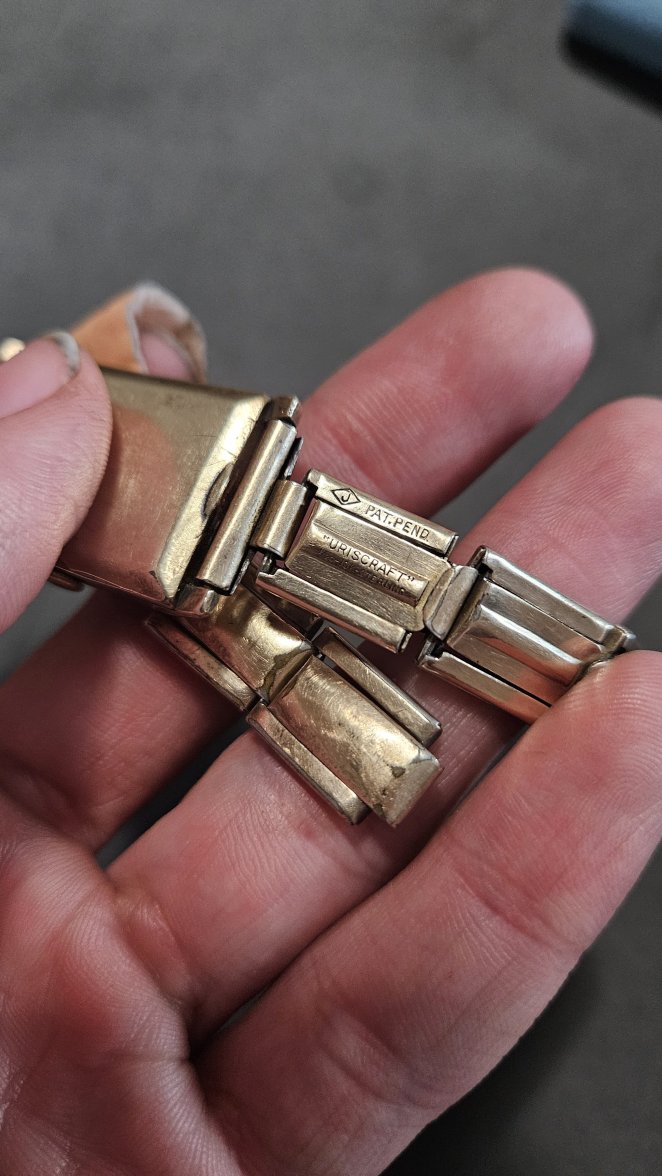
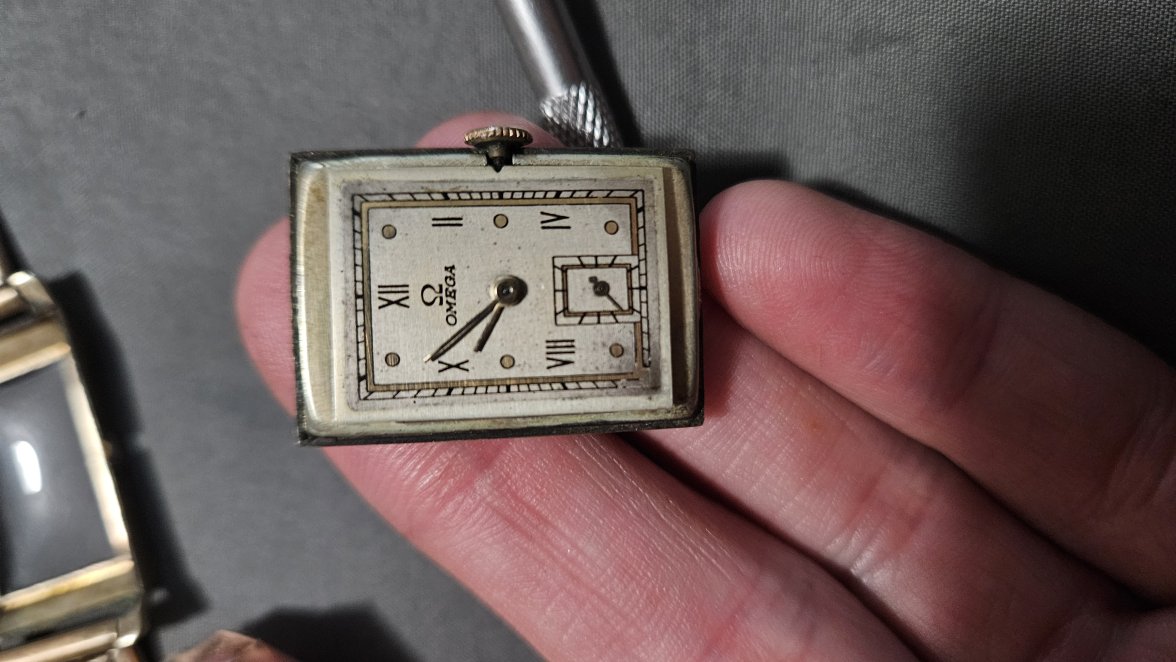
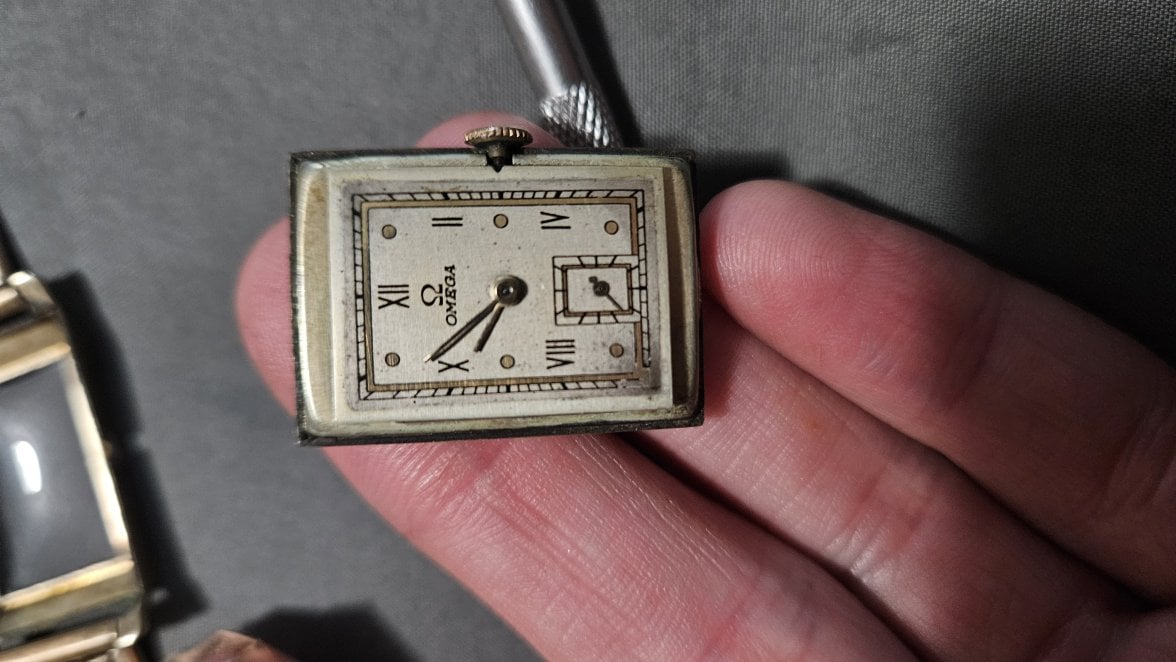
You should be able to pop off the back using the lip at the bottom and show photos of the movement and inside of the case-back.
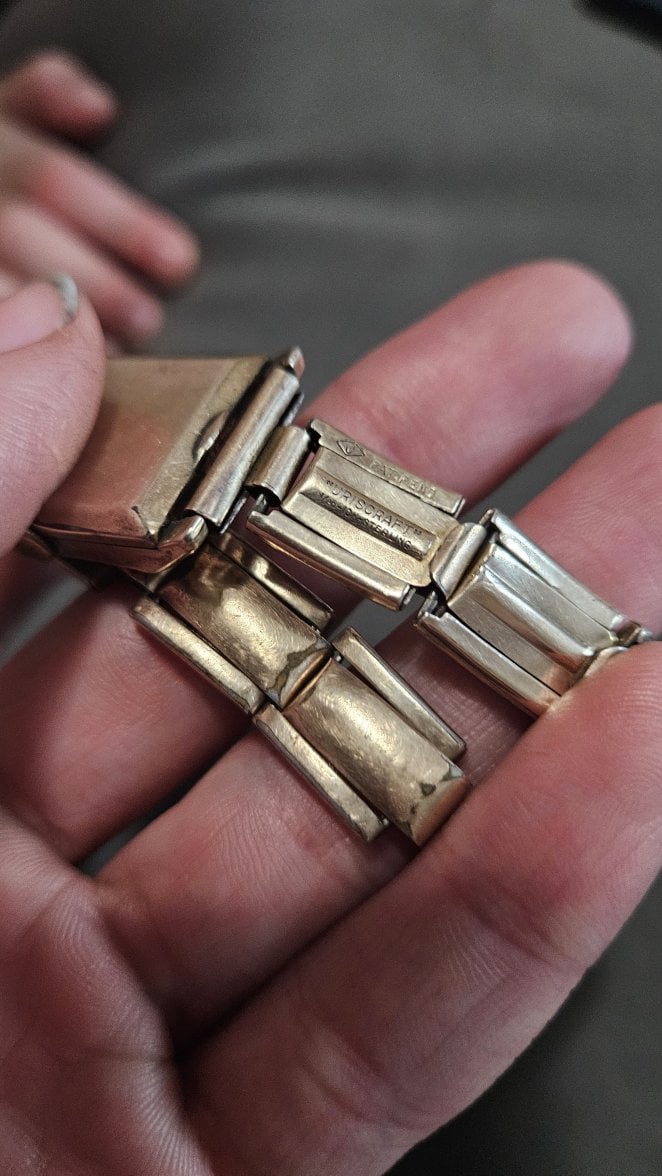
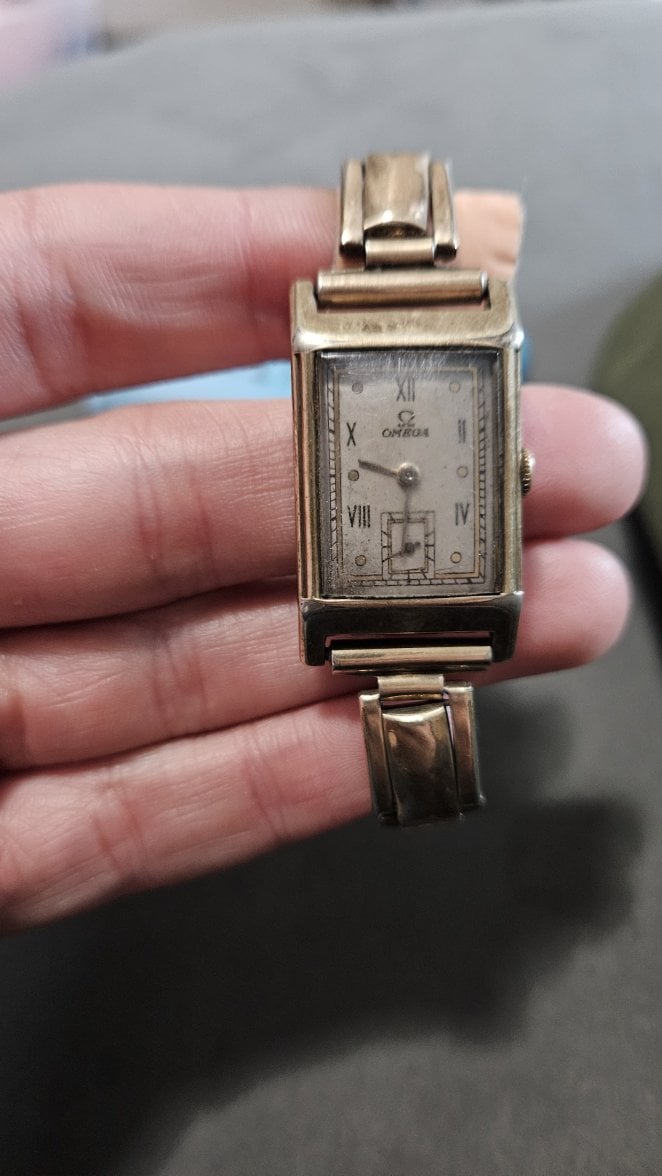
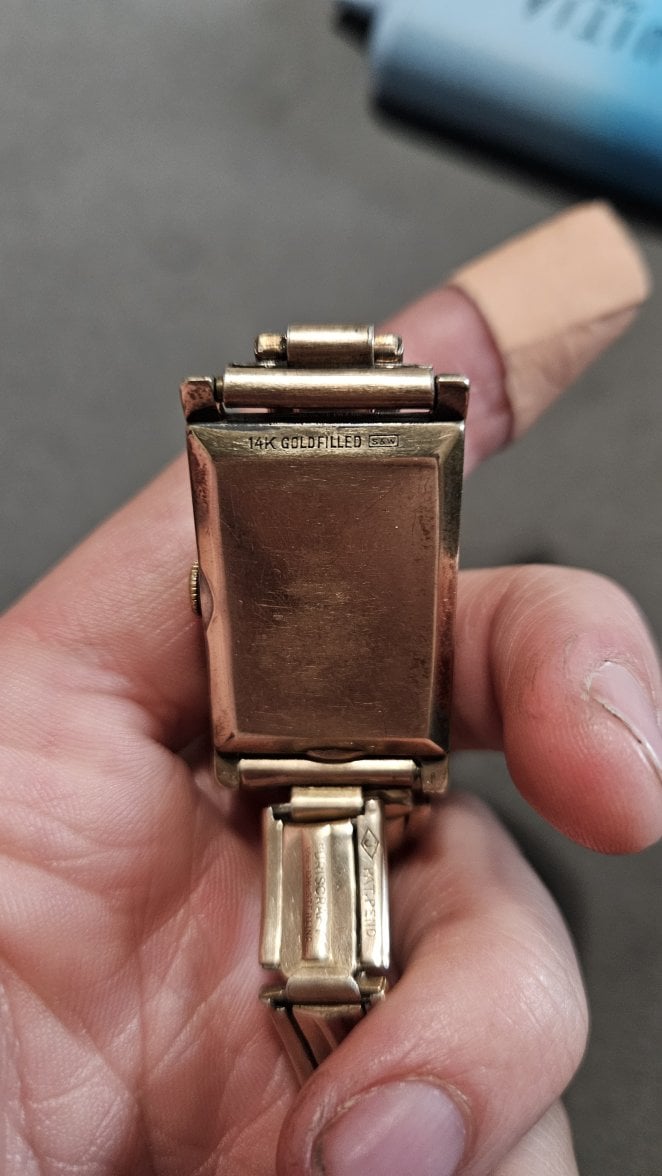
An American market watch as indicated by the S&W (Schwab & Wuispard Case Co, New York City) marking on the case back. Won't have a model name associated with it nor will there be a direct Swiss counterpart.
I'm guessing it's an R17.8 movement. Movement should pry away from the back using gentle pressure on the crown.
Late 1940's early 1950's.
I'm guessing it's an R17.8 movement. Movement should pry away from the back using gentle pressure on the crown.
I am undecided about the movement. Both options are reasonable. Going by the case proportions it could well be a cal.T 17. But usually the mandatory dust cover has a metal tube attached to it which is not visible here. I don´t know if the American cases differ in this respect. Maybe they don´t have a dust cover which we usually find with cal. T17 in Swiss cases. Then it would be easy to pry the movement out. A cal. R 17.8 would be easy to access. However different with a cal. T 17 with dust cap: removing the case back will only reveil the case markings and not the movement. You must remove the dust cover and for this action you must loosen the setting lever screw and take out the crown/stem before.
This is not a job for somebody who is not familiar with it. If the screw is loosened too much it will become disingaged from the setting lever and you will hardly be able to re-insert the stem. You will have to take off the dial, etc. etc. Too great a challenge for a layman...
Best would be to let a watchmaker do the job if OP is not bold and skilful enough to do it himself.
I am undecided about the movement. Both options are reasonable. Going by the case proportions it could well be a cal.T 17. But usually the mandatory dust cover has a metal tube attached to it which is not visible here. I don´t know if the American cases differ in this respect. Maybe they don´t have a dust cover which we usually find with cal. T17 in Swiss cases. Then it would be easy to pry the movement out. A cal. R 17.8 would be easy to access. However different with a cal. T 17 with dust cap: removing the case back will only reveil the case markings and not the movement. You must remove the dust cover and for this action you must loosen the setting lever screw and take out the crown/stem before.
This is not a job for somebody who is not familiar with it. If the screw is loosened too much it will become disingaged from the setting lever and you will hardly be able to re-insert the stem. You will have to take off the dial, etc. etc. Too great a challenge for a layman...
Best would be to let a watchmaker do the job if OP is not bold and skilful enough to do it himself.
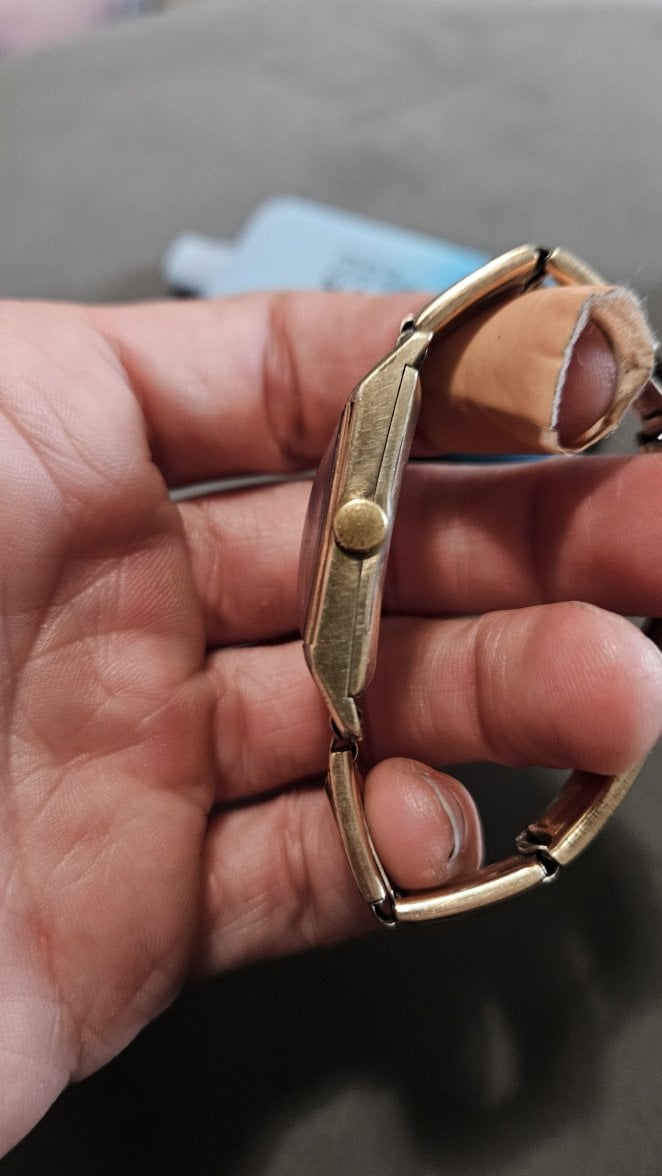
Most definitely not bold enough to try this myself. After doing a bit of research the watch does still run. Any suggestions on who I can take this to so I can safely get some more information on it. If it's worth something I'd like to sell it but if not I still think it's an amazing piece.
You’re going to need to tell us broadly where you are. There’s no point someone recommending a watchmaker in the UK if you’re in Aus.
If you search the forum you’ll likely find threads asking for watchmaker recommendations in your country.
You’re going to need to tell us broadly where you are. There’s no point someone recommending a watchmaker in the UK if you’re in Aus.
If you search the forum you’ll likely find threads asking for watchmaker recommendations in your country.