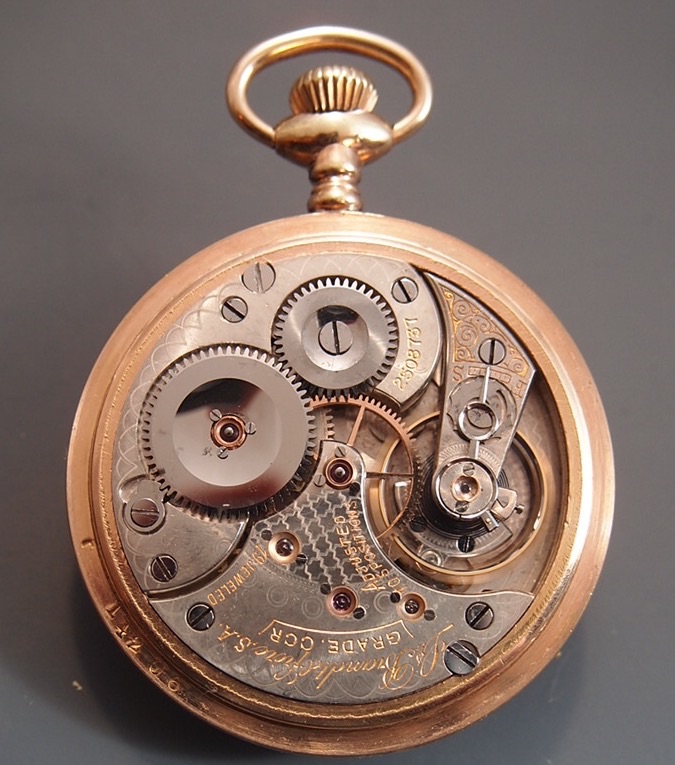
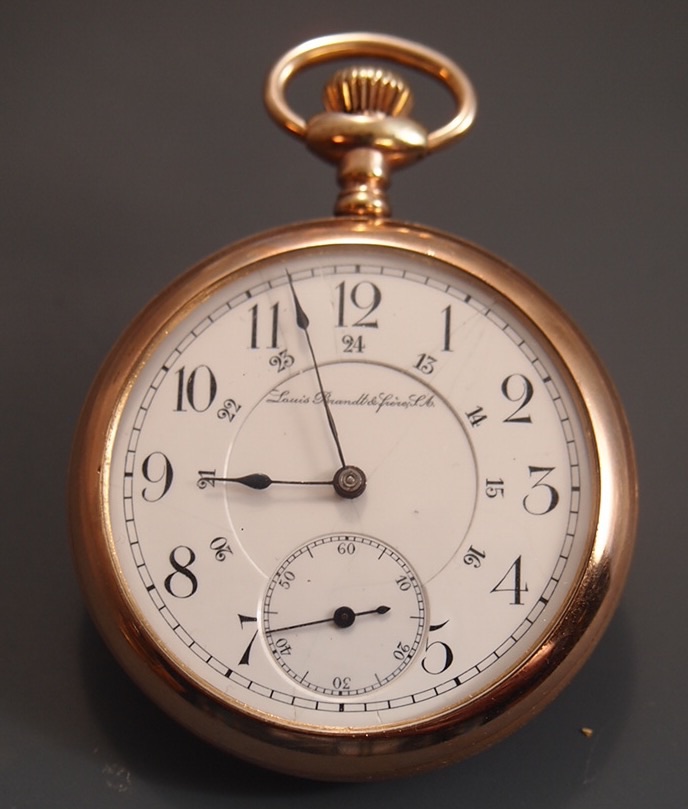
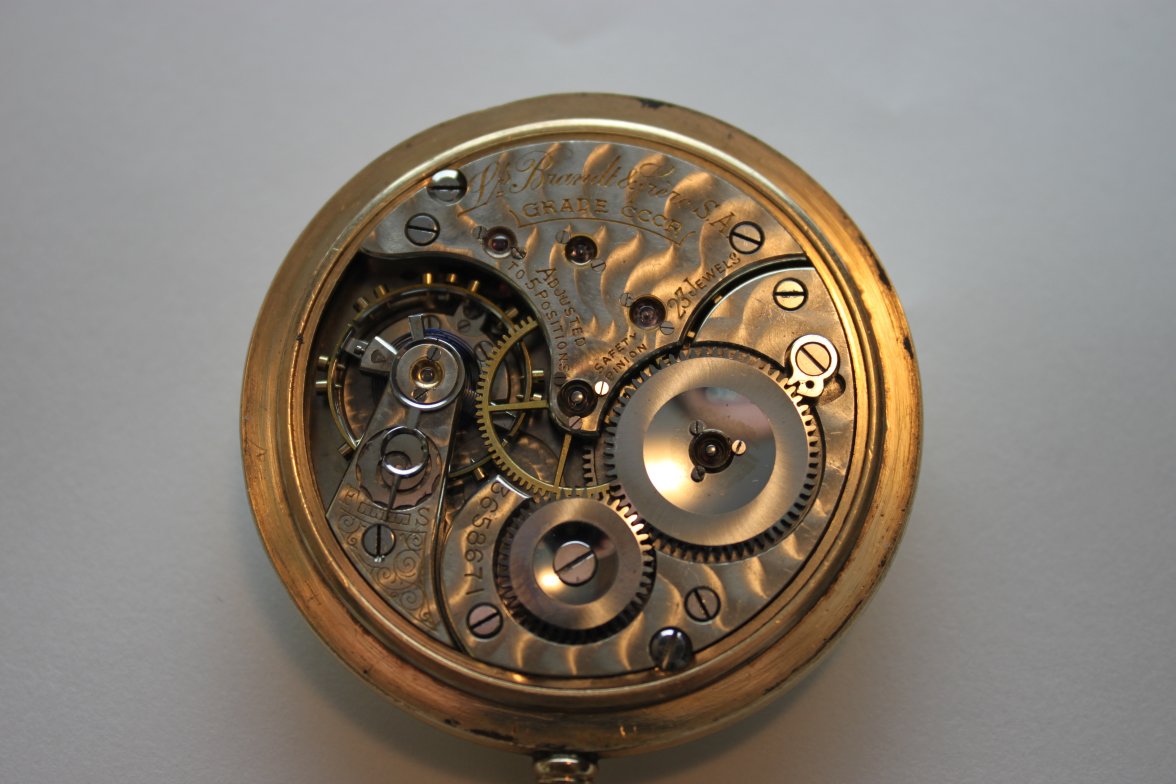
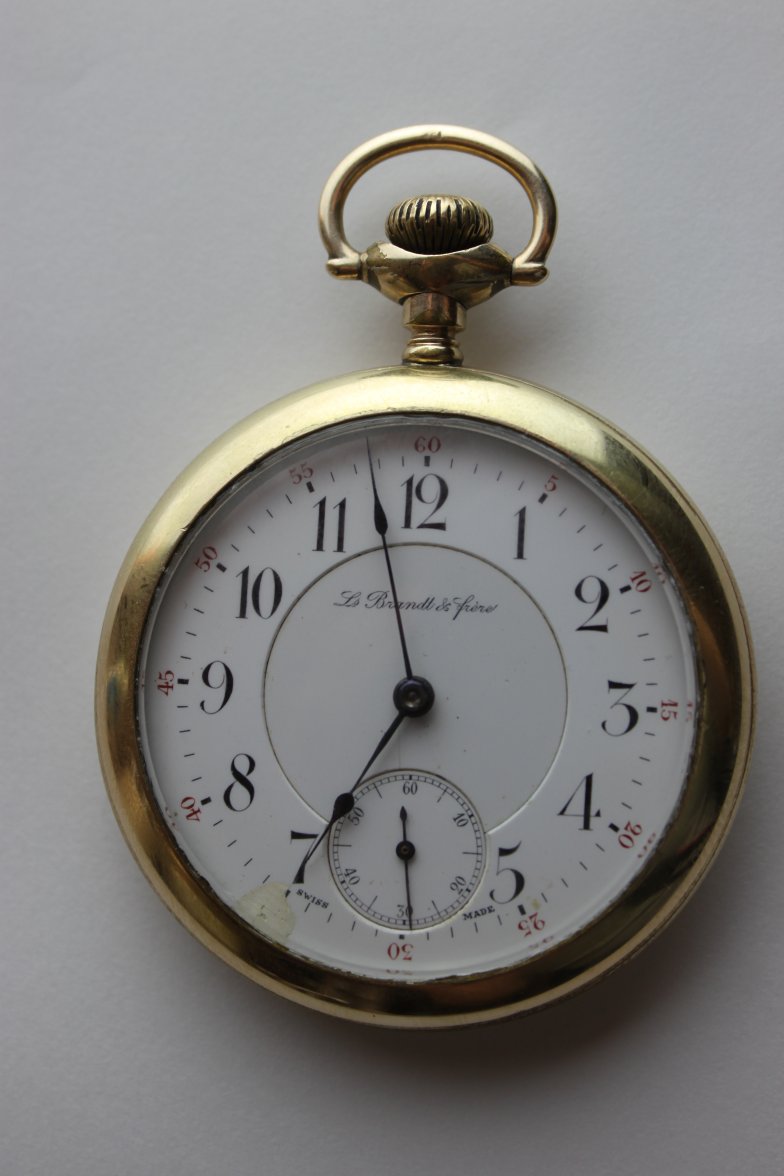
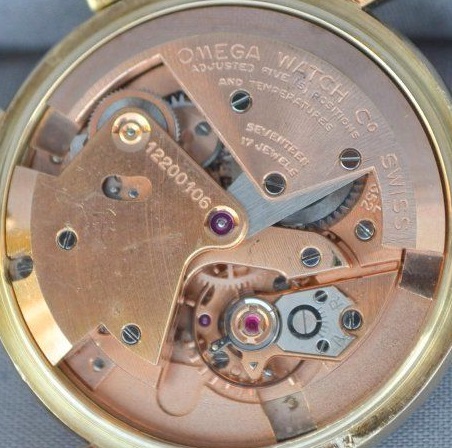
This is one of my Omegas, and I like them all, and it would be hard to settle on a favorite. But it IS my favourite Omega (Brandt) pocket watch, from circa 1910, I think.
A dial shot, I have two of these. One is a rescue that was acquired with no case, and missing or broken parts, and it is a private label.
But the subject watch dial is marked Louis Brandt & Freres. This watch is all original, and the only thing I had to do with it was to clean it. As to a shot of the interior of the case? Gold filled, swing ring. A bear to photograph inside the case without taking out the movement. These watches were railroad approved in Canada, and while the same basic movement in Omega are plentiful, we don't see a lot of them in this grade.
Love the gold center wheel. What a great example!
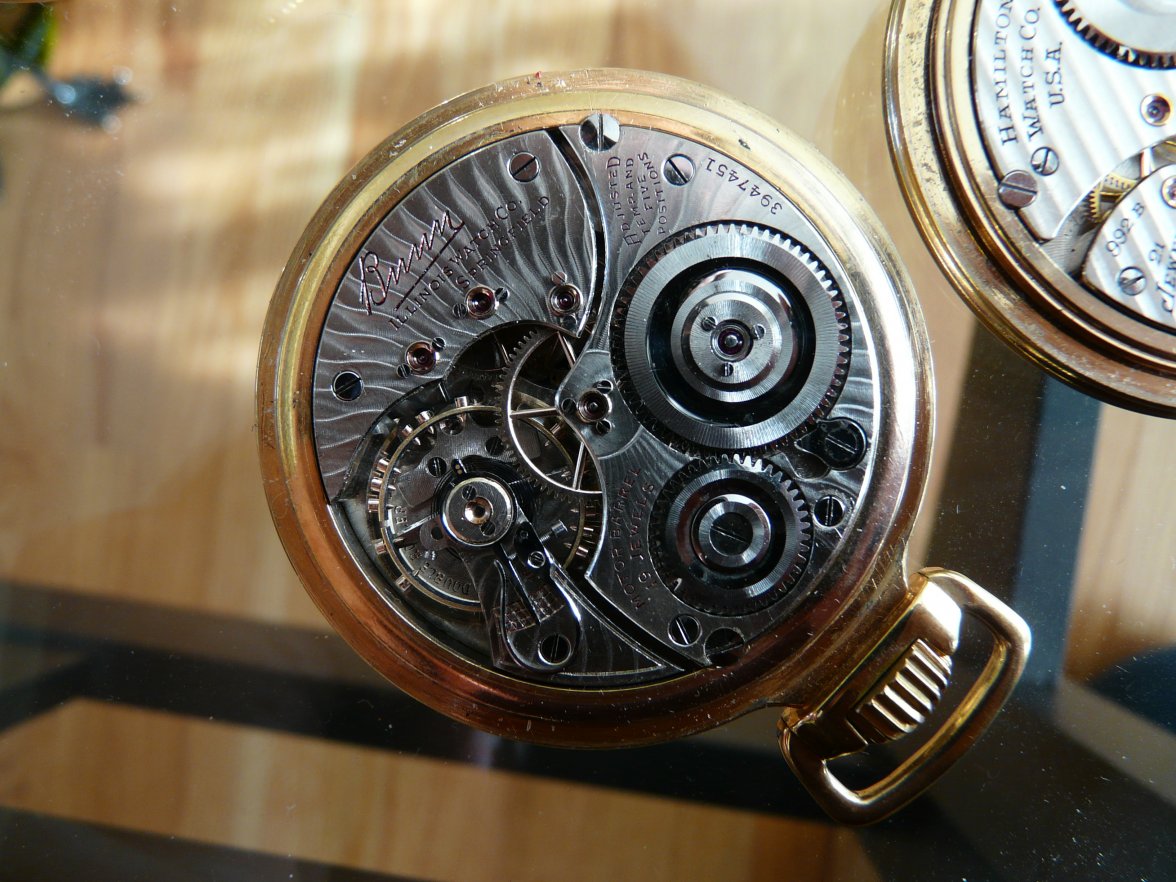
When I collected pocket watches (started in 1985 for about three years), I remember what a treat it was to find a 19-jewel movement. Seems lots of users bought the bare minimum 17-jewel examples, or stepped up to a 21-jewel. And some 23-jewel beauties out there too. But 19-jewel movements seem to have been passed over in favor of the other models for whatever reason. Maybe the price difference was small between 19- and 21-?
I should mention I never really studied or collected Swiss examples. Maybe the Canadian market was different...
Canadian railroads approved Brandt, Longines, Zenith, and possibly some Gallet watches, all of Swiss origin. And, of course, the Ball 435 B and 435 C which were made by the Swiss company, Record. But the largest contingent of railroad watches in Canada were of American origin. I am always on the lookout for a 23-jewel version, either in the DDR or the CCCR models.
Jewel count beyond 19 jewels in railway pieces really was a marketing thing. I've had a couple of old watch makers insist that jewels over 17 really are not needed and if you read enough on the subject you might tend to agree.
Ball Watch, for instance, pushed 17 & 19 jewel for years claiming that the higher jewel hardware was too high strung, too costly to run and too delicate for engine service. But more is better (honest sir, you NEED a 501 inch V8 in your Coupe De Ville) so when competition pushed higher jeweling, and the market swallowed it, Ball changed his tune and started pushing big jewel counts as needed for the accuaracy the railroads demanded. A lot of crap really but as Webb Ball had a lot of say in setting the rules for much of North America's rail lines and was on the board of Hamilton, he really could push what he wanted.
Another truimph of marketing over good sense. What was the jewel count on those early Omega 30mm & Conny chronometers??? Some were pretty low by later standards weren't they.
This morning I was at a freinds place looking a few pieces he recently purchased from the retired watch maker/jeweler/importer who pushed the approval of some of those 1950s pieces through approval at railway timeservice at CN & CP here in Canada. There was a mint Zenith RR56 and a nice Record as well as some older stuff (Omega CCCR, US Corp of Engineers IWC, LeCouter GSTP navigators watch..... that kind of junk....) With a nice hot espresso in my hand and a '55 Omega on my wrist it was a really rough morning.