- Posts
- 1,089
- Likes
- 1,206
Please consider donating to help offset our high running costs.

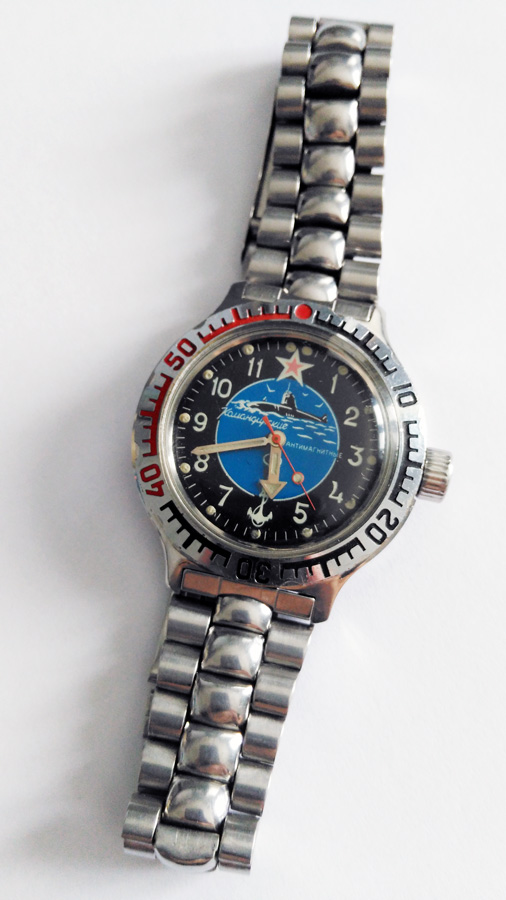
I spent seven years on Los Angeles class submarines... I can assure you, even the 688s are more modern, in every way, than a Russian boat.
It is rumored that the Akula class boats use minimal radiation shielding to save weight (and increase max speed).. and that the crews would have to be swapped periodically to avoid radiation sickness.
Pick up the book "Blind Man's Bluff" - an outstanding account of submarine service.
The russians have a loud mouth and boast a lot especially by internal and external propaganda but they don't always have the capabilities that they brag about.
But it doesn't mean that they have to be underestimated. After all it's the fact that they are less developed that hardens them and could make them a worthier adversary, as opposed to more developed nations that have really struggled for decades in conflicts where the enemy was nowhere near as advanced.

We laughed when we discovered vacuum tubes in the radio of a defector's MIG-25. The rivets on the wings were laughed at also.
The landing gear was silly big and robust.
I believe rough field landing, EMP and laminar flow testing stopped the laughing.
The Russians were prepared to fight THROUGH and PAST a nuclear exchange.
Nobody else was.

We laughed when we discovered vacuum tubes in the radio of a defector's MIG-25. The rivets on the wings were laughed at also.
The landing gear was silly big and robust.
I believe rough field landing, EMP and laminar flow testing stopped the laughing.
The Russians were prepared to fight THROUGH and PAST a nuclear exchange.
Nobody else was.

I spent a day aboard the SSBN Michigan back in the early 80s when the Cold War was still pretty chilly. I was auditioning for a job in the Nuclear Propulsion Officer Candidate (NUPOC) program. Back then, part of the job application process included a one-on-one interview with the father of naval nuclear propulsion, Admiral Rickover. To my great disappointment, I didn't get the job. But the day spent aboard the Michigan was a memorable experience. The sub carried a total 24 missiles. Each missile was tipped with up to 10 individual nuclear warheads. Each warhead had the explosive energy of 20 Hiroshima bombs. When you do the arithmetic, that comes out to a total of 4,800 Hiroshima bomb's worth of destruction carried by a single vessel. Bringing this back to the contemporary political scene in the United States, imagine a future with a decidedly kooky Commander In Chief having ultimate control of a fleet of 18 vessels just like the Michigan.
Did it sail while you were aboard or was it at port?
Oh, I wish the sub had been at sea! It was an absolute wonder of (at the time) cutting-edge technology. But alas, it was at port in Bremerton, Washington. The sub-pen it was berthed in had an open roof so that Soviet spy satellites could see the 24 missile ports on the rear deck.
I spent a day aboard the SSBN Michigan back in the early 80s when the Cold War was still pretty chilly. I was auditioning for a job in the Nuclear Propulsion Officer Candidate (NUPOC) program. Back then, part of the job application process included a one-on-one interview with the father of naval nuclear propulsion, Admiral Rickover. To my great disappointment, I didn't get the job. But the day spent aboard the Michigan was a memorable experience. The sub carried a total 24 missiles. Each missile was tipped with up to 10 individual nuclear warheads. Each warhead had the explosive energy of 20 Hiroshima bombs. When you do the arithmetic, that comes out to a total of 4,800 Hiroshima bomb's worth of destruction carried by a single vessel. Bringing this back to the contemporary political scene in the United States, imagine a future with a decidedly kooky Commander In Chief having ultimate control of a fleet of 18 vessels just like the Michigan.




I used to be involved in security for a long running air show that featured military aircraft primarily. I did this from the early 80's to the later 90's.
I was lucky enough to be close to, or in, many different Western aircraft over the years...sat in cockpits of all kinds of fighters, older planes at the end of their service life, as well as current planes for that era. The first year we had a B1 Bomber at the show, I got inside that as well (instrumentation was unconventional to say the least, at least for that time).
Back when the Soviet bloc first dissolved, we were treated to some Ukrainian MIG 29's at our show. I didn't sit in one, but got up to look in the cockpit - looked like a Viet Nam era F4 at best. You mention the rivets, which is what triggered all my memories from that year - the external construction appeared to be pretty crappy in that it certainly wasn't very refined. Not the kind of workmanship you would find on any Western aircraft of the time - not pretty, but I'm sure it was effective.


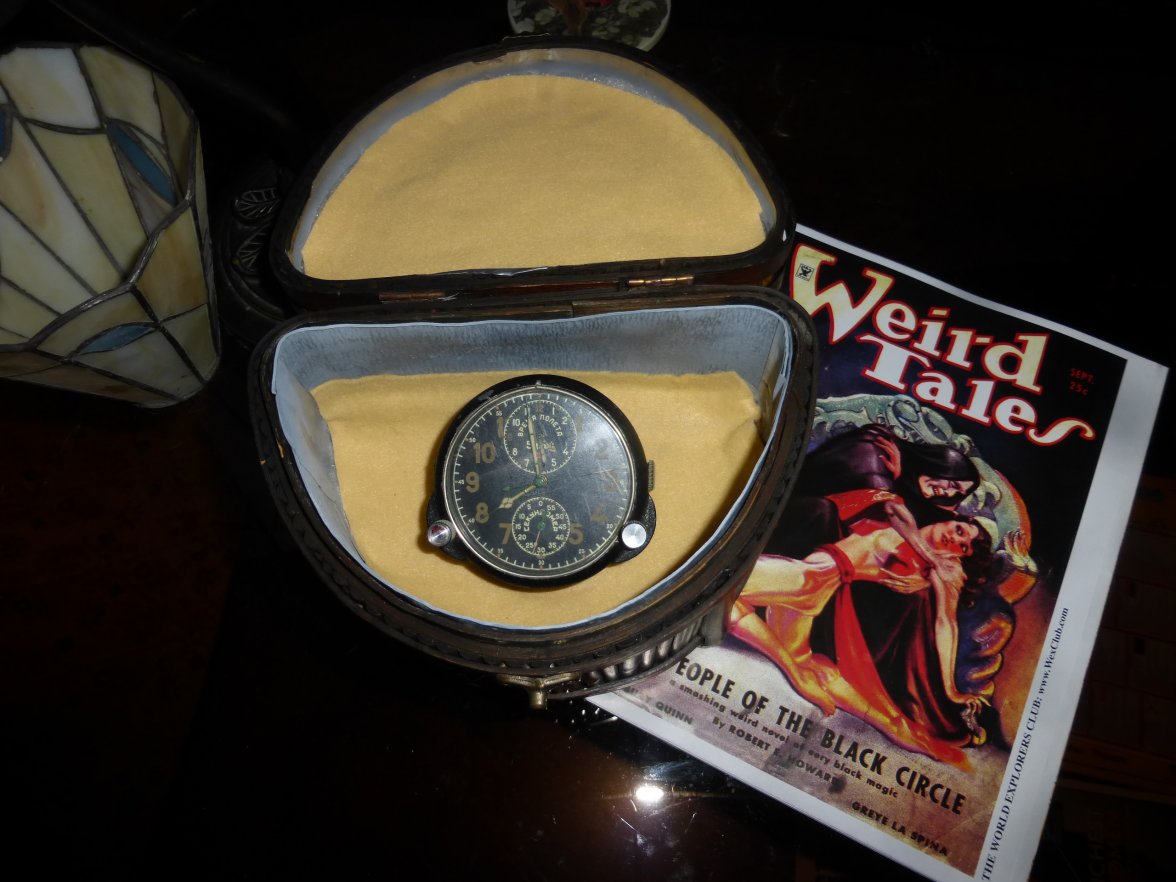
I have a similar one. I bought it at a gun show. Guy had a lot of salvage. I figured I'd get it fixed. I love clocks.
Set it on my bookshelf in my office.
Later, for another project, I bought a radiation detector. Actually 2 for different purposes. (Think "Geiger Counter") I tried them on a whole bunch stuff all around the house. Bond Girl sure got chuckles watching her child-husband playing with his toys.
Nothing much registered even on the sensative one.
Until I got to my Mig clock.
Think Chernobyl.
I bought lead (Pb) sheets and lined a box.
It sits in the garage surrounded by lead bullets.
It only comes out once in awhile as a curiosity/conversation piece.