- Posts
- 1,089
- Likes
- 1,206
Spy
·I have always admired the idea of sailing under water than on it. Submarine's were introduced to me in 20,000 Leagues Under the Sea with James Mason and Kirk Douglas. What impressed my imagination even more from that picture is the idea of owning a boat. It would set you a part from others if you could own your own submarine. This is probably why I gravitate to dive watches because they are like a micro submarine.
However, my question was about naval submarine's. Personally, I prefer the Soviet subs because of their exterior design and construction. For example, my favorite sub's are the Akula class(better known by the NATO designation: Typhoon), Lira class(NATO designation: Alfa), Shchuka class(NATO designation: Victor-III), Barrakuda and Kondor class(NATO designation: Sierra I and Sierra II), Borey class(NATO designation: Dolgorukiy), and finally Yasen class(NATO designation: Severodvinsk).
Many of these subs feature a towed sonar array; this is a pod on the tailplane. Funny story was when this design debuted on the Shchuka class in 1979, America thought is could be part of a magnetohydrodynamic drive or caterpillar.
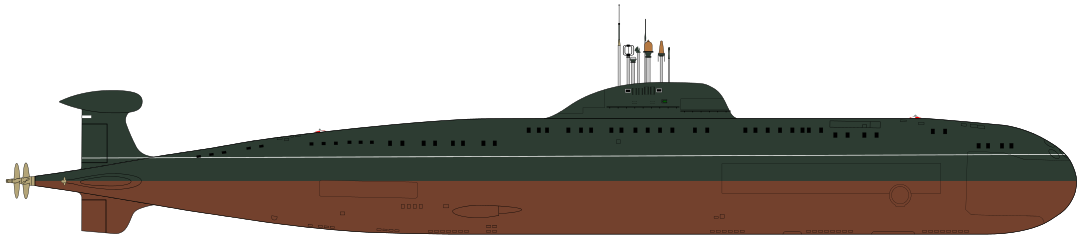
Soviet submarines were further advanced than American submarine's. One example is in the use of titanium for the hull in the Lira class. Titanium was expensive and revolutionary at the time. Like all Soviet submarines this boat had a double-hull. The inner hull withstood the pressure while the outer hull formed the shape for better hydrodynamics. The Lira, or Alfa class, was rumored to have a crush depth over 1,300 meters. Apparently, this has been refuted by a Russian authority. The Shchuka class(pictured above) had a maximum operating depth of 600 meters, making it one of the deepest diving naval subs.
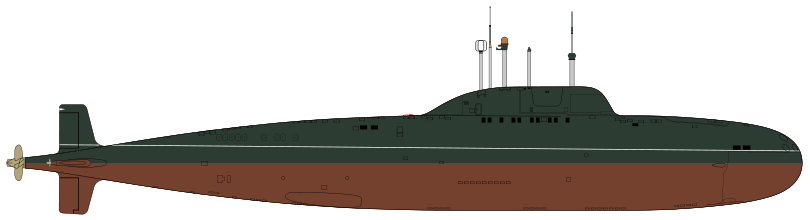
My favorite sub of all-time is the Typhoon class. Not solely because it was featured in The Hunt For Red October but mostly because of its size. At 574 feet and having a submerged displacement of 48,000 tonnes, it remains the largest class of submarine ever built. Only six were made and all but one have been retired. The one still in operation serves as a training vessel, although, it is still armed and capable of launching nuclear missiles. Unlike many ballistic missile submariner's the silos were forward of the sail, rather than behind it. I should point out that has twin screws(propellers). This was not and is not commonly seen on sub's, especially today. The last American sub to feature twin screws was the USS Triton in mid-1950's. It even has a swimming pool. You can see pictures of one that a blogger published when he got a tour of the boat here.
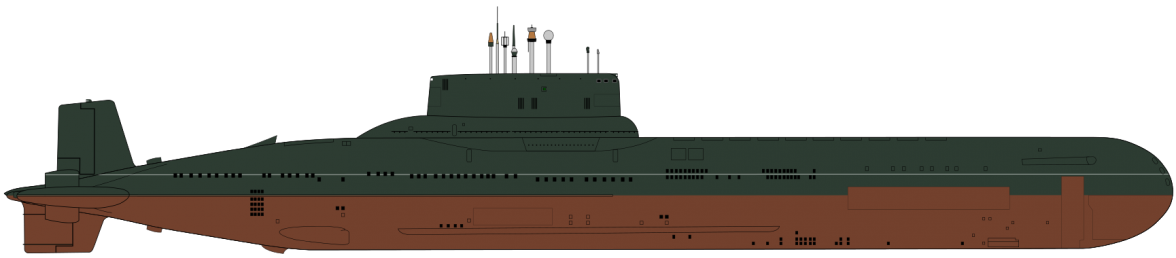

Of American submarines, I like the Ohio class submarine and Virginia class attack submarine. The Ohio class submarines are ballistic missile boats. These are equal to the Typhoon class and serve as a nuclear deterrent. Ohio's are 560 feet and have a submerged displacement of 18,750 tonnes. The shape is more similar to the traditional submarine design.

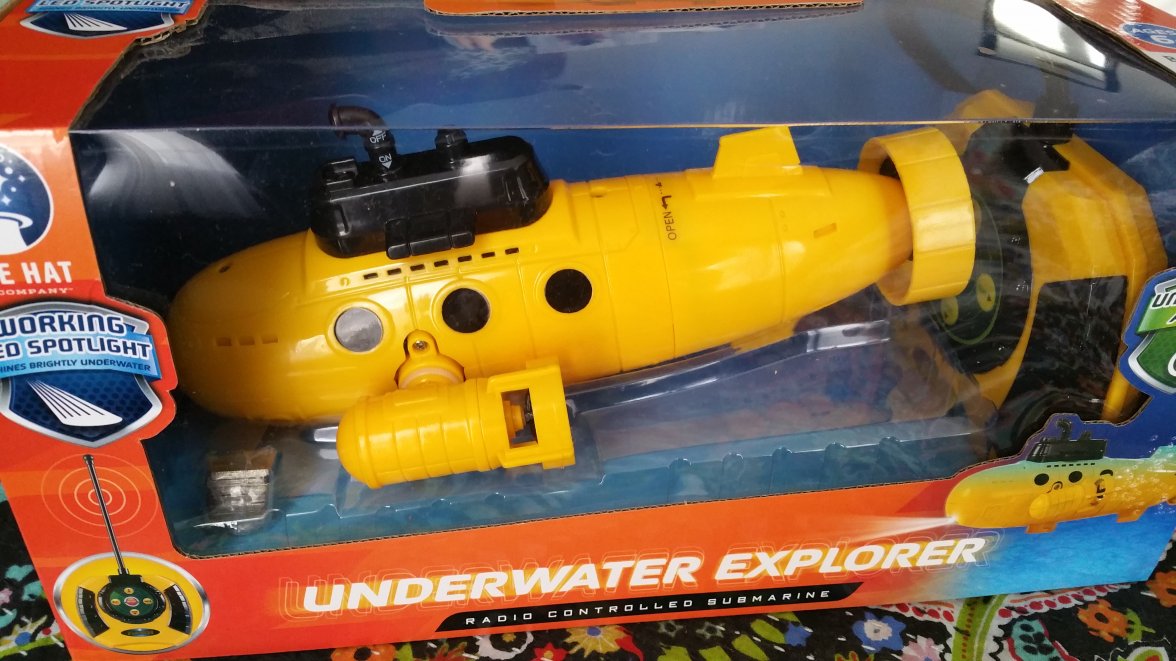
For a while I have been toying with the idea of buying a radio control submarine replica of one of these naval sub's. But the costs range from $400 to over $1,000. My wife would have something to say if I bought one just like that. Fortunately, I found one for under $30. It is intended for children but I have to remember to share with my son, rather than the other way around. 😜 We take it to the pond and play with it there. It is 10 inches long and has a range of 15 meters. The operational depth of 2.5 feet(I did exceed that depth and it continued to work at 4 feet). The sun fish seem to like it.
My son has the "conn".
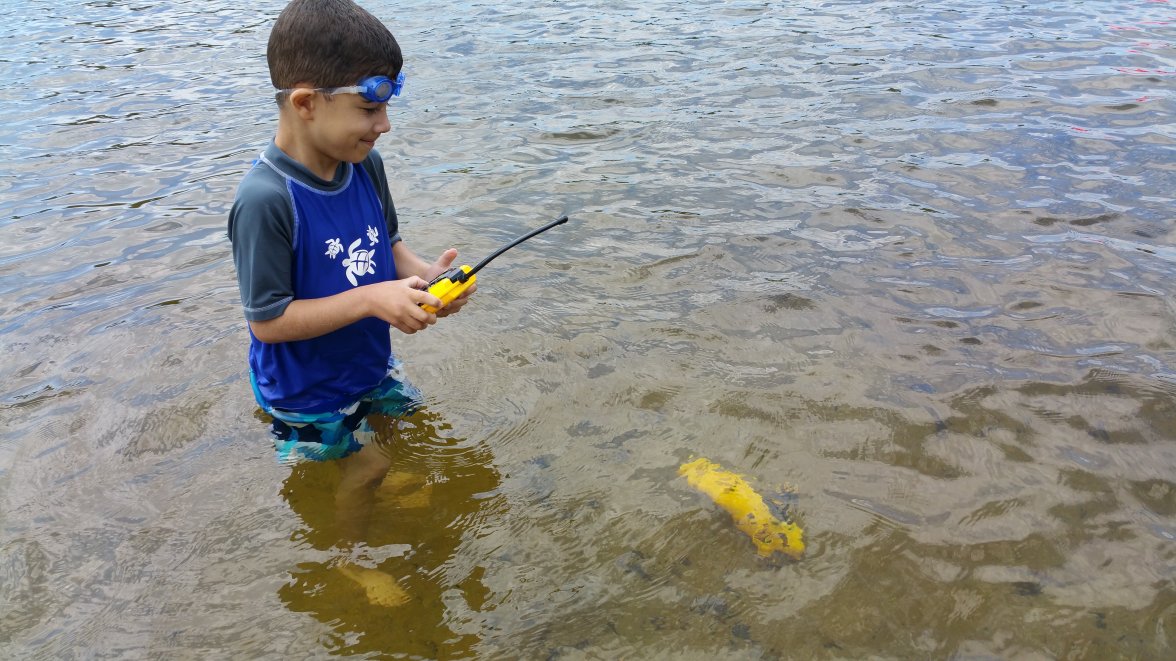
I have owned a few radio control toys in my younger years, but a radio control submarine has been the most fun. Mine can turn left and right, dive and stay submerged while moving along or just sail along the surface. It can even perform a mini emergency breach!
Perhaps one of these will be acquired in the future...

However, my question was about naval submarine's. Personally, I prefer the Soviet subs because of their exterior design and construction. For example, my favorite sub's are the Akula class(better known by the NATO designation: Typhoon), Lira class(NATO designation: Alfa), Shchuka class(NATO designation: Victor-III), Barrakuda and Kondor class(NATO designation: Sierra I and Sierra II), Borey class(NATO designation: Dolgorukiy), and finally Yasen class(NATO designation: Severodvinsk).
Many of these subs feature a towed sonar array; this is a pod on the tailplane. Funny story was when this design debuted on the Shchuka class in 1979, America thought is could be part of a magnetohydrodynamic drive or caterpillar.
Soviet submarines were further advanced than American submarine's. One example is in the use of titanium for the hull in the Lira class. Titanium was expensive and revolutionary at the time. Like all Soviet submarines this boat had a double-hull. The inner hull withstood the pressure while the outer hull formed the shape for better hydrodynamics. The Lira, or Alfa class, was rumored to have a crush depth over 1,300 meters. Apparently, this has been refuted by a Russian authority. The Shchuka class(pictured above) had a maximum operating depth of 600 meters, making it one of the deepest diving naval subs.
My favorite sub of all-time is the Typhoon class. Not solely because it was featured in The Hunt For Red October but mostly because of its size. At 574 feet and having a submerged displacement of 48,000 tonnes, it remains the largest class of submarine ever built. Only six were made and all but one have been retired. The one still in operation serves as a training vessel, although, it is still armed and capable of launching nuclear missiles. Unlike many ballistic missile submariner's the silos were forward of the sail, rather than behind it. I should point out that has twin screws(propellers). This was not and is not commonly seen on sub's, especially today. The last American sub to feature twin screws was the USS Triton in mid-1950's. It even has a swimming pool. You can see pictures of one that a blogger published when he got a tour of the boat here.
Of American submarines, I like the Ohio class submarine and Virginia class attack submarine. The Ohio class submarines are ballistic missile boats. These are equal to the Typhoon class and serve as a nuclear deterrent. Ohio's are 560 feet and have a submerged displacement of 18,750 tonnes. The shape is more similar to the traditional submarine design.
For a while I have been toying with the idea of buying a radio control submarine replica of one of these naval sub's. But the costs range from $400 to over $1,000. My wife would have something to say if I bought one just like that. Fortunately, I found one for under $30. It is intended for children but I have to remember to share with my son, rather than the other way around. 😜 We take it to the pond and play with it there. It is 10 inches long and has a range of 15 meters. The operational depth of 2.5 feet(I did exceed that depth and it continued to work at 4 feet). The sun fish seem to like it.
My son has the "conn".
I have owned a few radio control toys in my younger years, but a radio control submarine has been the most fun. Mine can turn left and right, dive and stay submerged while moving along or just sail along the surface. It can even perform a mini emergency breach!
Perhaps one of these will be acquired in the future...
Edited: