Hodinkee LE Leica

Posts
2,689
Likes
9,875
That is not by accident- planned obsolescence. Prior to the digital boom (the camera equivalence of the Quartz crisis), all of these companies- Leica, Nikon, Canon, Minolta- we’re their own competition. A new model release introduced new features but as was said prior- the film technology was what was improving (the quality of color print film in 1999 was extraordinary compared to 10 years earlier). But a 50 year old Leica was just as capable of taking professional images as a brand new Leica, or Nikon etc- it was just a matter of user controls and interface that had changed- bells and whistles.

Not quite a plug and play task...but add to that most modern cameras have processors that evolve with the the sensors. Its just not cost effective and as simple as it sounds. There are manufactures that upgrade sensors (RED)...but they are in cameras costing $50k, and even those cameras at times aren't just sensor swaps as all the electronics must be upgraded to. Frankly its more cost effective to just replace a modern camera...especially mass produced mirrorless models. They just aren't designed for sensor swaps, and if they were they would cost 2-3X more.
Edited:

 
Posts
29,920
Likes
77,368
That is not by accident- planned obsolescence.

Yes, that's obvious. If the camera were designed for upgrading initially, it could be done, but clearly the companies don't design these cameras in that way. So instead of being able to upgrade your fancy $15k camera, it becomes just more electronic junk that has to be dealt with like an old VCR. Someone in a third world country will be smashing it up with a hammer and putting parts of it in a fire to try to get whatever precious metals might be in there out of it...

Smart design from the ground up would help alleviate this, but the companies have no incentive to do this at the moment.
 
Posts
16,305
Likes
45,005
No idea what that is or why I would need one. As I said, my Nikon takes great photos still for work...
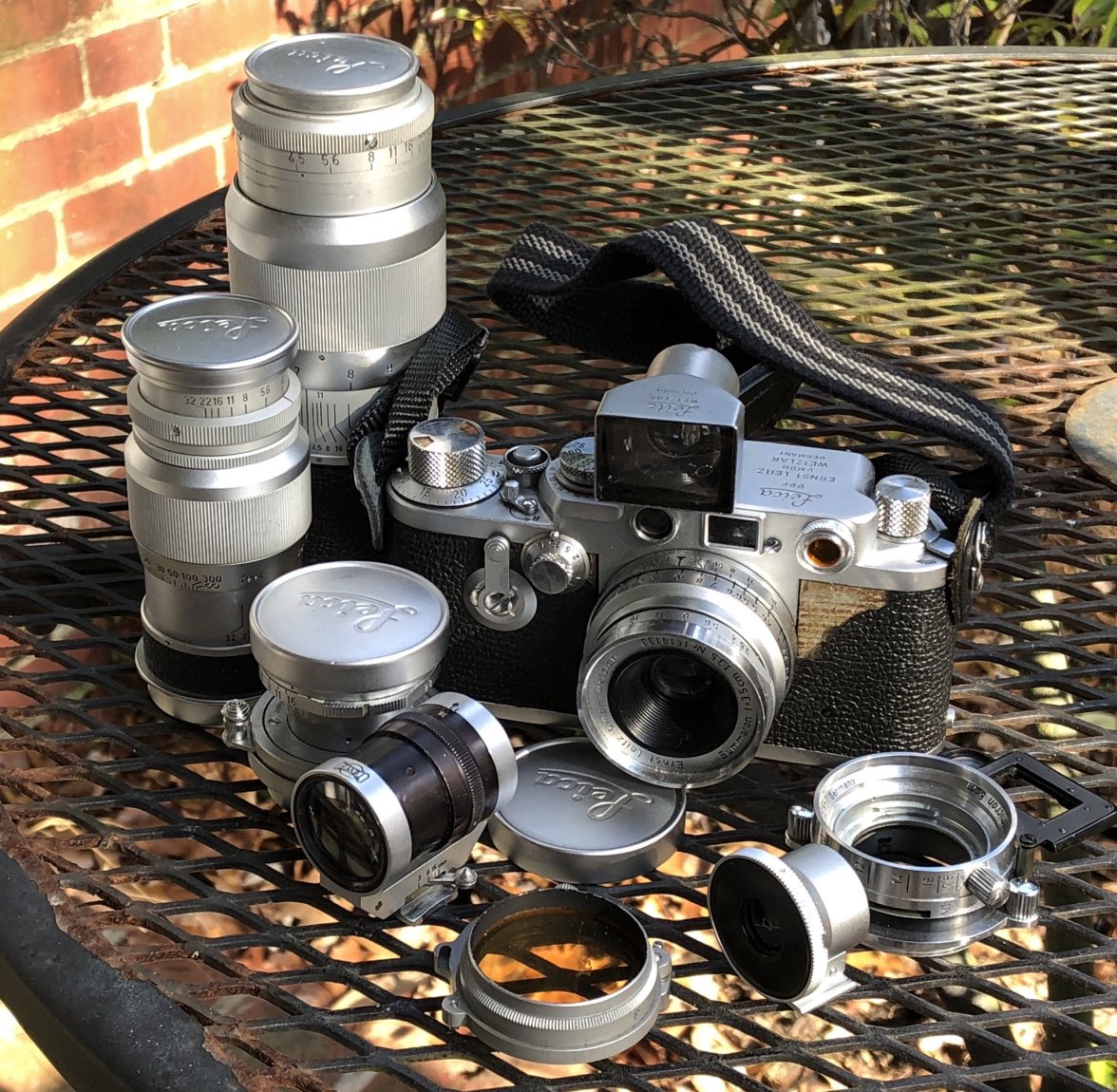
Not sure if @CajunTiger was being tongue-in-cheek but I appreciate the reference to the early Leica screwmount cameras as a great option for anyone looking to still enjoy film photography and use a wonderfully mechanical tool capable of astonishing results. These have a cult following for a reason.
Prior to the introduction of the M-mount cameras in 1957 (the basic intent of this thread so not really off topic) the original design of the Oskar Barnack designed Leica was virtually unchanged- just improved upon. The loading was fiddly with a take up spool and done through the bottom, the rangefinder and viewfinder were through two different optical finders (focus- then compose) and the winding was done with a screw knob rather than a racheted lever. But the earlier screwmount Leica’s were more compact, lighter, and just as high quality as their later M-brethren. With practice these cameras are just as easy to use as any other camera and the ability to scale focus with them made them even easier negating the need for using the rangefinder (same can be done with the M cameras).
Early screwmount lenses were primitive but the later ones (approaching the mid 50’s) were excellent and adapter rings were offered so you could use your screwmount lenses on the new M-mount cameras. The screwmount bodies are still relatively cheap (around the $300 mark for the IIIc or IIIf models) the IIiG is a rarity and those command more money. But like anything Leica, the glass will still cost you and the host of accessories add up- particularly as they are now unobtanium and highly collectible.
Furthermore, these are 60+ year old mechanical devices with cloth shutters (that are prone to decay), so like our vintage watches-servicing is imperative and only by someone who knows them well and has access to the correct fabric for the cloth shutter.
Shooting film, processing at home in the kitchen sink with a changing bag and daylight tank, then scanning on a high quality scanner is easily done by anyone who has the desire to do it and the process is incredibly zenlike and fulfilling. Color is a different beast and I still send color out- I don’t process color.

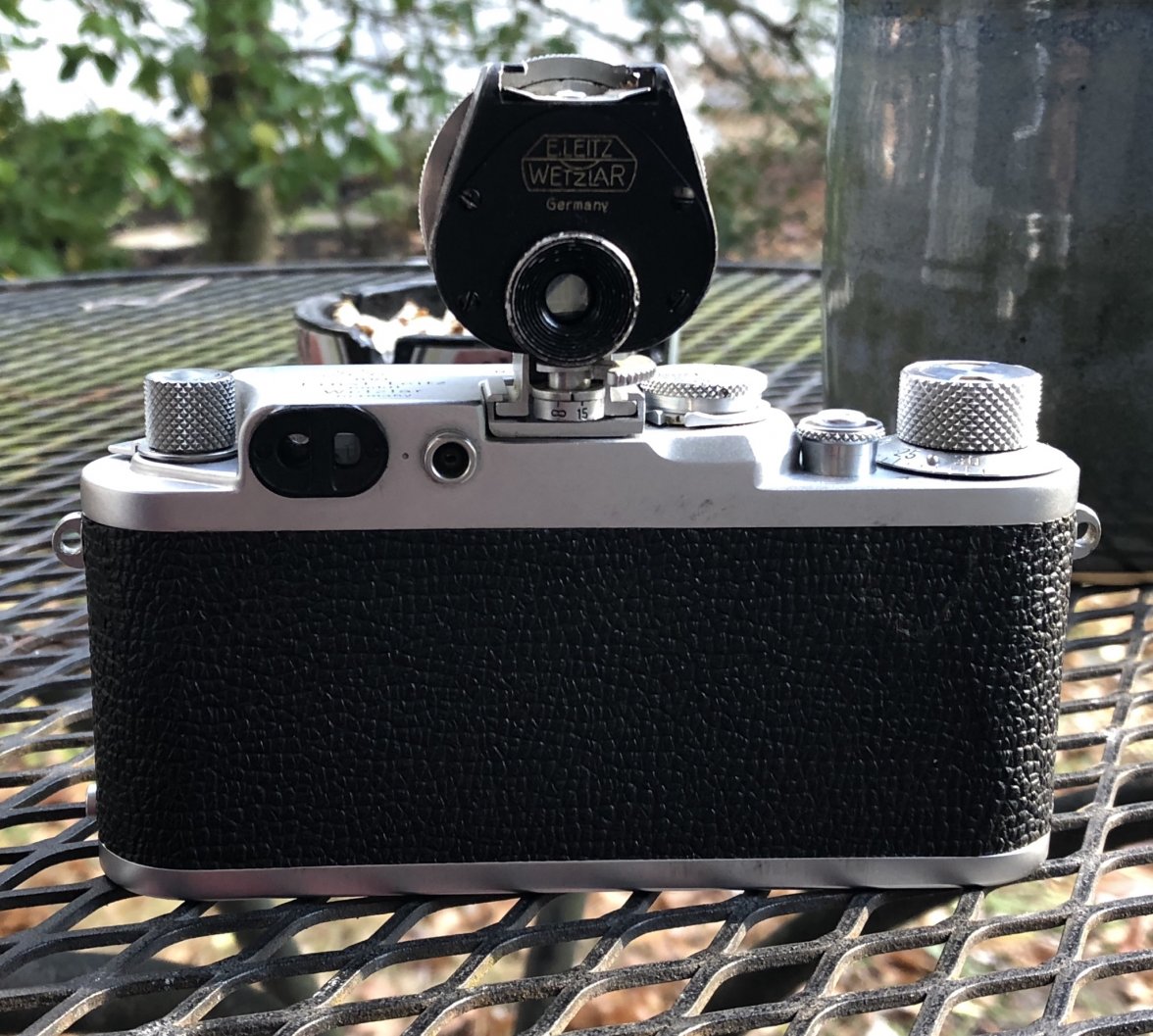
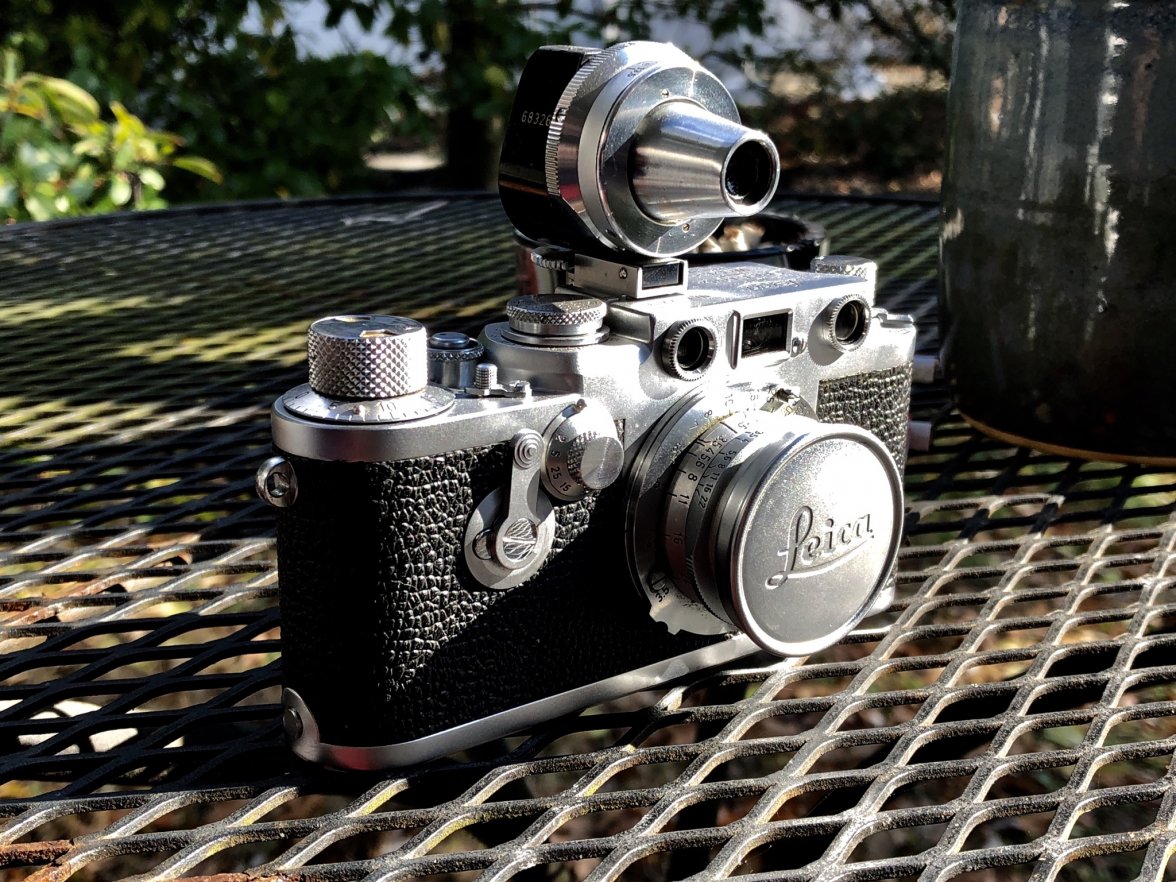
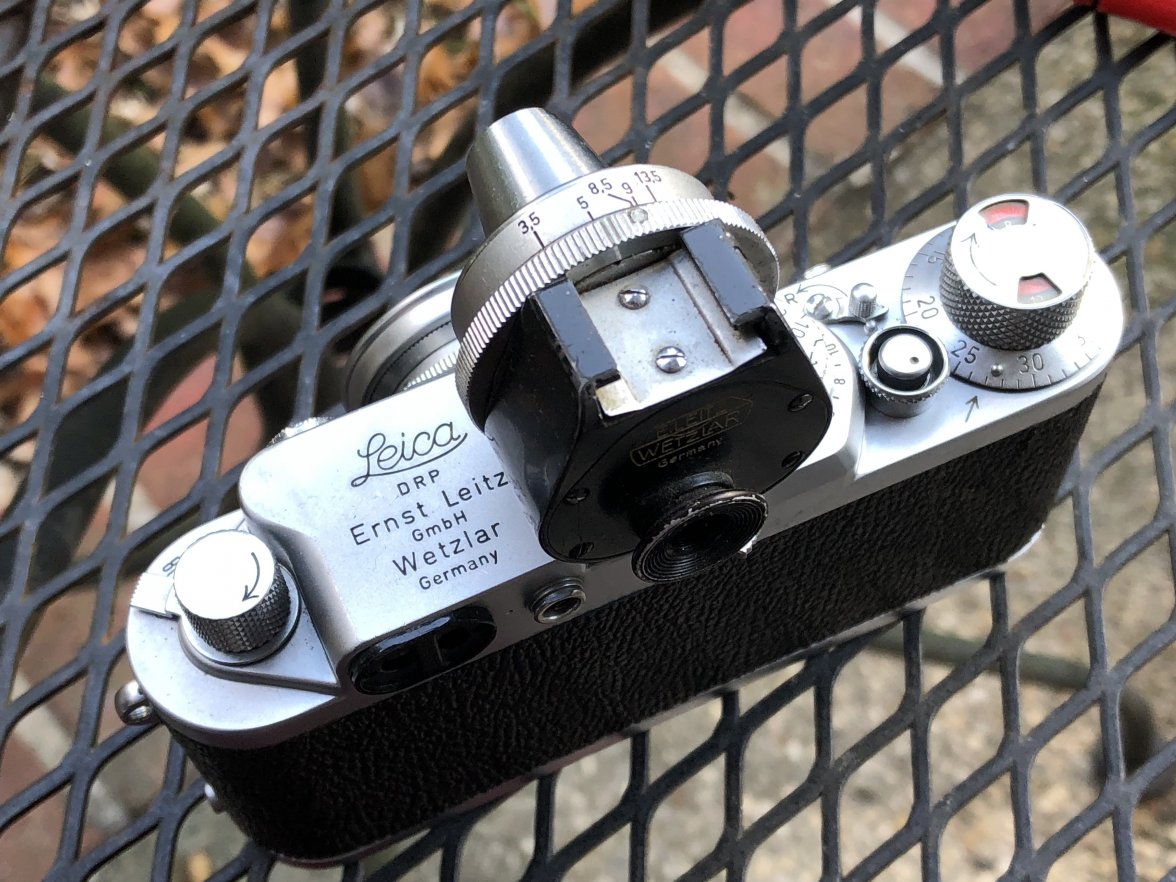
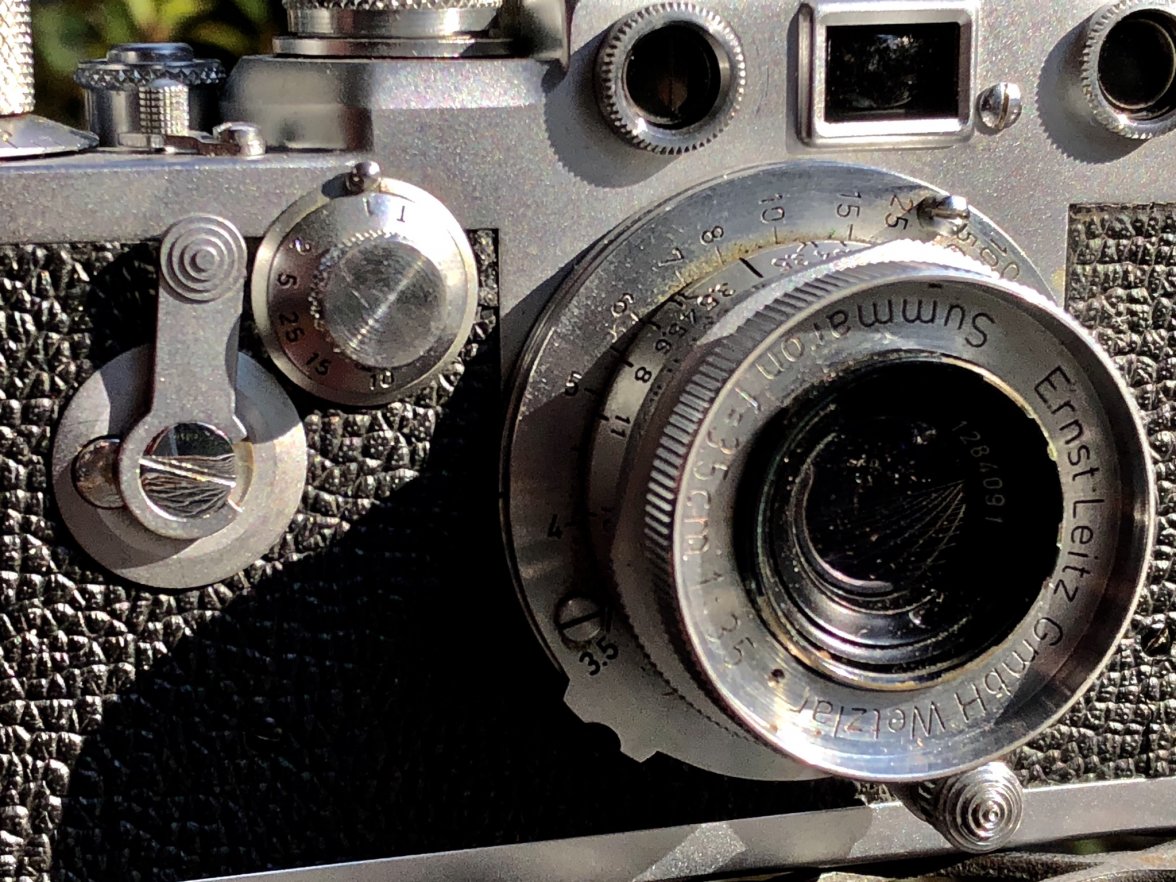
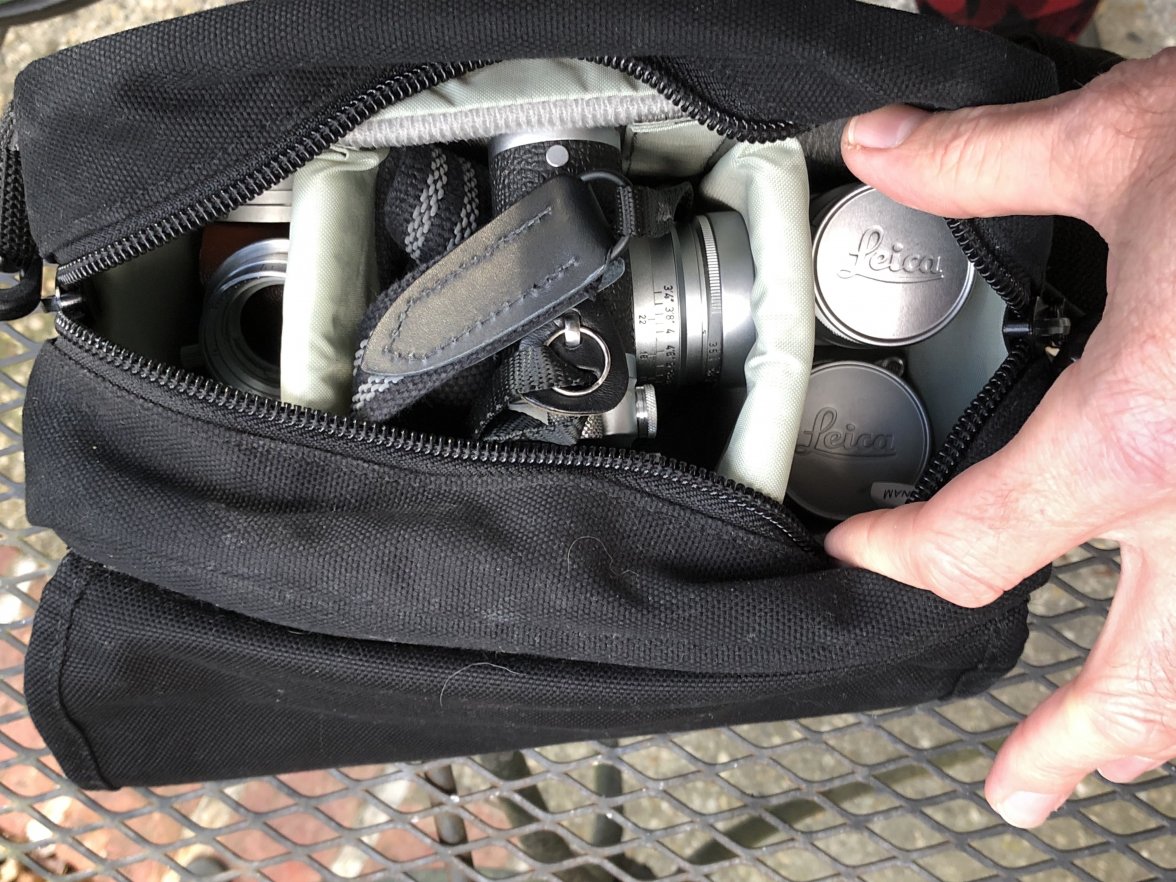
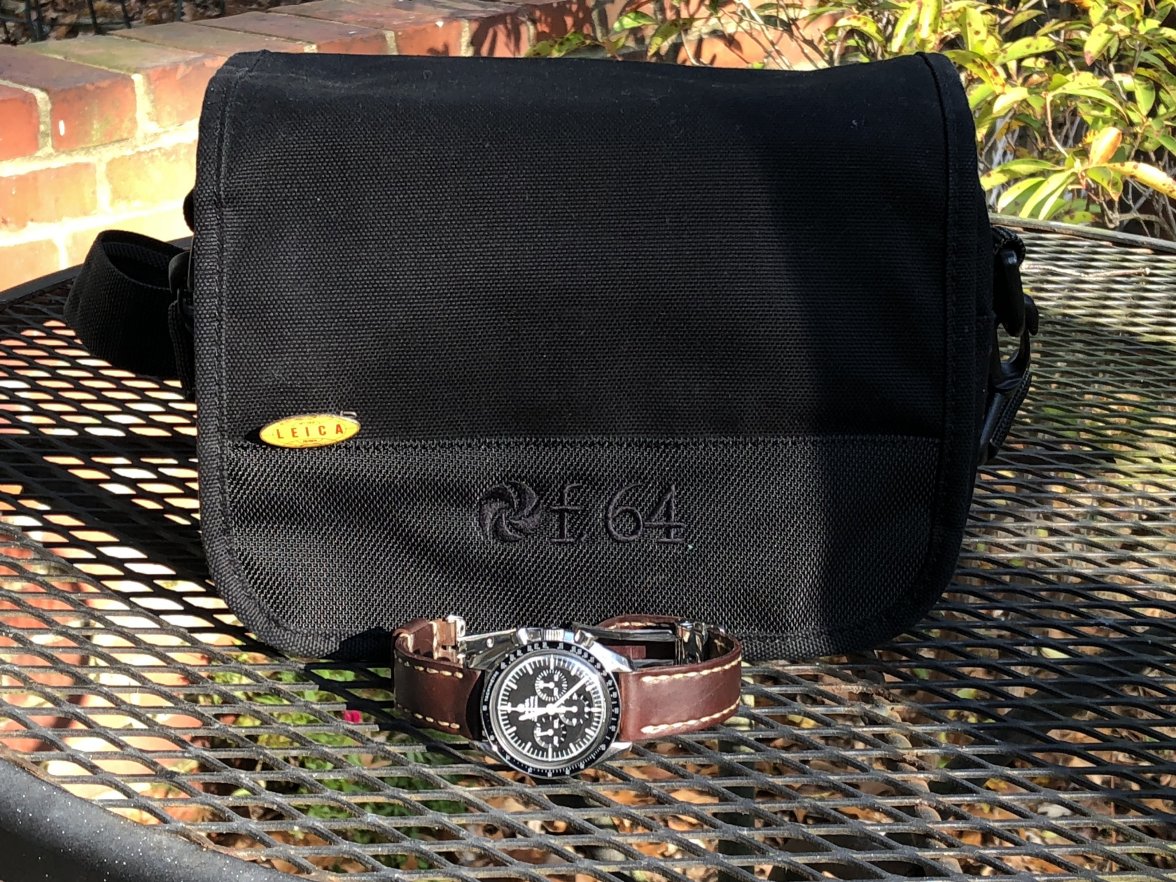
From my personal collection- iPhone pics with coffee this morning just to illustrate:

A simple IIIc with added optical finder-


And this is my IIIf go- bag, a total pleasure to use once you get the hang of it
 
Posts
16,305
Likes
45,005
Not quite that simple...do you have any experience swapping sensors? Not quite a plug and play task...but add to that most modern cameras have processors that evolve with the the sensors. Its just not cost effective and as simple as it sounds. There are manufactures that upgrade sensors (RED)...but they are in cameras costing $50k, and even those cameras at times aren't just sensor swaps as all the electronics must be upgraded to. Frankly its more cost effective to just replace a modern camera...especially mass produced mirrorless models. They just aren't designed for sensor swaps, and if they were they would cost 2-3X more.
Completely agree- no argument from me. And that’s just the nature of the current medium.
 
Posts
29,920
Likes
77,368
Not sure if @CajunTiger was being tongue-in-cheek

No idea...I'm not a fanboy of any camera brand so I guess I don't get the reference...
 
Posts
16,305
Likes
45,005
No idea...I'm not a fanboy of any camera brand so I guess I don't get the reference...
Not sure if you’re getting mixed signals here- it’s not about being a “fan-boy”, it’s about appreciating a finely made tool- very akin to appreciating quality watches versus mass consumer watches. The Hondinkee offering is indeed a fanboy item- but the Leica as a quality image making tool, and their place in the history of photography as the pinnacle of quality is undeniable.
 
Posts
29,920
Likes
77,368
Not sure if you’re getting mixed signals here- it’s not about being a “fan-boy”, it’s about appreciating a finely made tool- very akin to appreciating quality watches versus mass consumer watches. The Hondinkee offering is indeed a fanboy item- but the Leica as a quality image making tool, and their place in the history of photography as the pinnacle of quality is undeniable.

The main message I got from that post was it seemed like a non-sequitur...not related to anything I was posting.

I appreciate finely made tools, and I own many of them related to the work I do for a living. As I've said clearly, in the post that was replied to, I don't care how good a camera is I won't be spending $14k on one (doing so would be an absolutely horrible business decision). Then some camera was posted as a reply that is clearly not suitable for the work I do. Again I have no idea what point was being made...

Maybe a fanboy of the brand would know what that camera is, but not being one I don't...that was what I was referring to with the fanboy comment...
 
Posts
2,457
Likes
7,060
I'm still very fond of my Fujifilm X100, quirks and all...
In the wild, people notice it, I guess because it looks like a '50's rangefinder, but for me the attraction is its picture taking ability. The handling of its controls (shutter speed, aperture) are like traditional mechanical cameras. The jpg engine and fill flash are second to none, making the X100 perfect camera for taking pictures of people. Its bokeh is also excellent. I also have a DSLR that I use for all the other situations (in raw format). The newer versions of the X100 series still uses the same fixed 23 mm lens - because it was perfect from the get-go. 😁
 
Posts
16,305
Likes
45,005
The main message I got from that post was it seemed like a non-sequitur...not related to anything I was posting.

I appreciate finely made tools, and I own many of them related to the work I do for a living. As I've said clearly, in the post that was replied to, I don't care how good a camera is I won't be spending $14k on one (doing so would be an absolutely horrible business decision). Then some camera was posted as a reply that is clearly not suitable for the work I do. Again I have no idea what point was being made...

Maybe a fanboy of the brand would know what that camera is, but not being one I don't...that was what I was referring to with the fanboy comment...
And nobody is telling you that a Leica is the correct tool for your work, what you currently use seems to be the perfect tool for your purposes.
My point, although seeming non-sequiter to you, was in response to you not knowing what @CajunTiger was showing you, which you dismissed quickly with a quip. I was only trying to educate and add information to the thread about why the Leica is appreciated by so many.
 
Posts
29,920
Likes
77,368
And nobody is telling you that a Leica is the correct tool for your work, what you currently use seems to be the perfect tool for your purposes.

Not sure where you get this from but to clarify I didn't say anyone was "telling" me that Leica is the correct tool. As I've stated repeatedly, I have no idea what point was being made with the post showing some old $300 camera. That is why I considered that post a non sequitur...

It's great that specific cameras made by specific companies are appreciated by many, but for me it's just a tool to do a job...nothing more. It may be a very emotional topic for some, but it isn't for me.
 
Posts
16,305
Likes
45,005
It's great that specific cameras made by specific companies are appreciated by many, but for me it's just a tool to do a job...nothing more. It may be a very emotional topic for some, but it isn't for me.
Completely understand. And I’m sure I can find a huge percentage of the population that couldn’t understand why anyone would pay $15k for a 55 year old watch that’s similar to one that was worn by some dude named Ed White- but people have their passions and emotion plays a huge part in that.
 
Posts
58
Likes
65
There's a silly IG/hipster following over Leicas... But I guess if you've got money to blow...

And, photography is really about lenses 😗
There's an old saw in photography circles that says at least half of the Leicas out there are owned by dentists since they are the only one's who can afford them...
You are right that the glass is where it's at. On that count Leica's are usually paired with some pretty pristine lenses.
 
Posts
2,588
Likes
7,176
[QUOTE="take57, post: 1390766, member:]
You are right that the glass is where it's at. On that count Leica's are usually paired with some pretty pristine lenses.[/QUOTE]

You are when paired with Zeiss ZM glass 😁

also the best M camera is the Zeiss ZI 😀
 
Posts
58
Likes
65
I'm still very fond of my Fujifilm X100, quirks and all...
In the wild, people notice it, I guess because it looks like a '50's rangefinder, but for me the attraction is its picture taking ability. The handling of its controls (shutter speed, aperture) are like traditional mechanical cameras. The jpg engine and fill flash are second to none, making the X100 perfect camera for taking pictures of people. Its bokeh is also excellent. I also have a DSLR that I use for all the other situations (in raw format). The newer versions of the X100 series still uses the same fixed 23 mm lens - because it was perfect from the get-go. 😁
It's been my experience that the X100 makes for a great street photography tool because for the most part folks don't notice it, or if they do they're not imitated by it because it does look like something of a throwback toy camera. It's my go-to travel camera. Small, quick to shoot with and takes very, very nice images. No Leica tax either...
 
Posts
1,708
Likes
5,699
It's been my experience that the X100 makes for a great street photography tool because for the most part folks don't notice it, or if they do they're not imitated by it because it does look like something of a throwback toy camera. It's my go-to travel camera. Small, quick to shoot with and takes very, very nice images. No Leica tax either...

The Fuji X100 series is comparable to the Leica D-lux series... more than comparable as it’s the same camera. With a few small build differences on the Leica, and a Leica lens. Looking at the current models of both - a $95 difference. Hardly a “Leica tax” for the upgrades.

I do agree the not getting noticed factor is important, both for candid shots and security. Wish the D-lux series had a no red dot option, like the M series.
 
Posts
29,920
Likes
77,368
Completely understand. And I’m sure I can find a huge percentage of the population that couldn’t understand why anyone would pay $15k for a 55 year old watch that’s similar to one that was worn by some dude named Ed White- but people have their passions and emotion plays a huge part in that.

Yep, and if you go into details with that kind of person, you just watch their eyes glaze over...so that's kinda how I feel about all this camera talk...
 
Posts
2,457
Likes
7,060
The Fuji X100 series is comparable to the Leica D-lux series... more than comparable as it’s the same camera.
I think you are confusing the Panasonic LX100 with the Fuji X100.
Edited:
 
Posts
1,708
Likes
5,699
I think you are confusing the Panasonic LX100 with the Fuji X100.

Maybe in terms of being the same camera, that could be the Panasonic, but no in terms of price I am comparing the Fuji and the Leica. $95 difference.
 
Posts
3,642
Likes
24,629
Not quite a plug and play task...but add to that most modern cameras have processors that evolve with the the sensors. Its just not cost effective and as simple as it sounds. There are manufactures that upgrade sensors (RED)...but they are in cameras costing $50k, and even those cameras at times aren't just sensor swaps as all the electronics must be upgraded to. Frankly its more cost effective to just replace a modern camera...especially mass produced mirrorless models. They just aren't designed for sensor swaps, and if they were they would cost 2-3X more.

Part of it is planned obsolescence, but as CajunTiger noted, new models often include updates in technology that don't lend themselves to a simple swapping of a sensor.

Speaking as primarily a video shooter who uses the Red and Sony: the way to best handle the cost is by immediately selling the old model when the new one comes out - or, with red, paying for the upgrade (which ain't cheep - upgrade from Scarlet W to Gemini was 2/3 the price of a new red). That way you stay current and recoup as much resale value as possible. This was very difficult for my board to understand at work - they felt like a $25K+ camera should be the last camera you ever need. On the contrary, for ever hour our Red is being used, we have to set aside $25 towards it's anticipated replacement in 2-3 years.
 
Posts
16,305
Likes
45,005
Part of it is planned obsolescence, but as CajunTiger noted, new models often include updates in technology that don't lend themselves to a simple swapping of a sensor.

Speaking as primarily a video shooter who uses the Red and Sony: the way to best handle the cost is by immediately selling the old model when the new one comes out - or, with red, paying for the upgrade (which ain't cheep - upgrade from Scarlet W to Gemini was 2/3 the price of a new red). That way you stay current and recoup as much resale value as possible. This was very difficult for my board to understand at work - they felt like a $25K+ camera should be the last camera you ever need. On the contrary, for ever hour our Red is being used, we have to set aside $25 towards it's anticipated replacement in 2-3 years.
When my office made the switch from film to digital, the justification for the camera costs were also hard to justify to management. We argued that we were spending $10-15k a year on film, paper and chemistry which will now be transferred to the cost of upgrading the cameras every few years- but the concept didn’t compute to them.