HELP ME! OMEGIA desk clock

Posts
5
Likes
0
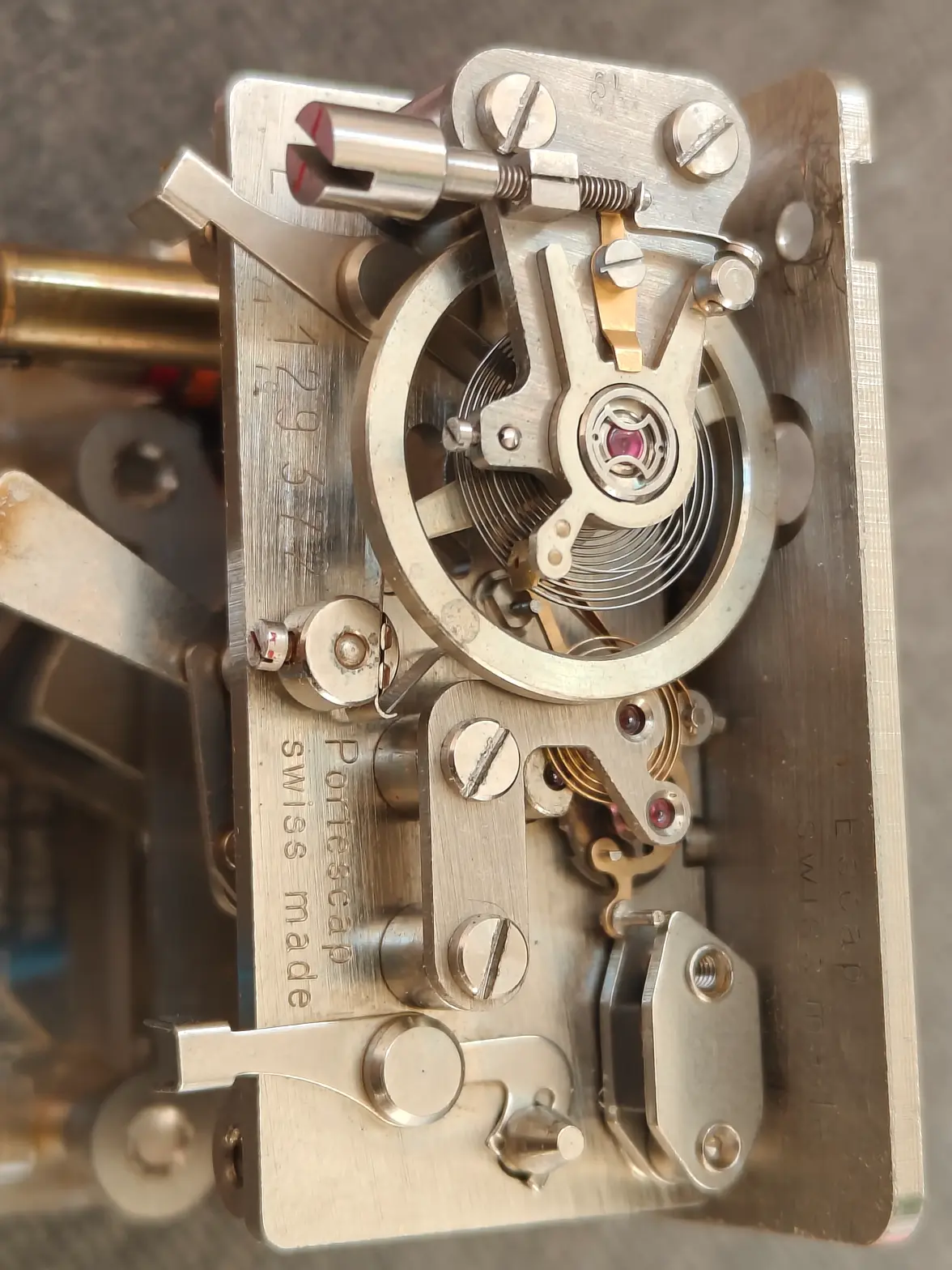
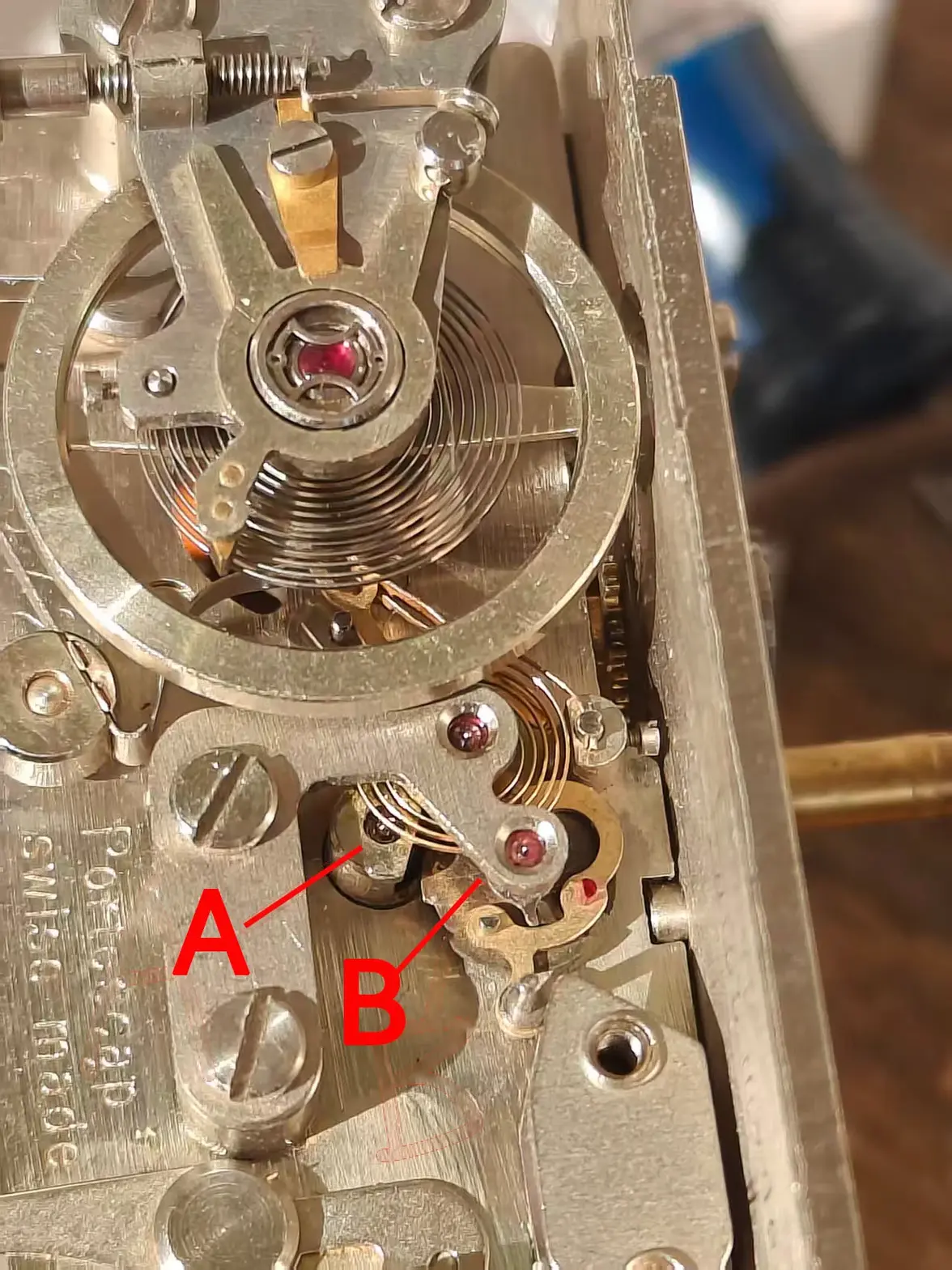
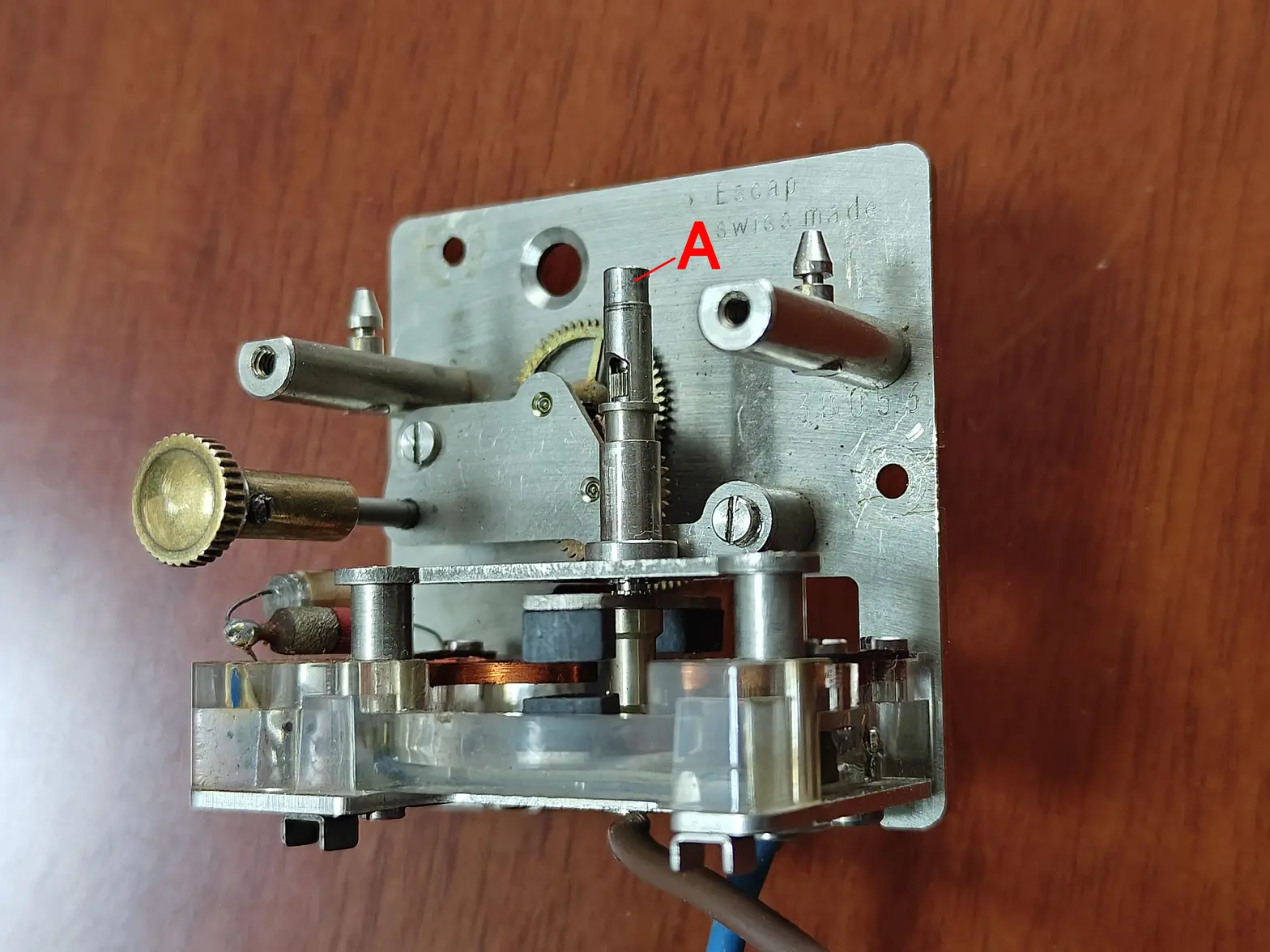
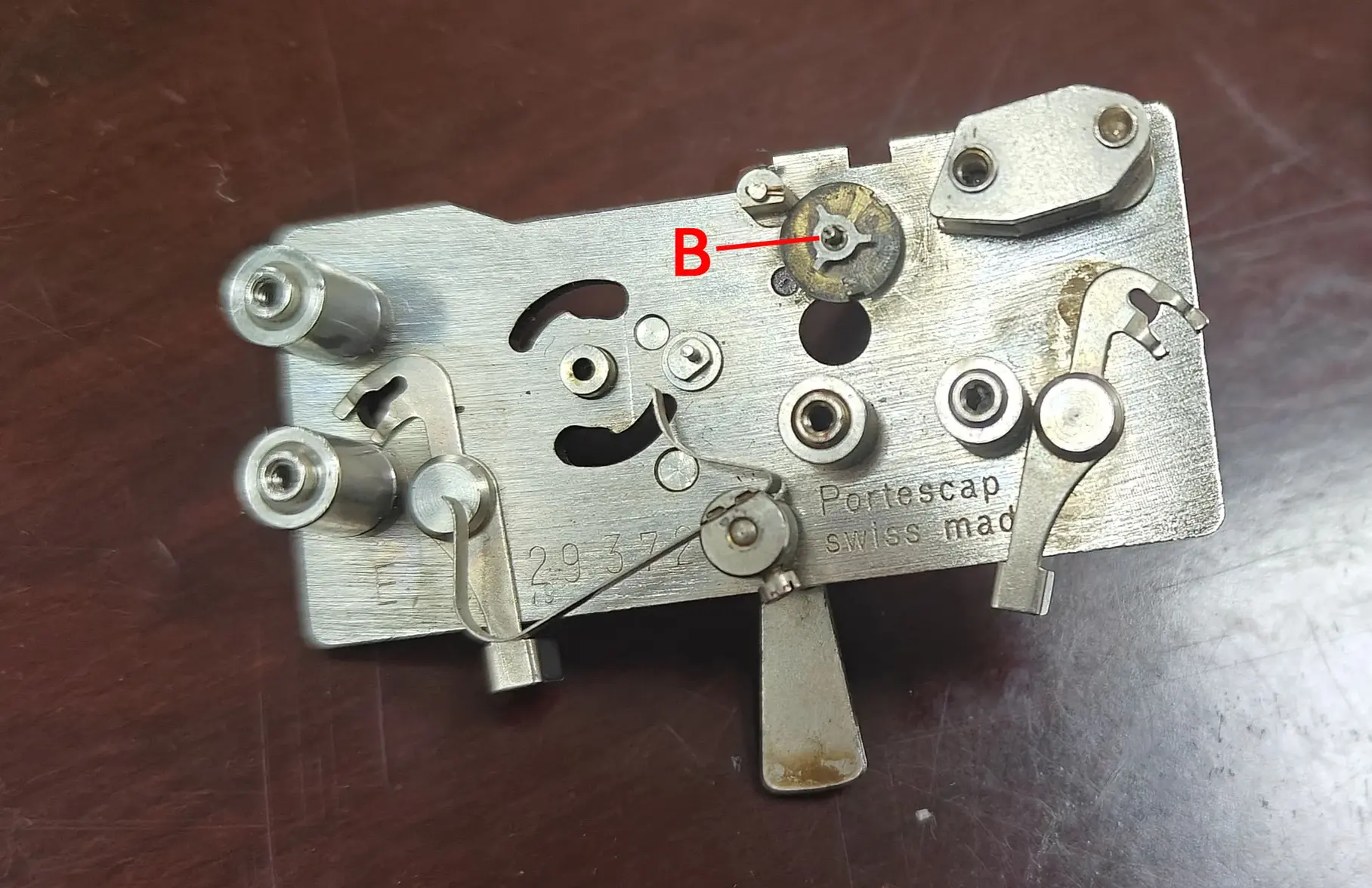
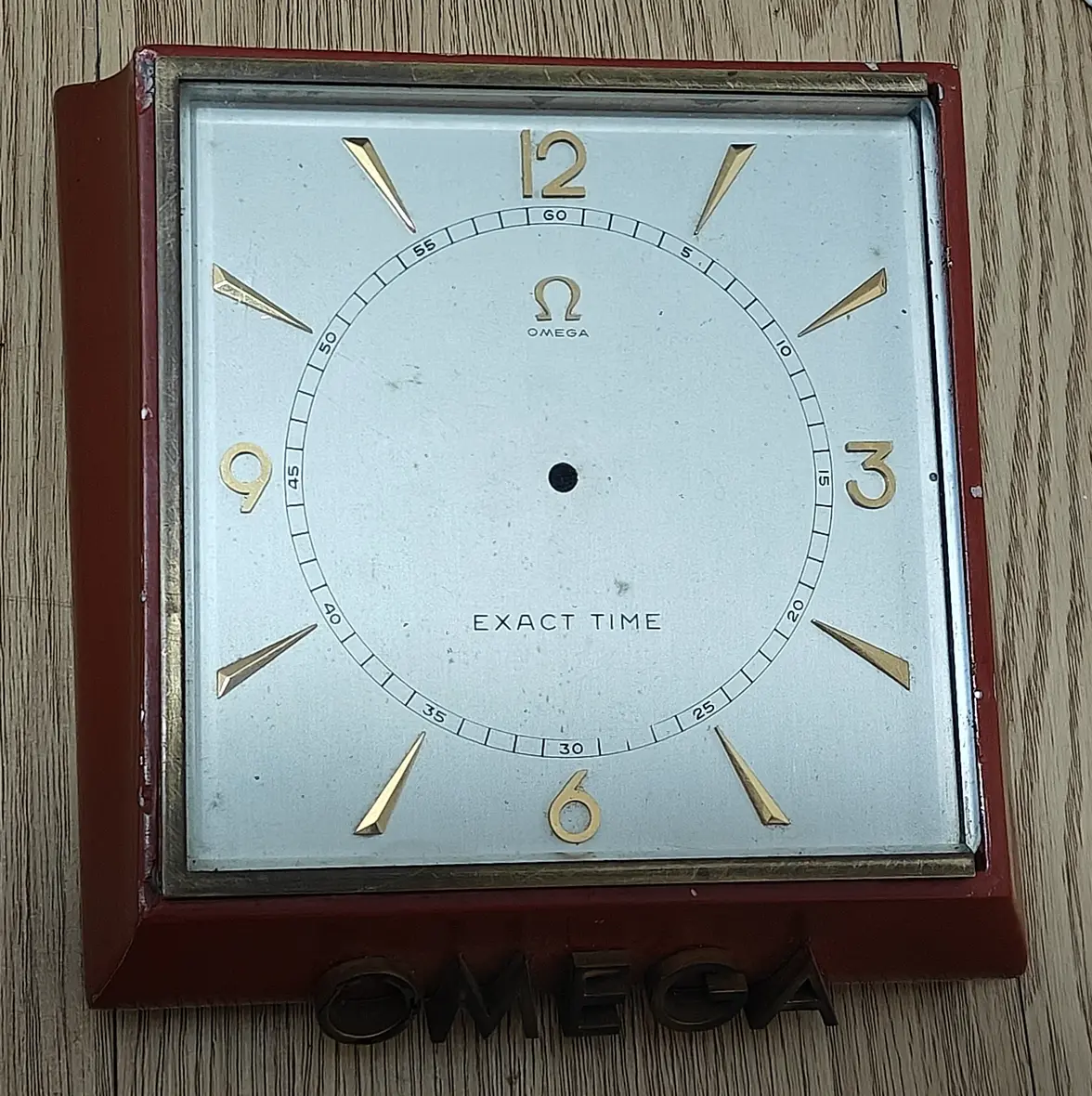
I have a second-hand clock, as shown in Figure 1. It is battery-powered, and the movement has the number "129372" printed on it. After installing the battery, the power system works normally—I can see the A-axis rotating. The B-axis is connected to the transmission gears, which then drive the hands. The platform operates normally when manually adjusted. However, the clock does not run. I can see a small gear at the end of the A-axis, but there is no gear on the corresponding part of the B-axis. If there were a gear on the B-axis as well, everything would be easily understandable—the clock's failure to run would be due to a broken transmission. However, the B-axis does not appear to be missing any parts, and there doesn't seem to be space to install a gear. Please help me confirm:
1 Was there originally a gear on the B-axis? If so, could you provide a picture for reference?
2 If there was no gear on the B-axis originally, how does the transmission work? What is the reason the clock is not running?
 
Posts
17,745
Likes
37,102
I had to repair one of these some years ago and the only solution was to replace the motor with a modern quality quartz movement.

The main problem is the little drive wheel (rubber tire) gets worn down or disintegrates and there are no spares available.

I'll see if I can find anything in my records.
 
Posts
17,745
Likes
37,102
Similar clock in this thread, there may be others.
That was the clock I did for Linus, no way to repair the worn drive wheel and no parts available.
 
Posts
17,745
Likes
37,102
Here is the issue with the clock I did.
From my messages:


Oh well, at least we now know what the problem was.

But first a quick run down on "acceptance check".

Case is slightly crazed where exposed to light but should come up with gentle cleaning.
Bottom plate missing two feet (can use screws to replace and fit non-slip bumpers).
Door handle broken, will try to braze back on.
Dial has age shadow, maybe able to clean but will test a small corner first.
Dial has two gouges at the centre from careless hand removal.
Brass on case/dial surround is tarnished. Suggest gentle cleaning and not "Ooooo Shiny!" look.
Missing screws: 1 on battery case, 4 on back of dial edging.

So that was the state of the nation before I started on disassembly.

A quick check with a fresh battery showed that the motor would run, but not efficiently, so an electrical problem with the transistorised motor circuit.

While the motor would run (just), there was no expected "kicking" of the escapement lever which keeps the top balance wheel ticking to regulate the speed at which the drive wheel and shaft rotate to provide the "tick" of the movement.

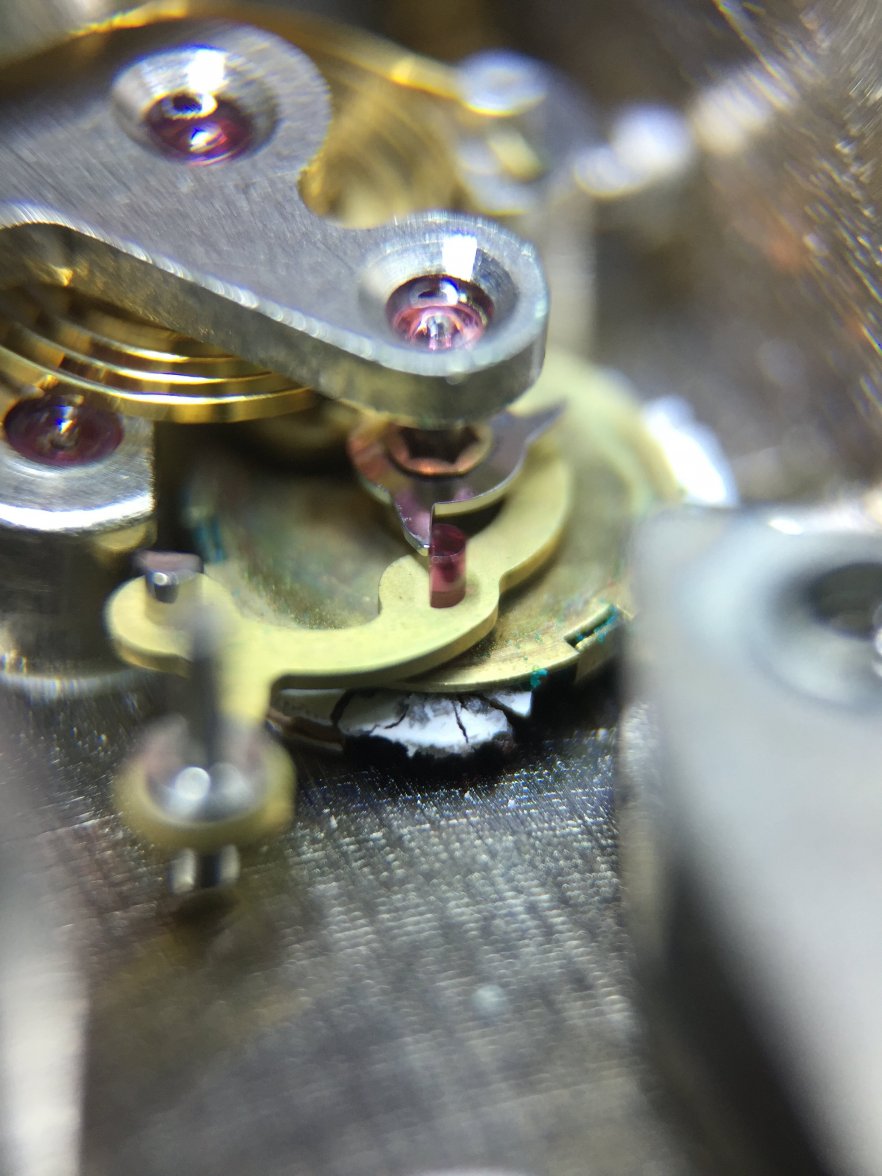
A look into the top of the escapement showed that something was not good.

IMG_3714.JPG


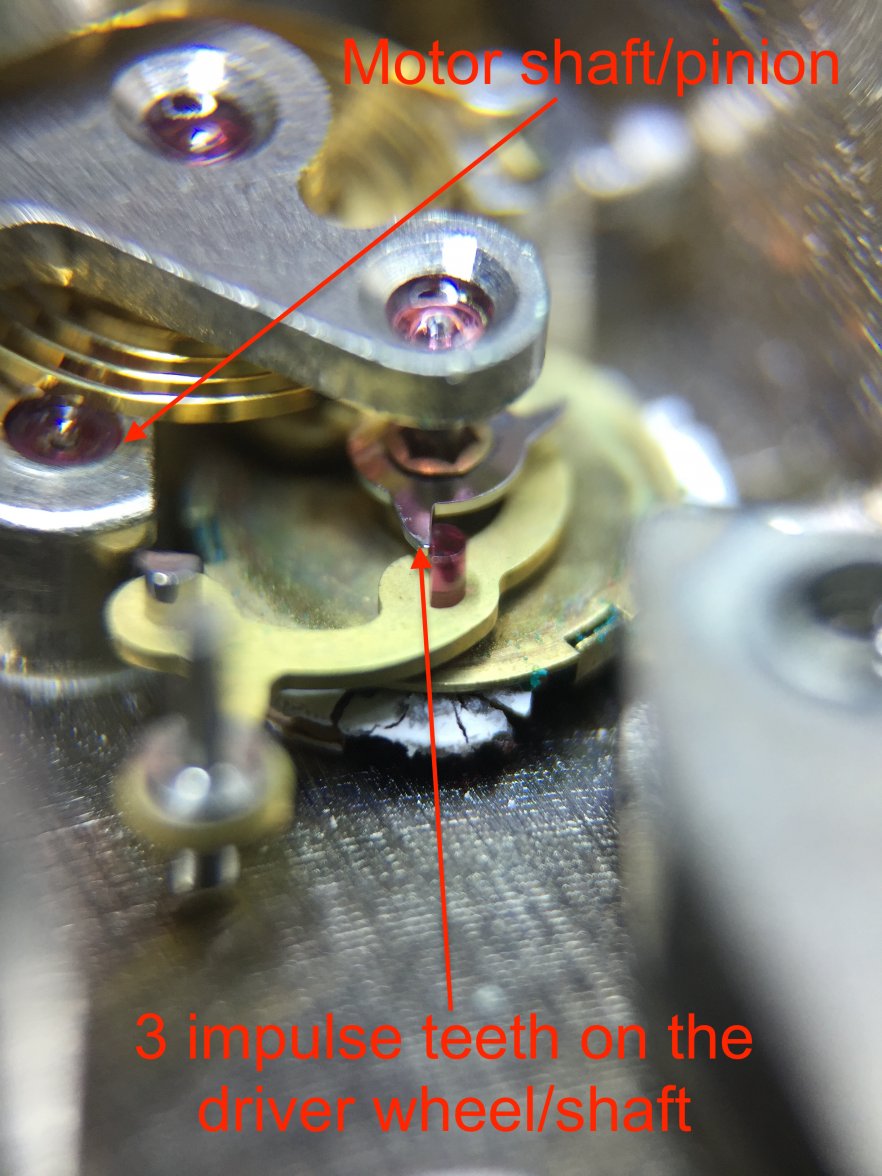
The motor has a shaft going to the escapement assembly and the pinion on its end turns a wheel with three "teeth" that kick the escapement lever to power the balance wheel as well as regulating the speed at which the driver shaft can power the hand wheels.

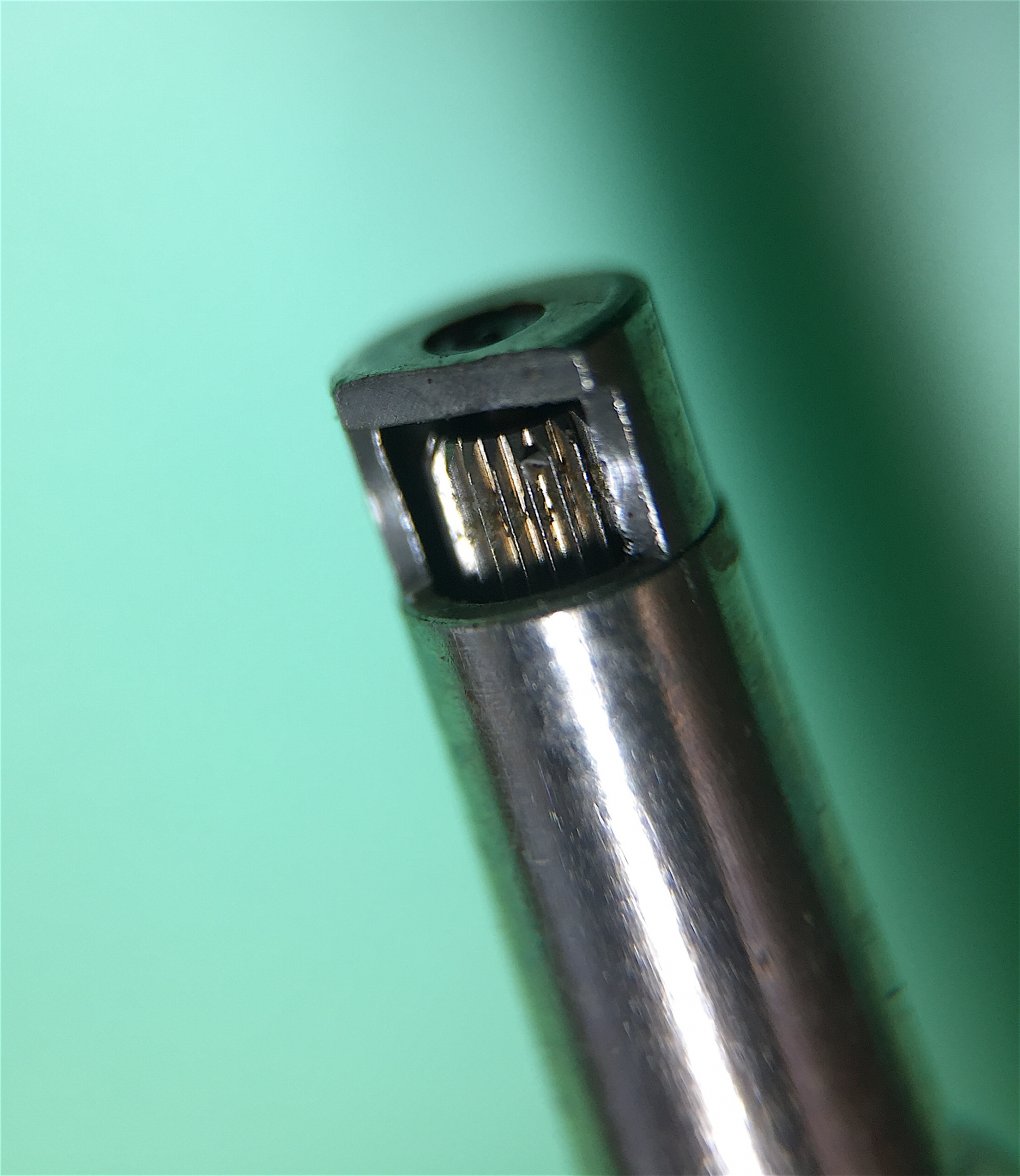
Here you can see the top of the motor shaft with its pinion. Not a big problem with it, but there is a lot of bits in the grooves that should not be there.

MotorShaftTop.JPG


Here's a view showing the way the motor drives the escapement.

MotorToDriver.JPG


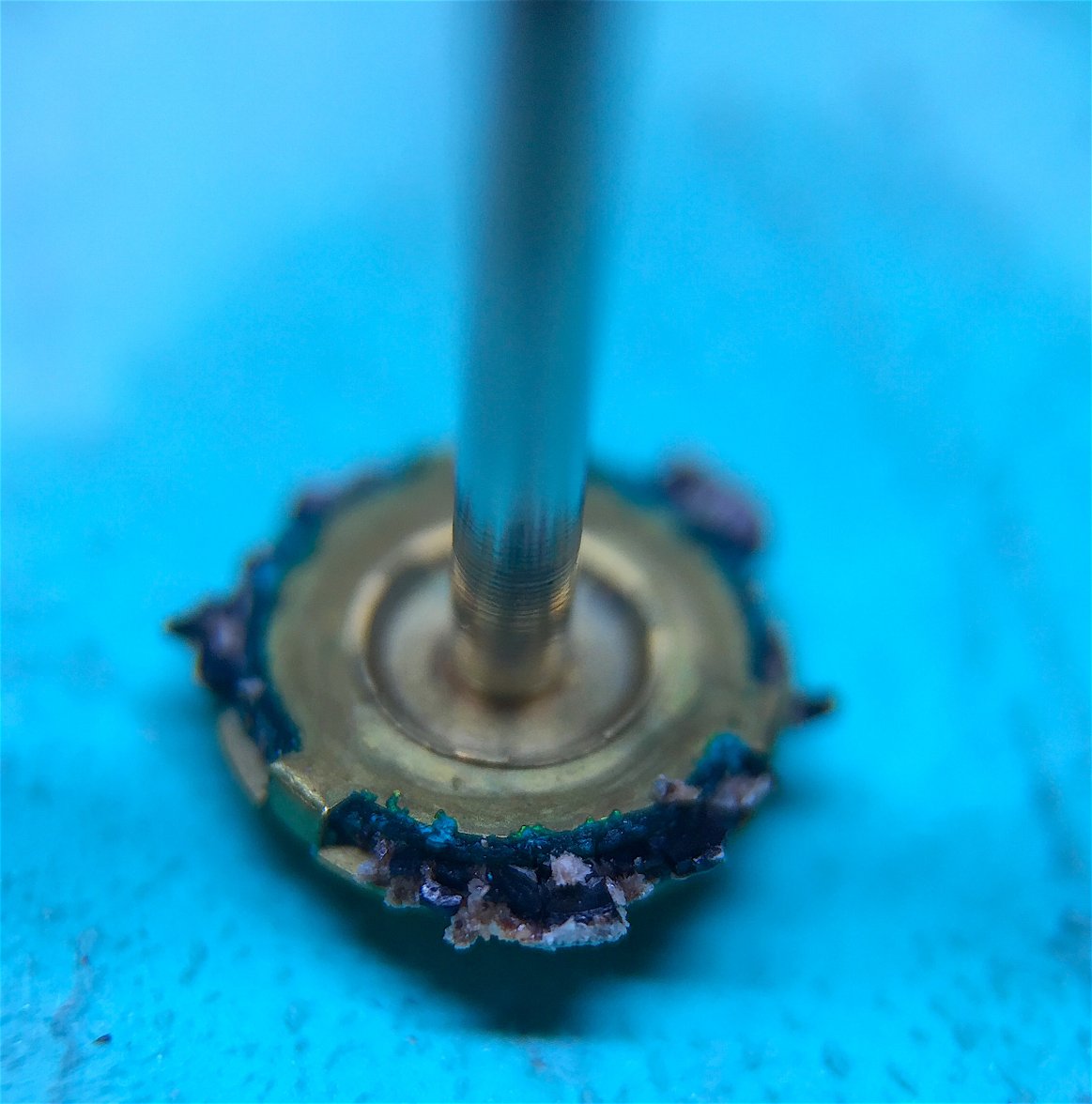
And there is the problem. The motor shat/pinion should drive a wheel (cog) just below the three impulse teeth, but there's nothing there except some "bits".

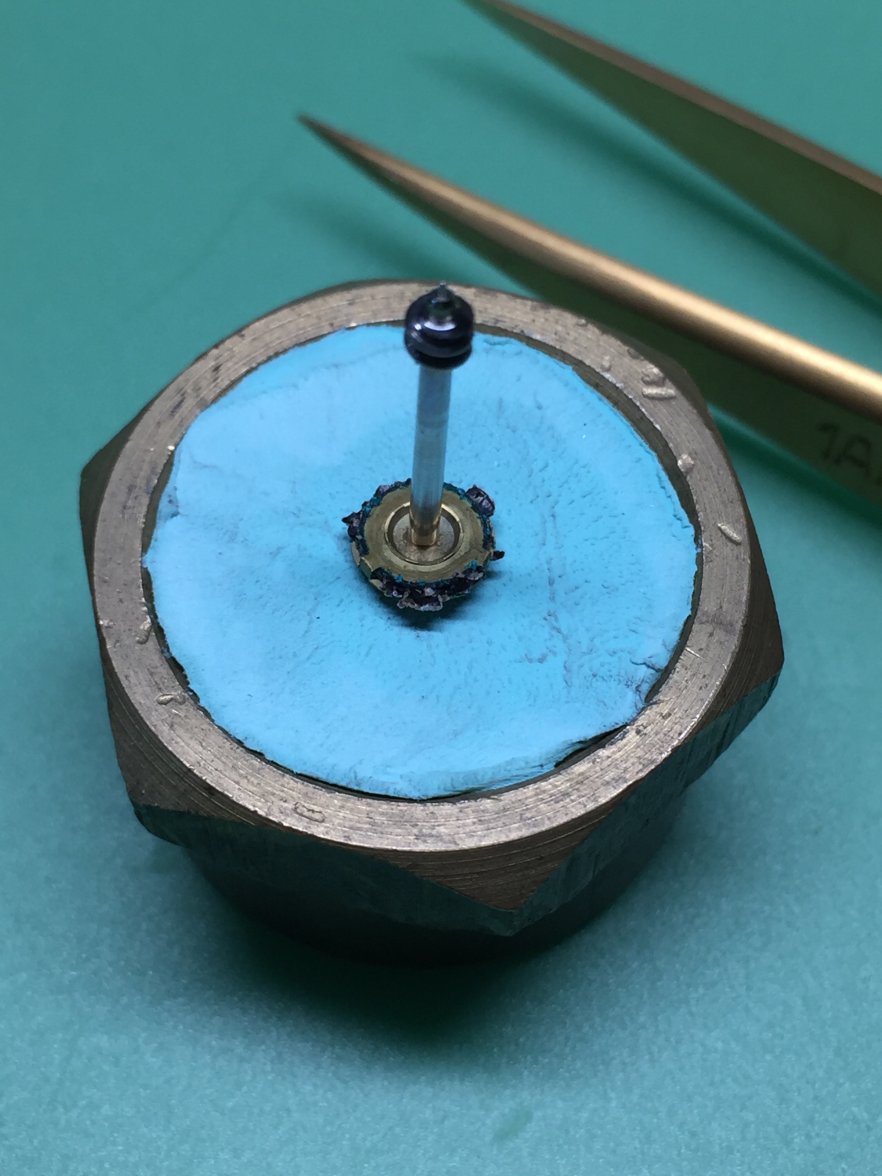
So after removing the parts the problem becomes obvious. It appears that the wheel that's driven by the motor shaft pinion, was made from an early plastic material that doesn't age well at all.

DriverWheelAndShaft.JPG


And a close-up. It should look like a nice round wheel with little teeth all around the outer edge.

DriverWheelUnderside.JPG


So, there we are.

Unless I can find a replacement electric clock escapement that hasn't been made since 1960s, and the last parts stock sold off in 1985, there's no chance of repairing this movement. Add to that, if this part has an inherent design flaw, chances of finding a movement with that part will be slim.
 
Posts
648
Likes
1,935
@JimInOz butting into the conversation like an idiot, but what dimensions has the plastic wheel? Can't it be produced somehow? (cough) 3D printed (cough).
 
Posts
17,745
Likes
37,102
@JimInOz butting into the conversation like an idiot, but what dimensions has the plastic wheel? Can't it be produced somehow? (cough) 3D printed (cough).
From memory, it's less than 10mm diameter, made of rubber, so even TPU would probably be too slippery.

The problem is that the tire (rubber bit) is sandwiched between two tiny plates, the bottom sitting on the shoulder of the shaft and the top held to the shaft by the top of the shaft being peened over.
To replace the tire, the top of the shaft needs to be machined down, the top cap removed the tire replaced.

And then magic happens to secure the top cap again.
 
Posts
5
Likes
0
From memory, it's less than 10mm diameter, made of rubber, so even TPU would probably be too slippery.

The problem is that the tire (rubber bit) is sandwiched between two tiny plates, the bottom sitting on the shoulder of the shaft and the top held to the shaft by the top of the shaft being peened over.
To replace the tire, the top of the shaft needs to be machined down, the top cap removed the tire replaced.

And then magic happens to secure the top cap again.
Thank you very much , Mr. JimInOz
Now everything is clear!
 
Posts
5
Likes
0
From memory, it's less than 10mm diameter, made of rubber, so even TPU would probably be too slippery.

The problem is that the tire (rubber bit) is sandwiched between two tiny plates, the bottom sitting on the shoulder of the shaft and the top held to the shaft by the top of the shaft being peened over.
To replace the tire, the top of the shaft needs to be machined down, the top cap removed the tire replaced.

And then magic happens to secure the top cap again.
No matter what, I want to fix it. I can handle the disassembly and reassembly. The key now is the parameters for that wheel: outside diameter, number of teeth, and module. Where can I get this data? Can you give me some suggestions?
 
Posts
17,745
Likes
37,102
The key now is the parameters for that wheel: outside diameter, number of teeth, and module. Where can I get this data?
There are no teeth.
The part you need is a "rubber wheel on an axle" that hasn't been made for over fifty years.
I searched for months for parts without success.

I can handle the disassembly and reassembly.
That's the easy part.

No matter what, I want to fix it.
That will be the hard part.


Can you give me some suggestions?
Replace the movement with a quality quartz clock movement.
 
Posts
17,745
Likes
37,102
I did find a complete movement some years ago, but the price was prohibitive and likely hasn't got any better.

 
Posts
7,838
Likes
35,571
I also have one of these sitting at my watchmaker's for over two years. It's in need of a balance staff...also nowhere to be found. My WM has said he would try to make one, but that it would take him a while....unfortunately he's still yet to motivate himself to start the job....

I was over there last week and saw my poor clock sitting there collecting dust....we spoke about it, who knows maybe this year.....deep sigh....🫣
 
Posts
5
Likes
0
Just found this, explains the issues with the Portescap and offers a solution.

May be of help to those needing repair.

https://harrishorology.com/blog/portescap-movement-service-secticon-clock-repair
Thank you Mr. JimInOz

Here i have some question:
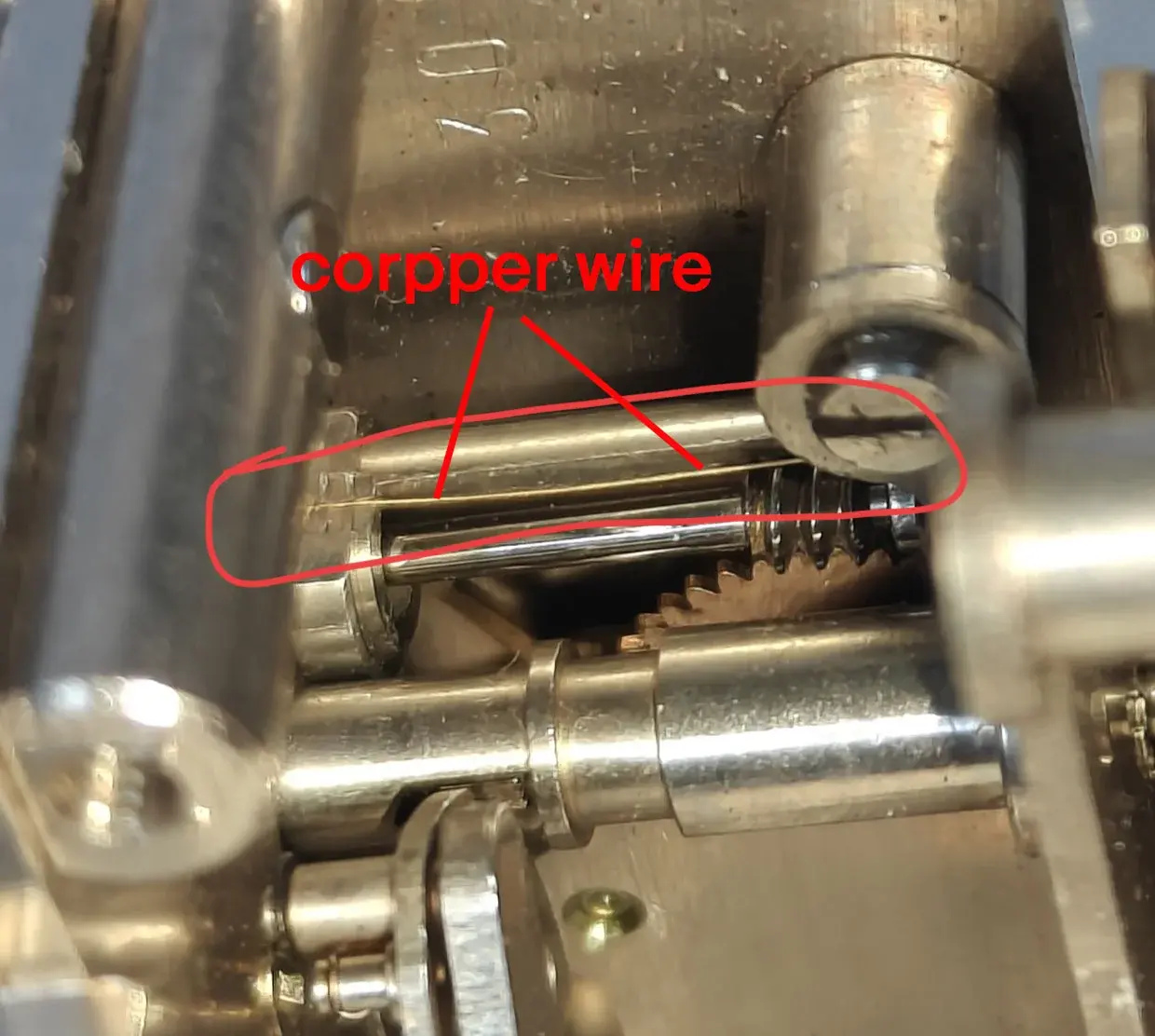
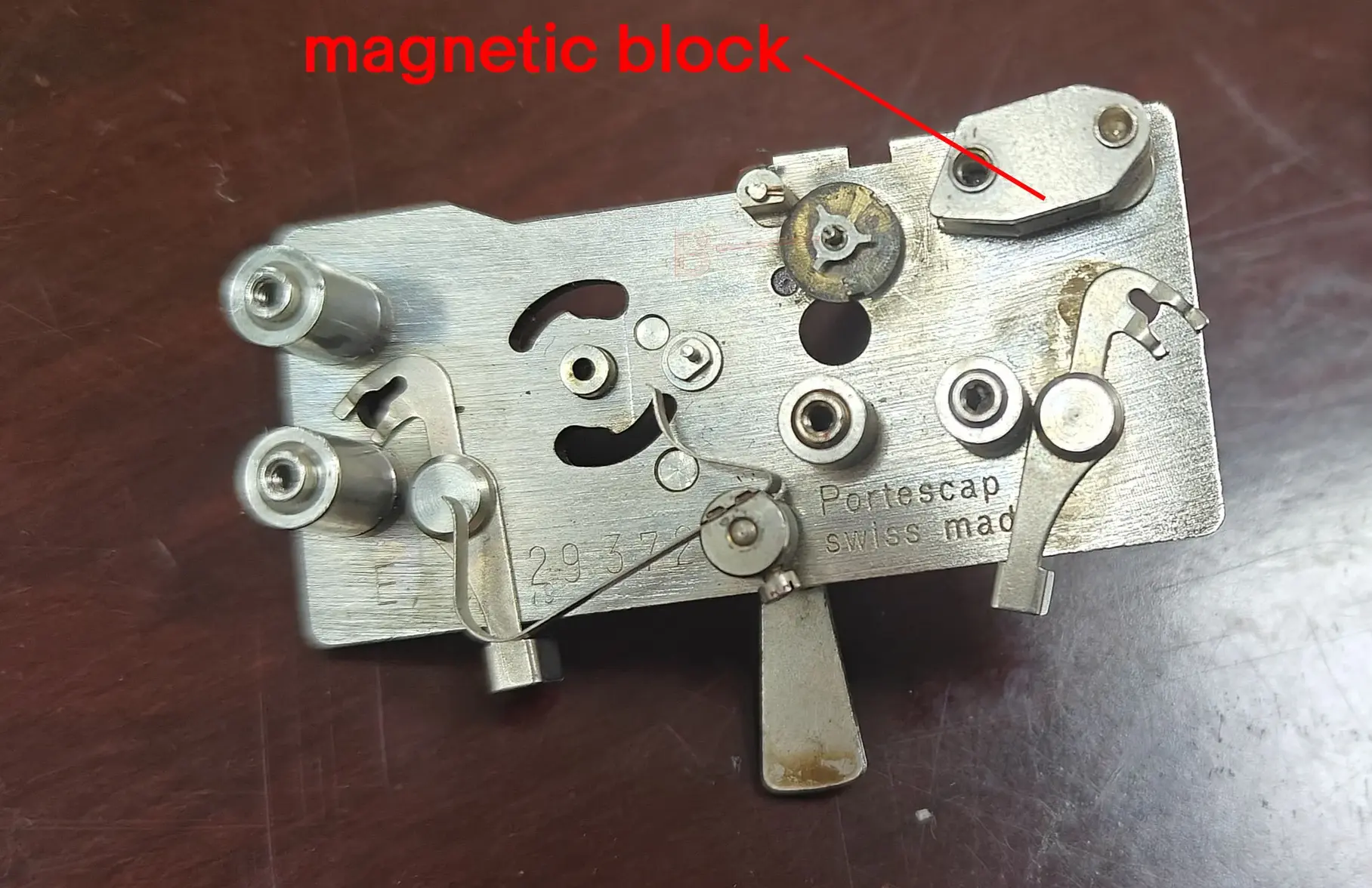
1 There is a thin copper wire which is securely attached to the shaft hub, and a magnetic block. What are their functions?


2 Regarding the rubber wheel, is it a complete circle in shape, or does it have several notches around the edges to engage with the block on the lever? Should the rotation of this rubber wheel be intermittent during operation? The battery-driven shaft alone should rotate continuously, If they are not synchronized at all times, does slippage occur, or does the rotation of the driving shaft also become intermittent? I noticed that even when powered on, the driving shaft needs to be manually flicked to start rotating. If the rotation is intermittent, how does it start on its own?
 
Posts
17,745
Likes
37,102
Sorry I can't help much, I haven't touched one of these since 2019 and without the movement in my hands so I can see what happens I'd just be guessing.

I think the magnetic block is to stop the impulse lever from bouncing, it hold the lever until the next "flick" from the wheel.
Regarding the rubber wheel, is it a complete circle in shape, or does it have several notches around the edges to engage with the block on the lever?
It doesn't have any notches, as far as I know it's just a smooth circular rubber wheel.

Check out the video in the site I linked you to, there's a lot of information there.