Forgot to mention, do not clean pallet forks or balance wheels in alcohol (denatured/IPA) as you risk softening the shellac that holds the pallet jewels and roller jewel. Many watches now do not use shellac, but unless you know what it is, assume shellac.
Use naphtha or benzine, or preferably, watch cleaning/rinse solution.
As to the cost of setting up a "hobby" workshop, you could probably do it for under USD$1000, depending on what level of "professional" tools and equipment you select.
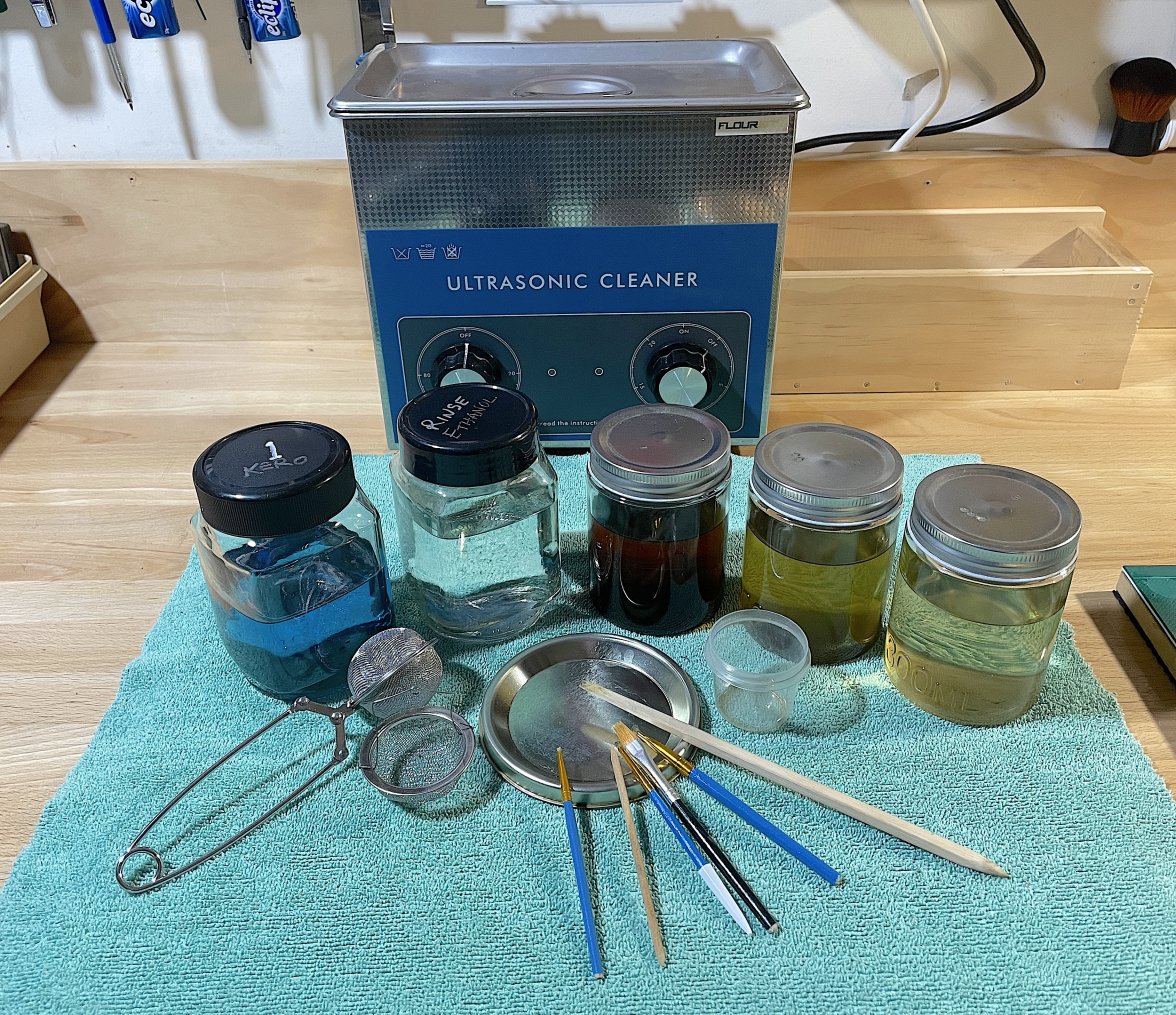
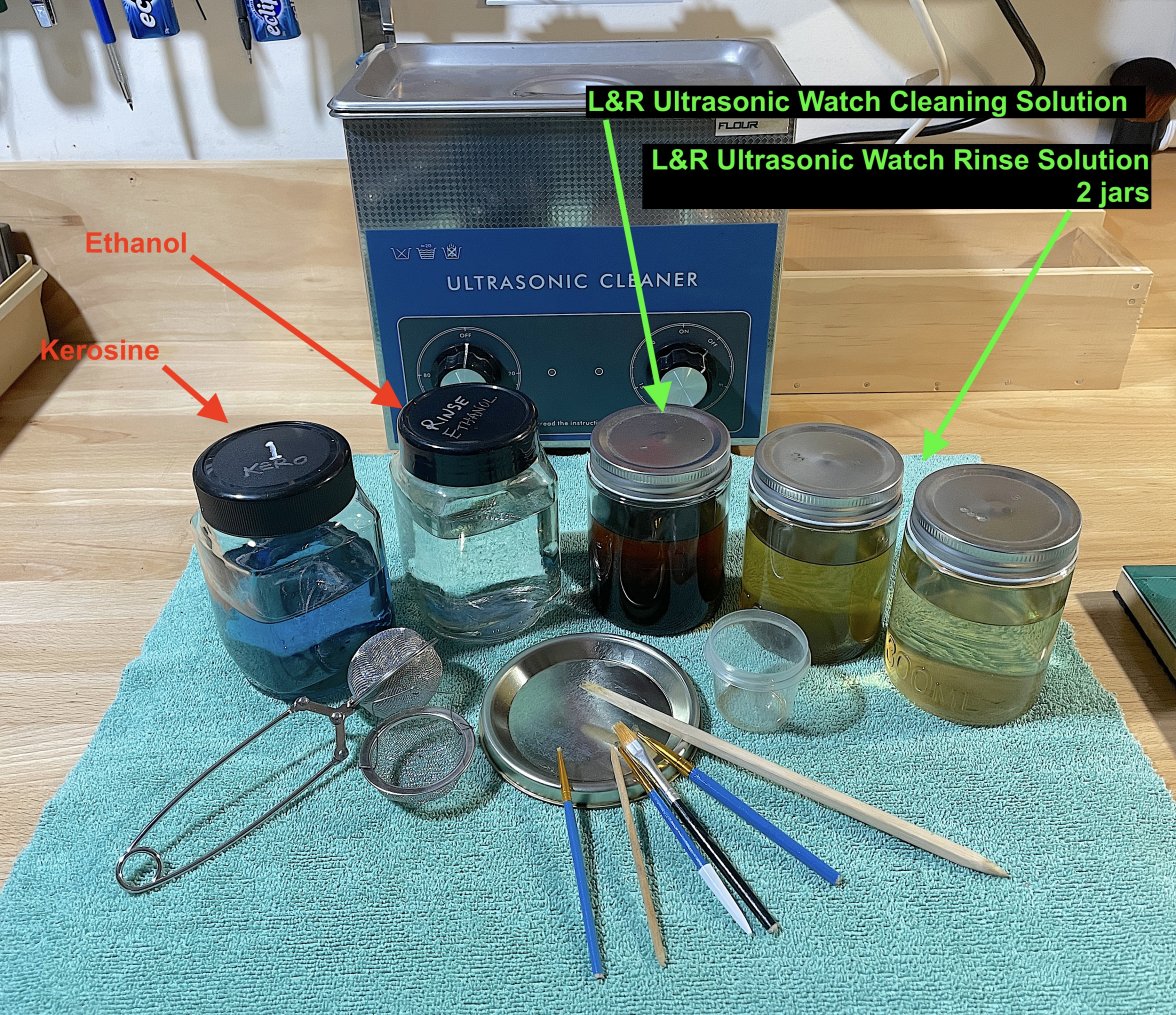
This is what I use for basic cleaning, red arrows point to manual cleaning, green to US cleaning.
When the rinse in jar 3 looks dirty, it becomes rinse 2. The original rinse 2 is disposed of and the jar cleaned and filled with clean rinse and is nice and clean rinse 3 again.
As you can see, my cleaning jar is looking a bit dark, so it's time to dispose of the fluid and get fresh stuff.
I do the same cycle as the rinse. A clean jar for the fresh cleaner and the old cleaner is used for very dirty jobs until it too gets replaced.
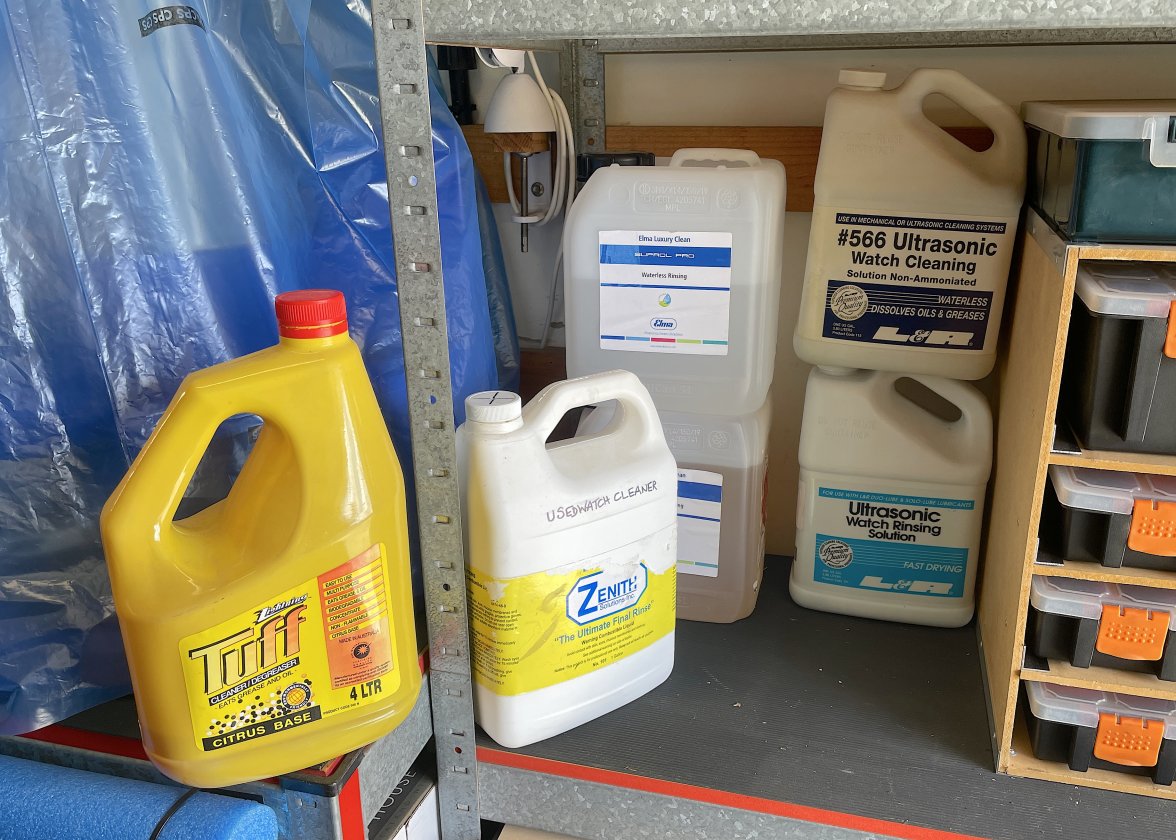
It's not only buying these fluids you have to consider. There's also the issue of what to do with them when they are no longer suitable.
All of my used cleaning/rinse fluids are stored in original used containers and when full, my mate takes them to his depot where they have an oil/petrochemical disposal system.
Managing your little chemical farm is another task you get to manage
😁.