- Posts
- 3,997
- Likes
- 9,030
Please consider donating to help offset our high running costs.

I do recognize the 1st syllable in dicta when I see it 😉
The thread arch clearly goes:
-> Rolex Expert: cool watch, crap engravings
-> Tony: from my armchair I’m immediately convinced by deduction alone that there is ZERO CHANCE this is Rolex because X, Y, Z and anyone who would believe otherwise is intellectually questionable
-> [evidence mounts RE X, Y. Z]
-> Tony, but it’s a mystery now!
-> Everyone else: Tony, do you think you owe anyone an apology?
Let's everybody just calm down. Keep in mind, you're a bunch of adult men, arguing over jewelry. Chill plz
You've been quite reasonable on this thread, but that's not an accurate representation of the thread arch.
Also, as mentioned to the OP above, if Rolex collectors are ready and willing to accept such poor quality as "factory original", it should be obvious that unscrupulous sellers have taken advantage of that, and therefore at least some of the watches floating around are not original.
In any event, @Tony C. , curious of your take on the Hermès examples? You do keep repeating “why, why, why would Rolex ever think to put things on the outside of the caseback that are redundant to the interior markings and inferior in workmanship...”
It seems to me the Hermès is a prime example, no?
this entire hand-wringing seems a weird distraction to me; are we really suddenly alarmed that there a quality of vintage watches that could be manipulated unscrupulously? Isn’t the existence of unscrupulously deployed information 1/2 the reason we’re all here - to sort through it?

@cvalue13
Also, as mentioned to the OP above, if Rolex collectors are ready and willing to accept such poor quality as "factory original", it should be obvious that unscrupulous sellers have taken advantage of that, and therefore at least some of the watches floating around are not original.

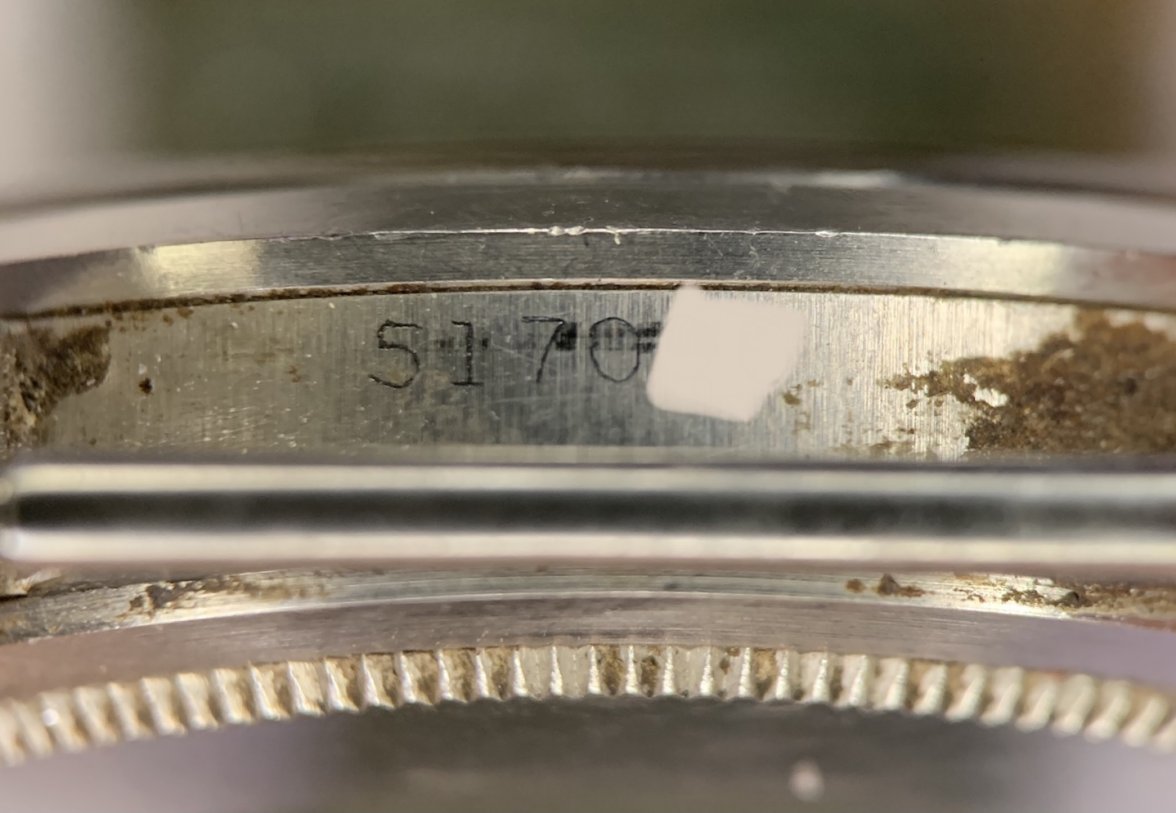
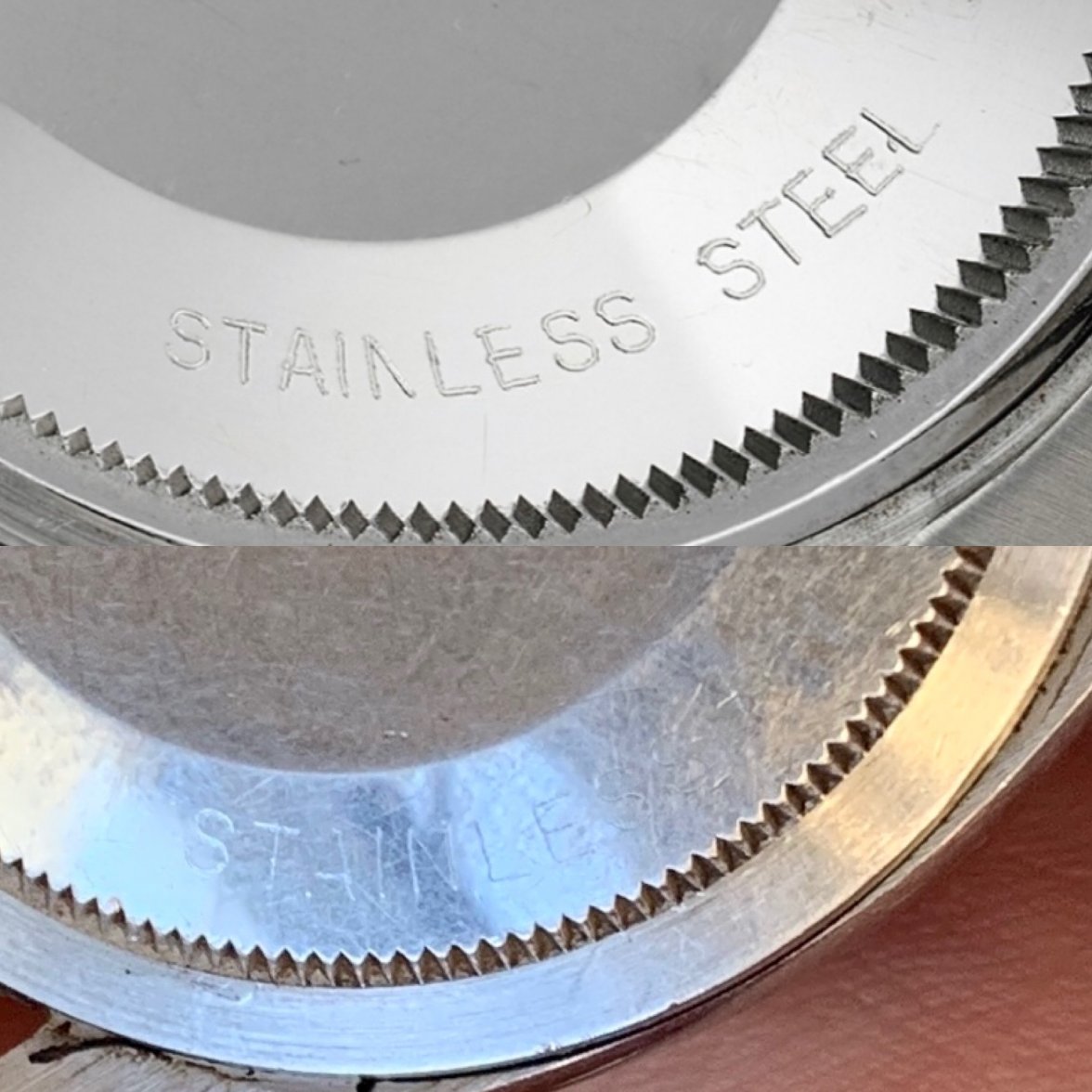
Here are shots between the lugs, minus the last few digits of the serial, and a side by side between the Phillips 5508 and this one. Hard to capture the whole text at once due to reflections. (Also, that’s not pitting between the lugs, just old DNA I have yet to clean off on the surface of the steel.)
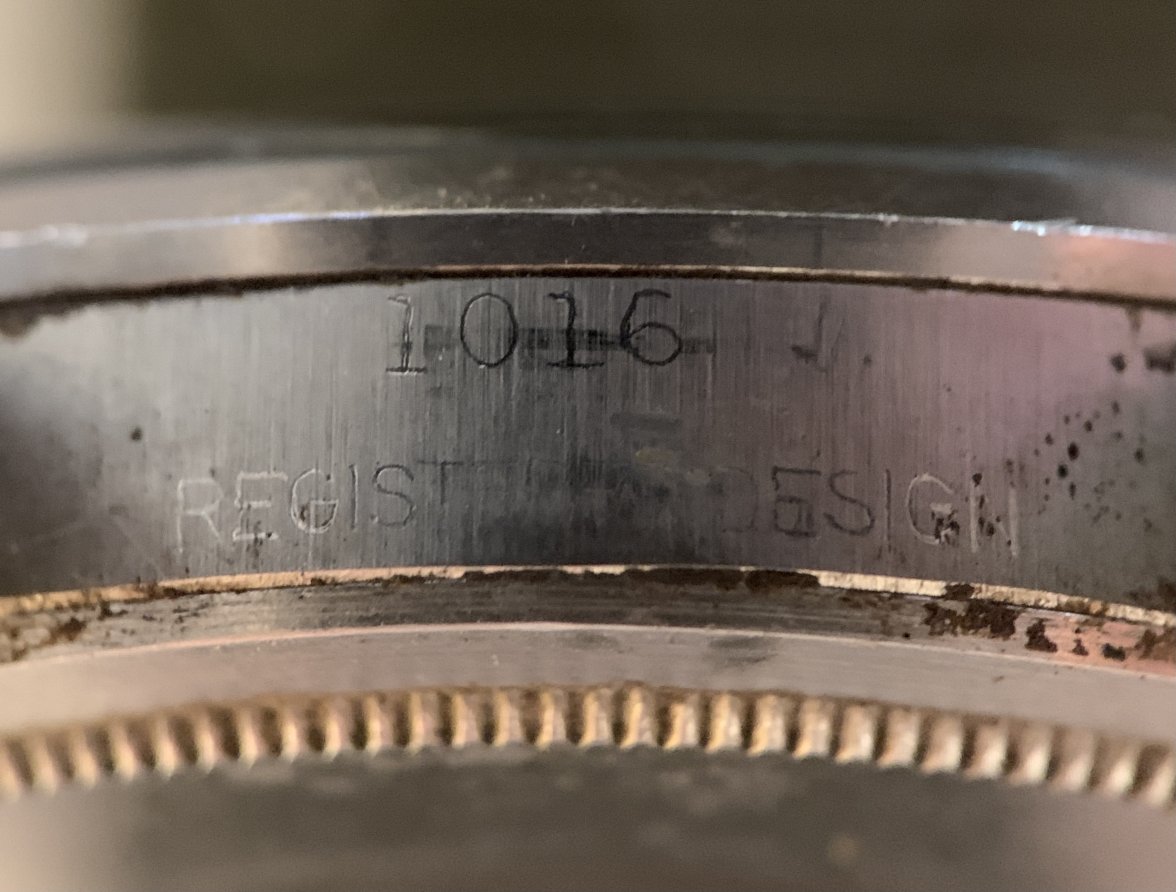
Thanks to those who brought up the other examples. I cannot answer why Rolex chose to engrave some examples in this pattern or quality. Neither can anyone else. It is shockingly easy to find examples of how bad the engraving QC is, which is evidenced by the number of examples of it that have been found via a simple google search, so I’ll stop beating that dead horse (if someone isn’t convinced by now, I’m not going to try and sway you anymore).
Odd how similar those fonts look. But since they have small differences that are less varied than the differences in quality between the serial/model engravings, it must be because Rolex didn’t do it. Also funny to call the engraving quality on my example “noticeably worse,” despite the one from Phillips completely missing arm on the N in stainless. Rolex, of course, could never have done something so poor.
Please dissect away and confirm whatever conclusions you’d like to come to.

Notice in particular:
-> the relative low quality/depth of the outer caseback “Hermès” engraving compared to the inner engravings quality/depth
-> the repetition in both the interior and exterior the caseback of engraving/stamping indicating the case material
So here, after just an evening of musing through the problem, is just one known example (and reason) of Rolex using different techniques and standards in duplicating interior/exterior caseback engravings.
If t_swiss has spent more than an evening ....
You're right of course that, regardless of whether or not such markings ever left the factory, they can be easily replicated.
Of course, this all stems from the assumption that his watch DID, in fact, come from its original owner, who had no reason to tamper with it.
Those were third-party gold cases, and Hermes - not a watch company - was responsible for the signatures.
The Hermes quality isn't nearly as bad, and I'd say that the comparison isn't taut for other reasons, as well.
Furthermore, iconic gold marks on the outside of cases isn't redundant with spelling it inside of a case back, in anything like the same way as spelling out "stainless steel" both inside and outside,
Rolex just didn't care back in those days
But notice the quality of the Hermes you bring forward, next to it the one one the explorer is basically a cat scratch. And that's the thing, it is not even an engraving, I can do the same thing with a screw driver.

I’d note the somewhat self-contradictory nature of @Tony C. s reasoning here. On one hand he’s saying the engraving is so egregiously bad that no serious collector could take it seriously; on the other hand he’s saying people could do these things to fool serious collectors? Point being, it seems this observation cuts both ways at best, so we should move on to other critiques
We can stop suggesting there are NO scenarios where Rolex would use different/inferior techniques on the interior vs exterior of casebacks, and we can stop suggesting there are NO scenarios that marks on the interior of the caseback would tolerate a duplication on the exterior of the caseback
Which means the “mystery” has reduced to merely (1) why would they duplicate SS in particular (as compared to previous hallmarks), and (2) why is this example so particularly bad (compared to other examples that are merely “worse”)
But this is a much narrower field of play, and maybe let’s us focus on the limited nature of the “mystery”
A modest proposal indeed ...
I’d note the somewhat self-contradictory nature of @Tony C. s reasoning here. On one hand he’s saying the engraving is so egregiously bad that no serious collector could take it seriously; on the other hand he’s saying people could do these things to fool serious collectors? Point being, it seems this observation cuts both ways at best, so we should move on to other critiques

Dunno if this has been offered yet, after a quick read of the thread, but:
What if this IS quality control? The bad engravings, I mean.
Rolex is/was putting out tons of watches. Tooling, dies, machinery... these things dull, foul, misalign, etc... all the time. Especially on older equipment.
So it's probably some dude's job at the end of the line ( or end of some part of the process ) to check the serials, etc... and if they were out of whack, to scratch them in there legibly.
It becomes less frequent over time as Rolex can more readily afford to replace dies, upgrade QC in the process, tools and machinery become better, and so on.
You also see stuff like this in military collectibles.

So why did they care about the inner engravings so much? If they didn't care, why is there such amazing consistency on far more complex engravings in the movement and inner case-back?
It just does not make sense
Dunno if this has been offered yet, after a quick read of the thread, but:
What if this IS quality control? The bad engravings, I mean.
Rolex is/was putting out tons of watches. Tooling, dies, machinery... these things dull, foul, misalign, etc... all the time. Especially on older equipment.
So it's probably some dude's job at the end of the line ( or end of some part of the process ) to check the serials, etc... and if they were out of whack, to scratch them in there legibly.
It becomes less frequent over time as Rolex can more readily afford to replace dies, upgrade QC in the process, tools and machinery become better, and so on.
You also see stuff like this in military collectibles.