
- Posts
- 234
- Likes
- 248
nerdbedusa
·deadlock.

Let's say it with Monty Python:
I mean, what have you got to lose?
You know, you come from nothing, you're going back to nothing.
What have you lost? Nothing!
Edited:
Please consider donating to help offset our high running costs.
deadlock.
Lost too much time reading this ridiculous and pointless thread.

I think that my original question is neither ridiculous nor pointless.
It depends on how the question was treated here.
And in the end, it is up to each one to decide with which he wastes his time.
From personal messages I received in connection with this post, I realized that everyone seems to know something but is unwilling to share their own knowledge.
I openly admit that in these circumstances, I am also unwilling to make my knowledge public.
So that's it. Dead end, topic done.

I think that my original question is neither ridiculous nor pointless.
It depends on how the question was treated here.
And in the end, it is up to each one to decide with which he wastes his time.
From personal messages I received in connection with this post, I realized that everyone seems to know something but is unwilling to share their own knowledge.
I openly admit that in these circumstances, I am also unwilling to make my knowledge public.
So that's it. Dead end, topic done.
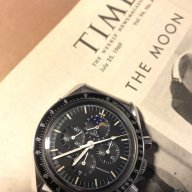

Spending the weekend cuddling with my black base 1000 bezels.
No drama. Just love.

If you didn't care what happened to me,
And I didn't care......................... for you,
We would zig zag our way through the boredom and pain
Occasionally glancing up through the rain.
Wondering which of the buggars to blame
And watching.............for pigs on the wing.
-favorite album. @queriver


Either the basis…for a stunning Masters thesis, on the combative insecurities of ‘civilised’ Men …
Perhaps. Or, the collective outrage of civilized men, with a finely honed sense of fairness and justice, who have detected when the balance of giving and not receiving has been disturbed.
The original question is of course a good one, many of us would like a definitive rule book on identifying genuine 2915 bezels, however afaik no one yet has all the answers. Many good men have tried and failed. The steel bezel is perhaps the only vintage Speedmaster part that we can't identify positively.
But we do have an answer to the original question which is in fact: Does anybody know how 2915 bezels really looked like? Well yes we do - The Bukowskis example is almost certainly genuine.
However that is only one example of one type and my belief is that there are 3 or 4 types of genuine steel bezel (flat top and round top '3''s; dot above and below 90' etc..) Over the last 10 years or so I have occasionally dedicated a bit of time to researching these but on every occasion have given up in bewilderment. Fwiw I have drawn a few opinions though:
There are more replicas out there than genuine ones.
It's easier to identify a replica than to positively identify a genuine one
There are several variations (3, maybe 4?)
They have a smaller diameter and thickness than later/modern/service bezels.
The outside diameter is not an identifier of genuineness. Most of the old ones will have been polished to a greater or lesser extent and so the OD varies (sometimes the OD even encroaches onto the engravings.)
No versions had square markers.
Not sure if any versions had serifs.
The quality of workmanship was (unsurprisingly) very high, with fine and even engraving.
As everyone already knows - the 'A's where always flat-topped.
I'll probably remember a few more things to add later.
The original question is of course a good one, many of us would like a definitive rule book on identifying genuine 2915 bezels, however afaik no one yet has all the answers. Many good men have tried and failed. The steel bezel is perhaps the only vintage Speedmaster part that we can't identify positively.
But we do have an answer to the original question which is in fact: Does anybody know how 2915 bezels really looked like? Well yes we do - The Bukowskis example is almost certainly genuine.
However that is only one example of one type and my belief is that there are 3 or 4 types of genuine steel bezel (flat top and round top '3''s; dot above and below 90' etc..) Over the last 10 years or so I have occasionally dedicated a bit of time to researching these but on every occasion have given up in bewilderment. Fwiw I have drawn a few opinions though:
There are more replicas out there than genuine ones.
It's easier to identify a replica than to positively identify a genuine one
There are several variations (3, maybe 4?)
They have a smaller diameter and thickness than later/modern/service bezels.
The outside diameter is not an identifier of genuineness. Most of the old ones will have been polished to a greater or lesser extent and so the OD varies (sometimes the OD even encroaches onto the engravings.)
No versions had square markers.
Not sure if any versions had serifs.
The quality of workmanship was (unsurprisingly) very high, with fine and even engraving.
As everyone already knows - the 'A's where always flat-topped.
I'll probably remember a few more things to add later.
I believe it to be true that there were only two different bezel styles. Thinking of the very short production run of only one year, I guess that makes even sense.
Then I am convinced there were serifs on the letters of 'TACHYMÈTRE BASE" of the second generation bezel.
And no pantograph can do that.
And you can see that there were slight imperfections. Looking at the second generation bezel, the markers (dots in this case!) were not positioned concentric, for example.

In the Amethyst trade, these stones would sell in a variety of colours, from $2 per carat to $20 per carat. People strove to find the deepest colour, and free from inclusions.
Then about 20 years these showed up - rich, dark colour, clean, the top quality (this is a 20 carat stone):
It is Chinese made synthetic, and cost at the time about $2 - $7 to make. At the time they told everyone it was a new mine, and the Brazilians and Africans nearly went out of business with their natural stones. Now there is a test to differentiate it, but it is complex and expensive, and even today costs about $20 per stone - so uneconomic, and now every fine Amethyst is priced as a synthetic.
So in other words, all fine Amethysts are now treated and priced the same, if they show no characteristics of natural. All fine Amethysts are priced as synthetic, even if natural. Previously a flawless, perfect stone was the most valued, the highest price. Now lower quality stones, with colour variation and inclusions, are valued higher as it is clear they are natural.
As to the 2915-1 bezels, perfect repros are coming. We cannot stop them In fact, to a large extent they are already here, and to try and stop them by withholding information is a fools endeavor - causing only a delay of the inevitable when 2915 bezels are reproduced that simply cannot be differentiated. (But I think we are already there).
They are after all a ring of metal engraved to specific specifications. In my previous life, finding an engraver to do this would be simple.
Then we have to be pragmatic, and ask, so what?
With the price of 2915's headed to a median of $250,000 then the bezel becomes a smaller part of the value. I have heard of some dealers paying $20,000 for what they believed an original bezel. So still a far smaller percentage of total value than, say, a DO90 bezel on a 145.012.
We must reach a point where the reproduction bezel will be indistinguishable from an original. There is no point in bleating, its coming. Ther is no point withholding information.
The question is as a collector, what to do I do about it?
My own view is to look at a bezel on a watch, and ask does it look right to me. I can, I think, immediately recognise and dismiss any bezel made with a laser engraving, or modified from modern bezels, or even an obvious reproduction.
We then look to the profile of the bezel, and the engraving itself. The problem is what do we compare it to? These bezels were thought to be made originally with a Pantograph. Now we hear an expert pronounce another method as well, this one producing serifs. I believe there is variation in the engravings, and the problem is who can say for sure that a bezel is original? Perceived wisdom already suggests there are at least two distinct styles.
While wisdom might pronounce there are only two variations, I have seen no proof. Because how can we obtain proof? I dont think these were made so mechanically that there is no variation, but I do not know.
We can only make educated intuitive guesses, and decide how much value to attribute to the bezel when buying the watch.
When we reach the point of indistinguishable bezels, I do not think it will make a difference to the price of 2915's. They will all be priced as though they have repro bezels, but the ones that are seen to be incorrect will be penalised.
I also think that a good repro bezel is not cheap - especially if prepared and distressed to correctly match a watch. It is a skilled job and not something any one can do - after all if they could they would. (and the ones who can you can bet are already doing it - not telling anyone like the Chinese Amethysts).
The problem circles back, to finding a confirmed genuine bezel to copy from.
In conclusion, if I were buying, I would want a 2915 bezel that looked right as far as I know, which so far is pretty much as @Dash1 says.
The price of a 2915 nowadays has become so high, a perfect repro bezel is inevitable.


