- Posts
- 1,301
- Likes
- 2,576
queriver
·Hi everyone,
This is my first post to hopefully contribute in a small way to the amazing discourse around this forum.
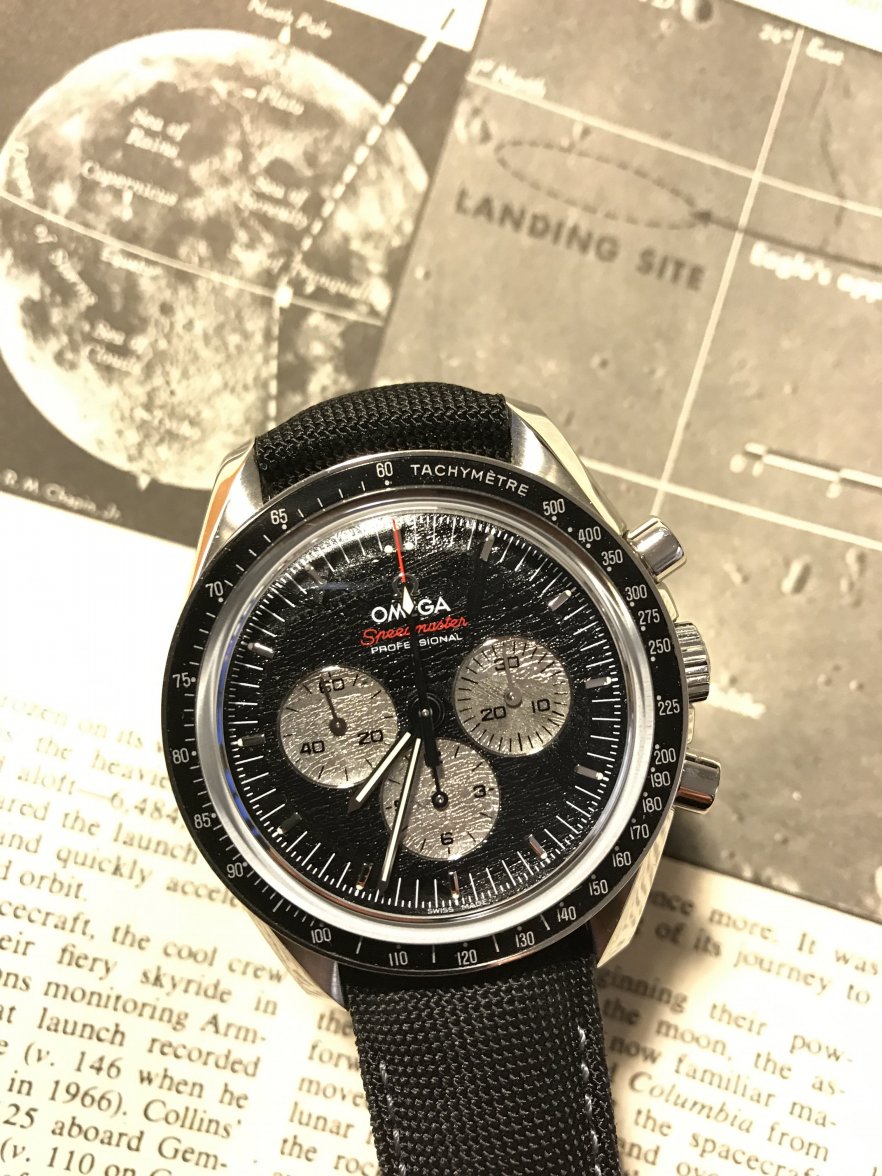
As a Speedmaster Apollo-Soyuz LE “Speedyorite” owner, this question has bugged me for some time and I wonder whether anyone else already has some answers.
I know meteorites that land on our planet survived the cold vacuum of space for potentially billions of years, then entry to our atmosphere, striking the ground at great speed and finally our weather extremes for perhaps thousands of years, so they must be tough. But, when you slice a piece of Gibeon meteorite into thin wafers to produce watch dials and then oxidise the surface, as was done with the Speedyorite to produce the dark grey colour over most of the dial (the subdials are the natural colour of the meteorite), how will that process affect the crystal structure and the surface colour and finish over time? Is the surface oxidation layer likely to change colour? Will slicing up the meteorite into thin wafers have somehow weakened the crystal structure at the surface? Or, will the Speedyorite be a rare patina-less watch?
Cheers
queriver
This is my first post to hopefully contribute in a small way to the amazing discourse around this forum.
As a Speedmaster Apollo-Soyuz LE “Speedyorite” owner, this question has bugged me for some time and I wonder whether anyone else already has some answers.
I know meteorites that land on our planet survived the cold vacuum of space for potentially billions of years, then entry to our atmosphere, striking the ground at great speed and finally our weather extremes for perhaps thousands of years, so they must be tough. But, when you slice a piece of Gibeon meteorite into thin wafers to produce watch dials and then oxidise the surface, as was done with the Speedyorite to produce the dark grey colour over most of the dial (the subdials are the natural colour of the meteorite), how will that process affect the crystal structure and the surface colour and finish over time? Is the surface oxidation layer likely to change colour? Will slicing up the meteorite into thin wafers have somehow weakened the crystal structure at the surface? Or, will the Speedyorite be a rare patina-less watch?
Cheers
queriver