Comparing apples (watches) and pears (hi-fi)

Posts
5,636
Likes
5,800
That's overly simplistic. There is often truth in between the views of the objectivists and subjectivists. Components that measure the best don't necessarily sound the best. A very large number of audiophiles prefer the sound produced by tube amplifiers, in spite (or because) of the distortion that they typically add to the sound. Etc.

With regard to cables, we certainly don't want to go off on that contentious tangent here. But I will point out that $300 for a power cord is considered to be relatively cheap by many audiophiles these days! 馃榿
See, and I worked as an electronics technician to pay for college and I rebuilt tube amps and would grab random friends and make them listen. Sometimes they would hear a difference, and sometimes they didn't..

So, quite honestly, I have zero respect for any of these "audiophiles" who upgrade a 6-foot power cord and claim all sorts of wonderfulness with the exact same house wiring with much longer runs that they've always had!

The emperor truly has no clothes.

(I was the creater and moderator of the USENET group rec.audio.high-end back then too)

 
Posts
5,496
Likes
9,396
See, and I worked as an electronics technician to pay for college and I rebuilt tube amps and would grab random friends and make them listen. Sometimes they would hear a difference, and sometimes they didn't..

So, quite honestly, I have zero respect for any of these "audiophiles" who upgrade a 6-foot power cord and claim all sorts of wonderfulness with the exact same house wiring with much longer runs that they've always had!

The emperor truly has no clothes.

(I was the creater and moderator of the USENET group rec.audio.high-end back then too)
I have come around to your line of thinking this past year. And seeing some of the 'teardowns' of expensive gear, as well measurements that are quite poor with respect to price, have helped open my eyes. Like high-end watches the vast majority of high-dollar audio is jewelry. These days I am shooting for as neutral as possible and considering chip-added (and selectable) distortion for fun. I don't want/ need a system to sound warm, etc. all the time -- I want it to accurately reproduce the recording, and then selective apply distortion as the mood strikes me.

I logged some time on the Usenet group. Geeze, that was all 20+ years ago 馃檨
 
Posts
7,984
Likes
27,963
See, and I worked as an electronics technician to pay for college and I rebuilt tube amps and would grab random friends and make them listen. Sometimes they would hear a difference, and sometimes they didn't..

So, quite honestly, I have zero respect for any of these "audiophiles" who upgrade a 6-foot power cord and claim all sorts of wonderfulness with the exact same house wiring with much longer runs that they've always had!

The emperor truly has no clothes.

You're extrapolating wildly from a few anecdotal examples. I would agree that plenty of audiophiles' preferences would be exposed as biases if they were subjected to blind ABX testing, and also that expensive power cords are, as a category, dubious in terms of *true* ROI. But amplifiers undoubtedly can sound different, including solid state, and depending on the contexts in which they are being used. Which leads me again to one of the central points of these debates: context matters.

Not all amplifiers that measure well sound the same. Certain types of distortion create identifiable sound signatures, and are preferred by some audiophiles. Some types of speakers are relatively agnostic about the amps the drive them, while others are sensitive, and sound very different depending on which are chosen. Speakers can sound quite different depending on the room in which they are used. Some speaker cables are designed to act as filters of sorts, and will sound different than more neutral cables. Etc.

It's a complicated business/hobby, and while there's nothing at all wrong with aiming for the most neutral sound sound possible, that is not the end-all for many audiophiles.
 
Posts
2,552
Likes
7,021
Power cords can make audible differences. But they are most likely only appreciated in very high resolution systems.
It is not something I put money in in my system.
 
Posts
5,636
Likes
5,800
You're extrapolating wildly from a few anecdotal examples.

More than a few, sadly. I spent a lot of time with some hardcore guys who worked for Sound Investments in Glendale WI, in the 80s. Yes, once you get past 97%, then it's rarely better, only different, and I am well aware of component matching.

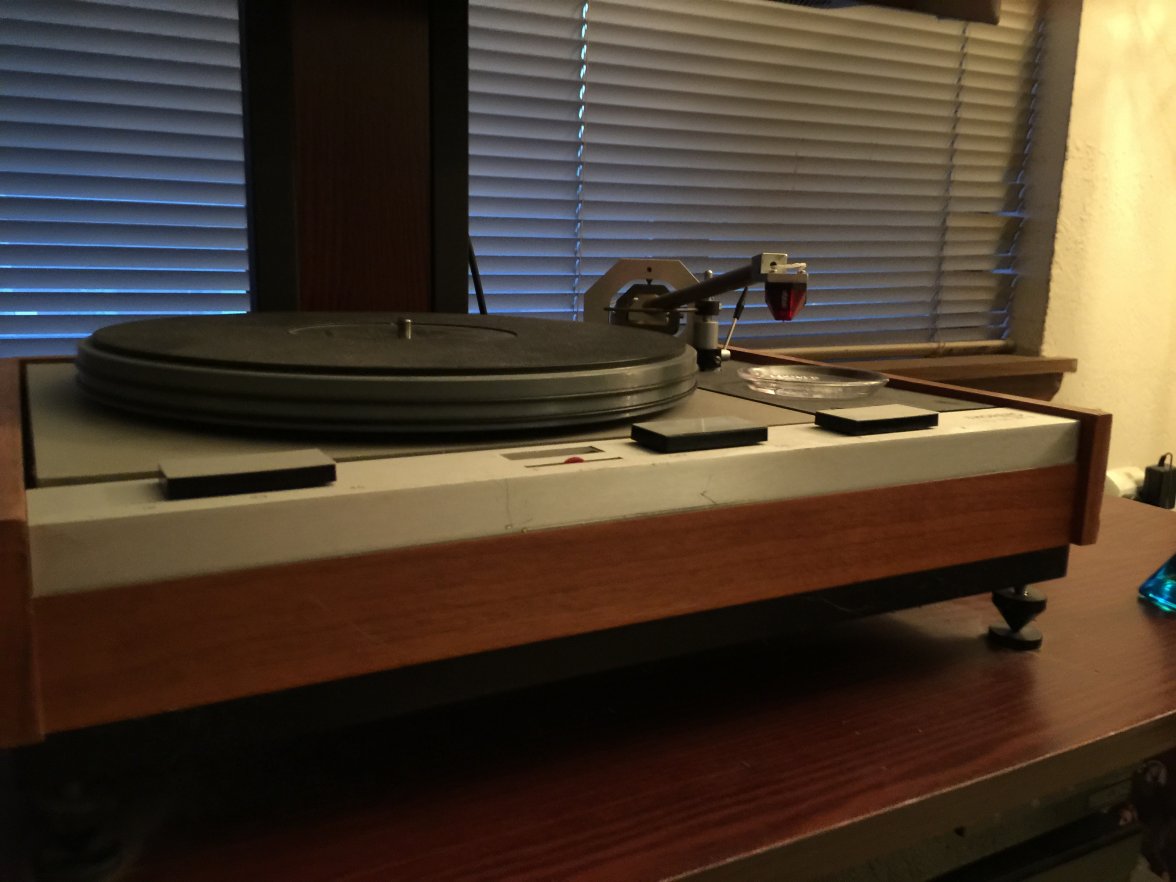
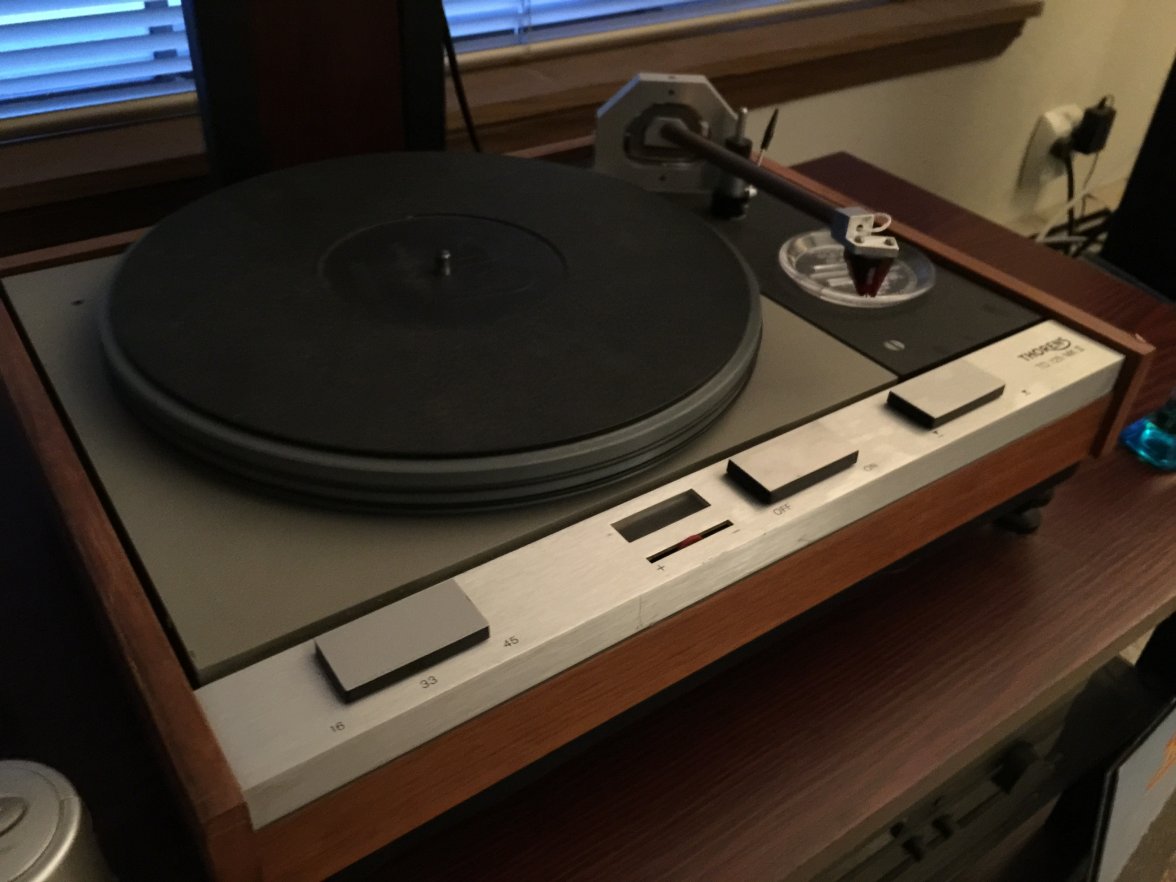
The folks at the store did me a big favor and hooked me up with local mechanical genius Gene Zanow. I handed him my Thorens TD125 Mk II. It had a Decca unipivot arm. He was to give the arm minor upgrades and tune the table.

What did I get back? The platter was trued. Bearing polished. Springs adjusted so it would move up and down. That tonearm? Gone. Arm board, gone. Wiring, gone. Original arm lifter, gone. What did I receive? A custom-made tonearm that Gene made himself. It was an "Optimum pivot" desgin. The pivot was on the same plane as the record. He made me two weights, one for the average cartridge and one for my beloved Decca Mk IV.

He did keep my AudioQuest sorbothane mat!

I've mentioned some of my favorite components. Mark Dineen's B100 preamp by ADC... one of the most neutral preamps ever. QED 440 bridged solid-state class A amplifier, amazing. The speakers, I can't describe them because boutique. Nobis Dm-3t made in Milwaukee. They were designed to be ESL-63 killers. They pretty much are!

That store made and sold a lot of interconnect custom made. Star-quad microphone cable. It worked pretty well.

My point is that I leared everything you've mentioned decades ago, and did things about it. Honestly, I got out of it because I got tired of screwing around with other people's mistakes (don't get me started on Counterpoint) and I get good equipment and service from Parasound. I sometimes think I want a Halo integrated amp. Maybe some day.

So, please. I know. No need to explain. 馃榾
 
Posts
1,541
Likes
3,352
This conversation has gone off in an interesting direction but it鈥檚 not really what I鈥檓 talking about. I think most would agree that the marginal difference in performance between 拢1000 and 拢5000 is massive compared with the performance difference between 拢30k and 拢34k. Personal taste notwithstanding.

That鈥檚 why I kept the discussion to around 拢2.5k

The emperor鈥檚 new clothes thing doesn鈥檛 interest me. What interests me is: if I spend 拢2.5k on a watch am I buying a more sophisticated piece of engineering than if I spend 拢2.5k on a turntable or amp, or pair of speakers? And yes, I know that the three have different forms of technology in them. That again is not the point. I鈥檓 paying 拢2.5k for something that manufacturers consider economically equivalent. But are they equivalent in terms of the technology that is wrapped up in them?
 
Posts
5,496
Likes
9,396
It depends on your definition of technology. There are $100 DACs with very sophisticated chips that are the same ones found in DACs costing many thousands of dollars. And $120 'chip amps' that can crank out 100 wpc into 4 ohms. From a technology perspective, these things are way more advanced then most of the kilo-buck high-end components. And it all resides in small silicone chips.
 
Posts
5,636
Likes
5,800
This conversation has gone off in an interesting direction but it鈥檚 not really what I鈥檓 talking about. I think most would agree that the marginal difference in performance between 拢1000 and 拢5000 is massive compared with the performance difference between 拢30k and 拢34k. Personal taste notwithstanding.

That鈥檚 why I kept the discussion to around 拢2.5k

The emperor鈥檚 new clothes thing doesn鈥檛 interest me. What interests me is: if I spend 拢2.5k on a watch am I buying a more sophisticated piece of engineering than if I spend 拢2.5k on a turntable or amp, or pair of speakers? And yes, I know that the three have different forms of technology in them. That again is not the point. I鈥檓 paying 拢2.5k for something that manufacturers consider economically equivalent. But are they equivalent in terms of the technology that is wrapped up in them?

A flying tourbillon wristwatch is the functional equivalent of a high-end audio system. You will not get a flying tourbillon inexpensively... or at least you couldn't until the Chinese started making them. Even still, most chronometer wristwatches do quite well. So does for example Onkyo or Hitachi systems, but are they truly high-end? Can be.

But, that said, you can't really compare them.