Calling all Pocket Watch Buffs

Posts
15,920
Likes
47,769
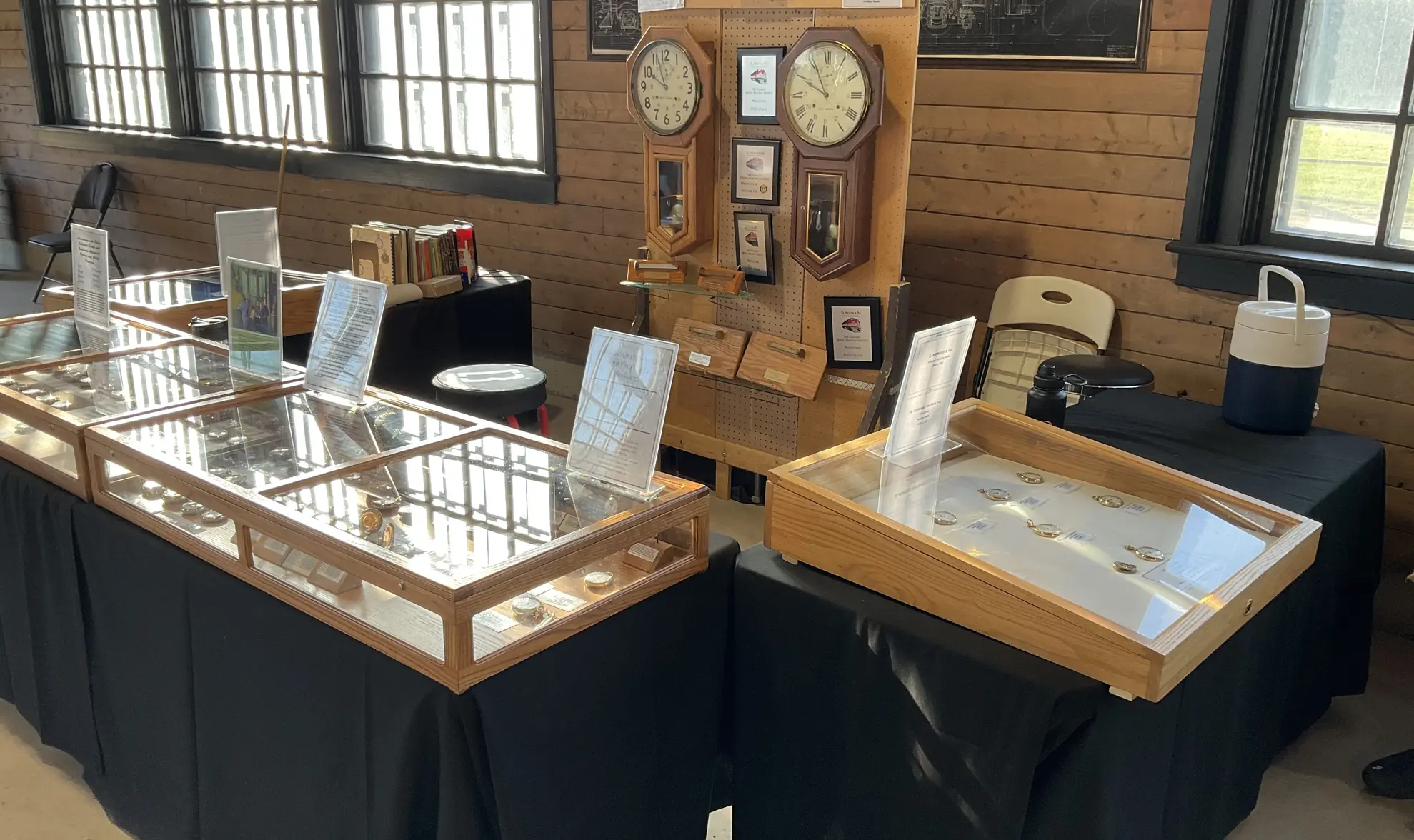
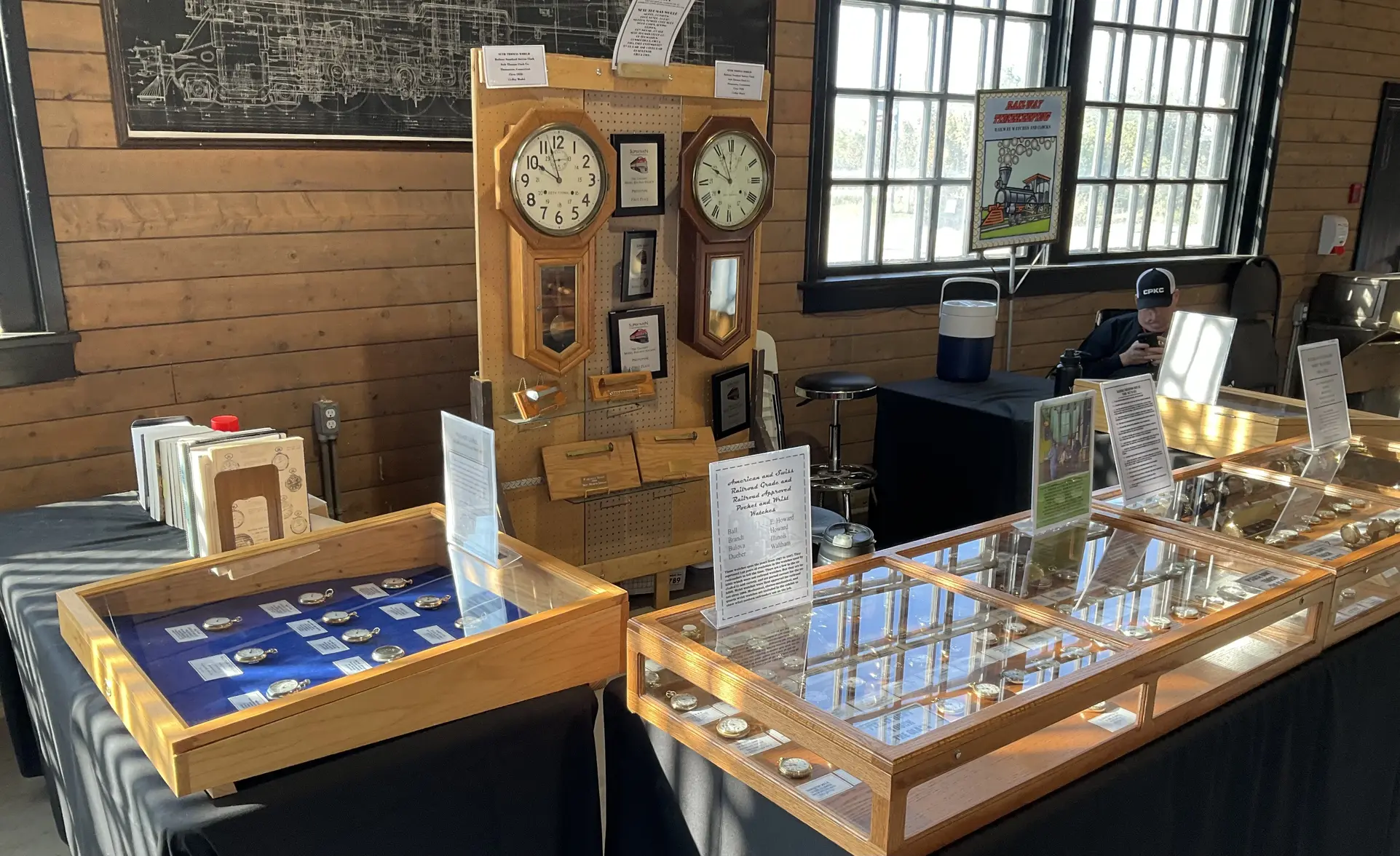
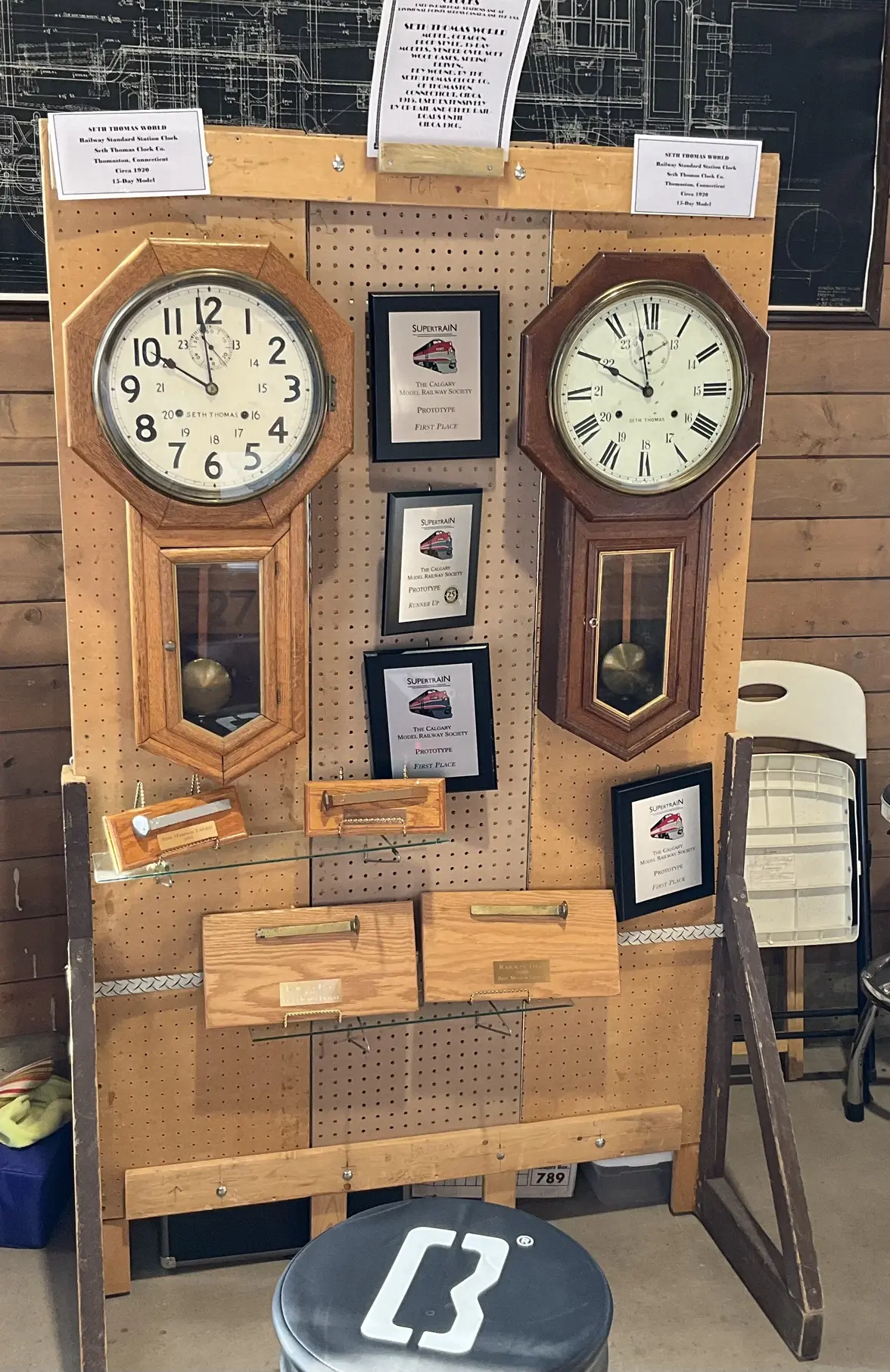
Our railroad pocket and wrist watch display, including railroad standard clocks. Heritage Park, Calgary, Sept. 19 & 20, 2026.

 
Posts
8,807
Likes
62,373
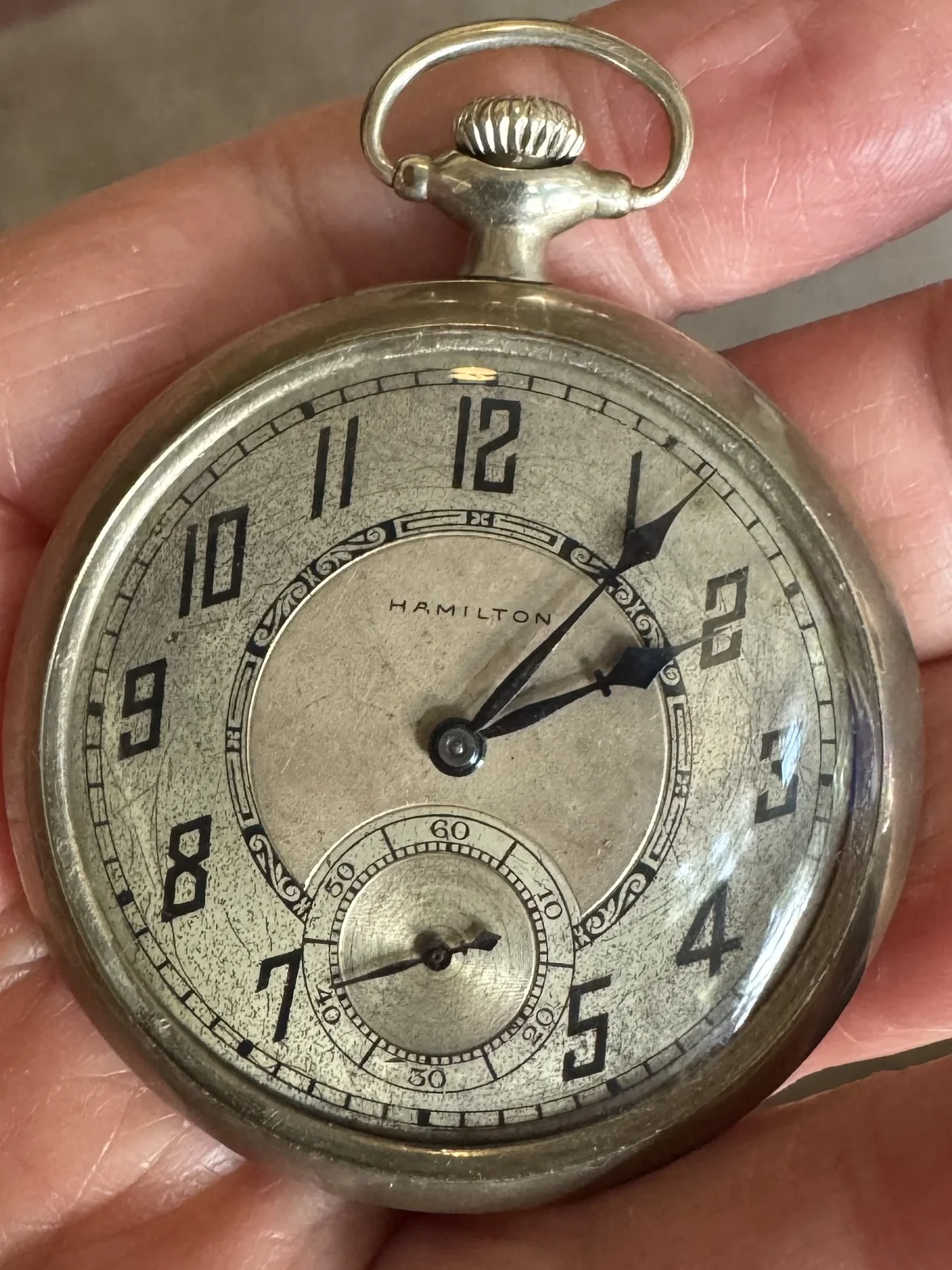
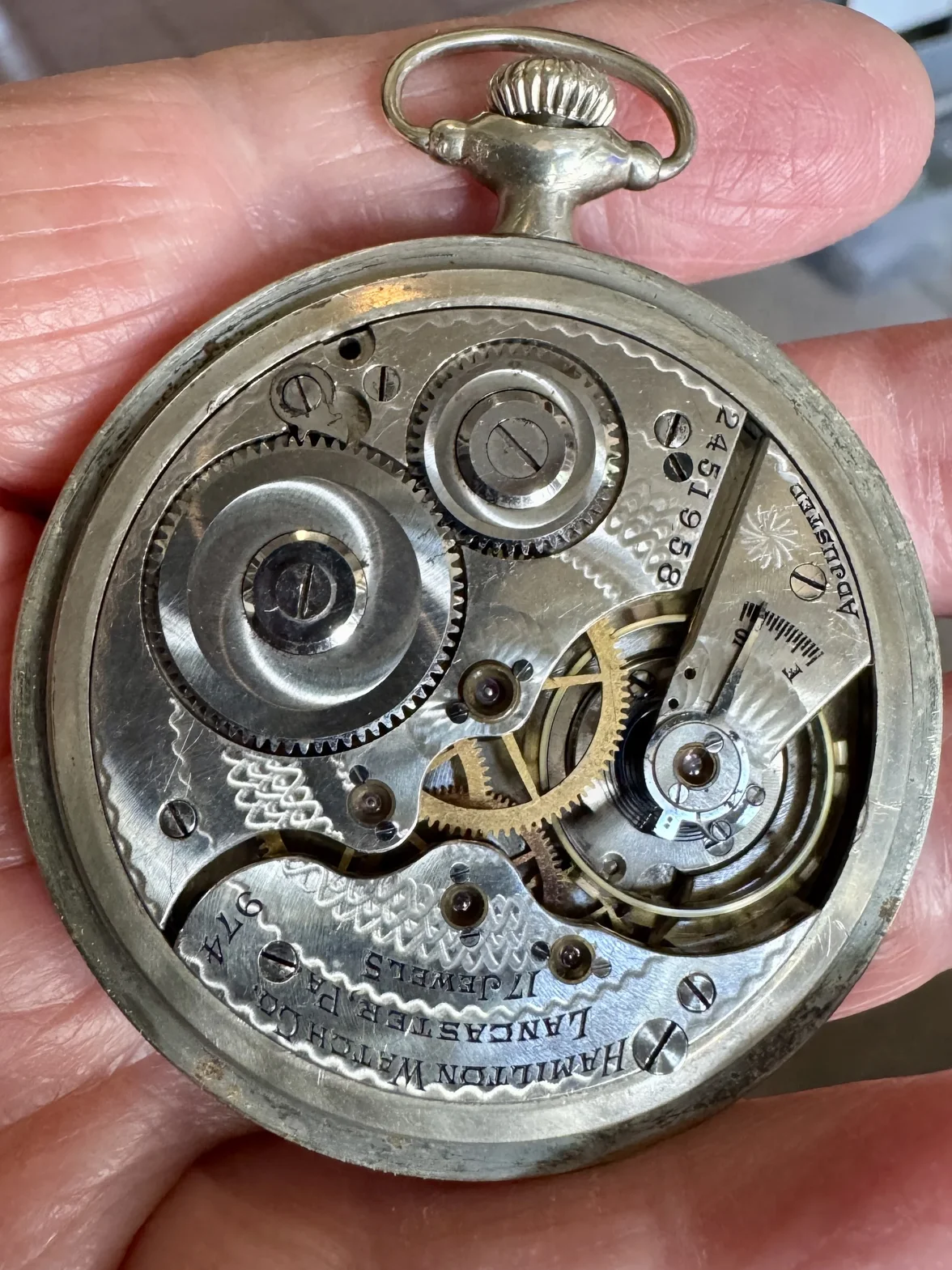
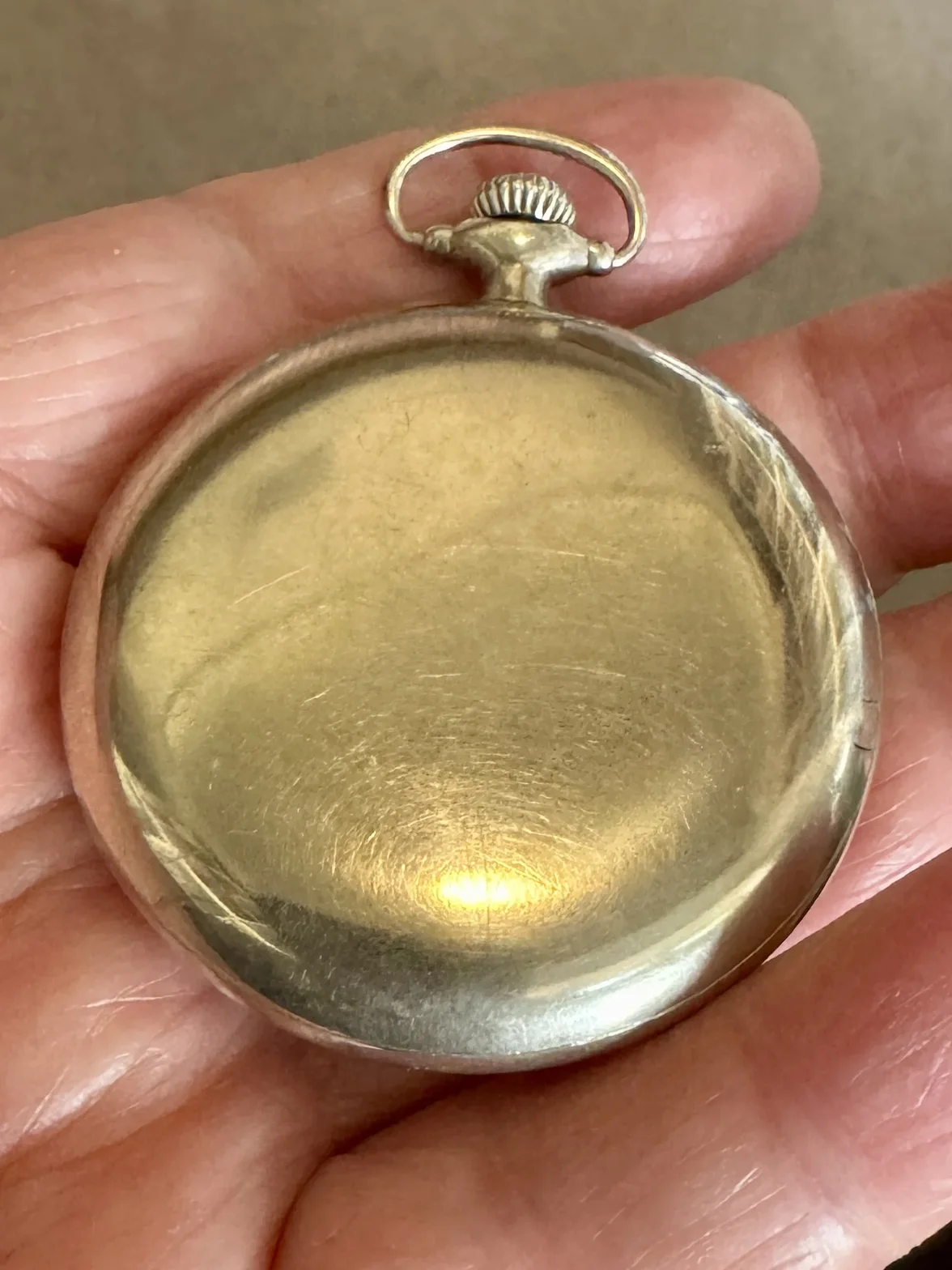
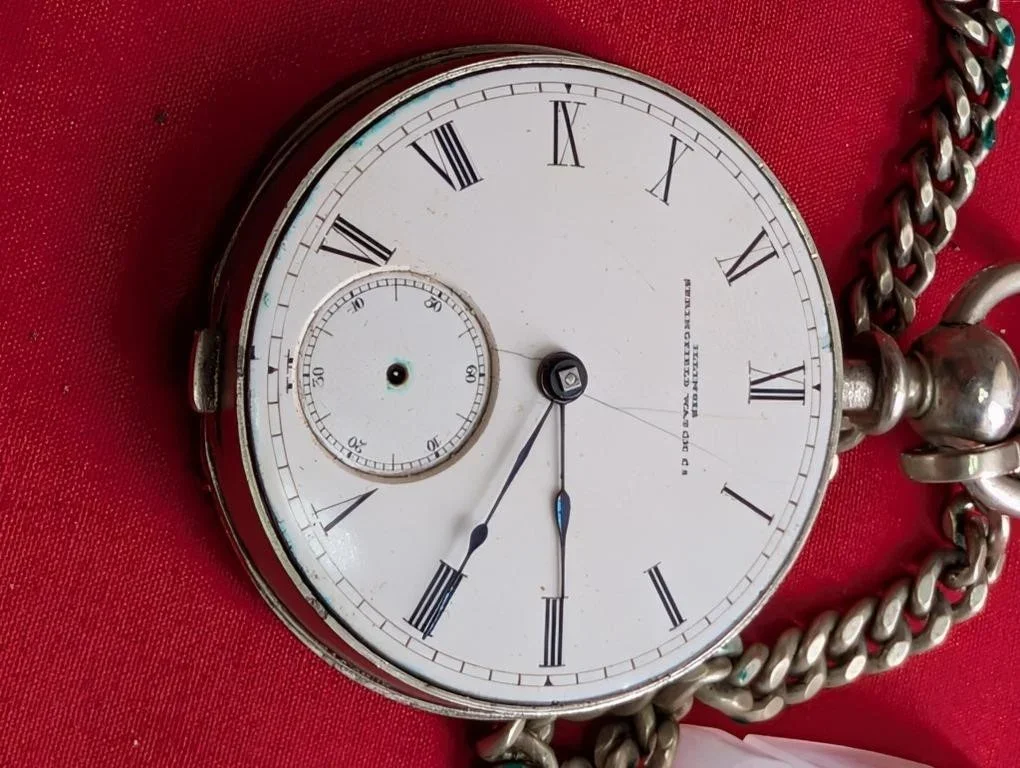
16s Hamilton grade 974 circa 1927 with nifty black-enameled motif and numerals. Wear through from age on silvered metal dial. But the Blued, closed “kite” handset is clean. Case nickel.

 
Posts
15,920
Likes
47,769
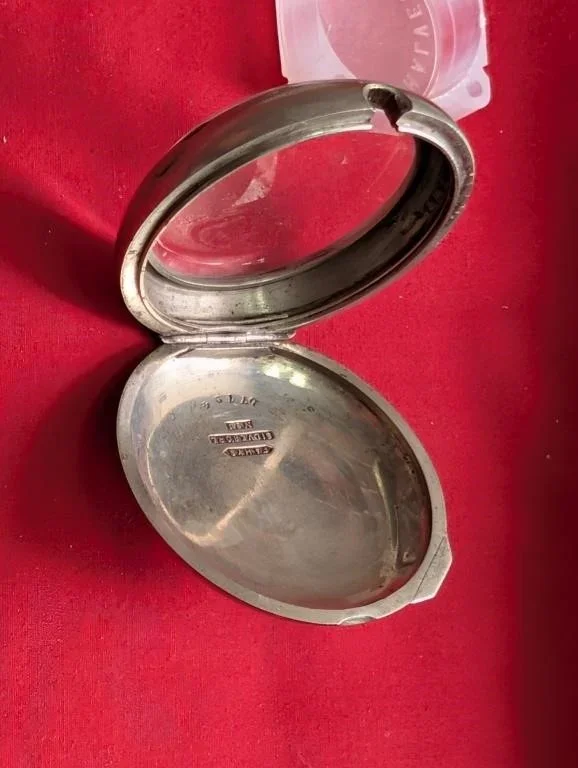
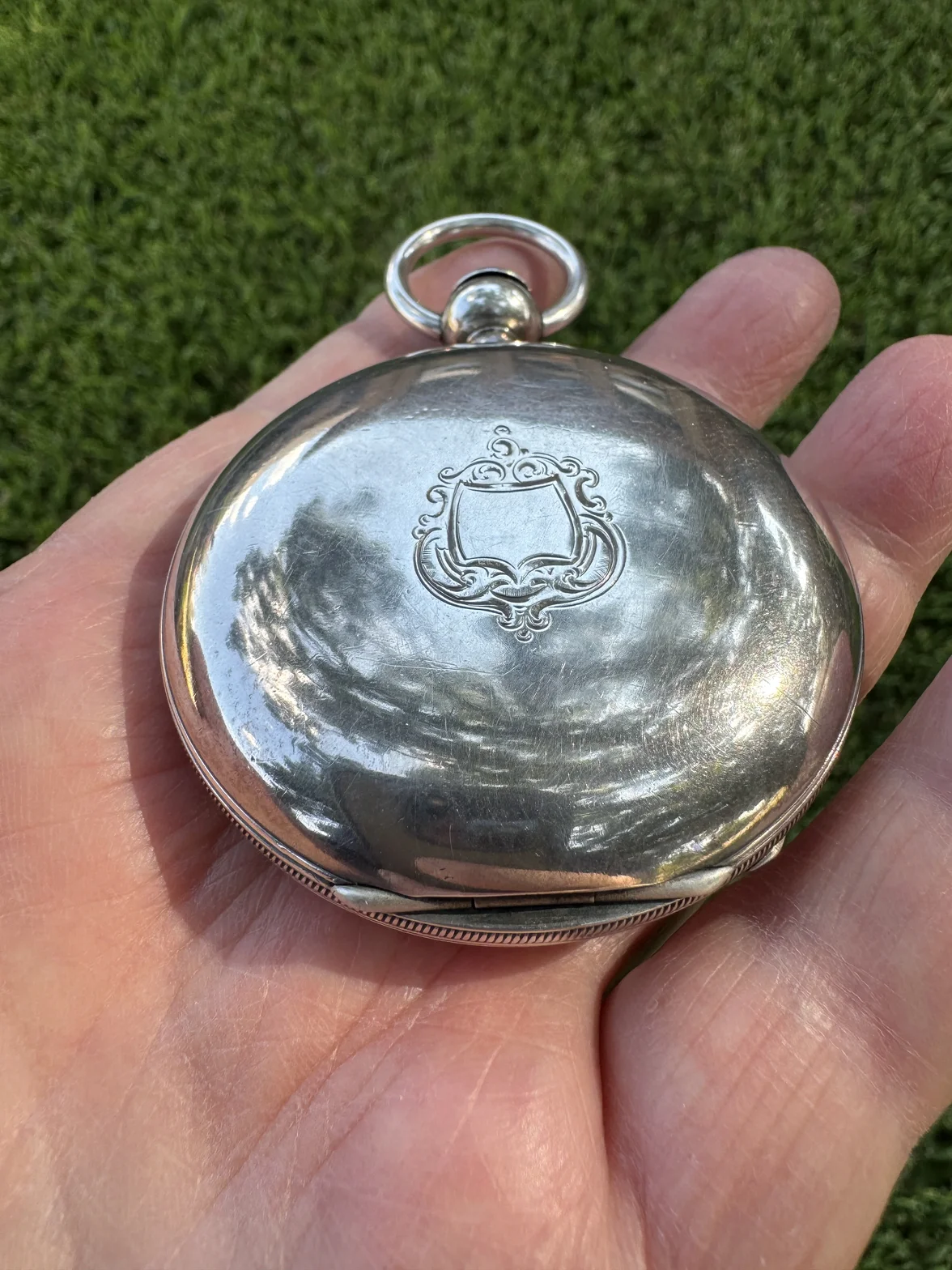
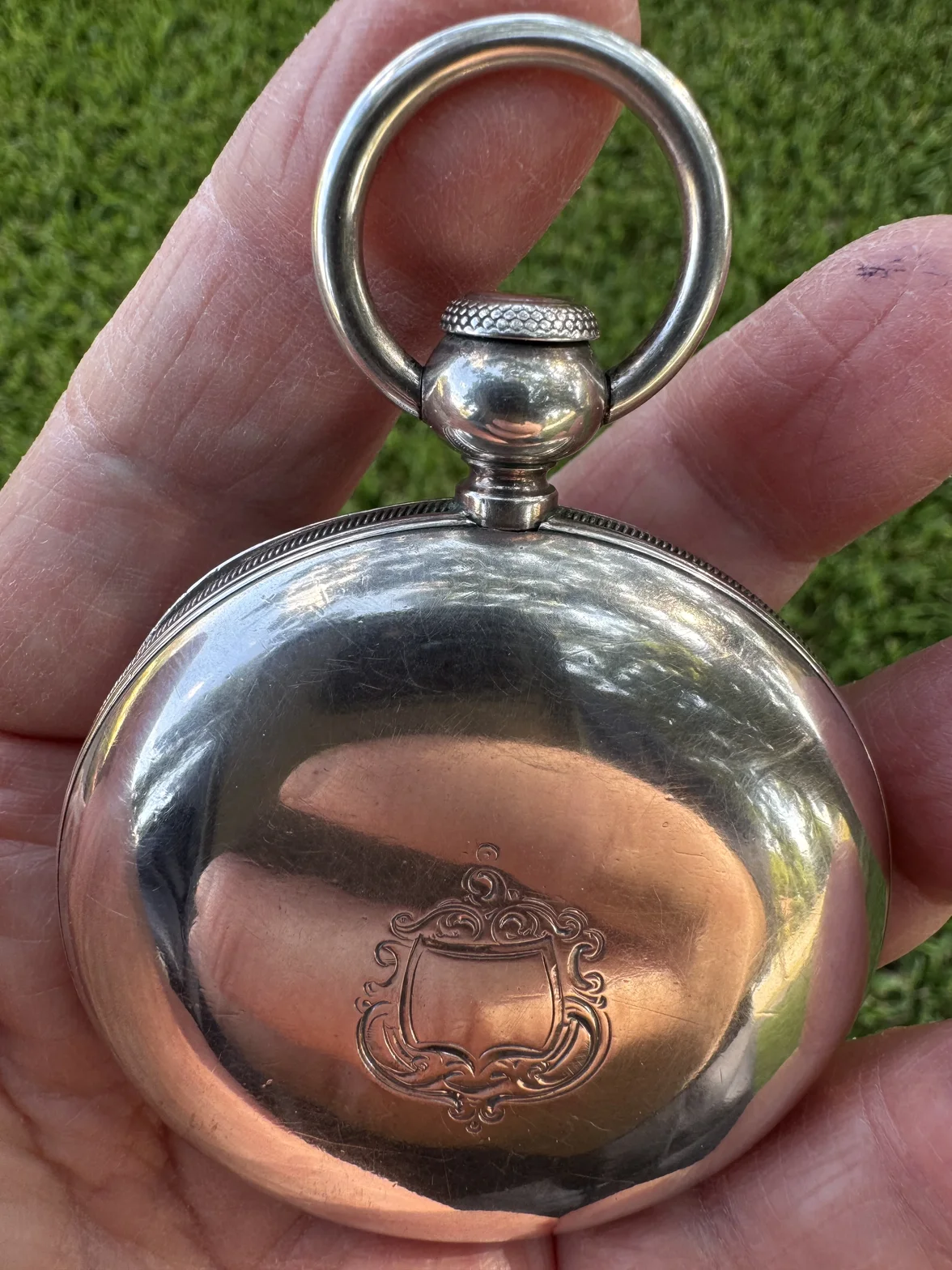
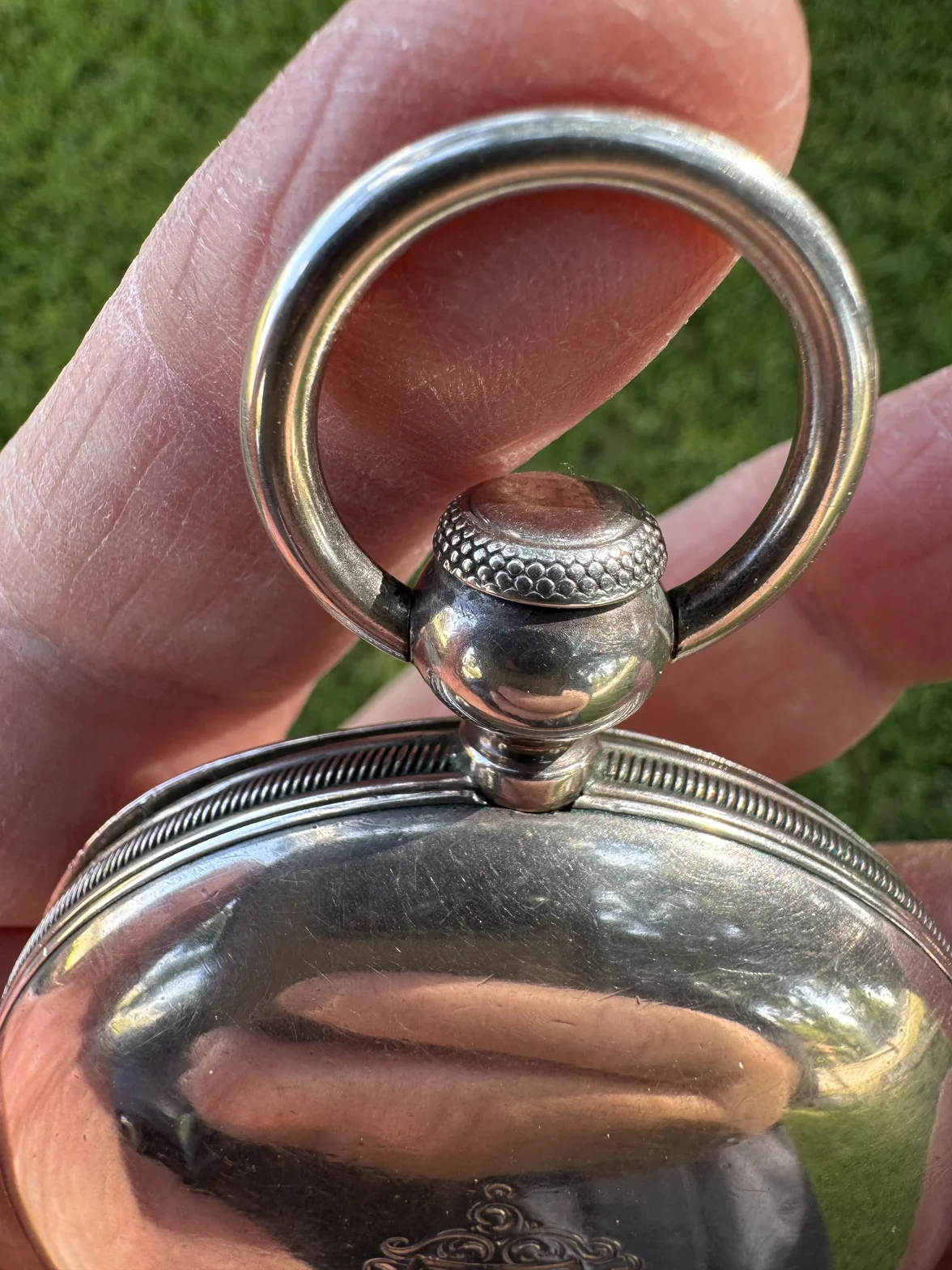
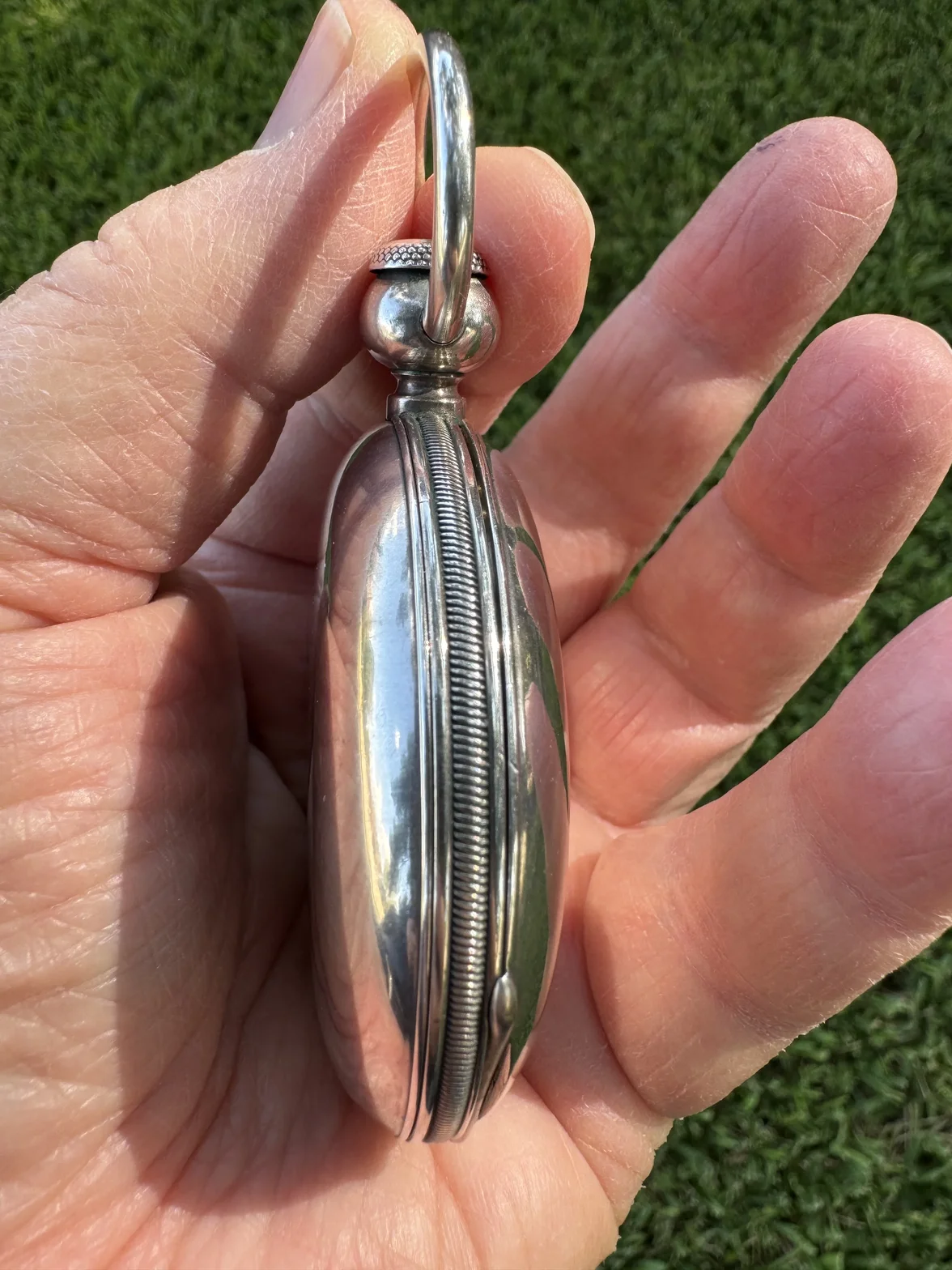
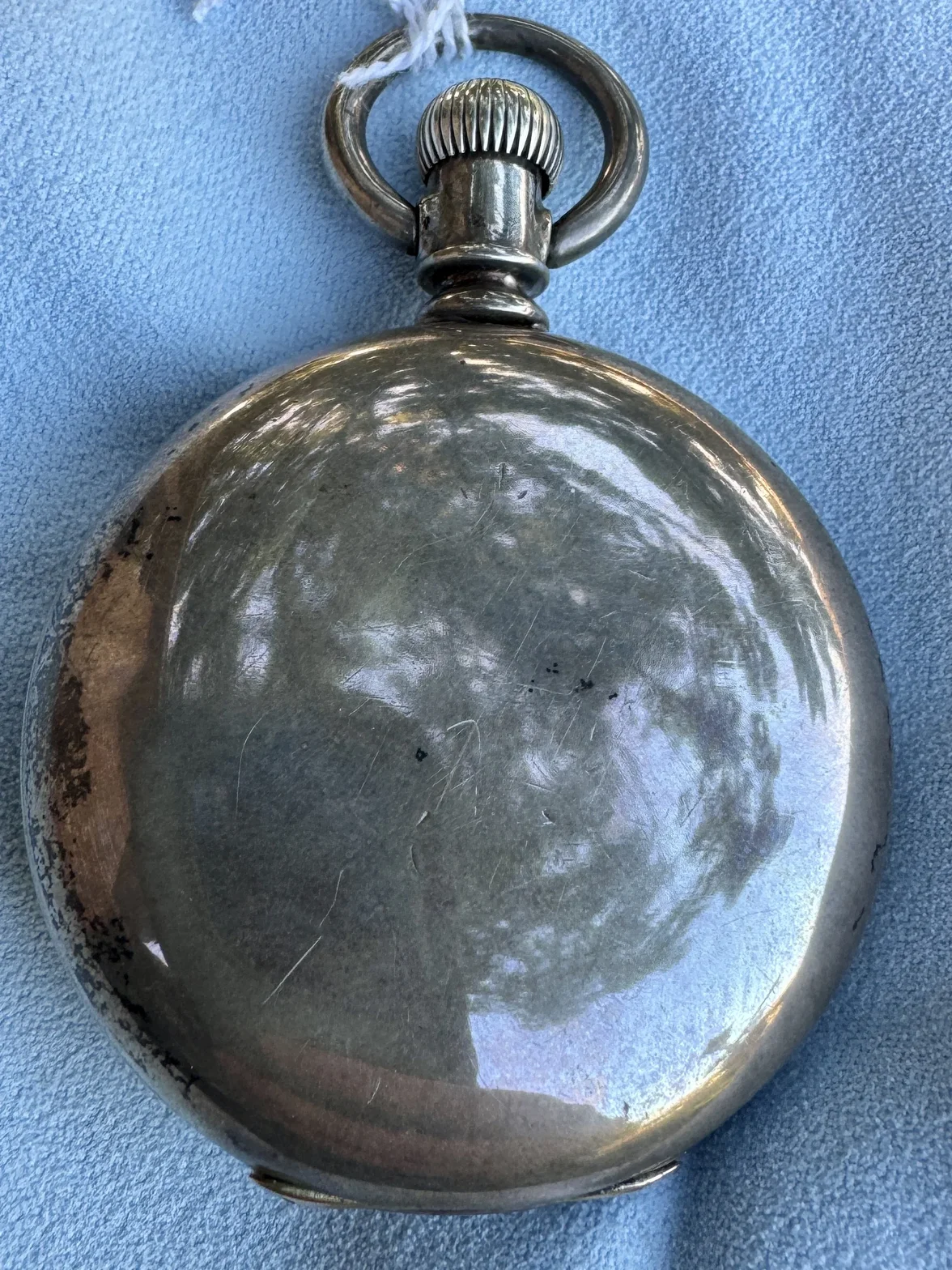
2-part case??? Screw off front and back! Or 2-hinges!!
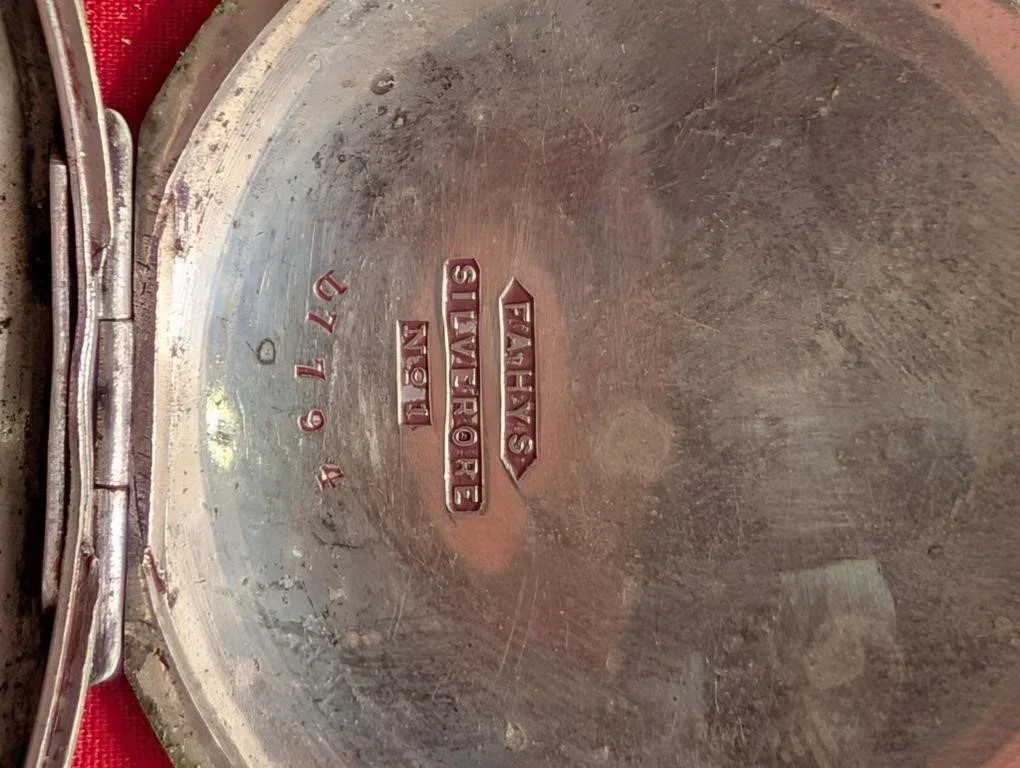
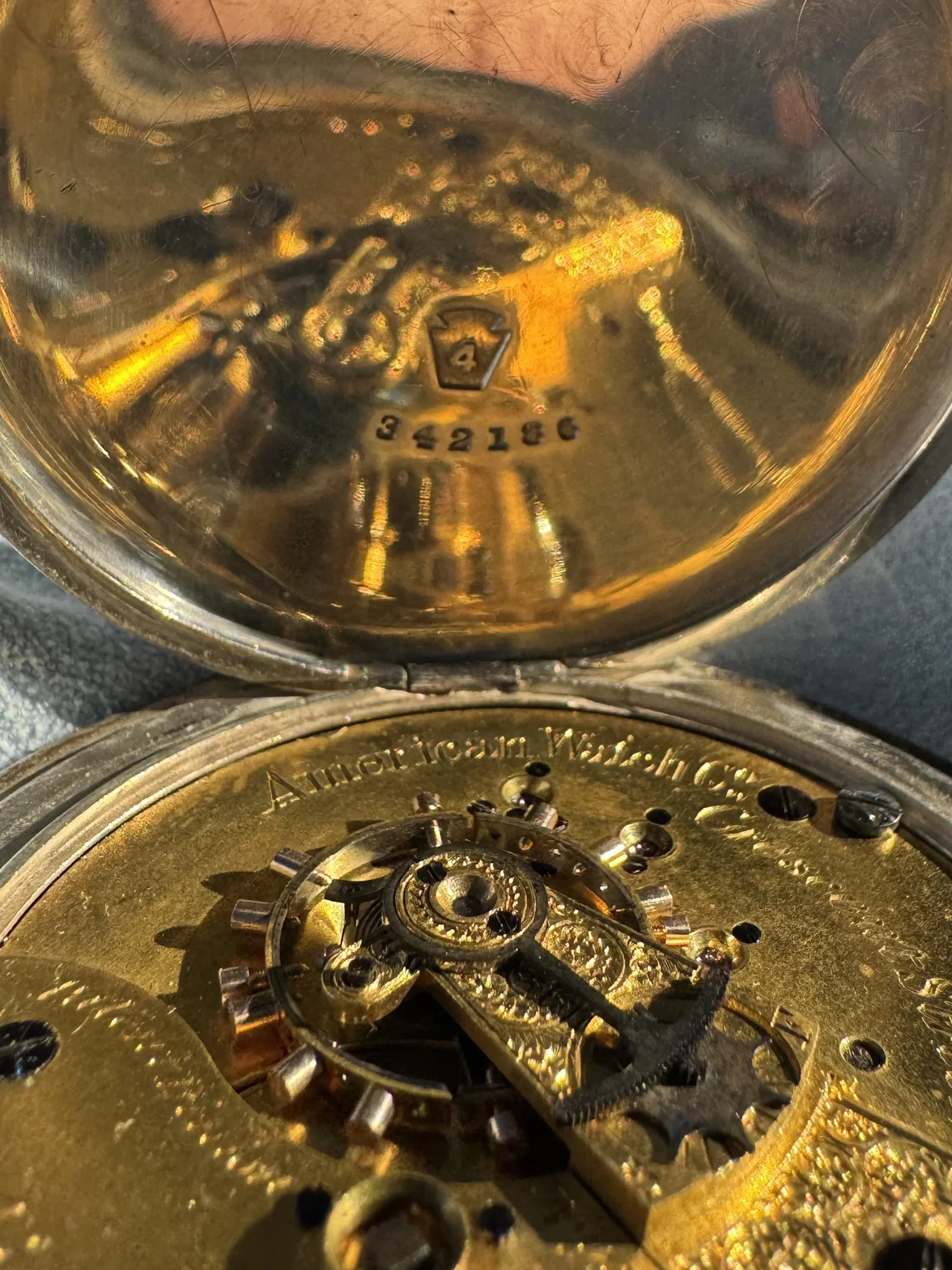
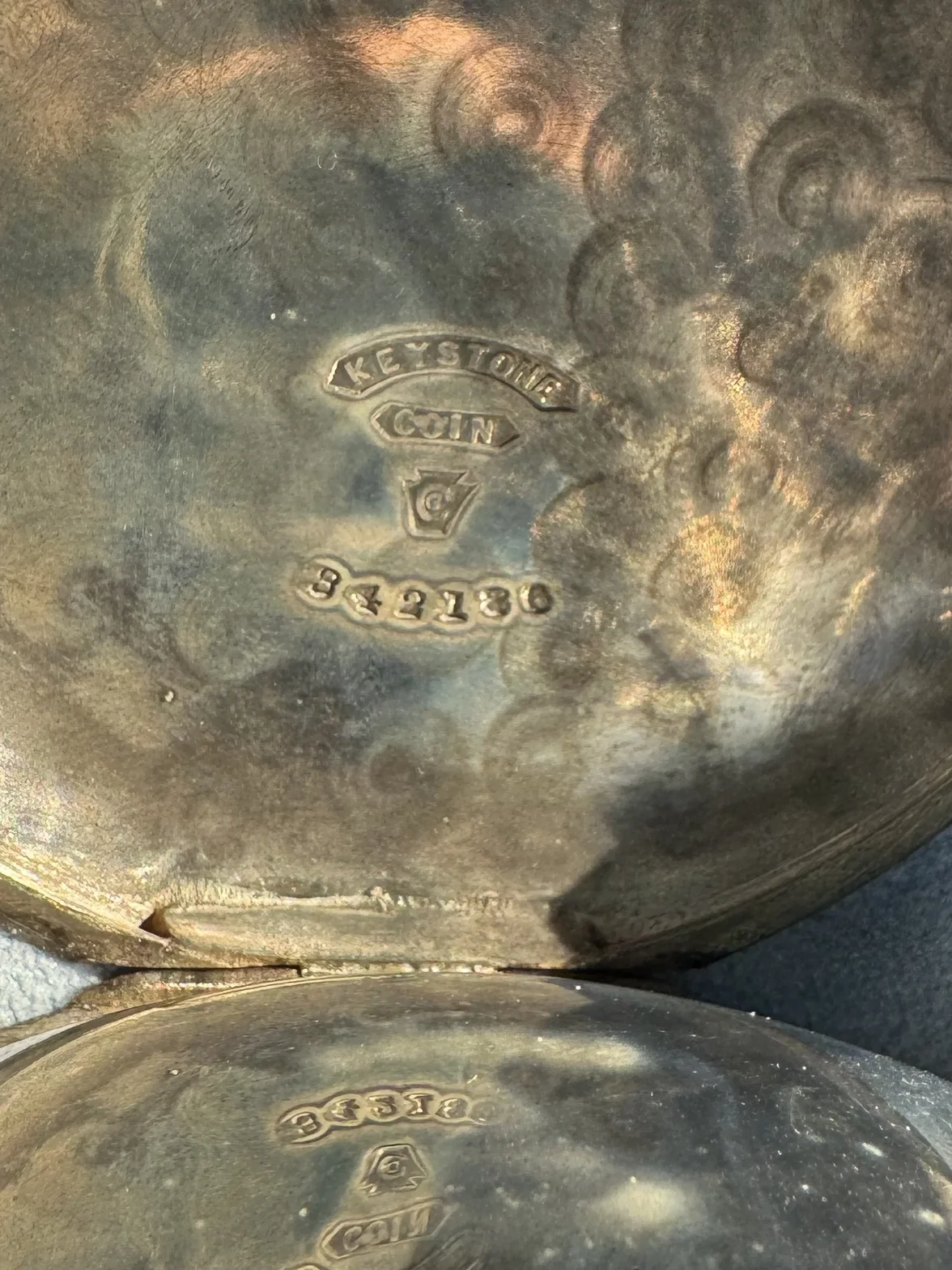
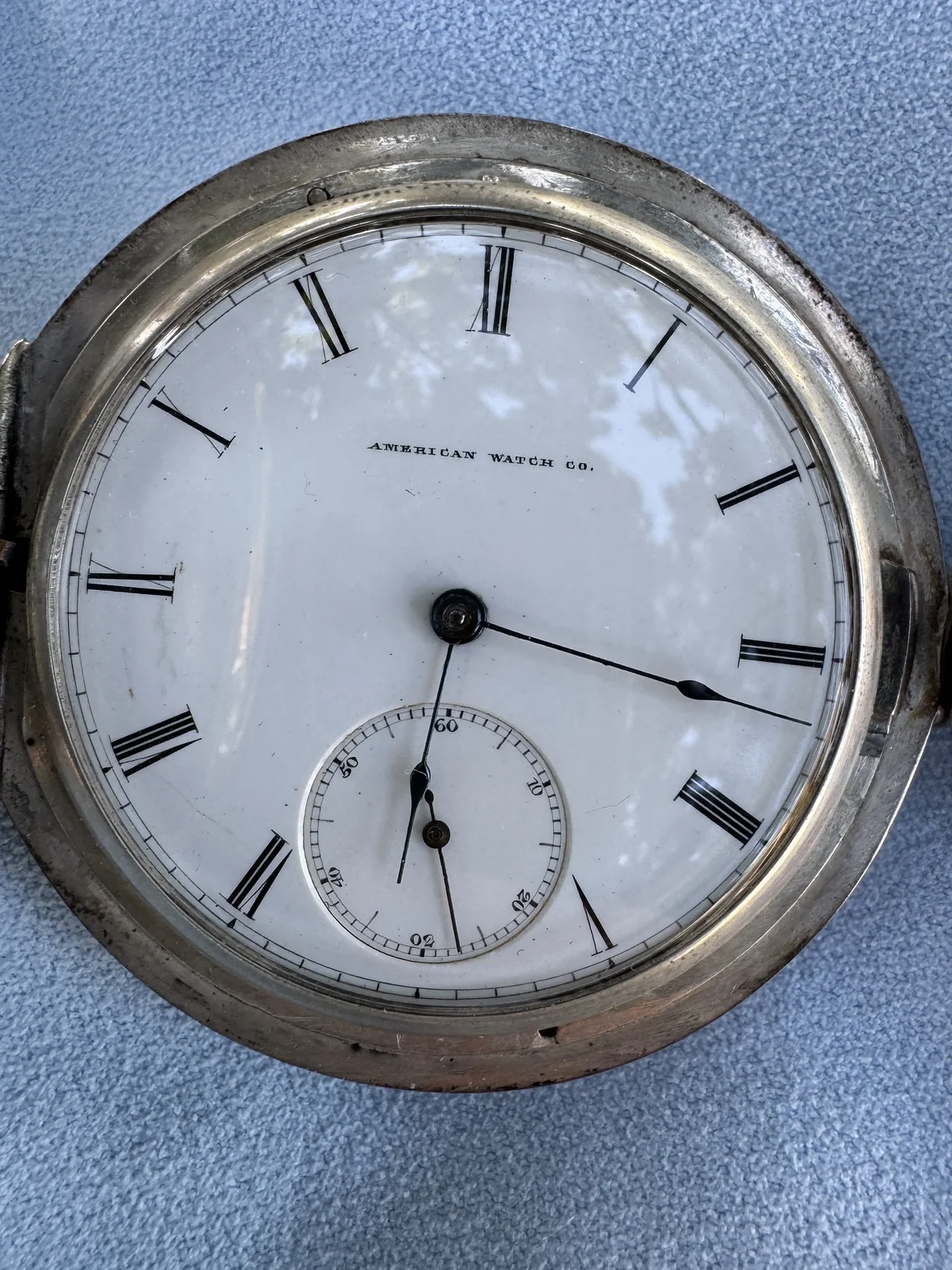
I’ve never seen a watch case that has ANY silver in the alloy, marked OREsilver. As in coin silver (.800, .900). My suspicions are the case is nickel silver (Silveroid, Silverine). I bought my 15-jewel Waltham 1857 model in a coin silver case (.900 silver) about 40 years ago, for $275.00 U S. The Canadian dollar was in better shape in that era. Glad I bought mine way back then!
 
Posts
100
Likes
256
2-part case??? Screw off front and back! Or 2-hinges!!
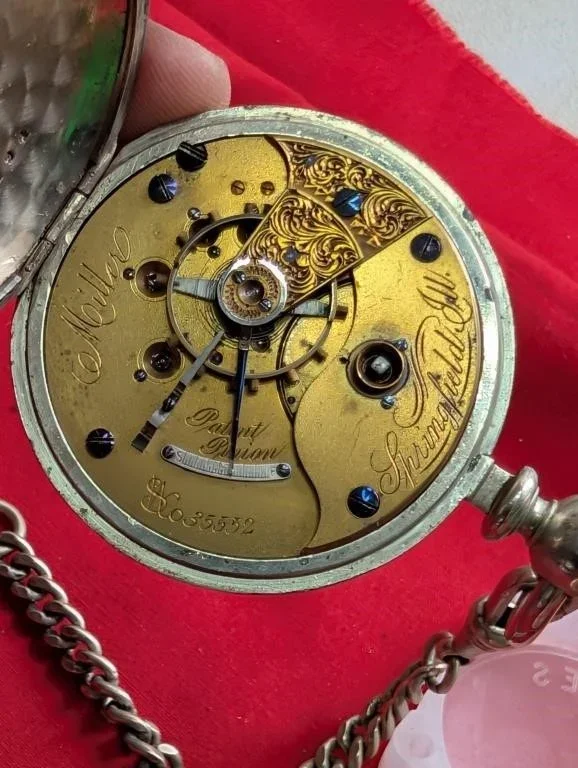
the two cases separate and are on hinges. I have the same case but with an Illinois inside. They are not common cases. Mine is also not silver ie. Silver Ore
 
Posts
100
Likes
256
Sorry the messaging is getting confused I was chatting about the two part case I had seen with a similar 18S 1857 movement in it that was Silver Ore. And you are correct zero real silver. I have the same case similarly marked but instead of a Waltham movement inside the 2 part case its an Illinois...not to be confused with your note...sorry
 
Posts
8,807
Likes
62,373
the two cases separate and are on hinges. I have the same case but with an Illinois inside. They are not common cases. Mine is also not silver ie. Silver Ore
Why uncommon? is this uncommon because they are 1st generation?
 
Posts
100
Likes
256
Why uncommon? is this uncommon because they are 1st generation?
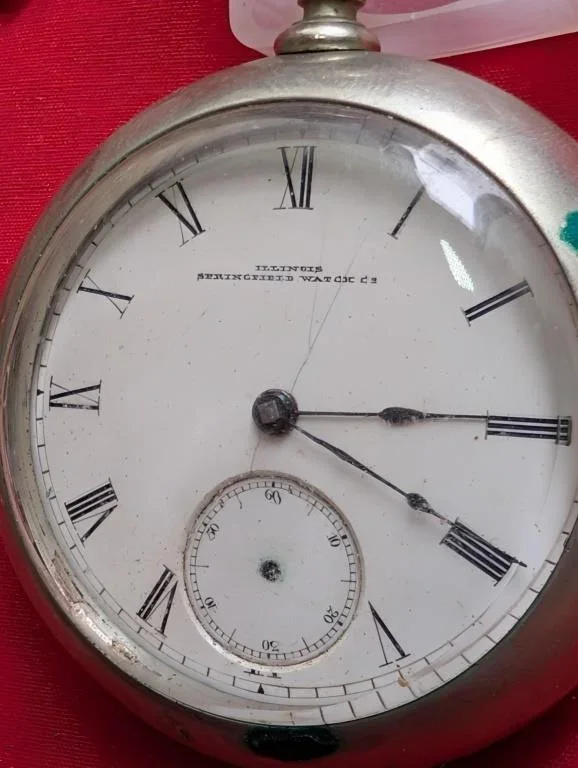
Its a great question. The concept of a case in a case was very common but way before the period we are talking about in post civil war America and especially with the advancement of technology late in the key wind era to stem wind and good environmental packaging to be implemented with effective dust covers and such. It is very common if you collect the early British Fuse pocket watches early 19th Century to find pair case or case in case packaging. I think it was done to enhance the effective usability of pocket watches in that era to rougher use and environments.
By the 1880s when this watch I own dates to a sturdy key or stem wind hinged half hunter with a solid dust cover and thick crystal really should be as good as it needed to get but there must have been some market demand because a few of these pair case or case in a case watches were still produced. My watch also has a thick bulls eye crystal which again is a sign the original buyer/owner was thinking of the old days pre 1850. But, really nice machining at the stem where the inner case fits into the outer case and to be honest when all put together it looks and feels like one watch not a case within a case as compared to the later period during WW1 where soldiers or industrial coal miners had an external case for their pocket watch to function in and not be affected by the hostile environment.
The watch on Oldtymers and the early Illinois I own are but a few that have this old style case in case packaging. The Oldtymers case is Ore Silver as is mine which suggests the rough expected use whomever the original buyer might have been back in that era anticipated....I have had it cleaned oiled and timed and its running nice....I initially bought this Illinois KW based on the case. I just have not seen many in my days collecting....

 
Posts
100
Likes
256
Its a great question. The concept of a case in a case was very common but way before the period we are talking about in post civil war America and especially with the advancement of technology late in the key wind era to stem wind and good environmental packaging to be implemented with effective dust covers and such. It is very common if you collect the early British Fuse pocket watches early 19th Century to find pair case or case in case packaging. I think it was done to enhance the effective usability of pocket watches in that era to rougher use and environments.
By the 1880s when this watch I own dates to a sturdy key or stem wind hinged half hunter with a solid dust cover and thick crystal really should be as good as it needed to get but there must have been some market demand because a few of these pair case or case in a case watches were still produced. My watch also has a thick bulls eye crystal which again is a sign the original buyer/owner was thinking of the old days pre 1850. But, really nice machining at the stem where the inner case fits into the outer case and to be honest when all put together it looks and feels like one watch not a case within a case as compared to the later period during WW1 where soldiers or industrial coal miners had an external case for their pocket watch to function in and not be affected by the hostile environment.
The watch on Oldtymers and the early Illinois I own are but a few that have this old style case in case packaging. The Oldtymers case is Ore Silver as is mine which suggests the rough expected use whomever the original buyer might have been back in that era anticipated....I have had it cleaned oiled and timed and its running nice....I initially bought this Illinois KW based on the case. I just have not seen many in my days collecting....
These pics are pre the cleaning and restoration so now has a second hand is brighter and runs well.
 
Posts
8,807
Likes
62,373
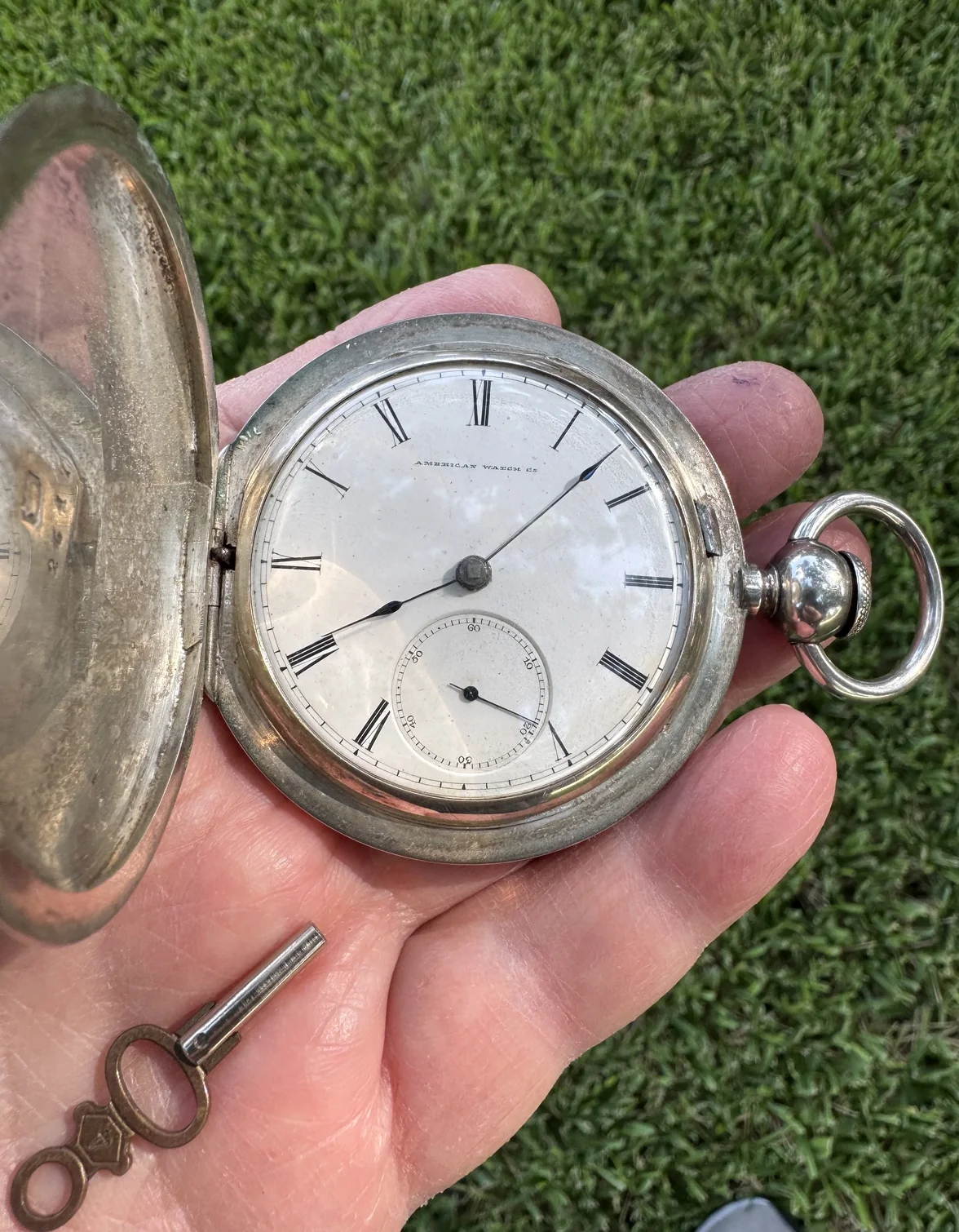
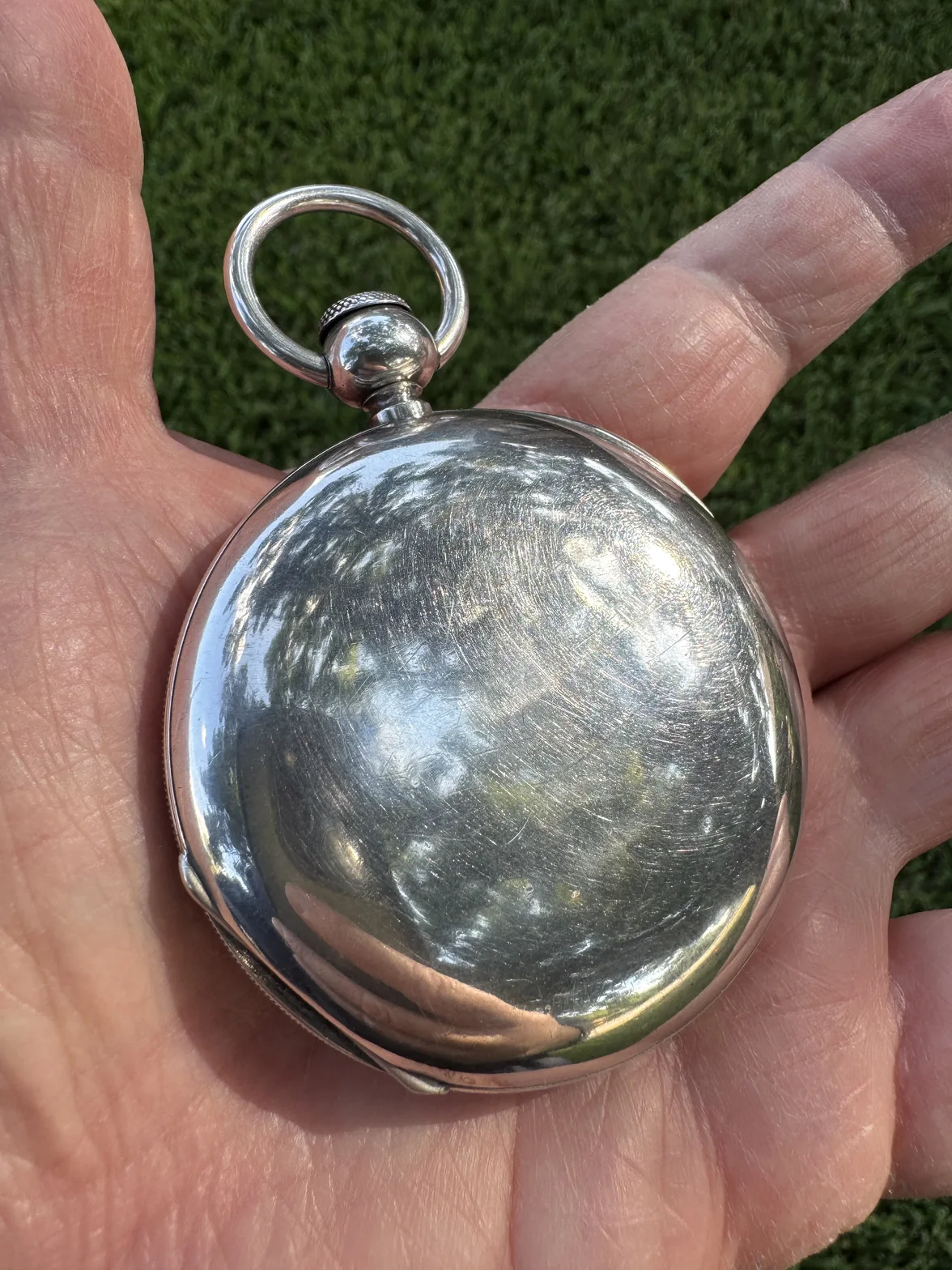
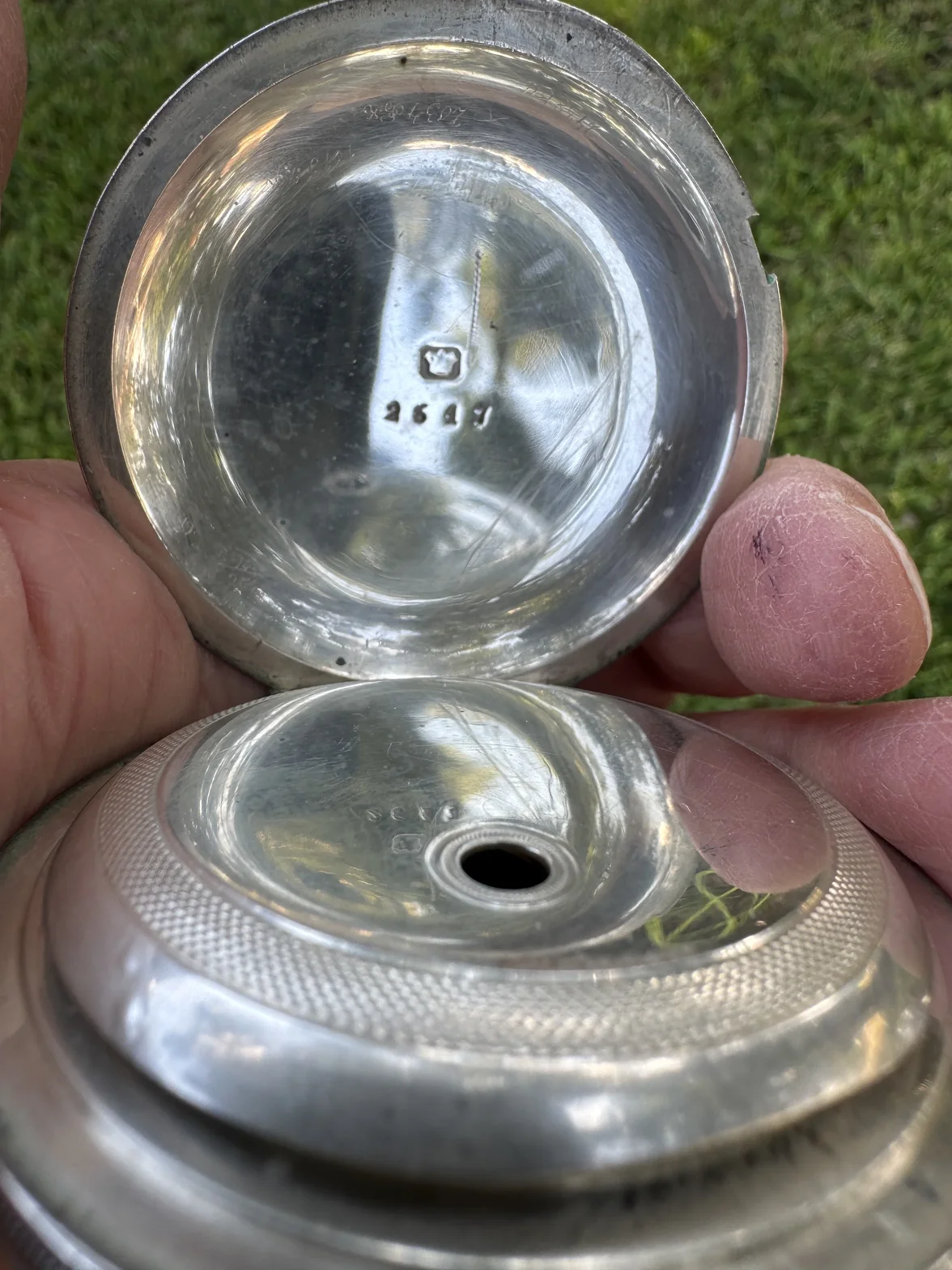
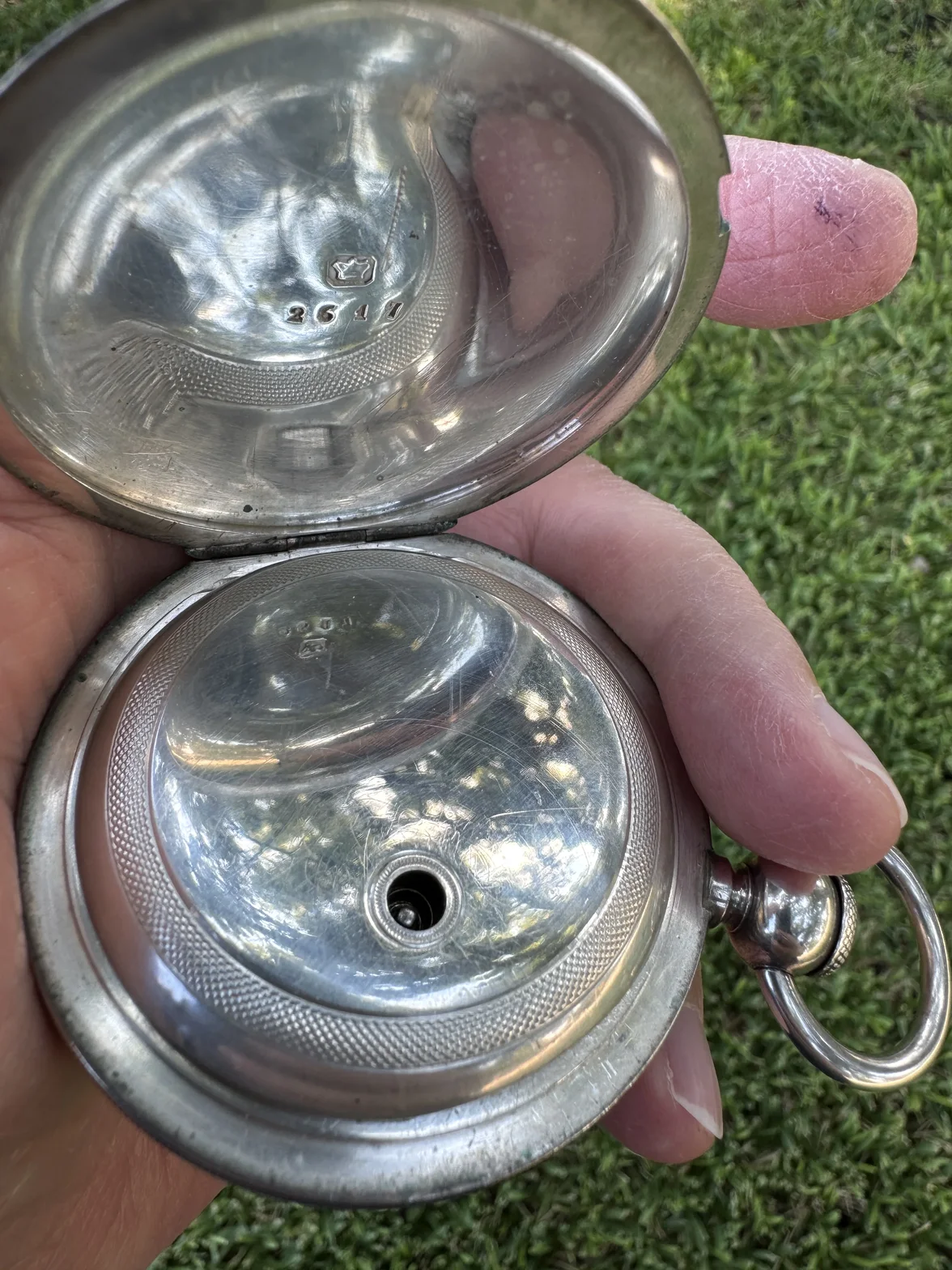
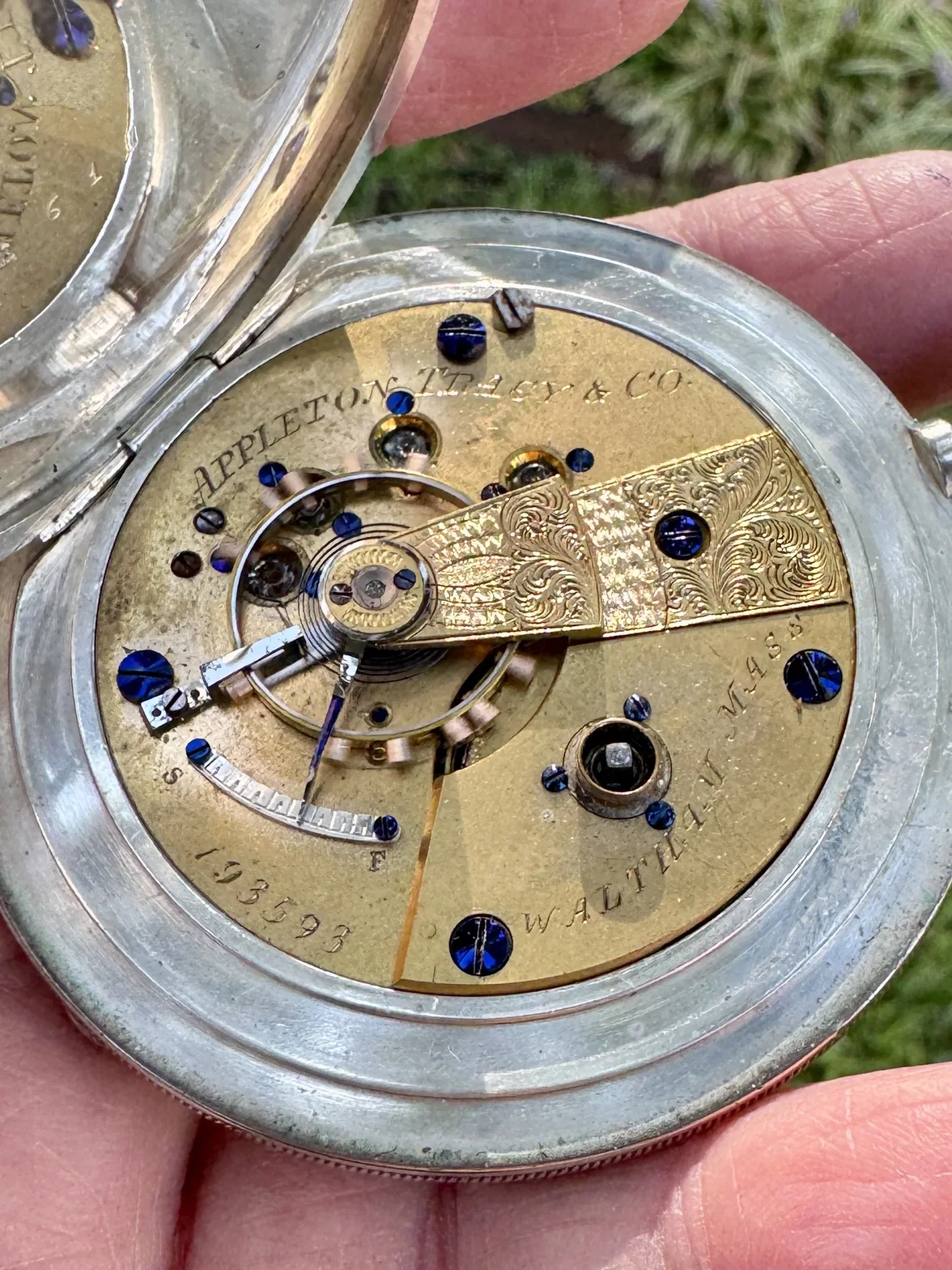
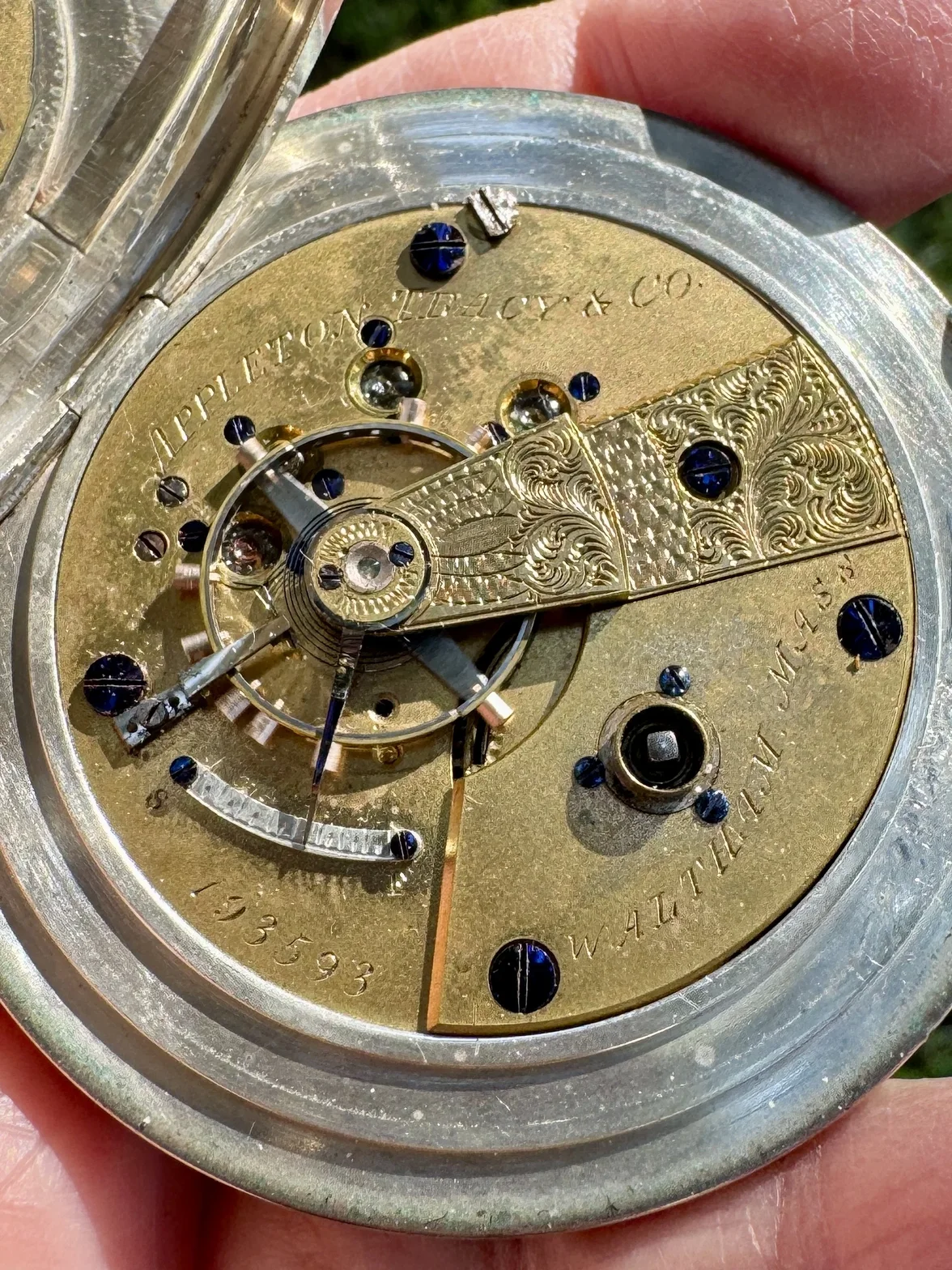
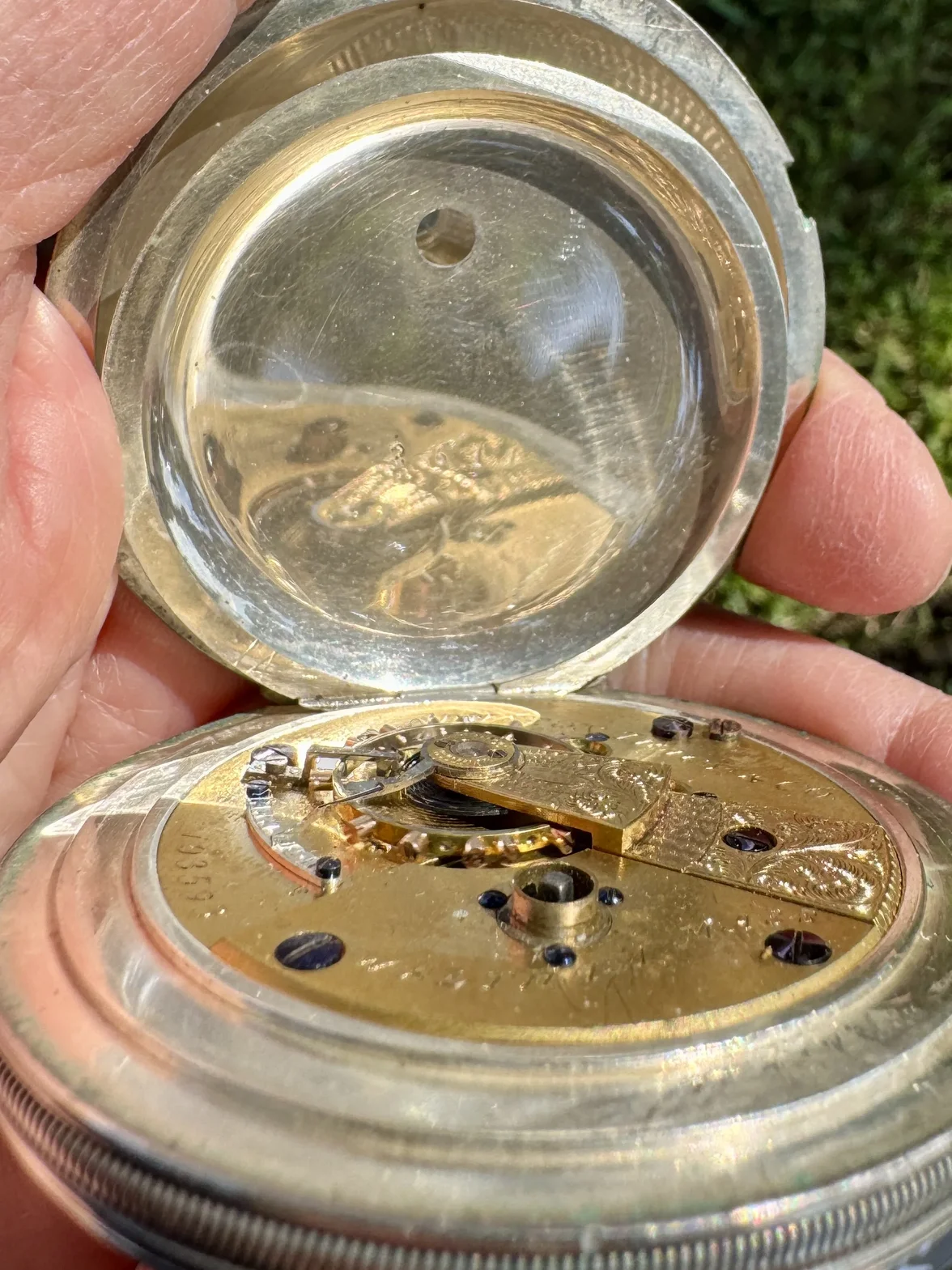
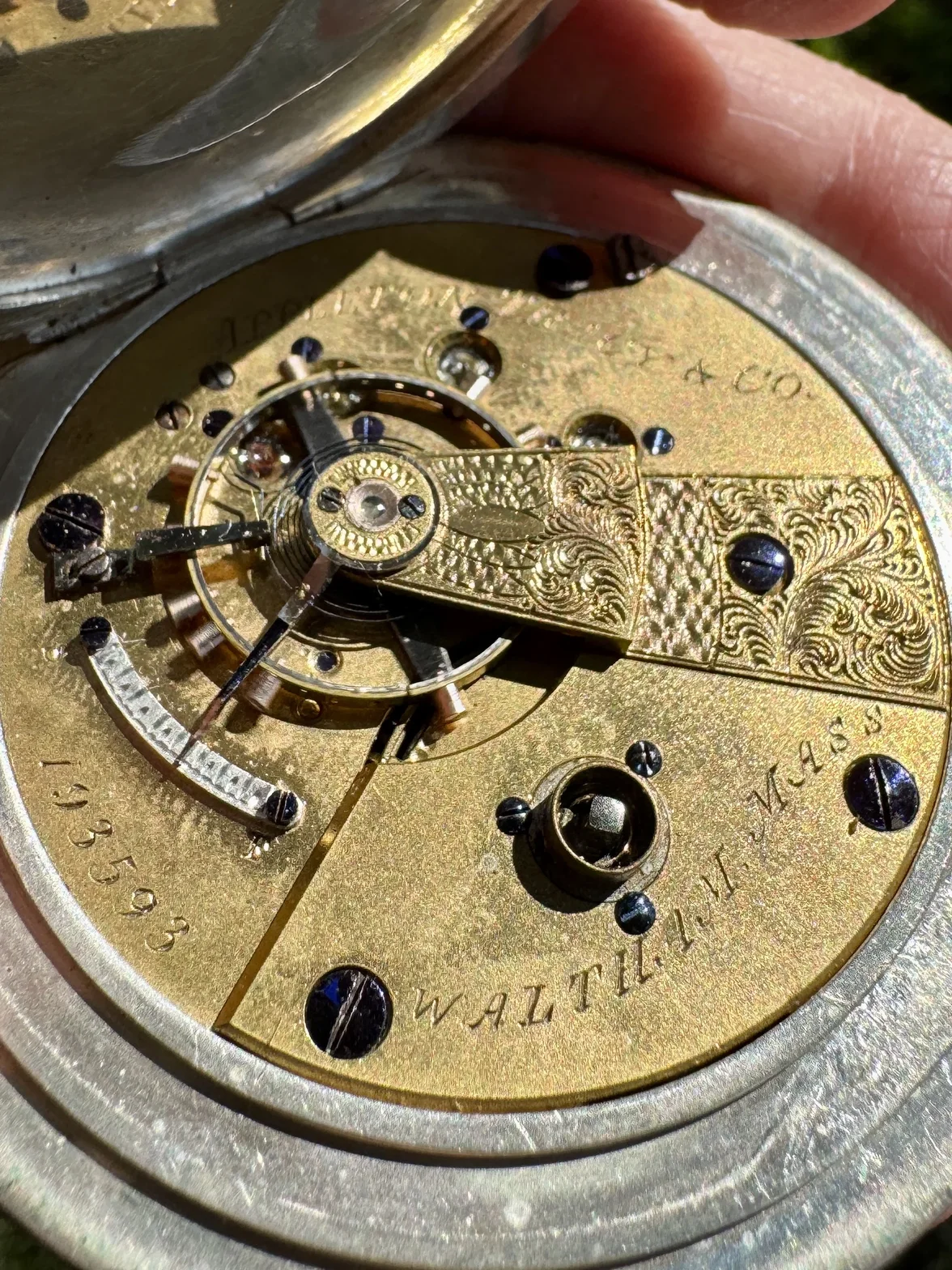
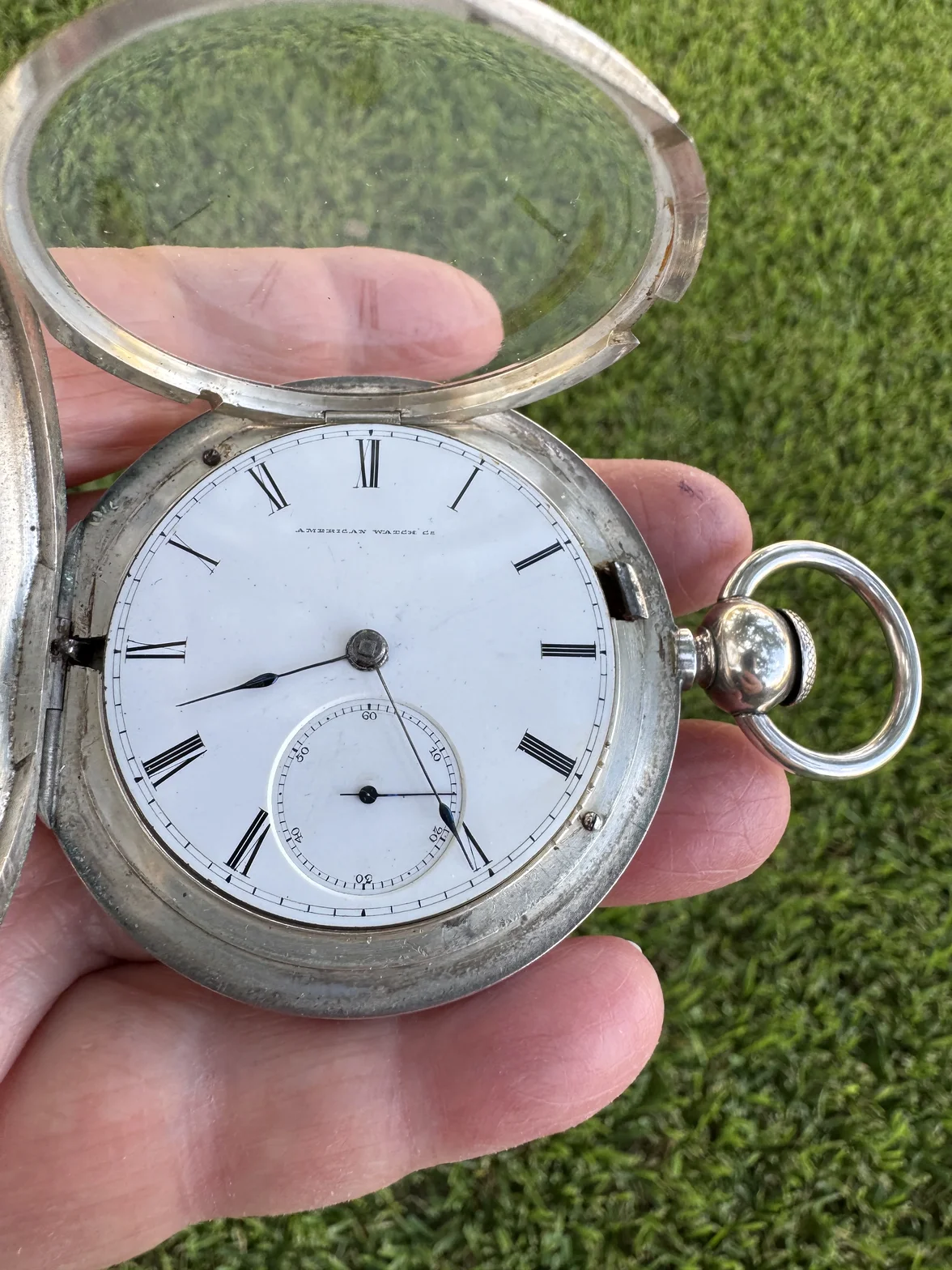
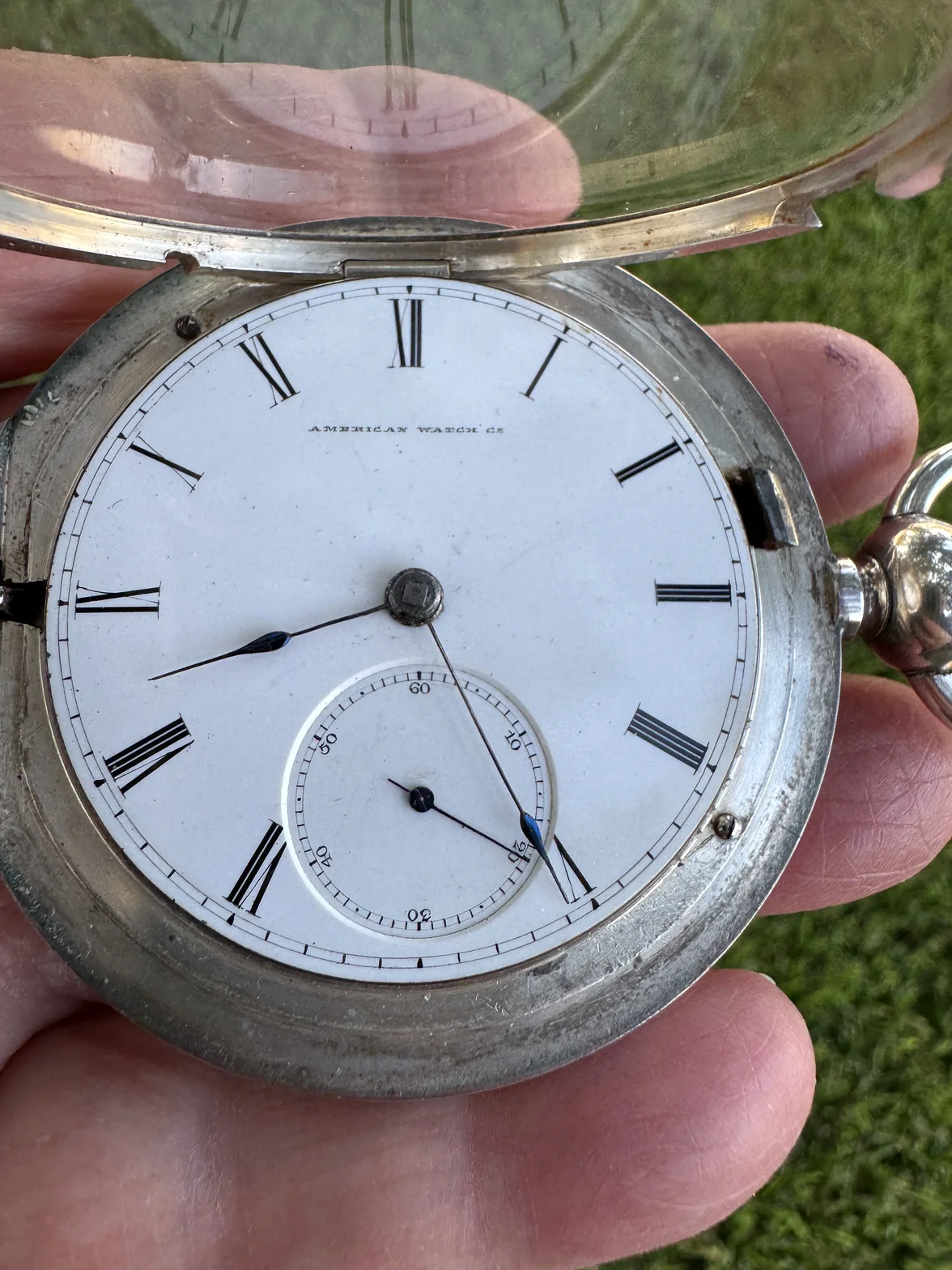
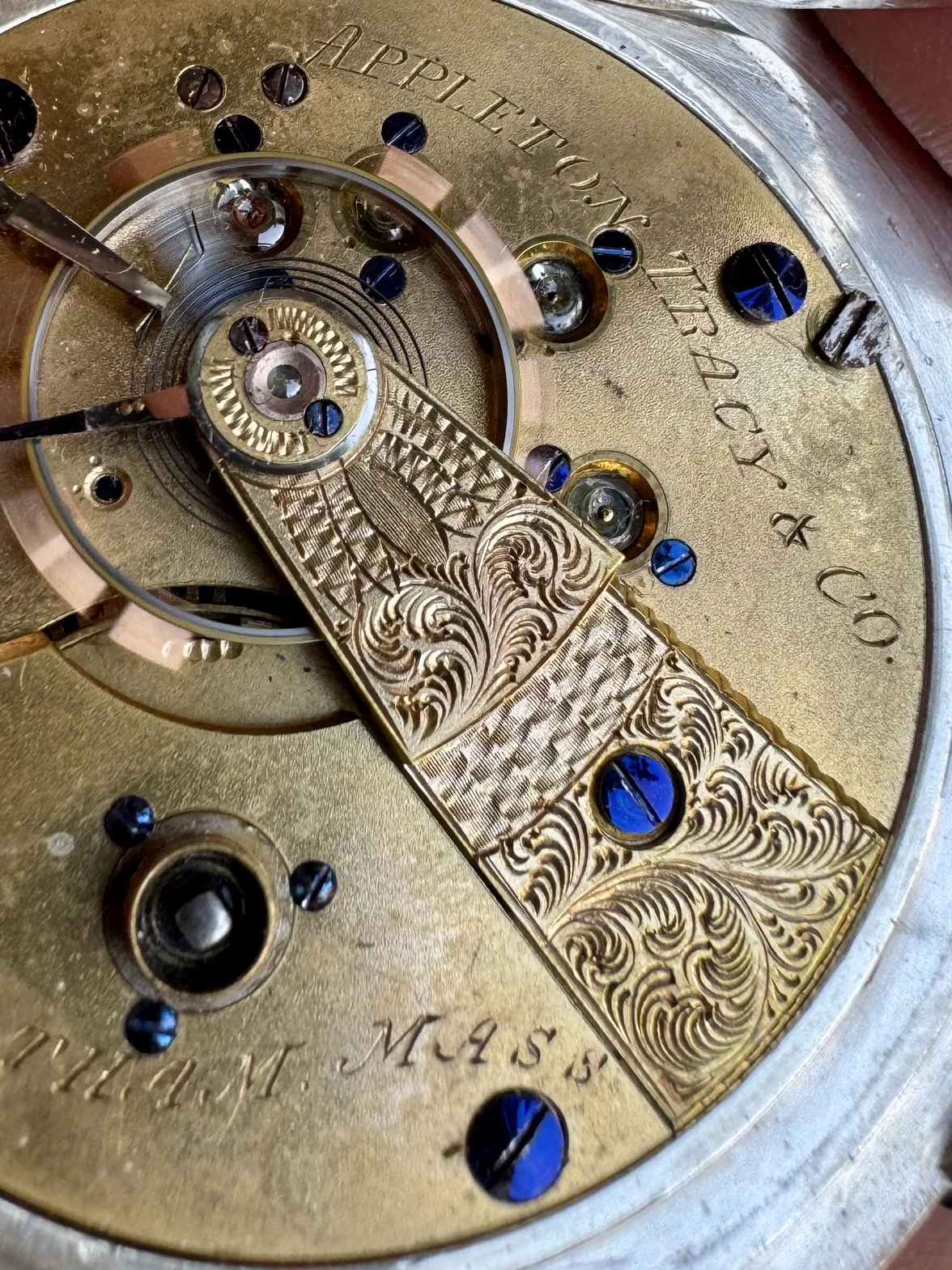
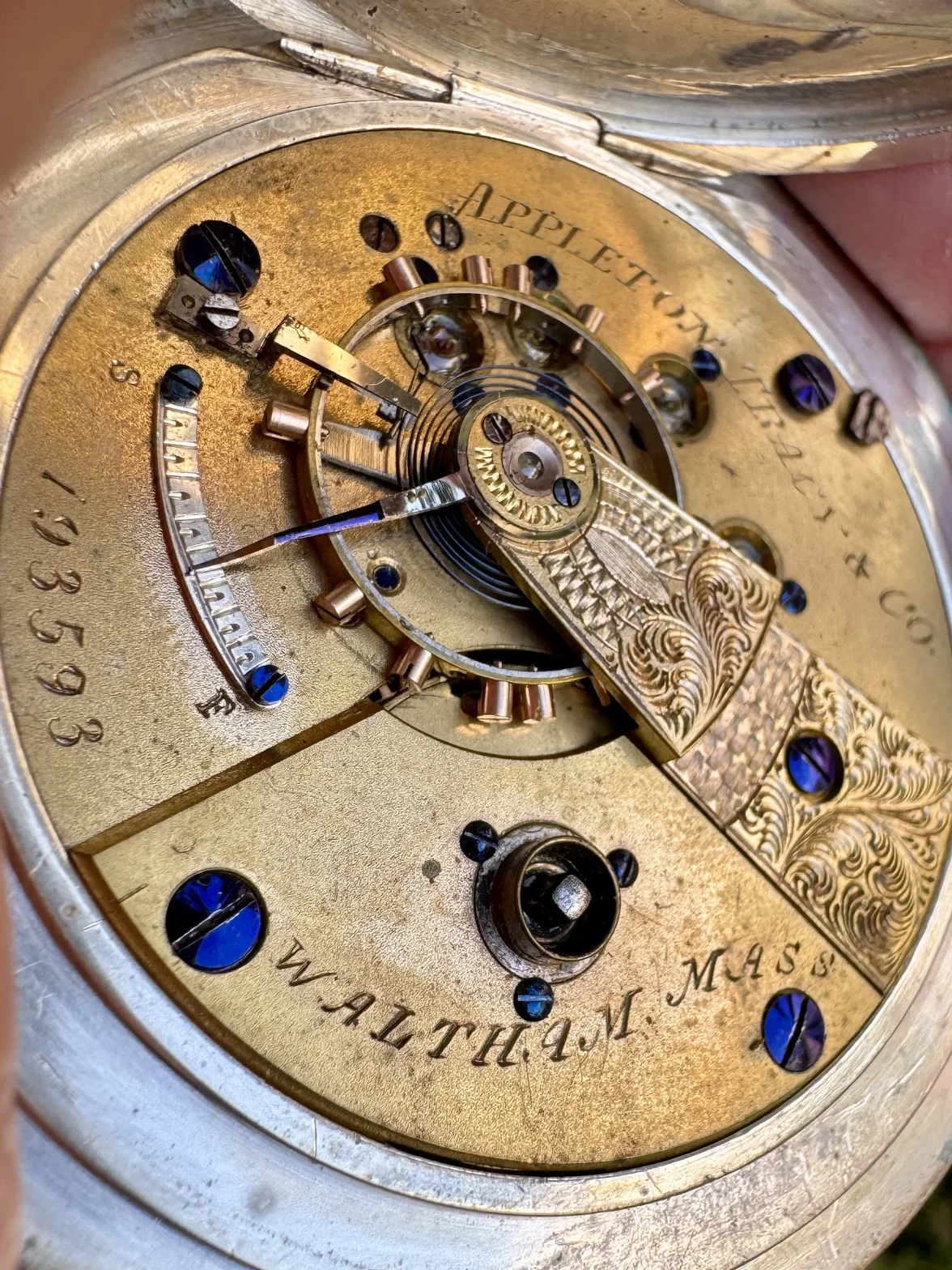
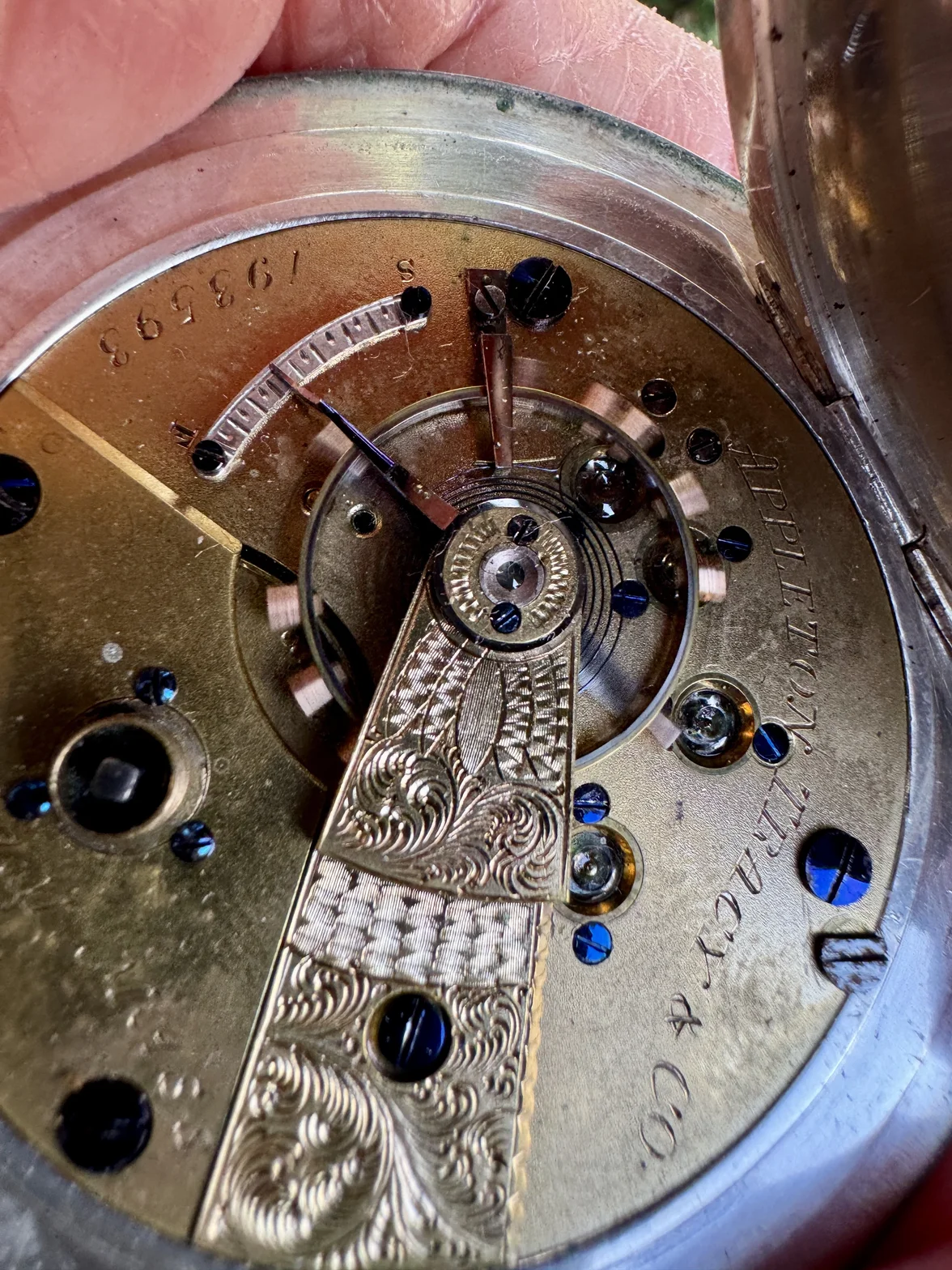
18s American Watch Co. 15j Appleton Tracy & Co grade Model 1857 with key.
Serial #193593 Year:1865.
Elongated spade teardrop blued handset. No hairline dial.
Gilt plates. Hand-chased balance cock.
Unserviced

This was a Factory documented special run of 1000 movements with the First Series Style 1 "Under-Sprung" layout with blued regulator arm arching over the hairspring and silver applied scale. Bimetallic balance wheel. Maybe to meet increased demand for luxury goods post American Civil War. Or to test a new layout of their iconic Model 1857. Definitely upgraded to the max.
Big, nifty looking sapphire jewels with a clear balance jewel.
Giant, blocky poising screws gives this a healthy swing.

Clad in a bespoke,Sterling Silver case made in Switzerland with Hallmarks indicating a local craftsman.

 
Posts
8,807
Likes
62,373
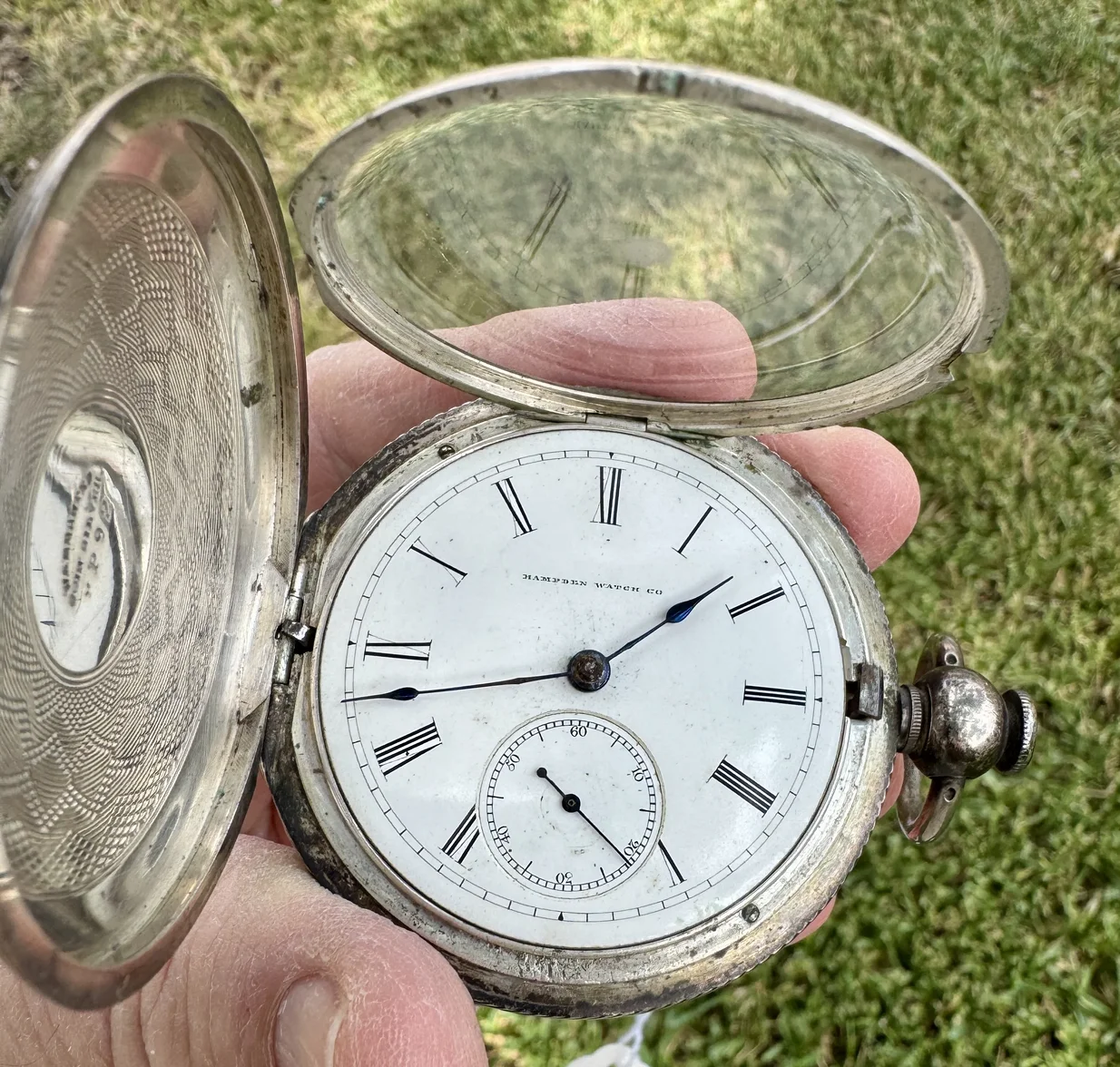
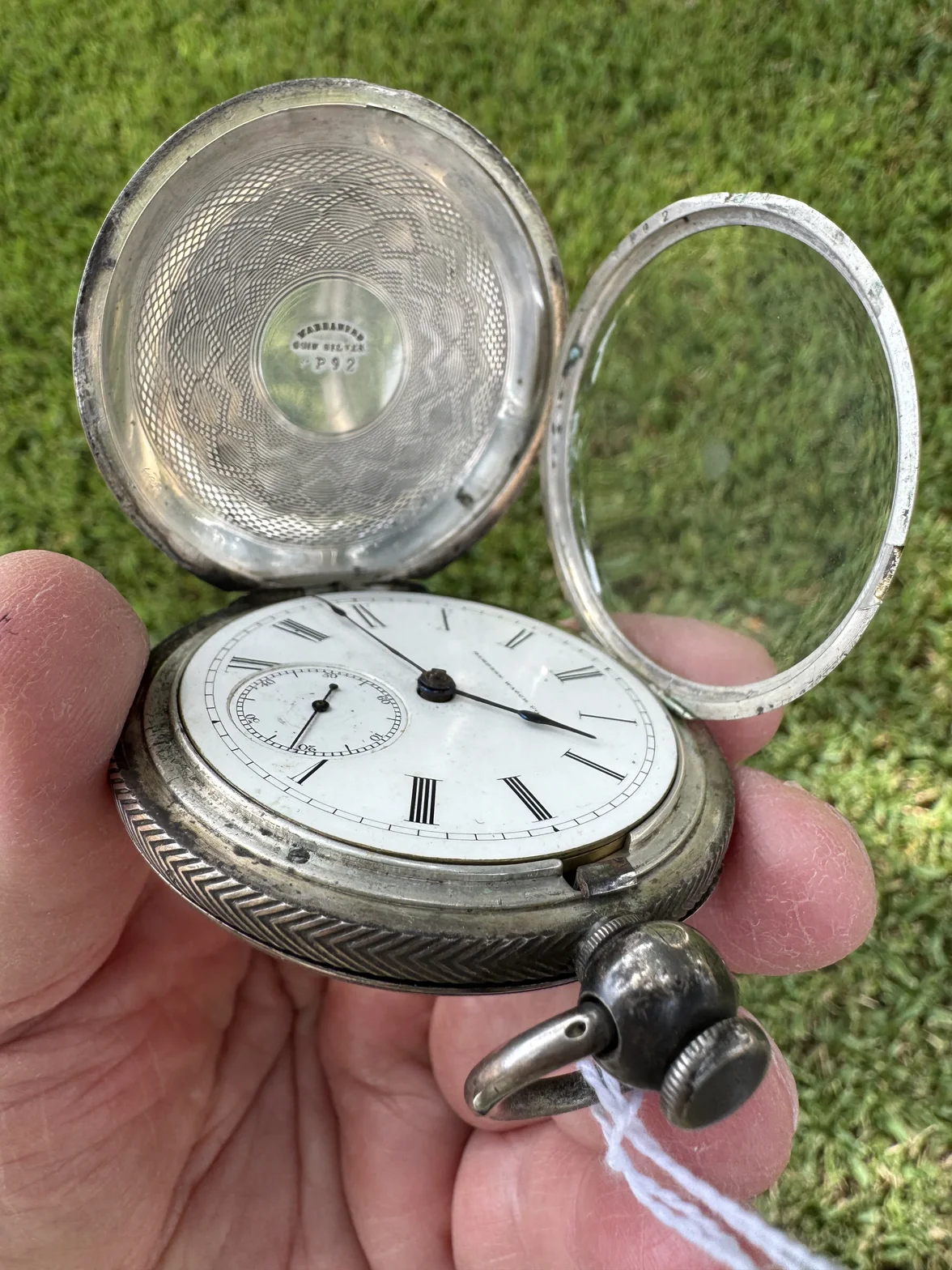
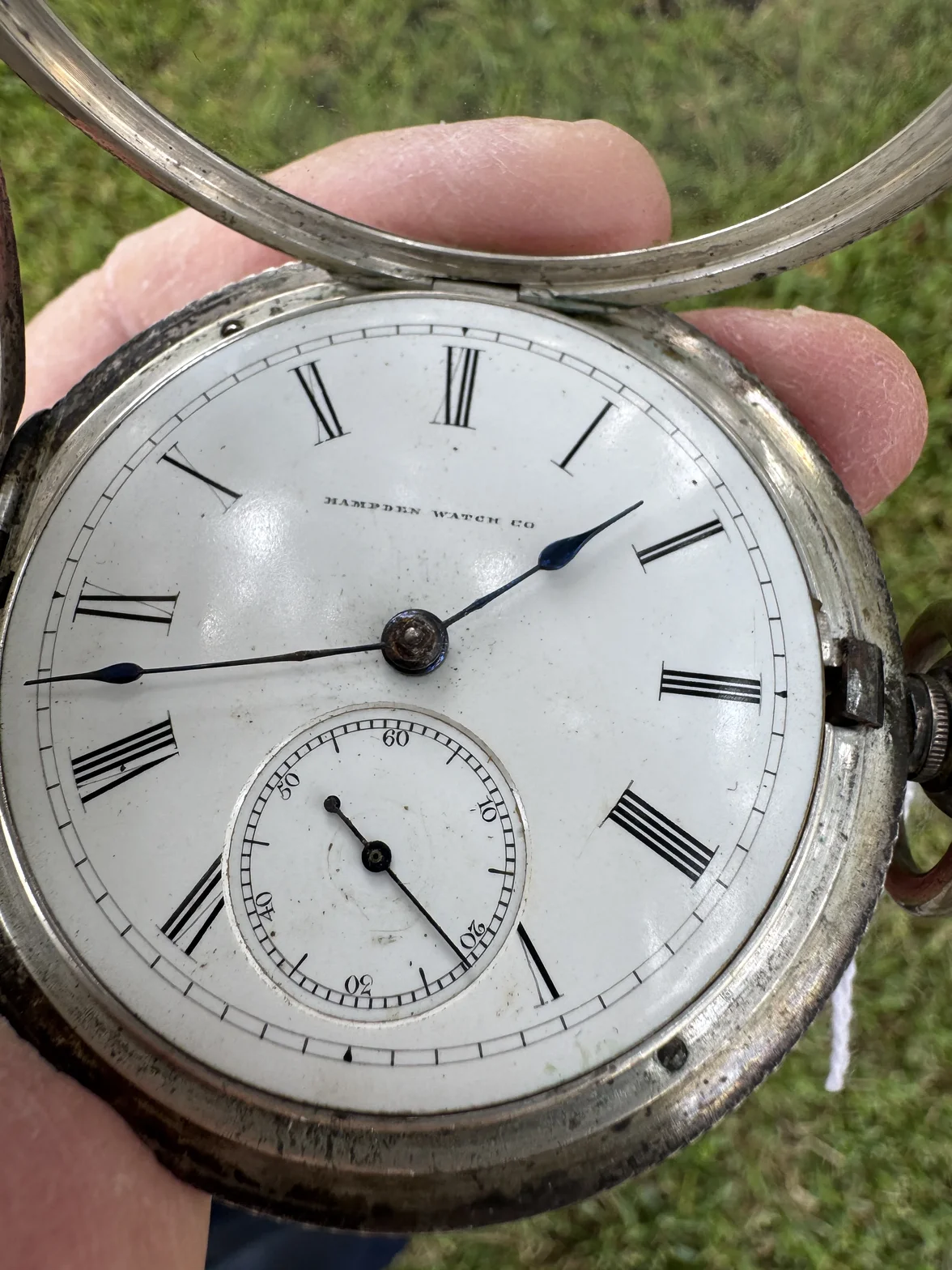
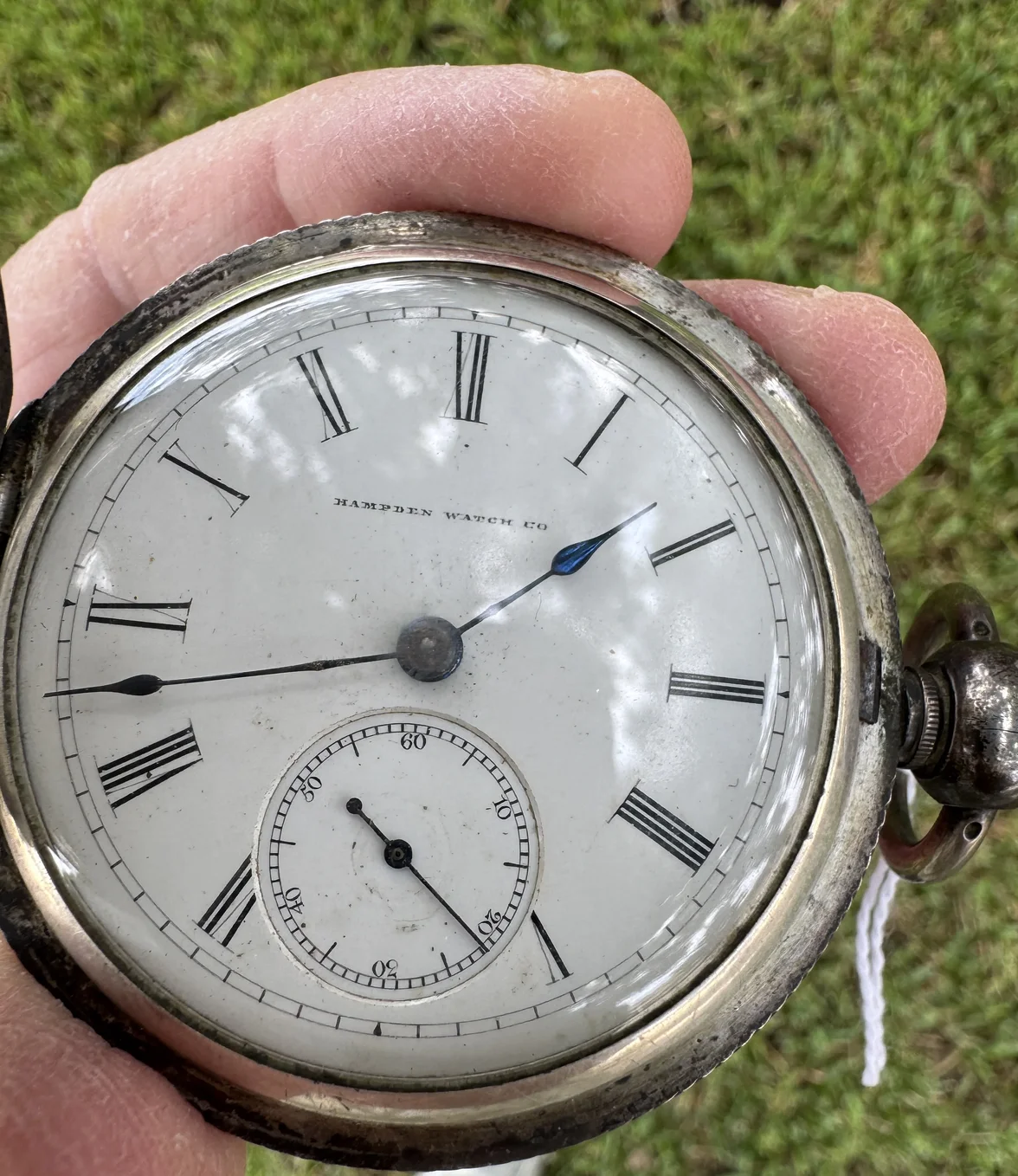
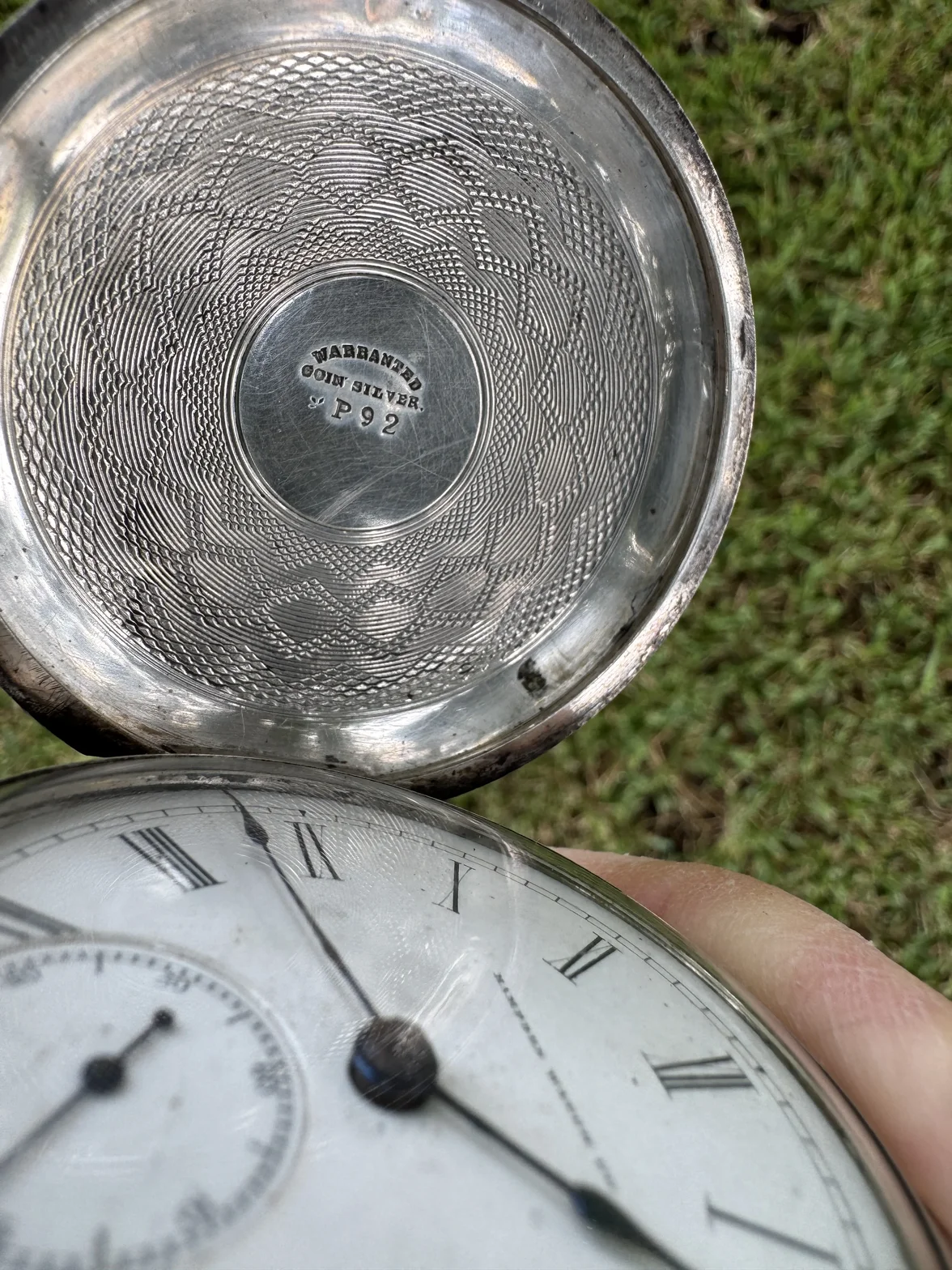
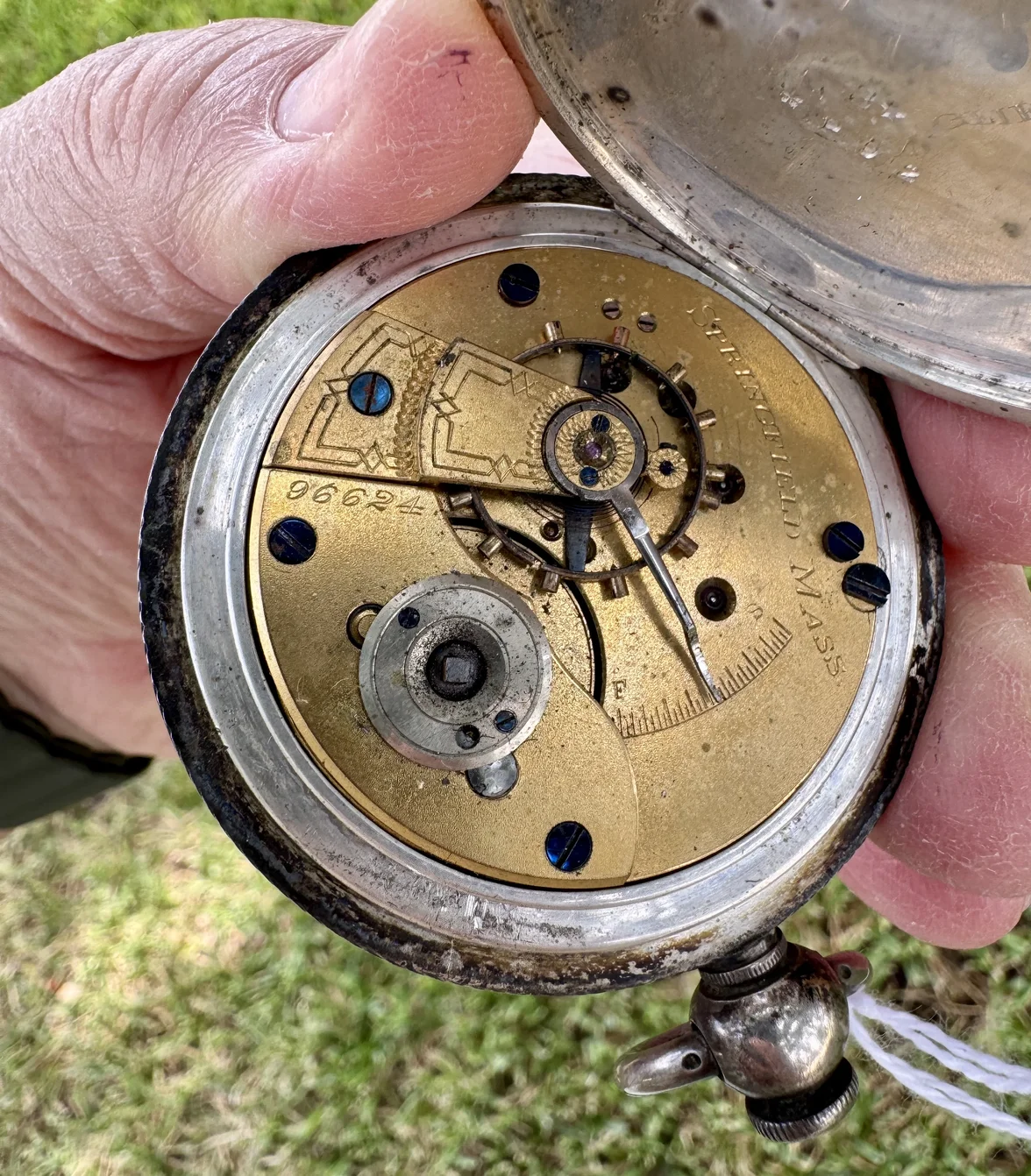
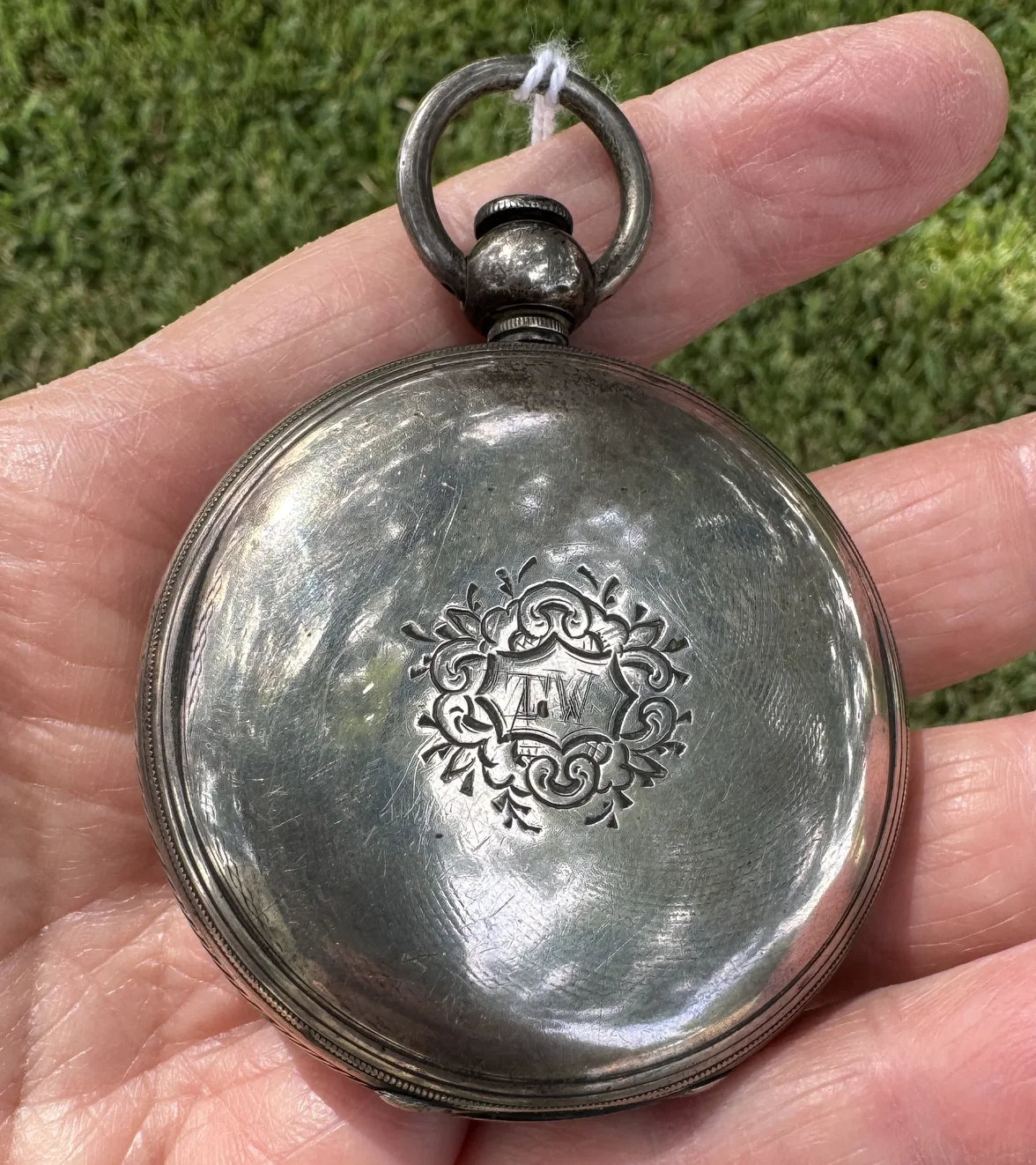
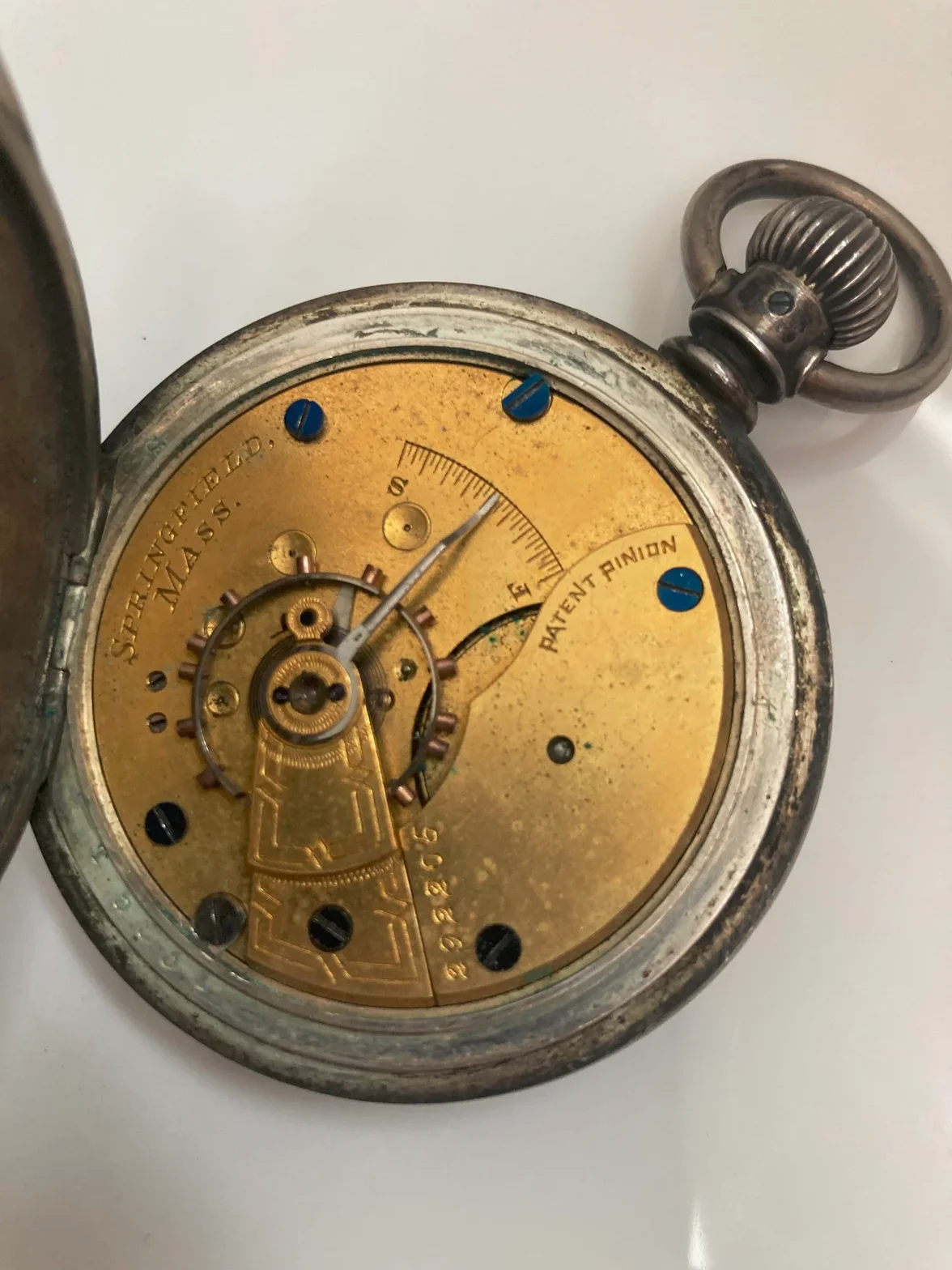
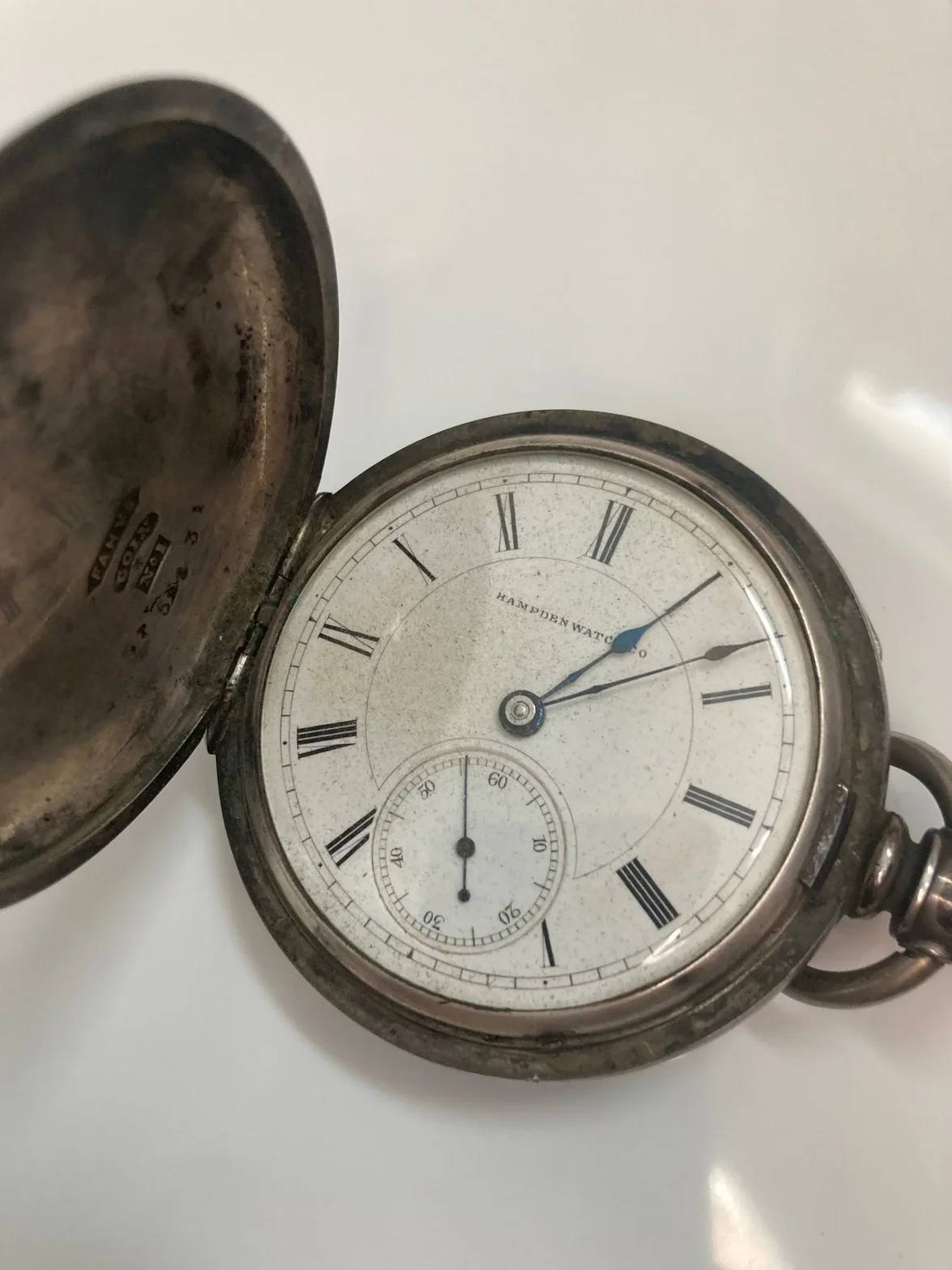
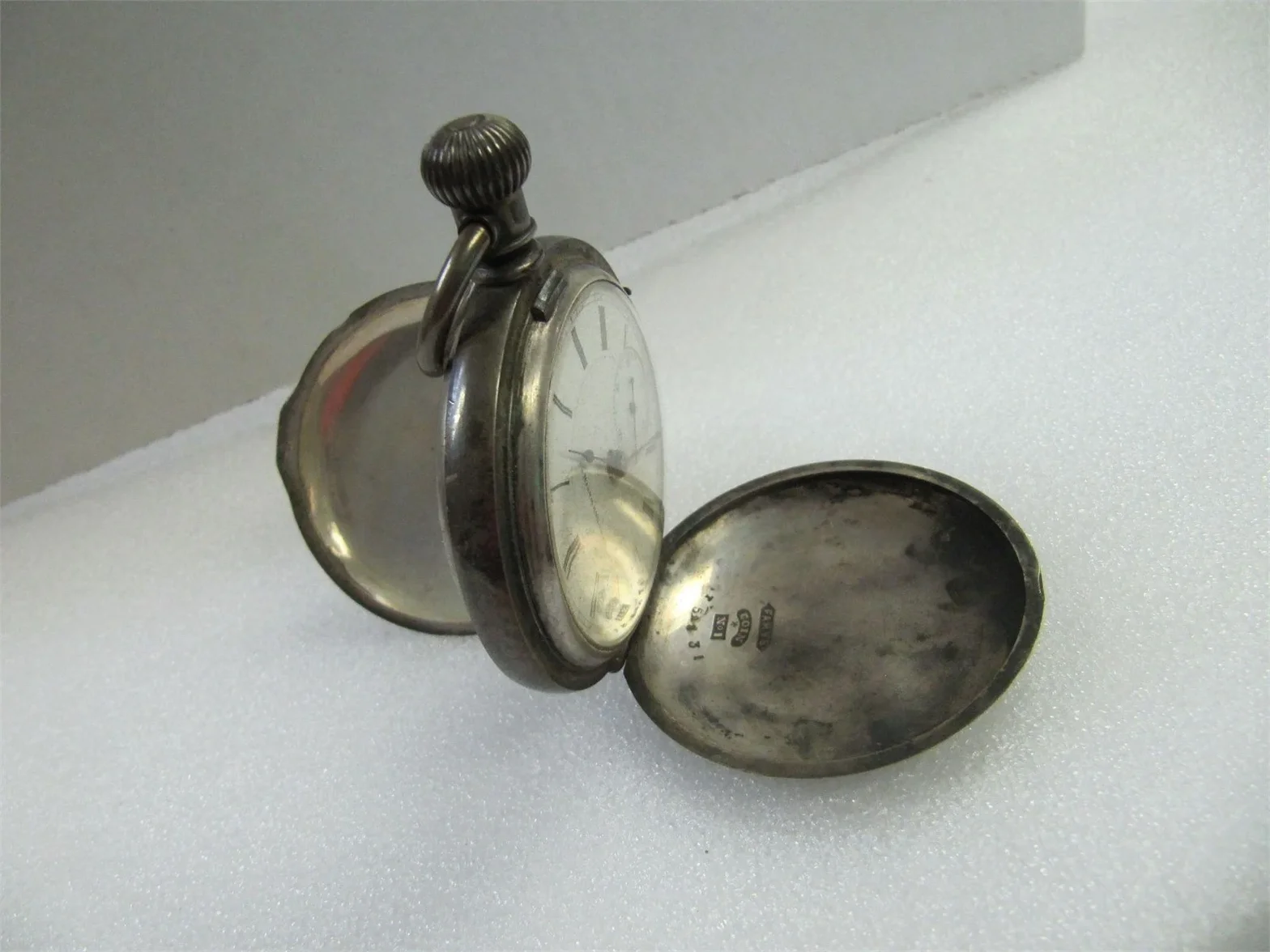
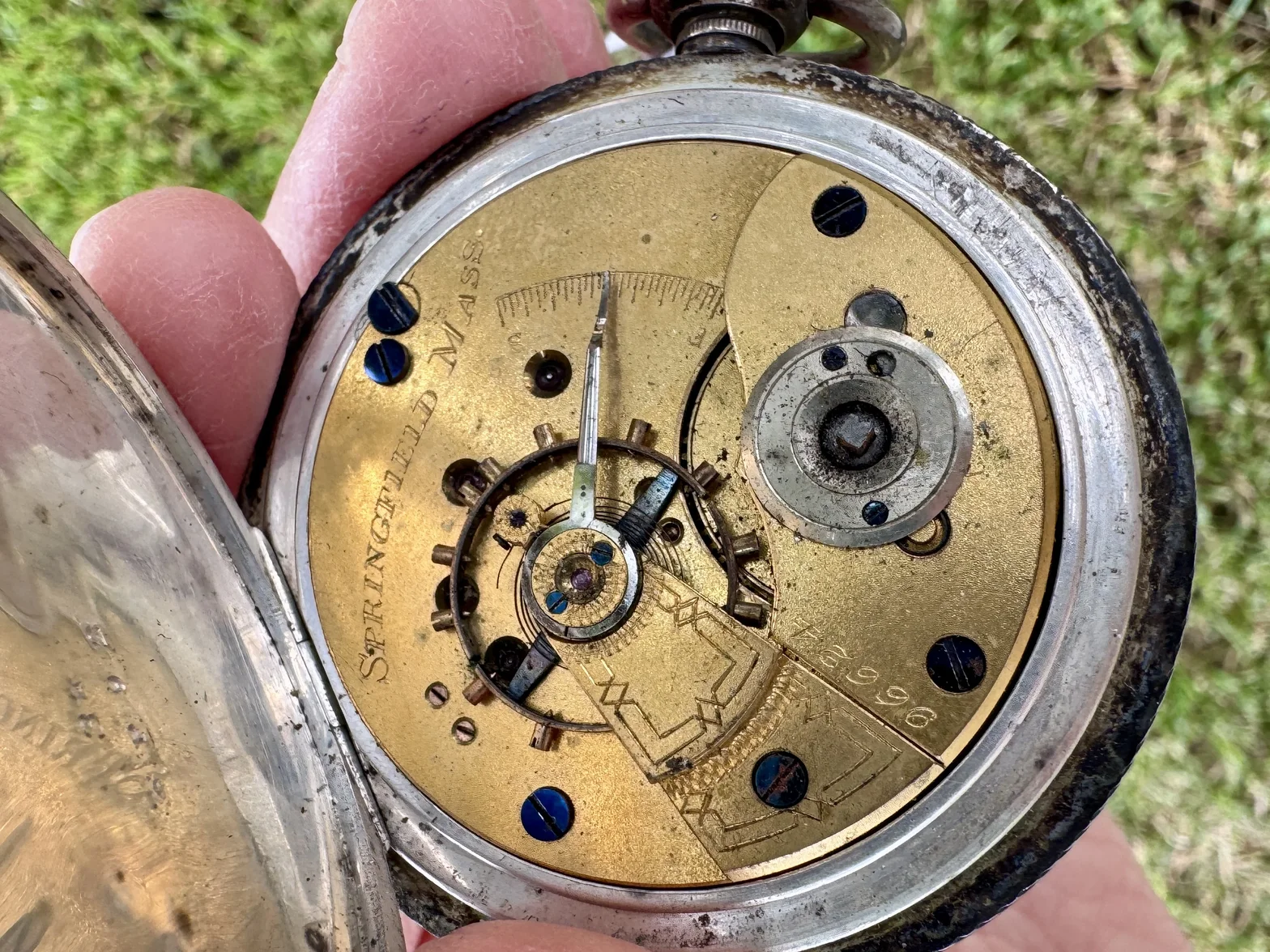
Pre Dueber and pre-move to Canton, when they were in Springfield, Mass. a Hampden 18s “Springfield “ grade 11j model 2. KWKS Year: 1878.
Nifty coin silver Brooklyn Watch Case Company case pre buyout by Dueber.

Love the design on the front lid.

 
Posts
100
Likes
256
Pre Dueber and pre-move to Canton, when they were in Springfield, Mass. a Hampden 18s “Springfield “ grade 11j model 2. KWKS Year: 1878.
Nifty coin silver Brooklyn Watch Case Company case pre buyout by Dueber.

Love the design on the front lid.

I really like your Hampden. I don't have many Hampden watches especially the early ones. A few months ago got a somewhat similar pocket watch to yours mine being 18S 7J 3 oz Fayes Coin Silver 3 hinge case made in 1884 SWLS and not running but the balance staffs look good fully wound up...dial is single sunk no chips or hairlines. I bought it primarily for the silver case not knowing if it worked or not when I bid on it. When I received it because it was not working and only 7 jewels I didn't know how to the value the watch ie. would it be impacted up by it being a pre Dueber Springfield Watch....if I spent the money to get it cleaned the additional cost would put me at about its market value up here. If I however replaced the movement by an early Waltham 11J PSB (currently a sidewinder) which is in running condition I thought I might be slightly ahead of the game. Seeing your watch I think maybe I will get this Hampden cleaned and running....thx for posting yours
 
Posts
15,920
Likes
47,769
I have an 18-size Dueber watch which is basically a Hampden. It is in an original gold filled Dueber hunter case. Funnily enough, I don’t have a picture of it. Dueber and Hampden are not my main focus.
 
Posts
8,807
Likes
62,373
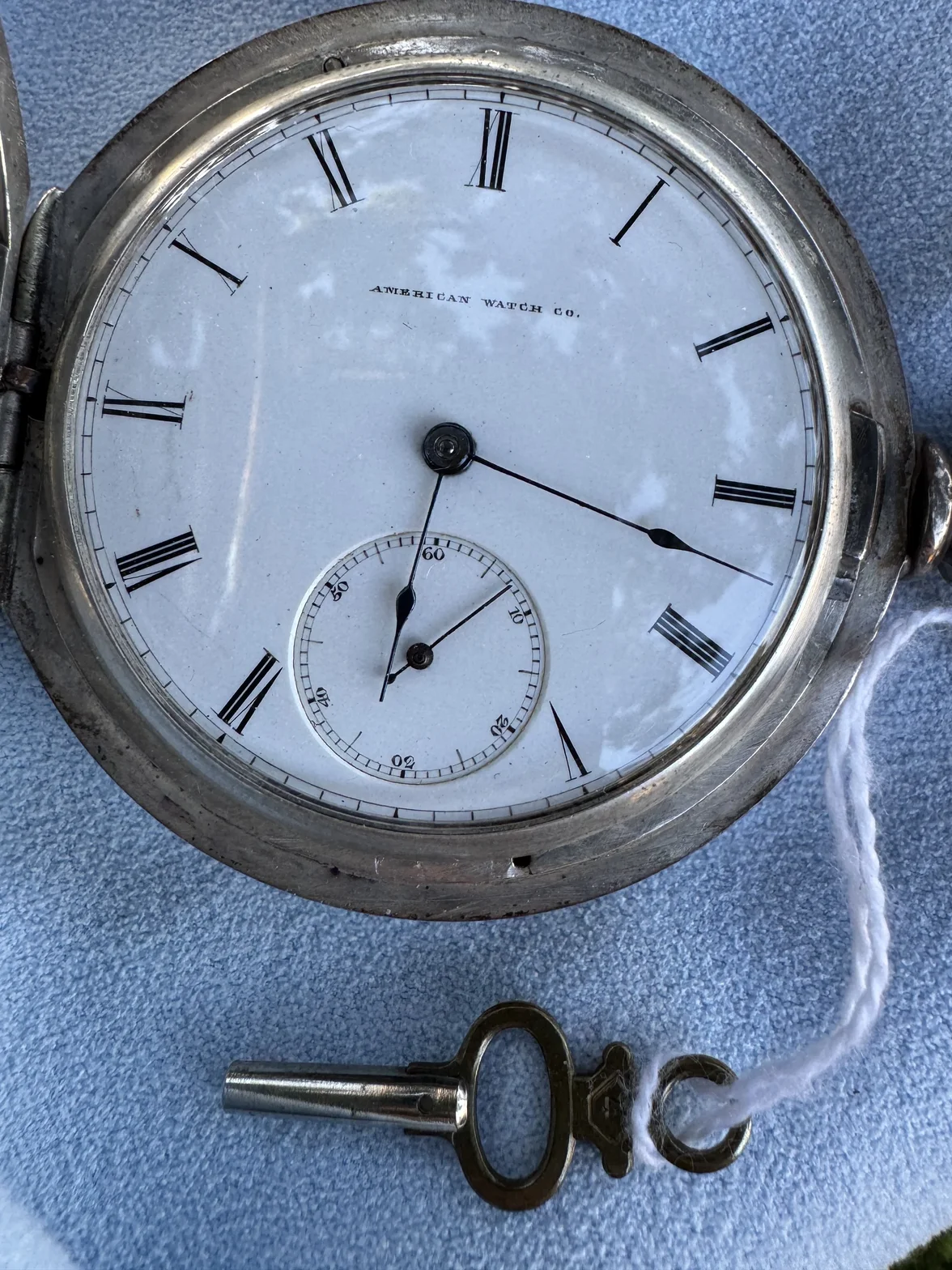
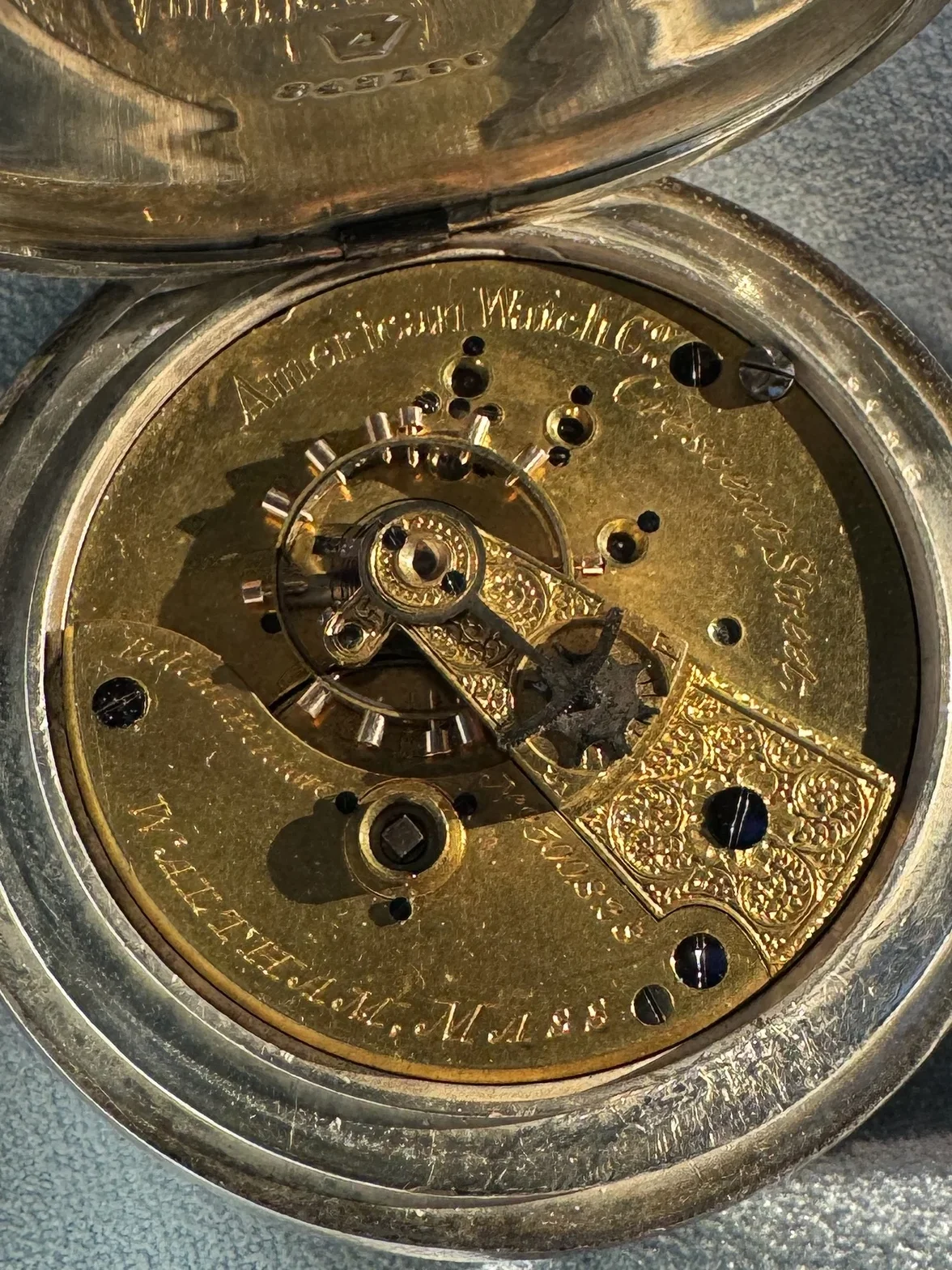
With this American Watch Company grade Crescent Street, Model 1870, Y1871 & 15j, we are at the dawn of the stem wind and RR grade movements. Mine is a transitional example having both rear wind and stem wind capabilities.
Lever set and a very early serial # 500828 in this models run.
Nifty 18s coin silver smooth case and #4 key. Serviced and accurate.

 
Posts
912
Likes
4,870
With this American Watch Company grade Crescent Street, Model 1870, Y1871 & 15j, we are at the dawn of the stem wind and RR grade movements. Mine is a transitional example having both rear wind and stem wind capabilities.
Lever set and a very early serial # 500828 in this models run.
Nifty 18s coin silver smooth case and #4 key. Serviced and accurate.
I love the pocket watches you and Canuck own. How many pocket warches do you have in your collection?
 
Posts
4,329
Likes
12,671
With this American Watch Company grade Crescent Street, Model 1870, Y1871 & 15j, we are at the dawn of the stem wind and RR grade movements. Mine is a transitional example having both rear wind and stem wind capabilities.
Lever set and a very early serial # 500828 in this models run.
Nifty 18s coin silver smooth case and #4 key. Serviced and accurate.

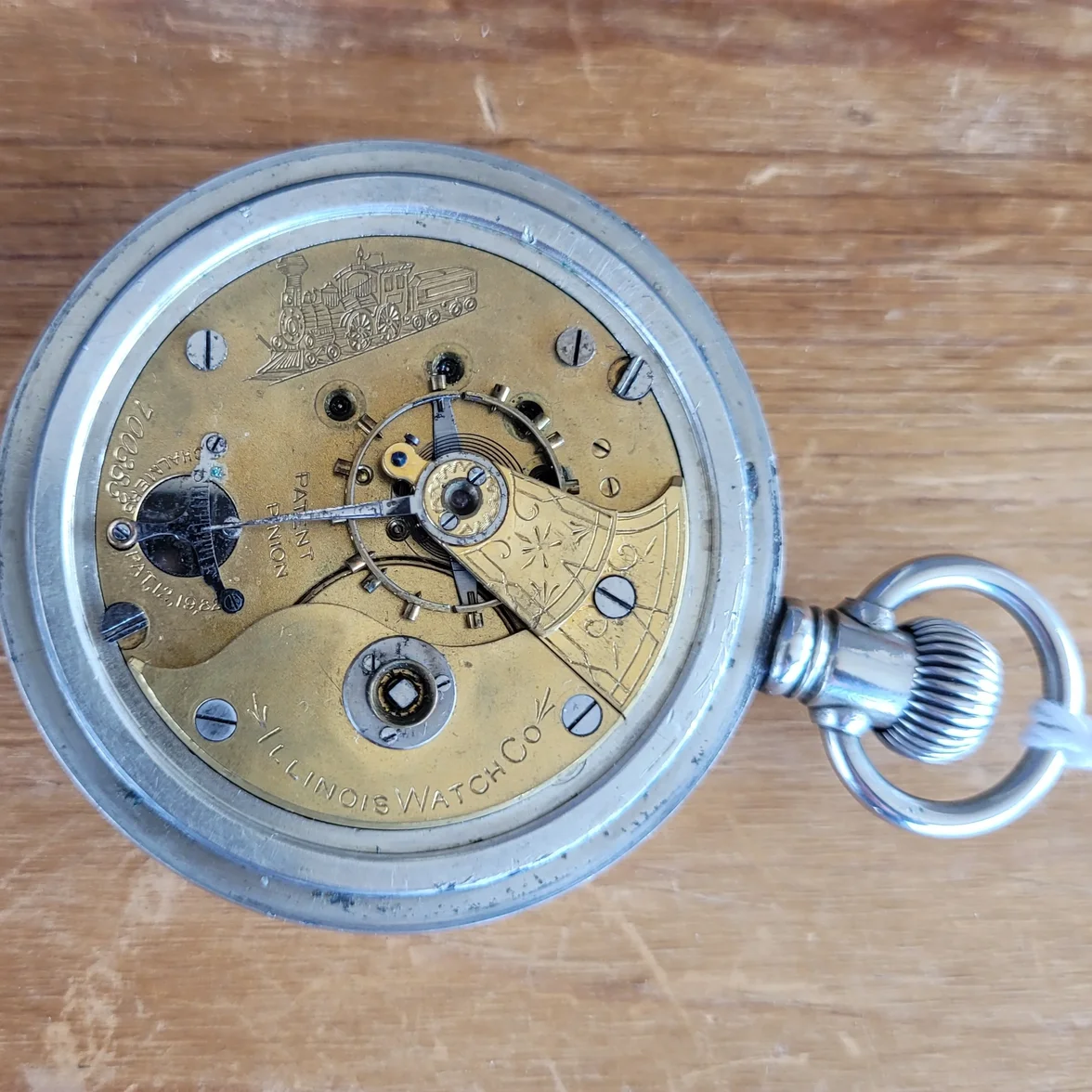
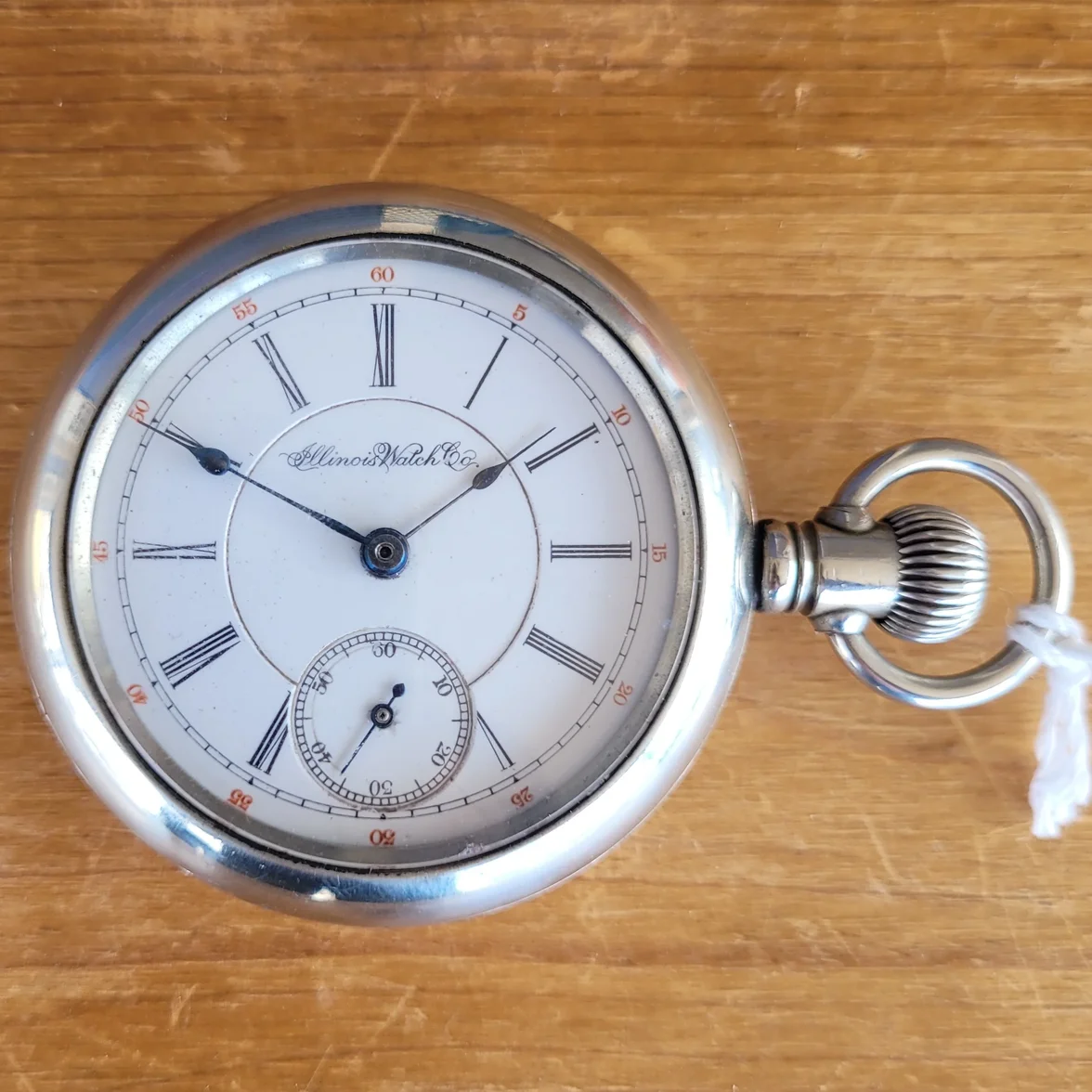
I have a few rail road standard transitional watches, but one of my favorites is not a standard watch. It's is my Illinois Model 2 Grade 4. There's something that's just fun about the locomotive engraving on the mov't.
 
Posts
15,920
Likes
47,769
The Illinois model 2, “Railroader” with 11-jewels was not railroad grade at the time it was made. Was the engraved locomotive on the movement a vanity thing? I don’t know if this was the situation with Illinois, but I have read that early stem wind movements occasionally had winding mechanisms that were unreliable, so if the watch could also be wound with a key, the wearer was never stuck with a watch he couldn’t rely on.

https://pocketwatchdatabase.com/search/result/illinois/700383