Calling all Pocket Watch Buffs

Posts
3,424
Likes
35,024
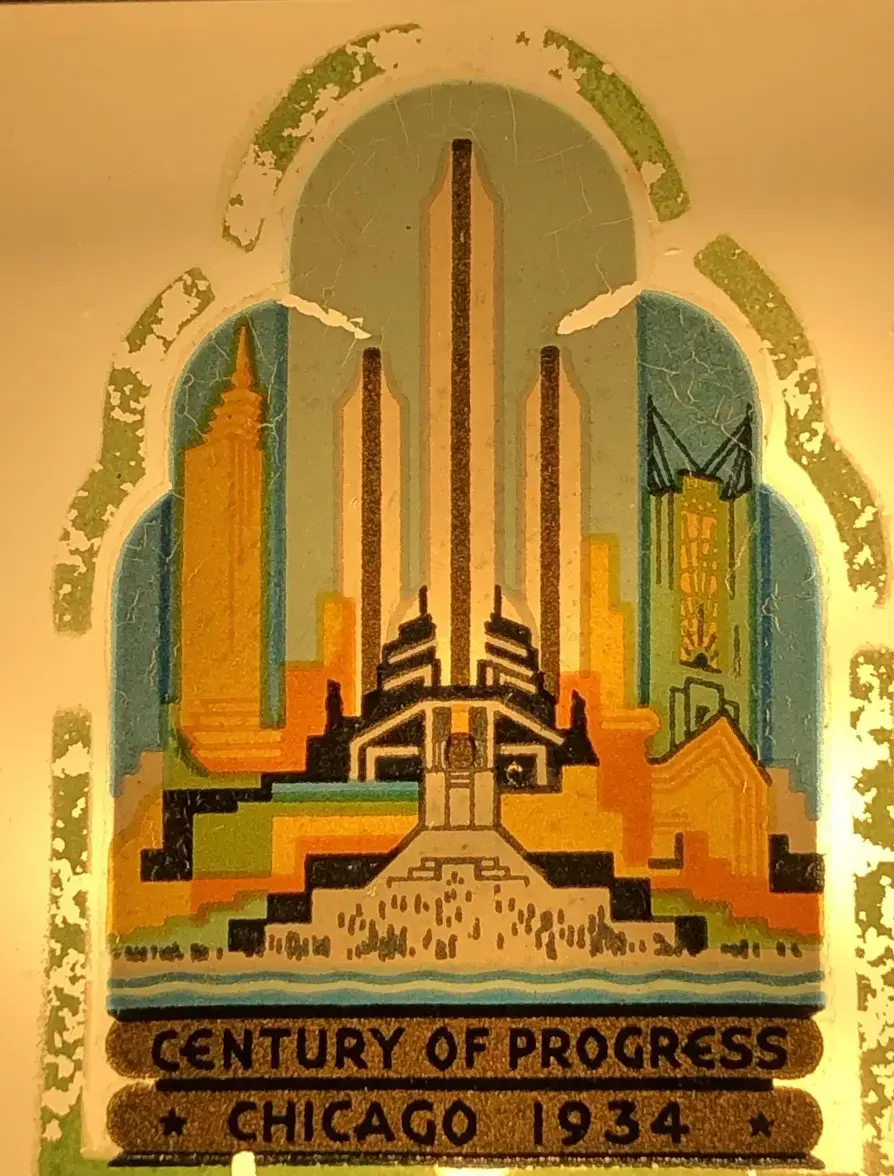
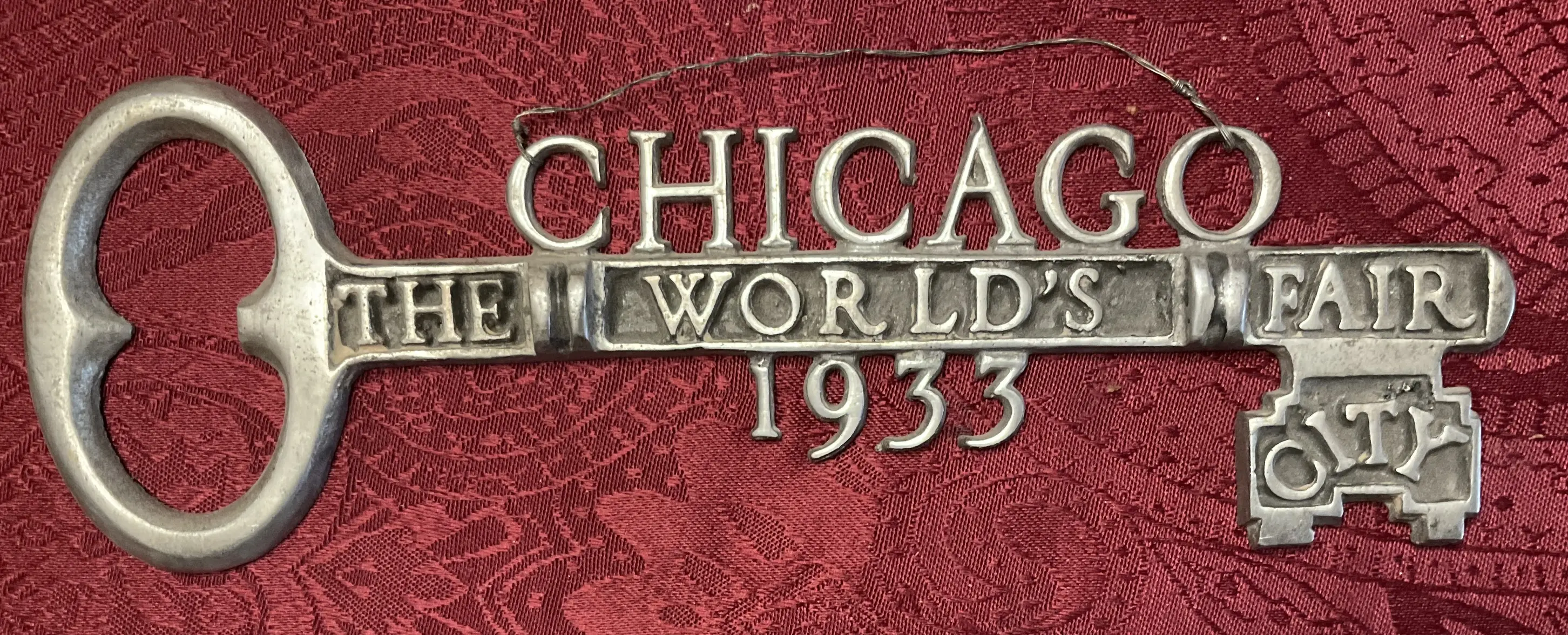
Somewhere around here I have a die-cast aluminum “key to the city” wall ornament that my late father bought when he visited Chicago for the “Century of Progress” World’s Fair in Chicago in 1933. My spouse and I bought souvenirs in Montreal when we visited Expo 67. I bought a meerschaum pipe, and she bought a ruby and pearl ring and a wolverine turban (winter hat).

Edited to add.

I found the key to the city of Chicago that my late father bought when he visited the 1933 Chicago “Century of Progress” World’s fair.

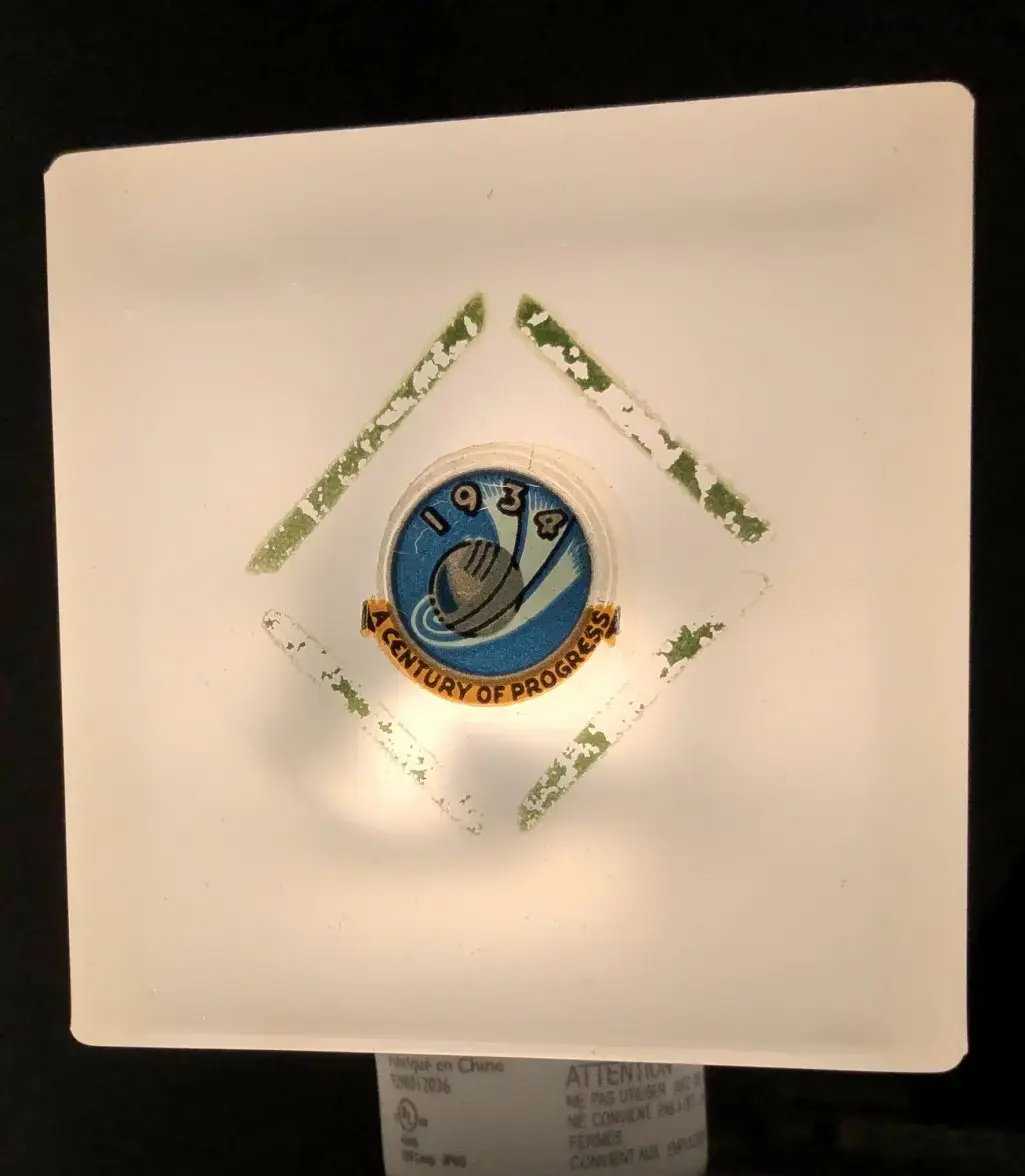
My 1934 Chicago World Fair lamp.
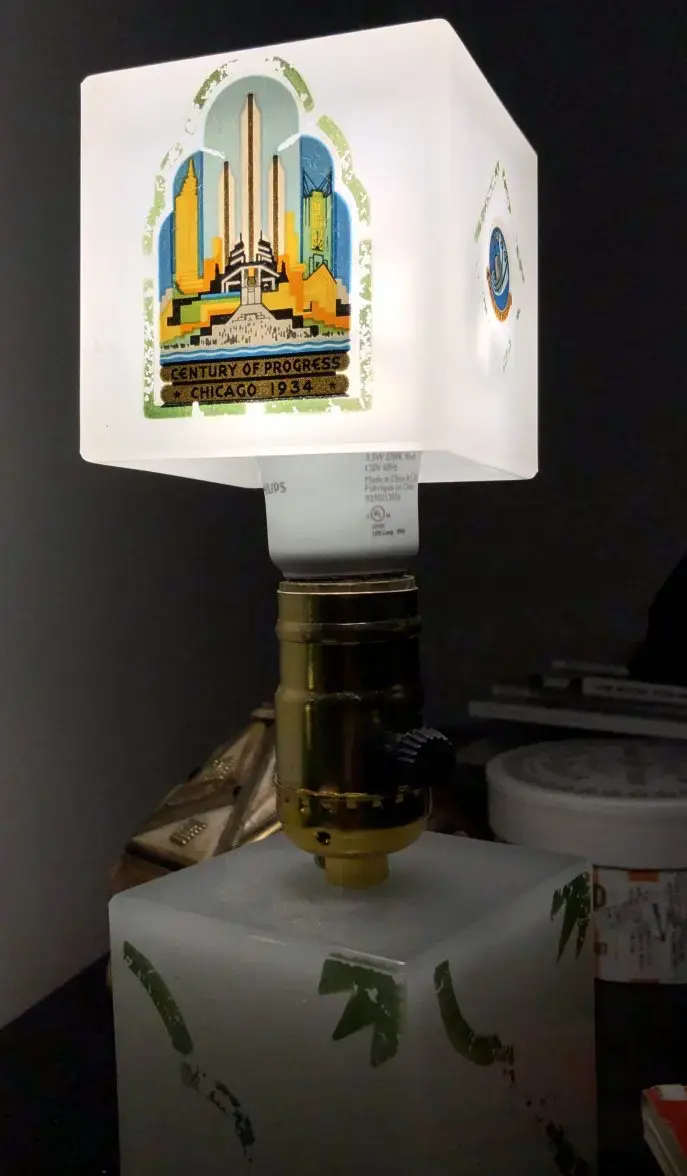


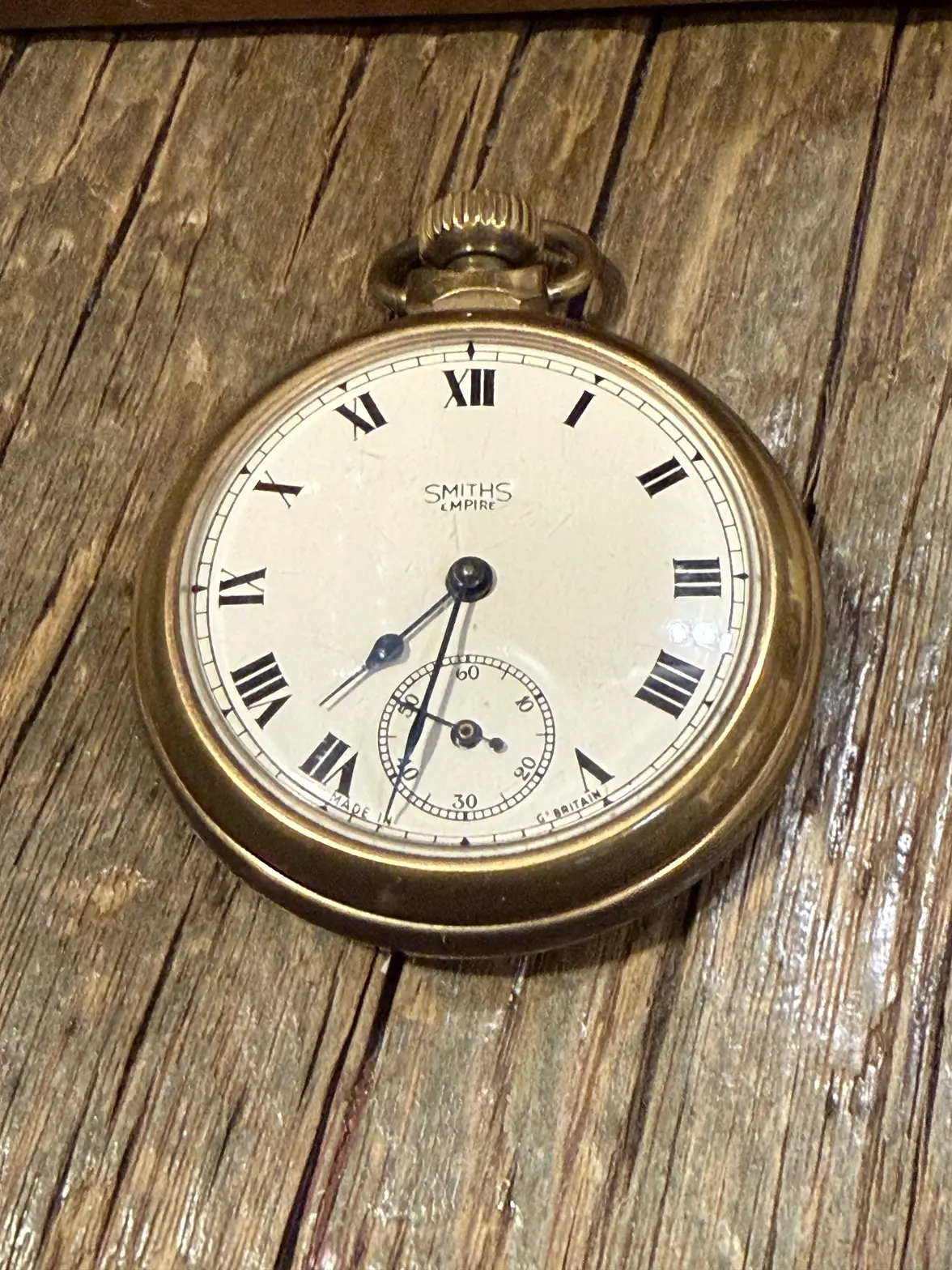
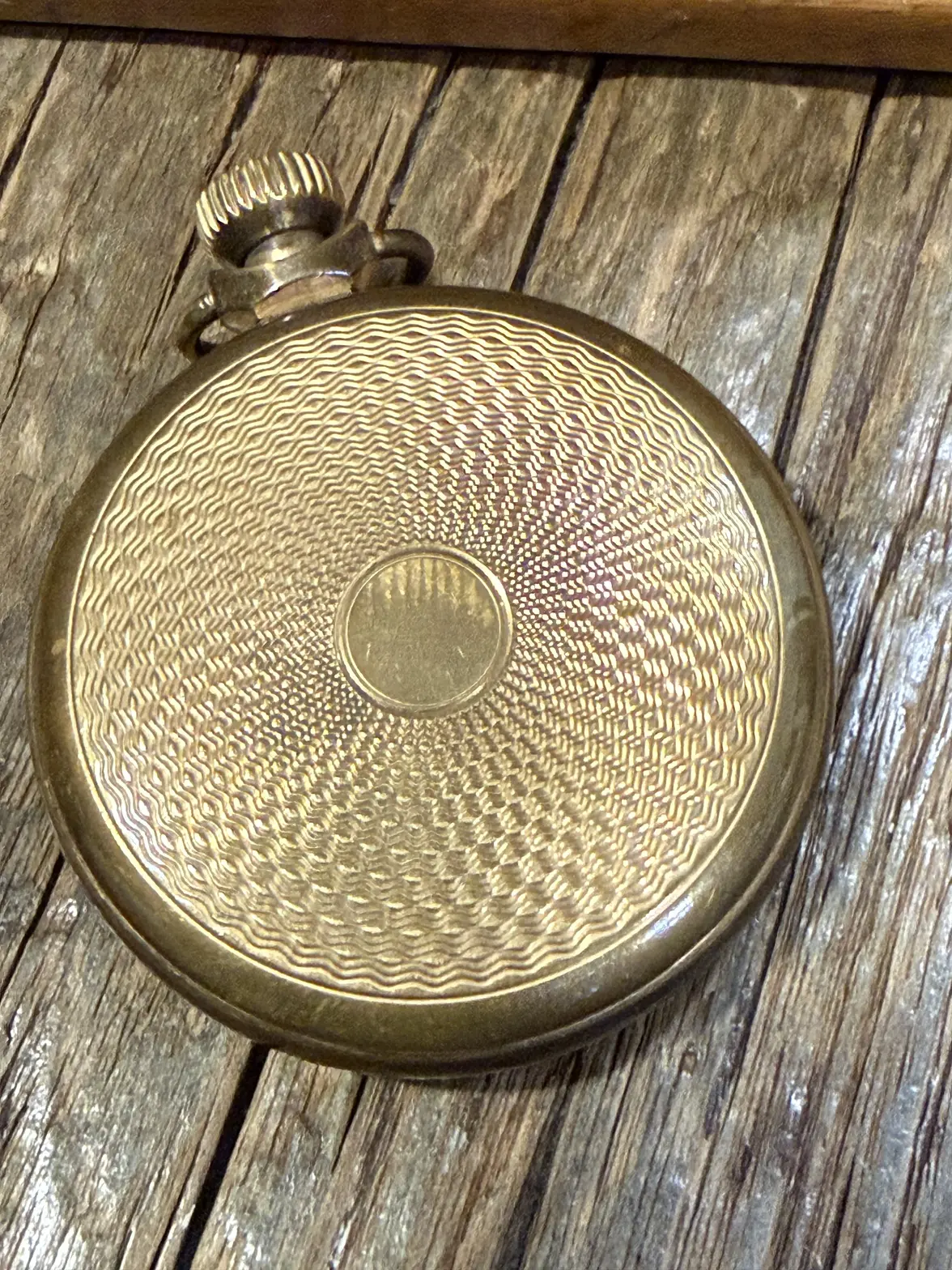
Ok, now back to pocket watches… maybe an Illinois…
 
Posts
3,424
Likes
35,024


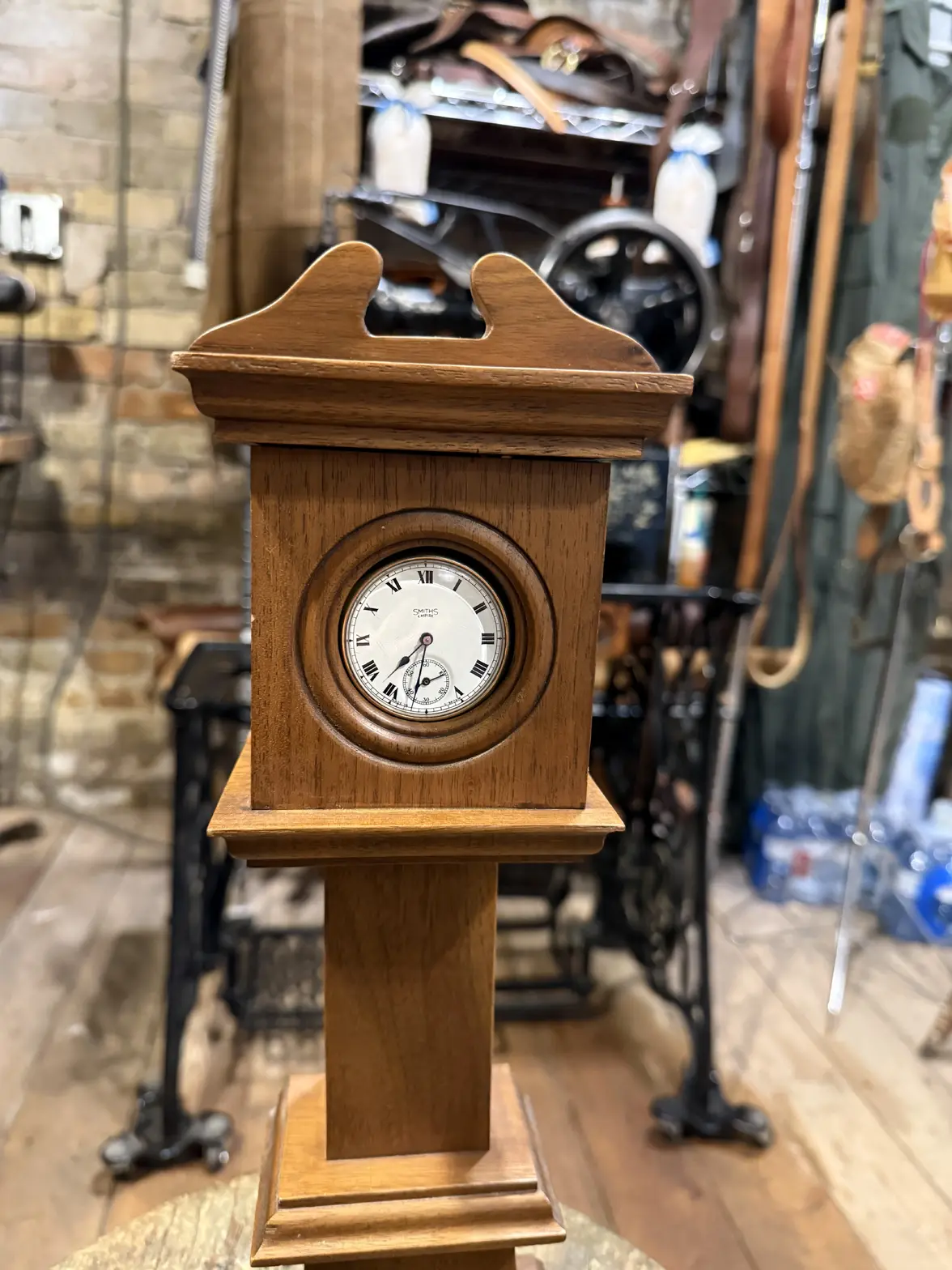
My only shop companion today. This one reminds me of Alpha. His is nicer.

 
81107862120__8F473B2F-80DF-4DCC-A13B-6AF403544BD6.MOV - 407.7 KB
Posts
15,920
Likes
47,769
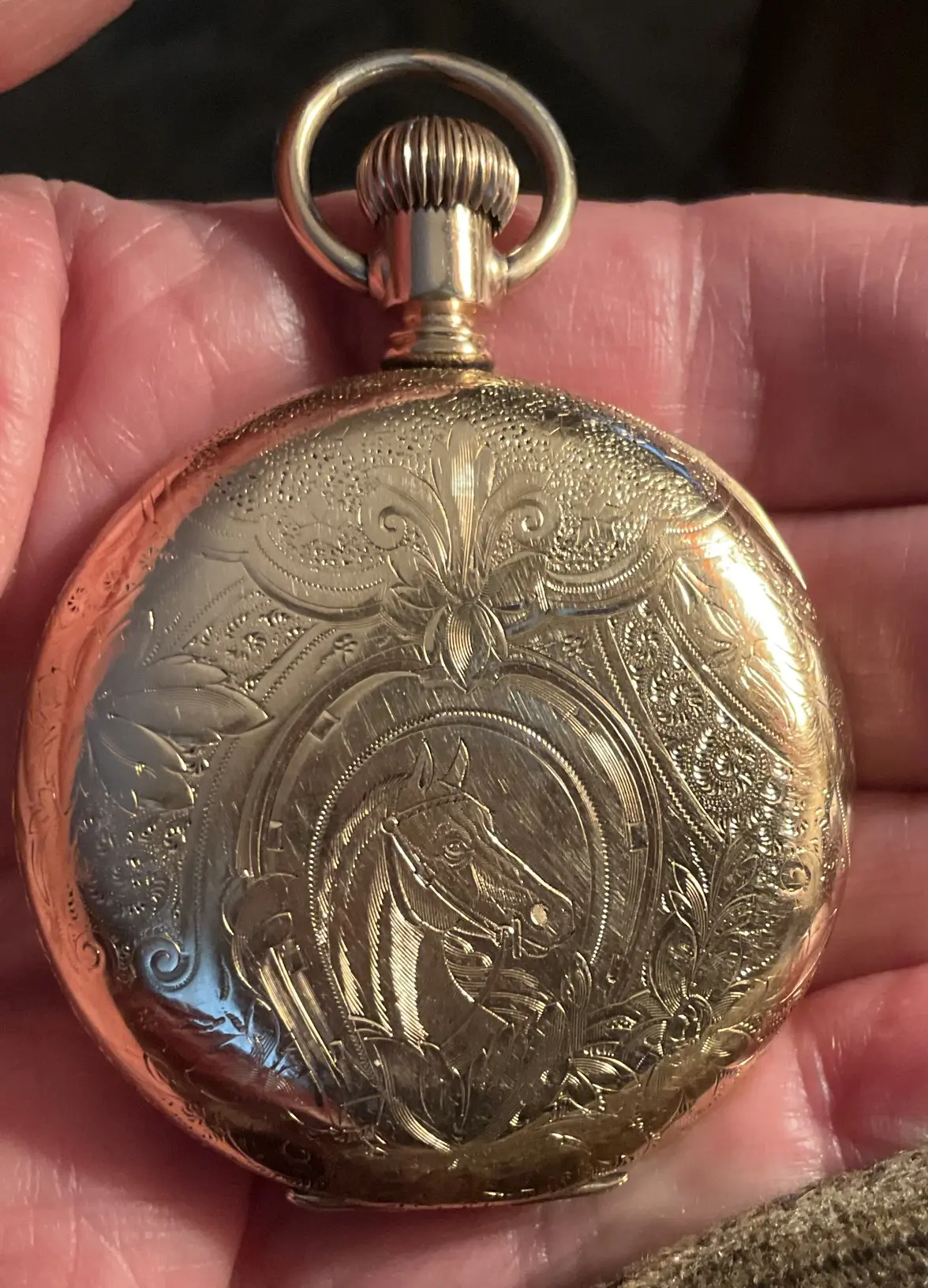
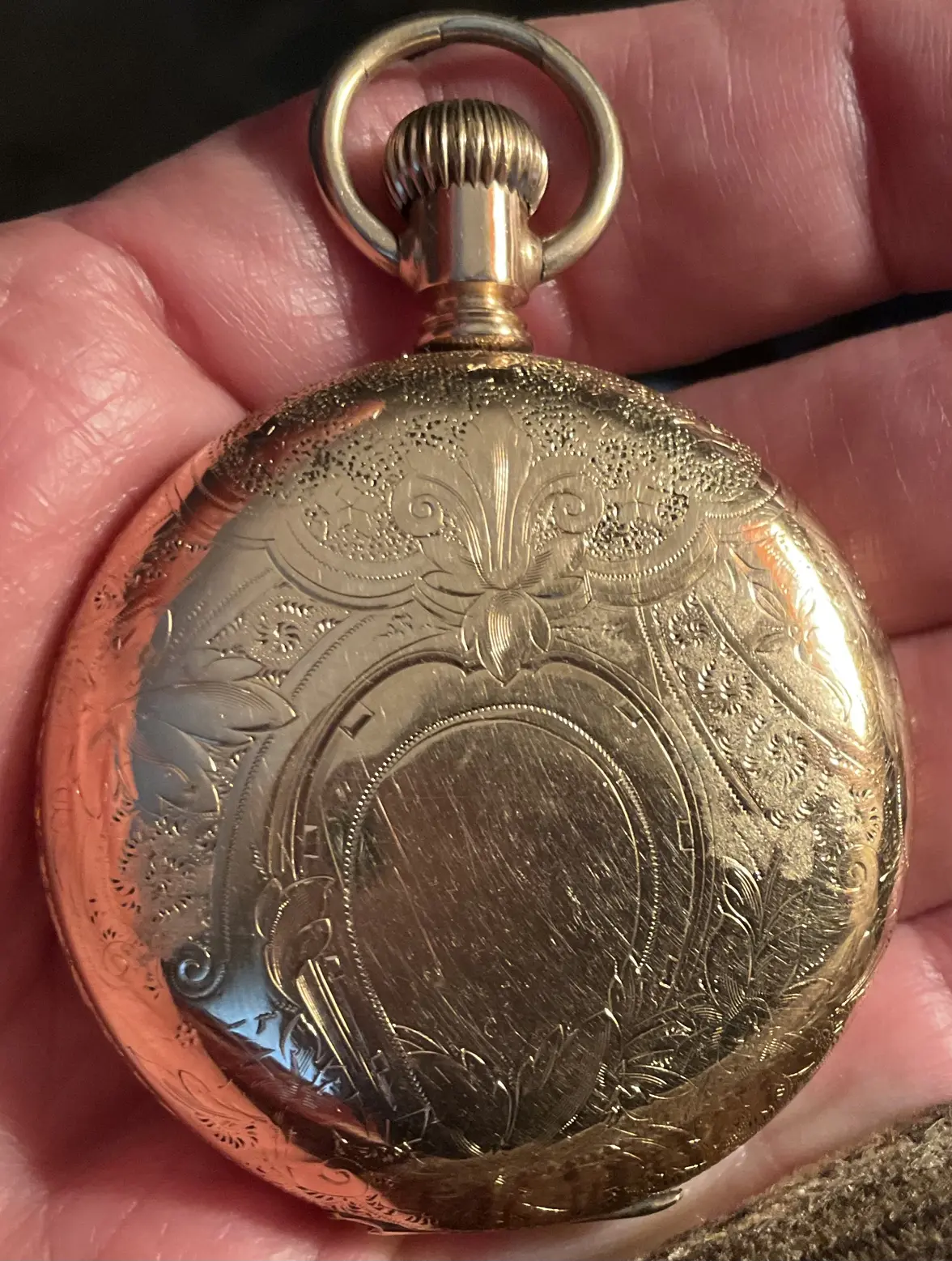
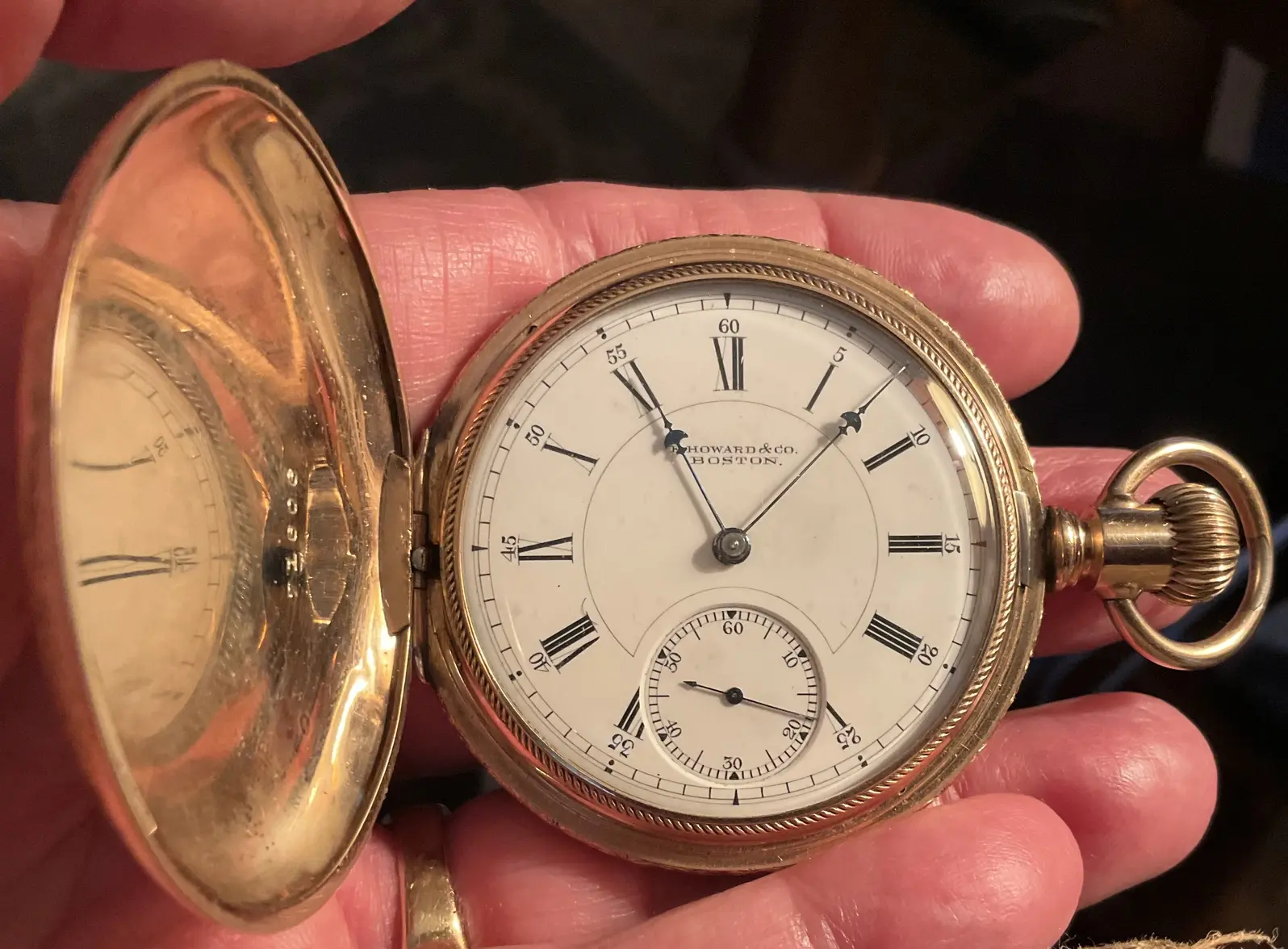
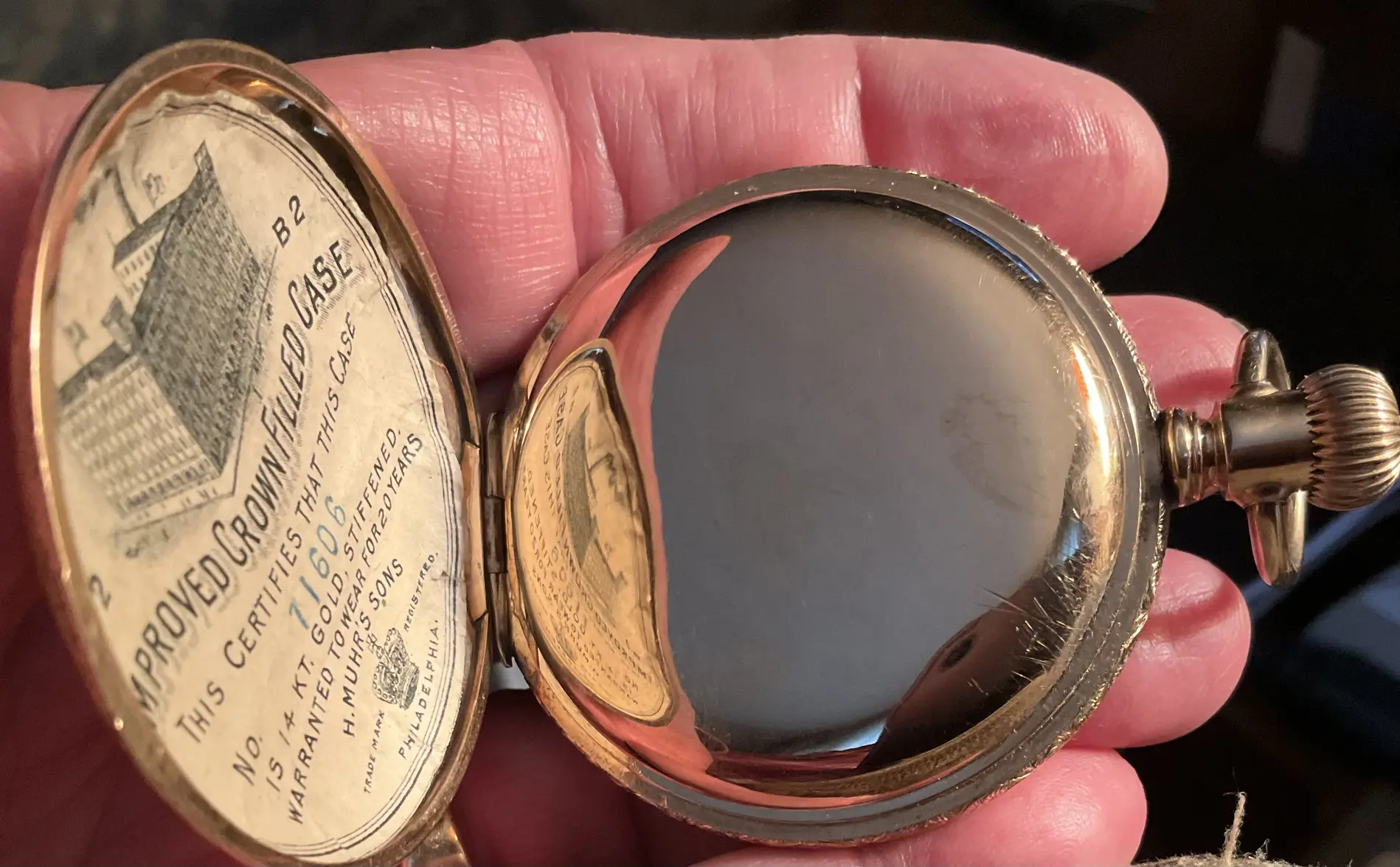
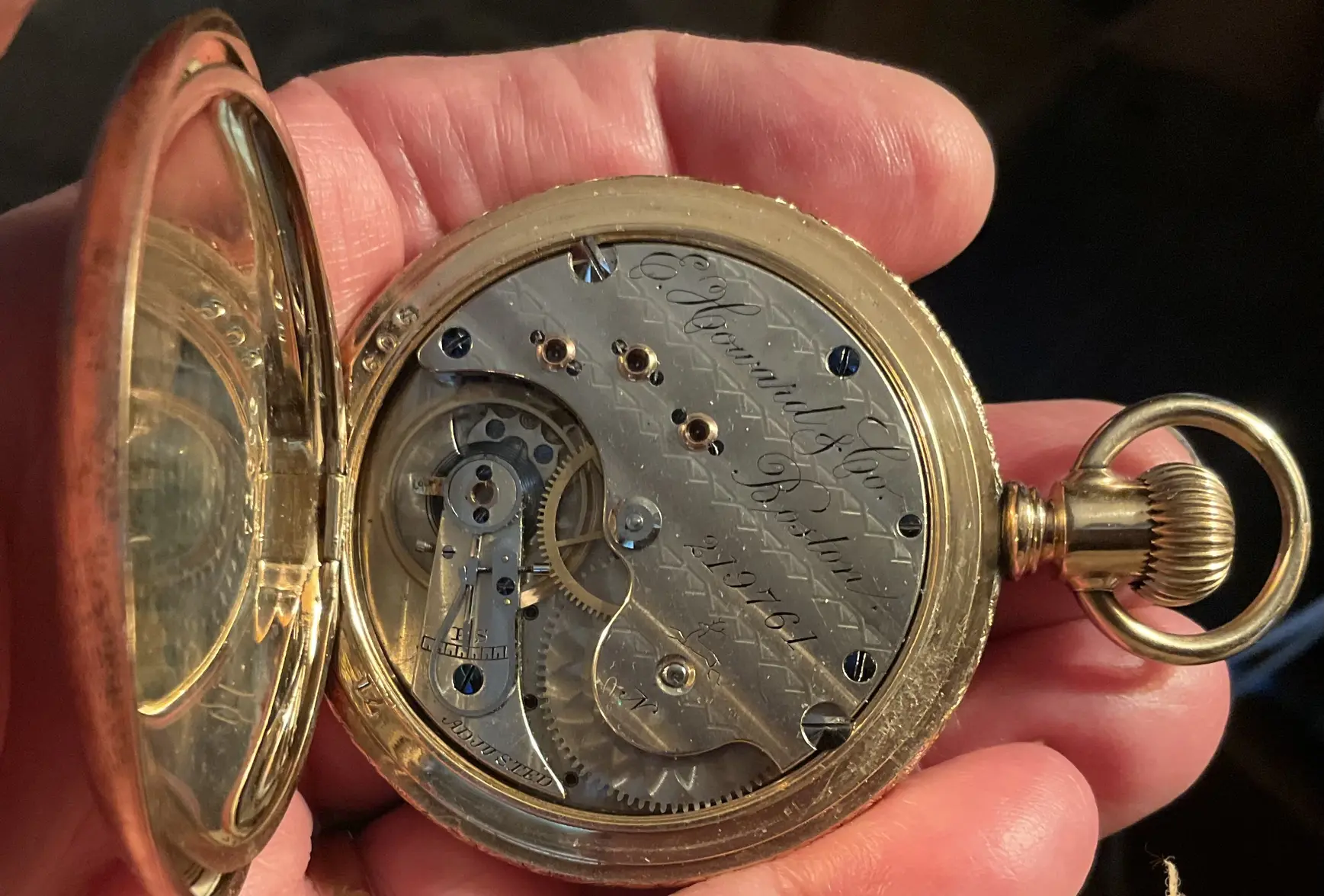
“Back to watches”, says @Duracuir1 . Well okay! This is my 1884 E Howard series VII (approx. 18-size) hunter in its original case with original case paper. I’ve heard this style of hand called “beetle and poker”. So, approximately 140 years old, and one can but wonder if it ever had been used! Benefit to me! We’re preparing for our annual “Railway Days” event at our local Heritage Park. Two live steam locomotives and vintage rolling stock, turn table exhibitions, spike driving competitions, many model railroad layouts, wagon rides, etc. etc. A busy, noisy, fun week end. Two of us will be showing approximately 125 railroad standard (mostly) pocket watches, two dozen railroad standard wrist watches, and several railroad standard Seth Thomas World wall clocks. Everything running and set to time. A good time will be had by all!


Posts
7,073
Likes
56,639
Canuck, it makes my fingers hurt just thinking about the winding chore!
 
Posts
15,920
Likes
47,769
Canuck, it makes my fingers hurt just thinking about the winding chore!
I wind and set all the pocket watches (~125) after we set up the exhibit at the park, on the Friday night. Two of us (sometimes 3) get together for breakfast on Saturday morning at 7:00, and wind everything again. Then breakfast at 7:00 on Sunday, and wind them again. Lotsa winding, for sure. The older watches usually only run a bit over 30 hours on a full wind. Most of the newer 16-size ones will do up to about 48 hours. The odd one will do about 50 hours. And my Illinois Bunn Special 60-hour will do, well, about 60 hours. We don’t leave the watches in the showcases overnight. It is not uncommon for a few to act up by refusing to run, or for a mainspring to break some time between Friday night, and Sunday night. These will get attended to by the next exhibit in April, 2007. Easy when you love what you do!
 
Posts
4,329
Likes
12,671
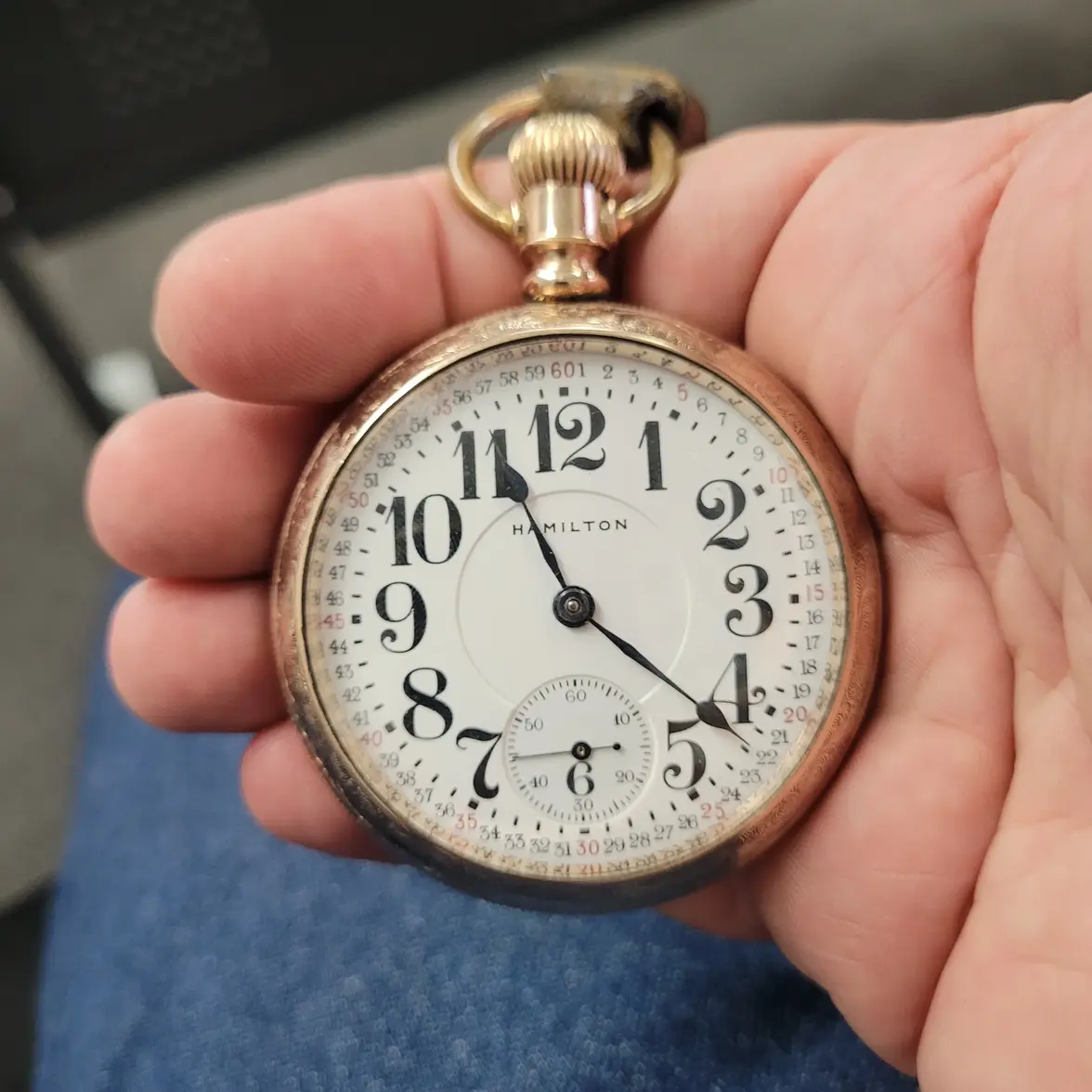
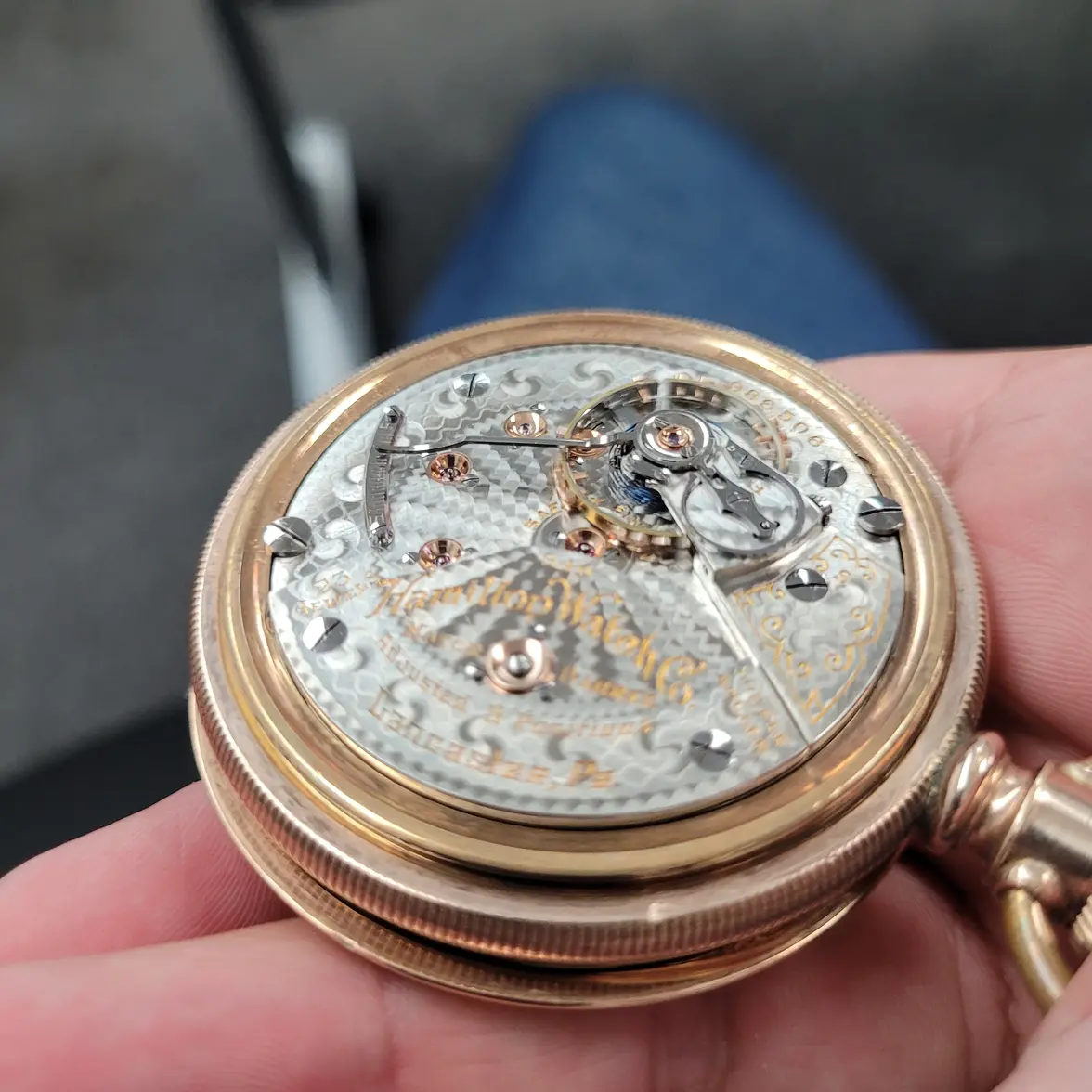
Back to watches, eh. Well, I'm my pocket today is my late run Hamilton 946, circa 1917. It's on the short list of most attractive watch I own.
 
Posts
15,920
Likes
47,769
Jones & Horan auction some time this fall will have the ORRS (Ball) version of the 946 on offer. I’m more likely to be struck by lightning than I am to win the lottery to enable me to afford that one.
 
Posts
15,920
Likes
47,769
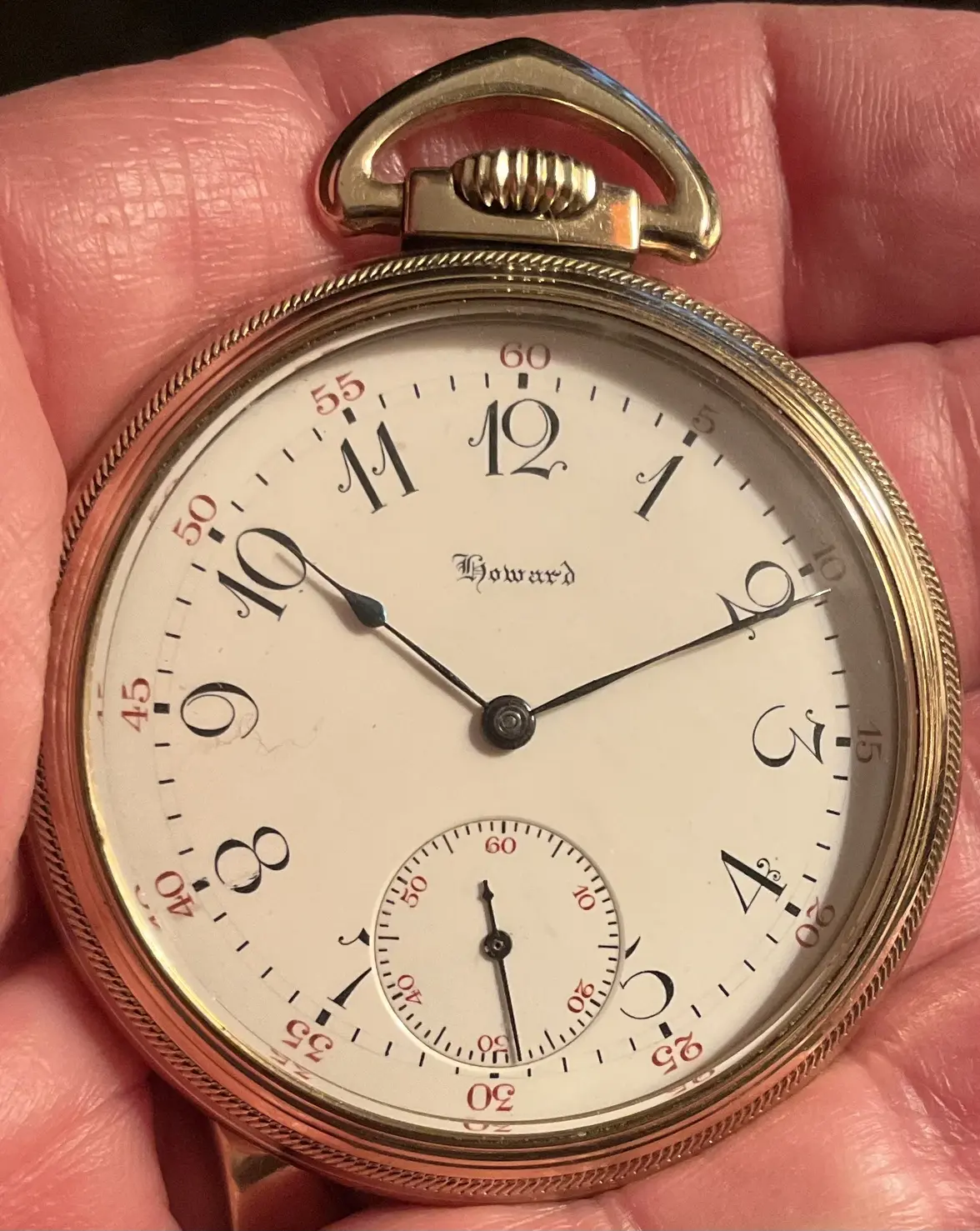
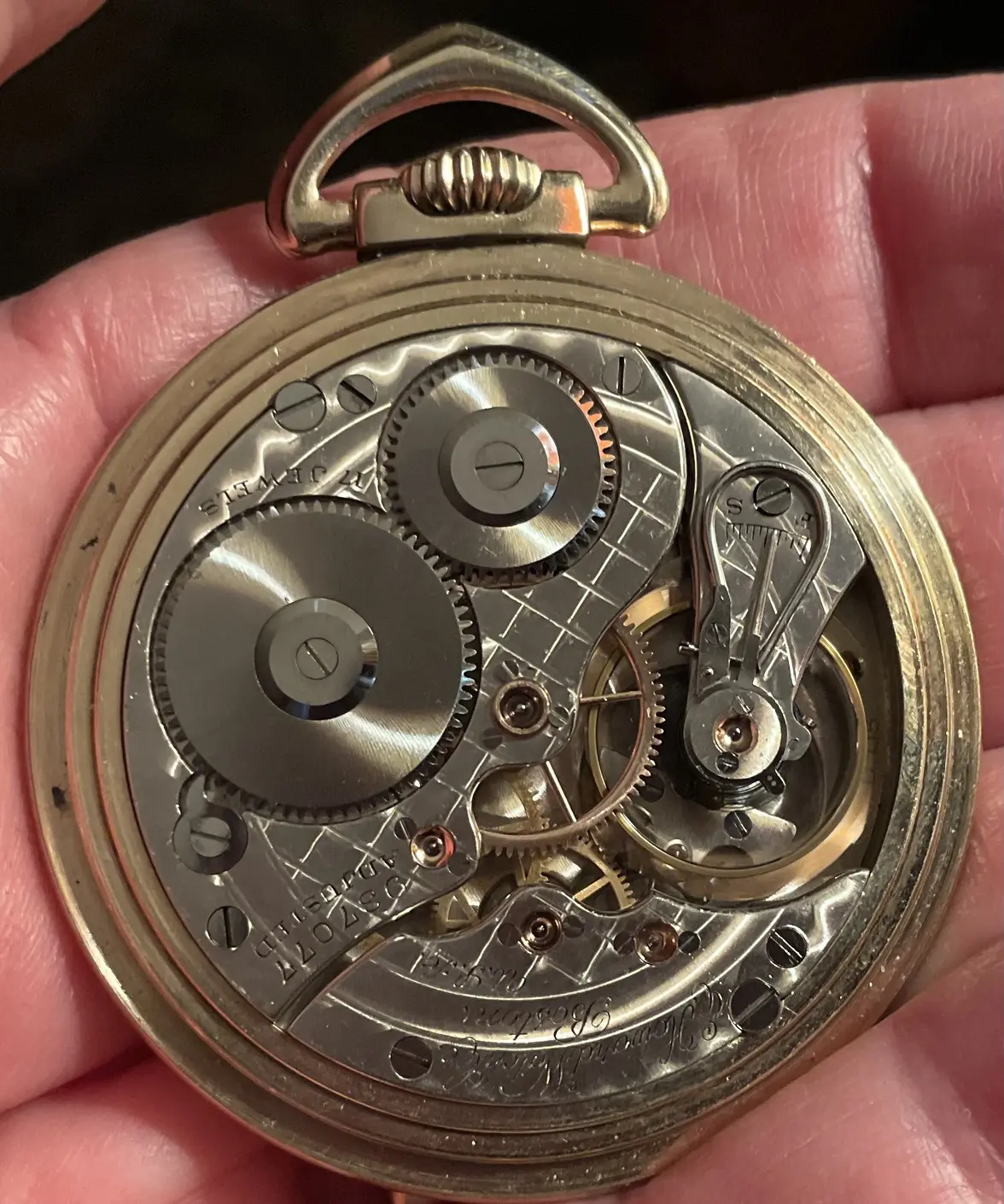
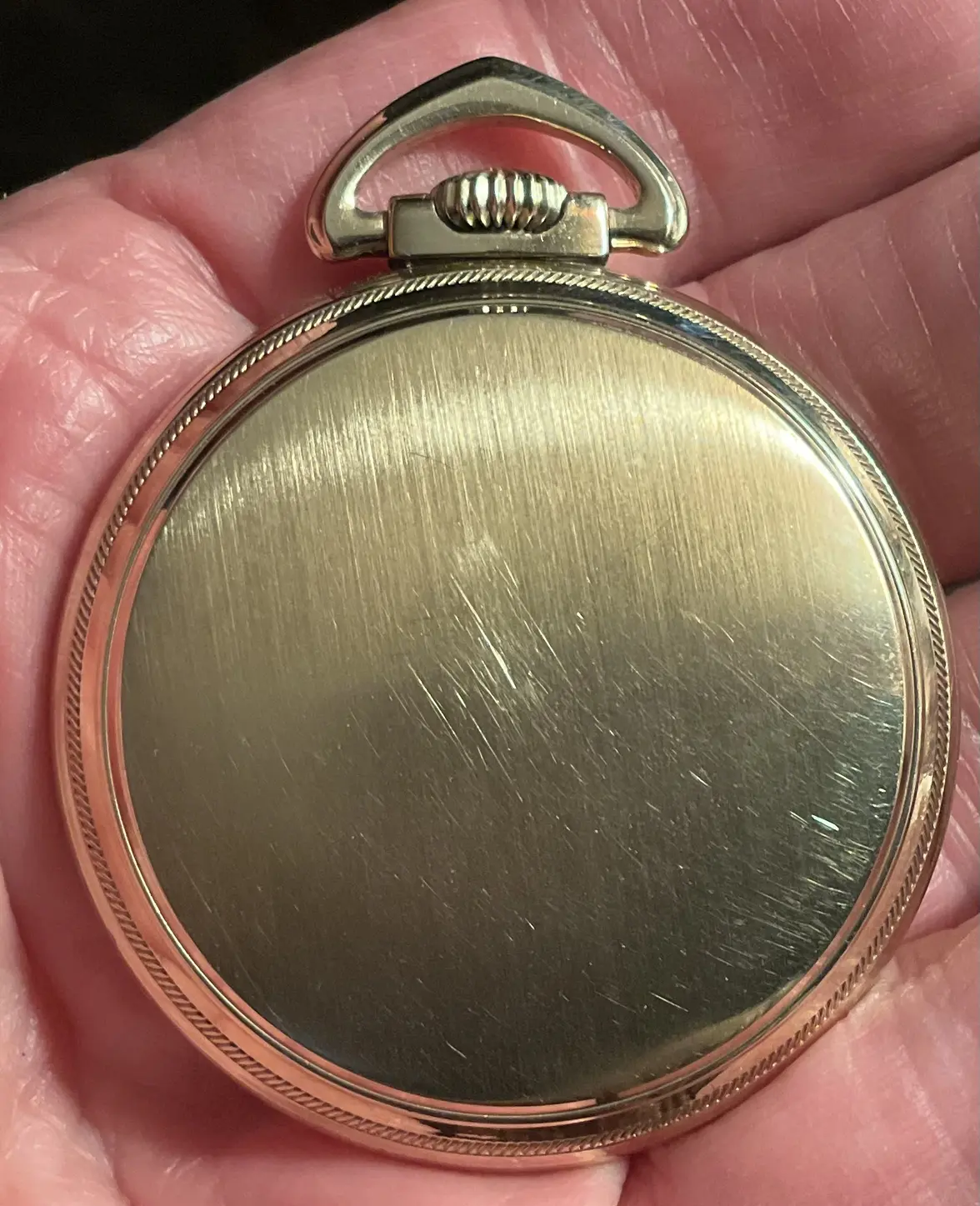
More watches. This one is a Keystone Howard series 4, 17-jewels, 16-size, gold filled Keystone case, pendant set. This was one of the first pocket watches I acquired about 40 years ago, when I was starting to build a collection. Since that time, I have shifted my focus primarily to railroad grade watches. This one is not of railroad standard. Every time I look at the movement, I am reminded how closely it resembles the Hamilton 992. According to the pocketwatchdatabase site, this one is about 115 years old. It doesn’t look to be over a century old.

https://pocketwatchdatabase.com/search/result/e.-howard-watch-co.-keystone/937077

As I recall, I was impressed with its condition, at the time. Thinking back over all the decades I have owned it, I don’t recall ever having carried it!

Edited to add: The pocketwatchdatabase site calls this Keystone Howard, railroad grade. The movement is not marked in a manner I would expect it to be marked if it was railroad grade. And pendant set? All I know is that at the best of times, it has never performed to what I would consider railroad standard.

Edited:
 
Posts
8,808
Likes
62,377
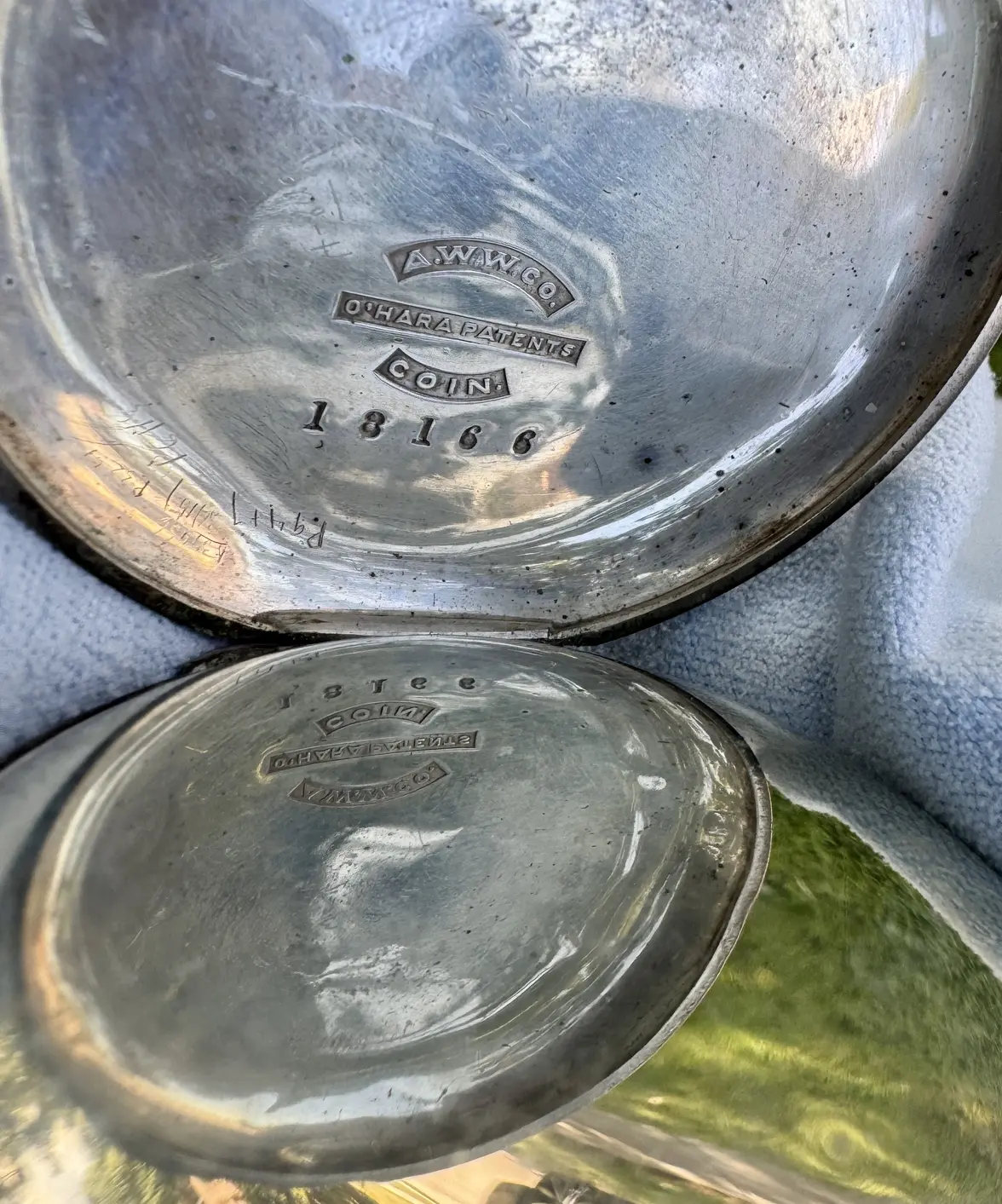
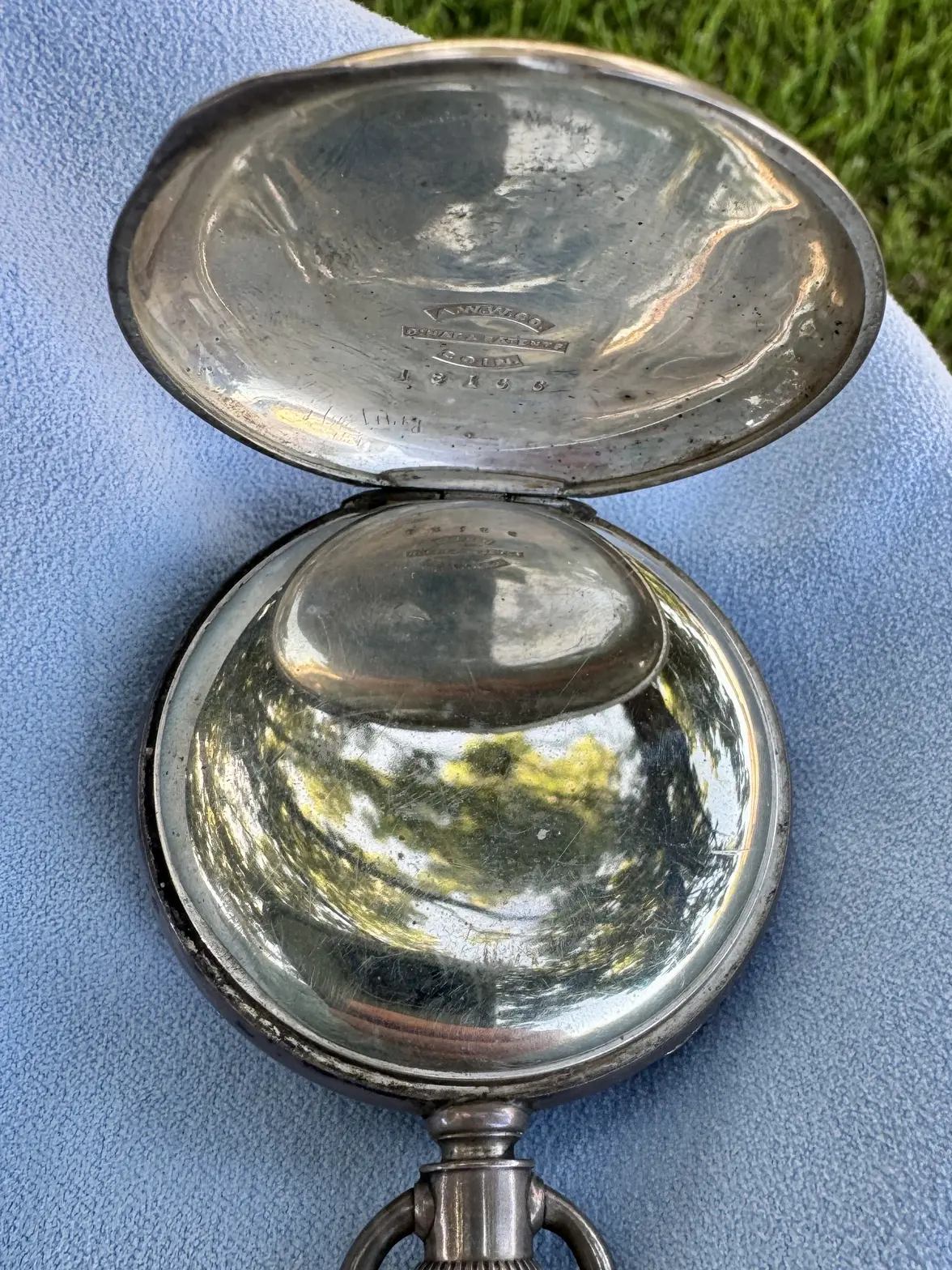
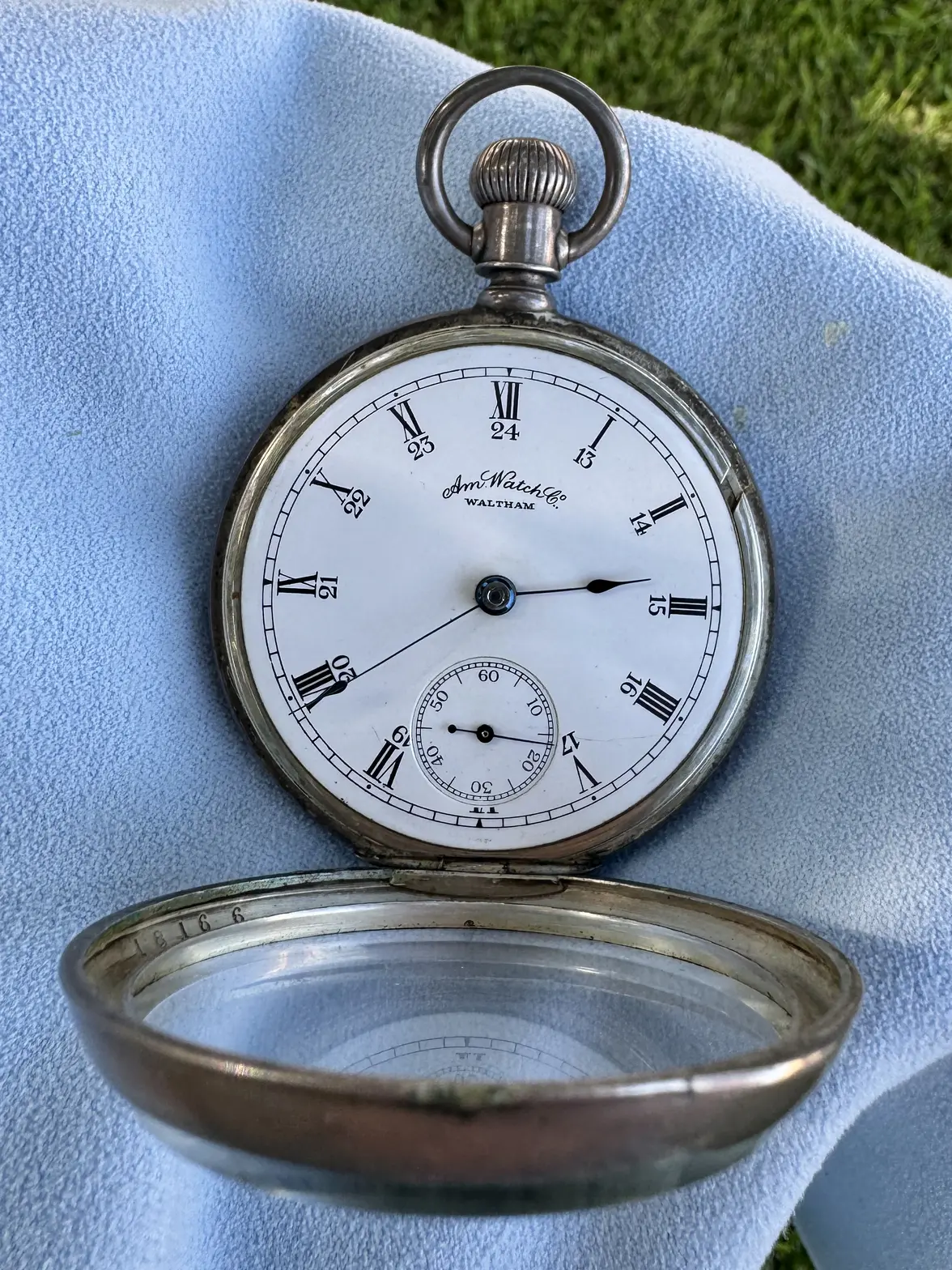
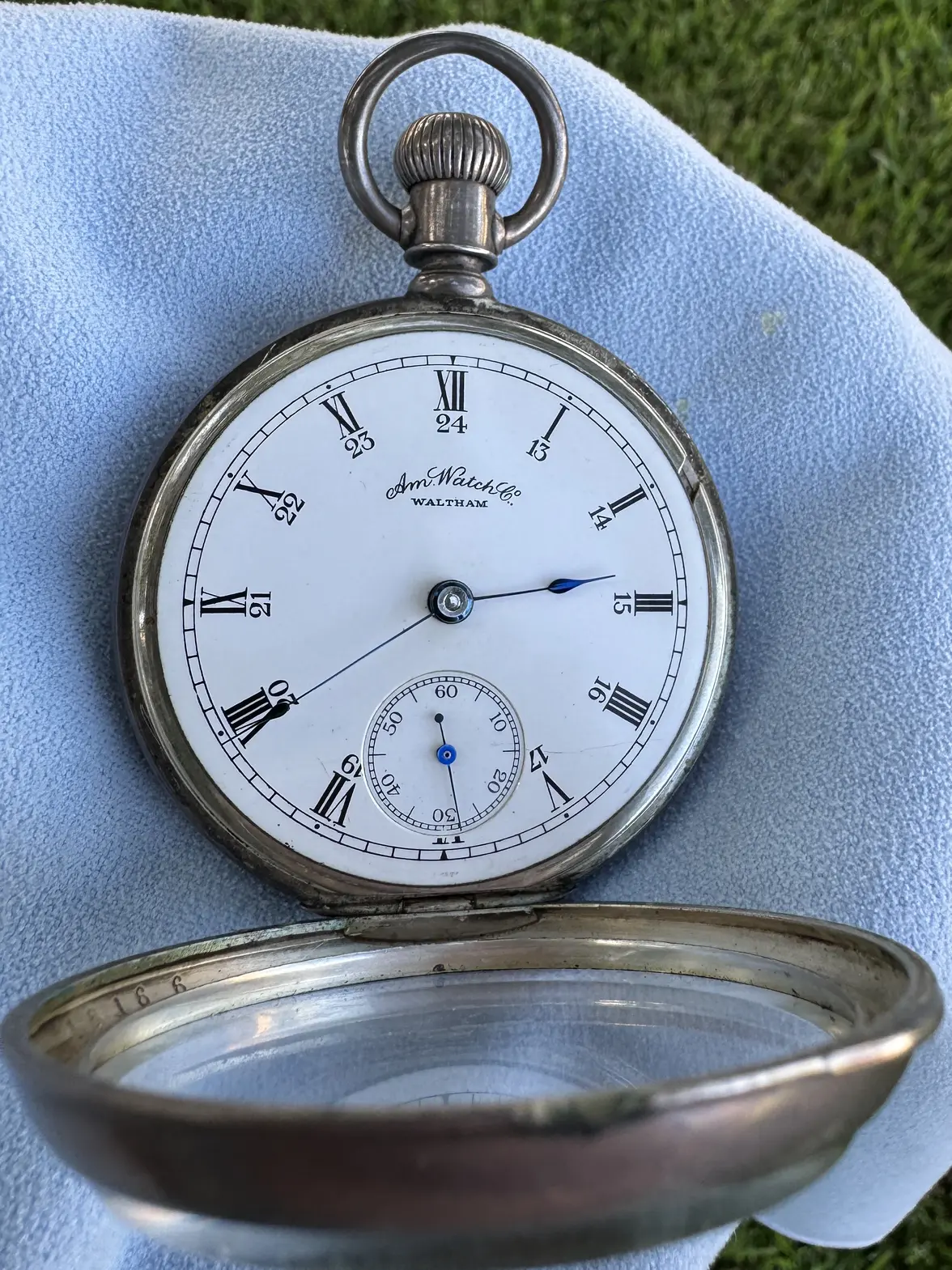
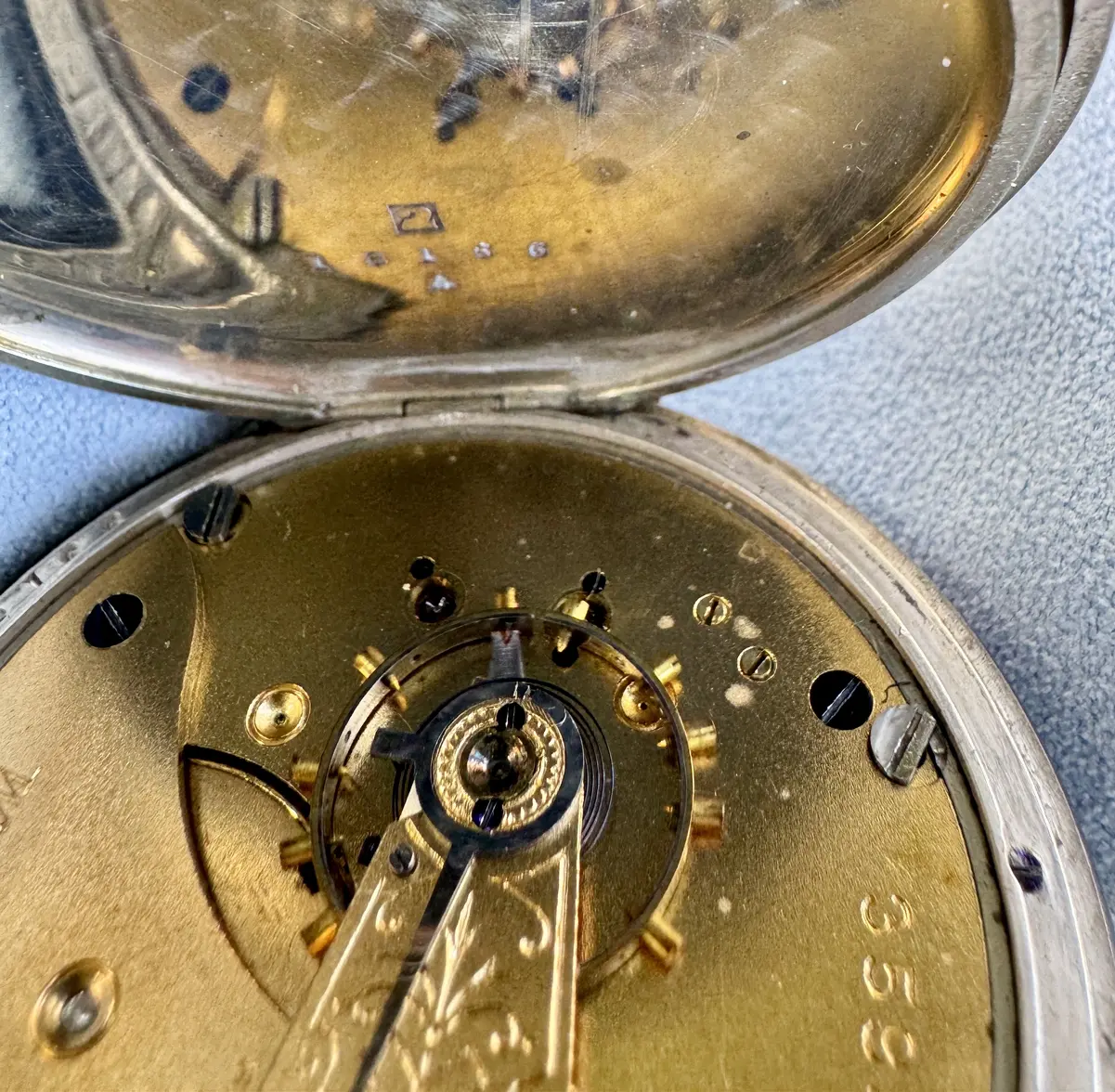
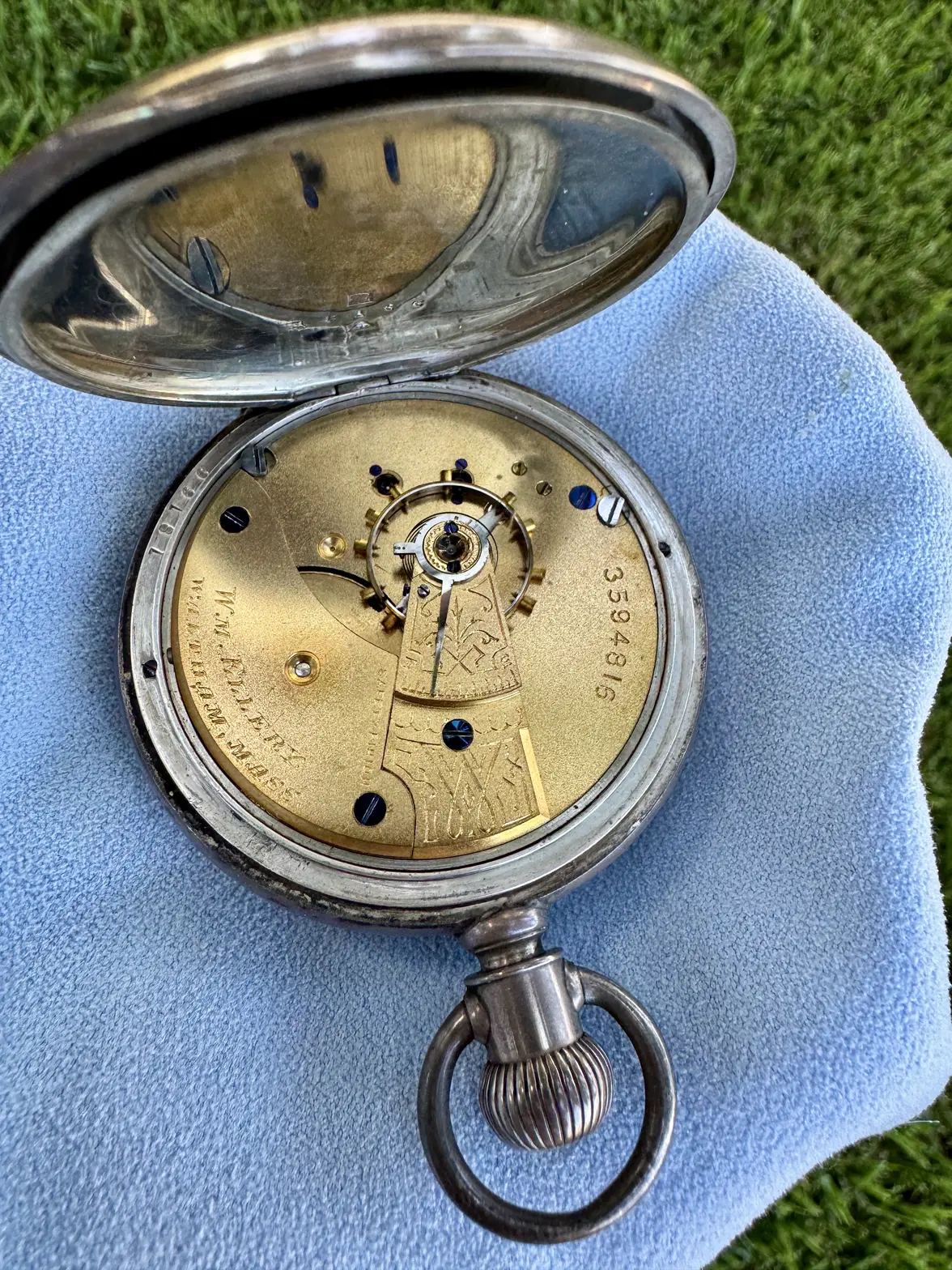
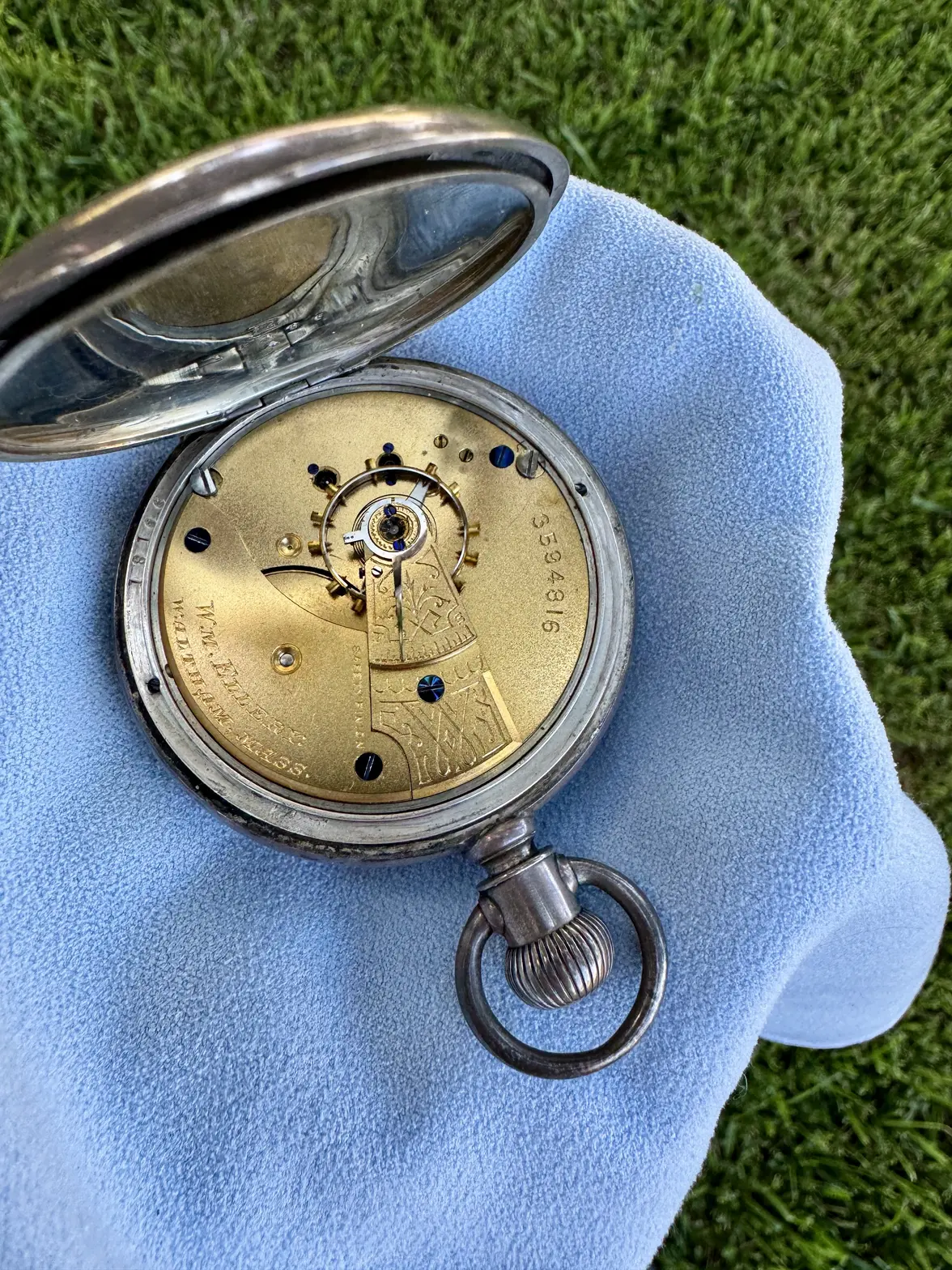
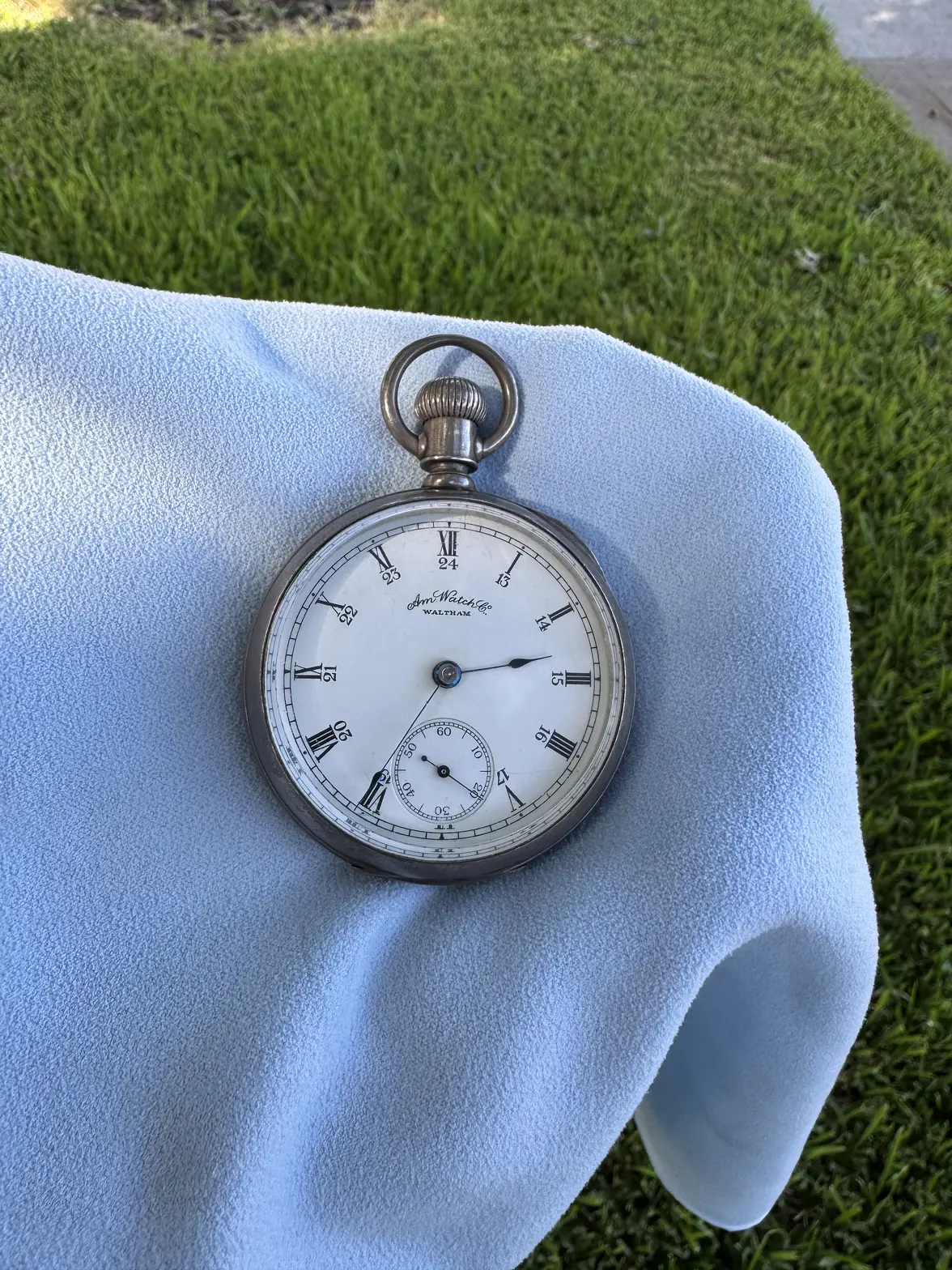
18s Waltham Special Order Wm. Ellery grade model 1883 circa 1888.

11j only

Single sunk Canadian Dial( up from flat)

Pendant Set which necessitates the next upgrade

In-House Factory “A” stamp to a 2oz. coin silver case with the just patented O’Hara’s custom-milled Interlocking, dust-proof interior bevel edges version II for pendant set movements. ( looking at movt, a very good patent!!).

Waltham Extra Elongated “Fine Spade” teardrop handset to not clutter the dial while also reaching to the outer edge of the minute track while the hour hand just kisses the 24hr numerals.

Upgraded 2.5mm heavy bevel glass crystal.

Gilded “flashed gold) plates and hand chased highlights.


Runs well, bows tight, mellowed coin silver case….. What’s not to like?


Within 2 years, Waltham shut down in house making of cases. Danial O’Hare moved on down the street to Crescent and eventually started his own dial making business with decorative dials.


edit to 11j standard and a Chronometer Balance upgrade to mitigate extreme temp changes.
Edited:
 
Posts
15,920
Likes
47,769
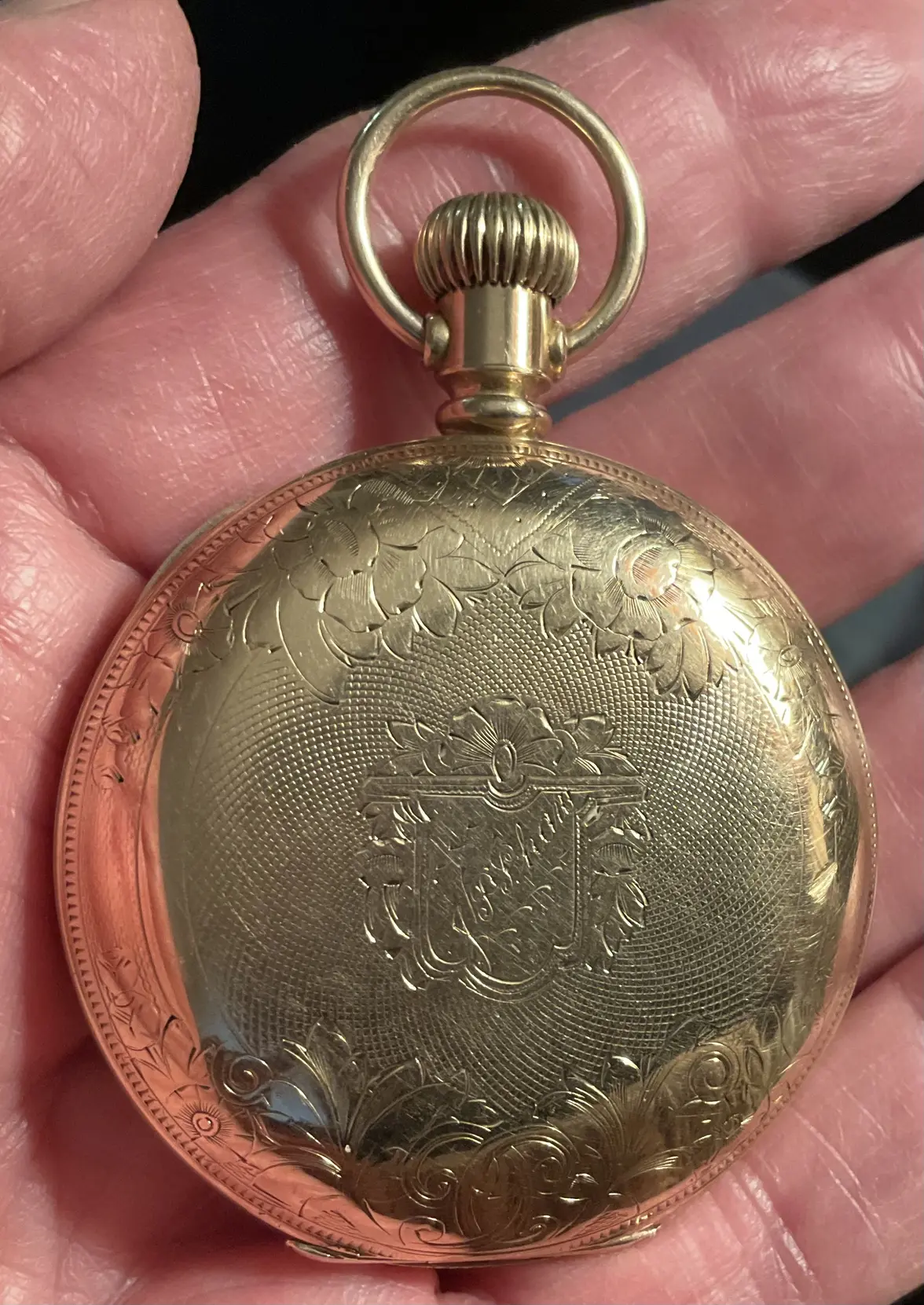
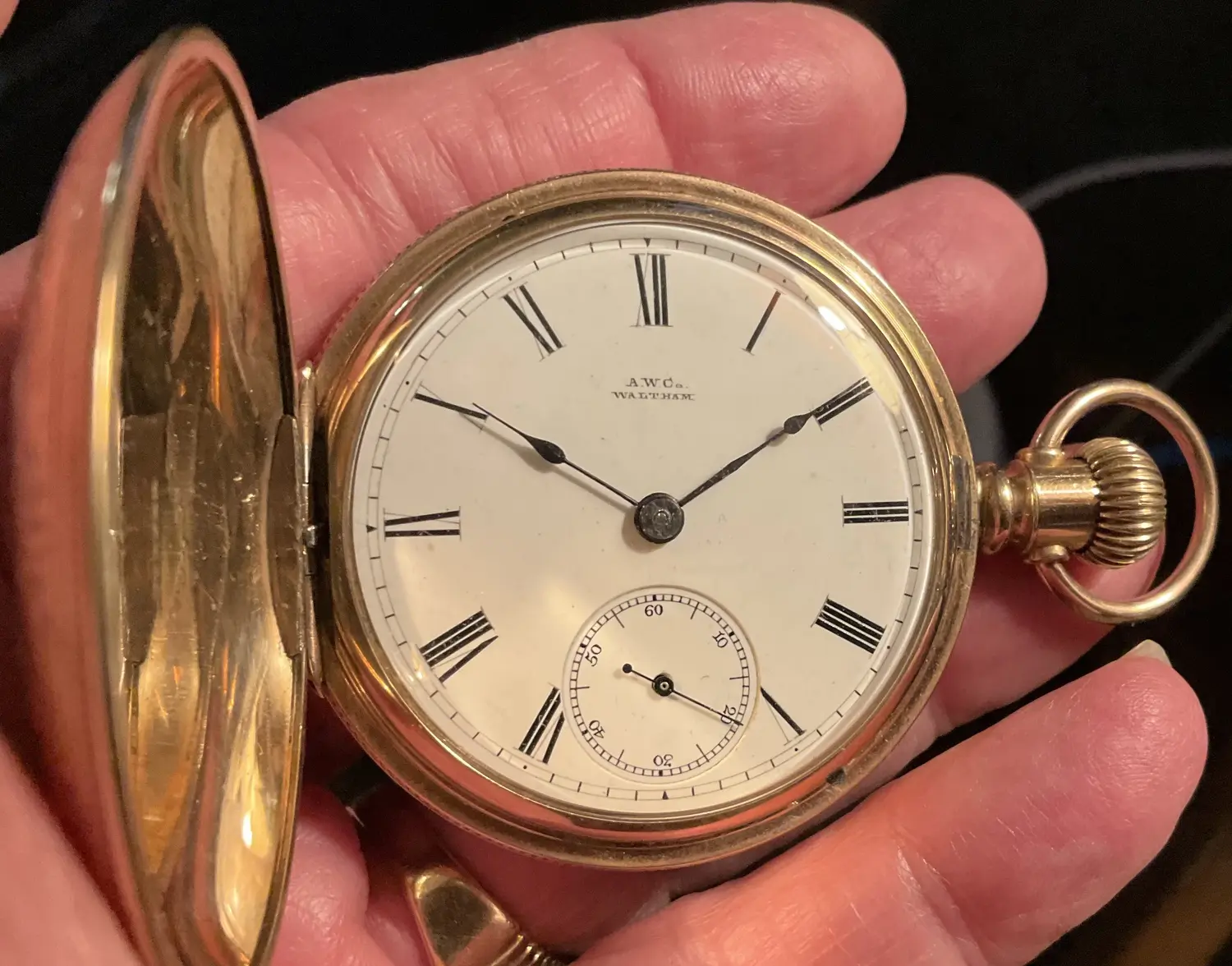
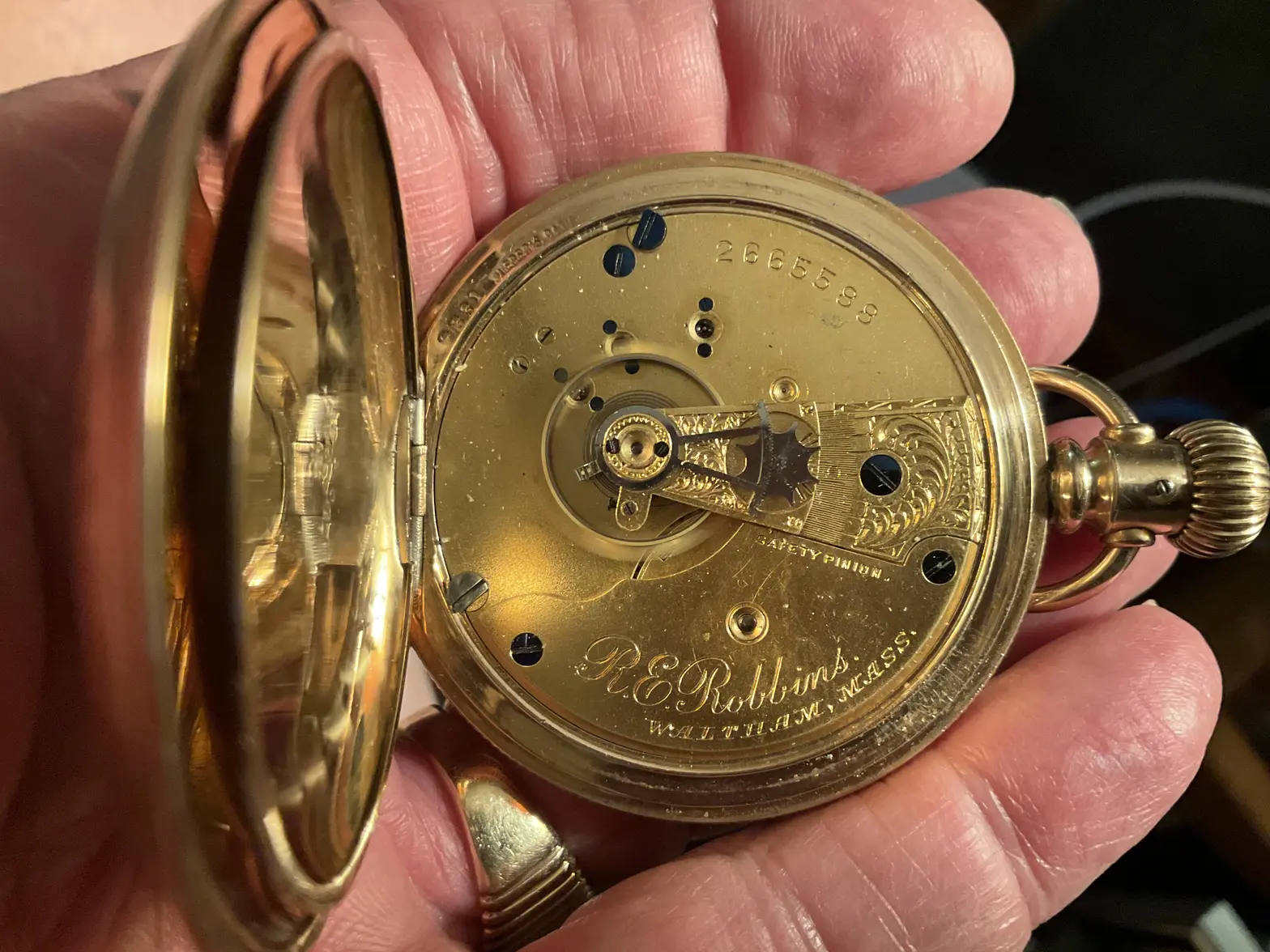
The Wm. Ellery posted by @TexOmega reminds me quite a bit of one watch in my collection. This one is an 1877 model (they were all lever set), 11 jewels, several in chatons, hunter case, patent regulator, single sunk dial, Dueber gold filled case. Movement marked R E Robbins (for Royal Robbins). He appeared on the scene at Waltham when they were on the ropes. Robbins pulled the company out of the mire and was there to build Waltham into the power house it became.

 
Posts
7,073
Likes
56,639
TexOmega; I am going to say that you have your lawn irrigation system running often and long just now.

Our lawn is stressing and I am going to have to length the run time for each watering.

I like the Waltham produced silver case.
 
Posts
8,808
Likes
62,377
TexOmega; I am going to say that you have your lawn irrigation system running often and long just now.

Our lawn is stressing and I am going to have to length the run time for each watering.

I like the Waltham produced silver case.
The shadowing is from a giant, sprawling Oak tree, and my grass loves the shade from the east and west on THAT side of the lawn. But I do water over there because my vegetation PLUS MY foundation needs the water. That giant tree sucks all my foundation water at a high rate and I gotta slab foundation on Blackland. Warp-City if I don't. Then a call to my plumber for all the water damage from my slab leaks. They had to tunnel under my neighbors house on all sides to get to all the leaks and had to put concrete blocks to support the slab and level the house around all sides about 2 years ago.

My foundation people and my arborist know best. Well .....at least the last 35-40 years. The future is unknown.

Nifty, rugged, elegant coin silver case, thanks.
Edited:
 
Posts
4,329
Likes
12,671
Up here in the land of the Redman, my grass is brown, brittle, and primarily dead. I have never watered my grass nor put any chemicals on it. I reckon that's why I have the ant and horny toad colonies on my property.
 
Posts
8,808
Likes
62,377
The Wm. Ellery posted by @TexOmega reminds me quite a bit of one watch in my collection. This one is an 1877 model (they were all lever set), 11 jewels, several in chatons, hunter case, patent regulator, single sunk dial, Dueber gold filled case. Movement marked R E Robbins (for Royal Robbins). He appeared on the scene at Waltham when they were on the ropes. Robbins pulled the company out of the mire and was there to build Waltham into the power house it became.

Love it......even the triple repeat serial number is cool!

DataBase says 13j...?
Edited:
 
Posts
15,920
Likes
47,769
Love it......even the triple repeat serial number is cool!
Peculiar, but I had never taken note of the peculiar S# on my 1877 Waltham.
 
Posts
100
Likes
256
18s Waltham Special Order Wm. Ellery grade model 1883 circa 1888.

Upgrade to 3- Raised jewel Chatons to 15j up from “press” 11j

Single sunk Canadian Dial( up from flat)

Pendant Set which necessitates the next upgrade

In-House Factory “A” stamp to a 2oz. coin silver case with the just patented O’Hara’s custom-milled Interlocking, dust-proof interior bevel edges version II for pendant set movements. ( looking at movt, a very good patent!!).

Waltham Extra Elongated “Fine Spade” teardrop handset to not clutter the dial while also reaching to the outer edge of the minute track while the hour hand just kisses the 24hr numerals.

Upgraded 2.5mm heavy bevel glass crystal.

Gilded “flashed gold) plates and hand chased highlights.


Runs well, bows tight, mellowed coin silver case….. What’s not to like?


Within 2 years, Waltham shut down in house making of cases. Danial O’Hare moved on down the street to Crescent and eventually started his own dial making business with decorative dials.
Wow, your 18Size Waltham 11 Jewel watch just blows me away. I couldn't believe the configuration when I looked at your pics just now....seeing on 2 of the additional 4 jewels added to the basic 7 in the escapement on your movement. All the 11 jewel movements I own and have seen have the additional 4 jewels on the top plate so I just researched this a bit and got a good explanation from AI....

Yes, Waltham did produce their 11-jewel configurations in two distinct styles that correspond exactly to the arrangement of the four additional jewels beyond the standard 7-jewel balance/escapement assembly.
In American horology (including Waltham's full-plate movements like the Model 1883), 11-jewel layouts commonly varied in how those 4 extra plate jewels were allocated:
The Two 11-Jewel Configuration Styles
    • The Top-Plate (or Tailplate) Only Style: In this layout, all 4 additional jewels are placed strictly on the top plate (visible upper plate). They provide jeweling for the upper pivots of the pallet fork, escape wheel, 3rd wheel, and 4th wheel. The lower pillar plate (under the dial) remains unjeweled for these wheels. Waltham frequently did this on models like the P.S. Bartlett or Wm. Ellery grades to give the movement the visual appearance of a higher-grade, 15-jewel watch from the back.
    • The Paired-Plate Style: In this layout, the 4 extra jewels are split evenly as 2 pairs (2 jewels on both plates). This typically provides both upper and lower jewel holes for the pallet fork and the escape wheel, leaving the 3rd and 4th wheels completely unjeweled. [1]
Waltham utilized both methods across different production runs, grades, and stem-wind vs. key-wind variations of their 18-size movements to differentiate price points and visual styles.

Thank you for the education.... I've learned something today I have never known.....now Ive got to find one to add to my collection....I have several 18S 11J 1883 movements both key winds and stem winds all mine are 4 + 0.....now to find a 2 + 2!!
 
Posts
15,920
Likes
47,769
I just learned something about my 1877 Waltham.it is not an 11-jewel model. It has 13-jewels, according to the pocketwatchdatabase. The top train bridge layout on my 1877 doesn’t agree with the typical layout (two combinations) for 11-jewel models as mentioned above. Upon checking the pocketwatchdatabase site, I find my 1877 Waltham has 13-jewels. This would seem to imply that there are four pivots jewelled on the pillar plate. That is,
-balance wheel, two pivots top and bottom = 4
-roller jewel = 1
-pallet stones. = 2
-pallet arbor. = 2
-Escape wheel = 2
-fourth wheel. = 2
-third wheel. = 0
- centre wheel. =0

Total 13-jewels. Live & learn.
 
Posts
100
Likes
256
The Wm. Ellery posted by @TexOmega reminds me quite a bit of one watch in my collection. This one is an 1877 model (they were all lever set), 11 jewels, several in chatons, hunter case, patent regulator, single sunk dial, Dueber gold filled case. Movement marked R E Robbins (for Royal Robbins). He appeared on the scene at Waltham when they were on the ropes. Robbins pulled the company out of the mire and was there to build Waltham into the power house it became.

Your Royal Robbins must be at least a 13J movement as three of the four wheels are jeweled looking at the top plate. I didn't even know they made such a movement thats amazing! What a stunning watch
 
Posts
15,920
Likes
47,769
Your Royal Robbins must be at least a 13J movement as three of the four wheels are jeweled looking at the top plate. I didn't even know they made such a movement thats amazing! What a stunning watch
I later edited that post, after I checked the S# in the pocketwatchdatabase site. In fact it does have 13 jewels! I should have recalled that fact since it was me who serviced it, after I bought it in 2025. I had quoted the previous owner $500.00 for the repairs it needed (balance staff, foot hole jewel, mainspring, glass, one hand, and reconditioning.) He declined the repair, so I bought it from him (for peanuts.) The following day I went to my shop to find I had all the parts it required. Later that day I was wearing it!
 
Posts
100
Likes
256
I later edited that post, after I checked the S# in the pocketwatchdatabase site. In fact it does have 13 jewels! I should have recalled that fact since it was me who serviced it, after I bought it in 2025. I had quoted the previous owner $500.00 for the repairs it needed (balance staff, foot hole jewel, mainspring, glass, one hand, and reconditioning.) He declined the repair, so I bought it from him (for peanuts.) The following day I went to my shop to find I had all the parts it required. Later that day I was wearing it!
You know I am just amazed at what I have seen yesterday and today with the Texas 18S Mdl 1883 11J or maybe higher in the 2 + 2 configuration leaving the 3rd and 4th wheels unjeweled and now your Mdl 1877 in 13J presumeably having the fourth wheel unjeweled and a Robbins movement which I knew existed as I have seen it in lists but never have encountered one....I really enjoy collecting the early Walthams but have maybe been too focused on the 1857 and 1877 key winds. I have several 1857s but all up until now have been either 7 or 11J. I recently picked up an 1857 18S in 15J not running but I believe the balance staffs are good but the mainspring is definitely dead its filthy inside and the case is a very worn out silveroid open face. The bones are good and no one bid against me so I got it for $20 this past spring.....Im assuming its going to be at least $300 to get it working and I already have a decent coin silver 4 oz hunting case minus a crystal awaiting it. I see my watch maker tomorrow to pick up my only National an 18S 15J KW in a hunting case and my fabulous Elgin 1880s 16S convertible that you use an additional wheel on the back of the movement to set the hands not the stem. I plan on leaving him my Electa to clean and this 15J 1857 Waltham to restore....the problem I have is that when he is finished I will still have a dial I think I will want replaced as its got a fair sized chip thats too noticeable on its edge. Worse case I guess I will want later to exchange dials with one of my 1857 7 jewel watches.....changing it from an open face to a hunter ought to be simple as no stem and I think all KW Walthams have the tabs to convert between hunting and OF easily. I have quite a few mdl 1883 dials in my scrap box but I think they would be useless on this 1857 movement.