Calling all Pocket Watch Buffs

Posts
4,329
Likes
12,666
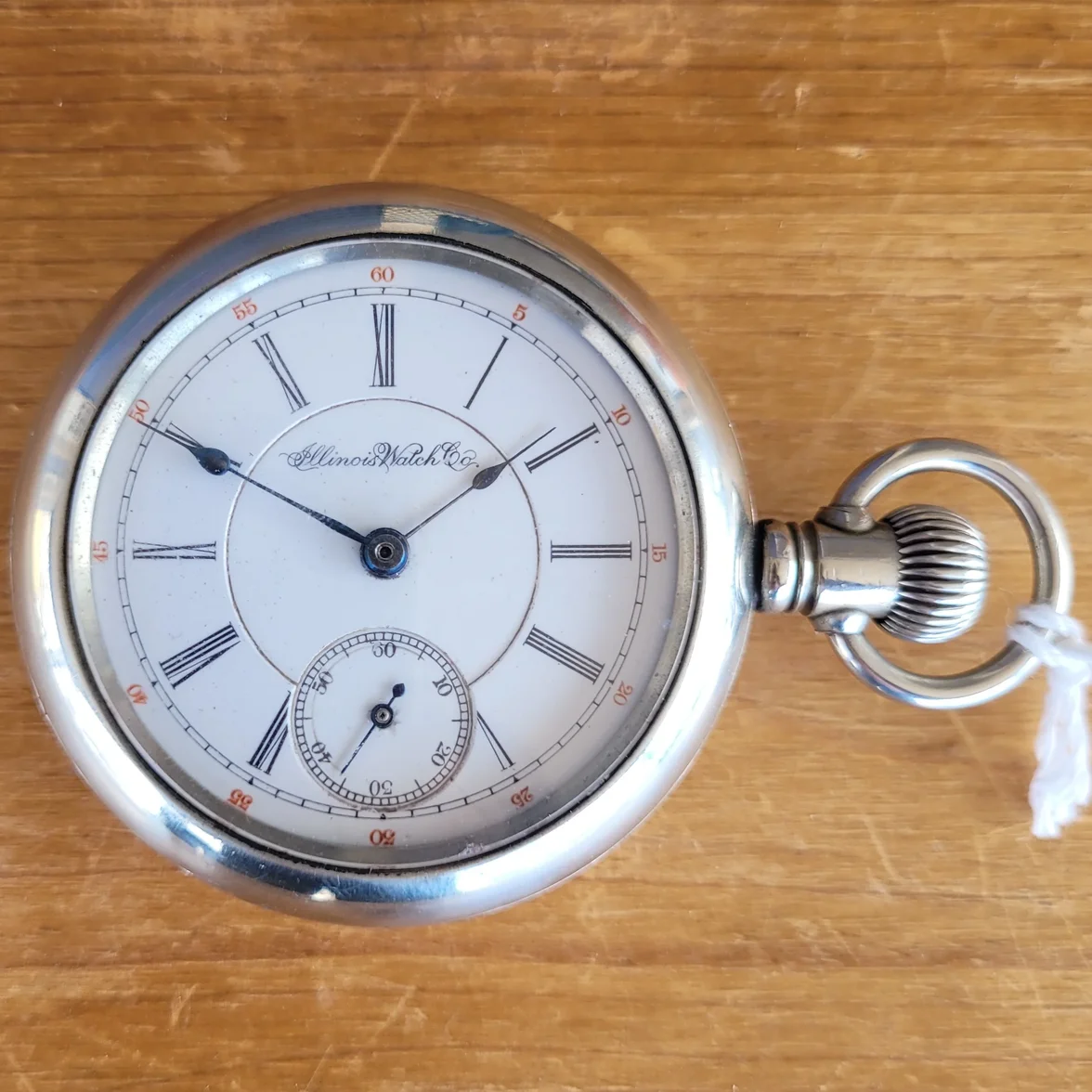
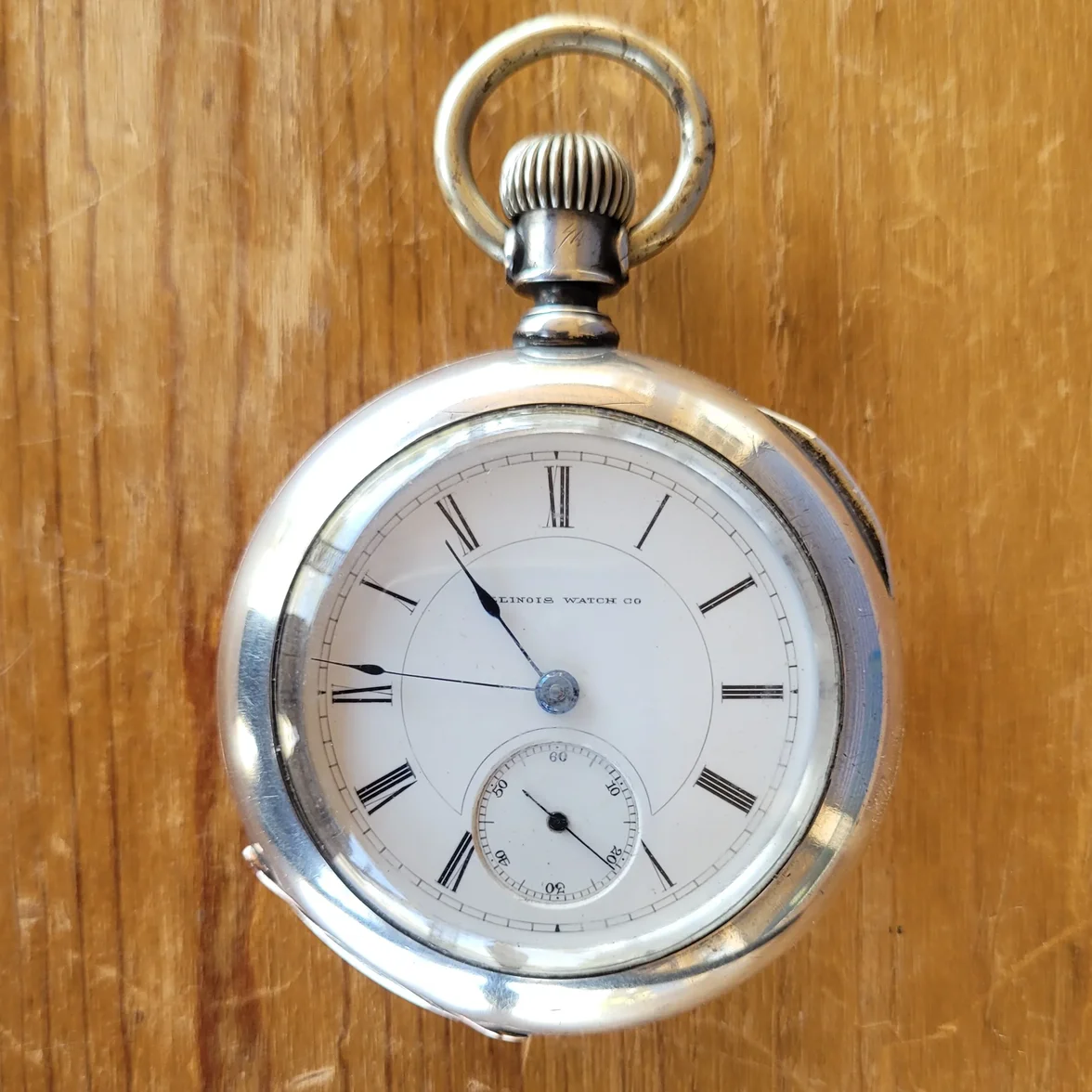
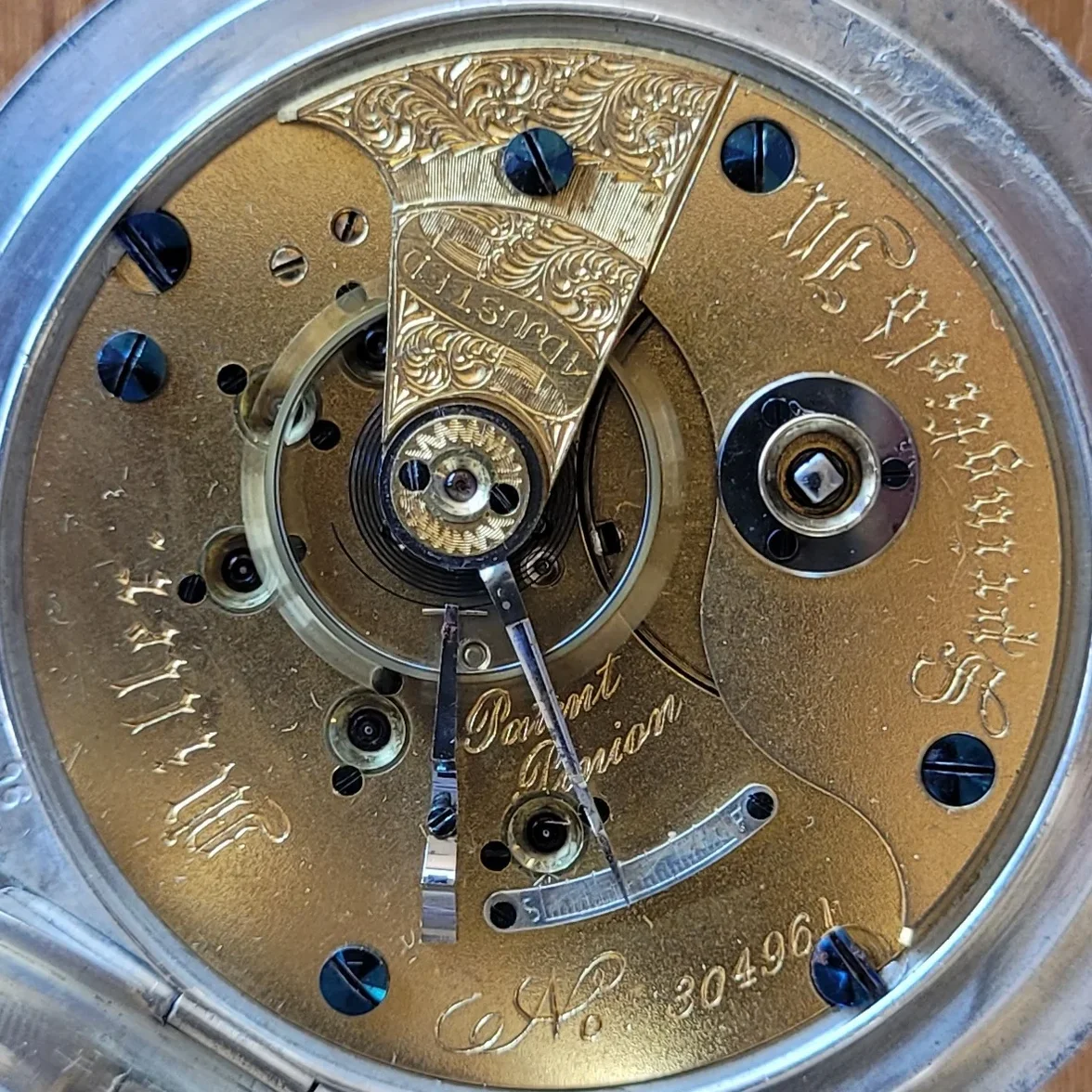
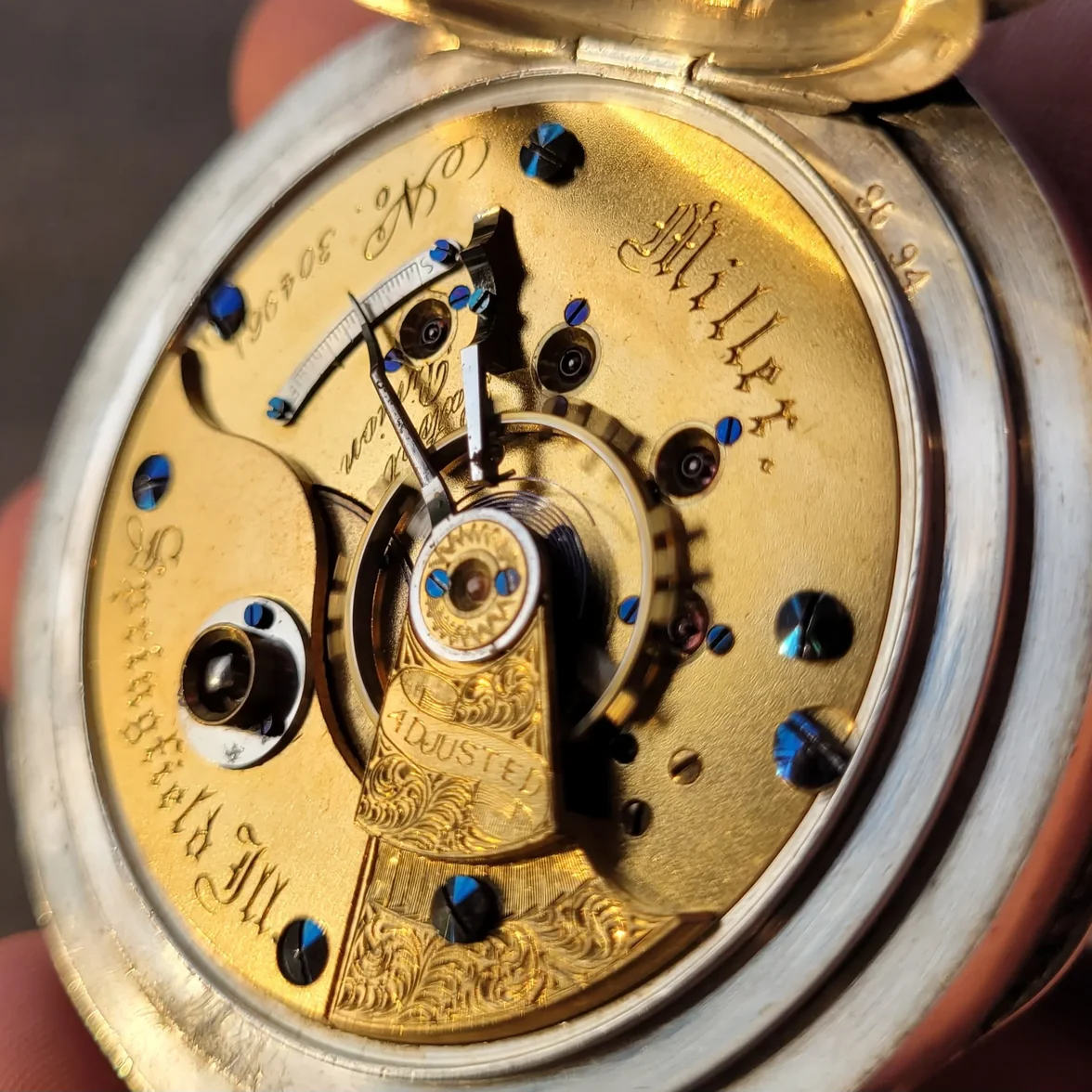
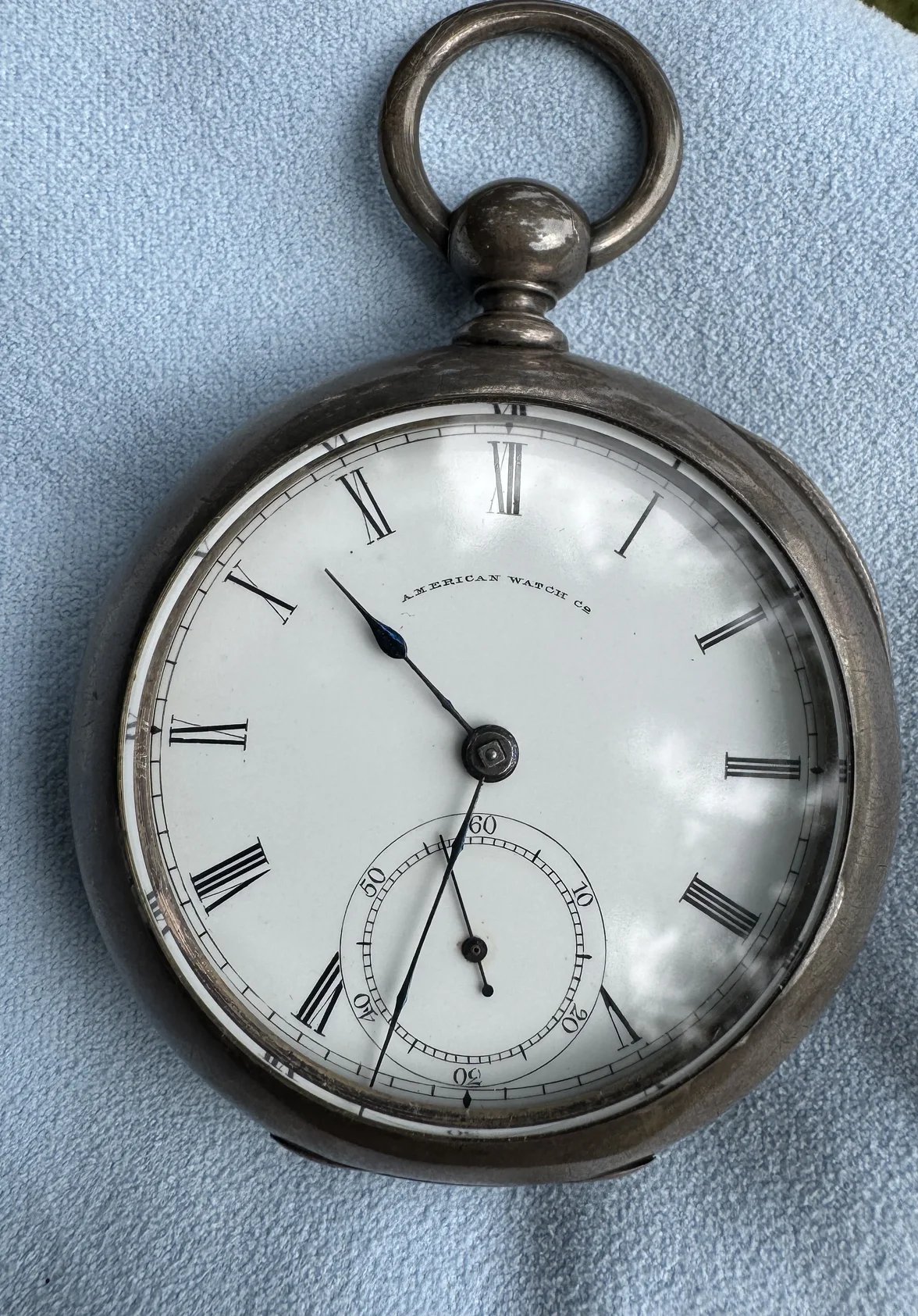
For a rail road standard transitional watch, I offer up my Illinois Model 3 Miller. This model was significant for being the first open faced, stem winding watch in America. This was accomplished by adding a 5th pinion to the Model 2 that allowed the seconds hand to be moved to the 6 o' clock position.
 
Posts
8,805
Likes
62,359
I love the pocket watches you and Canuck own. How many pocket warches do you have in your collection?


many, in varying quality, then maybe 20-30 top-notch, special. Then my great uncle's 1940's 992B at the top, always. 40 year journey, though.

It had to be my first introduction to a pocket watch when I crawled up into his lap. I was maybe 3-4 yrs old. He was a big, tall, raw-boned Swede who had married my dad's aunt in the 20's and I questioned what was ticking in his pocket. He had that 992B on a leather lanyard and pulled it out and showed me "it is like that watch on your dad's wrist, but you wear these in your pocket." Cool Beans. " Here, let me show you how to wind it up....." Hooked, and landed.

Took awhile, to enter my disposable income phase and my timepiece collection was strictly pocket for a long time.

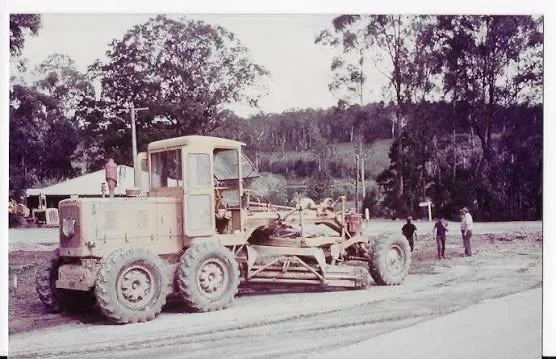
I eventually found out he was a road builder and drove those giant road graders in the 1930's and 40's here in Texas.

Picture from the web, but the one or two pictures I later saw was pretty much like it.

I've darkened the door of many rural mom&pop pawnshops all over the US and a few in Canada way before the internet was conceived.

And, now there are many outlets, so, study, keep your eyes open, and always keep a wad 'o green, cash money in your pocket.
 
Posts
15,920
Likes
47,768
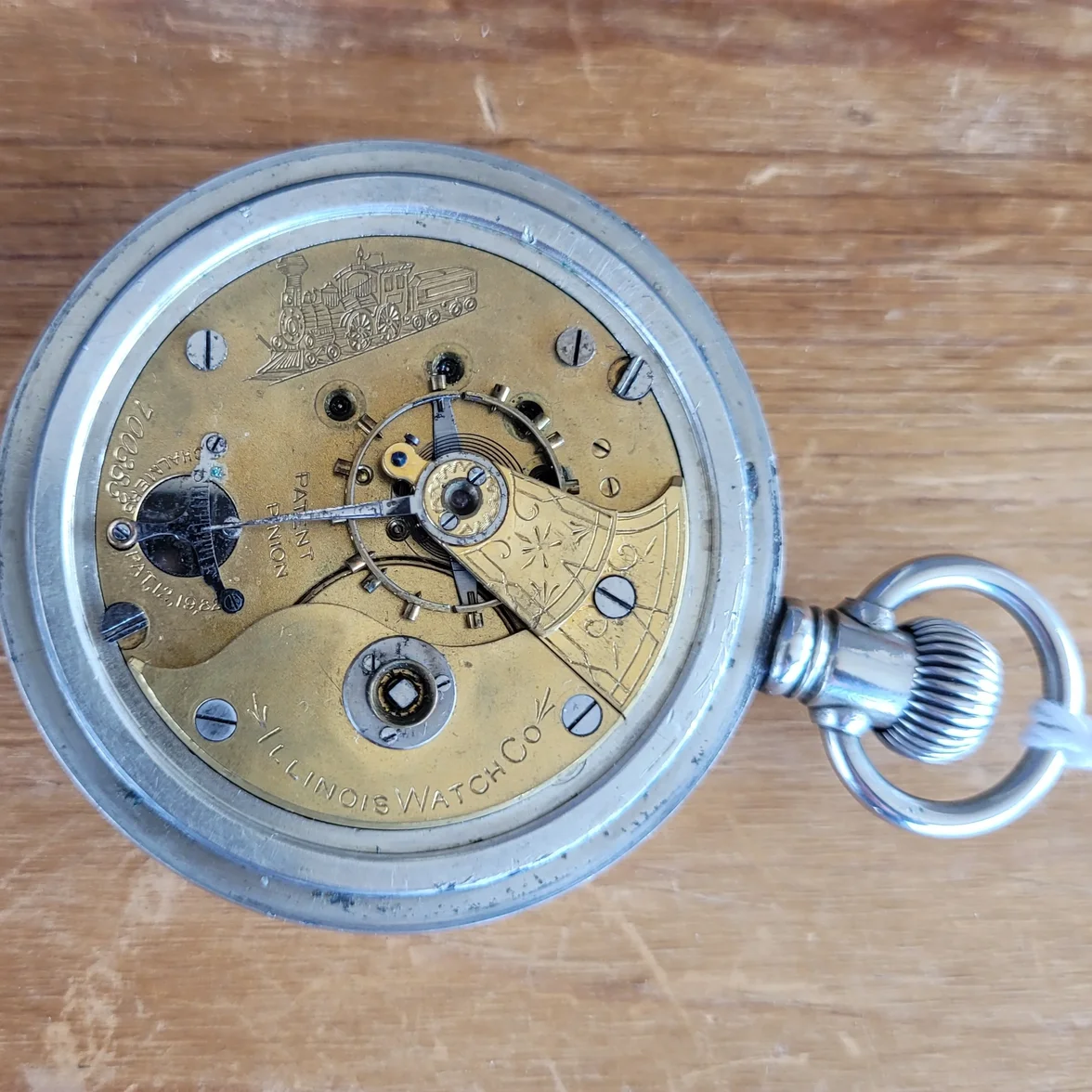
For a rail road standard transitional watch, I offer up my Illinois Model 3 Miller. This model was significant for being the first open faced, stem winding watch in America. This was accomplished by adding a 5th pinion to the Model 2 that allowed the seconds hand to be moved to the 6 o' clock position.
https://pocketwatchdatabase.com/search/result/illinois/304961

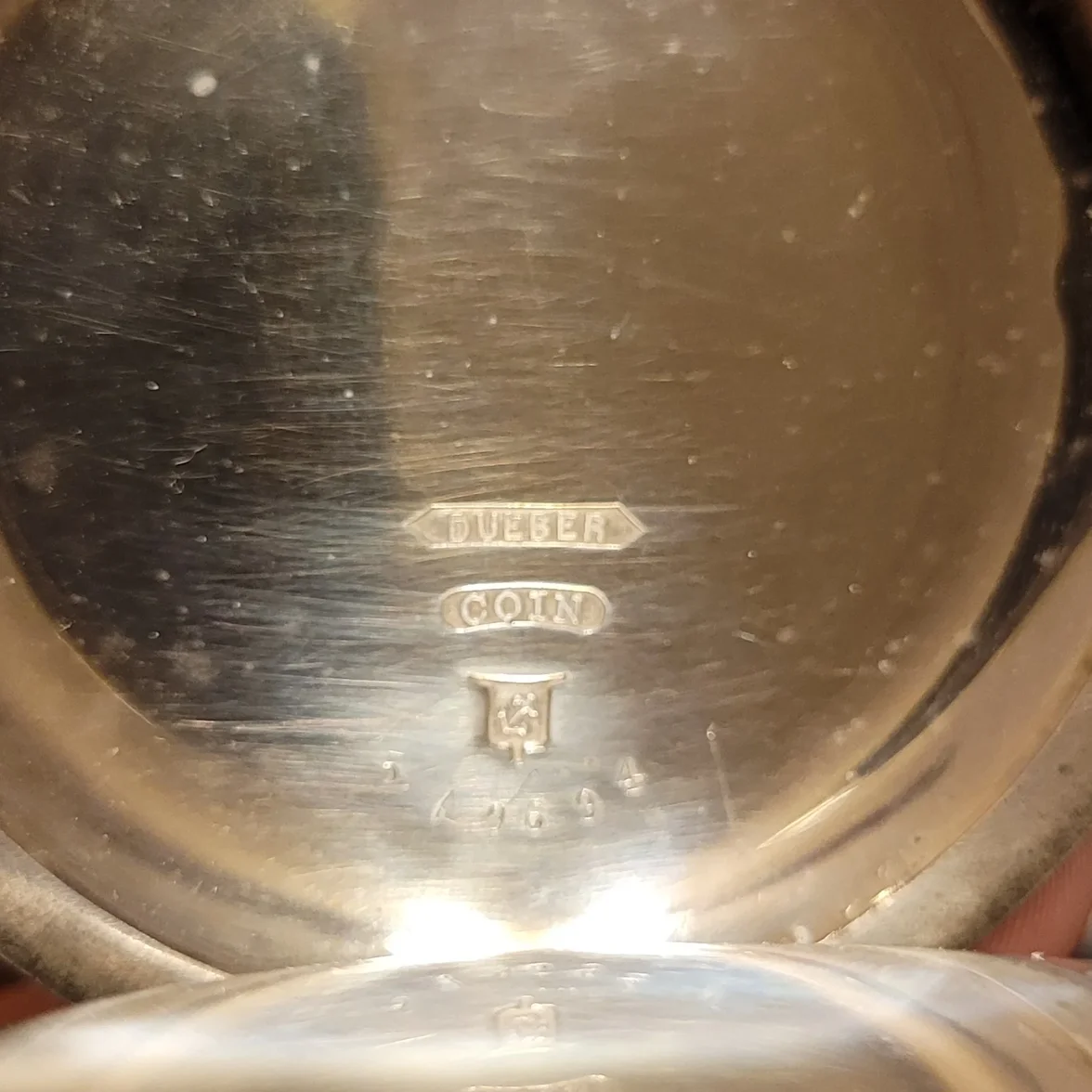
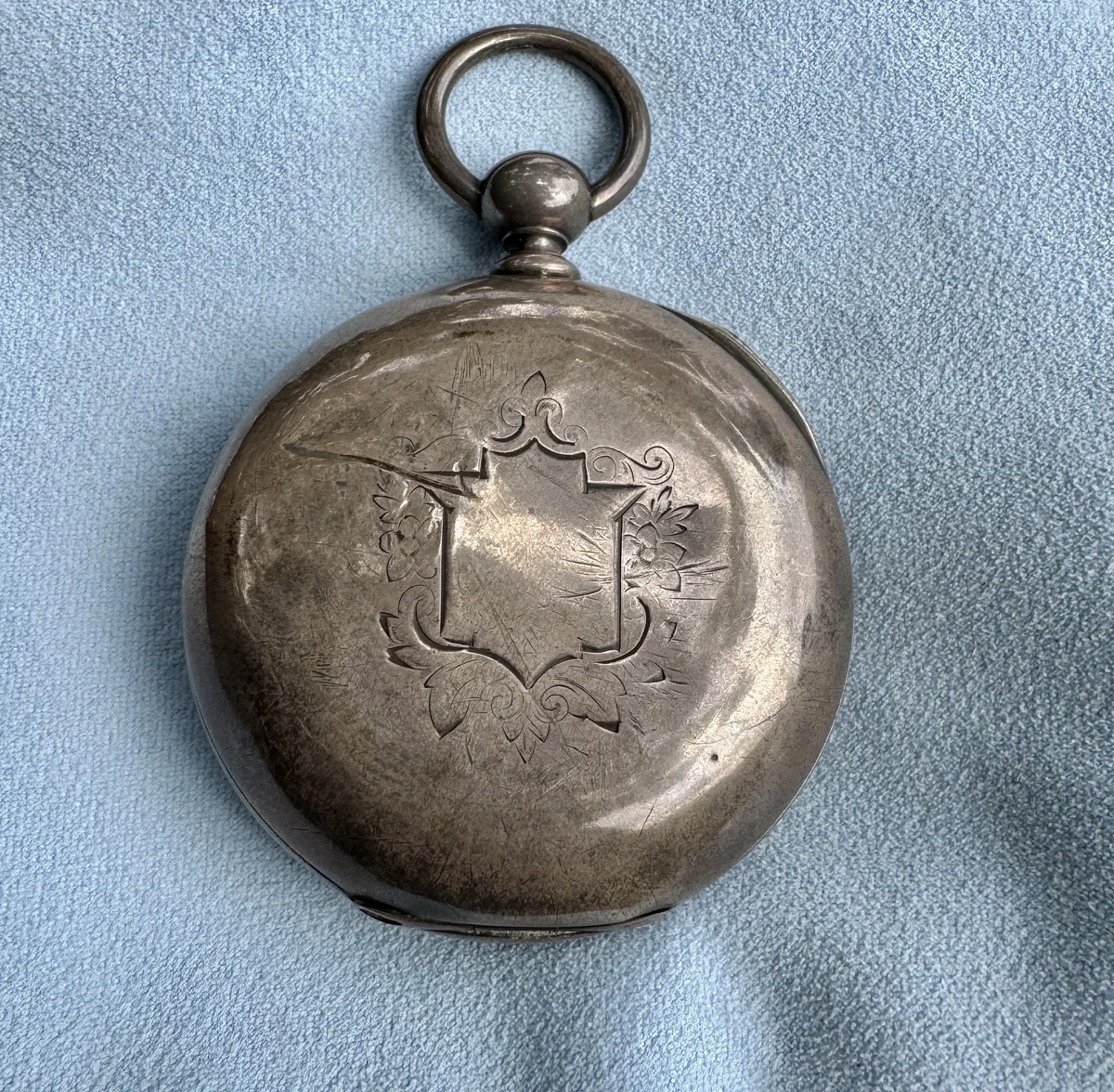
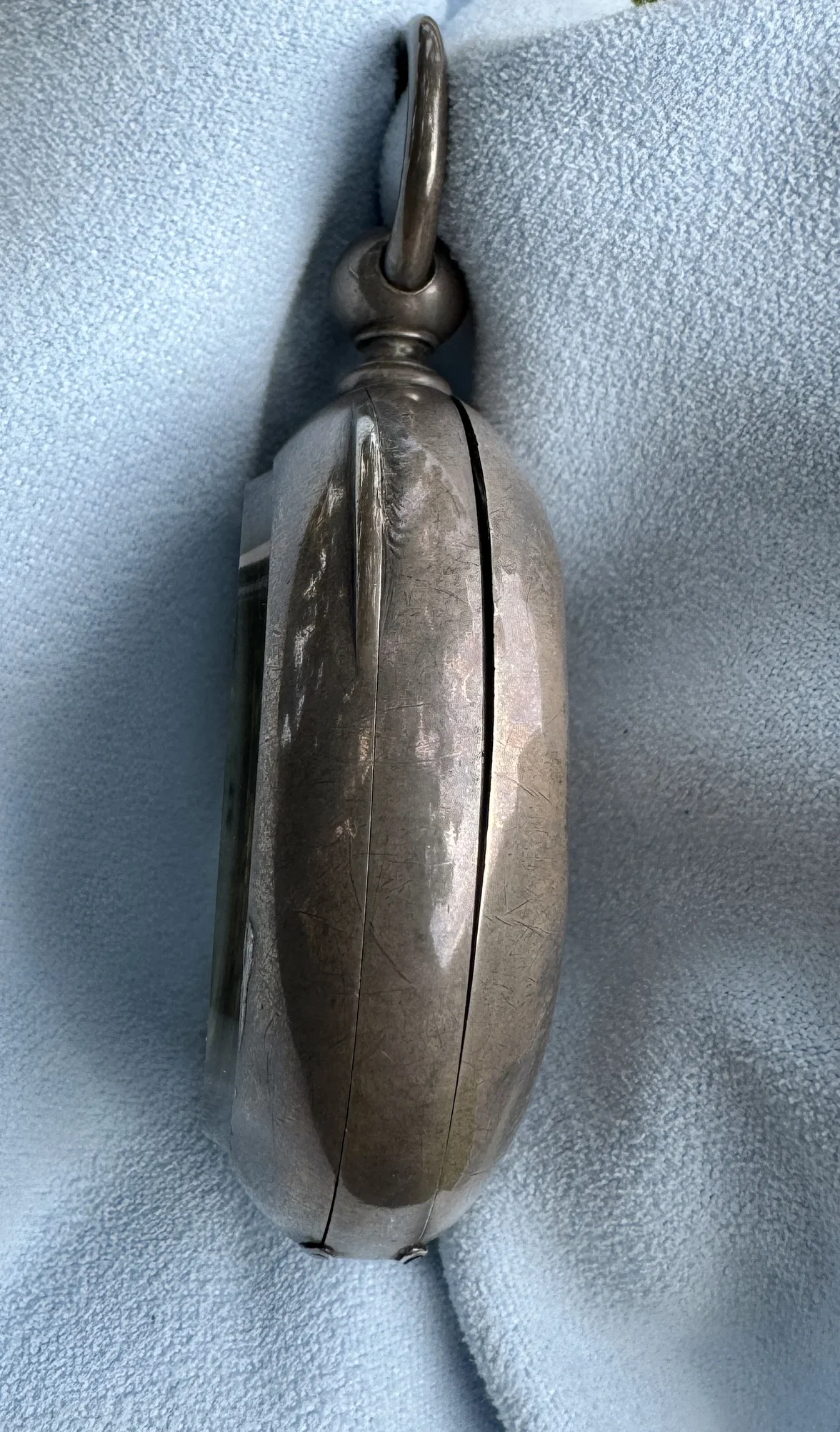
I’ll bet the Illinois model (5th pinion model) is in a coin silver case.

The Illinois model 3 movement allowed Illinois to offer an open-face watch with the seconds hand at the 6 position, without having to go to the trouble and expense of designing and building a new movement. Clever!
 
Posts
4,329
Likes
12,666
One thing that interests me about the "railroader" is that on p. 35 of their book, Meggers and Ehrhardt state:

"Also introduced in 1884 was the 'No.4 Railroader' Grade. This was a moderate quality 18-size Grade with 11 jewels, unadjusted, that retailed for less tgan $20.00 but it had a number of interesting features. The top plate was engraved with a replica steam locomotive, there was a patent regulator, and a 24-hour dial. The latter was refereed to in advertisments as 'specifically modeled fir railroad purposes.' Thus, Illinois clearly was aware that the railriad industry would influence its future business."

The General Time Convention in Chicago was only held a year earlier resulting in the adoption of the standard time system on Oct. 11, 1883 and its implementation on Nov. 18, 1883. Additionally, the General Railroad Timepiece Standards Commission didn't meet produce its timepiece standards until 1893.

Stations were equipped with accurate pendulum clocks and the time was sent via telegraph each day at noon by the US Naval Observatory, to ensure that railroad time was observed at stations. But, how were watches worn by train crews selected in this decade? Watches like the Railroader which definitely did not meet the standard, existed in a gray area as railways grappled with the best way to ensure their train crews were accurately adhering to their timetables.

I'd never consider my Railroader to be a standard watch because it is neither "fully jeweled" with the required 15 jewels, nor is it adjusted. But, that doesn't mean that Illinois wasn't targeting at least some railroad workers with its advertising.

Sorry for the long rambling thought.
 
Posts
15,920
Likes
47,768
I believe it was the Vermont Central Railroad which was concerned about the uneven quality of the watches their crews were using. They bought 21 high quality watches, and issued them to their crews. Within a year, the watches had either been pawned, or had been destroyed. This was in 1871. Practice was discontinued!
 
Posts
5,287
Likes
53,654
For me it's rare to buy a PW that isn't silver, it would have to be something special for me to buy it if it was not but sometimes RR PW's are in Nickel or GF and that makes for some hard choices.
If it's English or Swiss it needs to be silver or I am not buying, pretty much the only exception to that has been Omega PW' bought a few years back, nowadays I won't buy one if it's nickel or GF.
Several of my RR PW's are in GF, I wish they were not, Silver would be my preference or of course Karat gold.
I remember not long ago seeing on the NAWC site that according to time inspectors records that more than 30% of inspected watches were in Karat gold cases which to me is pretty amazing.
 
Posts
15,920
Likes
47,768
Karat gold cases on railroad watches? Joe Public could own a railroad watch! These were not restricted to those who worked for railroads, and who were obliged to carry a railroad standard watch. I would question the assertion that 30% of actual railroaders would spend what was necessary to buy a railroad standard watch in a karat gold case. By the mid 1920s or thereabouts, railroad watches were shipped in watch cases, a change from earlier years when the case was chosen by the guy who bought the watch. By the 1920s, I am almost certain a railroad watch in a karat gold case would have had to be a special order.

The only railroad standard pocket watch in a karat gold case I have ever seen was a 24-jewel Illinois that came to me after its owner made a hand shake deal with a scrapper, but the owner wanted the movement removed from the case. I made him a better offer than the scrapper did for the whole watch. He was honour bound to sell it to the scrapper. A year or two later, he phoned me and offered the movement to me for $500.00. I hope the watch had a luminous dial as it would need it where I told him to shove it!
 
Posts
231
Likes
3,062
All of my railroad approved pocketwatches are in either gold filled, silver or nickel cases. I only have one 14K gold cased pocketwatch, a nice 0 size Lady Waltham I bought for my lovely wife about 15 years ago. For my English pocketwatches it is important to me that they are silver. I am very interested in history and historical peer-reviewed articles and books. The wonderful traceability of English silver hallmarks make it possible for me to place each watch origin in a historical context.
 
Posts
8,805
Likes
62,359
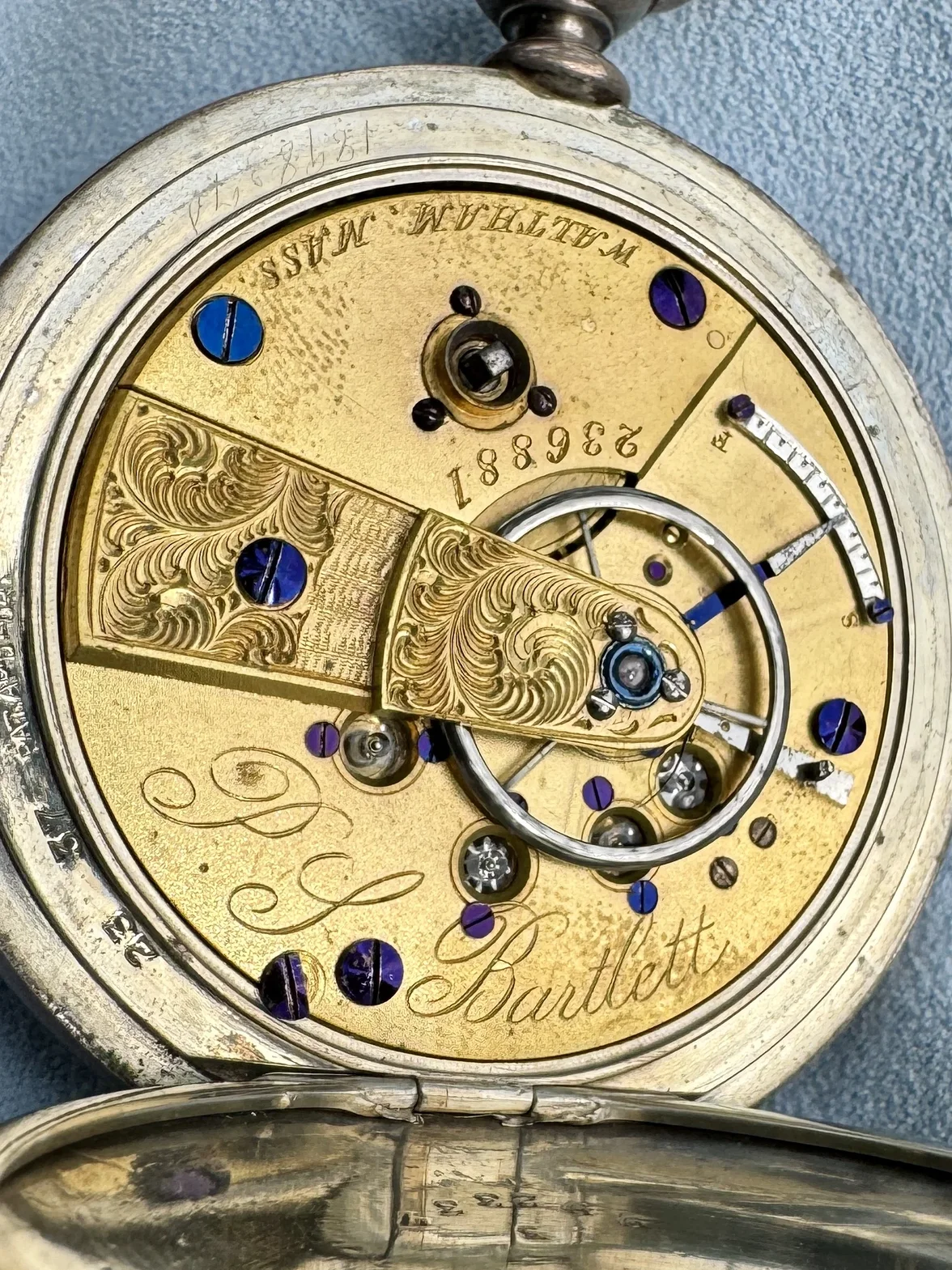
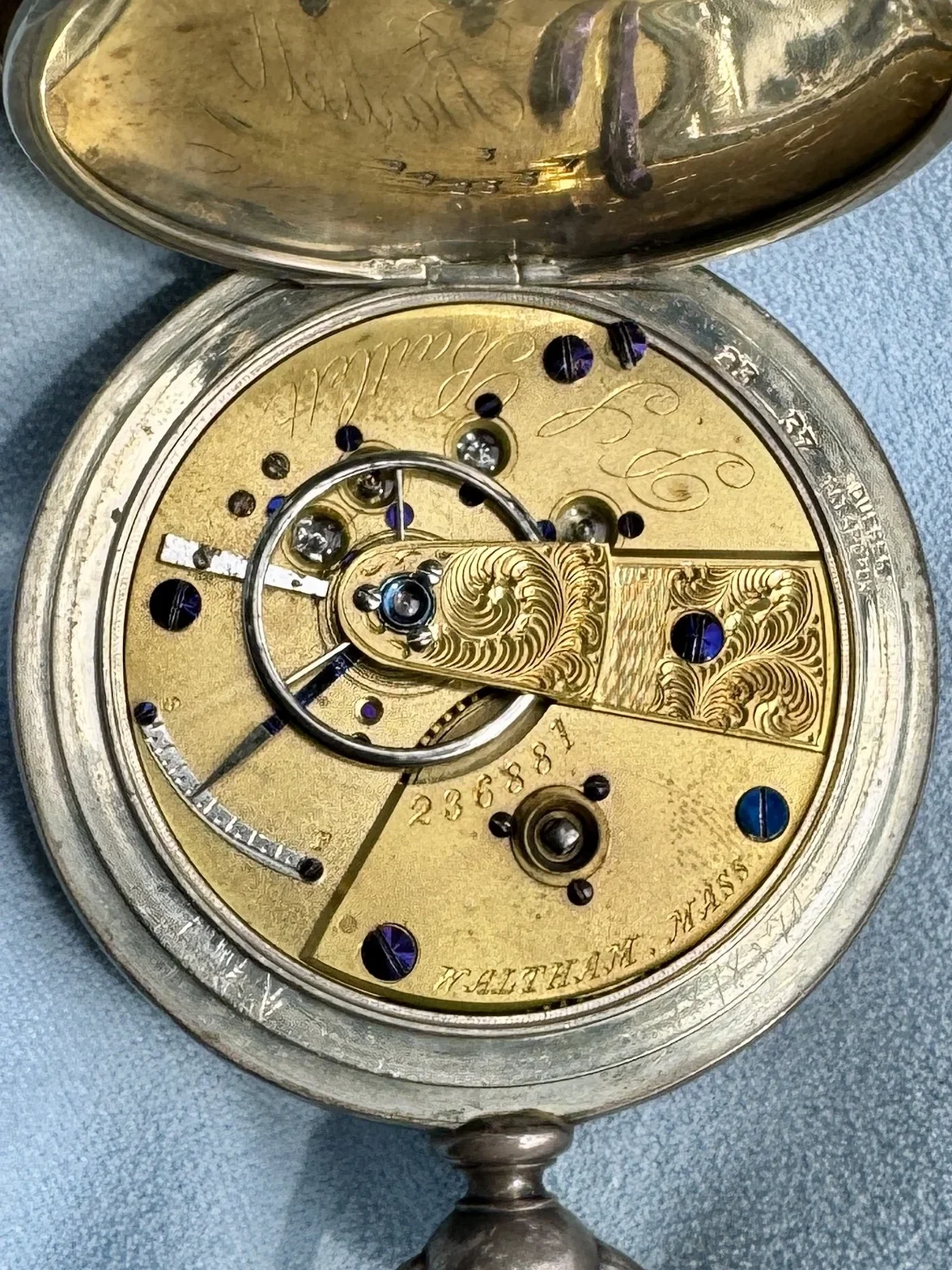
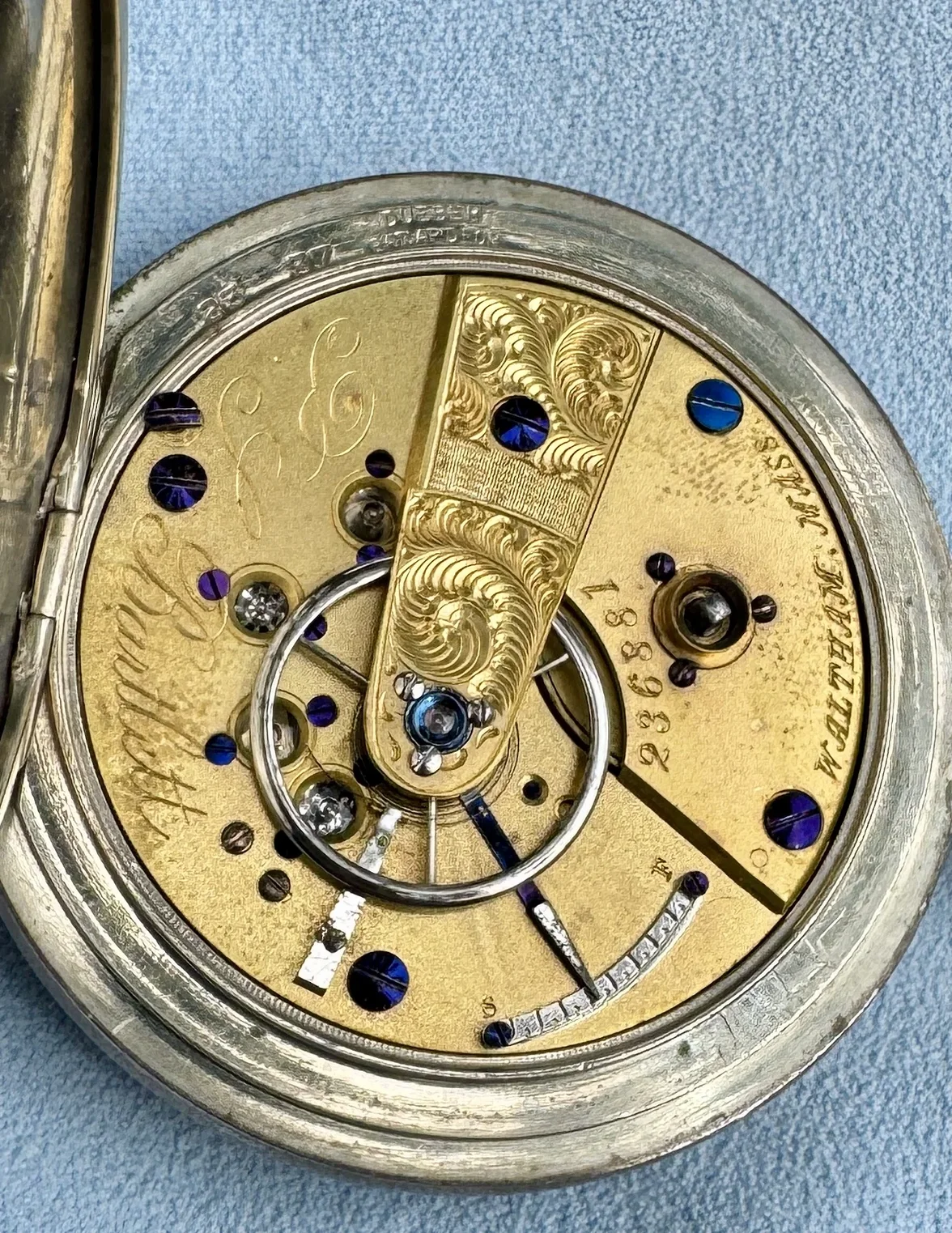
This one sits at 1866 but Waltham was clearly cleaning out 1st generation Model 1857 bits and pieces from their stockroom for these P. S. Bartlett grade watches.
11j, 18s, serial 236881 Works, thick glass crystal, coin silver case.
Love those giant jewels.
Especially love a 1866 flat porcelain dial with no blemishes and especially not seeing them at the key set arbor is a plus plus in my book.
Elegant blued spade and whip handset with straight shanks. Bought this one in 2001.

 
Posts
15,920
Likes
47,768
The jewels could be colourless corundum (sapphire), rock crystal, colourless aquamarine, or even spinel. Sometimes called “Liverpool Windows” on English watches. Is the cap jewel on the balance wheel a rose cut diamond? It would appear as though the hairspring is beneath the balance wheel (undersprung). A treasure, for certain.