Calling all Pocket Watch Buffs

Posts
8,786
Likes
62,297
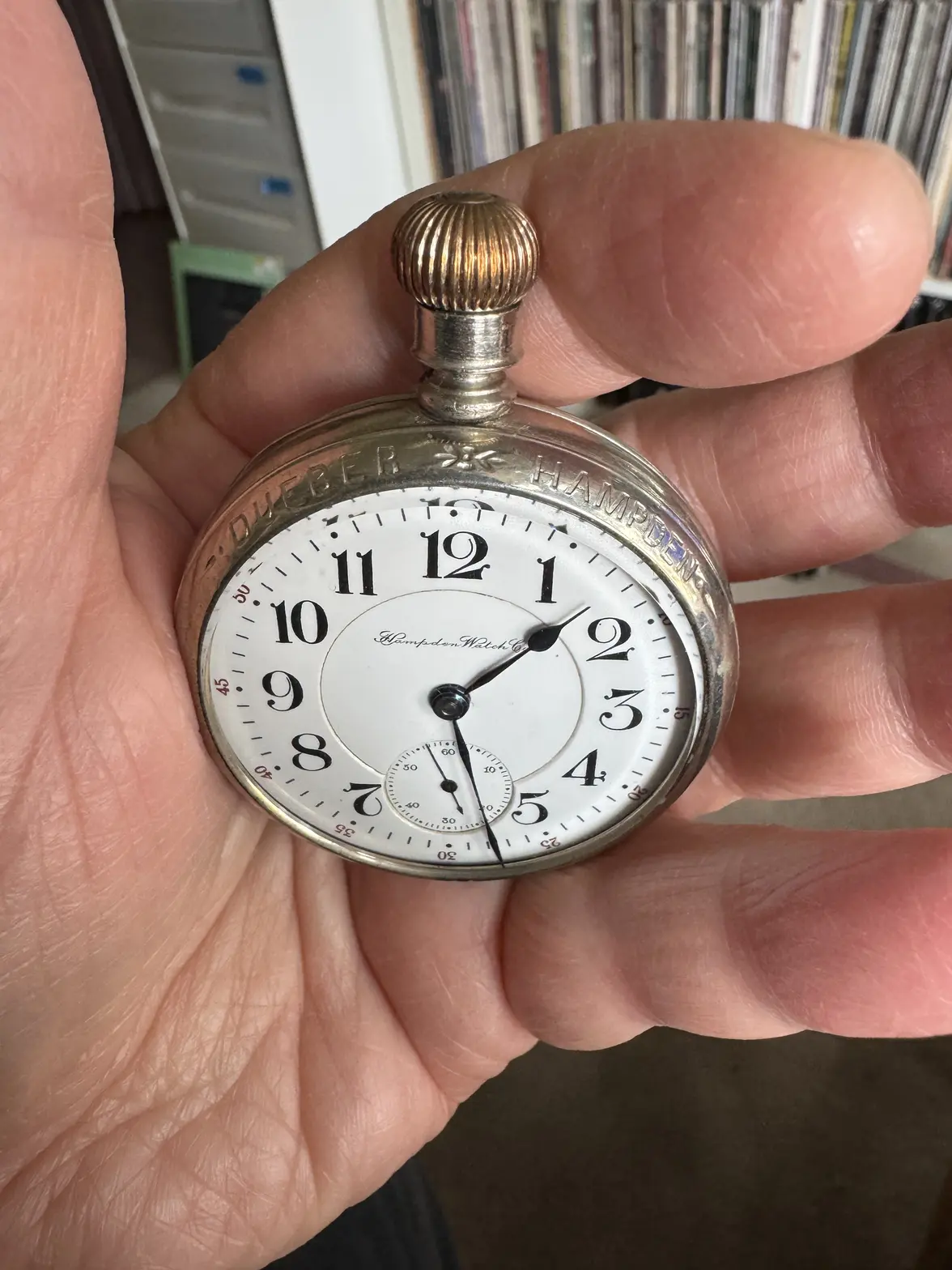
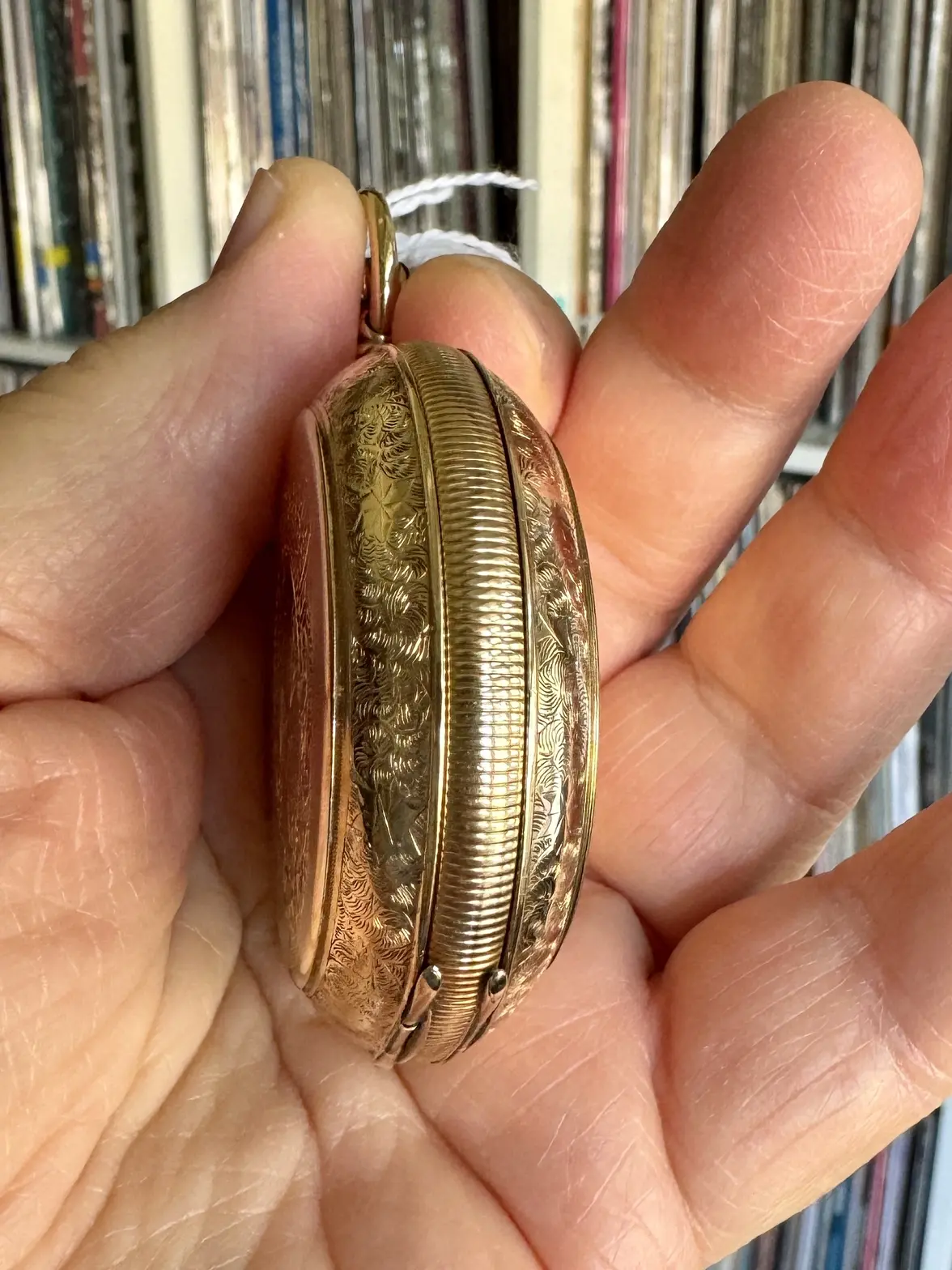
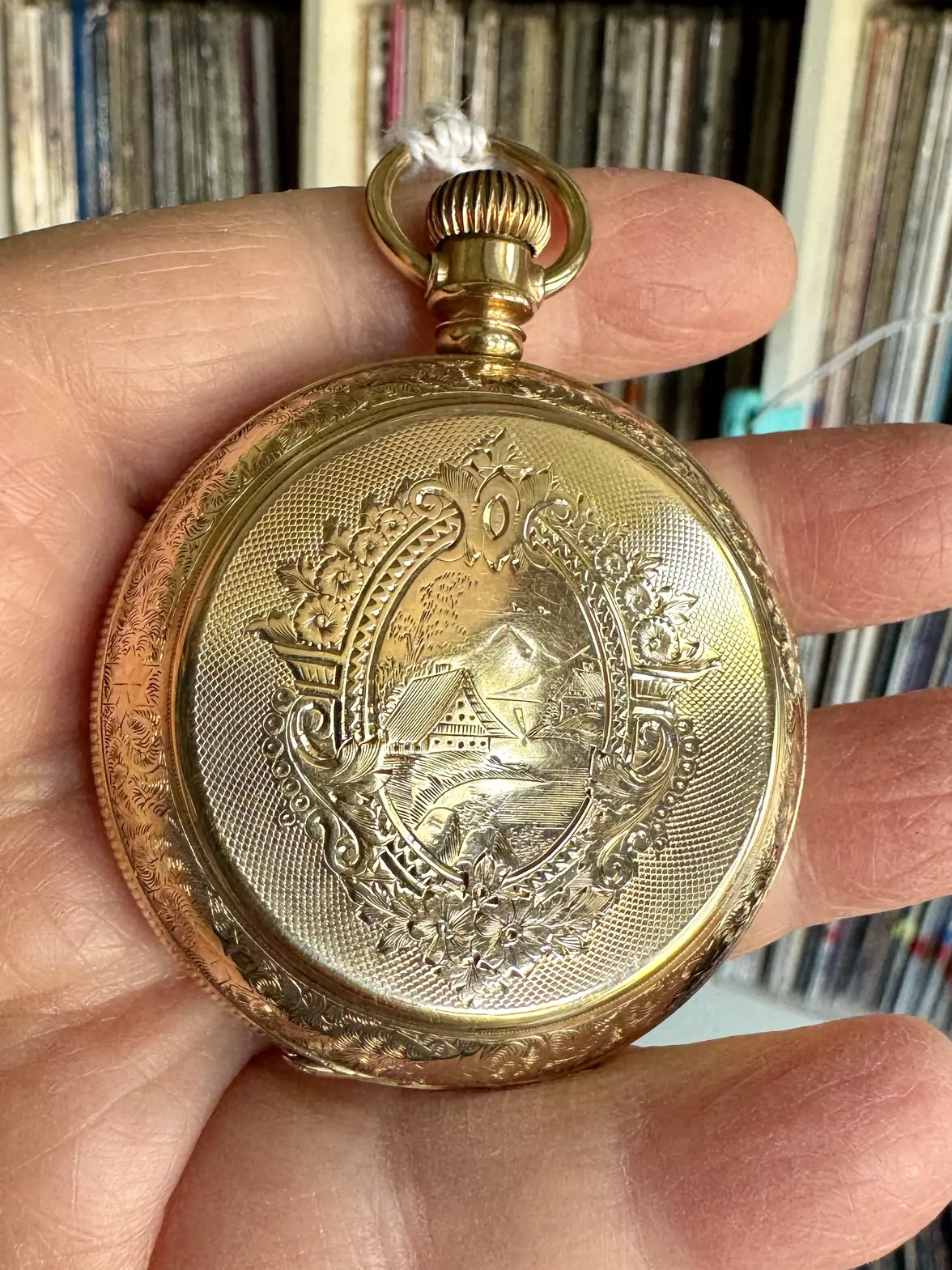
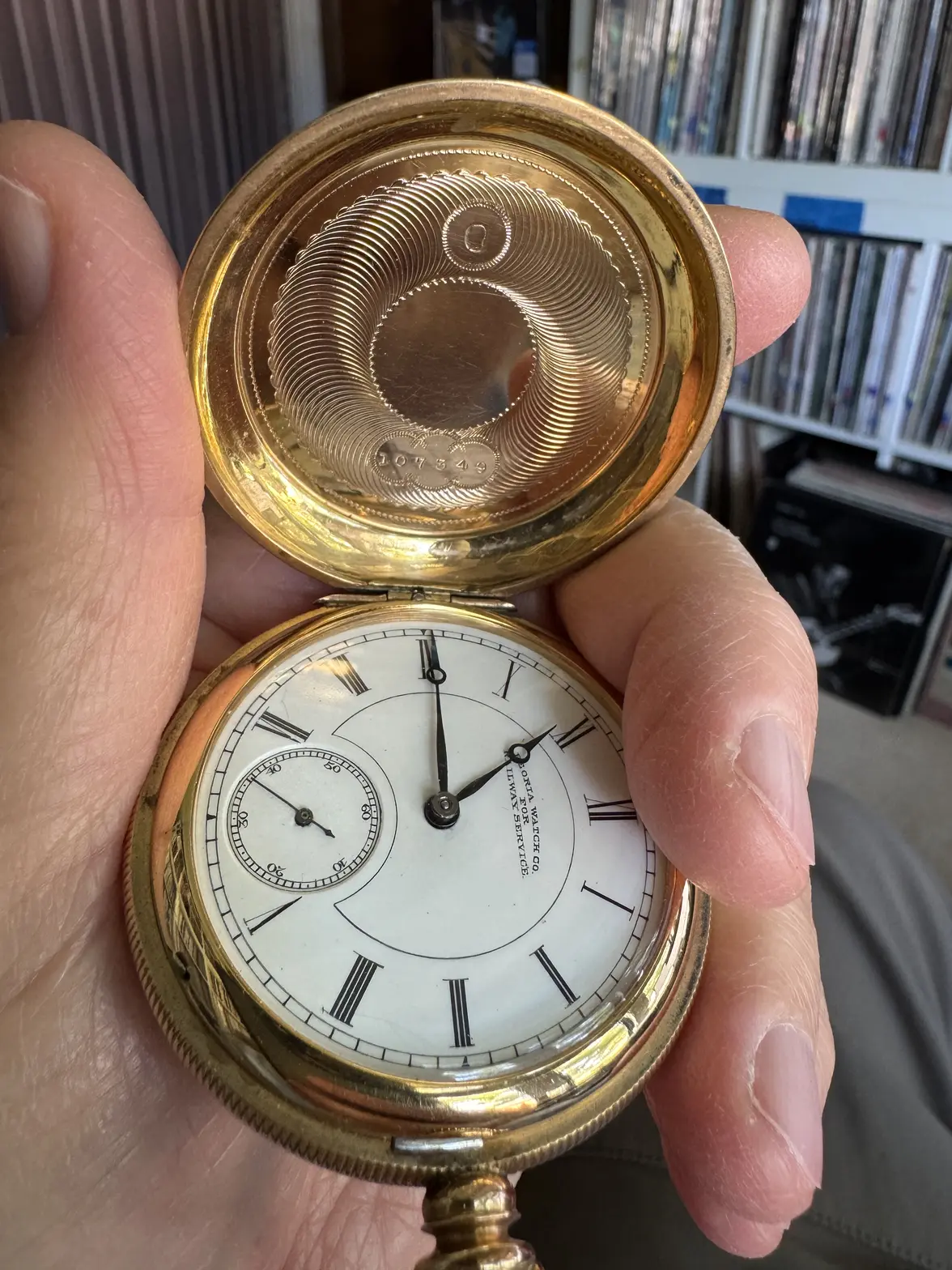
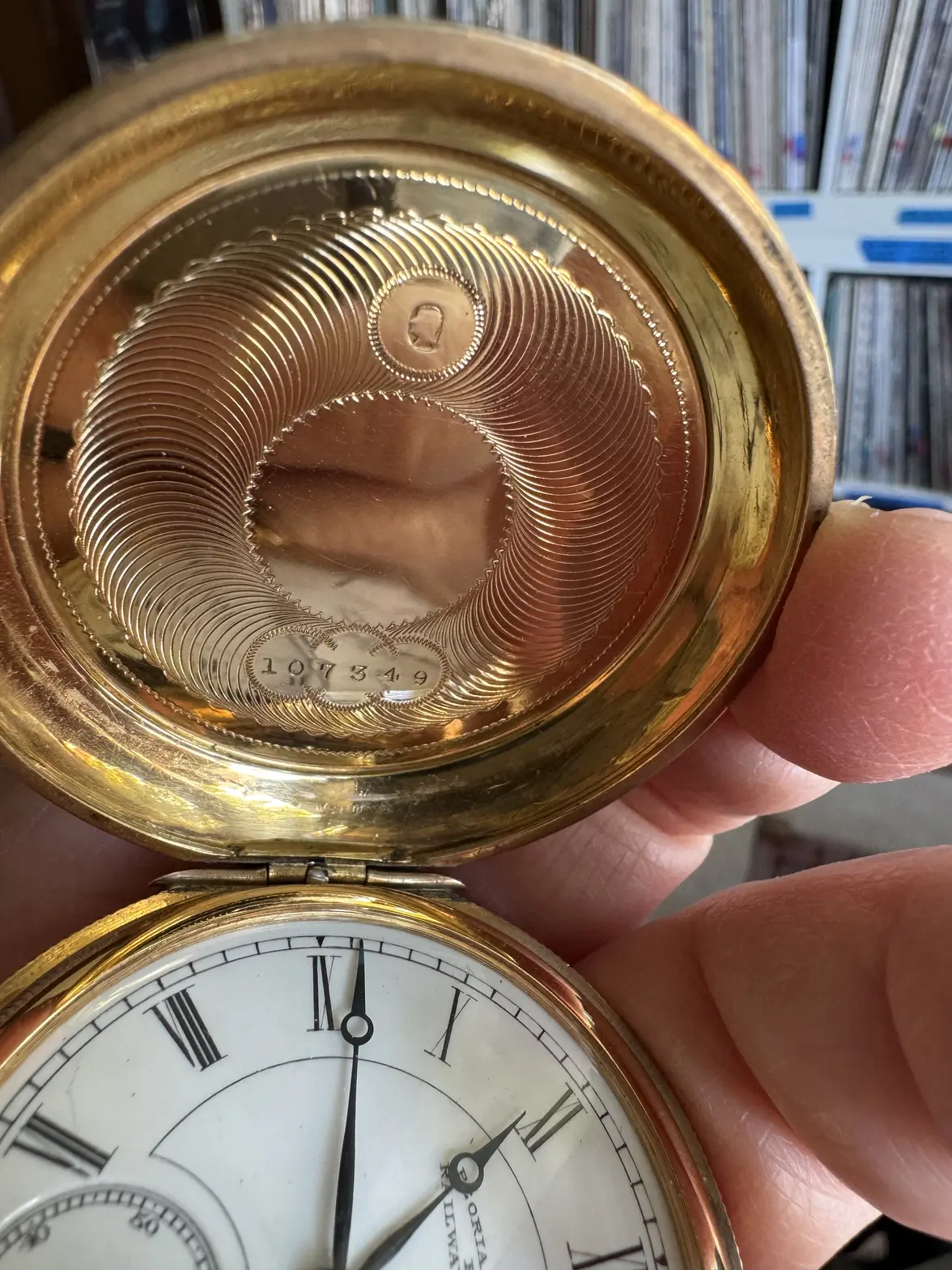
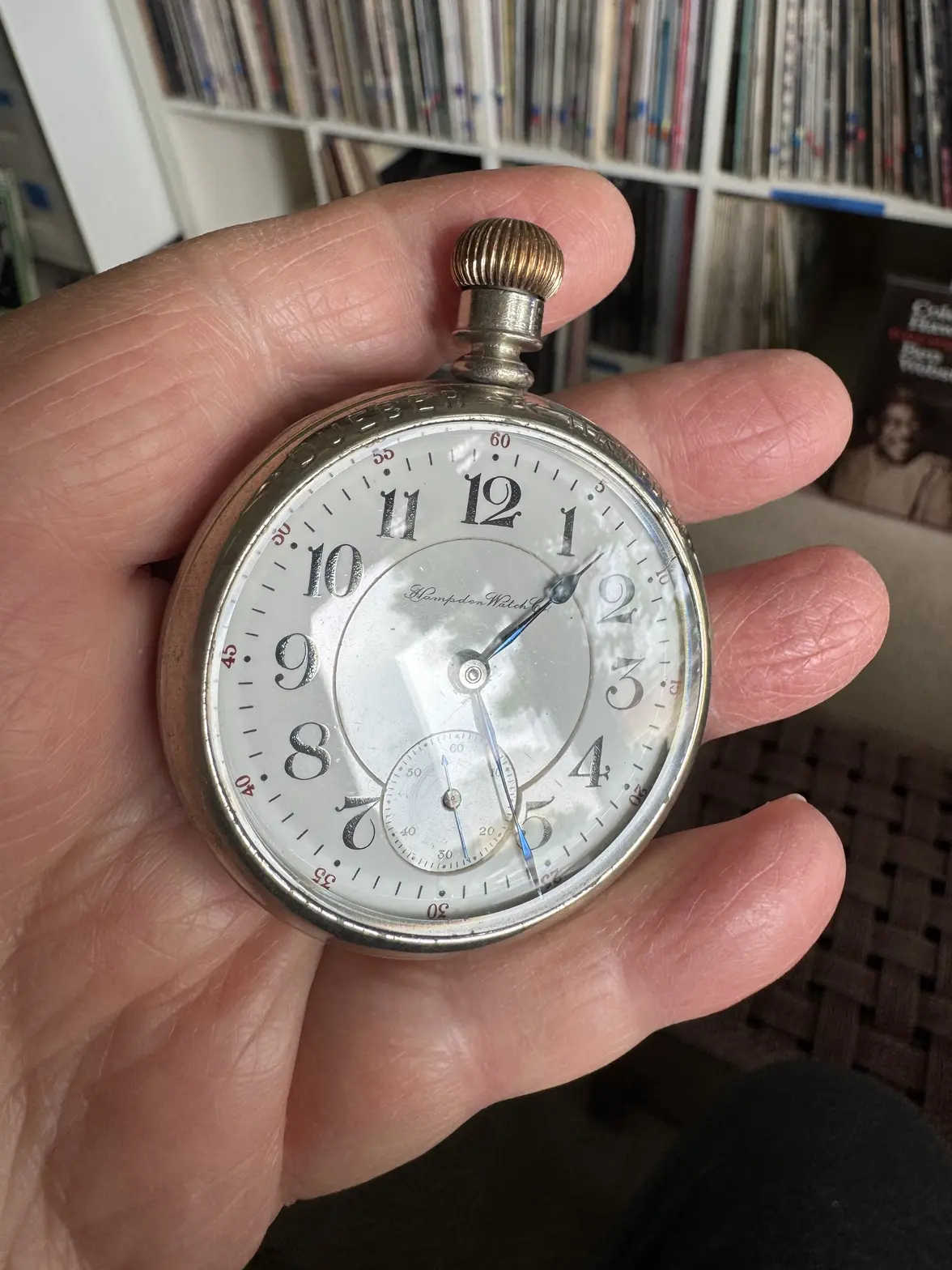
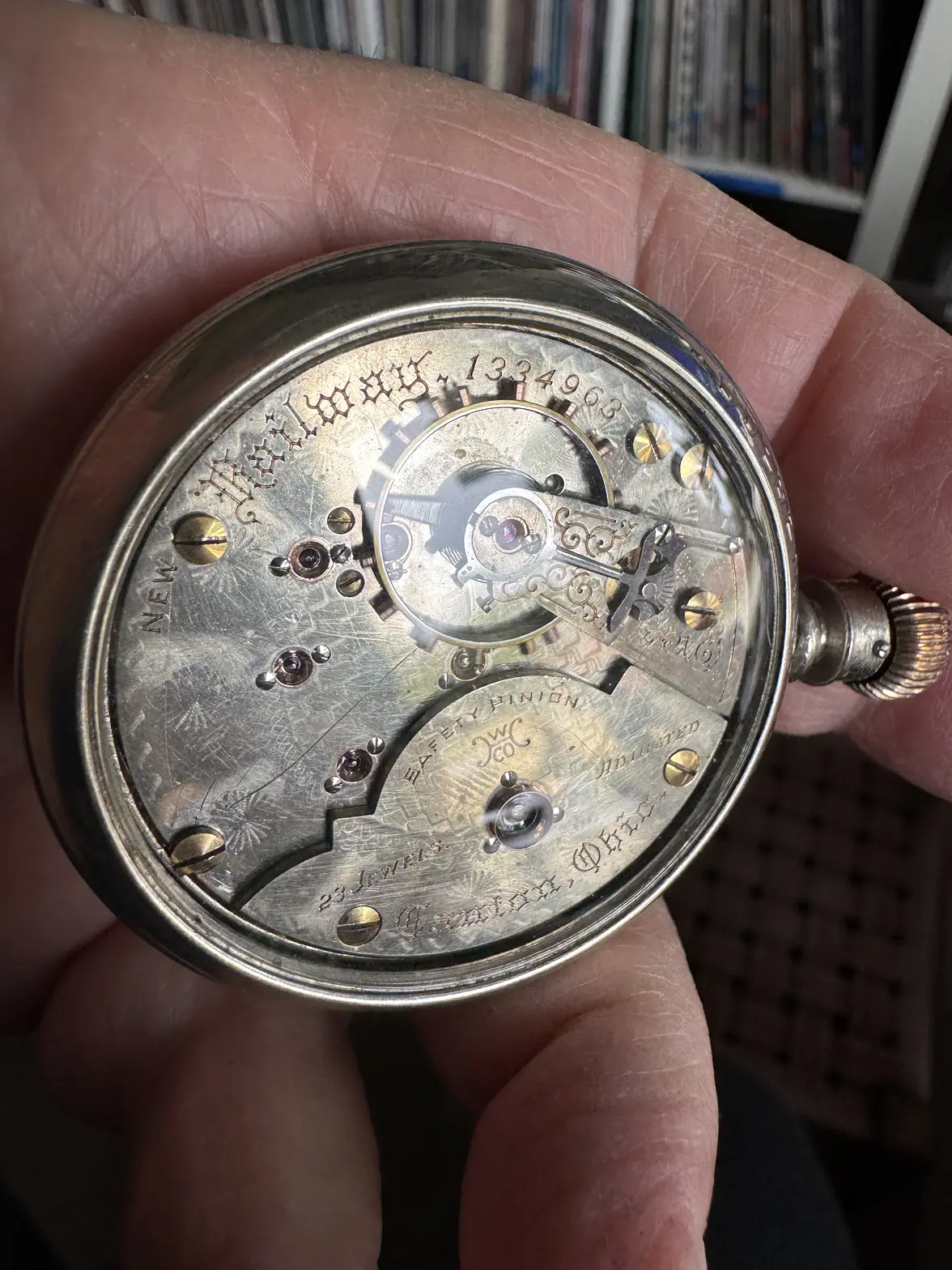
18s 23j Hampden:
Grade: “New Railway”
RR grade/approved
Model 3 year 1899
Dueber-Hampden display case

Edited:
 
Posts
15,860
Likes
47,583
18s 23j Hampden:
Grade: “New Railway”
RR grade/approved
Model 3 year 1899
Dueber-Hampden display case

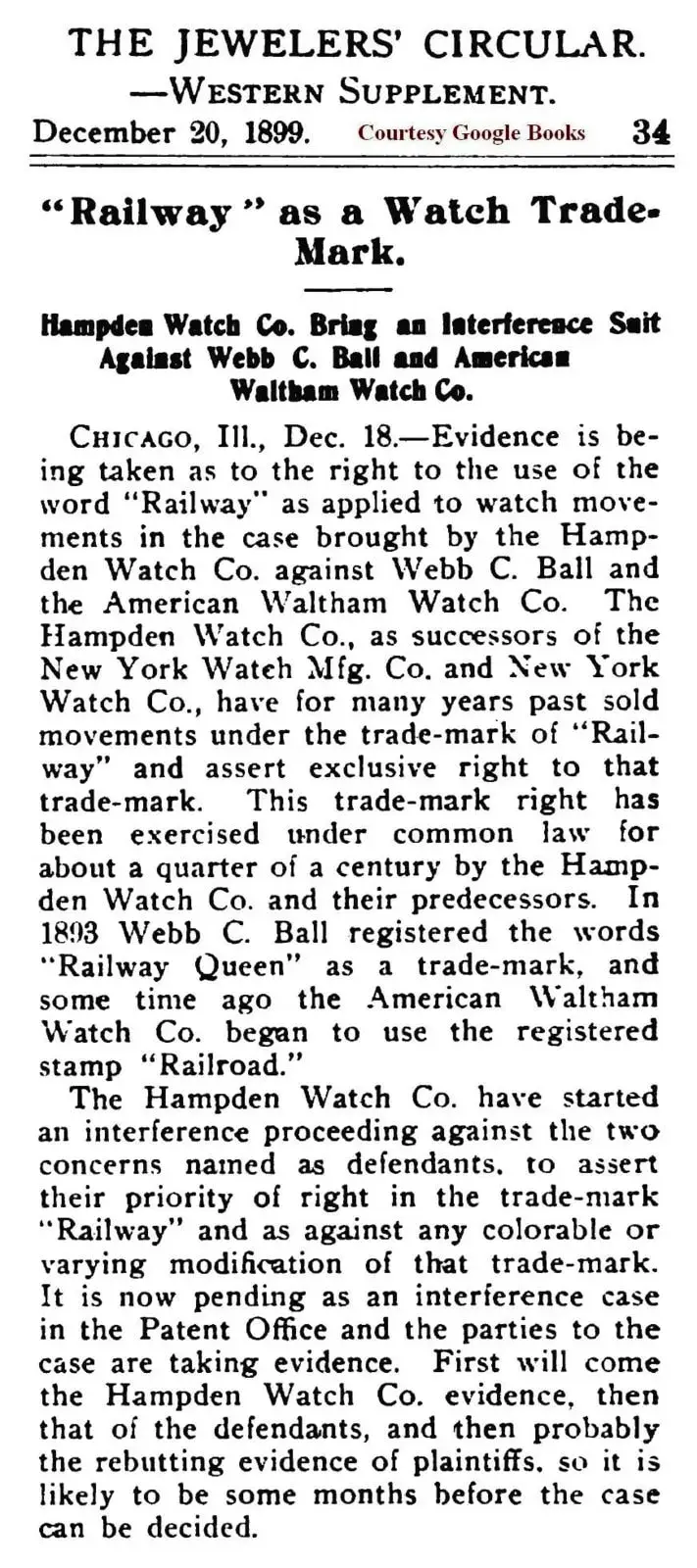
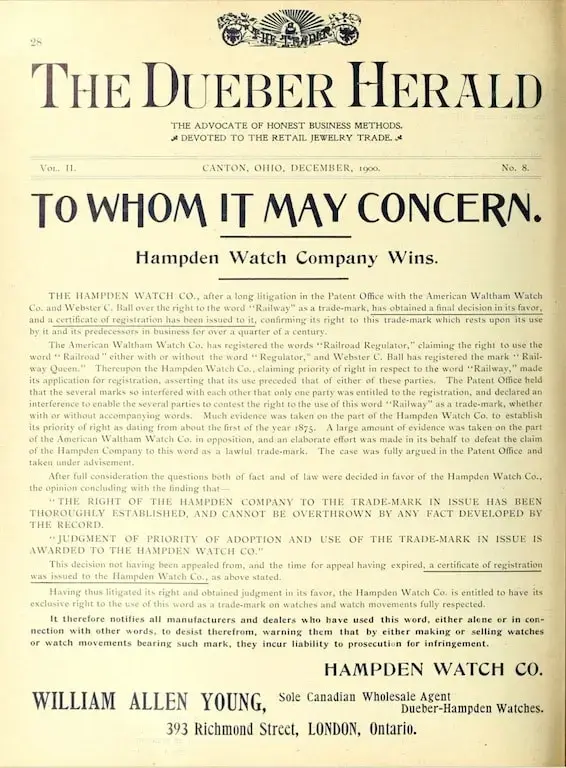
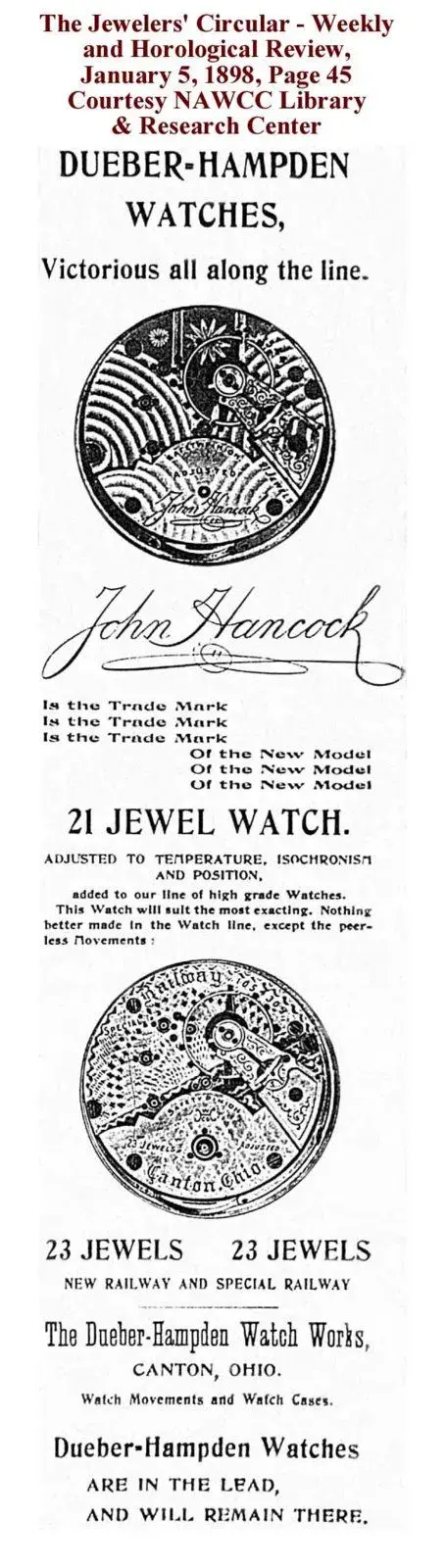
From an era when Dueber was accusing the competition of advertising “smokestack” jewels! Dueber himself was not above stretching things to gain a leg up on his competition.
 
Posts
8,786
Likes
62,297
Indeed, he had to move lock stock and barrel to Canton, Ohio as he was being boycotted for improprieties.
 
Posts
8,786
Likes
62,297
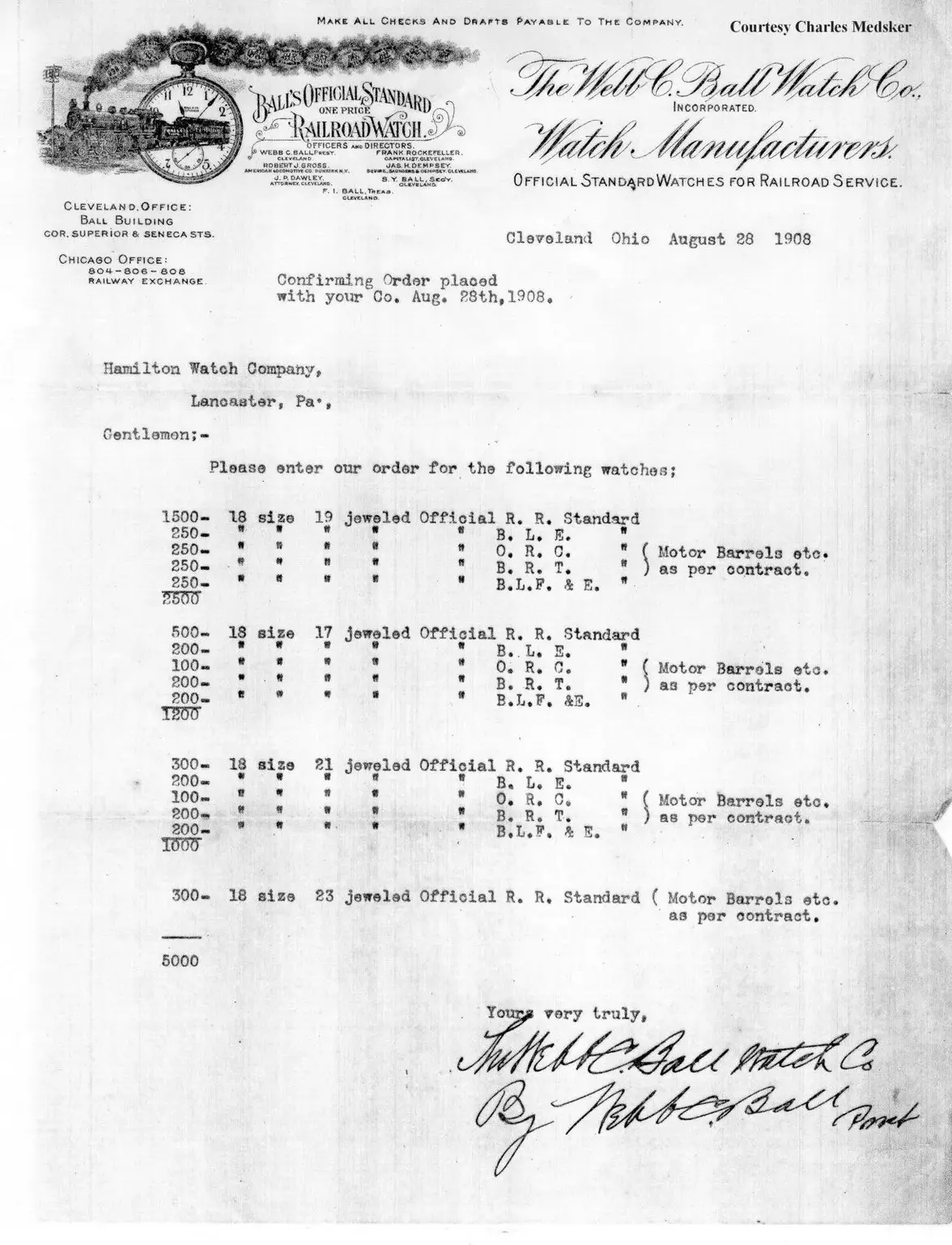
And, just to confirm all the advertising verbiage, this letter settles, once and for all time, that The Webb C. Ball Watch Company DID, indeed, manufacture pocket watches.🙄

 
Posts
4,273
Likes
12,474
And, another.
And, just to confirm all the advertising verbiage, this letter settles, once and for all time, that The Webb C. Ball Watch Company DID, indeed, manufacture pocket watches.🙄

Definitely not a PL.
 
Posts
8,786
Likes
62,297
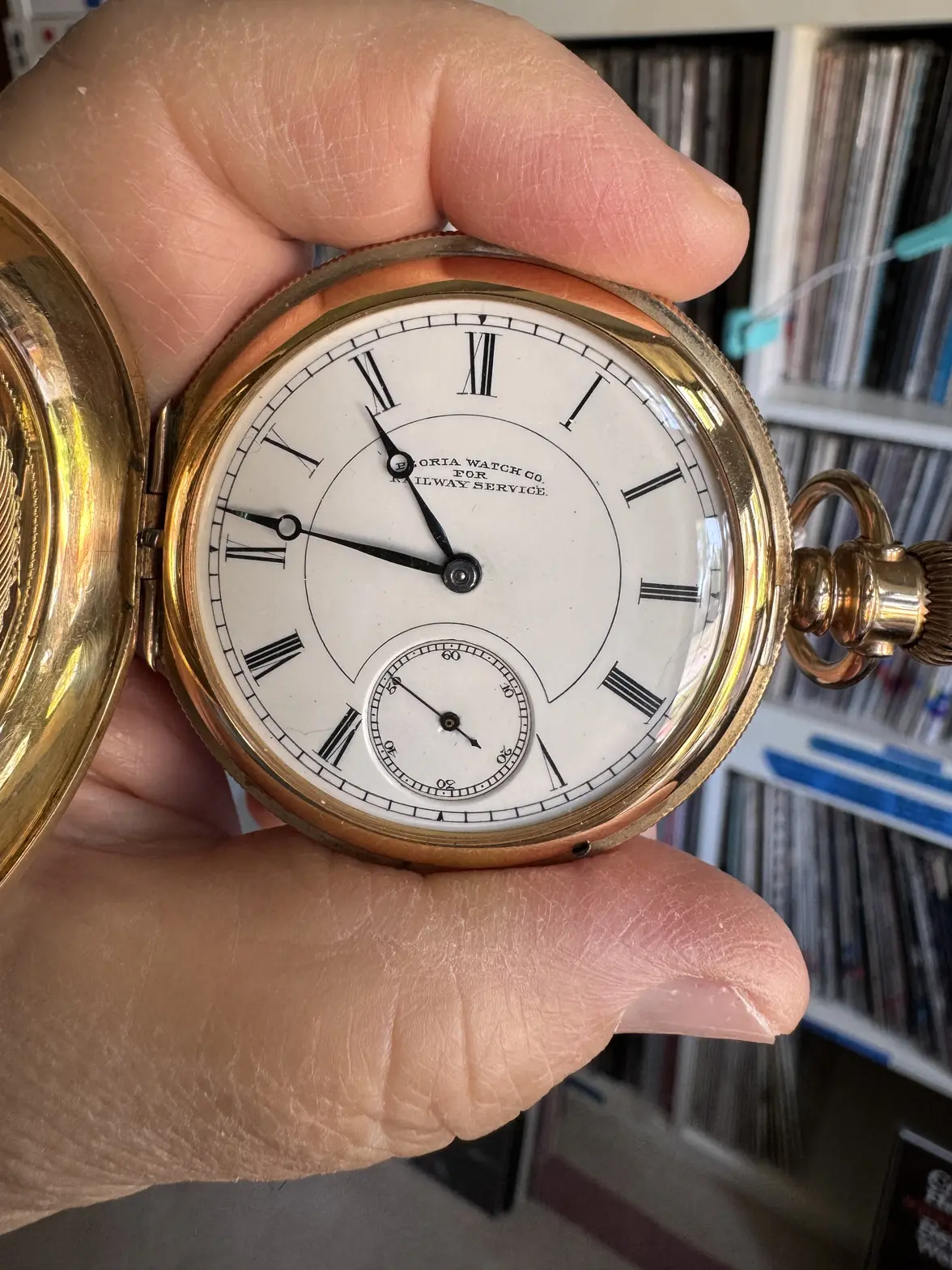
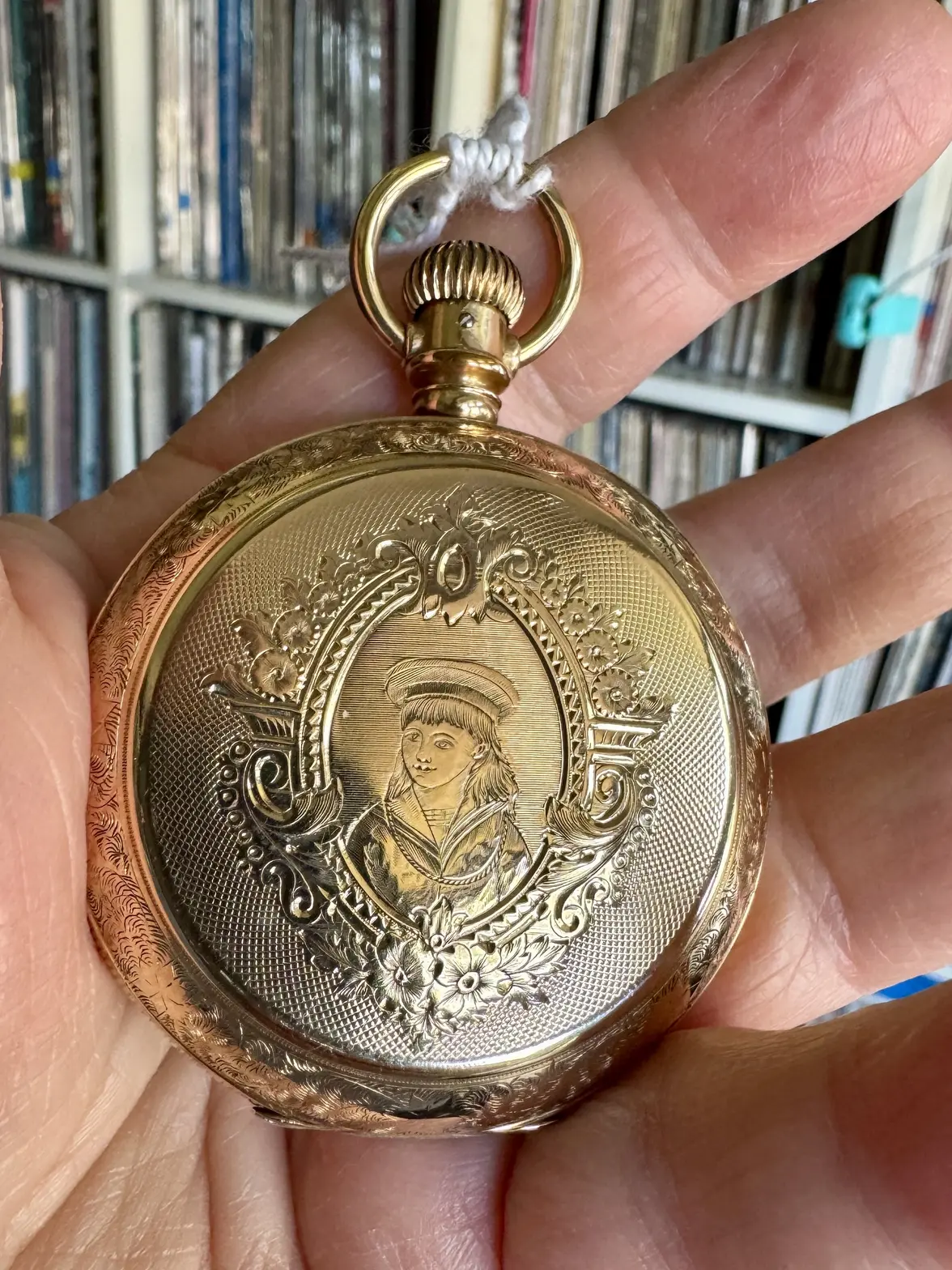
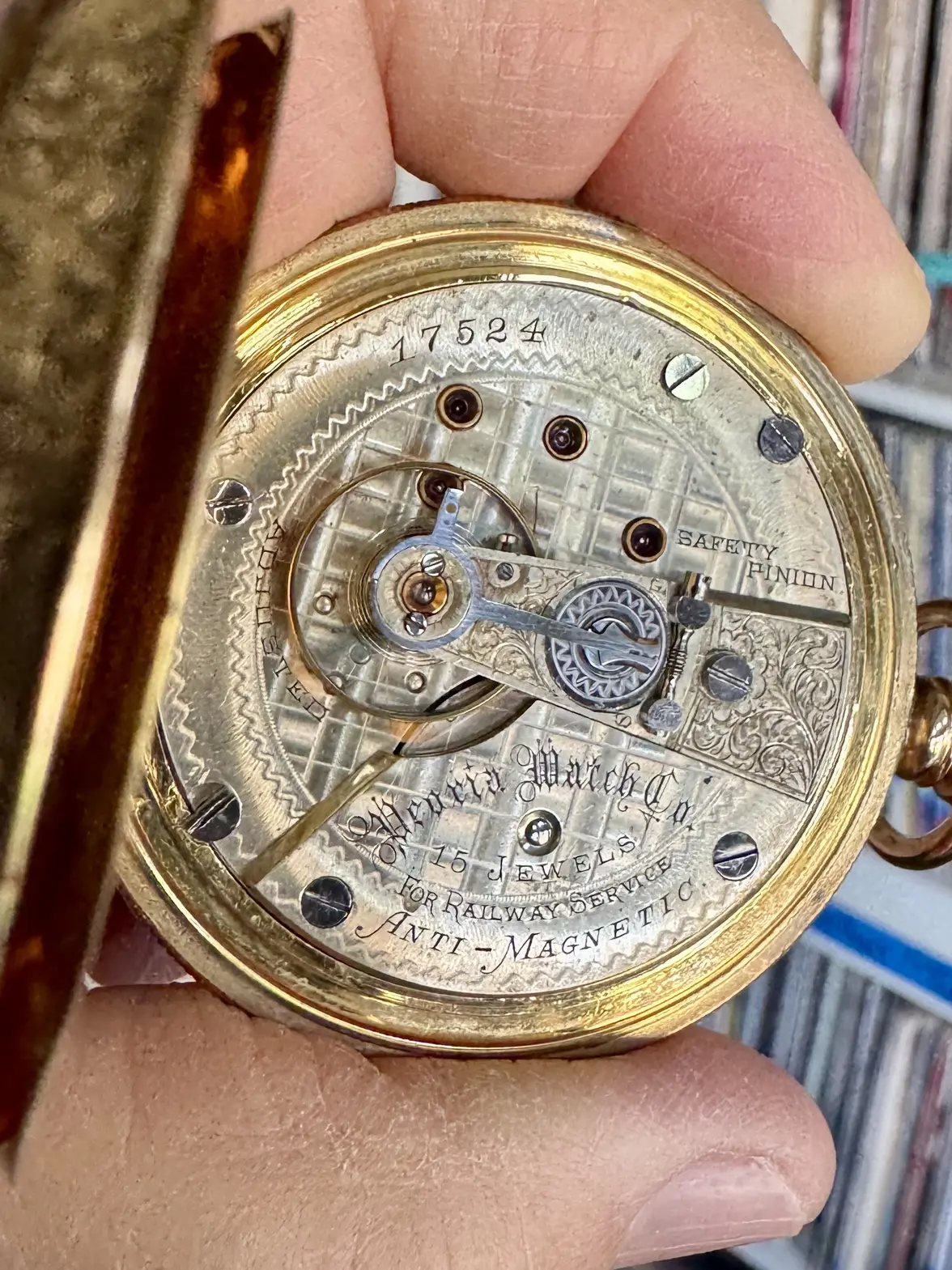
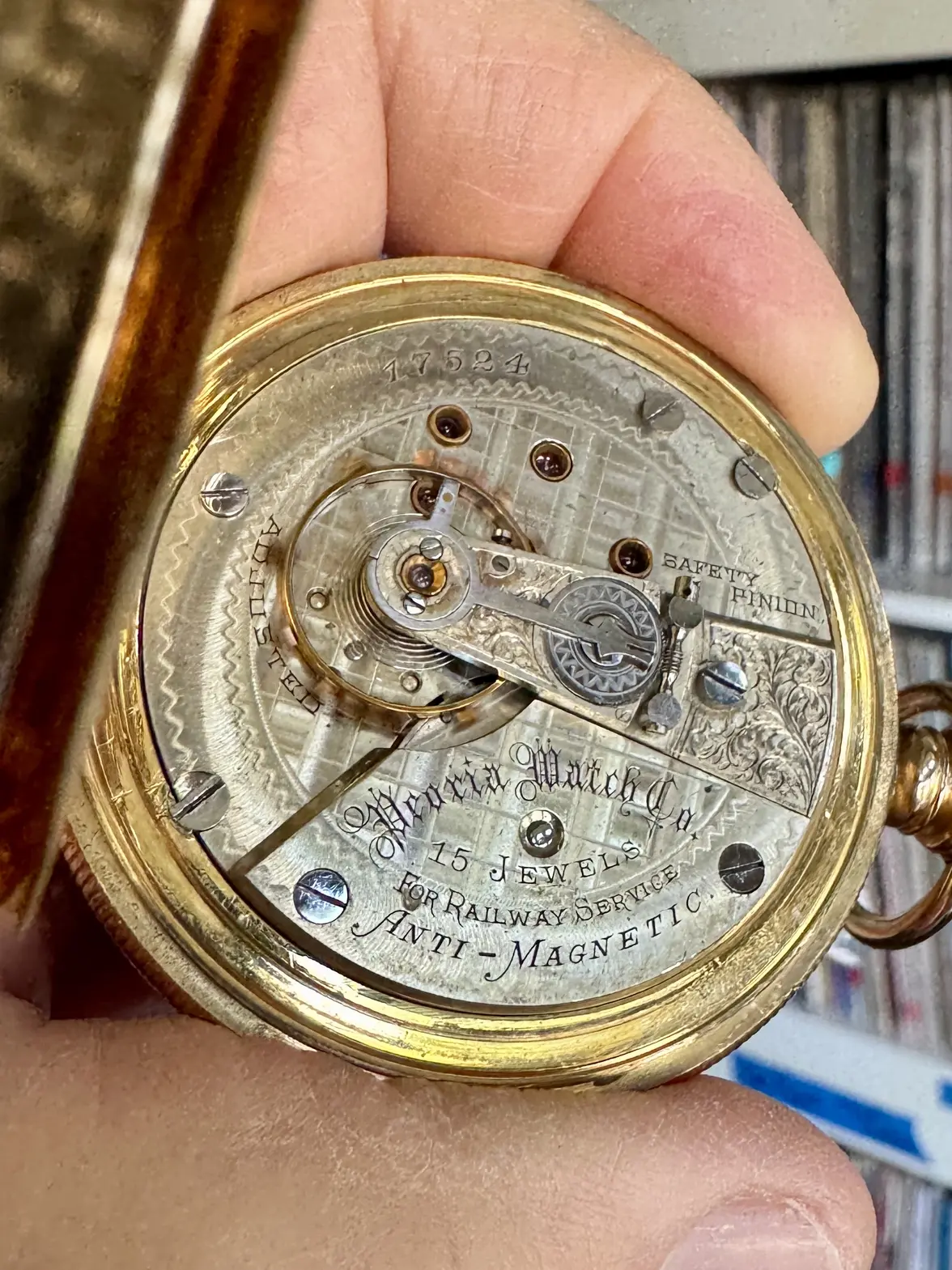
18s Peoria circa 1886-90, the years they were in business.
European technology imported with palladium balance and hairspring for an anti-magnetic movement.
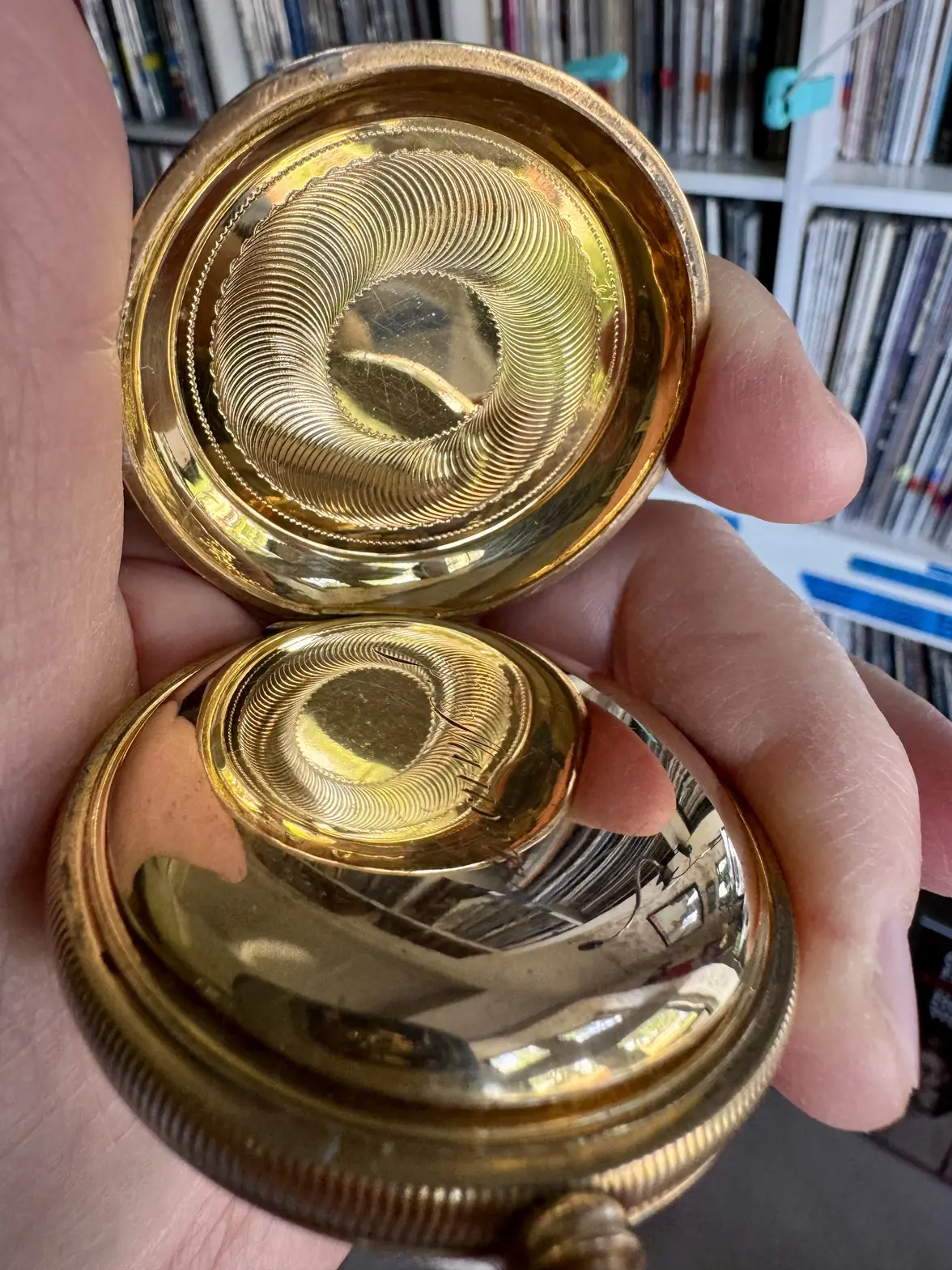
And taking this pw to the zenith, an absolutely gorgeous GW Ladd gf Hunter case.
RR grade/approved

 
Posts
8,786
Likes
62,297
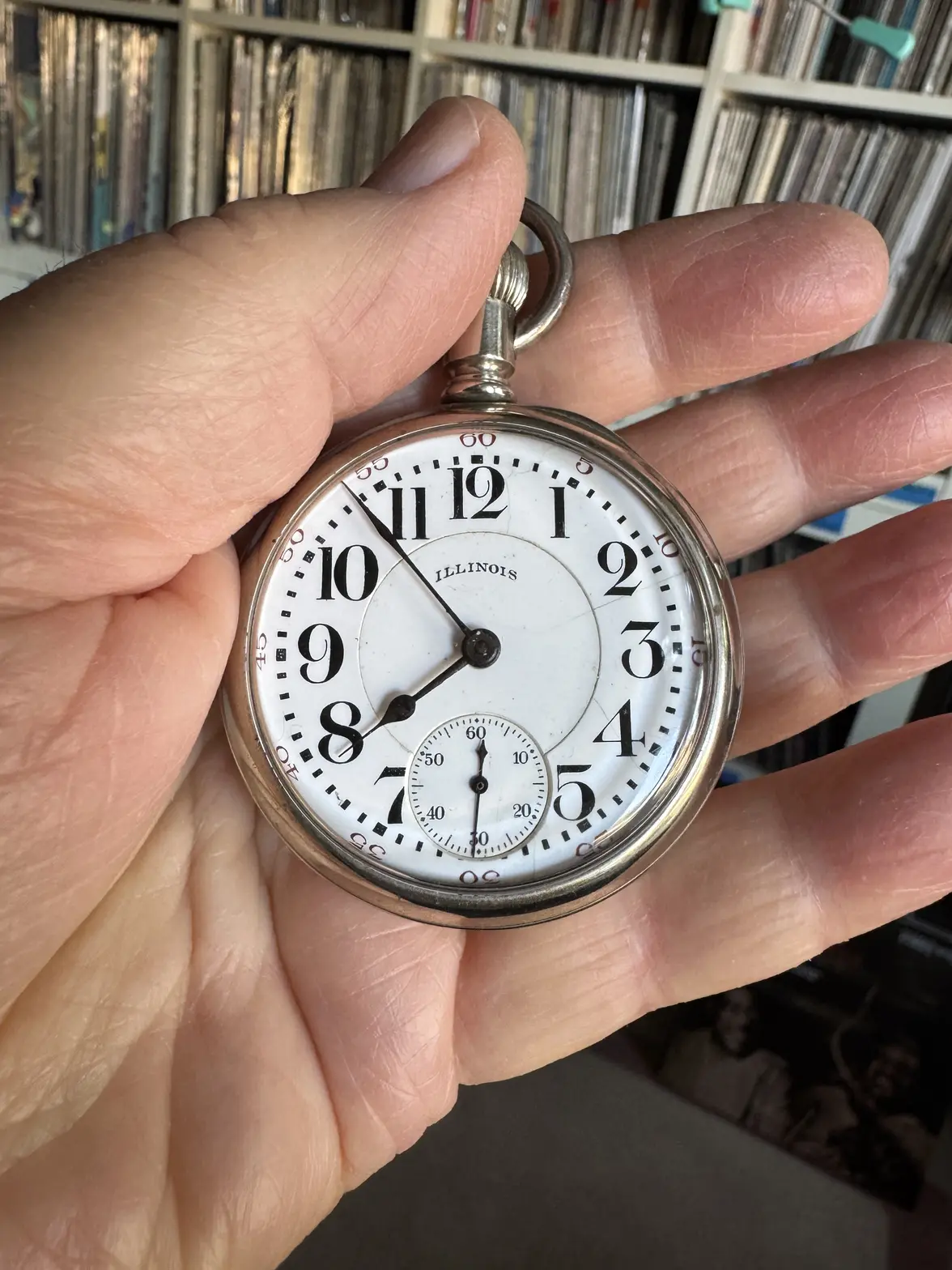
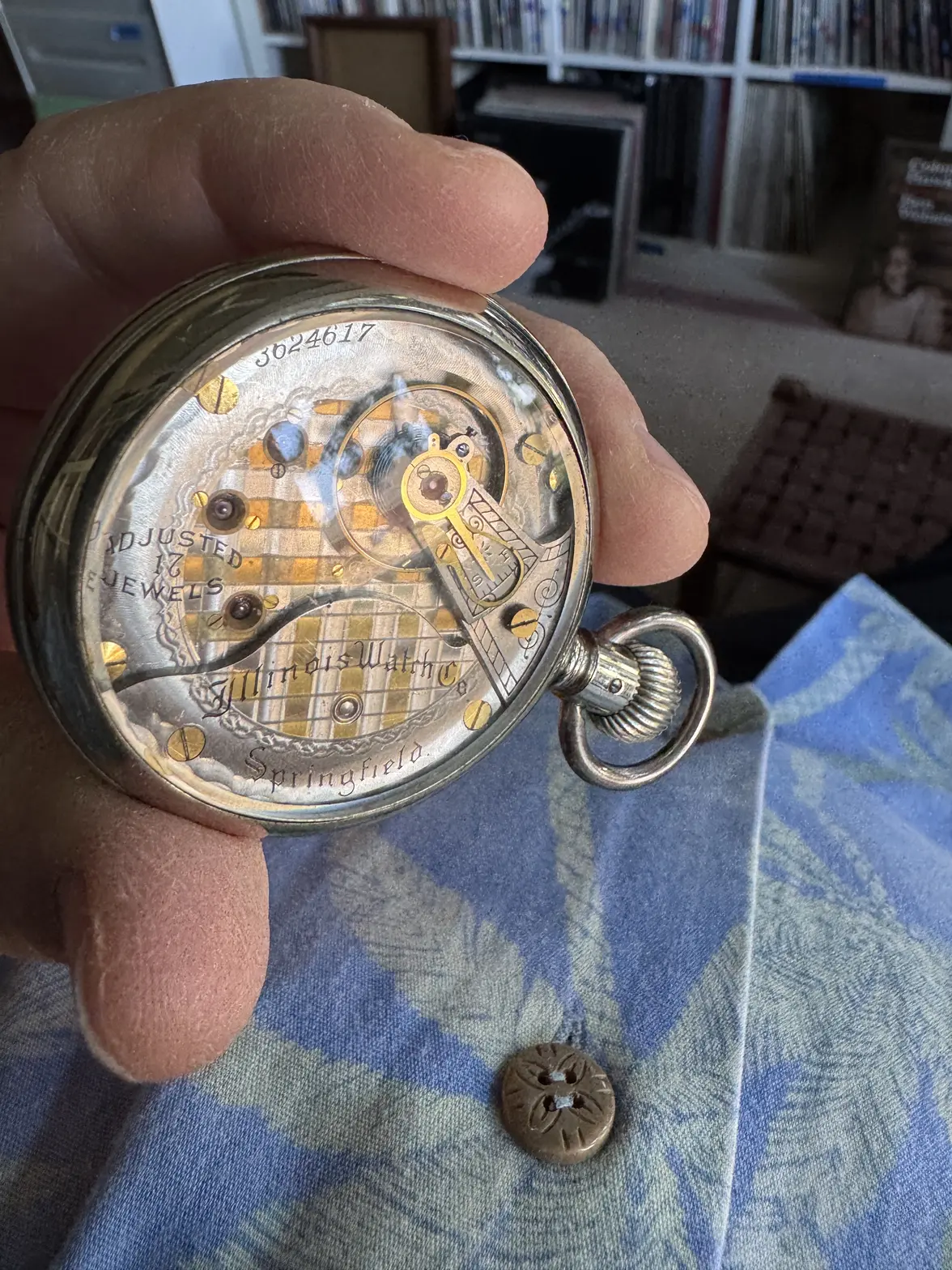
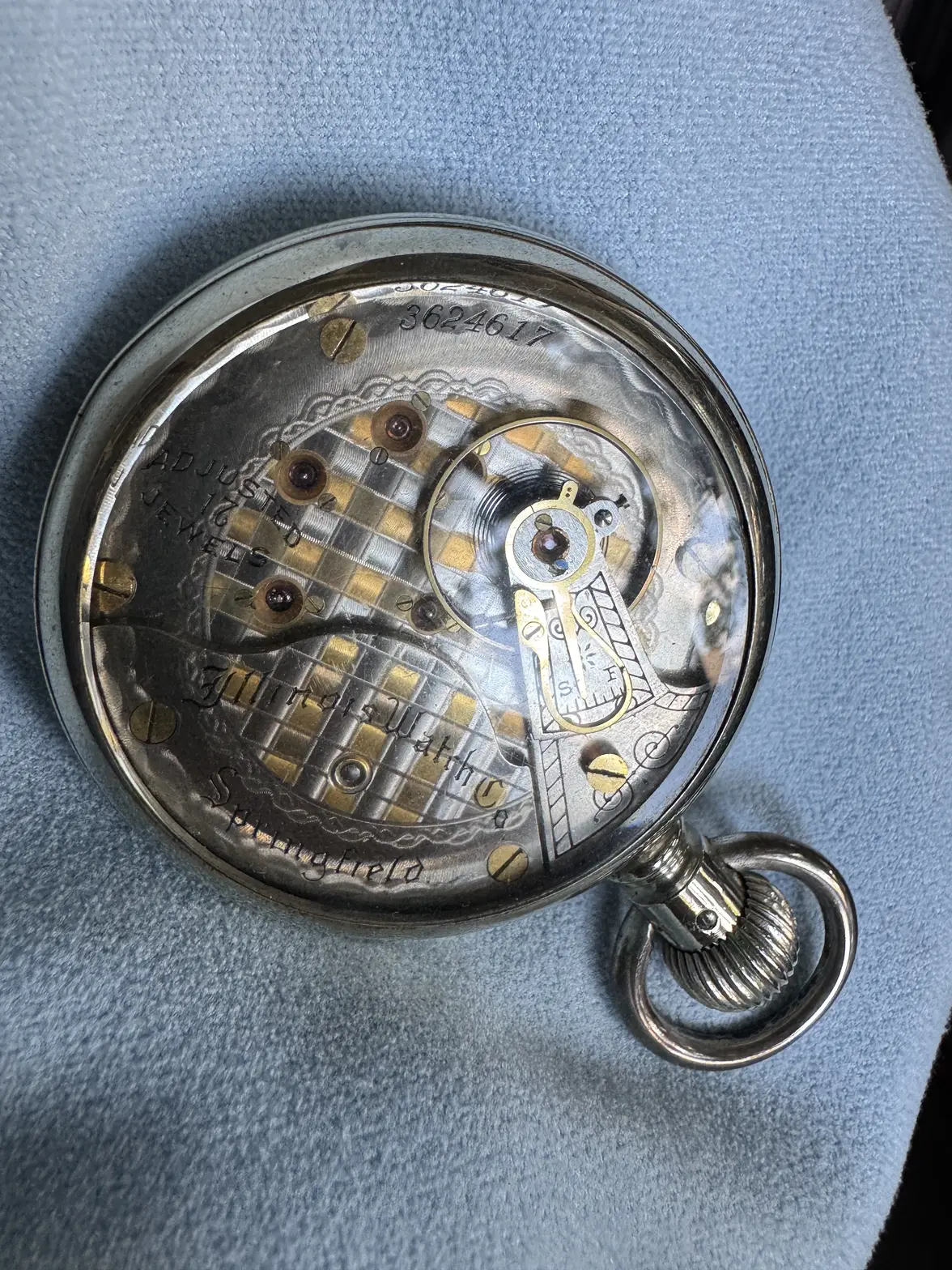
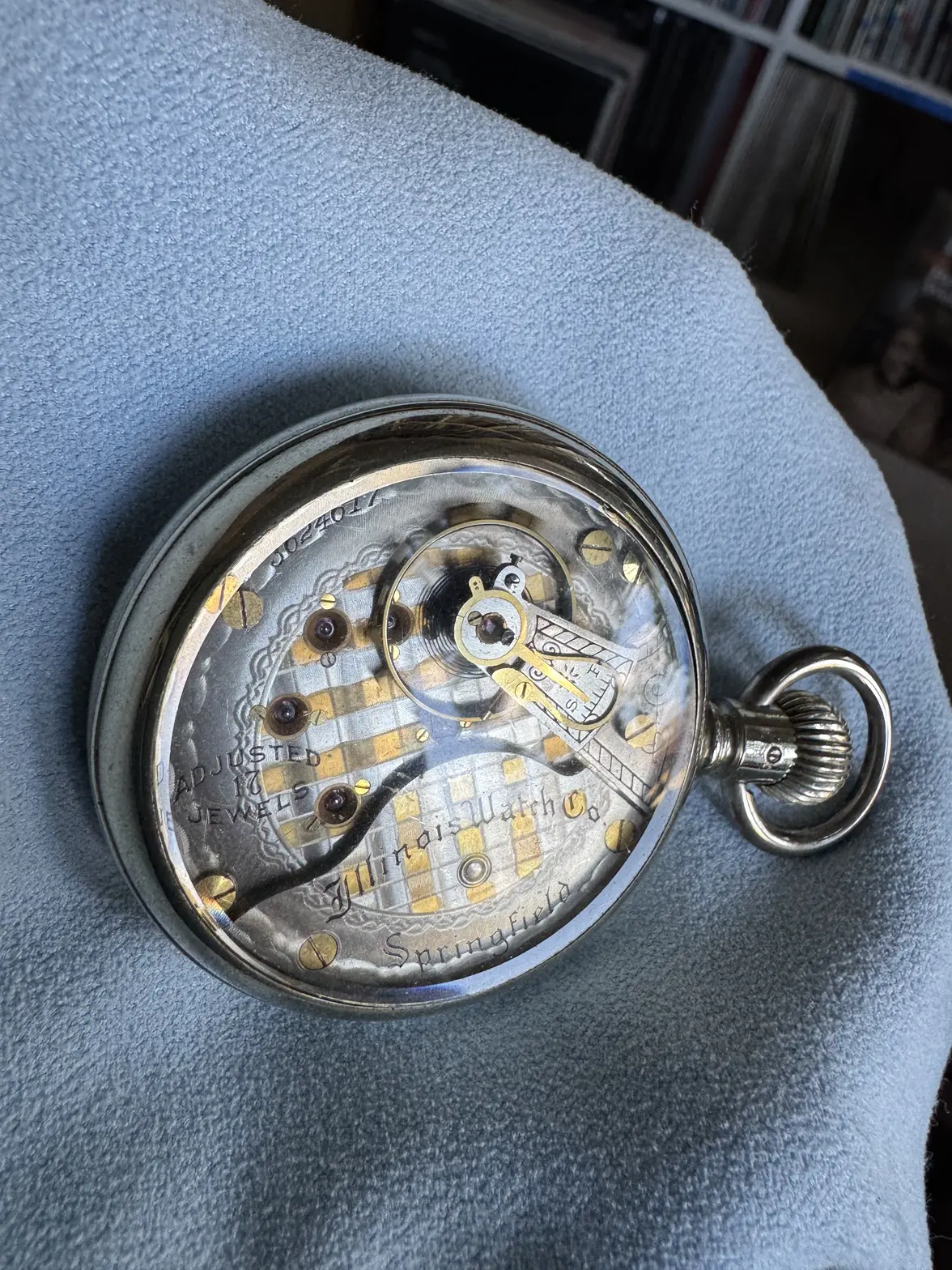
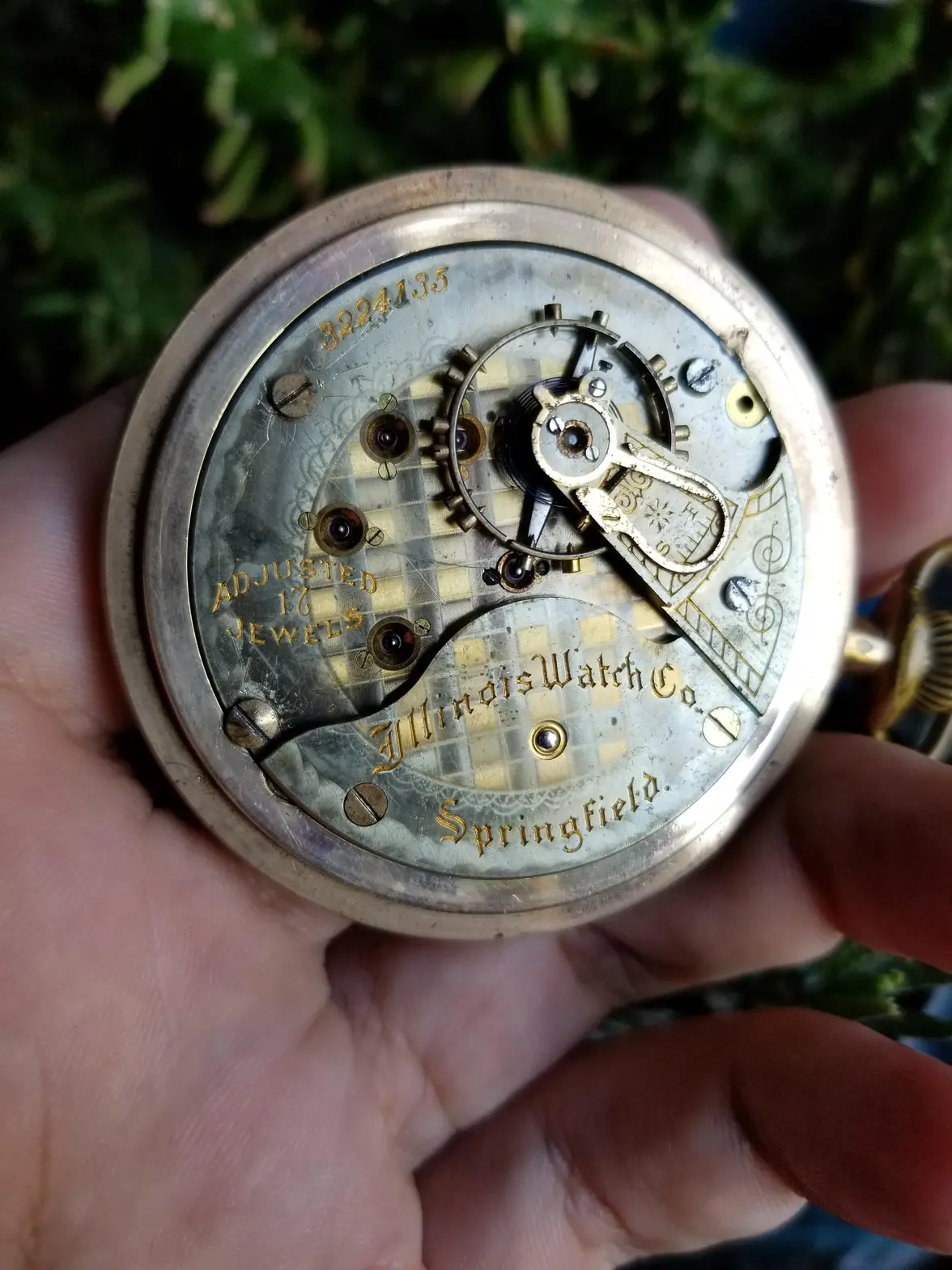
Checkerboard Illinois on a solid working man’s pocket watch. Sometimes Illinois offered their solid sellers in a special issue. Gold flashed screw heads, case screws, regulator and swan neck places this top tier grade 89, circa 1920.

 
Posts
4,273
Likes
12,474
Checkerboard Illinois on a solid working man’s pocket watch. Sometimes Illinois offered their solid sellers in a special issue. Gold flashed screw heads, case screws, regulator and swan neck places this top tier grade 89, circa 1920.

Absolutely wonderful!

My great granddad's Illinois is a grade 89. I distinctly remember my dad wearing it and being fascinated by it as a boy. He gave it to me when I was in high school. It is not nearly as nice as your example, but it's the last watch I'd part with.
 
Posts
15,860
Likes
47,583
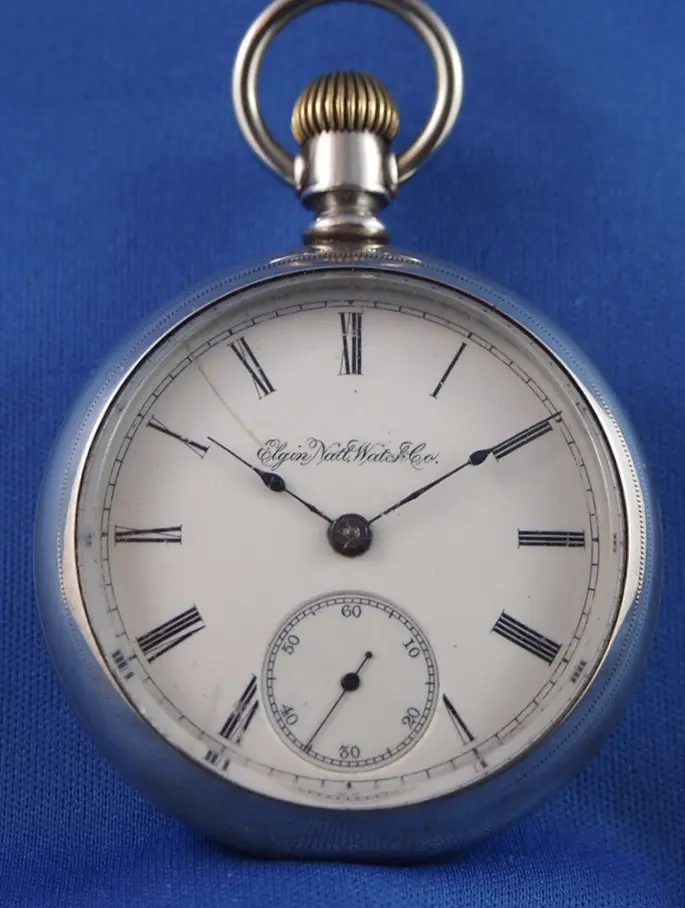
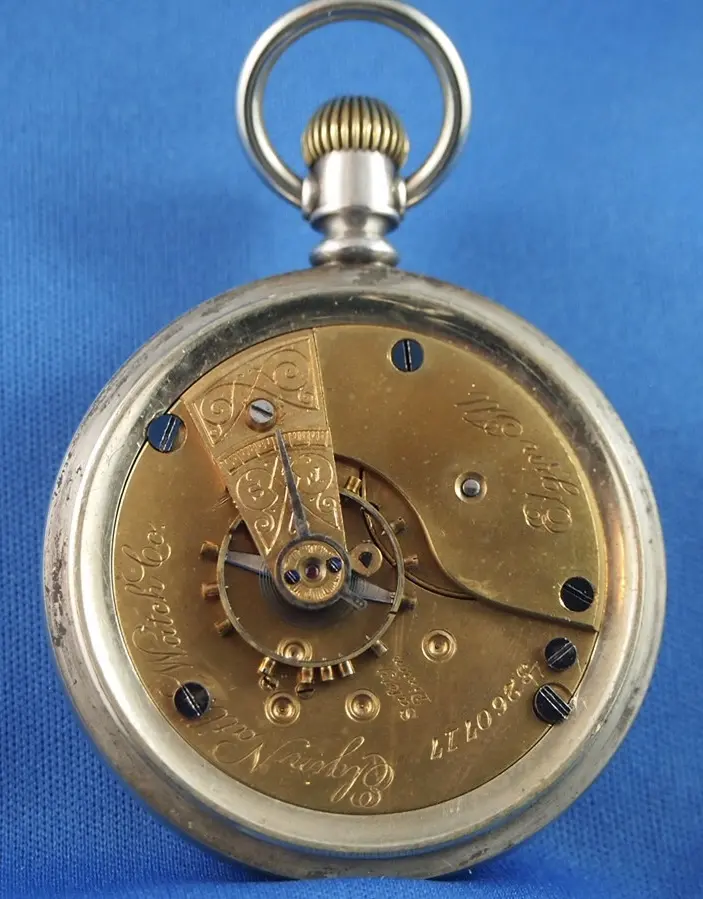
Idle thoughts! When my father passed away 50 years ago, I inherited a modest collection of pocket and wrist watches. Among the watches I inherited was an 18-size, 7-jewel Elgin pocket watch in a coin silver case. My father inherited it from his mother who passed away circa 1958. I was always told that the watch had belonged to my grandfather who passed away in 1908, 118 years ago.

My late grandfather was born in Whitehall, Stronsay, in the Orkney Islands in 1865. He emigrated to the United States circa 1891, and became a U S citizen in 1896. He died in Elyria, Ohio, in 1908.

This morning, I got to wondering if the age of the watch (based on the S#) could give me an indication if it had actually belonged to him. The S# on the Elgin is 3260717. According to the data on the pocketwatchdatabase site, the watch was made circa 1889.

https://pocketwatchdatabase.com/search/result/elgin/3260717

The watch case has a karat gold inlay of a steam locomotive on the case back. My grandfather worked for a time on the San Francisco street railway in the 1890s, but never worked for an actual railroad to the best of my knowledge. Image of the locomotive is quite heavily worn. Had my grandfather acquired this watch circa 1891, this locomotive image would not likely have become so heavily worn by the time he passed away in 1908. This seems to tell me that the watch was used by someone else after his death. Could the watch have belonged to him? Could be!

Edited:
 
Posts
162
Likes
174
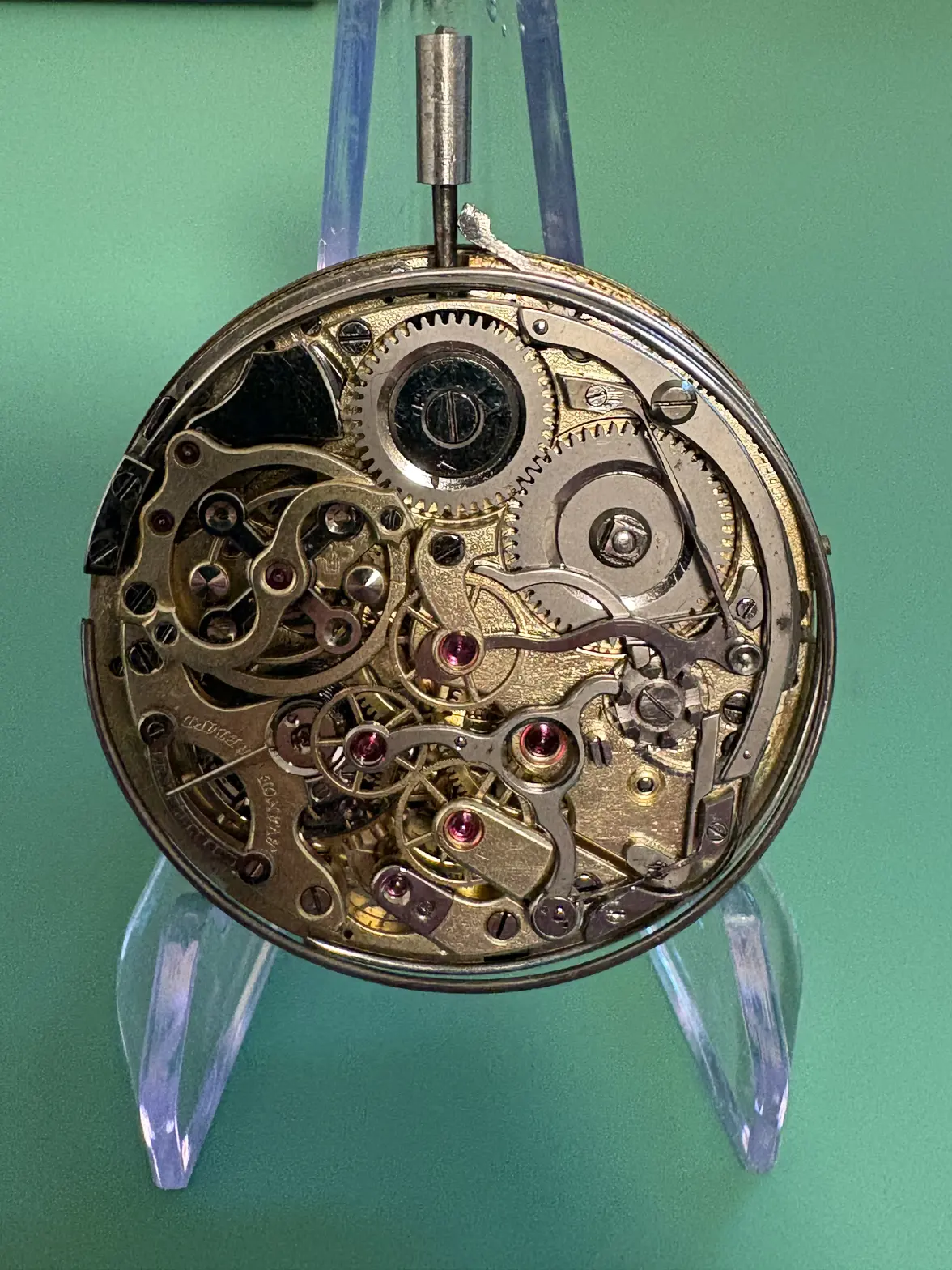
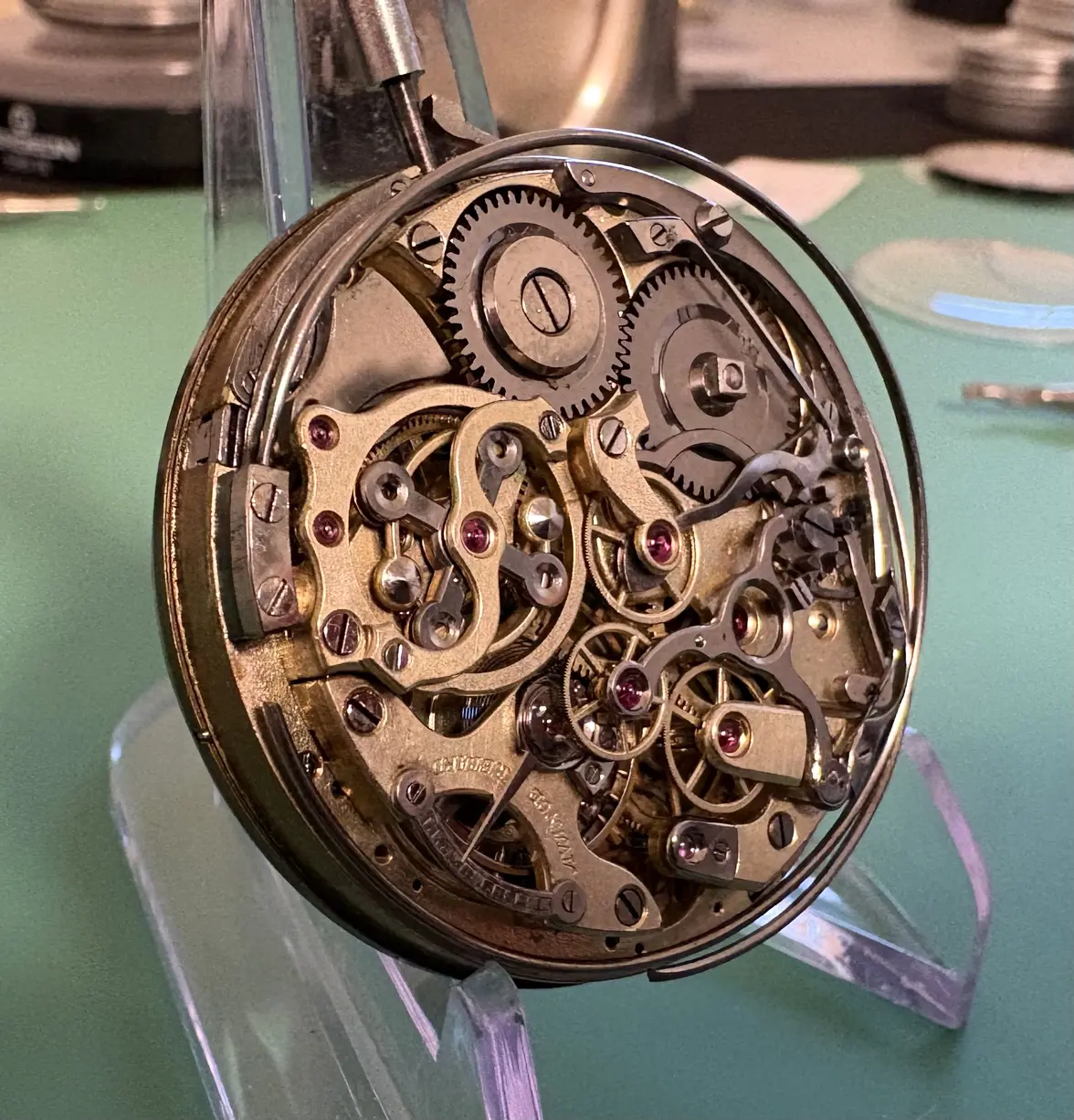
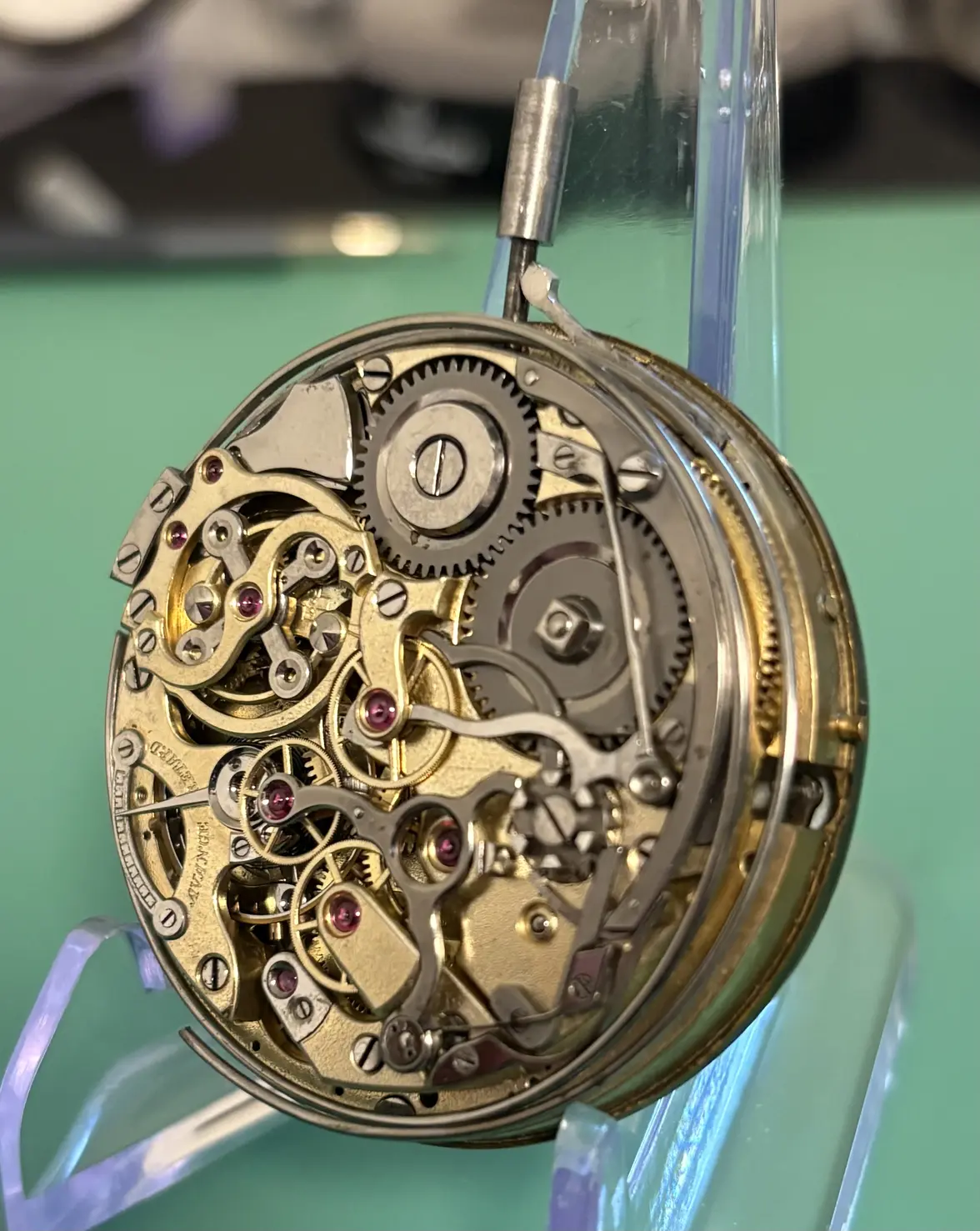
Unfortunately the case has presumably fallen victim to a goblin at some point, but the movement is so beautiful I thought I would share it. My first time handling such a complicated watch and it is incredibly detailed.

It is a Le Phare chronograph and repeater.

 
Posts
8,786
Likes
62,297
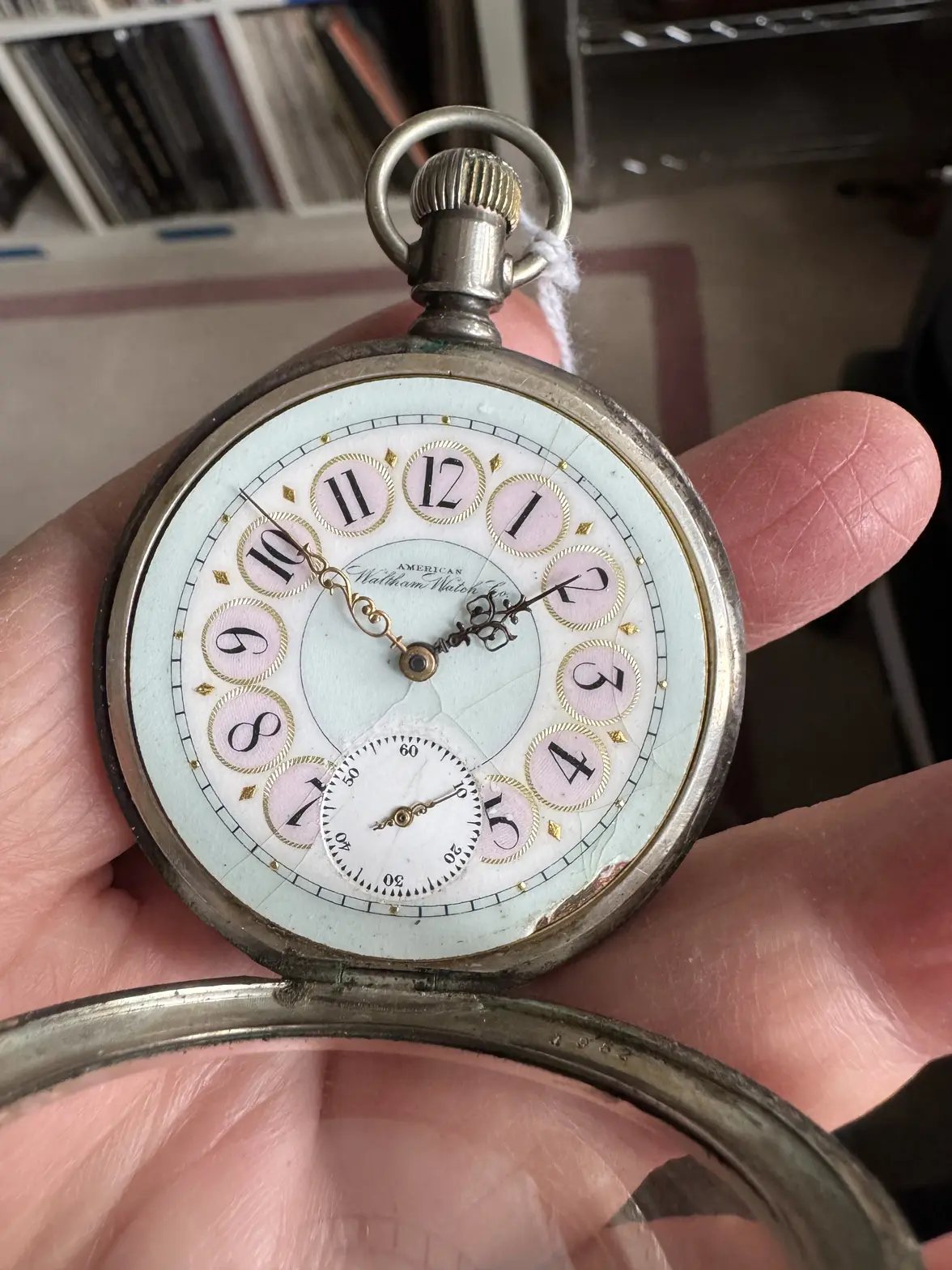
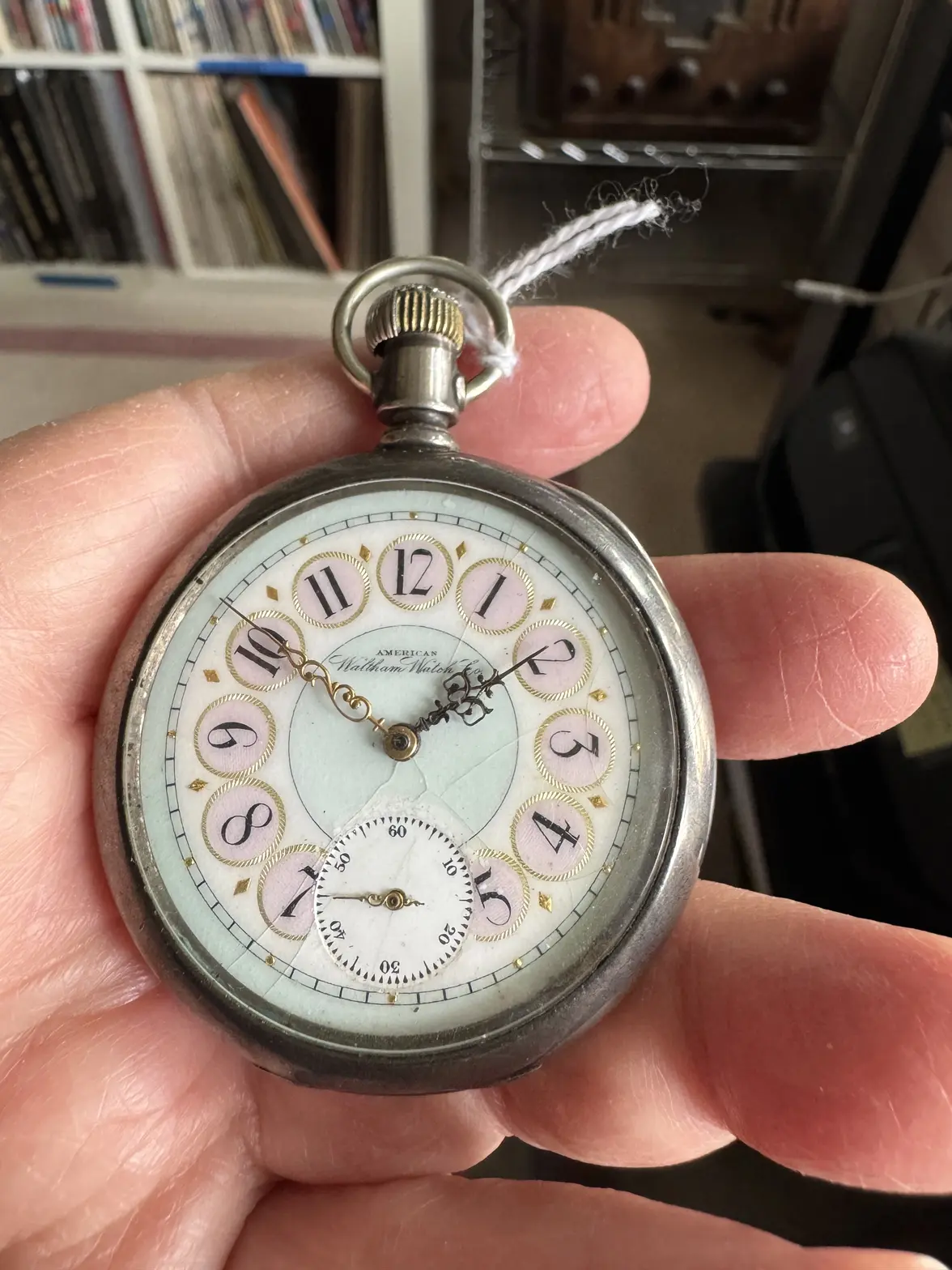
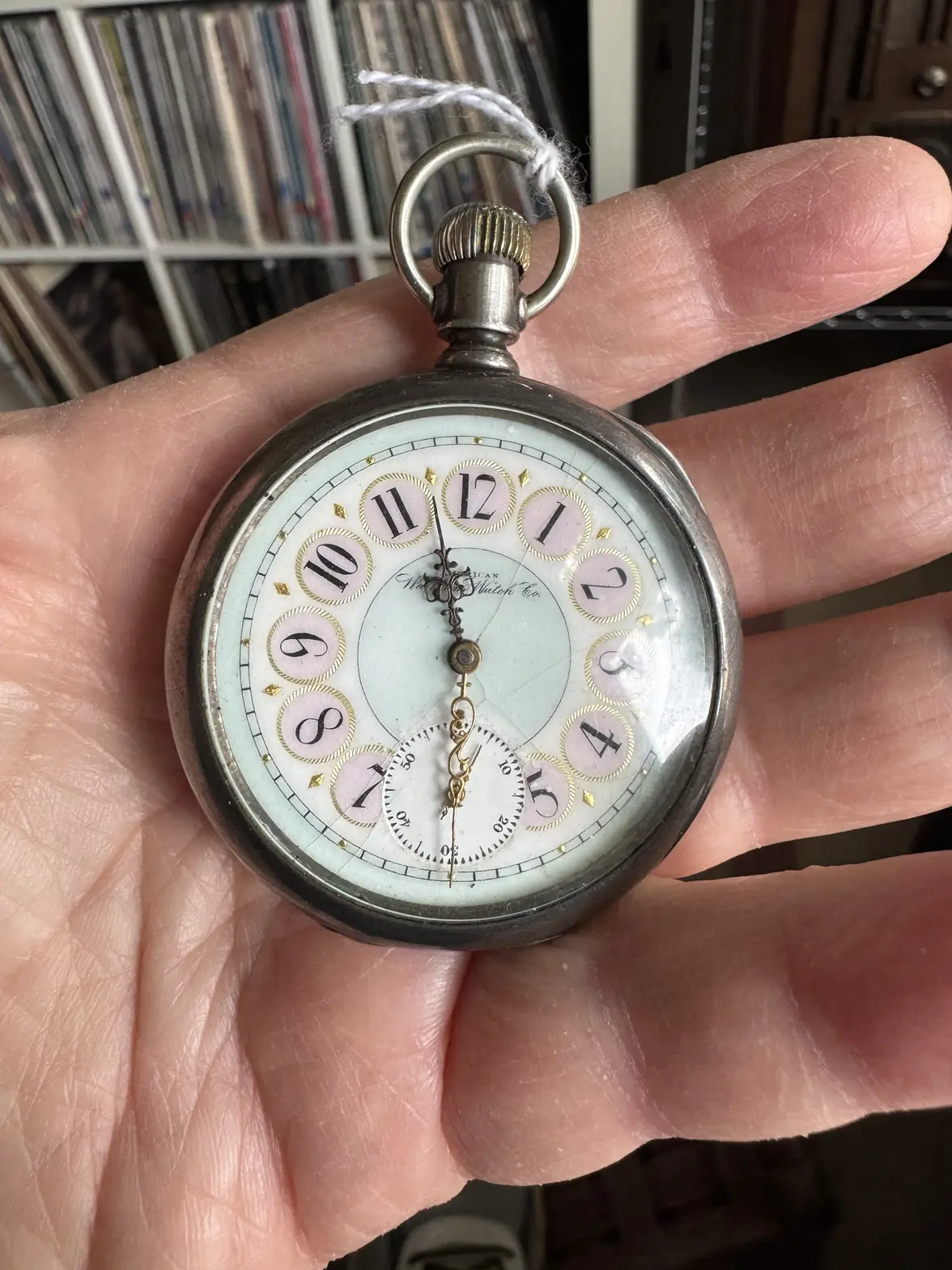
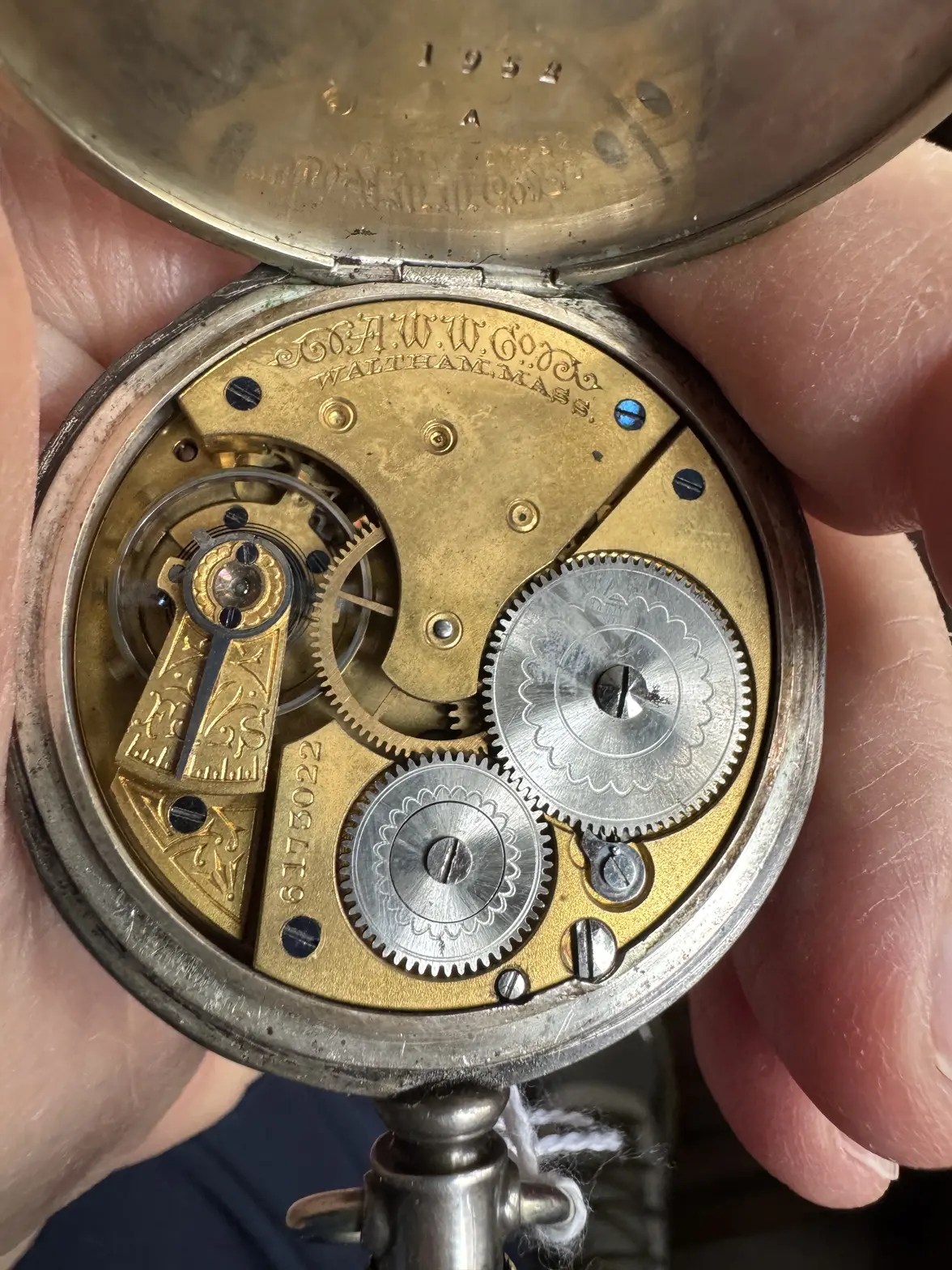
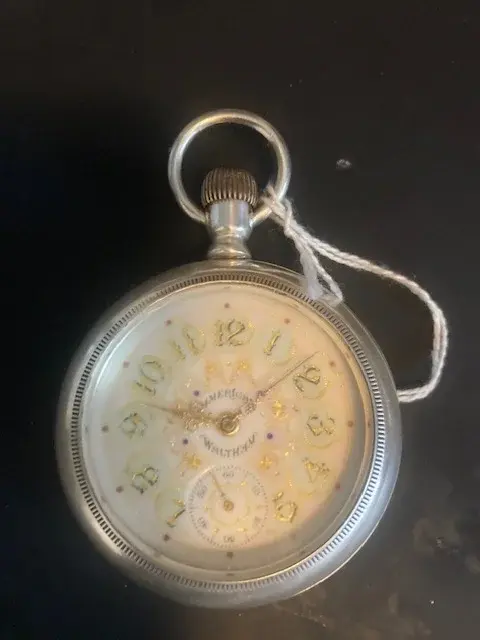
This Nifty looking O'Hara Ribbon Dial with a Robin egg blue field and raised 24kt gold Paillon dots, diamonds and braided circle enclosing a pink enamel background for each radially placed Arabic numeral fronts a basic 16s 7j pw from American Waltham circa 1893.
O'Hara was the master at these Victorian multi-colored fancy dials during this period. Daniel O'Hara was a former Waltham executive establishing his company also in Waltham, Mass. A high degree of technical and artistic excellence was required for the multi-fired process(over 1400 degrees F.) to complete a fancy dial.

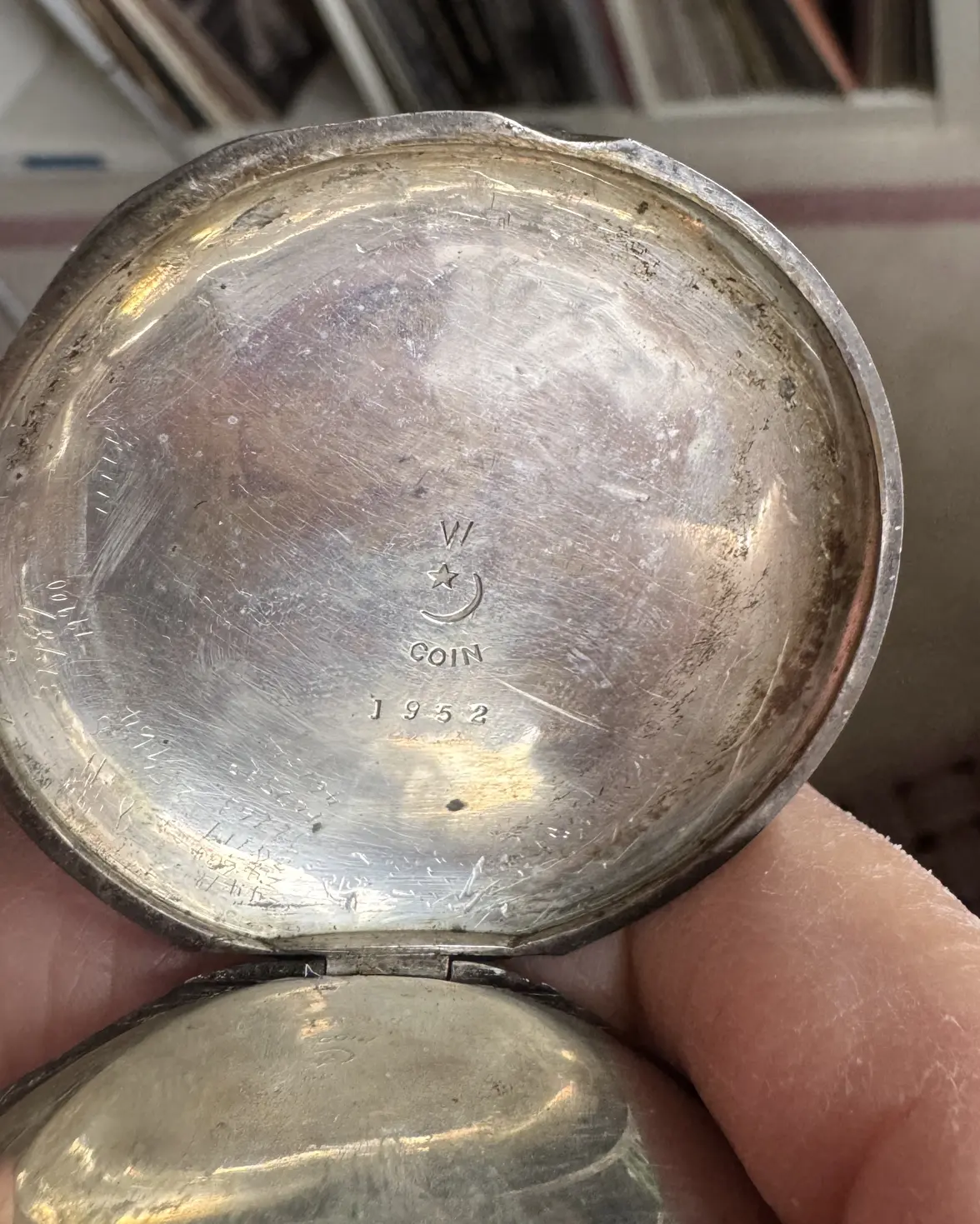
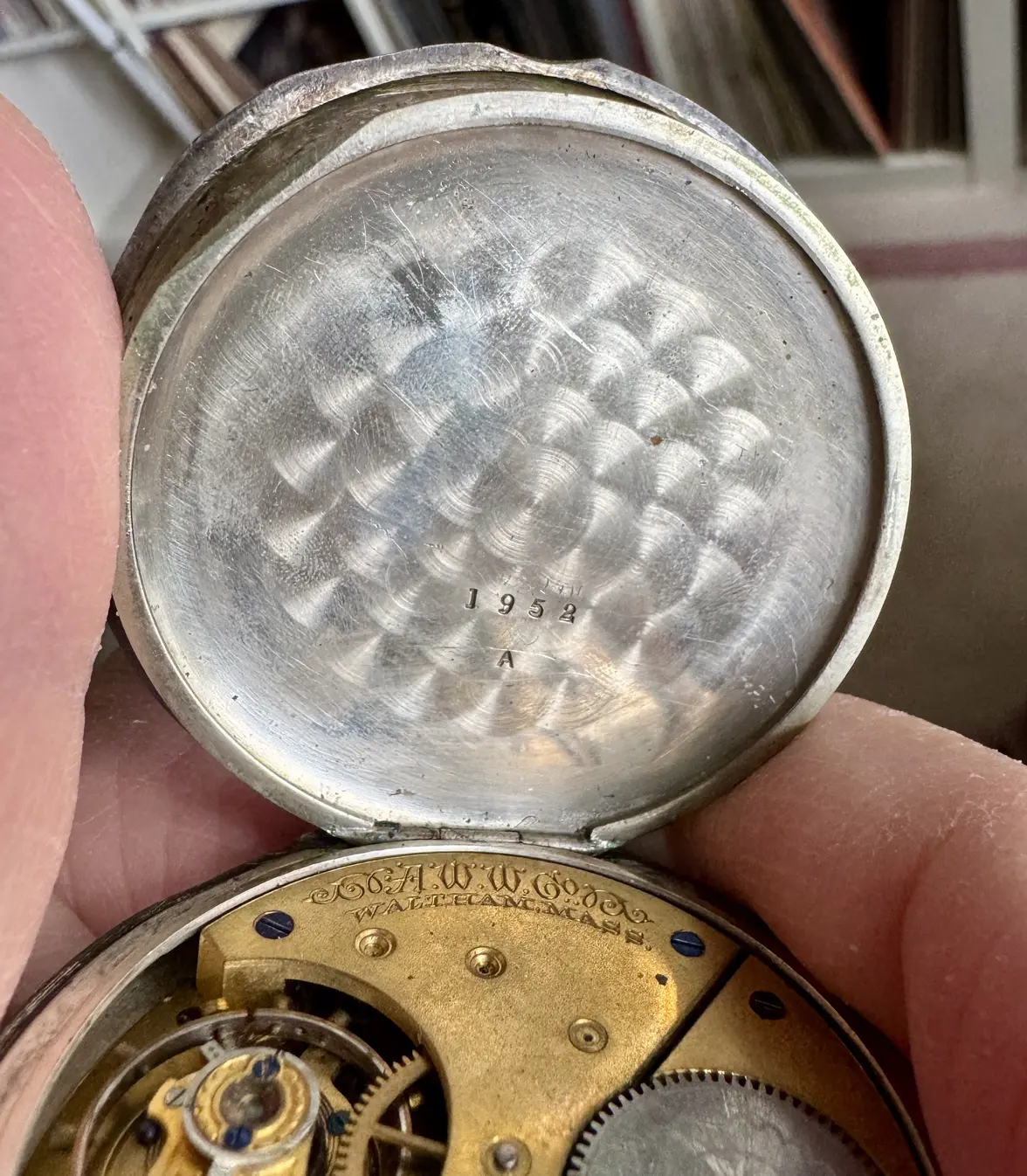
The case is an early production of the Crescent Watch Case Company. Only the very first run had no company name only the graphic Star & Crescent Moon icon. It is Design # 6 as noted with the Roman Numeral VI. and "A" denotes the batch code. Serial # 1952 on back, cuvette, and bezel confirms a 1st run.

Coin silver was 90% pure silver.
Louis XVI hands completes the Styling....2 look to be the correct 24kt gold, the hour hand may be a replacement in bronze(tarnished).

 
Posts
91
Likes
239
This Nifty looking O'Hara Ribbon Dial with a Robin egg blue field and raised 24kt gold Paillon dots, diamonds and braided circle enclosing a pink enamel background for each radially placed Arabic numeral fronts a basic 16s 7j pw from American Waltham circa 1893.
O'Hara was the master at these Victorian multi-colored fancy dials during this period. Daniel O'Hara was a former Waltham executive establishing his company also in Waltham, Mass. A high degree of technical and artistic excellence was required for the multi-fired process(over 1400 degrees F.) to complete a fancy dial.

The case is an early production of the Crescent Watch Case Company. Only the very first run had no company name only the graphic Star & Crescent Moon icon. It is Design # 6 as noted with the Roman Numeral VI. and "A" denotes the batch code. Serial # 1952 on back, cuvette, and bezel confirms a 1st run.

Coin silver was 90% pure silver.
Louis XVI hands completes the Styling....2 look to be the correct 24kt gold, the hour hand may be a replacement in bronze(tarnished).
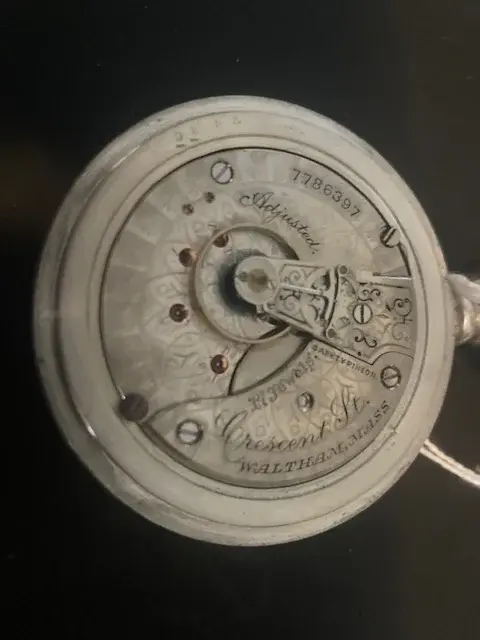
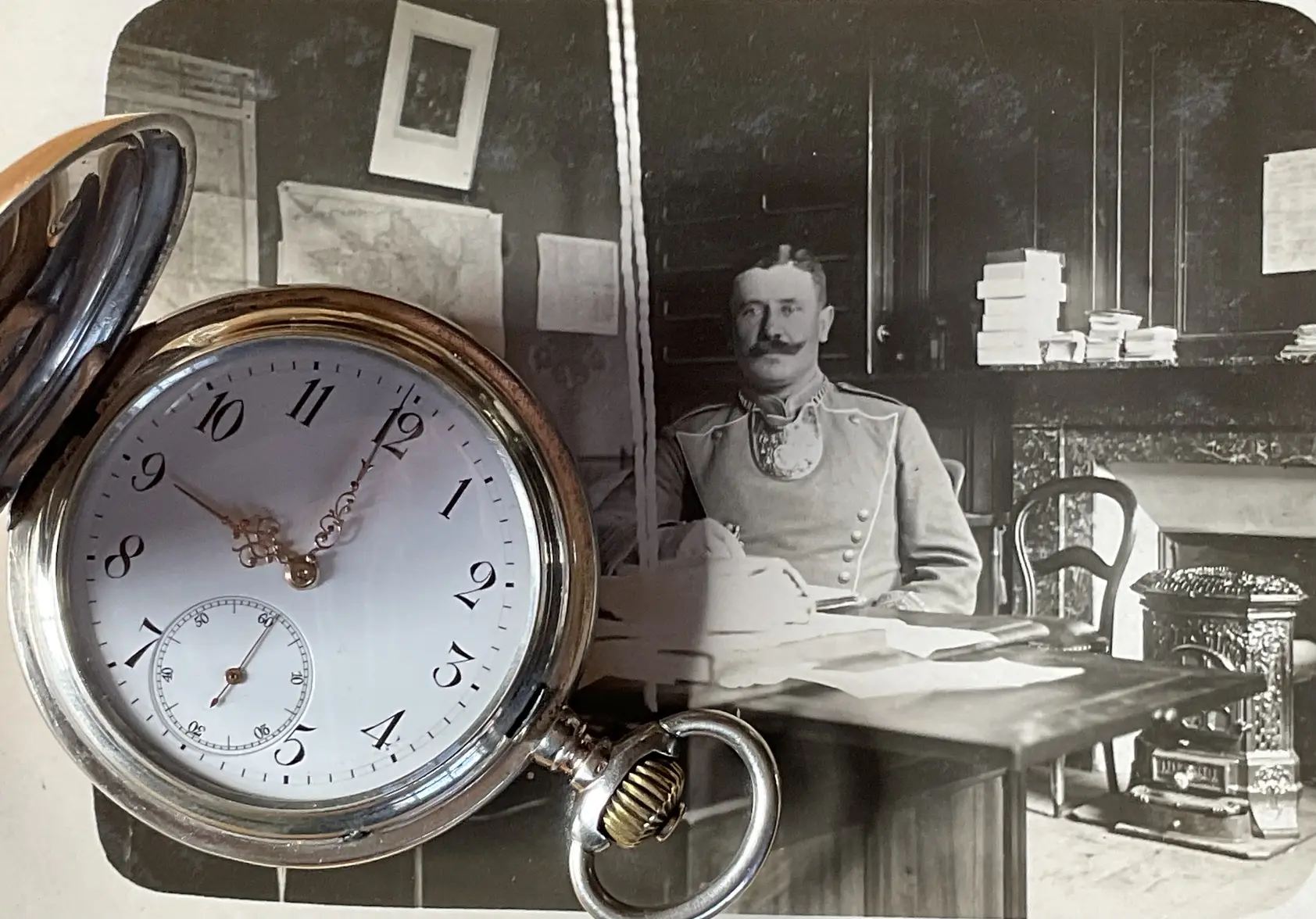
Absolutely gorgeous you have a nice watch. I was fortunate to buy an 18 Size Waltham Crescent St. 17J Open Face watch with an OHara dial. The serial dates to 1896 and the case is Sterling. The total watch weighs in at 163.35 grams.
 
Posts
8,786
Likes
62,297
That's a Whopper.....a good defensive weapon in a pinch......
 
Posts
15,860
Likes
47,583
These fancy dials usually were finished in the kiln with a coating of clear flux, I gather it was to protect the decorations. I took a course at an art college many years ago. Our instructor taught us the the thicker the enamel the higher the probability of hairlines happening. It would have been a privilege to have been able to see these dials being manufactured.
 
Posts
91
Likes
239
That's a Whopper.....a good defensive weapon in a pinch......
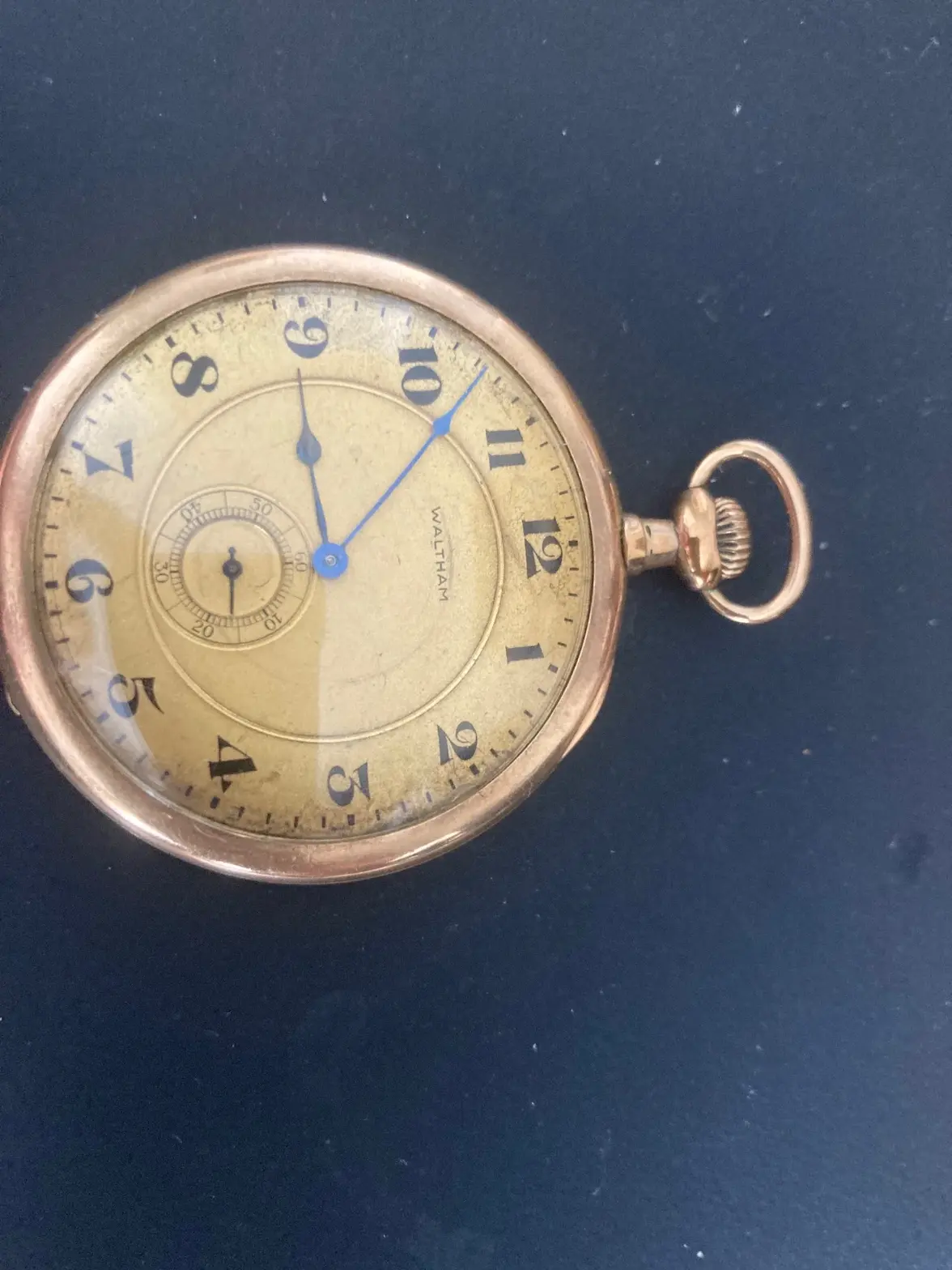
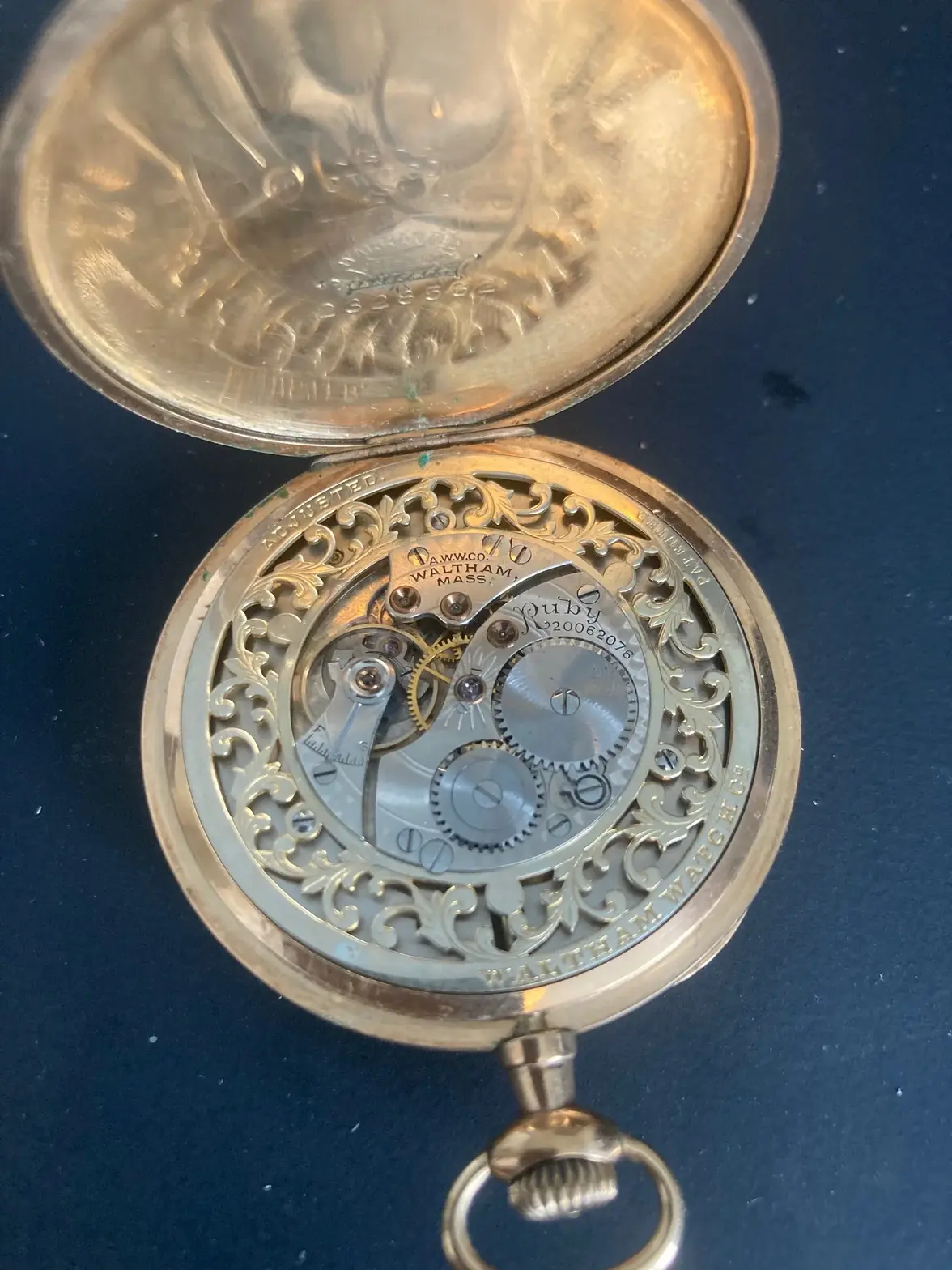
Ive never thought of it that way but I guess you are correct. I really enjoy the pocket watches that were embellished like the Ohara dials. Similarly, Waltham brought out a line of pocket watches that were strictly dress watches called the Opera Models. Very thin, looking like 12 size vest pocket beauties which when opened displayed a high quality 6/00 movement and an ornate and intricate filigree. I used this Waltham Opera in the last of my working days when wearing a suit with a vest. The laughable part was my Conservative company required me to wear a wrist watch at the same time as concerned about the appearance ie. chains on the body....
 
Posts
15,860
Likes
47,583
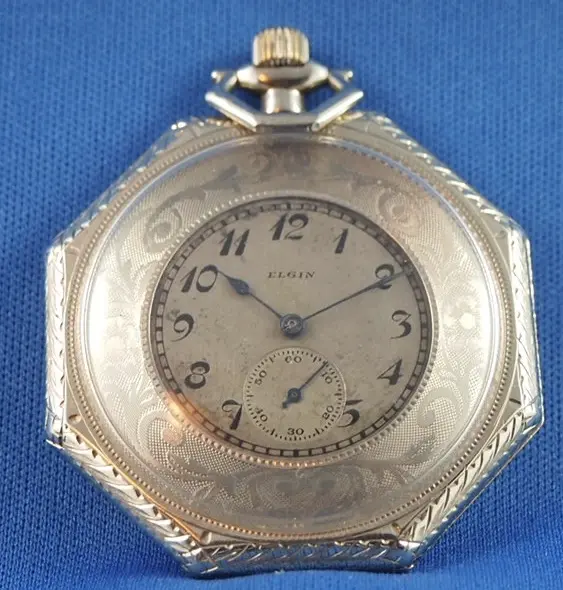
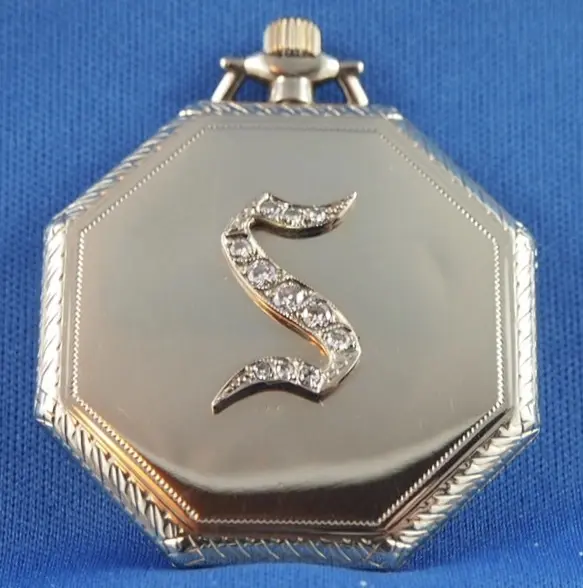
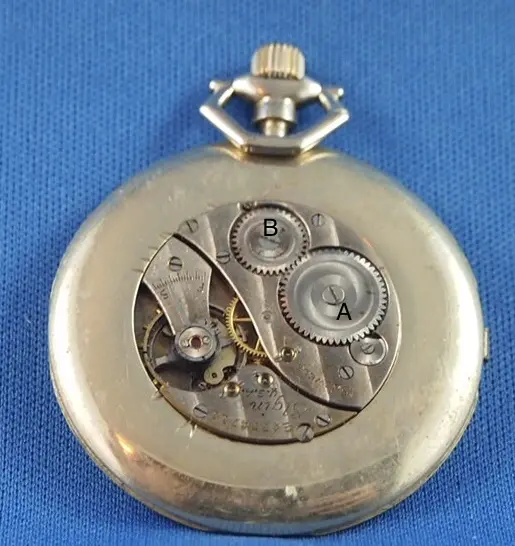
The “Opera” watch fashion was followed by other U S watch companies, as well. Shown is my Elgin in a 14-karat white gold case. This watch came from my wife’s family. It had belonged to her great uncle. In turn, it came from the late husband of his second wife. When he died, it was an open casket funeral, and he was dressed in his finest. The widow wanted him buried with the watch in his pocket. After the funeral, the funeral director removed the watch from the pocket. After he was buried, the funeral director gave the watch back to the widow! She was furious! I have .75 of a carat of diamonds in a family initial on the case back.

 
Posts
18,660
Likes
38,708
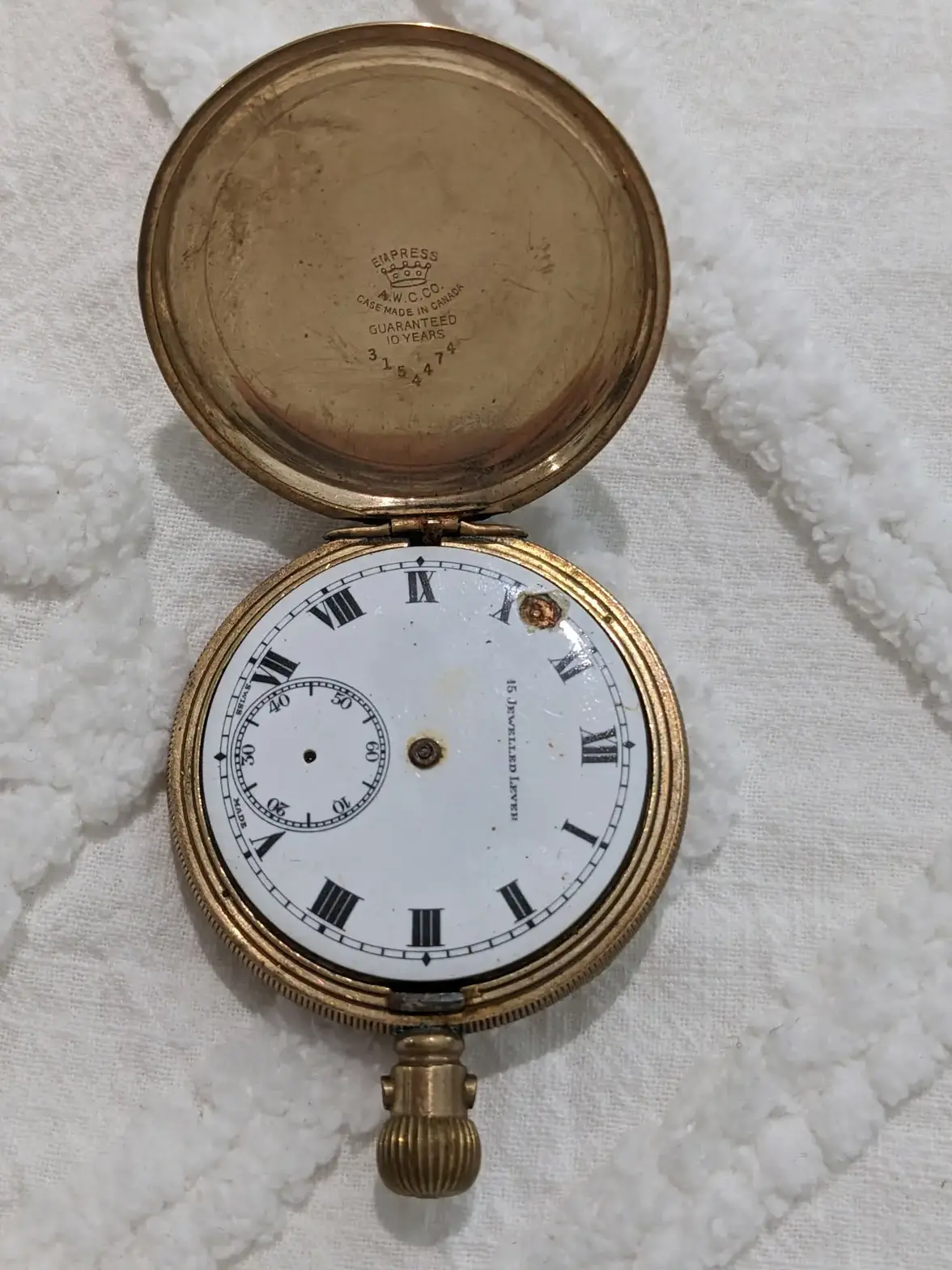
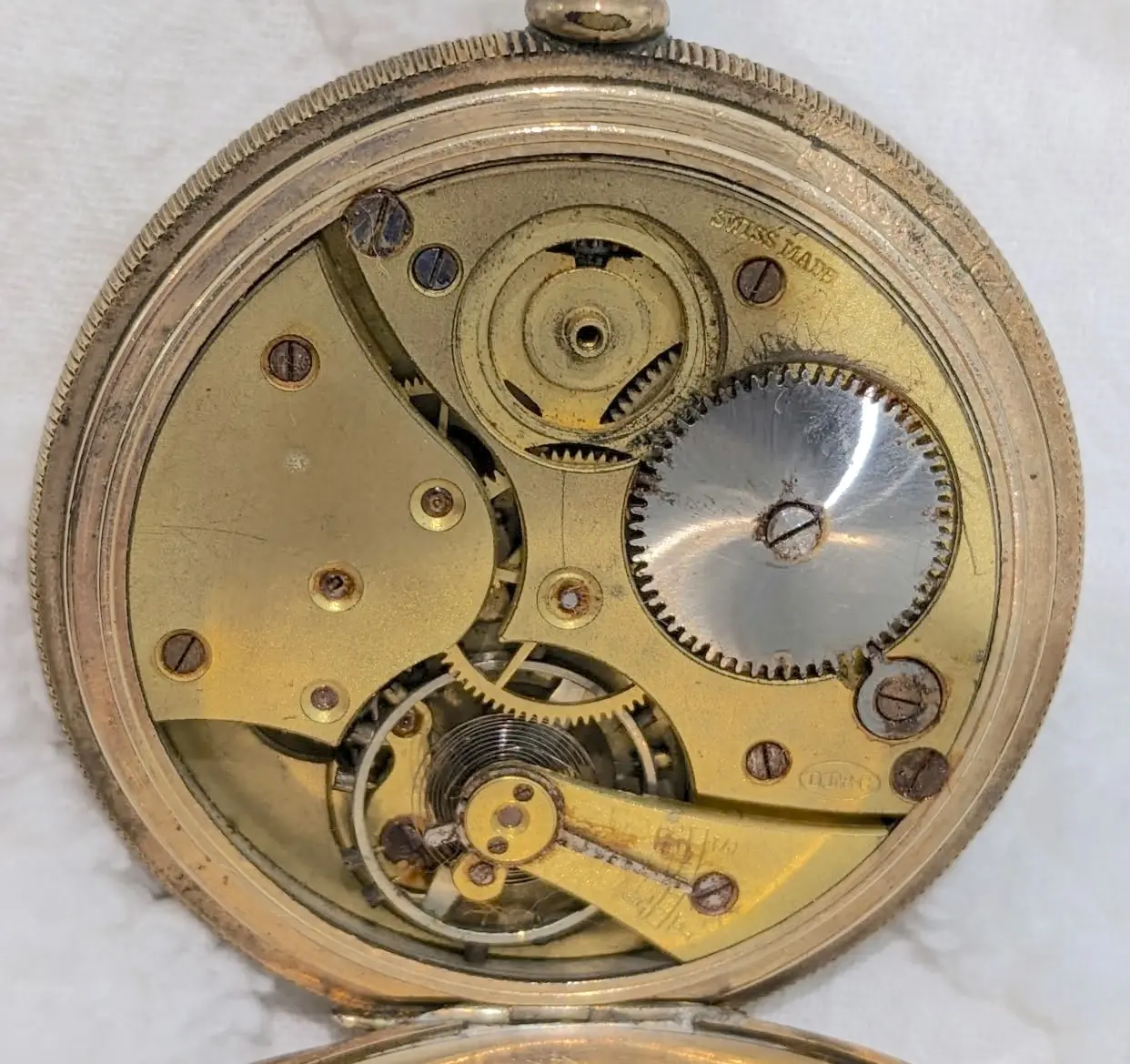
Long story. The sister of a lady who works with my Son has an old pocket watch from her Great Grandfather and I've been tagged to assess it for possible restoration/repair. Judging by the amount of rust and missing parts I see I suspect it may be a bridge too far.

So far I know it's a Swiss movement in an Empress GF case (AWC Co Toronto) dating to about 1900.
The movement isn't familiar to me and I thought it may be one of the Omega sister brands seen in Canada (Regina, Labrador, Patria) however I can't tie it to any brand I know. It may just be a generic Swiss ebauche.

Any detectives out there like to elaborate.

Front view.


Movement.

 
Posts
15,860
Likes
47,583
Before we discuss resuscitating the movement, we need to look at the case.

  • I don’t see the bezel and crystal.
  • The hinge on the front cover is badly sprung.
  • I very much doubt the latch will hold the front cover closed.
  • The trade mark A W C Co. Is the trade mark for the American Watch Case Co. A Canadian company.

So right off the bat, there are several major problems you need to address.

The movement:

  • Rust. All screws!
  • Missing parts.
  • Maybe someone other than me can identify it as an aid to locating parts.

Dial:

- If you are by a miracle, able to deal with everything else that is wrong, that dial is going to look patched.

In short, it would be interesting to see if anybody who replies, would be more optimistic than I am that this sow’s ear might be made into a silk purse. I know you are one to welcome a challenge. But…….!