Calling all Pocket Watch Buffs

Posts
803
Likes
9,390
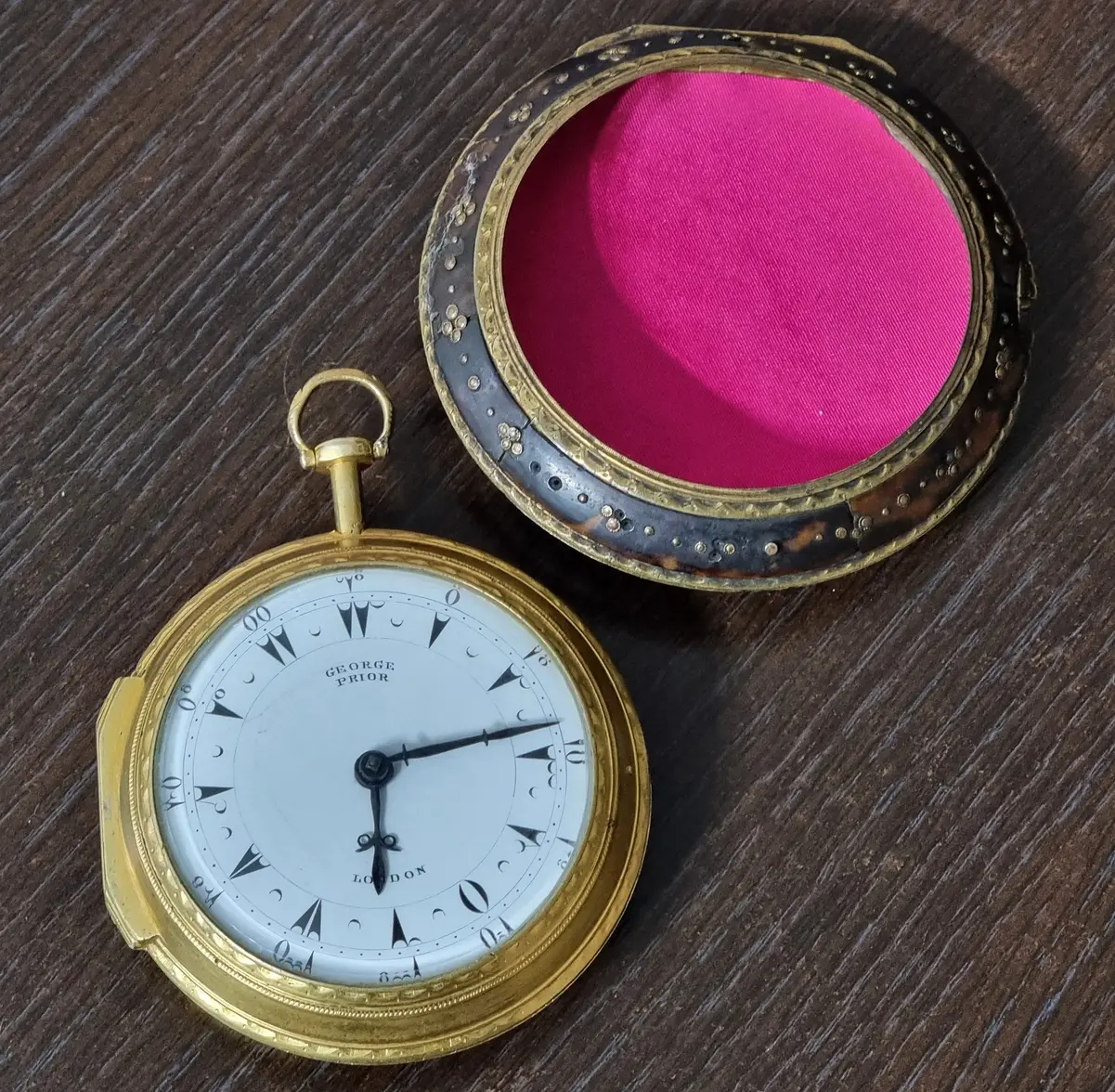
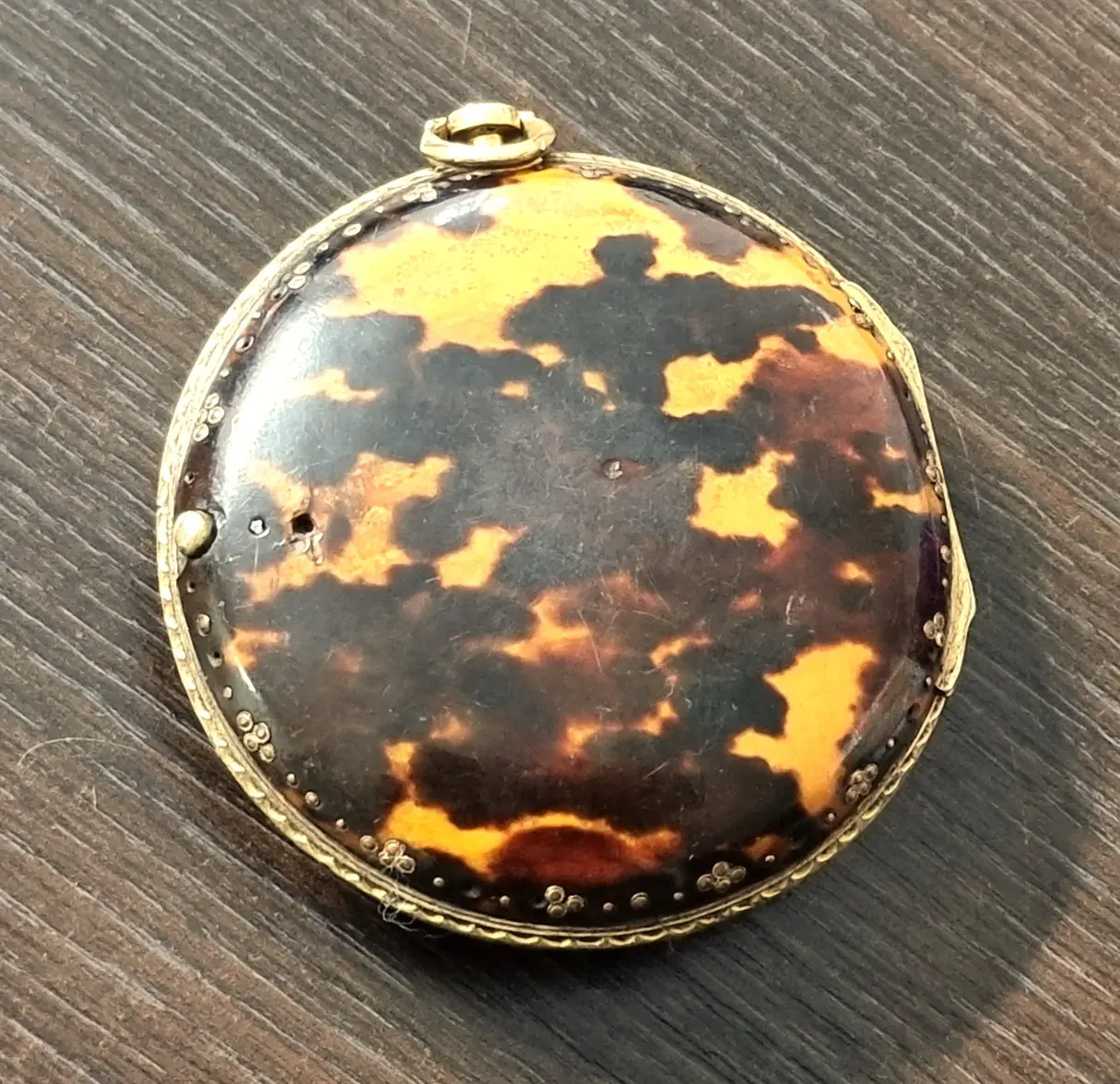
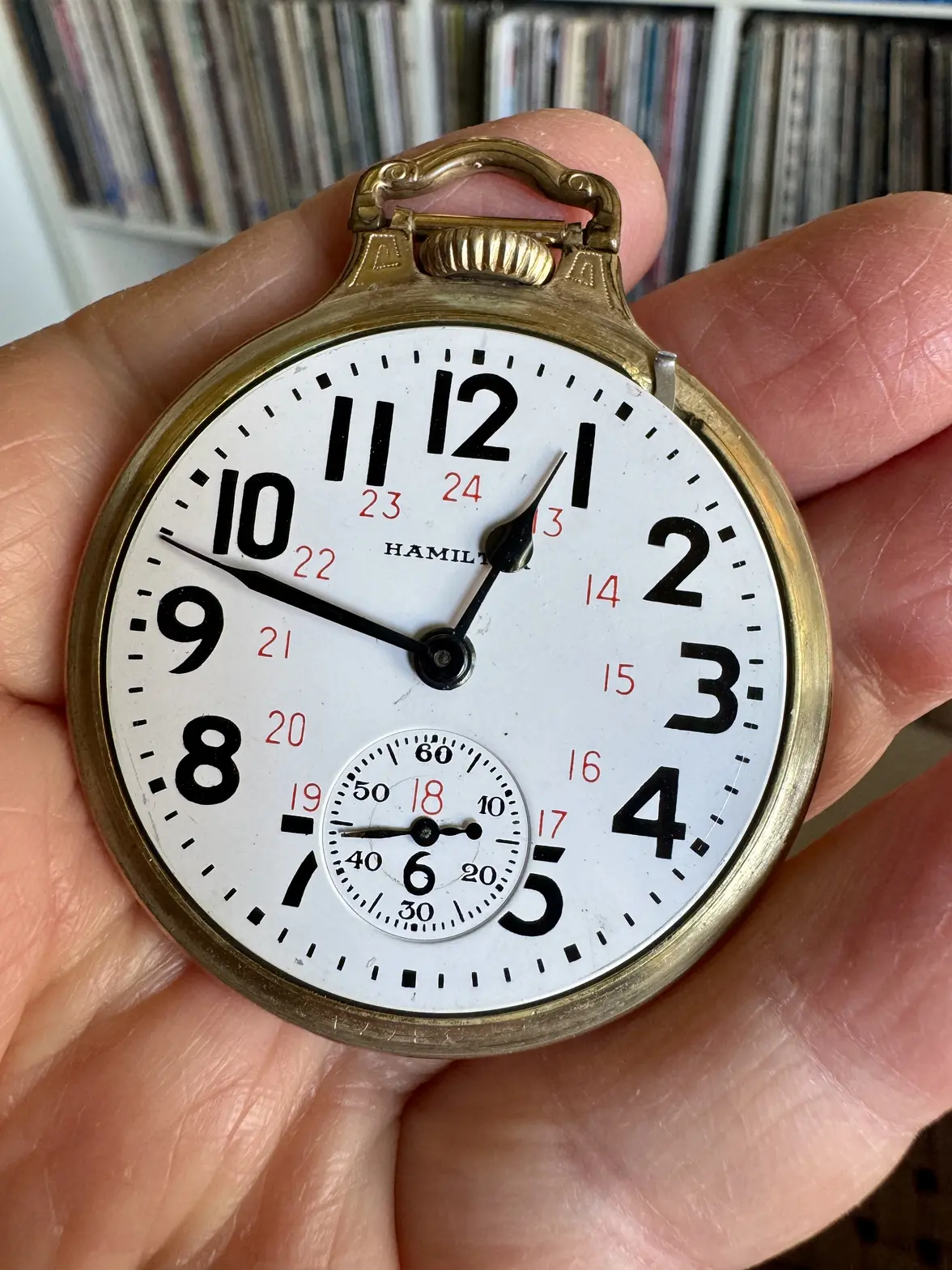
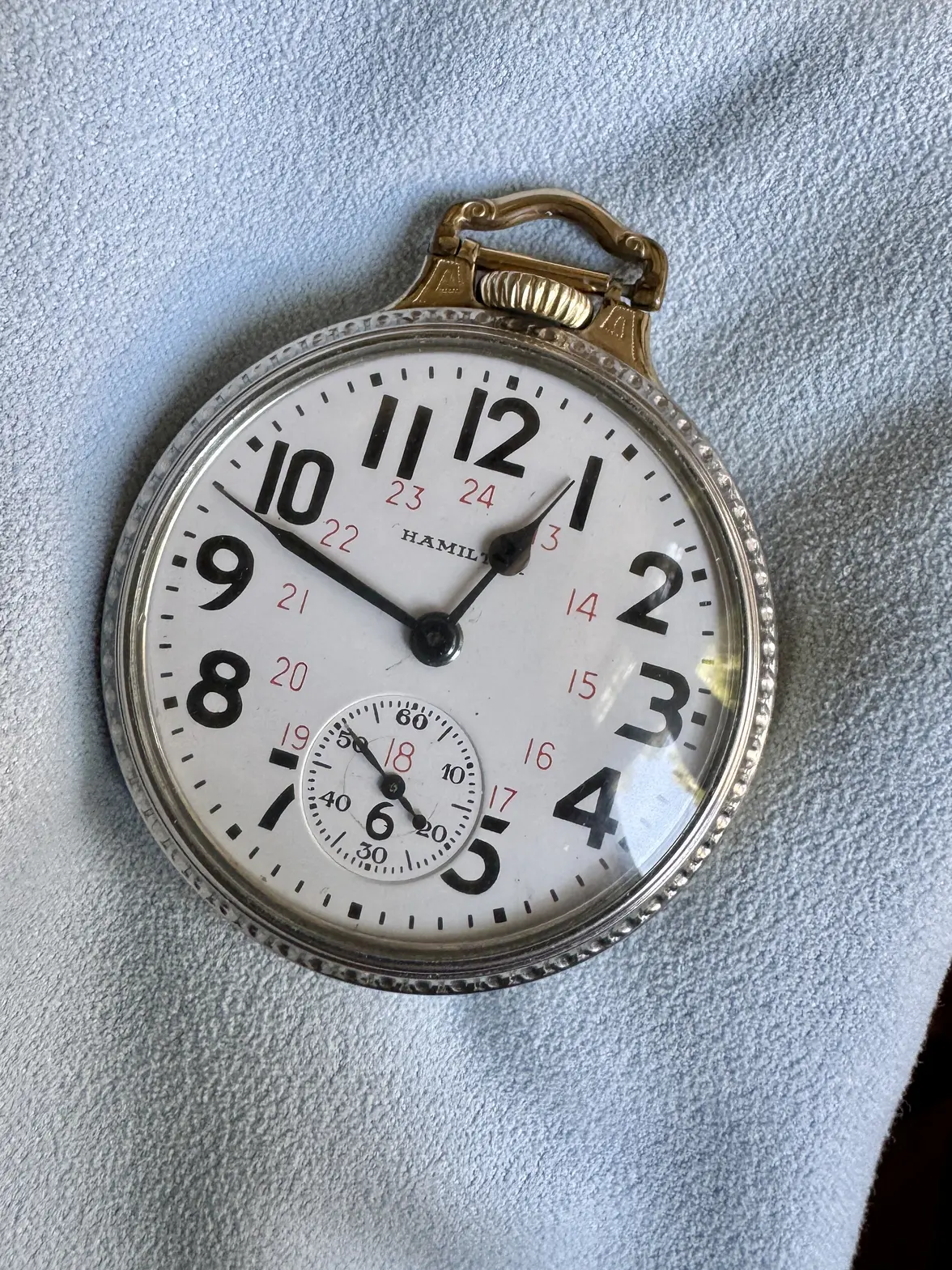
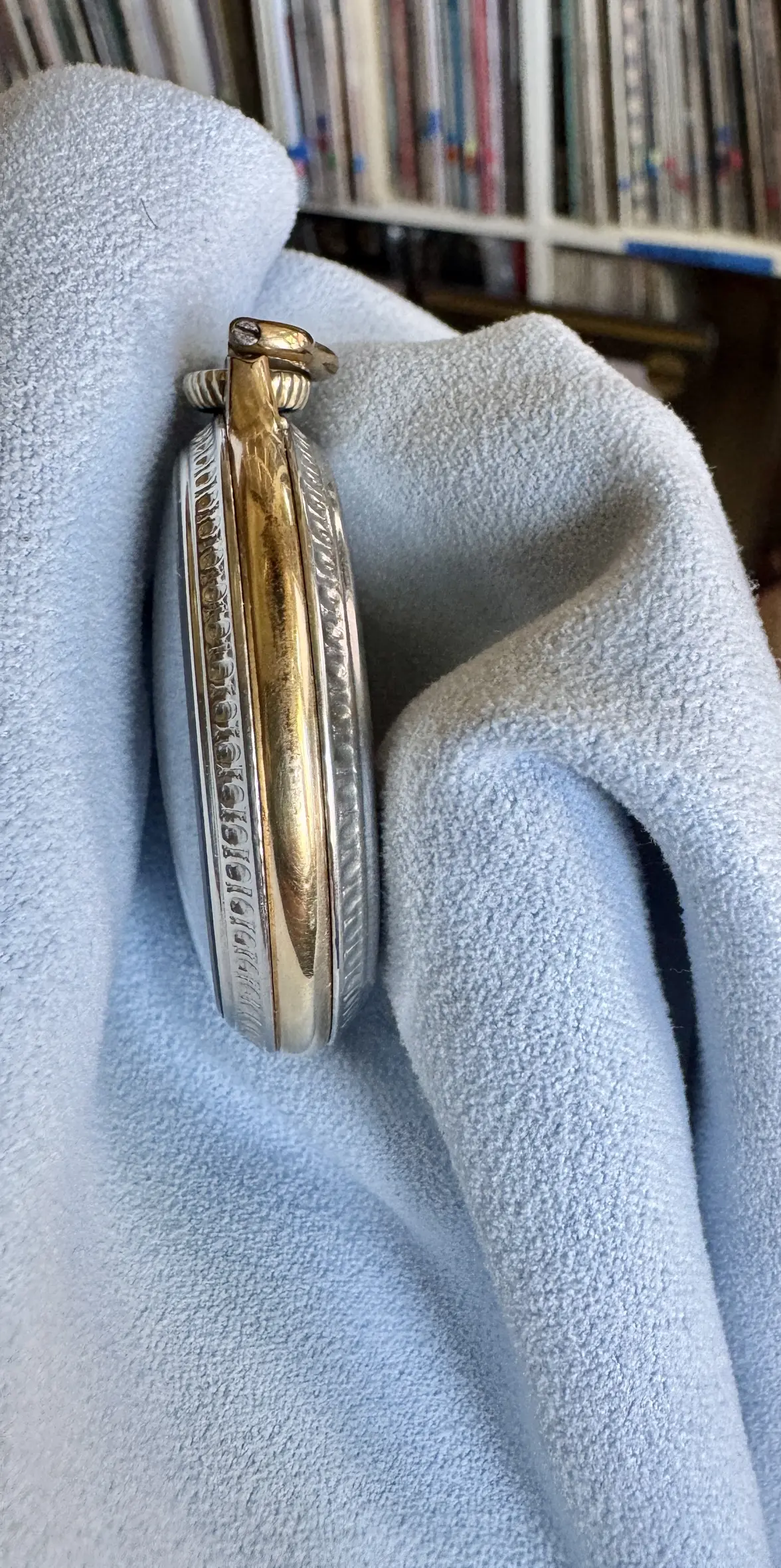
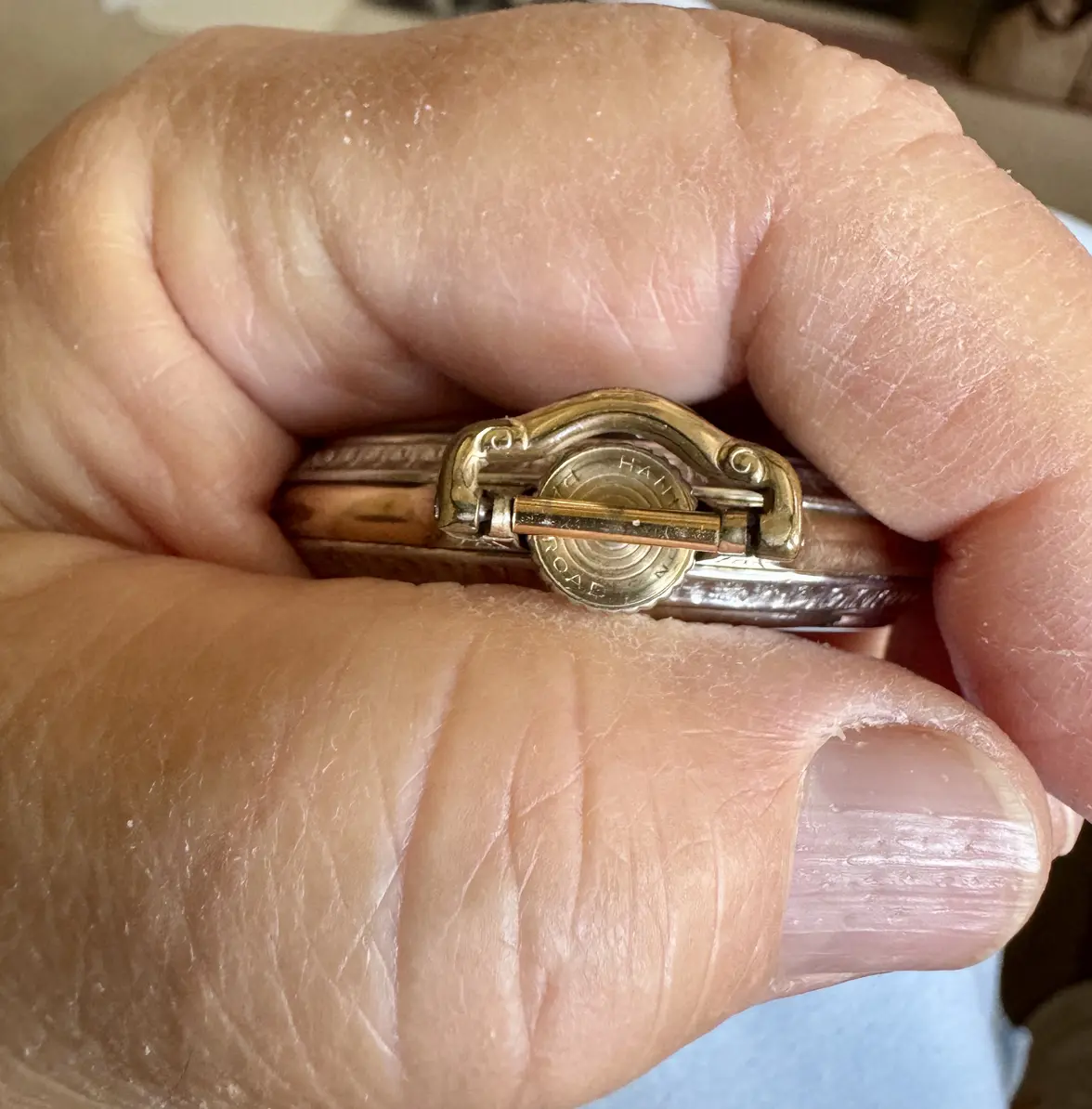
Hello everyone,I am not an expert on vintage pocket watches, but I recently got this huge piece and I’m trying to figure out what exactly I have here.The dial says George Prior, London, and it was clearly made for the Turkish/Ottoman market. To my untrained eye, the enamel dial, the hands, and the outer tortoiseshell case look totally original and high quality.However, after doing some basic research, I noticed a few things that look really strange and make me question if the whole watch is genuine, the size: this thing is absolutely massive! It measures about 10 cm (100 mm) across. Is that normal for these watches? No Serial Number: I looked everywhere on the movement, but there is no serial number engraved. I read somewhere that real English watches from this era always had numbers.Yellow Metal Inside: The inner case is made of a yellow metal (looks like brass or gilt), but I couldn’t find any British silver hallmarks inside. The Movement Style: When I open it up, the little pillars holding the plates look smooth and round (like small pillars on a balcony). Also, the name Geo Prior is written in a curvy cursive/italic script, and there is a small silver dial for adjustments. I’ve heard this style might actually be Swiss, not English.Could this be what collectors call a "marriage watch" from back in the day? Like, a genuine Prior outer case and dial but with a fake or swapped Swiss movement inside from the 18th or 19th century?
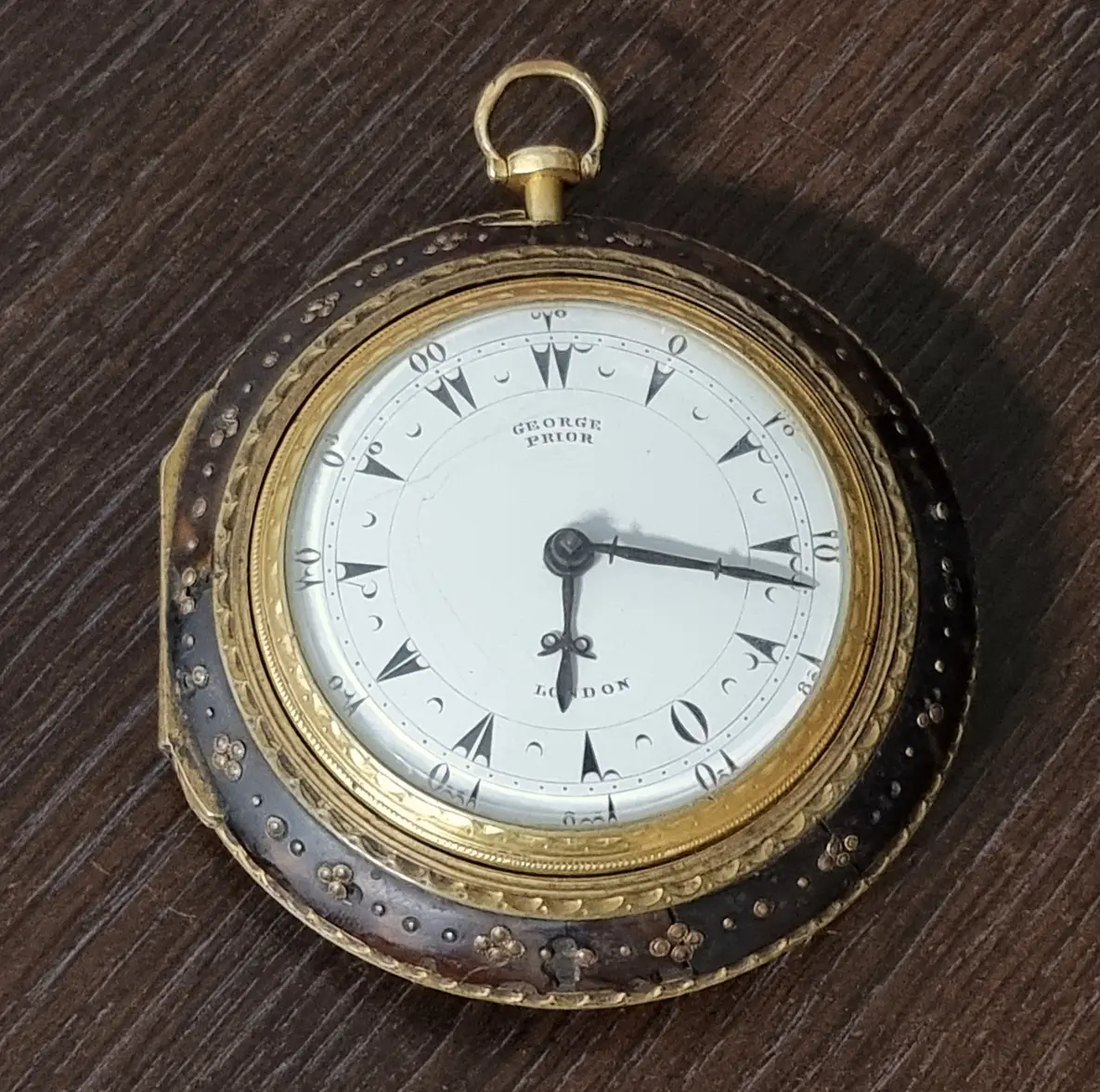
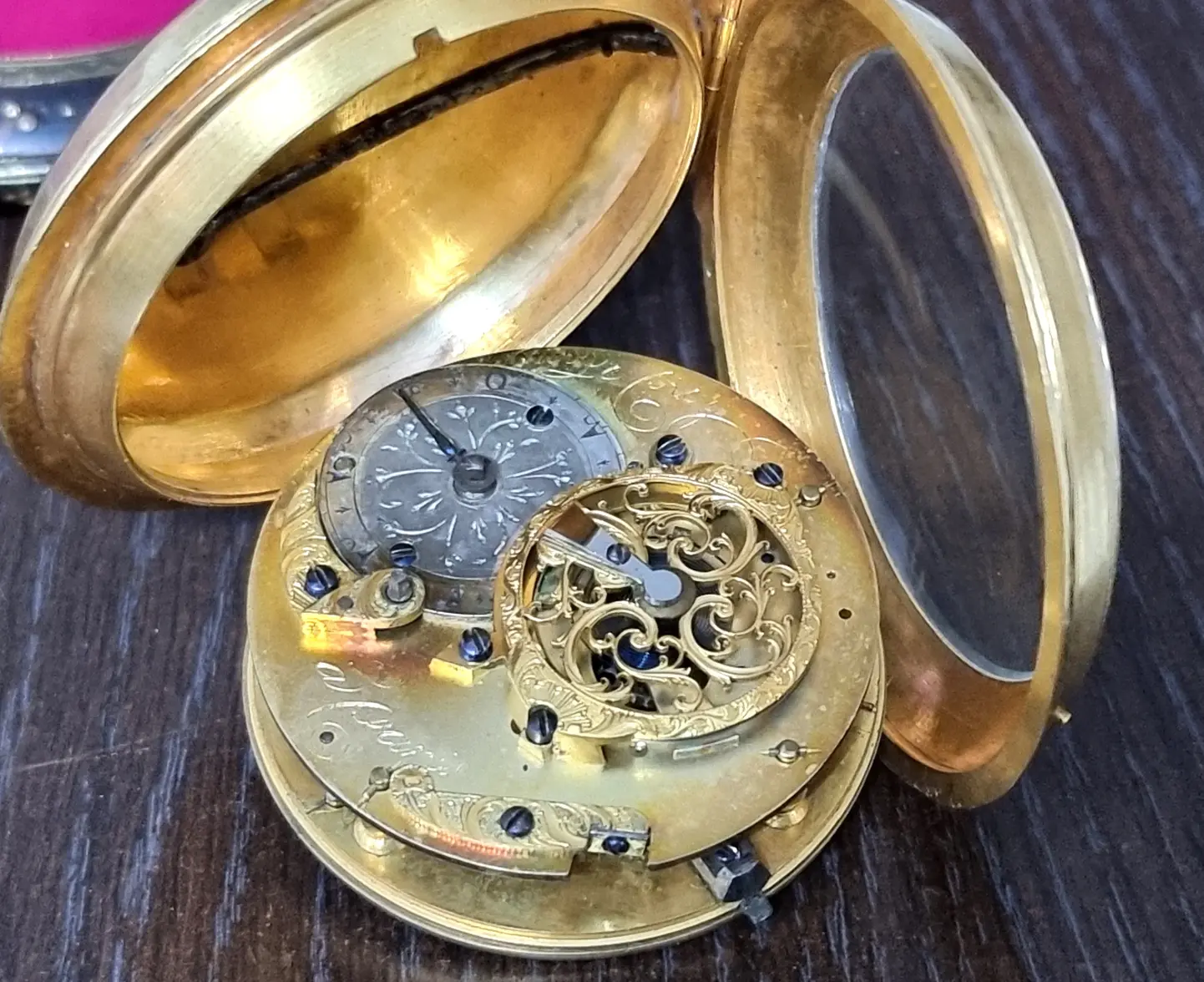
I would love to hear your thoughts and expertise on this! Thank you so much for your help!
 
Posts
8,757
Likes
62,102
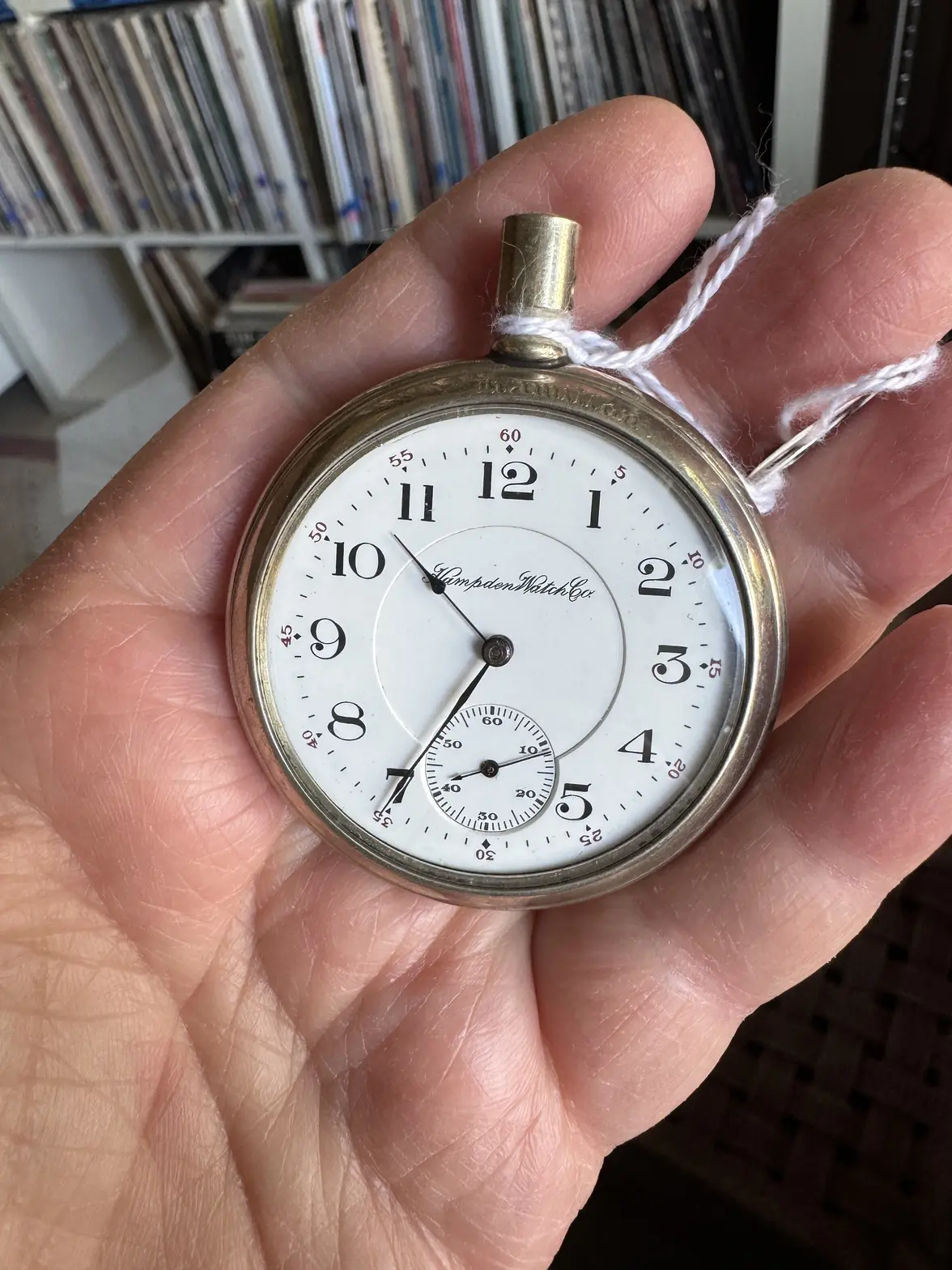
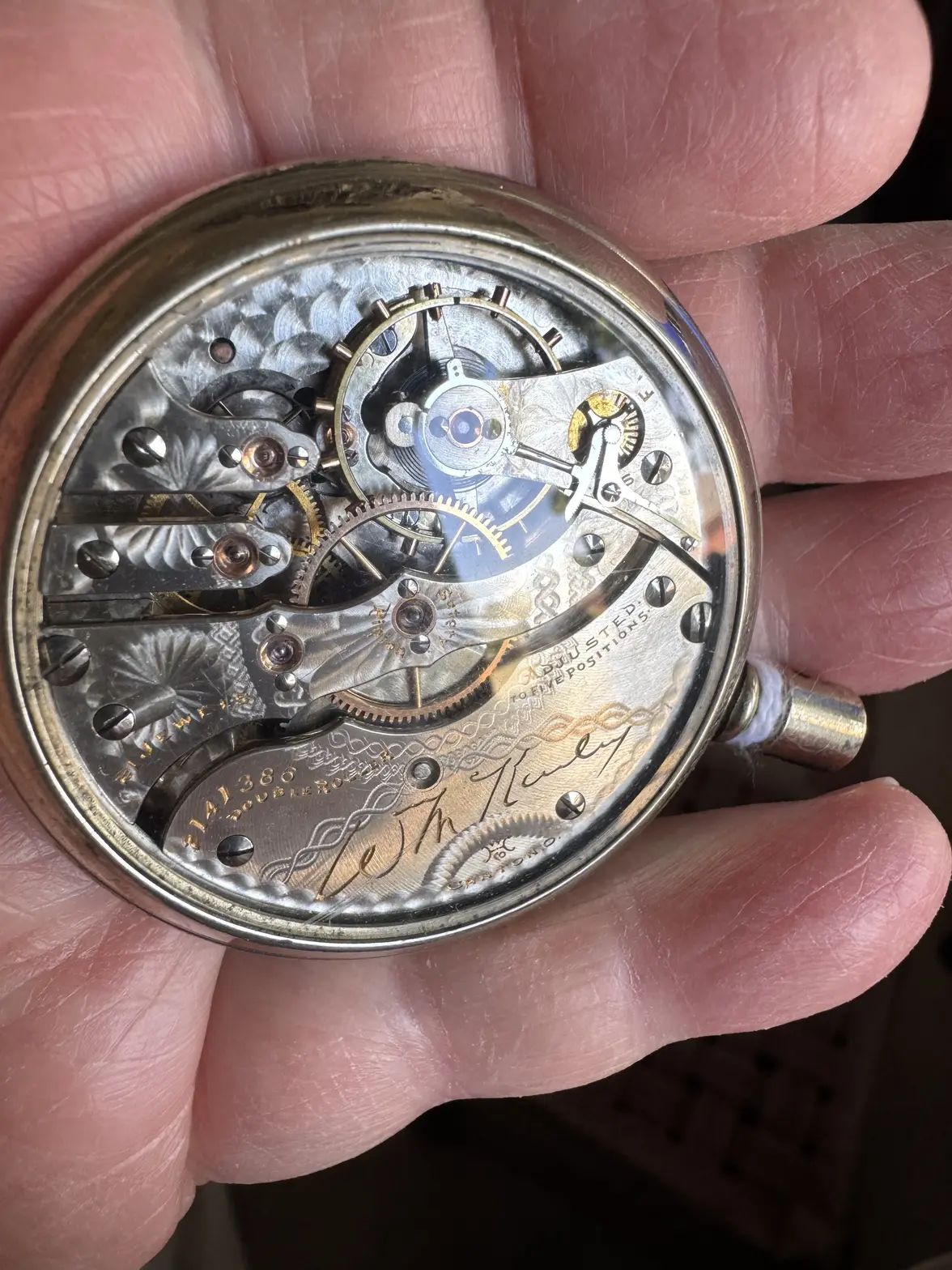
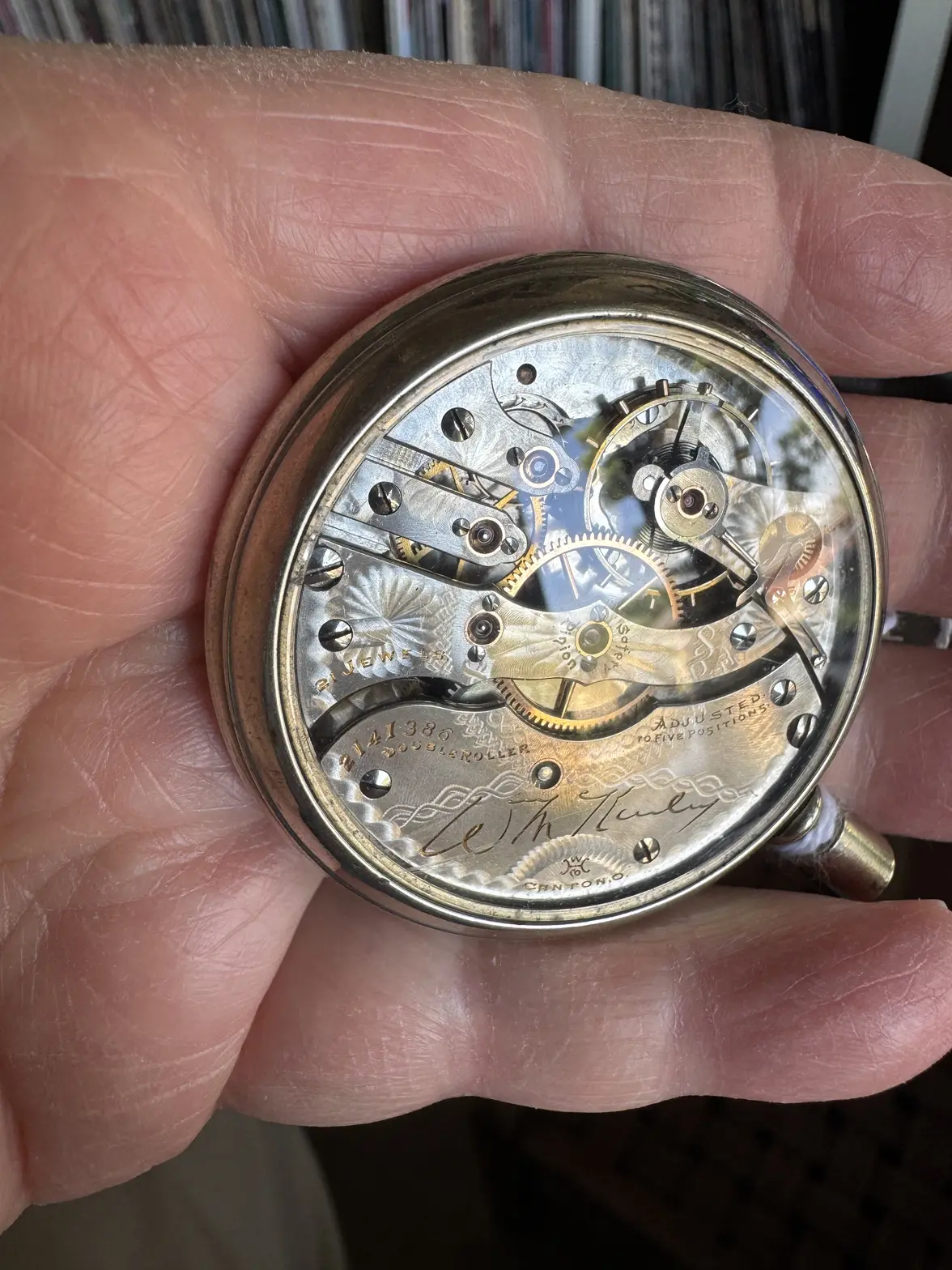
These 16s 21j William McKinley grade Hampden watches marked “double roller” were marketed by Hampden in 1905 as “guaranteed to pass railroad inspection” both in US and Canada.
This one dates to 1905 and also marked Adjusted to 5 Positions which was also needed at that time to be considered RR grade.

 
Posts
6,402
Likes
21,789
Walmart aisle 3 bay 22 here in North Texas seems to have dozens.

Eventually one will pop up online, be prepared to pay up. Good luck and post the rest of that pw when you can.
God help me, I think I'm a pocket watch collector. This is my fourth pw, if I include my Longines, which was purchased on a lark, and could make me a hoarder. But my next 3 purchases were RR grade, nice movements, which would pass as a collection.

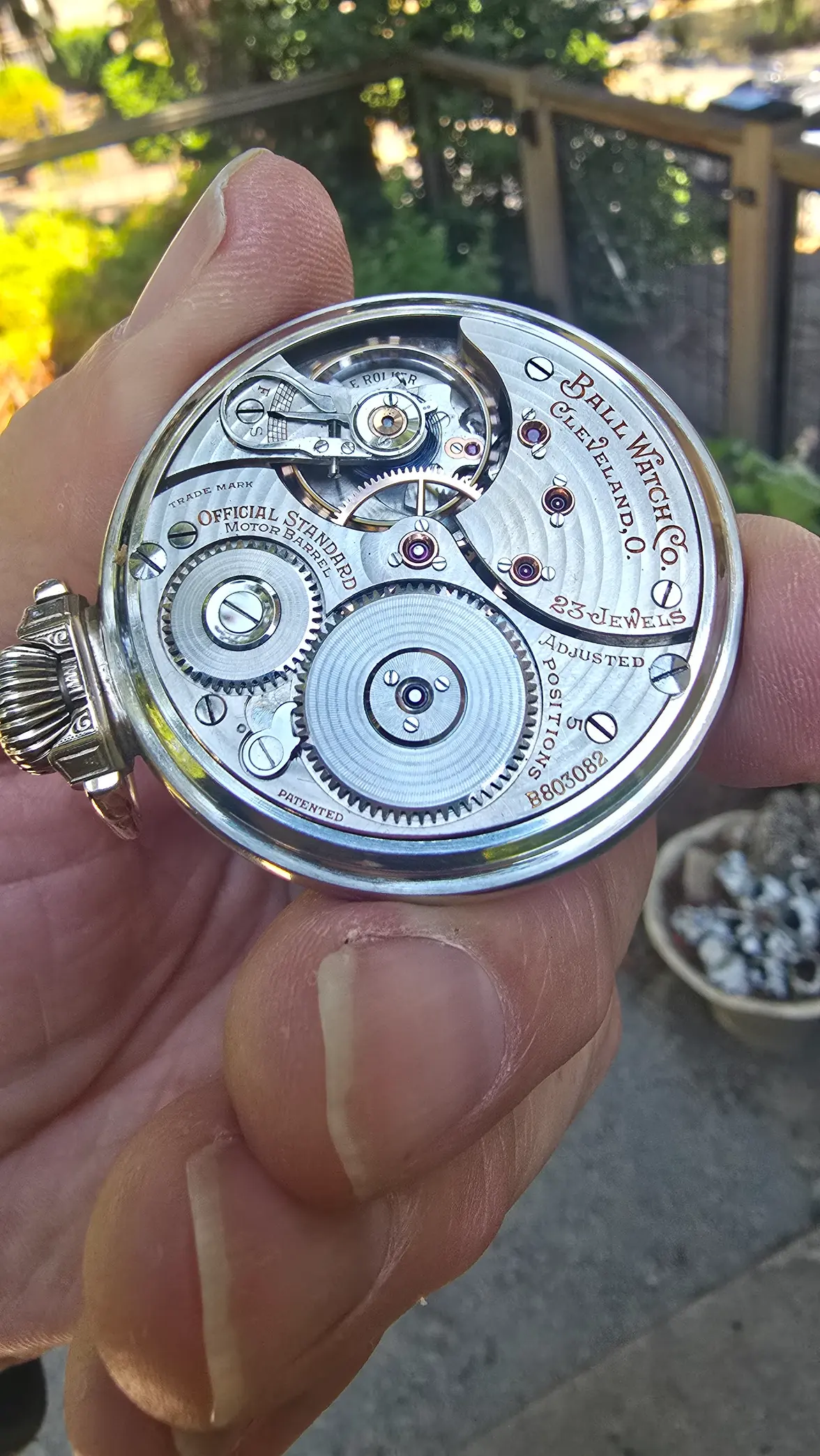
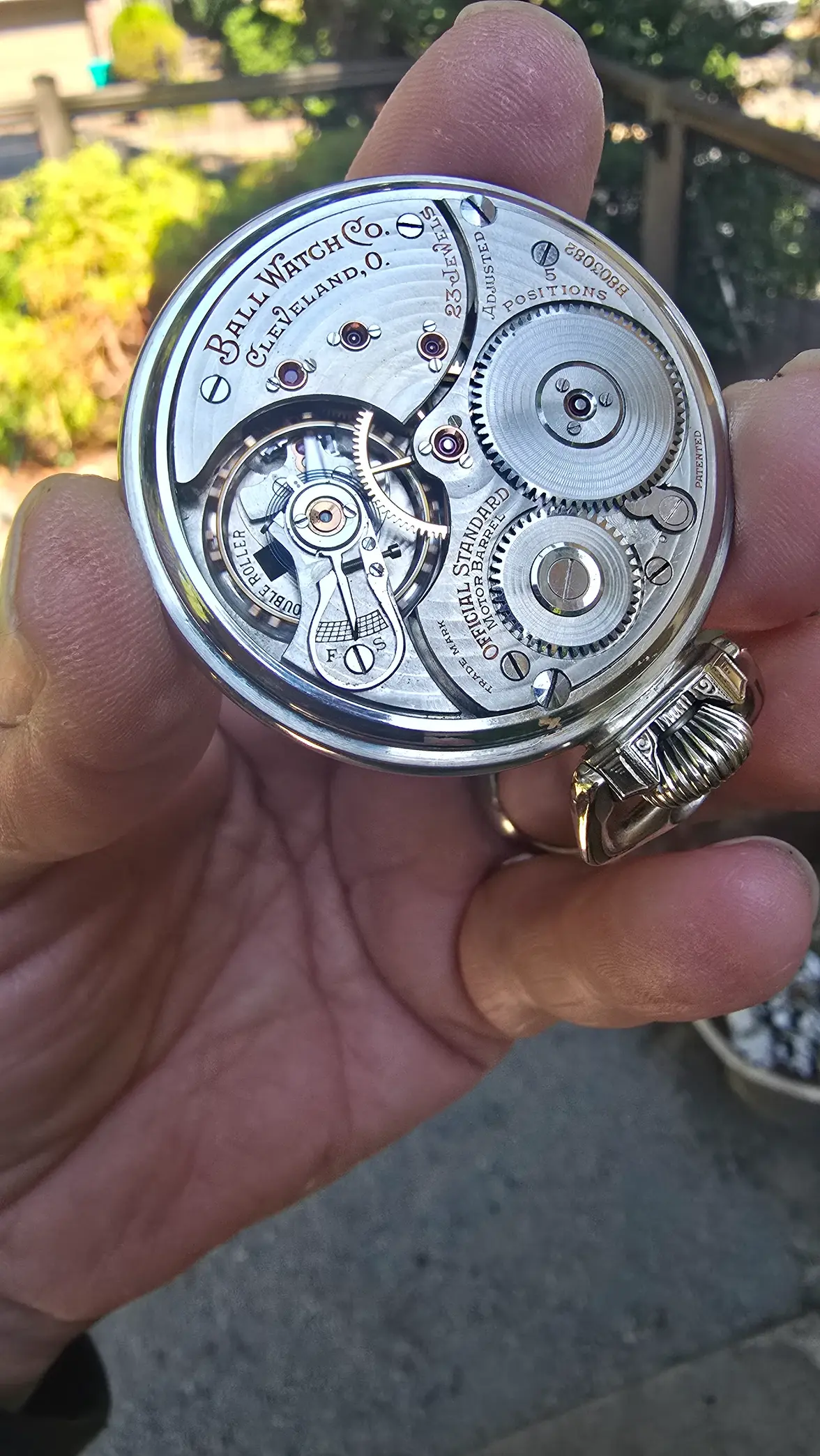
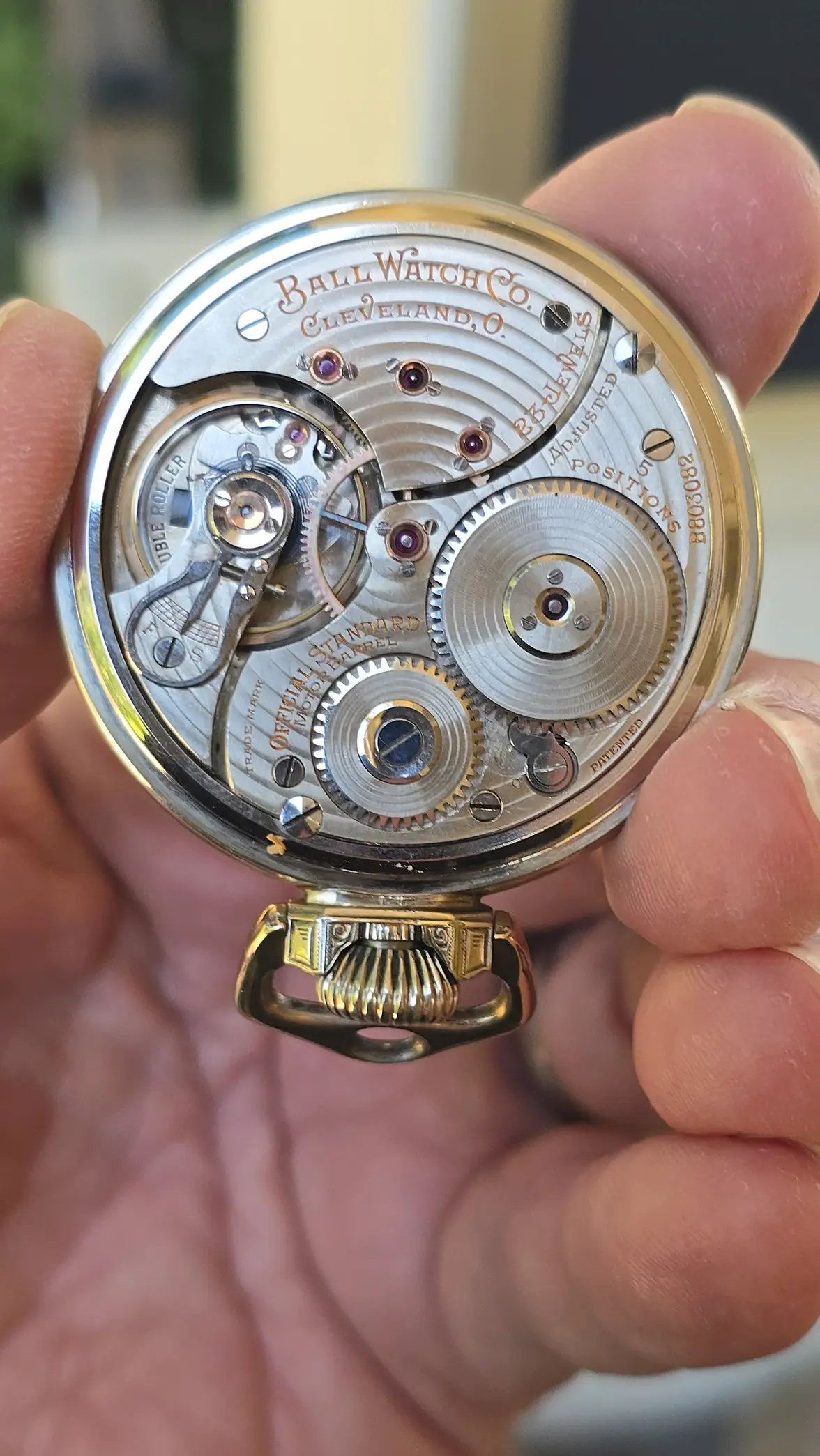
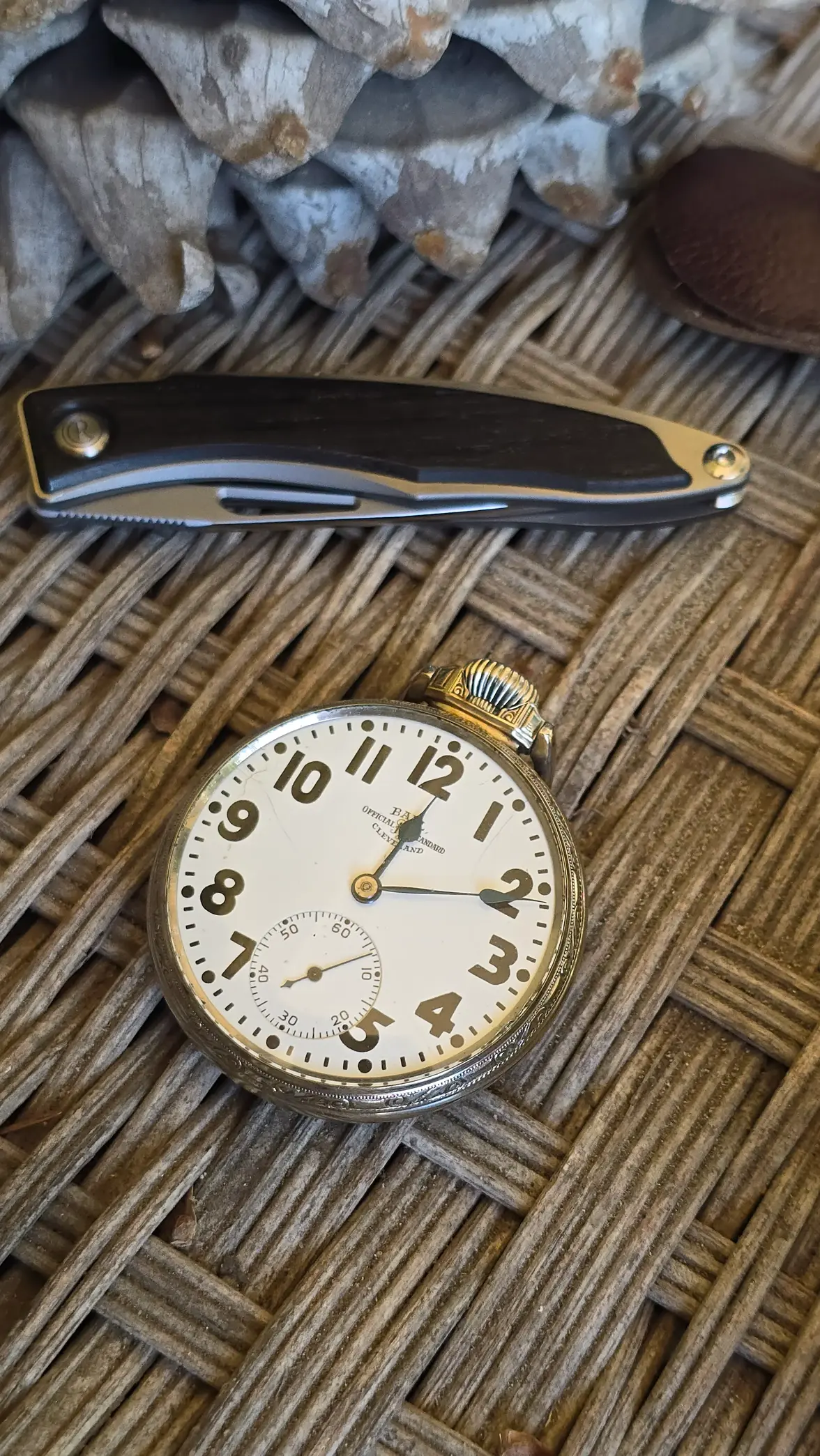
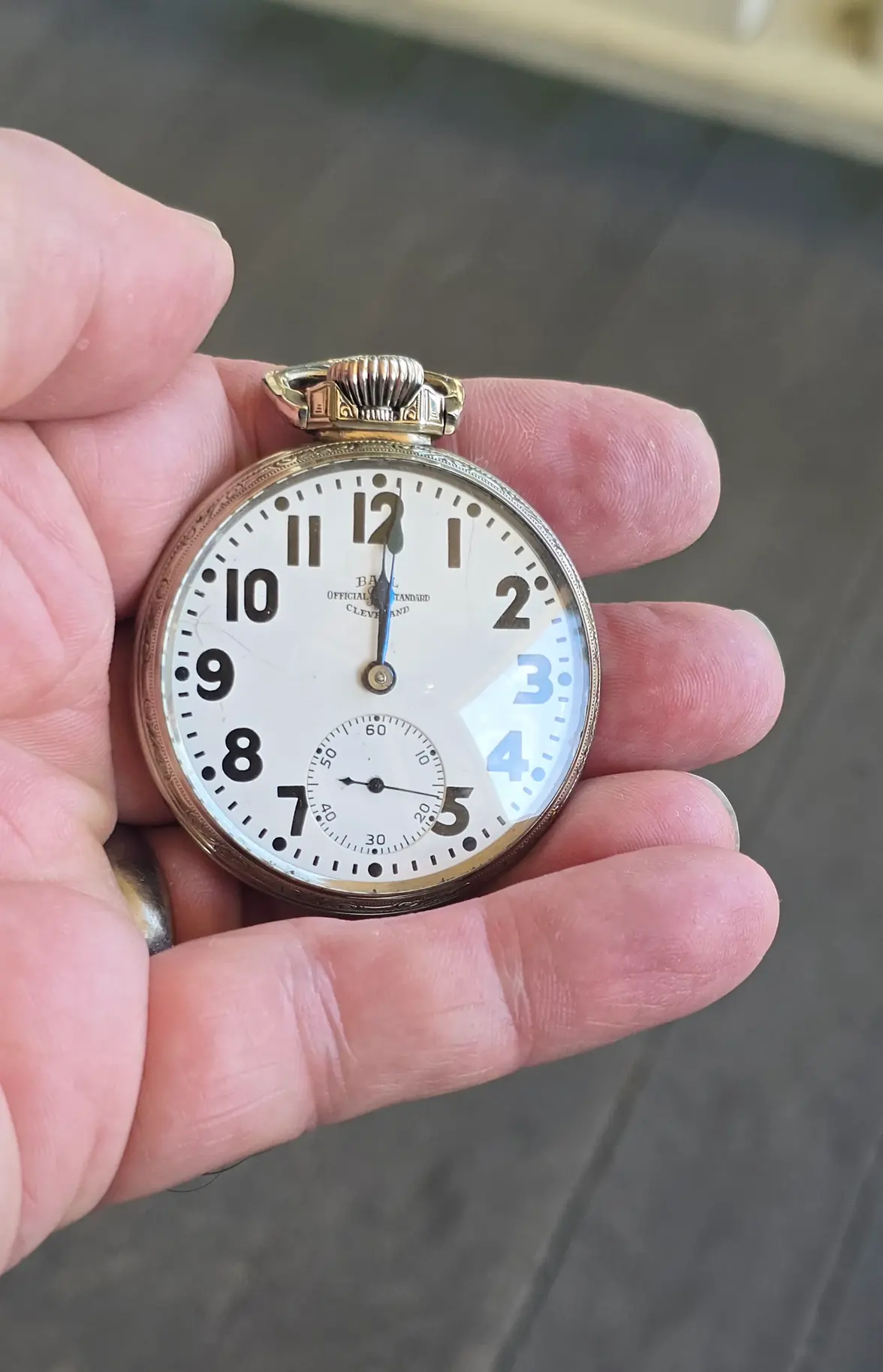
Pretty pleased. It was a fair amount under $1k so seemed worth a risk. It cleaned up nicely. It sets, winds and runs, but don't know about accuracy.

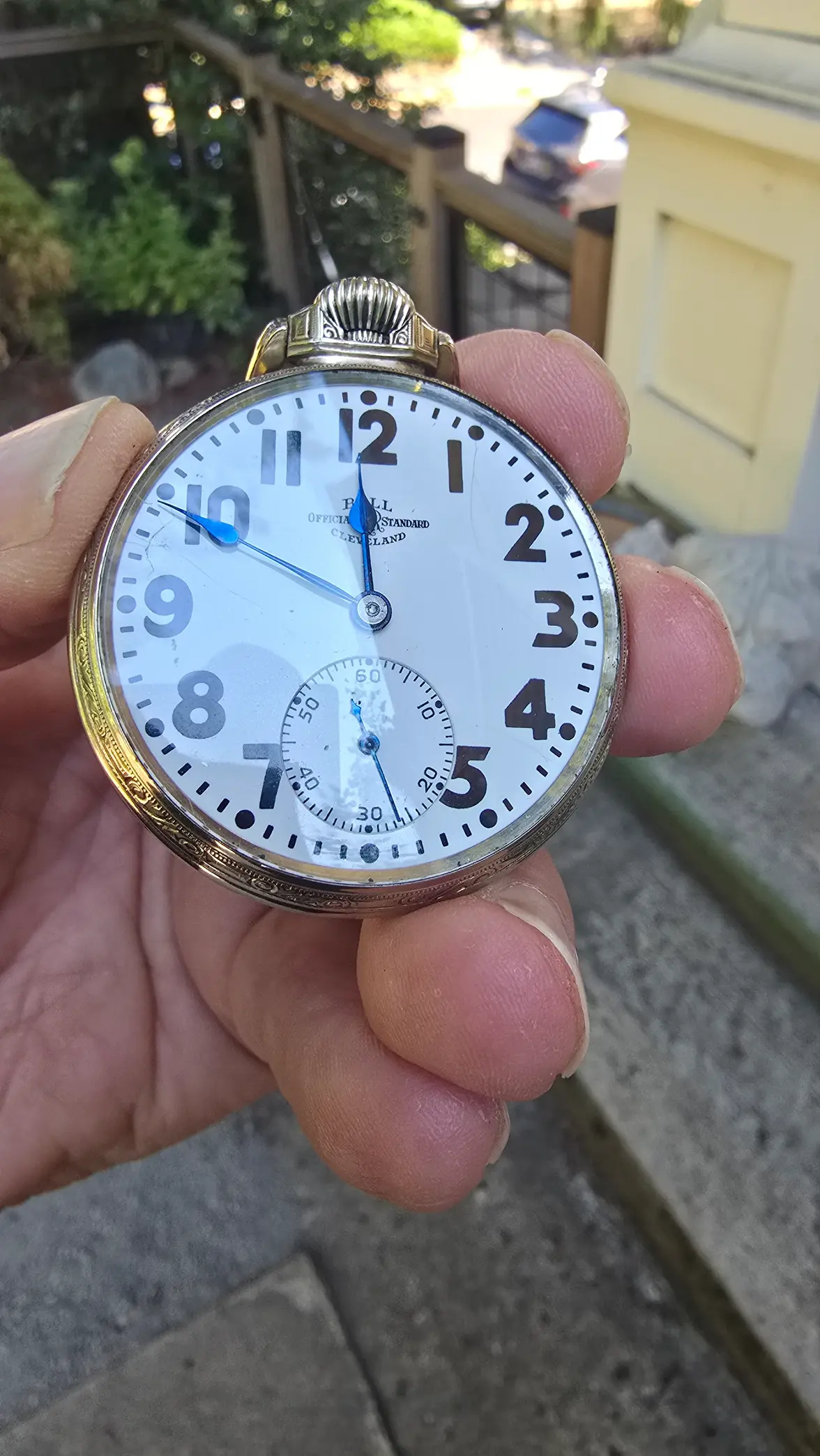
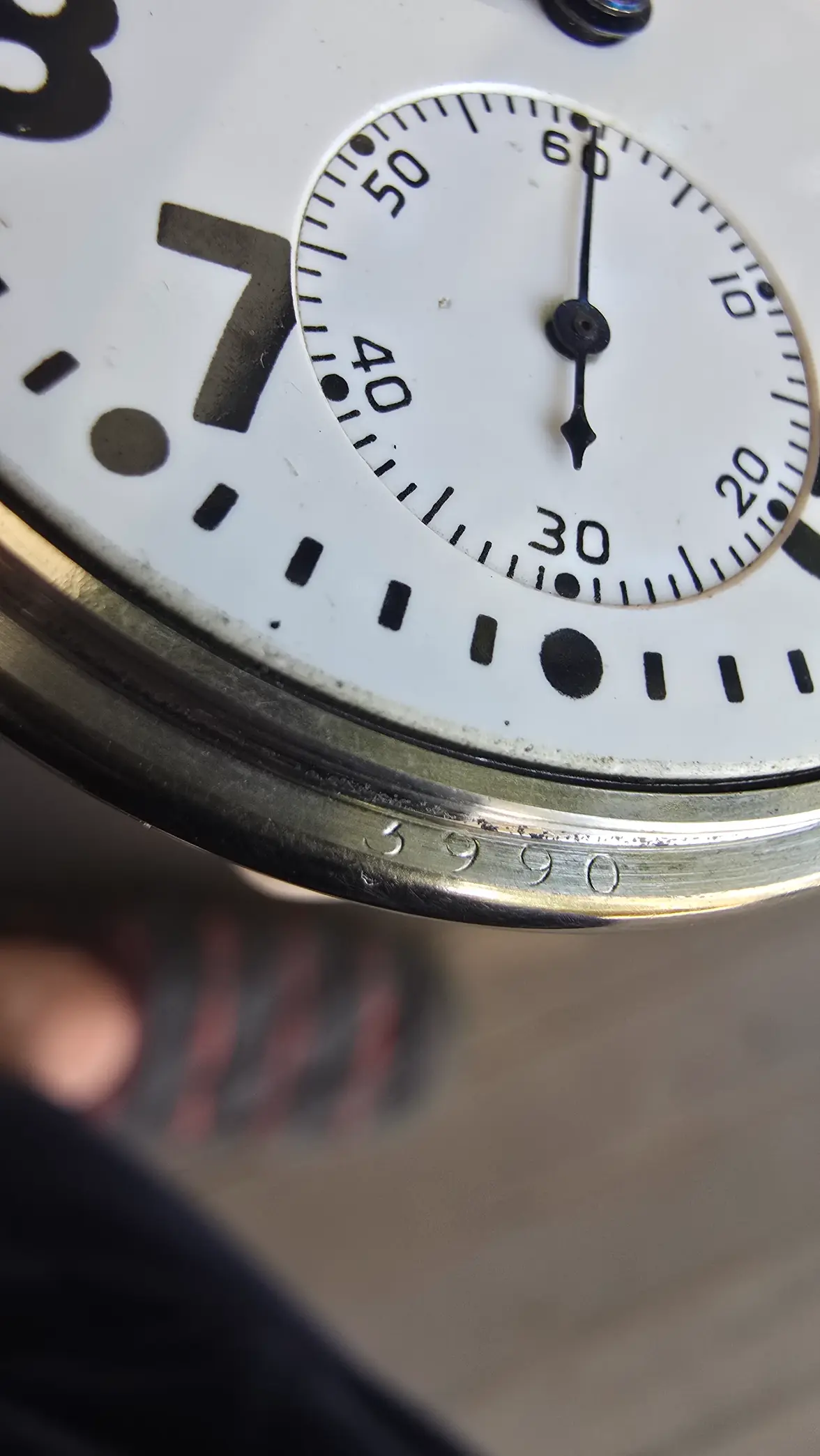
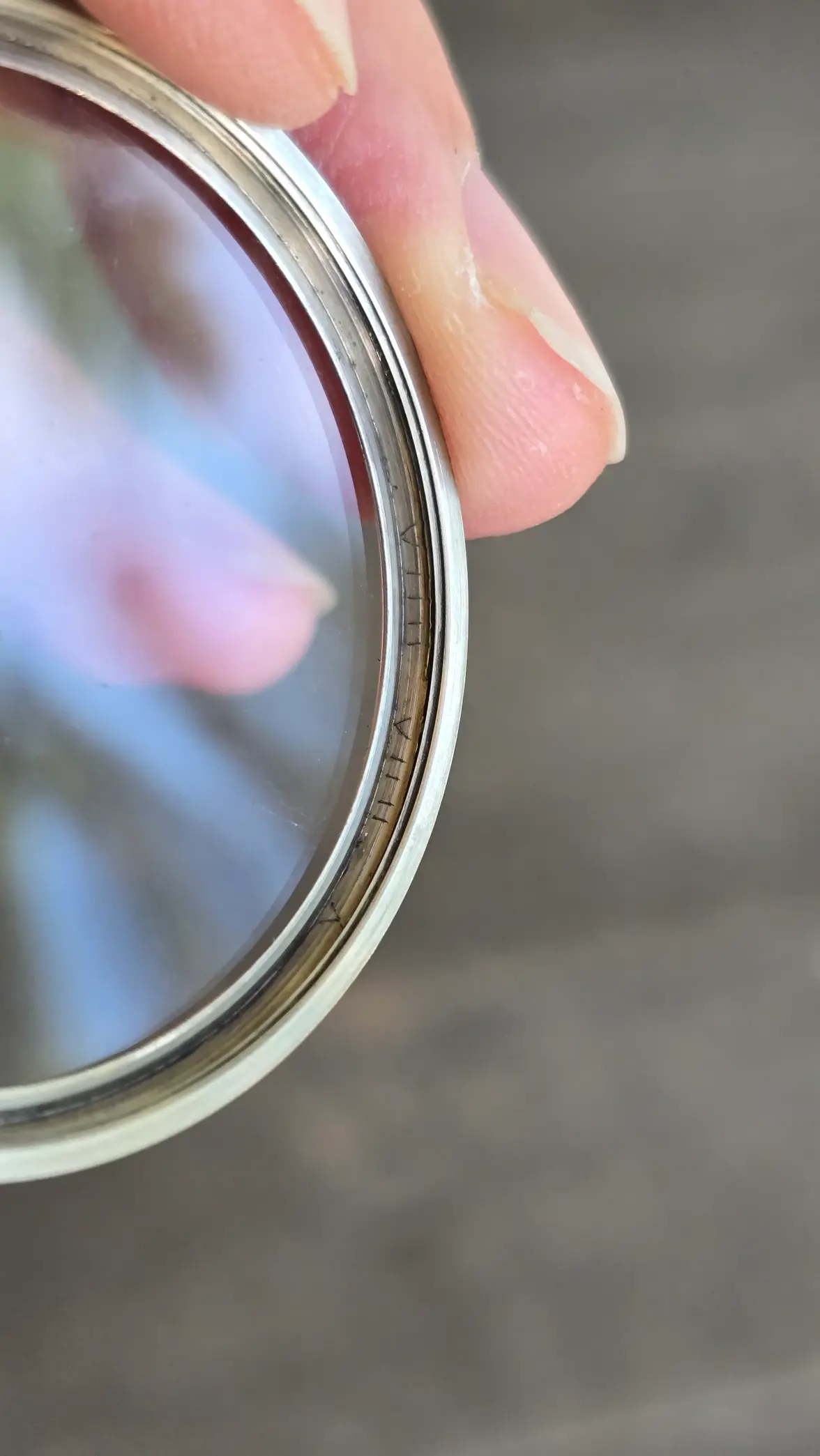
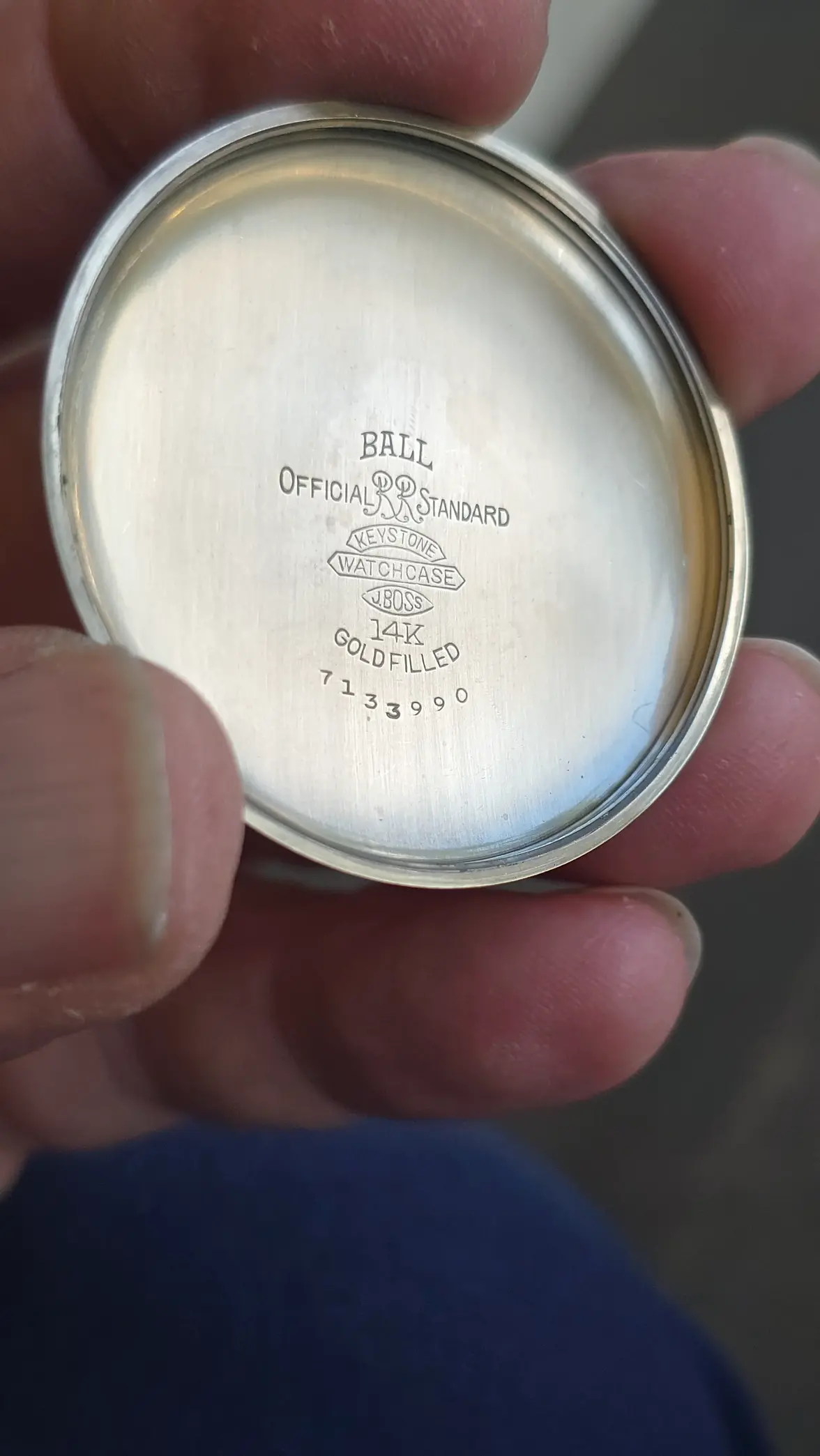
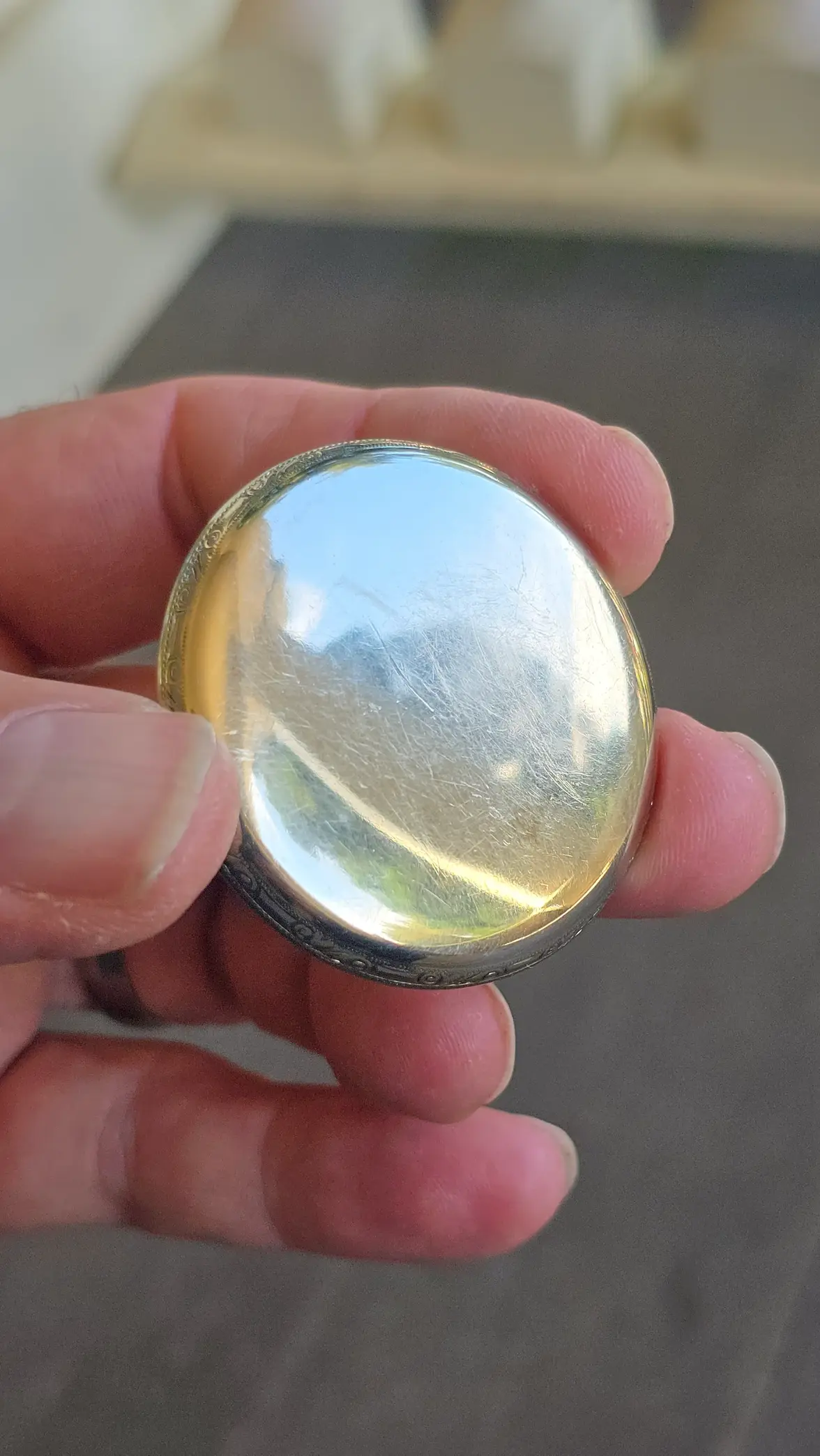
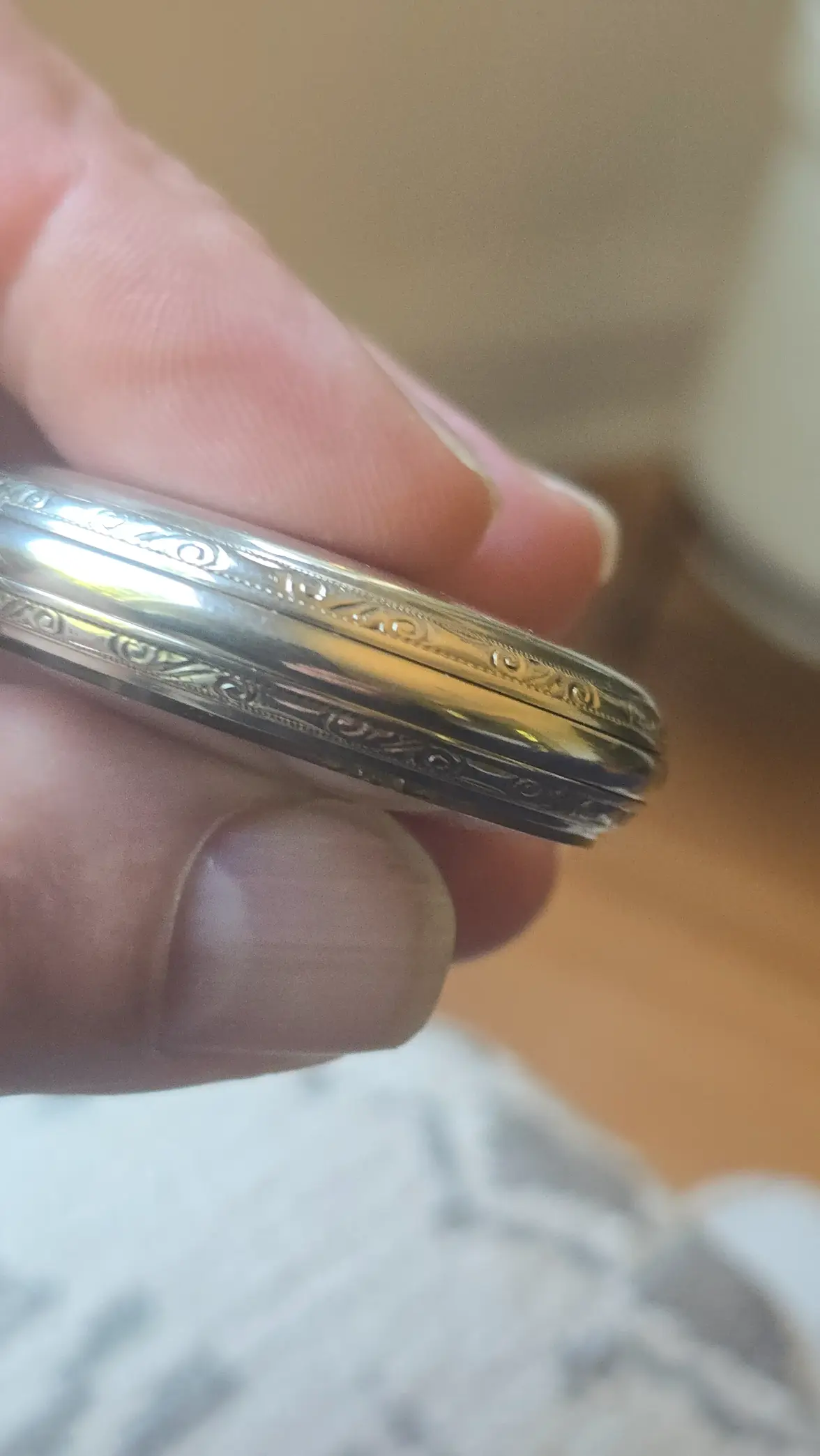
What could have been rust or pitting was just gunk. No dents or dings on the case. What might have been brassing was just reflection. There is a case number below the 6 that matches the last 4 of the s/n on the caseback. There are marks on the inner bezel that I don't know the meaning. The 14k white gold filled is bright and very attractive. My first encounter with white gold and I can see the appeal.

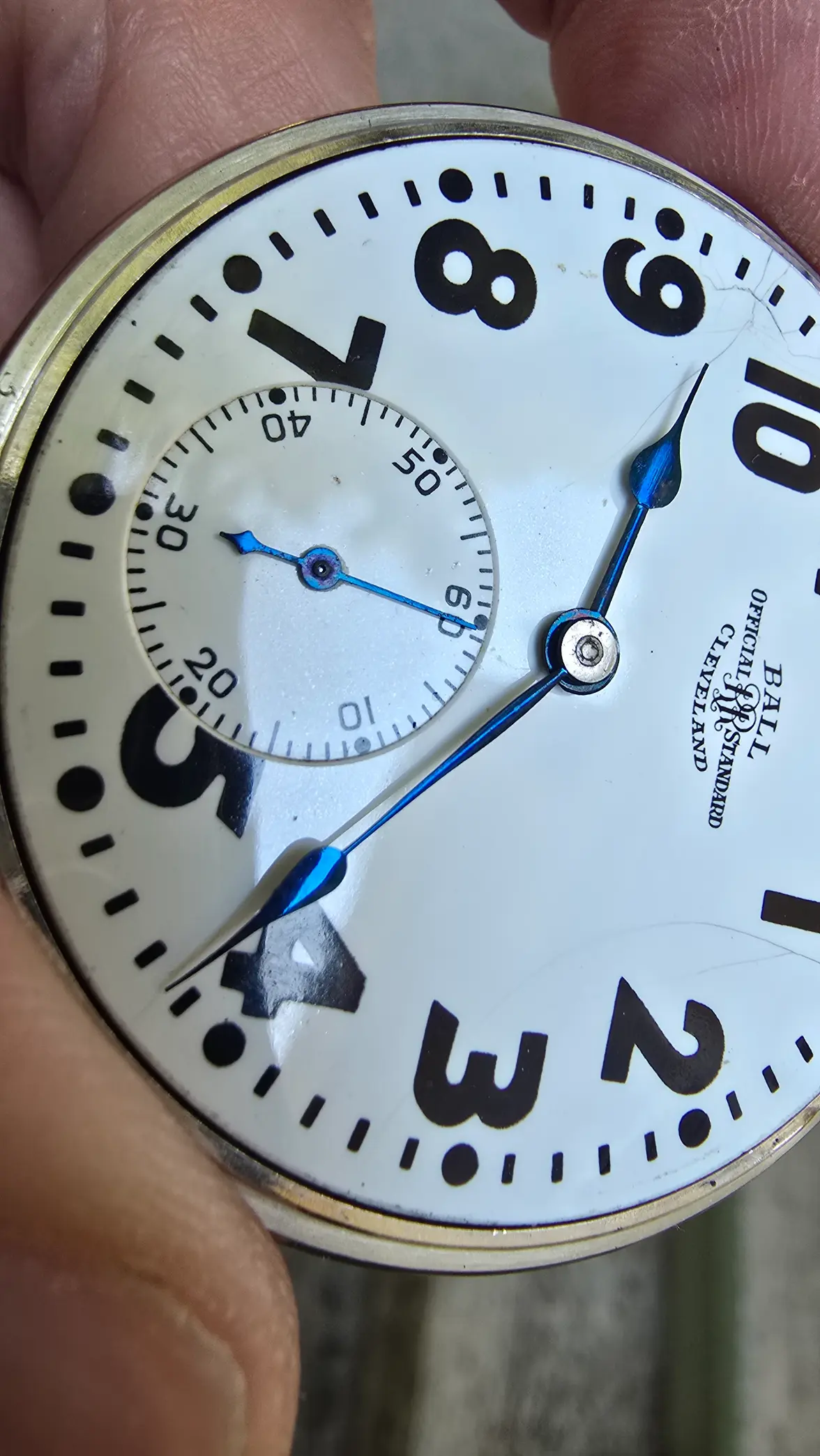
The dial is just as cracked as it appeared, if not more so, but the cracks melt away at a distance. This might be the equivalent of a ten foot paint job on a car.

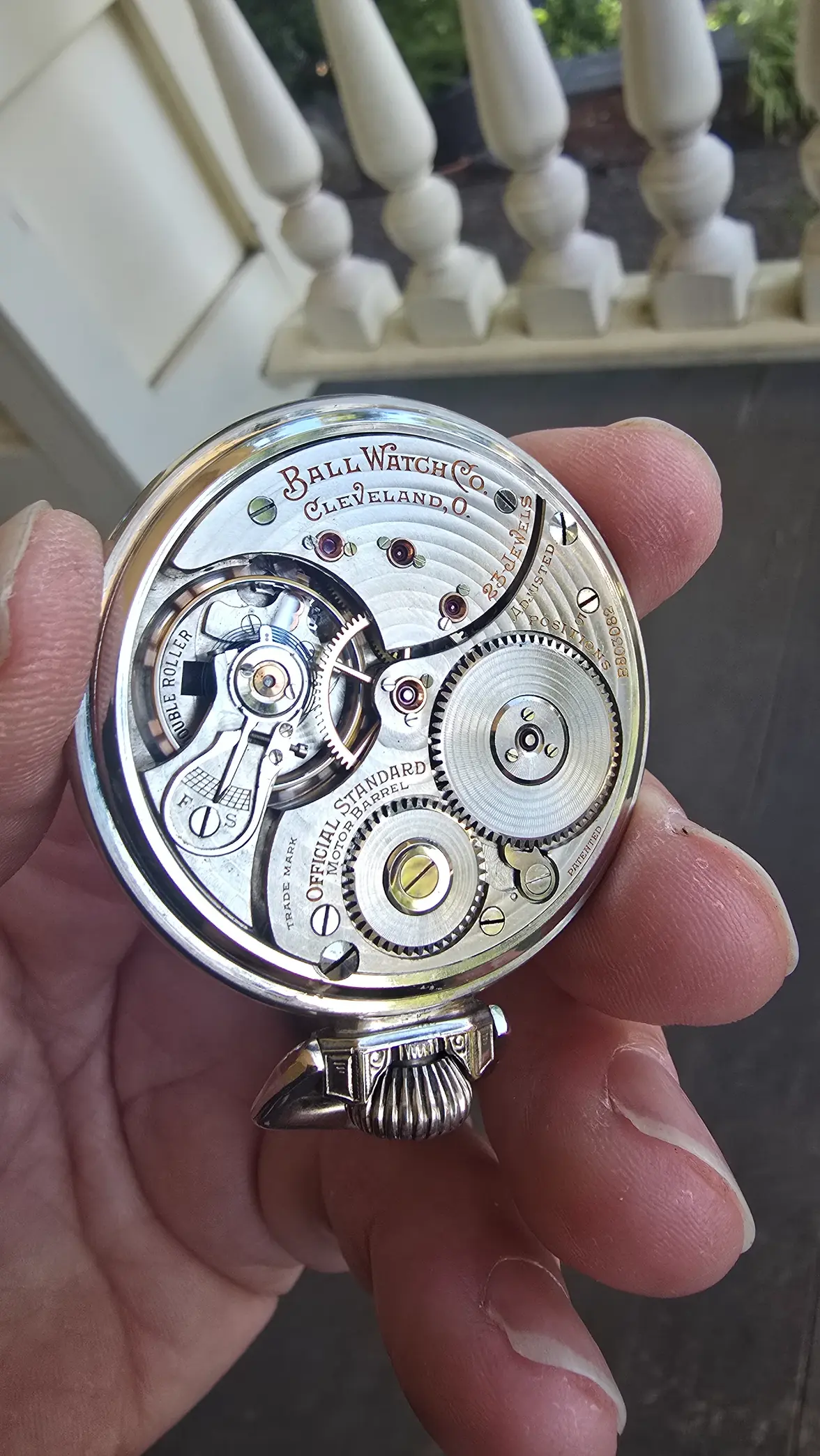
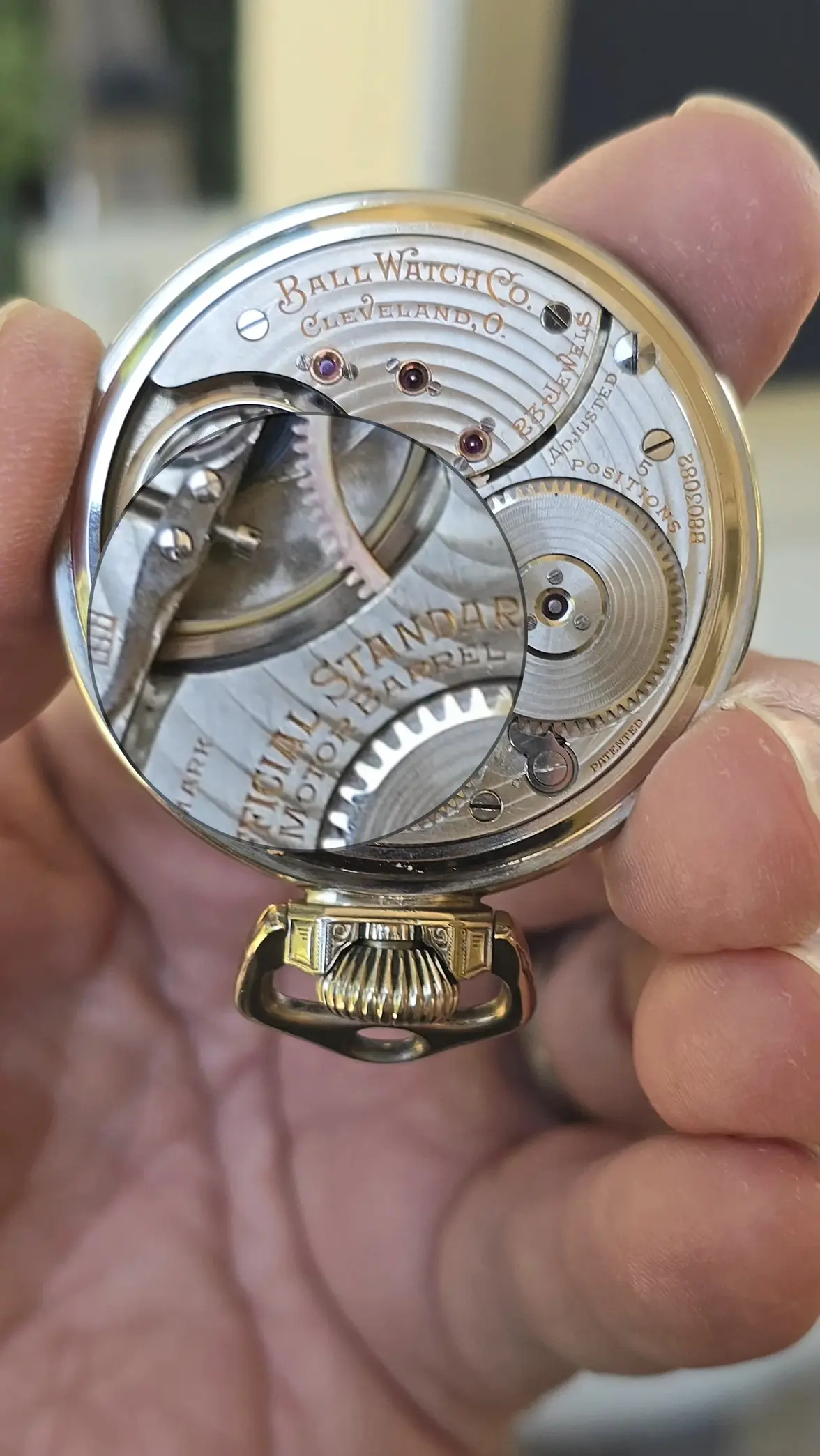
The movement is very clean. It pops much more than I expected. The gold bits help. The s/n puts it towards the end of the run.

I can appreciate why the 16s was popular. I like the 18s, but this 16s feels like a 39mm vs a 42mm on a wrist watch. The 42mm works, but the 39mm is just right, like how this 16s sits in your palm.

I'll keep looking for a dial, but this one doesn't distract too much from the watch. I have a 992 and a Bunn Special both with perfect double-sunk dials. It's hard to beat the beauty of an unmarred enamel dial, but the cracks are less bothersome in person, as compared to photos.

Photos:


How does the snap-on caseback work? It's loose now. Because I don't know how it's designed to come off and on, I haven't tried pressing it on. Does it just take hand pressure? Once on, how does it pop off?

Thanks for indulging me. It's been fun.

 
Posts
8,757
Likes
62,102
God help me, I think I'm a pocket watch collector. This is my fourth pw, if I include my Longines, which was purchased on a lark, and could make me a hoarder. But my next 3 purchases were RR grade, nice movements, which would pass as a collection.

Pretty pleased. It was a fair amount under $1k so seemed worth a risk. It cleaned up nicely. It sets, winds and runs, but don't know about accuracy.

What could have been rust or pitting was just gunk. No dents or dings on the case. What might have been brassing was just reflection. There is a case number below the 6 that matches the last 4 of the s/n on the caseback. There are marks on the inner bezel that I don't know the meaning. The 14k white gold filled is bright and very attractive. My first encounter with white gold and I can see the appeal.

The dial is just as cracked as it appeared, if not more so, but the cracks melt away at a distance. This might be the equivalent of a ten foot paint job on a car.

The movement is very clean. It pops much more than I expected. The gold bits help. The s/n puts it towards the end of the run.

I can appreciate why the 16s was popular. I like the 18s, but this 16s feels like a 39mm vs a 42mm on a wrist watch. The 42mm works, but the 39mm is just right, like how this 16s sits in your palm.

I'll keep looking for a dial, but this one doesn't distract too much from the watch. I have a 992 and a Bunn Special both with perfect double-sunk dials. It's hard to beat the beauty of an unmarred enamel dial, but the cracks are less bothersome in person, as compared to photos.

Photos:


How does the snap-on caseback work? It's loose now. Because I don't know how it's designed to come off and on, I haven't tried pressing it on. Does it just take hand pressure? Once on, how does it pop off?

Thanks for indulging me. It's been fun.


I'd wear it that way, no doubt......only down side is a piece or two of the enameled dial might come loose and a hand may be stopped if it gets stuck.


Back should screw on. Dustproof was the standard especially with Ball Model Cases.
 
Posts
6,402
Likes
21,789
I'd wear it that way, no doubt......only down side is a piece or two of the enameled dial might come loose and a hand may be stopped if it gets stuck.


Back should screw on. Dustproof was the standard especially with Ball Model Cases.
Thanks, amigo.
I read that Ball had snap on casebacks and didn't even try to screw it on. 🤦
Maybe the earlier ones were snap one, or I'm just wrong. But it's on now.
 
Posts
15,797
Likes
47,327
God help me, I think I'm a pocket watch collector. This is my fourth pw, if I include my Longines, which was purchased on a lark, and could make me a hoarder. But my next 3 purchases were RR grade, nice movements, which would pass as a collection.

Pretty pleased. It was a fair amount under $1k so seemed worth a risk. It cleaned up nicely. It sets, winds and runs, but don't know about accuracy.

What could have been rust or pitting was just gunk. No dents or dings on the case. What might have been brassing was just reflection. There is a case number below the 6 that matches the last 4 of the s/n on the caseback. There are marks on the inner bezel that I don't know the meaning. The 14k white gold filled is bright and very attractive. My first encounter with white gold and I can see the appeal.

The dial is just as cracked as it appeared, if not more so, but the cracks melt away at a distance. This might be the equivalent of a ten foot paint job on a car.

The movement is very clean. It pops much more than I expected. The gold bits help. The s/n puts it towards the end of the run.

I can appreciate why the 16s was popular. I like the 18s, but this 16s feels like a 39mm vs a 42mm on a wrist watch. The 42mm works, but the 39mm is just right, like how this 16s sits in your palm.

I'll keep looking for a dial, but this one doesn't distract too much from the watch. I have a 992 and a Bunn Special both with perfect double-sunk dials. It's hard to beat the beauty of an unmarred enamel dial, but the cracks are less bothersome in person, as compared to photos.

Photos:


How does the snap-on caseback work? It's loose now. Because I don't know how it's designed to come off and on, I haven't tried pressing it on. Does it just take hand pressure? Once on, how does it pop off?

Thanks for indulging me. It's been fun.

https://pocketwatchdatabase.com/search/result/ball/B803082

Appears to be an ORRS Ball watch from the Illinois Watch Co. Very nice, and quite scarce as shown in the info from the pocketwatchdatabase site. One feature about this movement that sets it apart from other Ball 16-size movements is how the barrel bridge is cut out to circle the balance wheel. See the lens on the attached photo.


Posts
6,402
Likes
21,789
One feature about this movement that sets it apart from other Ball 16-size movements is how the barrel bridge is cut out to circle the balance wheel. See the lens on the attached photo.
Thanks for pointing this out. Looking at the Ball movements from other manufacturers, they looked the same as this one. I missed this cut out difference. It's mesmerizing watching the pallet fork.
 
Posts
15,797
Likes
47,327
Thanks for pointing this out. Looking at the Ball movements from other manufacturers, they looked the same as this one. I missed this cut out difference. It's mesmerizing watching the pallet fork.
They look almost the same. The plate design is by Ball, so there are a lot of similarities between movements. BUT, the Illinois is unique as pointed out.
 
Posts
8,757
Likes
62,102
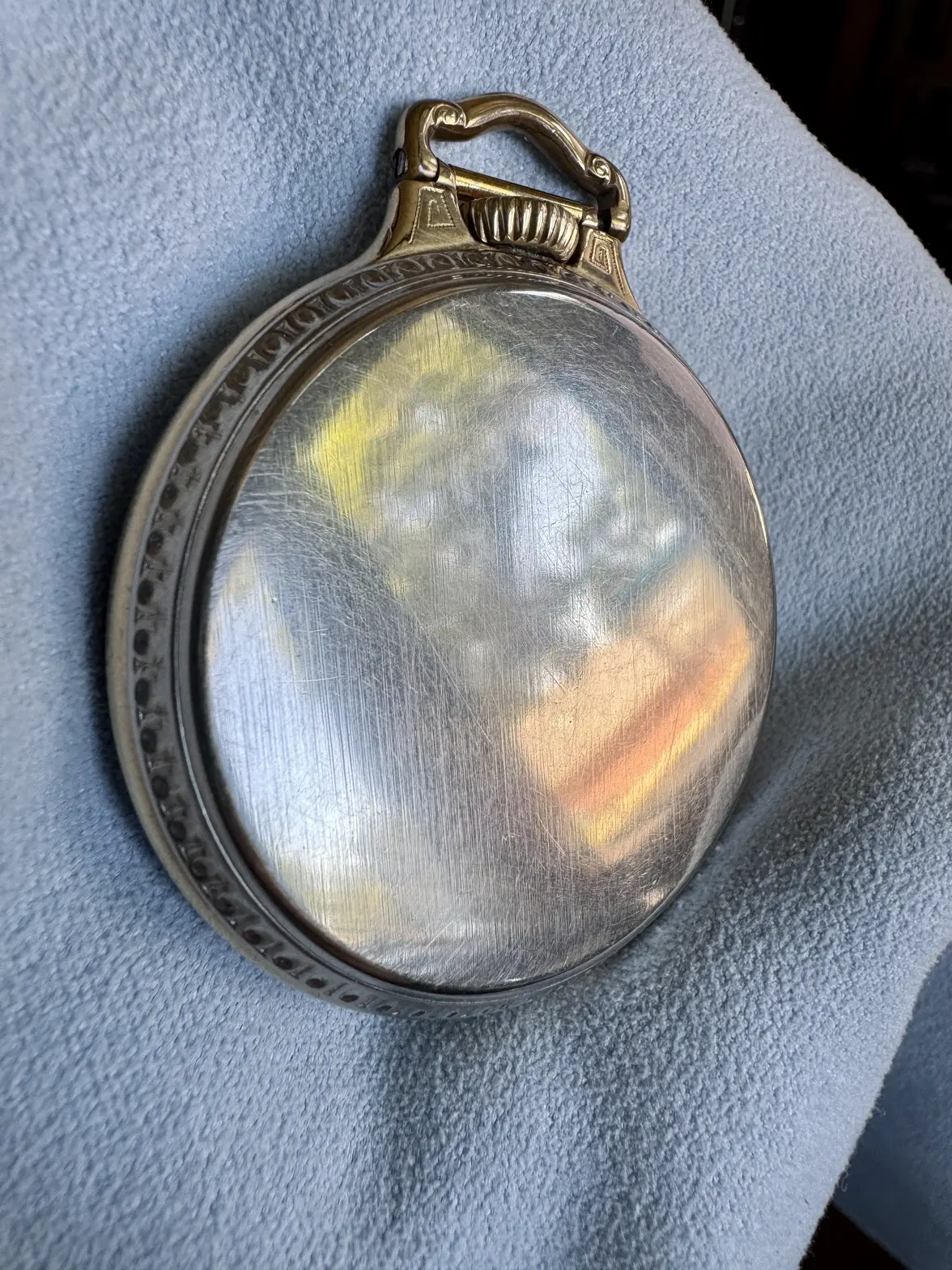
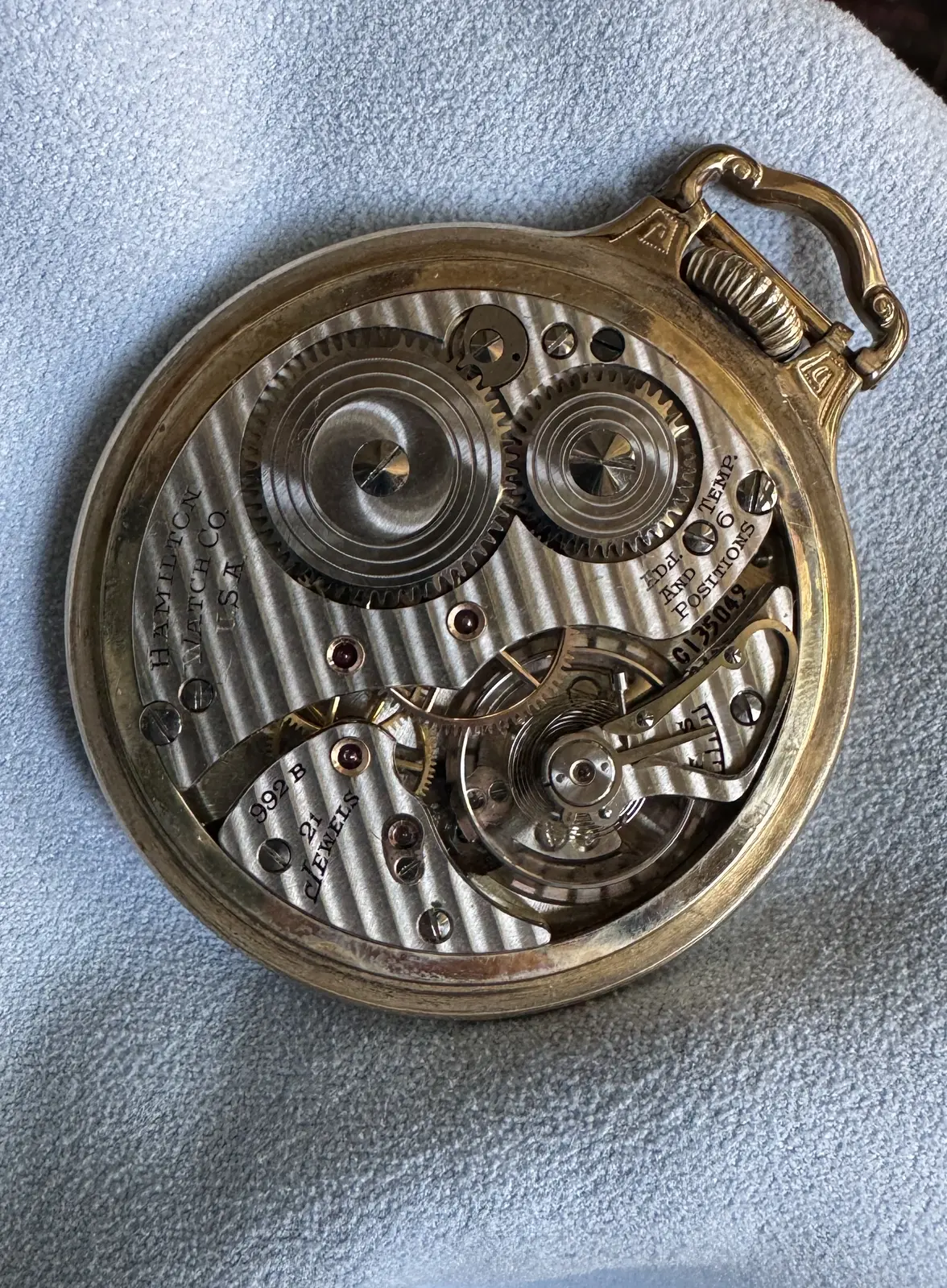
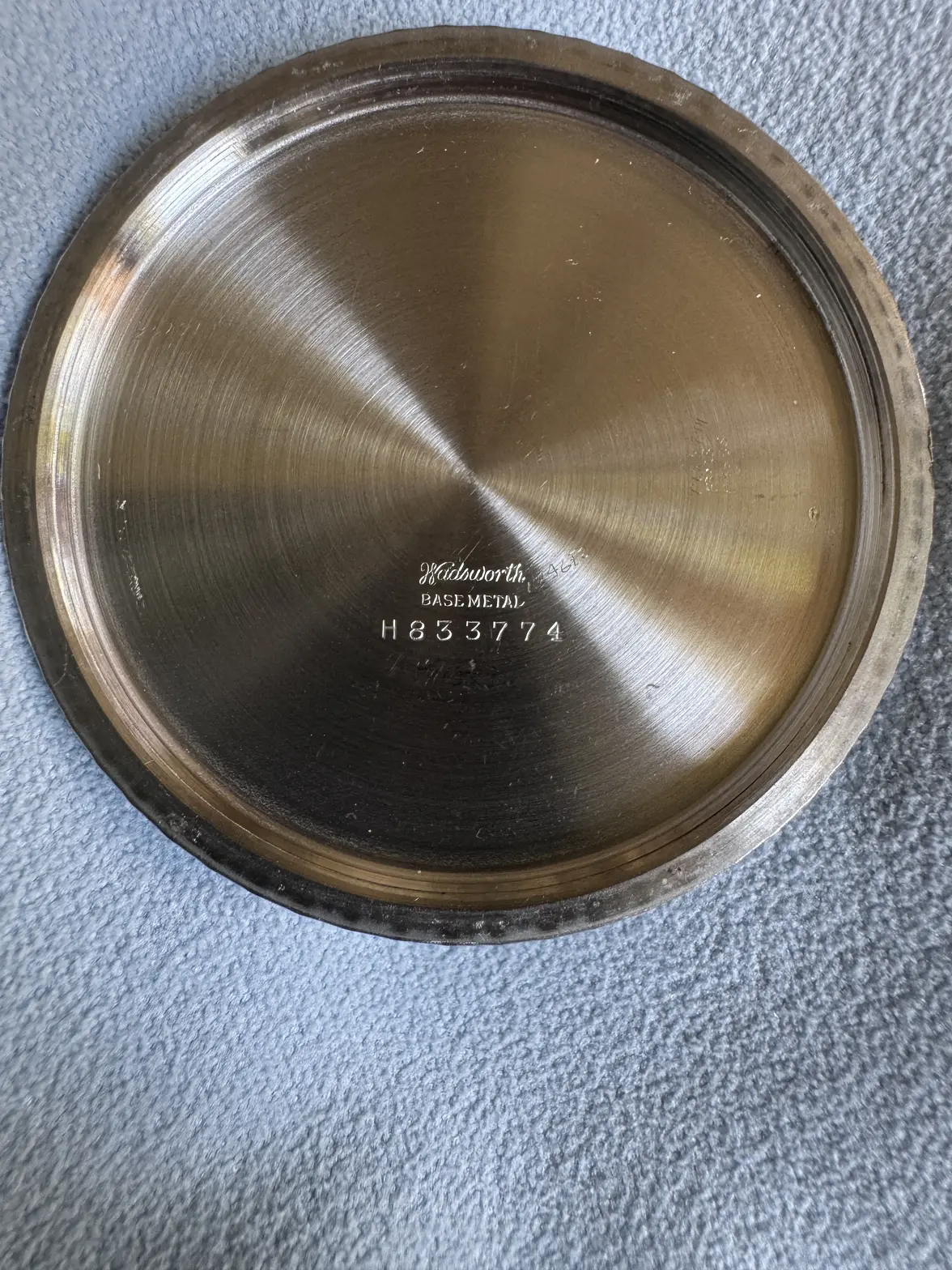
Hamilton introduced the #3 Tu-Tone case in 1946, it was short lived. Advertised as Stainless Steel back and bezel with yellow gold filled frame or mid-case.
As seen here, it is marked Base Metal. It is speculated that Hamilton( and others) considered any non precious metal like stainless steel “base” since no back has surfaced with Stainless Steel markings.

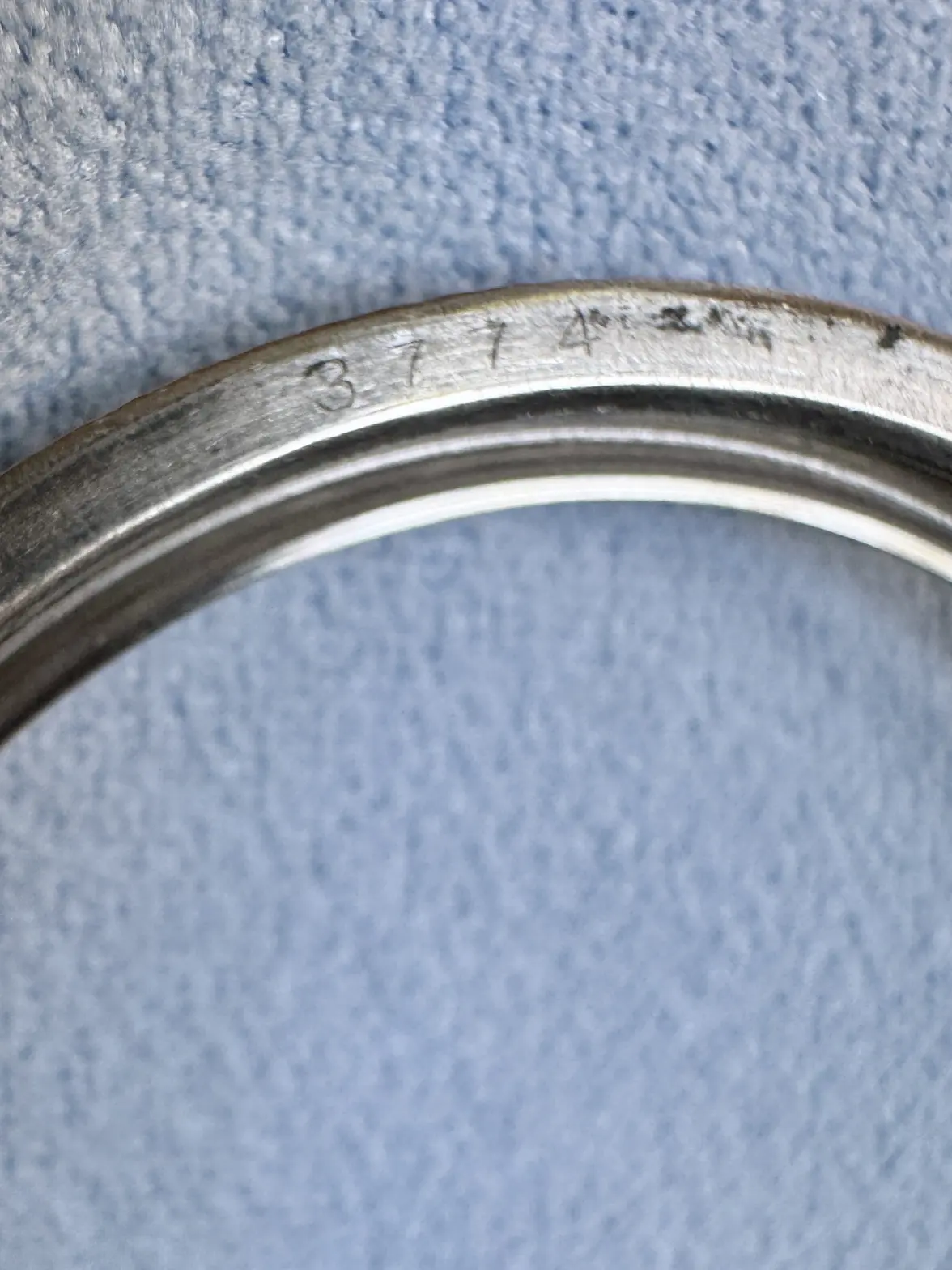
And to confirm a true Factory Tu-Tone and not a Frankenstein, both back and bezel have matching serial numbers.

Canadian style dial and a 1946 movement

 
Posts
15,797
Likes
47,327
Hello everyone,I am not an expert on vintage pocket watches, but I recently got this huge piece and I’m trying to figure out what exactly I have here.The dial says George Prior, London, and it was clearly made for the Turkish/Ottoman market. To my untrained eye, the enamel dial, the hands, and the outer tortoiseshell case look totally original and high quality.However, after doing some basic research, I noticed a few things that look really strange and make me question if the whole watch is genuine, the size: this thing is absolutely massive! It measures about 10 cm (100 mm) across. Is that normal for these watches? No Serial Number: I looked everywhere on the movement, but there is no serial number engraved. I read somewhere that real English watches from this era always had numbers.Yellow Metal Inside: The inner case is made of a yellow metal (looks like brass or gilt), but I couldn’t find any British silver hallmarks inside. The Movement Style: When I open it up, the little pillars holding the plates look smooth and round (like small pillars on a balcony). Also, the name Geo Prior is written in a curvy cursive/italic script, and there is a small silver dial for adjustments. I’ve heard this style might actually be Swiss, not English.Could this be what collectors call a "marriage watch" from back in the day? Like, a genuine Prior outer case and dial but with a fake or swapped Swiss movement inside from the 18th or 19th century?
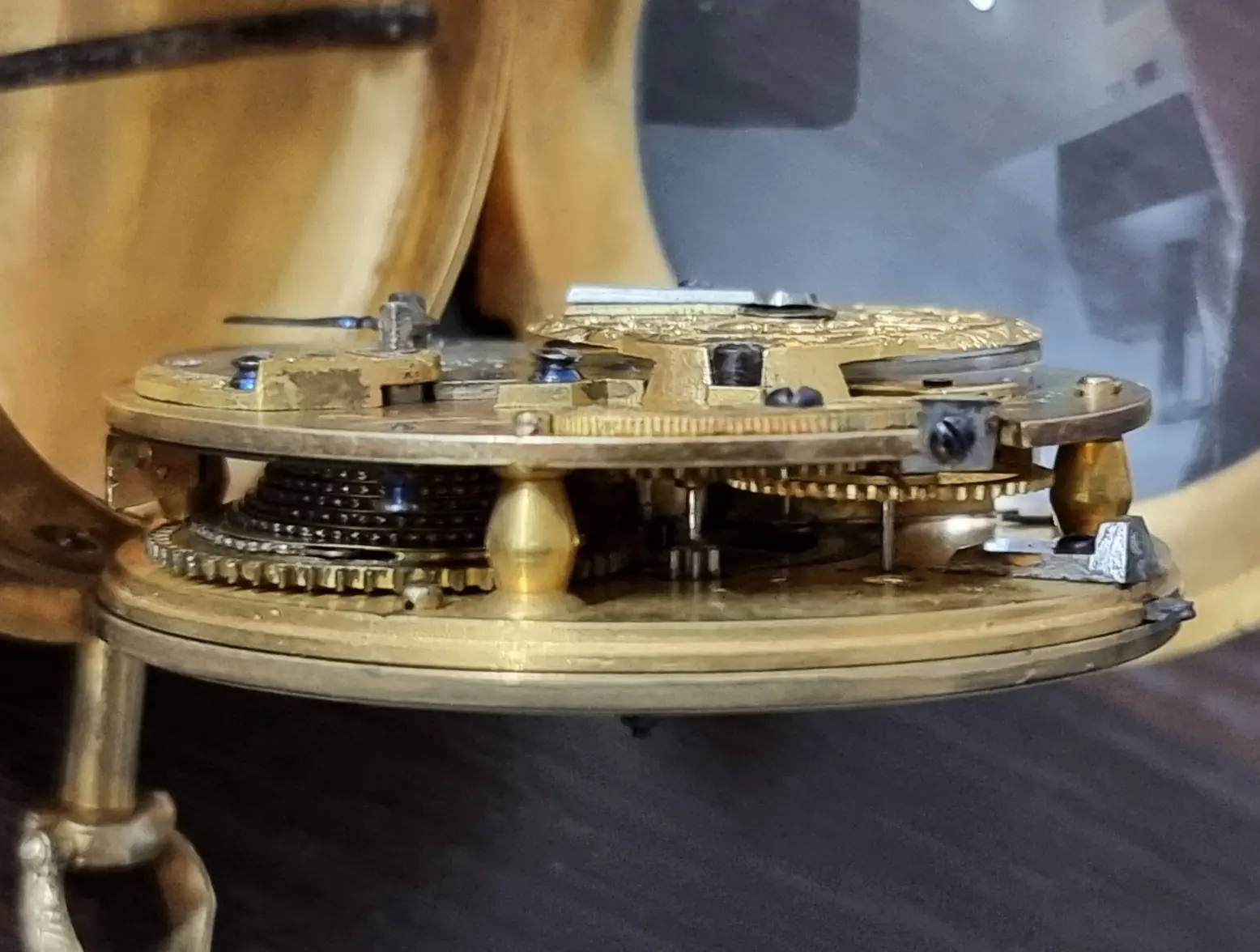
I would love to hear your thoughts and expertise on this! Thank you so much for your help!

In his book Watchmakers and Clockmakers of the World, Vol 1 (page 258),G H Baillie lists several makers with the Prior family name. In particular:

-George, London, Prescott st., 1765-1810.
-George (son of John Prior, 2 John Priors listed), born 1782, in London after 1822, maker of repute, especially in watches for Turkey rec’d 2 awards from Soc. Arts. 3 case watch. Science Museum South Kensington, 3 case watch with case of wood inlaid with silver, gold cased watch with Oriental chased case, South Kensington Museum, etc. etc.