Calling all Pocket Watch Buffs

Posts
15,867
Likes
47,592
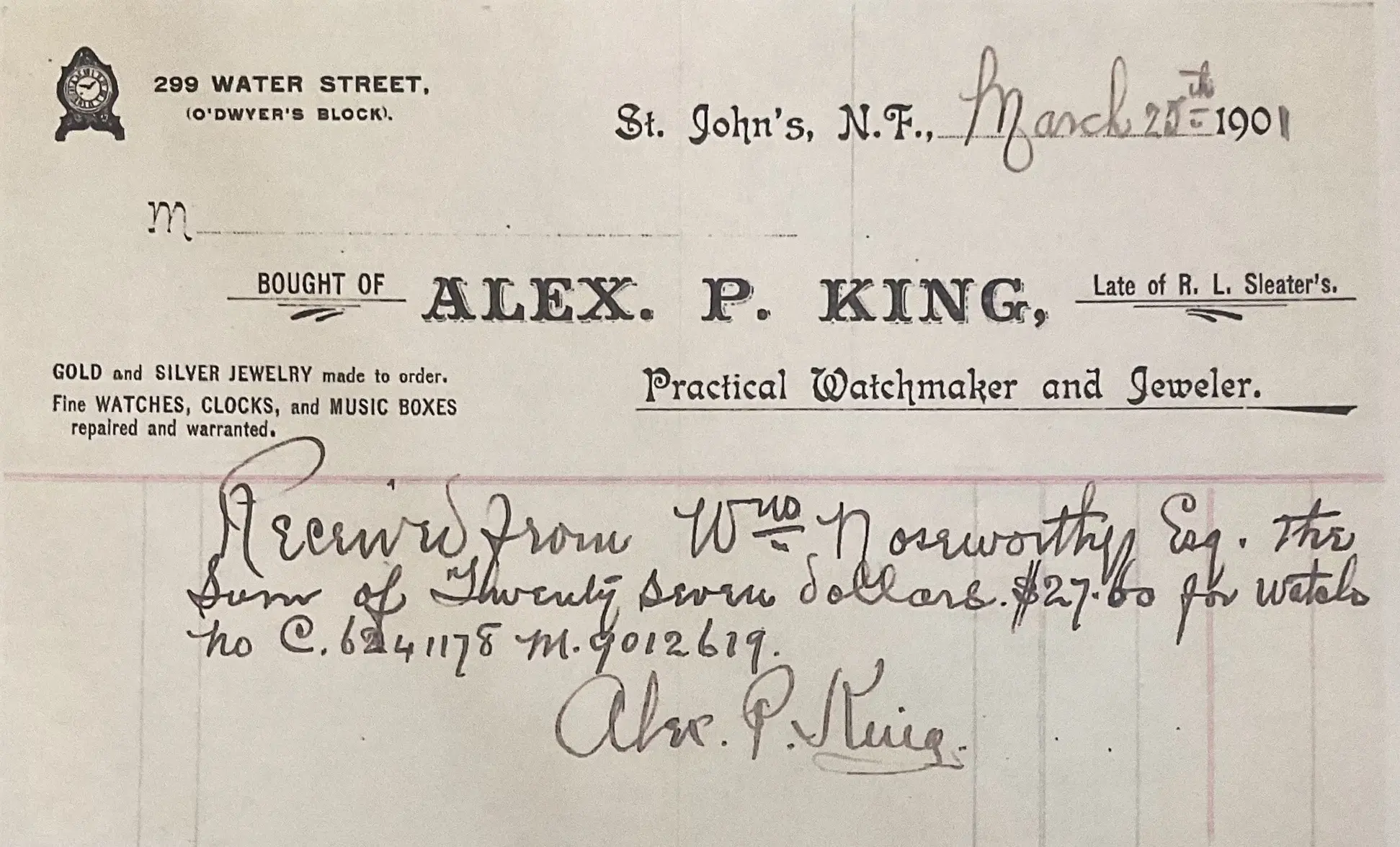
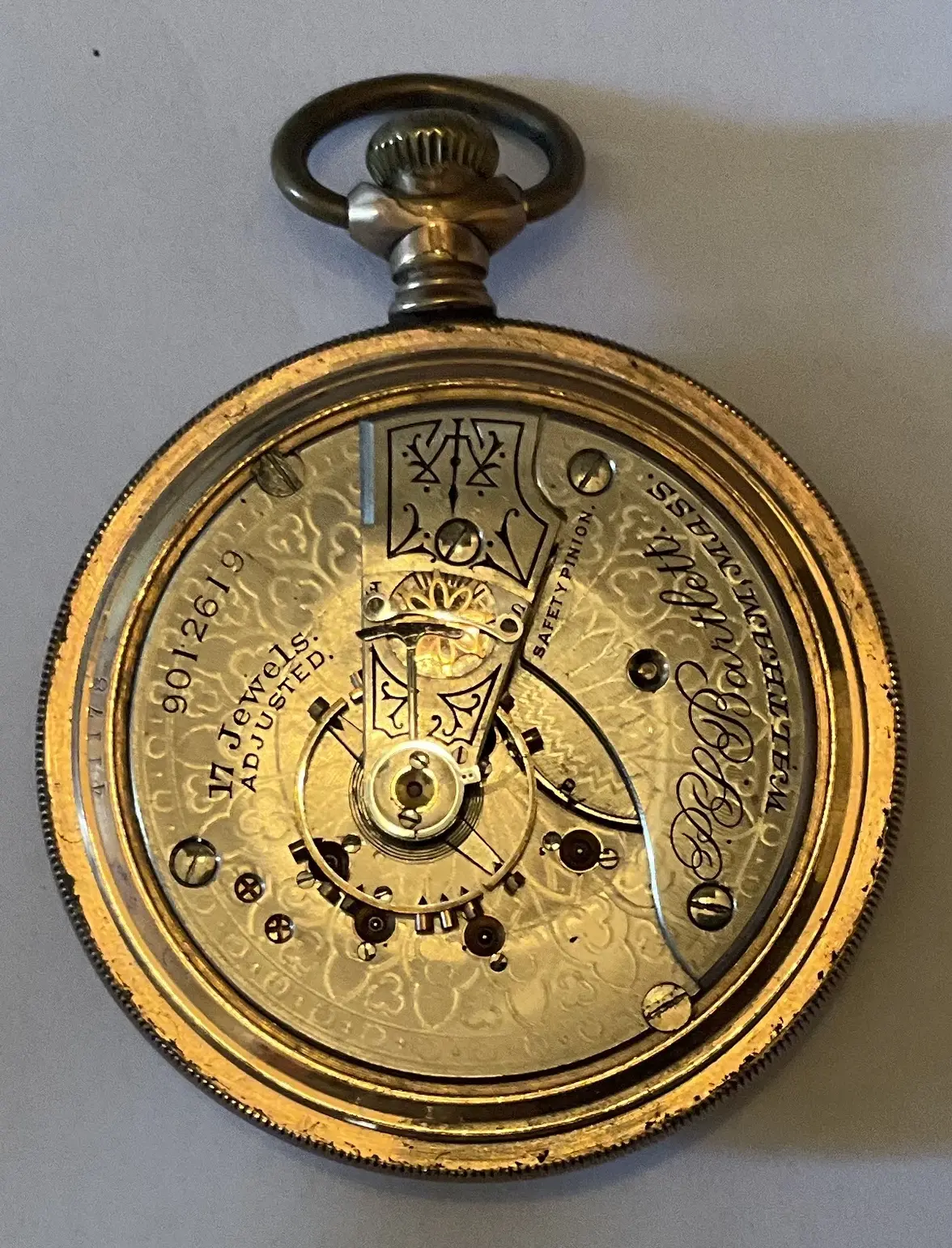
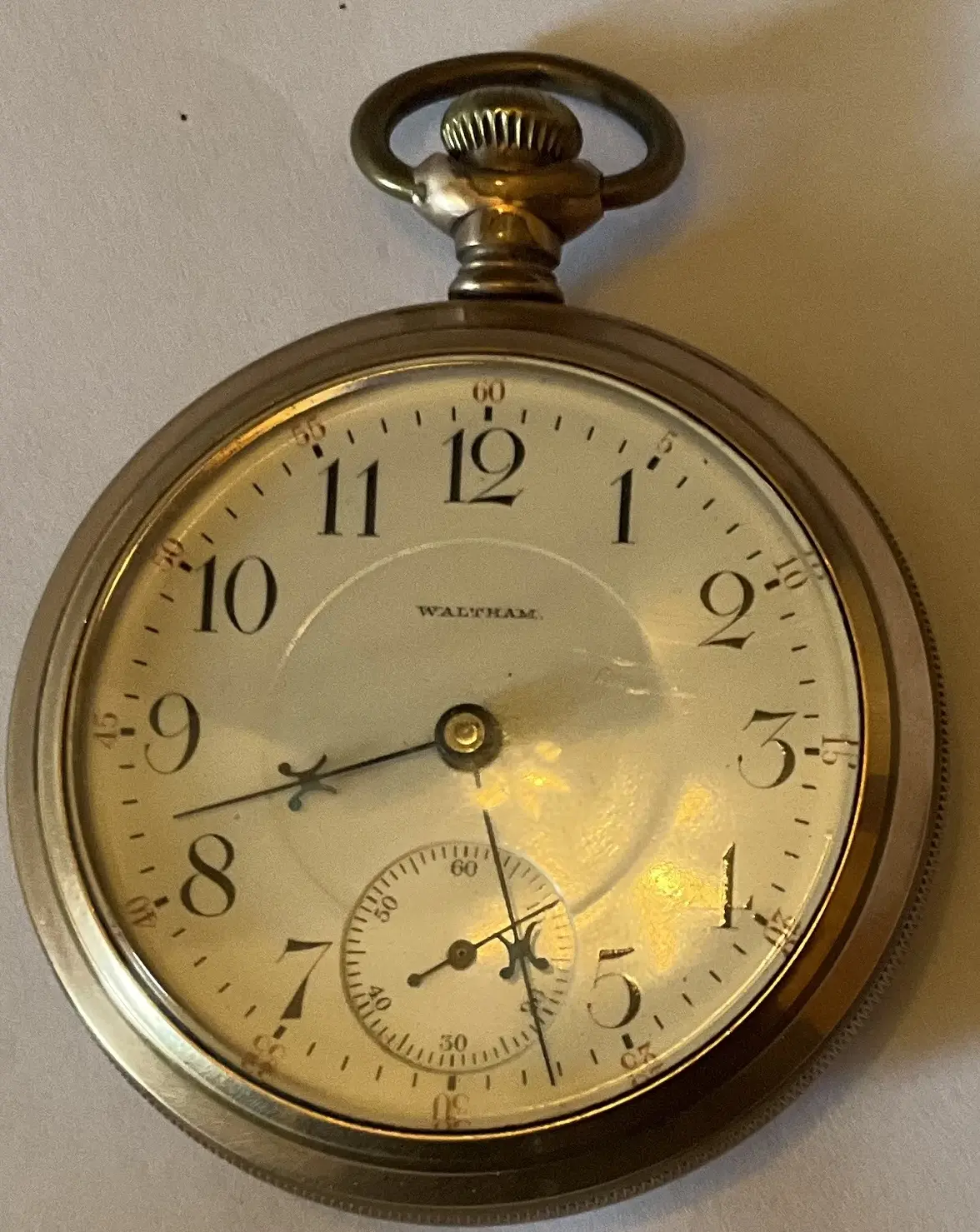
A customer picked up their repaired clock, today. The brought a family watch, an 1883 model Waltham P S Bartlett, 17-jewels, gold filled case. The watch doesn’t run. Aside from the watch, they brought a copy of the original receipt. I though this might be of interest.
Purchase price in St. John’s Newfoundland (Canada) in March of 1901 was $27.00!
 
Posts
91
Likes
239
A customer picked up their repaired clock, today. The brought a family watch, an 1883 model Waltham P S Bartlett, 17-jewels, gold filled case. The watch doesn’t run. Aside from the watch, they brought a copy of the original receipt. I though this might be of interest.
Purchase price in St. John’s Newfoundland (Canada) in March of 1901 was $27.00!
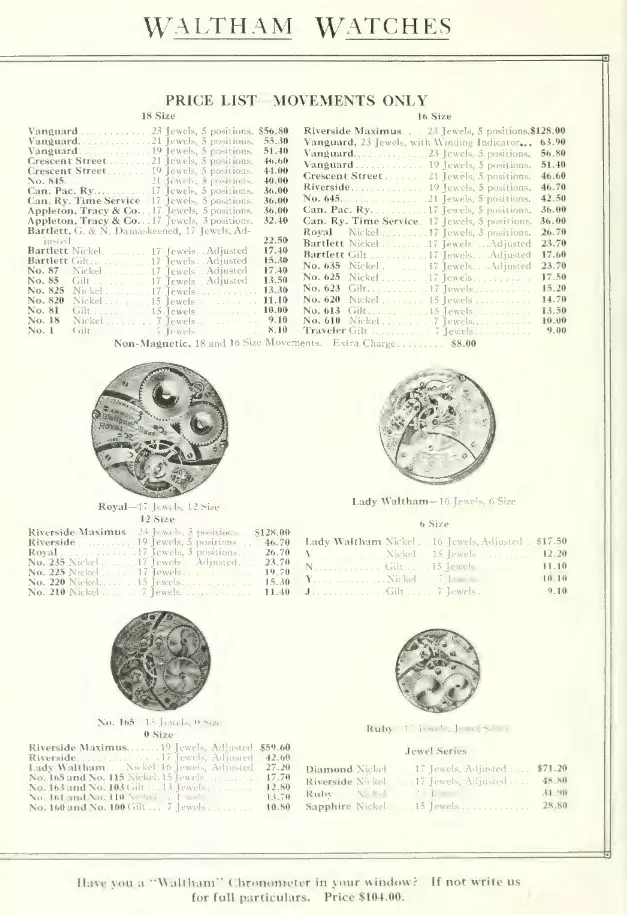
Thats interesting I just checked a copy of the PW Ellis Catalogue for 1915 and 1916 and their advertised price for an 18 Size ATC 17J nickle movement cased was also $27. The 18S 17J PSB movement only for $18.40

 
Posts
91
Likes
239
Thats interesting I just checked a copy of the PW Ellis Catalogue for 1915 and 1916 and their advertised price for an 18 Size ATC 17J nickle movement cased was also $27. The 18S 17J PSB movement only for $18.40

movement only was $17.40 sorry my mistake
 
Posts
15,867
Likes
47,592
Inflation back then appears to me to be very low.
 
Posts
91
Likes
239
Actually yes inflation appears to be very slow but I found it very interesting that the price point was so similar. Makes me wonder what price point Regina for example was deploying to undercut the American brands in Canada likely by a very small amount of money in our current terms but I guess significant in the day apart from the convenience of mailorder or local jewelry store fulfillment . I have seen other price points like Tavannes with their best 21J 16S in the 1920s pricing around $34 but also seeing specialty products like the Waltham Opera with its intricate and fancy filigree pricing upwards of $50 in that timeframe.....I think there must have been a lot of volatility through the 1920s as it was a booming era quickly dashed with the stock market fall and depression which ensued in the 1930s. These watch companies all faced a very competitive marketplace enduring year after year of the constant pressure for increased sales and revenues and at the same time dealing with I expect their workers determination for greater wages...in the end increased market share realized by the Walthams and Elgins of the period dominated....Columbus didn't make 1900 and Illinois passed away by 1927. The Hampden Duber organization didn't do much better dying early in the depression but sold to the Soviets and fostered a whole industry over there.
I really enjoy understanding the financial underpinnings and success of these early organizations but not that much is written about the great pocket watch era from that perspective....there is so much to appreciate from the principal companies of the period and extend that to the Private Labels which flourished through that timeframe and the marketplace becomes just unbelievable....
 
Posts
15,867
Likes
47,592
I’d like to know more about how Canadian import duties on Swiss watches were, as compared to Canadian import duties on American made watches, around the turn of the 20th century. American made watch movements often came into Canada without cases, the movements then to be fitted to cases made in Canada. That would have made a difference to applicable duties on U S watches. Duties on Swiss watches (I understand) were based on the number of jewels, and the number of adjustments. The Swiss makers (many of them) countered import duties on their products by producing a plainer product than the U S product, and making them in a way to cut costs.

Back to the Waltham I uploaded (above), that sold for $27.00 in St. John’s Newfoundland in 1903. Prices advertised by Ellis in Toronto in 1913 were not really much higher.

Fast forward to the early 1990s when I had some personal experience on U S duties applied to watches shipped from Canada to the U S. Duties differed based on karat of gold cases, karat of gold filled cases, steel cases, chrome cases, watches with straps, watches with karat gold bracelets, gold filled bracelets, number of jewels, electronic, manual wind, automatic wind, source country, water resistance rating, plastic, glass, or sapphire crystals, etc. etc. All very complex!
 
Posts
91
Likes
239
I’d like to know more about how Canadian import duties on Swiss watches were, as compared to Canadian import duties on American made watches, around the turn of the 20th century. American made watch movements often came into Canada without cases, the movements then to be fitted to cases made in Canada. That would have made a difference to applicable duties on U S watches. Duties on Swiss watches (I understand) were based on the number of jewels, and the number of adjustments. The Swiss makers (many of them) countered import duties on their products by producing a plainer product than the U S product, and making them in a way to cut costs.

Back to the Waltham I uploaded (above), that sold for $27.00 in St. John’s Newfoundland in 1903. Prices advertised by Ellis in Toronto in 1913 were not really much higher.

Fast forward to the early 1990s when I had some personal experience on U S duties applied to watches shipped from Canada to the U S. Duties differed based on karat of gold cases, karat of gold filled cases, steel cases, chrome cases, watches with straps, watches with karat gold bracelets, gold filled bracelets, number of jewels, electronic, manual wind, automatic wind, source country, water resistance rating, plastic, glass, or sapphire crystals, etc. etc. All very complex!
I have been searching for the information you are looking for now for many many years but all I can dig up are generalities. Regina for example are Swiss pocket watches imported from Switzerland to New York as movements then imported into Canada via Toronto mostly and cased by the A. W.C. Co Ltd. Apparently the import cost in terms of duties is less than importing the same product cased versus just as a movement. The same was the case for American manufacturers hence many vintage pocket watches we find here have Canadian cases hence you find transit cases which were used to transport uncased movements between countries. When we are talking about a $27 cased watch I can't imagine the difference to be significant based on the 5% or 10% or whatever import tariff Canada applied but I guess all thjngs are relative and even a small amount of money as viewed today might be considered signficant back in the day when people actually did pinch pennies. And off coarse when a manufacturer like Waltham went to market with a specialized watch like their Opera dress watches with a highly ornate case with custom filigree I doubt these watches would have been shipped as movements but due to necessity the final product....hence the much higher price maybe.
Yes, all very very complex
 
Posts
3,389
Likes
34,733


Smiths was ticking at my workshop on Saturday.

It had time to wind down since then. Stopped almost perfectly at 12. Maybe one second past 12.
 
Posts
199
Likes
1,570
Let's start with the Zenith Extra Prima. For this, I am using French Forum A Montres and Manfred Rössler's Zenith book as primary sources.
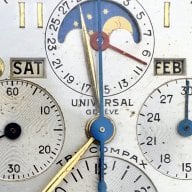
Regarding the extra prima Zenith I posted about earlier, I was pointed out to the fact that it has very likely incorrect sub seconds moon hand. The supposedly correct hand is shown below (I checked against ~5 other extra prima watches that I could find online and all 'agree' on below hand):


vs. my small seconds hand:

 
Posts
4,274
Likes
12,483
It is perfectly concievable that yours is the correct second hand but had the tail broken off at some point.
 
Posts
199
Likes
1,570
It's the other way around. My watch has the ball / moon. And every other similar watch that I find doesn't have it.

Not that I mind it there. And now that you mentioned it, I guess I could always chop the end off 😅 - I won't of course.
 
Posts
4,274
Likes
12,483
It's the other way around. My watch has the ball / moon. And every other similar watch that I find doesn't have it.

Not that I mind it there. And now that you mentioned it, I guess I could always chop the end off 😅 - I won't of course.
Ahh, I misunderstood. No, yours is just that much better than the other moonless ones.
 
Posts
8,786
Likes
62,297
Grade 161A Bunn Special Type III-B

White Gold Filled Factory Case #206
5th Pattern “Interrupted Ray” variant.
1931
Hamilton bought Illinois WC in 1928, this dial became available in 1930, and Hamilton used Elinvar in their hairsprings starting in 1931.
Handsome design throughout.😎

Edited:
 
Posts
852
Likes
3,670
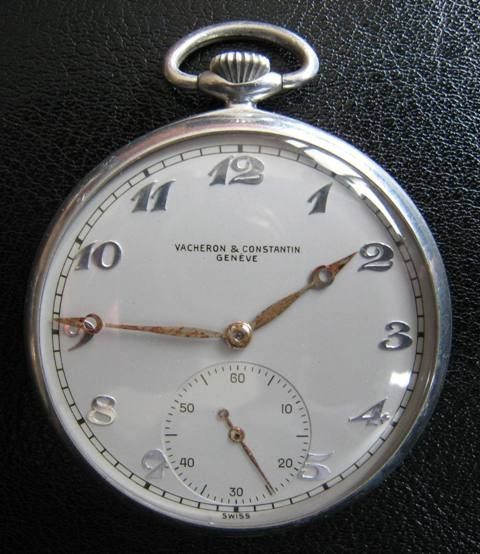
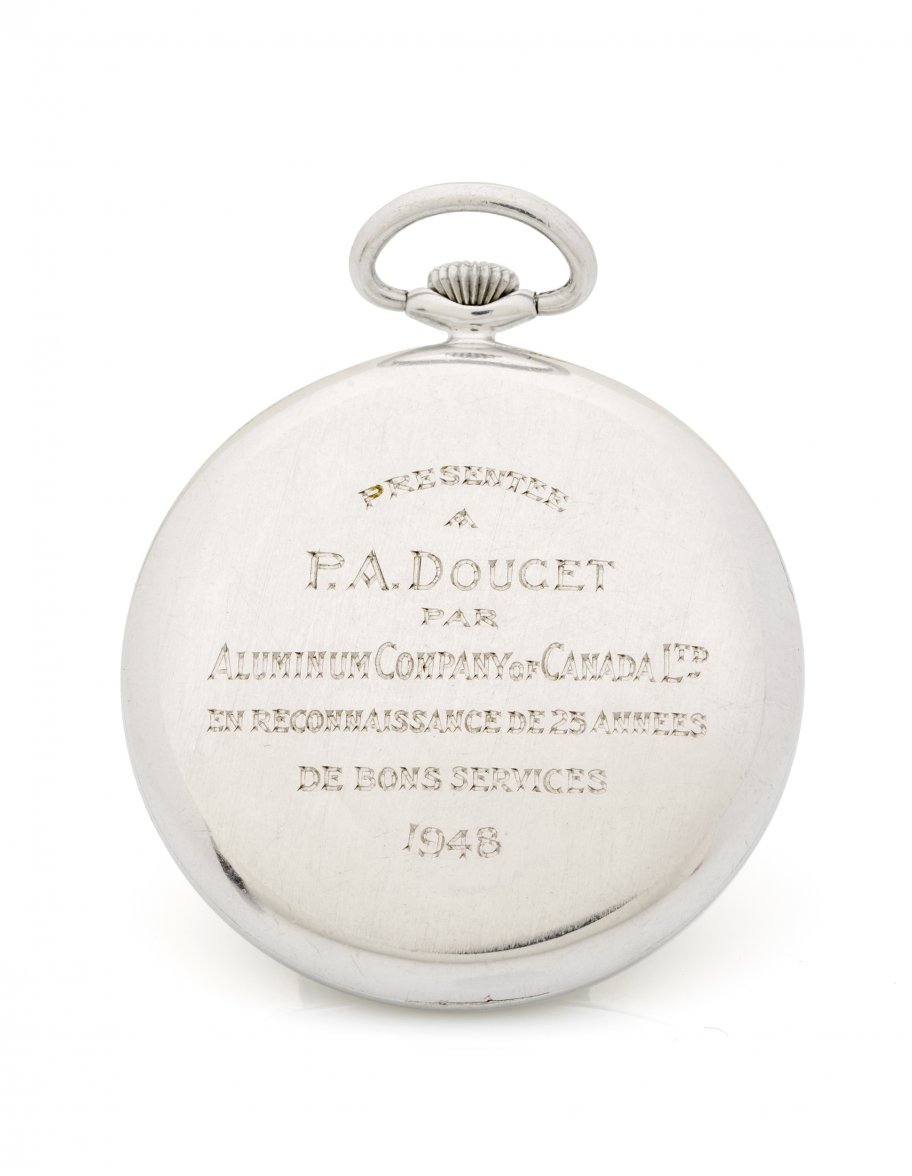
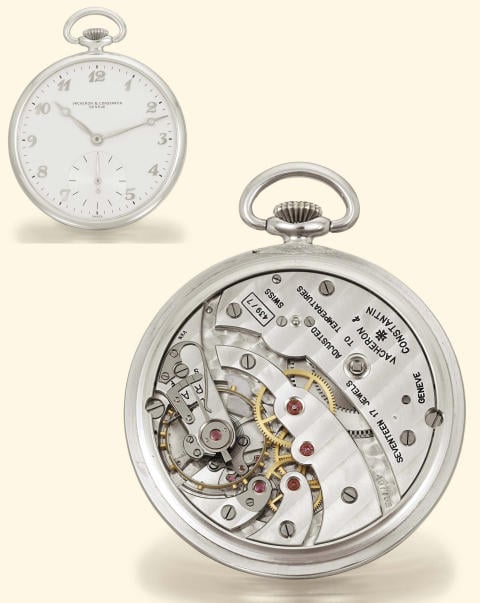
Another oddity in the world of watches. Have you ever heard of an “aluminum watch?” There is such a thing!

In the heyday of pocket watches, the Aluminum Company of America approached no less a watchmaking firm than Vacheron & Constantine to produce a series of pocket watches on which the watch case was made of aluminum.

Wait a minute, you say! Aluminum? Napoleon III, President of France served his honoured guests lavish dinners on aluminum plates. His rank and file guests were stuck with dishes made of gold and silver. Today, we think of aluminum as recycled pop cans. But at one time in its history, aluminum was revered as much as the noble metals.

Even in the era of the Vacheron & Constantine aluminum watch, aluminum held a much more prestigious role in society, than it does today. The cheapest of cheap watches today, often have cases made of aluminum. The watch:

Just seeing this - and just acquired one that I’ve posted in a new thread. They’re insane!!

 
Posts
15,867
Likes
47,592
I initially became aware of these watches many years ago, as a result of a report in the NAWCC Bulletin publication.
 
Posts
199
Likes
1,570
On the subject of pocket watch re-casing, I bought a Zenith 19''' movement/dial/hands from a gold melting pirate who now earned few extra € on top of what ever he made out of gold. Other than finding a period correct Zenith case that also fits the movement, what other pocket watch options there are for re-casing? For clarity, I am not interested of turning it into a wristwatch, desk watch etc.

On a quick glance, it looks like there are some (really) expensive looking completely custom options available. But what I would be looking for is budget friendly, but at the same time I'd like to better understand what can be done here.
Edited:
 
Posts
162
Likes
177
I found these little stands on AliExpress which perfectly hold a pocket watch for around $6 for 10. I only have two pocket watches at the moment so I have a justification for buying more now!


And after the photo the Omega doesn’t need a stand for the moment so I guess I can buy nine more! Pretty sure that maths makes sense.


Although I am strongly leaning towards starting collecting movements. Both because it is a lot more affordable, as my budget is limited, and for a lot of watches I think the movement is the most interesting part anyway. Plus I feel like I am saving them! I have some ideas on how to display the movements, but I need to learn CAD Fusion and then buy a 3D printer so that is some time off.
Edited:
 
Posts
18,668
Likes
38,718
I have some ideas on how to display the movements,
The current stands you have would be OK for display, but you'd need to keep them in a cabinet or cover to stop dust etc.
And even if you have a movement with a broken "unobtanium part or parts", they are still beautiful artefacts to look at and marvel at the workmanship.
 
Posts
162
Likes
177
The current stands you have would be OK for display, but you'd need to keep them in a cabinet or cover to stop dust etc.
And even if you have a movement with a broken "unobtanium part or parts", they are still beautiful artefacts to look at and marvel at the workmanship.
That is exactly my thoughts. And assuming gold remains high I think unfortunately there will be a steady supply of interesting movements.
 
Posts
91
Likes
239
I just got my latest Illinois back from my watchmaker and I am just thrilled at the beauty. I bought this watch in early May largely due to the beautiful 18 Size Gold Filled Hunter case. The 15Jewel Illinois movement was not working but I was optimistic as the balance staffs seemed to be OK. Internally my watchmaker had a lot of trouble as the roller jewel was missing, the mainspring was broken just to name a few of the internals that needed attention but its all done now and cleaned. From the PWDB its a Grade 60 Model 2 Class 3 18S 15J lever set Full Plate with Gold Settings made in 1891. The case and dial are flawless. It may become my new dress watch....Of more concern to me right now is that the other Illinois Pocket Watch I took in which is as yet unresolved. Its the Miller Grade Adj made in 1875 18S 15J KWKS in a Fays No 1 Silverore Double Case with a Thick Bulls Eye Crystal....I am hopeful but I might need to go to plan B using another Illinois KWKS movement if repair is unsuccessful.....I don't want to lose the use of that interesting double case for my collection...stay tuned.