Cal 552 accuracy - wow!

Posts
12,912
Likes
22,334
On the 55x auto movement, is it a good idea to give the watch a full wind manually if it is fully unwound? Or do folks just give it a few partial winds and then let the rotor top it off over the course of the day?

I’m not sure what best practise is but I give mine ten or so winds (not full turns) and strap them on. Even unserviced examples I’ve never had a single occurrence of one losing power while on the wrist.

Obviously if I give it ten quick winds, then just wear it while sat on my backside for half an hour and put it on the nightstand, there’s a good chance it won’t be running in the morning
 
Posts
29,188
Likes
75,422
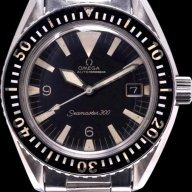
Someone uploaded this video to YouTube this week which shows the service of an Omega cal 552 in circa 1966 or 1967 Seamaster 300.

These really are beautifully engineered movements...


Just a warning that if anyone wants to use this as a guide on how to perform a watch service, I wouldn't recommend it. Lots of poor practices shown in this video. Some examples:

Prying up bridges with screwdrivers...


Here he's trying to slide the barrel bridge under the third wheel - if he had just assembled the barrel bridge area before the train wheels as it's supposed to be done, he wouldn't be risking bending the third wheel wedging the bridge in...


Screwdriver is way too small for this screw - this will chew up the slot in the screw...


Enough grease applied here for several watches...


What can I say - this is a very unorthodox method of oiling the pallet fork jewels, and will lead to oil getting in places it shouldn't when you try to install the fork...


Incorrect lift angle...


Using Rodico to spin the rotor - he had used this Rodico to wipe up excess grease in an earlier part of the video, so this is just spreading that contamination around...


Not the first time I've come across one of his videos. He serviced a 30T2 a while back...same unorthodox pallet stone oiling...


VERY sloppy oiling - too much oil and spreading it on the tops of the jewels...


Again wrong lift angle...


I don;t know this guy but I would find it hard to believe that this person has had any formal training.

So a reminder that pretty much anyone can buy some tools and call themselves a watchmaker.
 
Posts
2,686
Likes
4,271
Most of those videos are clickbait. Still they are entertaining. And can be somewhat inspiring in a warped sort of way.

I have probably been guilty of most of those practices. Apart from the oil. I was taught if one could see it oil was probably too much. Lifting bridges with screwdrivers is probably more common than not. There are those little slots there after all. The little plastic spludgers were not so common in the older days. I have taken to using pegwood which can be sharpened to fit into these little spaces. I do not know if this is frowned upon or not.

The order of bridge placement is an interesting one. Most instruction has the train installed before the escapement. I think the idea is to make sure the train is not binding. I found this can sometime cause problems when the balance slips putting sliding under the center wheel kinking the hairspring. What happened with my Val-72. In the cheaper watches balance wheels seem to be built with the train going in last. Most likely these were assembled with jigs and automation. This is probably another case where one really needs to have in person instruction.

I have taken to working on the watch in sections. With many repeated assembly steps. I have no deadline so I may assemble something like the escapement first where I can see it clearly. If this does not work, then the watch will not. A lot of instructional vids show the balance being cleaned mounted onto the plate with it's bridge.

I like to check the train as standalone. Such requires many steps of assembly and disassembly. Even more than one cleaning/oiling cycle. I have taken to assembling the barrel first, then the escapement, then the train.

For chronographs, I have taken to setting up the chronograph without the timeworks. Just the minimal wheels. This way I can see what may be binding. I like watch puzzles, so the parts may not be all from the same watch. Or I got a replacement part online, which may be cast off from something else. A problem when such are restricted.

Rodico was seen as a panacea. I always thought Rodico was my friend. Now I see how re using it can collect contaminates.

I suspect many of these practices date from when every shop had a watchmaker and many had service departments. The idea being to get through as many as one could in a day.

I have also noticed that watchmakers are highly competitive. Somewhat secretive and quick to dis the competition. And fiercely territorial. Even when the competition is not local. Such probably made sense in small communities as a survival skill.

Now we have the net, which can show us the good as well as the bad. I think it great @Archer is willing to take the time and point out these foibles.

30 years ago I was told I was too old for WOSTEP. I did get to visit and even attend some sample lectures. Even buy some textbooks. I was working in high tech at the time. I suspect had I done the that program I would have eventually found my way into training others. I did however take to getting things like USB microscopes, and CAD programs for creating virtual models of parts. Henry wanted me to make a Cad Model of a Tourbilon. He died and then there was no need to do so. I did however make models of things like the Antikeythera mechanism, Babbage's computer, and the Jaquet-Droz pipe organ playing doll that inspired all this. I also used the CAD program to model pipe organs.

It is easy to drift about using such things. A repeater watch missing parts and I got lost in the world of computer vision, 3D modeling and photogrameritry. (Some of what I used on the doll.)

I think I am really addicted to information overload. So am glad there are quazi instructional videos out there for inspiration.

Now if Clickspring would just post more progress on the Antikeythera ...
 
Posts
29,188
Likes
75,422
Lifting bridges with screwdrivers is probably more common than not.

I know, I see the damage from it all the time...

The order of bridge placement is an interesting one. Most instruction has the train installed before the escapement.

Yes, of course. Here the issue is with the barrel bridge - it really isn't designed to be put in place after the wheel train bridge is installed, and doing so can bend the third wheel.

A lot of instructional vids show the balance being cleaned mounted onto the plate with it's bridge.

Yes - this is done to protect the balance during cleaning, but it is removed before the assembly of the movement begins. It would make no sense to start installing other parts with the balance still in place as you cannot complete the assembly like this.

Rodico was seen as a panacea. I always thought Rodico was my friend. Now I see how re using it can collect contaminates.

Most brands will not allow it's use at all. I do keep it on hand, mostly for cleaning things like the groove in the case back, or for wiping off excess dirt off parts before they are cleaned (helps save the cleaning solutions). It never touches cleaned movement parts.

I suspect many of these practices date from when every shop had a watchmaker and many had service departments. The idea being to get through as many as one could in a day.

In many cases, yes. This is why seeking out an "old school" watchmaker as you often see people talk about on forums, can have it's downsides. Many of these bad habits from times past are difficult to break once they are ingrained.

I have also noticed that watchmakers are highly competitive. Somewhat secretive and quick to dis the competition. And fiercely territorial. Even when the competition is not local. Such probably made sense in small communities as a survival skill.

My experience is the exact opposite. Most watchmakers I know will bend over backwards to help a fellow watchmaker out either solving a technical problem, sourcing a part, or sourcing someone to do some highly technical thing that they do not have the ability to perform. I belong to a couple of groups of watchmakers where such requests for hep happen almost daily, and many are quick to jump in with solutions to whatever issue needs solving. I have been on both ends of this scenario many times, so your characterization is very different from reality in my view.

What many watchmakers will do is call out bad work, as I am doing here. It's part of educating customers/collectors on what a proper service actually entails, because most simply have no clue.
 
Posts
2,686
Likes
4,271
...
Most brands will not allow it's use at all. I do keep it on hand, mostly for cleaning things like the groove in the case back, or for wiping off excess dirt off parts before they are cleaned (helps save the cleaning solutions). It never touches cleaned movement parts.
...
In many cases, yes. This is why seeking out an "old school" watchmaker as you often see people talk about on forums, can have it's downsides. Many of these bad habits from times past are difficult to break once they are ingrained.

+1 on these replies. I learned this here and it can not be said often enough.

We are so fortunate to have a forum like this where such things can be discussed out in the open and not part of an insular group.

Some of the ideas i got about the territorial nature of watchmakers (and manufactures.) comes from reading the 'letters column' in the old trade magazines. These were probably culled to be the most entertaining. The you tube videos seem to take this and amplify it. One just has to look and see how many followers they have. Or how many are wanting to send in their watch for a cheap service.

We live in a society where criticism is frowned upon. A cerebral world of doing nothing but being entertained. Sadly this has lead to mistakes like the guy who built the sub out of the wrong materials and it imploded. Teachers are not allowed to discipline misbehaving students. Craft work has been regulated to the idea anyone can be an artist (Tell that to Leonardo or Vermeer. or the guys and gals what built frescoes and statues.) The philosophical jobs like law and banking what involve no physicality are rewarded. Curiously doctors throughout most history were philosophers who never touched the body. Even now doctors deal more with the non physical (insurance paperwork.) and statistical expert systems. Surgeons on the other hand ...

The old system of apprenticeship was not perfect. Dickens liked to exemplify the worst of it. The idle master, the lazy apprentice. Where the apprentice was simply cheap drudge labor. Who would then marry the daughter and repeat the abuse. If the apprentice did surpass the master the work was destroyed as being 'bad work.' So the calling out of bad practice has become seen more as a form of bullying to keep people in their place. Perhaps this is done in good faith. The ignorant for the most part are not aware of their ignorance.

Most of my frustration is the inability to get quality parts and consumables at reasonable cost. To many abused this to cut corners, or to botch something for quick profit, yet it also promotes the use of parts which may not be the best and can lead to issues down the line. Good watches are scrapped as parts movements. Sellers online get greedy and split assortments into single units or simply sell garbage. I guess these are market corrections. None of this is new. Watchmaking has always been a territorial cutthroat business. Restricting parts to the 'elite.' does not endear one to the trade. Nor do the obsolete tariffs between countries. Or the idea that one person is better than another. This of course does not apply to those who do share their expertise. So I do hope anyone reading this does not see such as any sort of a personal attack. It is just the way the industry evolved to be self sufficient.

On the other hand I probably have more watches than I can work on in a lifetime. Yet i am constantly on the lookout for the next one. So I am not making judgements on others. More that I would like to see others feel confident about the nature of watches. I want there to be a way to encourage others to this passion.

My personal experience has been most are willing to help me as much as they can. Often though they are busy.

I would not be here if it were otherwise.
 
Posts
29,188
Likes
75,422
So the calling out of bad practice has become seen more as a form of bullying to keep people in their place. Perhaps this is done in good faith. The ignorant for the most part are not aware of their ignorance.

I’m not even sure what you are referring to, to be honest. Are you referring to something that has happened to you directly? If you are referring to these old articles, keep in mind that back then, there were tons of watchmakers around all fighting for business, and cut throat prices and shady techniques were used to be competitive.

The market now is VERY different. There’s more work out there than all the watchmakers put together X3 could do, so no one is competing for jobs. If anything they are trying to find others who are willing to take their overflow. Your views of how this market works seem stuck in decades past.

Speaking from my own experience, the professional watchmakers that I have interacted with and given advice to have virtually without exception been grateful for my input. I don’t recall any being upset at something I’ve suggested to them even if it wasn’t a question, and I offered it up unprompted.

For the most part the amateur watchmakers have also been very receptive, but I have received far more push back from them than from pros. These are the folks who believe they are doing professional level work, and when you point out things they are doing that could be done better, they get upset. There are certainly some who very much appreciate the feedback, but the odd one get their back up.
 
Posts
2,686
Likes
4,271
I am referring to the old articles. Nothing to do with you or my direct experience. I look forward to your wonderful incites.

I was taught by mentors nearly 30 years ago. They passed on 20 or so years back. So yeah I am stuck in the past. On the other hand I have learned a lot in the last year.

Most everyone has been helpful. And I got to meet some of the best watchmakers there were 25 or so year ago. Have dinner with them, visit their workshops etc. There were a few older collectors what gave me push back. They are mostly all dead now.

I guess my complaint is the lack of easy access to affordable replacement parts. Some of the parts I got online recently are pure garbage.

The last paragraph in your reply sums up what I think I was trying to get at.

As I said I have more personal watch projects than I can do in a lifetime.
 
Posts
209
Likes
80
I'm the OP, and have a few more questions for the experts on the Omega cal 55x:

If you don't wear an automatic 552 for a few days and it stops, should you give it a full manual wind (vs a partial wind) when you first start wearing it again?

After the full service, with new mainspring, I gave my 552 what I presume is a full manual wind, but I don't hear the distinctive loud "click" noise to alert me when it's fully wound.

Before the service, with the old mainspring in place that came with the watch when I bought it, I would hear a sound single click noise with every crown revolution after about twenty winds, which I presume was an audible alert to indicate it was fully wound.

With the new mainspring (which my watchmaker said was a genuine, correct Omega OEM replacement mainspring), I don't hear that distinctive noise after twenty or more winds to alert me that the mainspring is fully hand wound.

So in summary:

a) Any ideas on why I'm not hearing that "full wind" click alert noise when manual winding with the new main spring? b) And is it a best practice or not to give a 552 a full wind if it is at a dead stop from letting it run down?
c) Manual winding after the service, seems stiffer and sounds "grittier." Is that also normal?

Thanks!
Edited:
 
Posts
209
Likes
80
Is the only way to "hack" the seconds on a 55x to let it run down to a low state of wind and then apply slight back pressure on the crown until the second hand can be aligned to a reference time?

Did none of the watches in the entire 55x cal family receive a "proper modern style" hack feature where one can stop the movement by pulling out the crown all the way?
 
Posts
29,188
Likes
75,422
So in summary:

a) Any ideas on why I'm not hearing that "full wind" click alert noise when manual winding with the new main spring? b) And is it a best practice or not to give a 552 a full wind if it is at a dead stop from letting it run down?
c) Manual winding after the service, seems stiffer and sounds "grittier." Is that also normal?

Thanks!

a) because the mainspring barrel doesn't have grooves in it that create the clicking noise like a modern barrel does.
b) yes
c) it shouldn't be

Is the only way to "hack" the seconds on a 55x to let it run down to a low state of wind and then apply slight back pressure on the crown until the second hand can be aligned to a reference time?

Did none of the watches in the entire 55x cal family receive a "proper modern style" hack feature where one can stop the movement by pulling out the crown all the way?

No hacking on any 550 series movements - that didn't come along until the 1000 series.
 
Posts
209
Likes
80
a) because the mainspring barrel doesn't have grooves in it that create the clicking noise like a modern barrel does.

Any idea why I was hearing the "fully wound" clicking noise on the same 552 but with the old, pre-service mainspring?
 
Posts
29,188
Likes
75,422
Any idea why I was hearing the "fully wound" clicking noise on the same 552 but with the old, pre-service mainspring?

I have no idea what you were hearing, but it wasn't from the barrel. I service these all the time and have never heard the kind of clicking from the mainspring barrel that you hear on a modern watch, like a 2892 for example.
 
Posts
209
Likes
80
I have no idea what you were hearing, but it wasn't from the barrel. I service these all the time and have never heard the kind of clicking from the mainspring barrel that you hear on a modern watch, like a 2892 for example.

Hi Archer,

Thanks. Since the 552 doesn't have an audible alert when wound, how many manual winds is needed on a Seamaster 300 to fully wind a 552? This will give me a good idea of how many times I should turn the the crown.

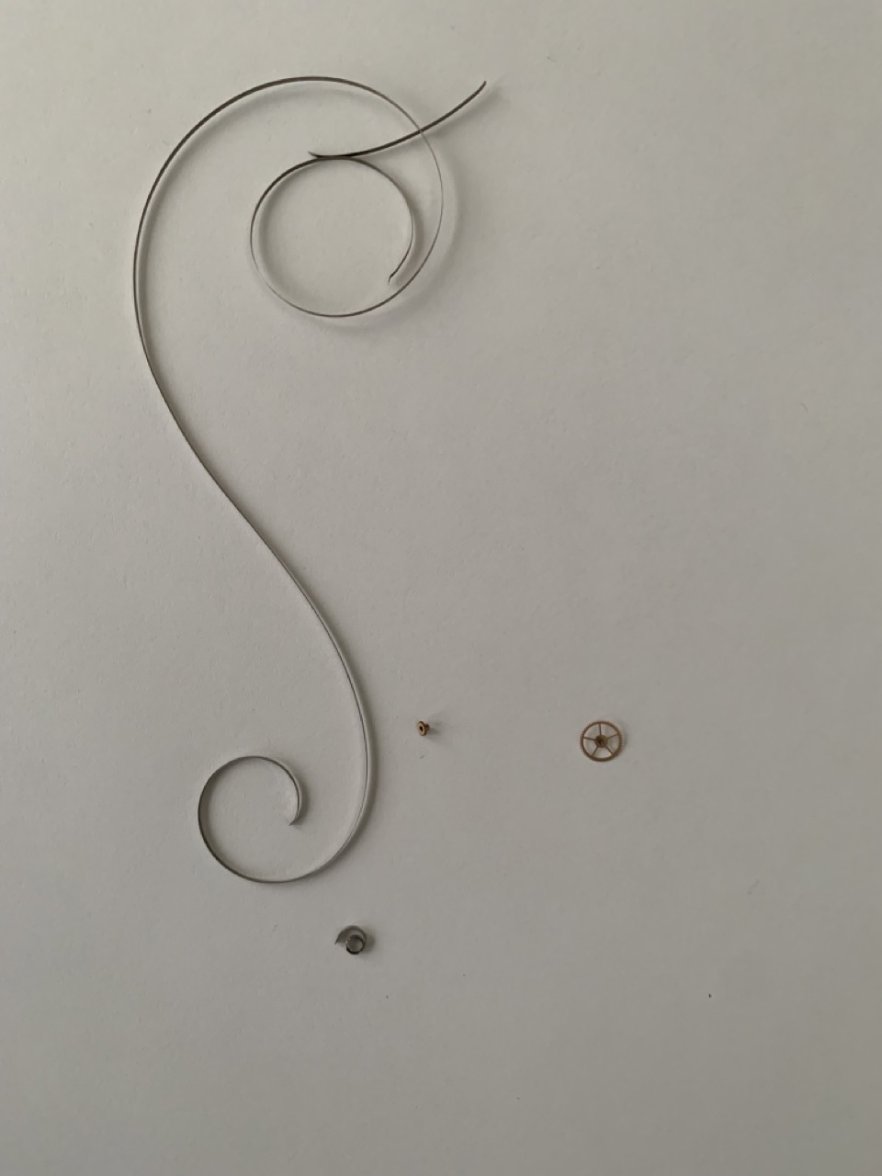
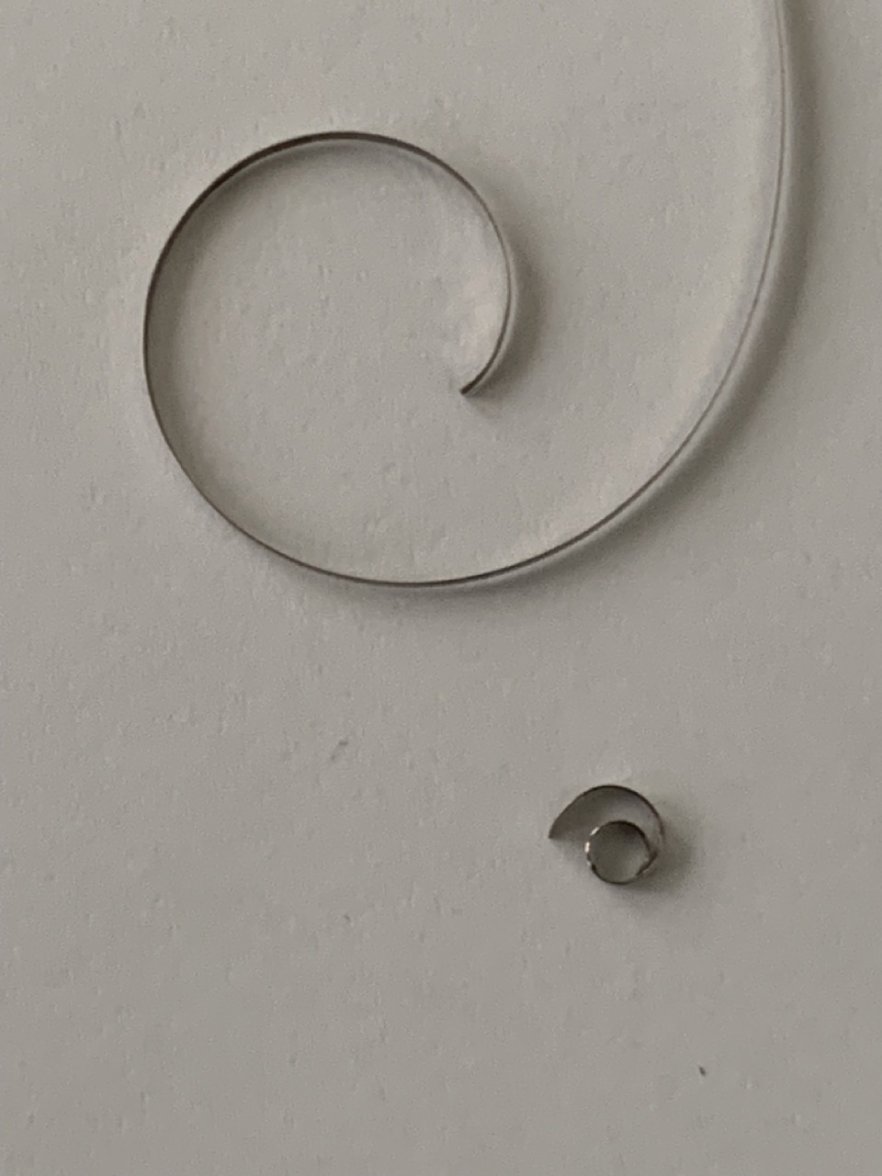
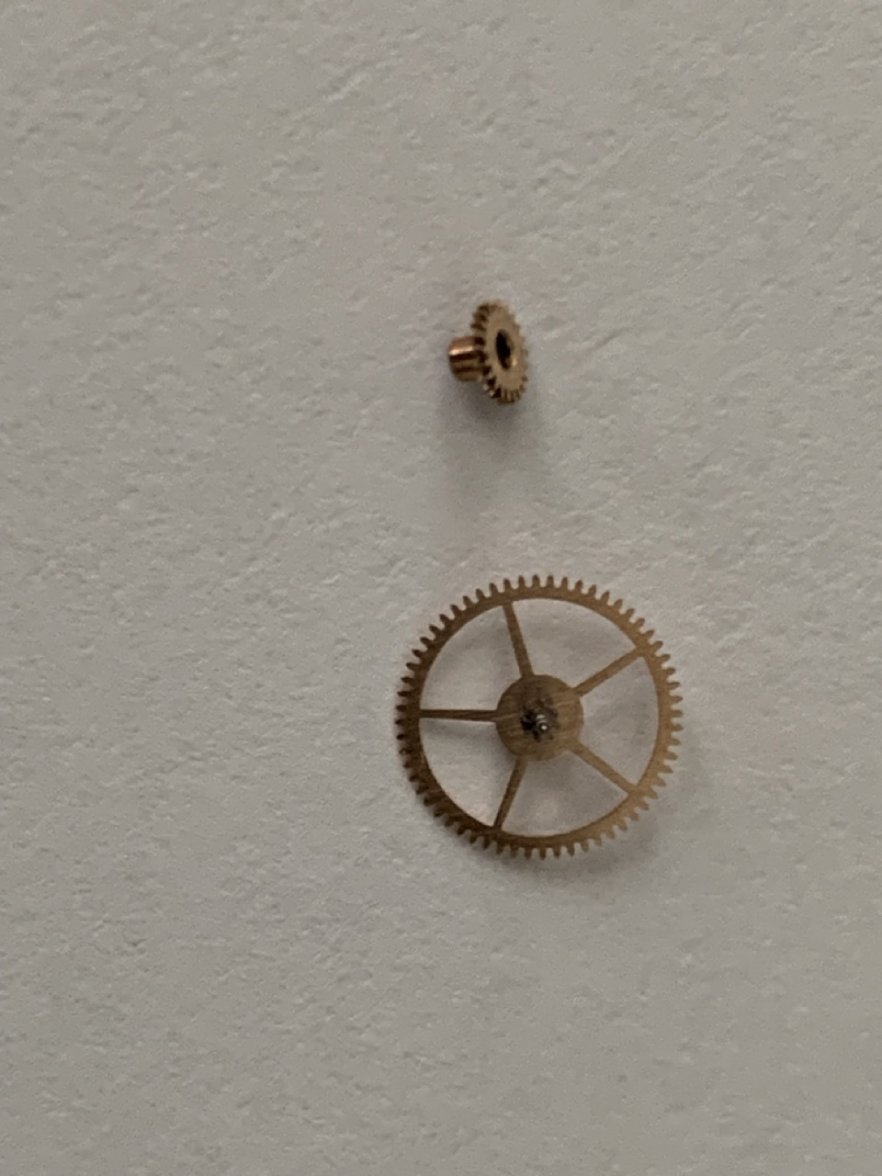
Here are the parts the watchmaker removed. A small piece of the mainspring that is closest to the arbor was broken off. (My 552 quit working after a manual wind). They also said they replaced the worn 3rd wheel and rotor pinion.

Do you think the part of the mainspring near the arbor that eventually broke could have been making the clicking noise?

 
Posts
29,188
Likes
75,422
Do you think the part of the mainspring near the arbor that eventually broke could have been making the clicking noise?

Possibly, but it wouldn't have been at full wind, because you would have no wind at all with a broken mainspring.
 
Posts
209
Likes
80
Possibly, but it wouldn't have been at full wind, because you would have no wind at all with a broken mainspring.

Archer, since you have worked on a bunch of vintage Omega's, are there any particular Omega movements that stand out in your mind as being the best from a standpoint of accuracy and engineering?