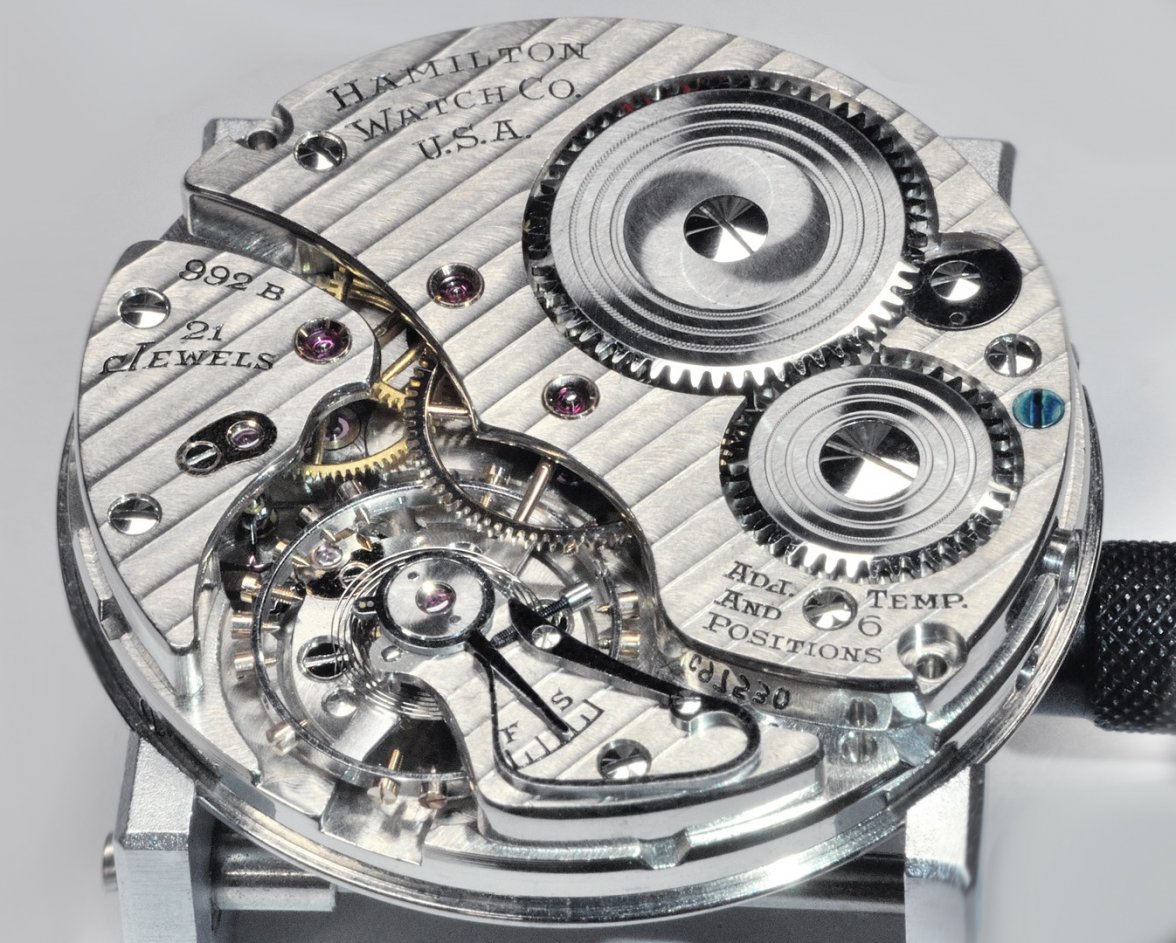
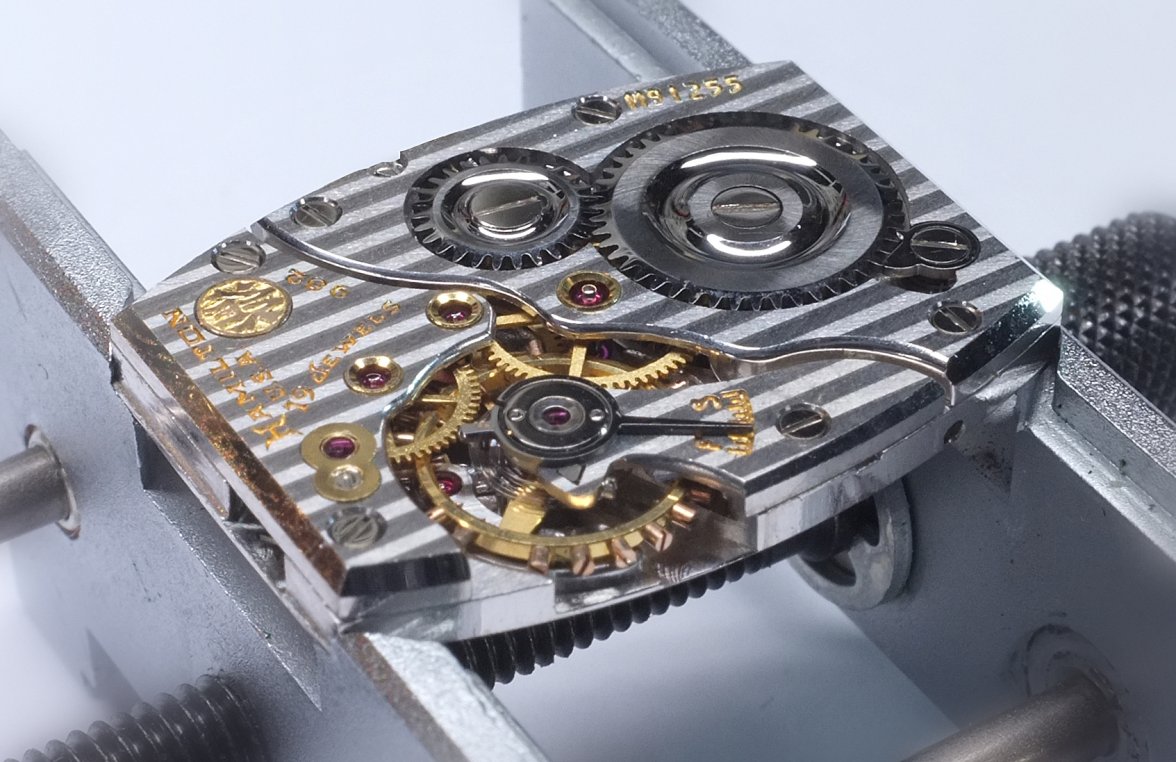
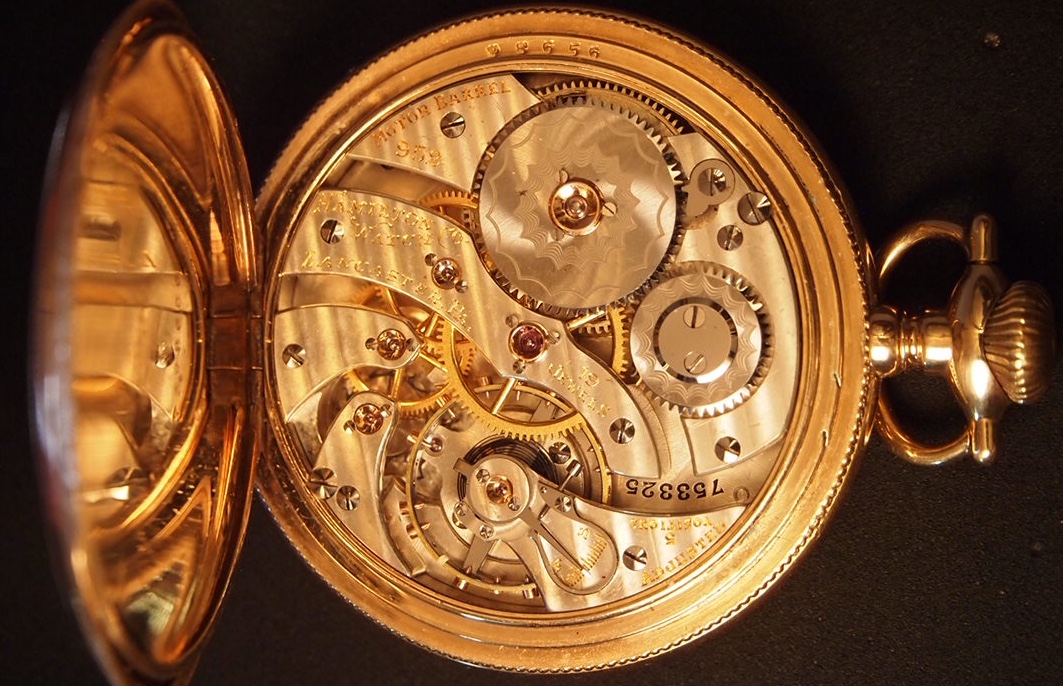
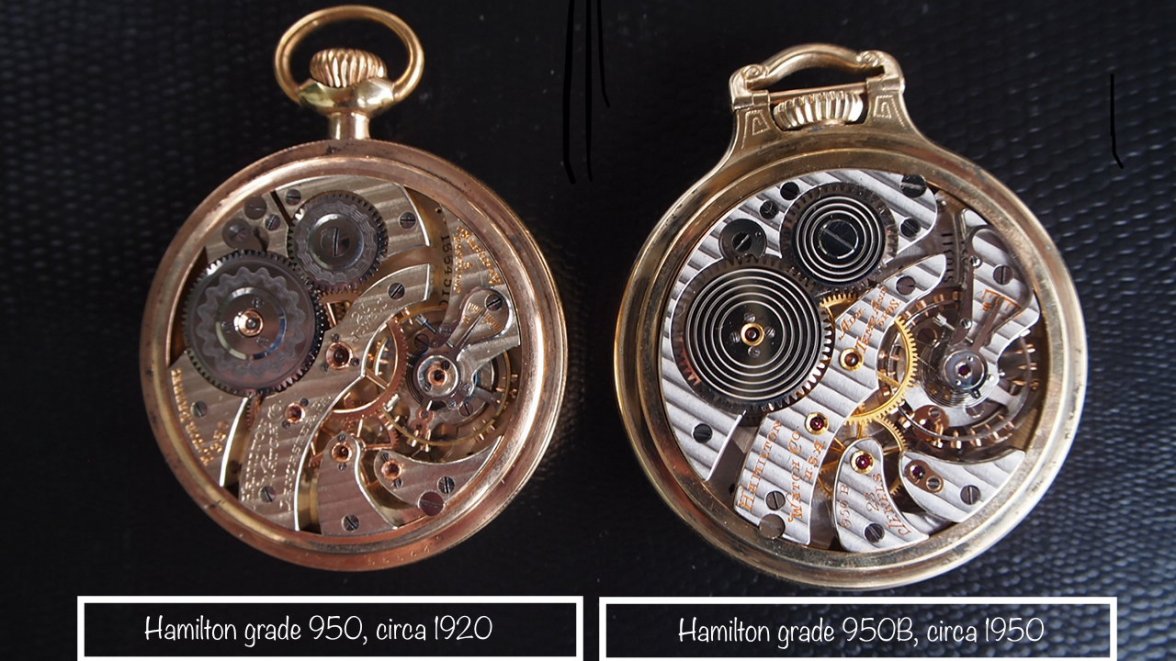
Movement decoration evolved over decades. Here I show a 23-jewel Hamilton grade 950 (left) from circa 1920, and its newest iteration from about 1950, 50 years later, a 23-jewel Hamilton 950B (right). The two are basically the same grade, and I guess the 950B is not one to be sneezed at, but the more highly decorated grade 950 is (to my mind), the prettier movement.
The 950 has the ruby jewels set into gold chatons with each inset into a milled recess in the plates, and each held in place by two or three screws with polished heads. Gold train wheels with oval spokes, gold screws on balance wheel, more decorous flourishes in the engraving. The longer pendant neck of the earlier 950 indicates its earlier vintage.
The newer 950B uses synthetic ruby jewels friction fit into brass chatons which are friction fit into the plates. Brass train wheels, flat spokes, gold balance screws, plainer bib for the upper escape wheel cap jewel, Swiss style system for retaining upper balance wheel cap jewel, all over less decorative. The squat pendant with the bar over crown evokes this one’s later vintage.
These compromises in the “window dressing” of the later grade 950 B in no way compromised the performance of the watch. The changes were made owing to advancements in metallurgy, improved manufacturing procedures, to lower production costs of the movement, and also to made the 950 B easier to work on. All the American watch manufacturers simplified production in later years, resulting in plainer watches.