- Posts
- 996
- Likes
- 4,030
qazwsx1
·Dear Omega Forums members,
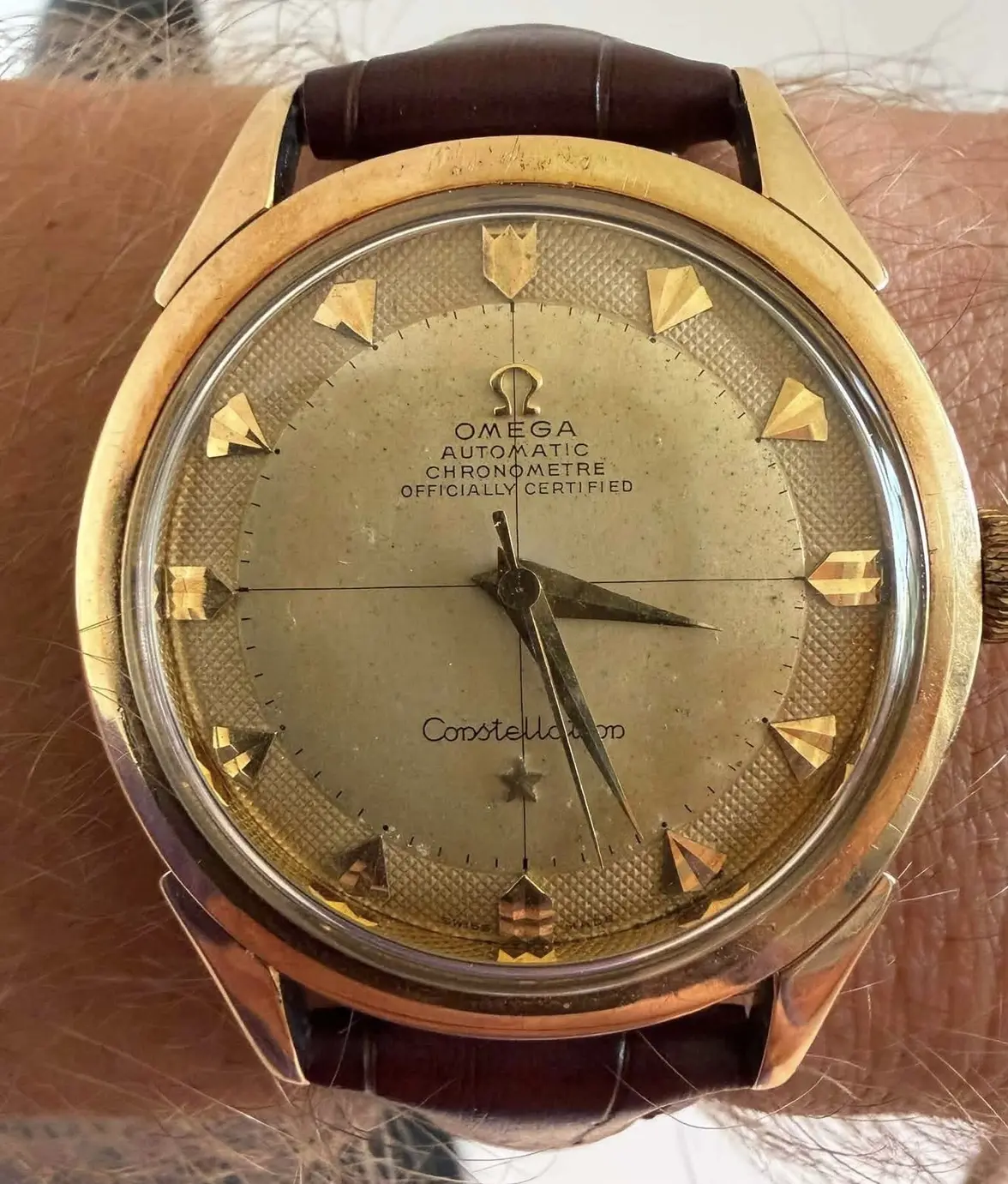
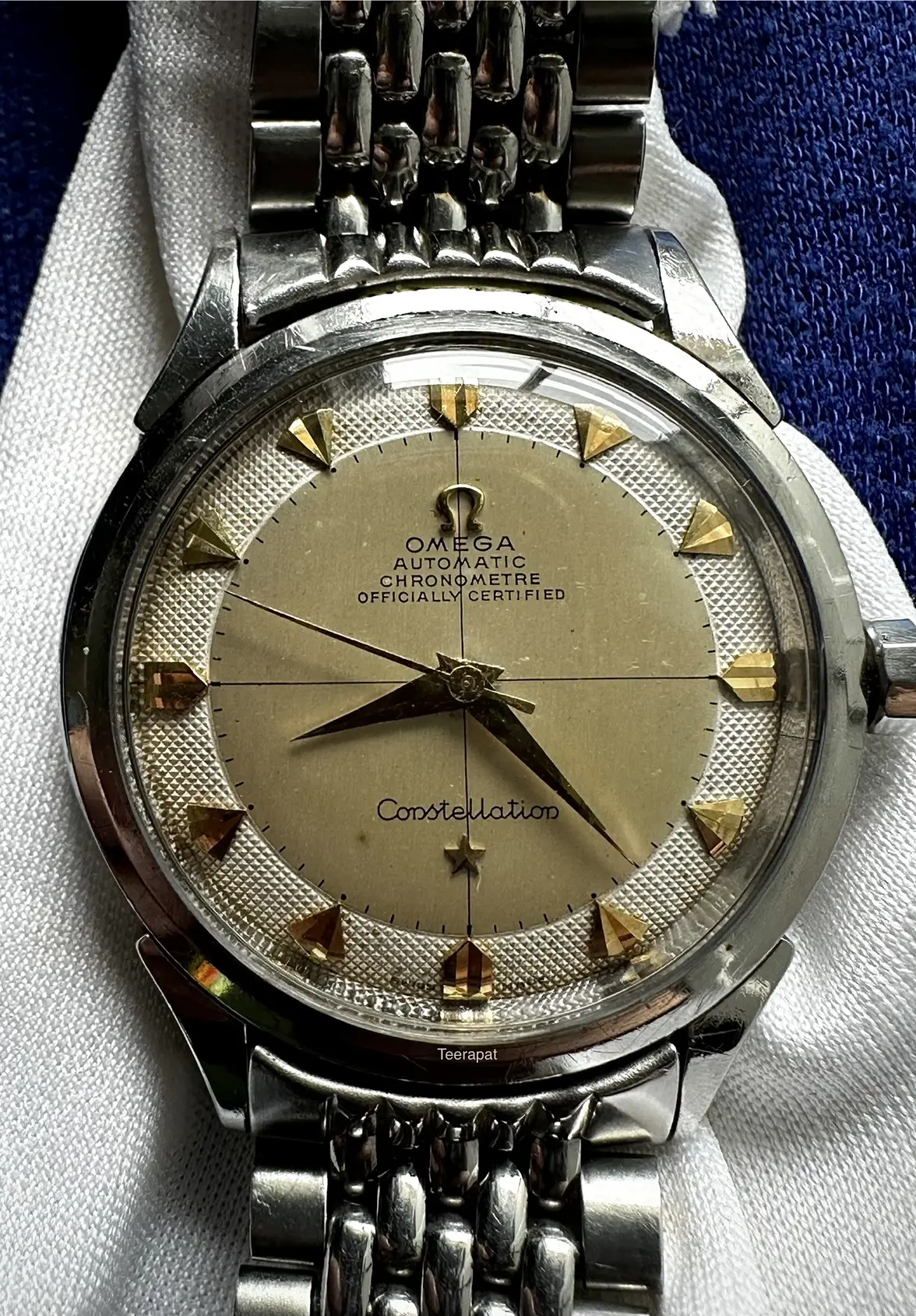
I would like to share another uncommon Constellation dial pattern from my collection: the so-called “partial-waffle” or “half-waffle” dial. As the name suggests, one section of the dial has a waffle texture, while the other remains smooth and slightly domed. In this thread, I will focus specifically on the version with the waffle texture on the outer portion of the dial.
Looking only at 1950s Constellations, and based on the examples I have been able to document, I have not seen this particular pattern on reference 2648. It appears to have first been used on reference 2652 and later on reference 2782, both powered by caliber 354. So far, I have not encountered this dial configuration on references fitted with caliber 505, such as references 2852 and 2887.
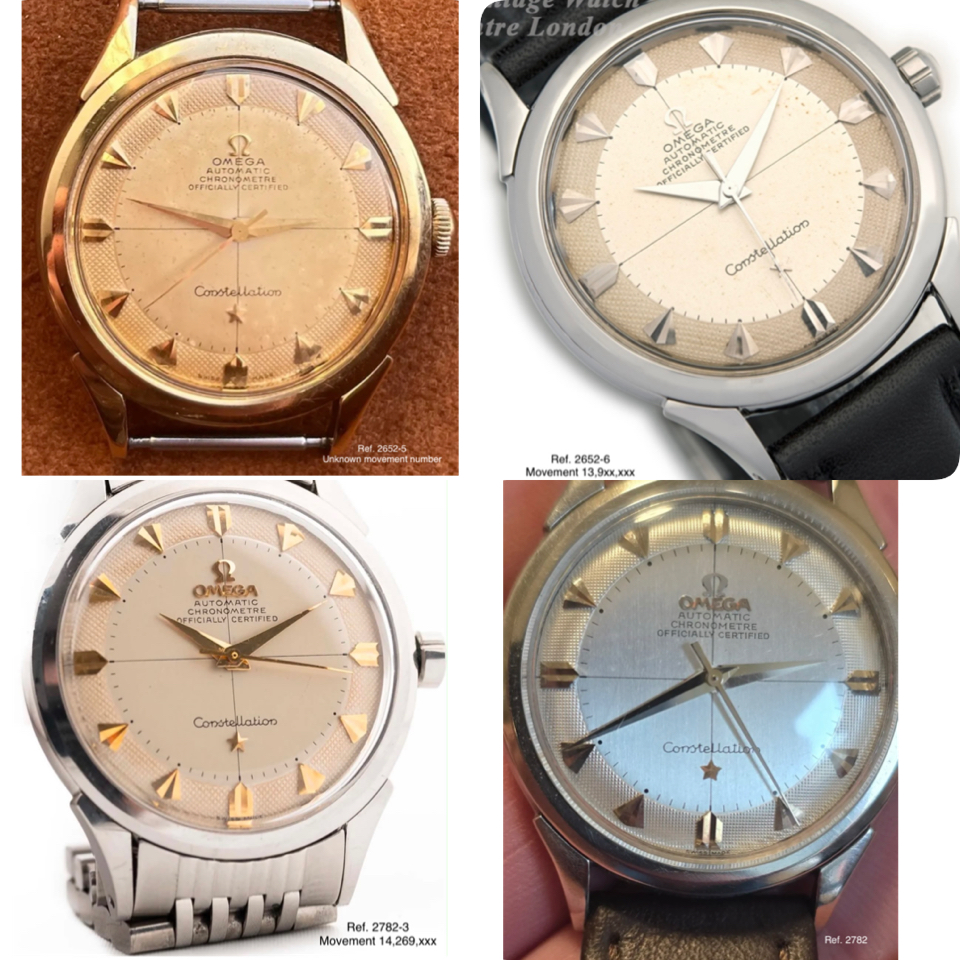
I have found two examples of reference 2652 with this dial pattern. The first was a gold-capped 2652-5 previously sold on this forum, while the second was an all-steel 2652-6. I also found two examples of reference 2782: a very attractive steel 2782-3 and another example, discussed on this forum, that appeared to have been redialed.
Once again, I consider myself very fortunate to have found one.
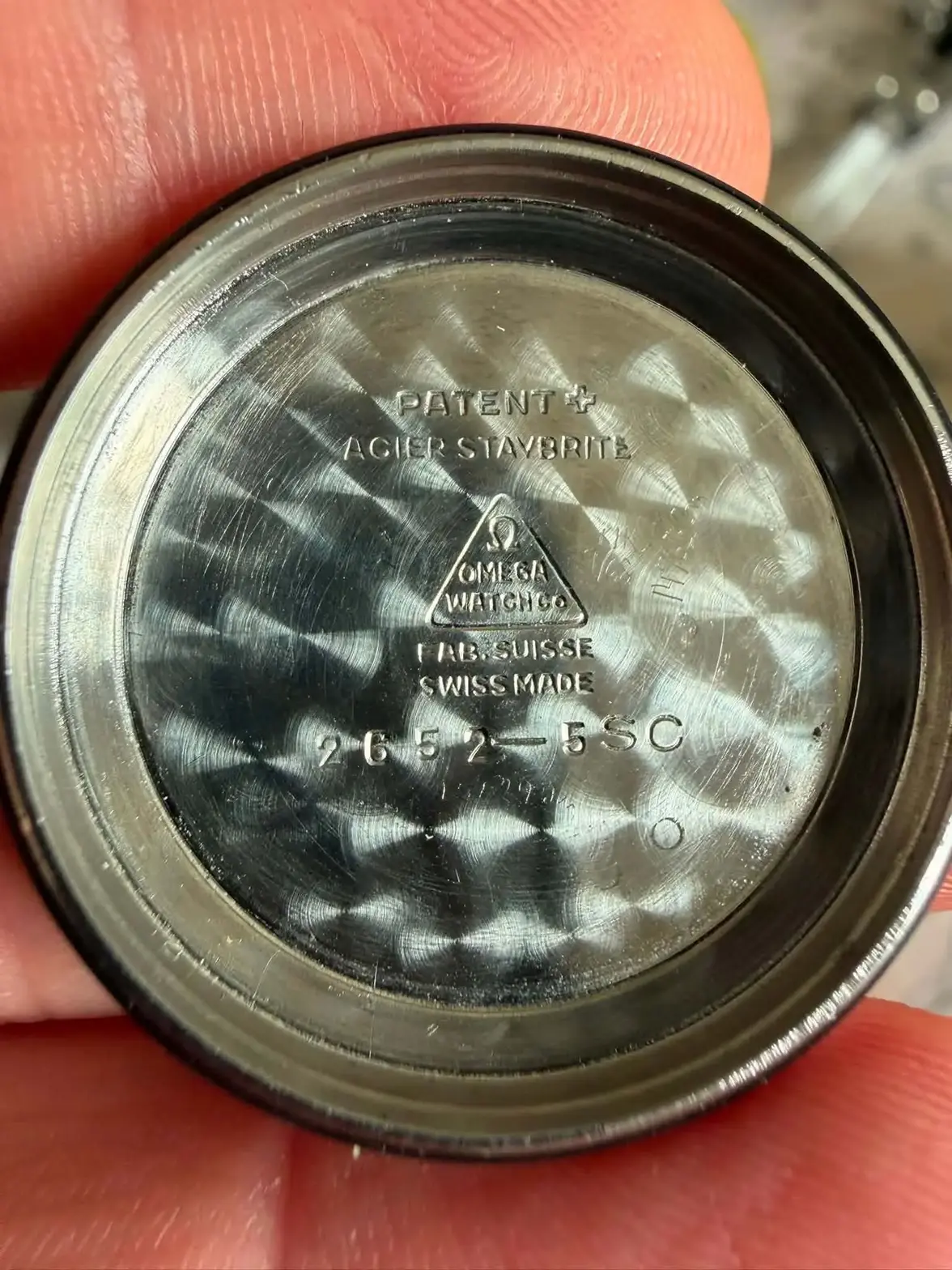
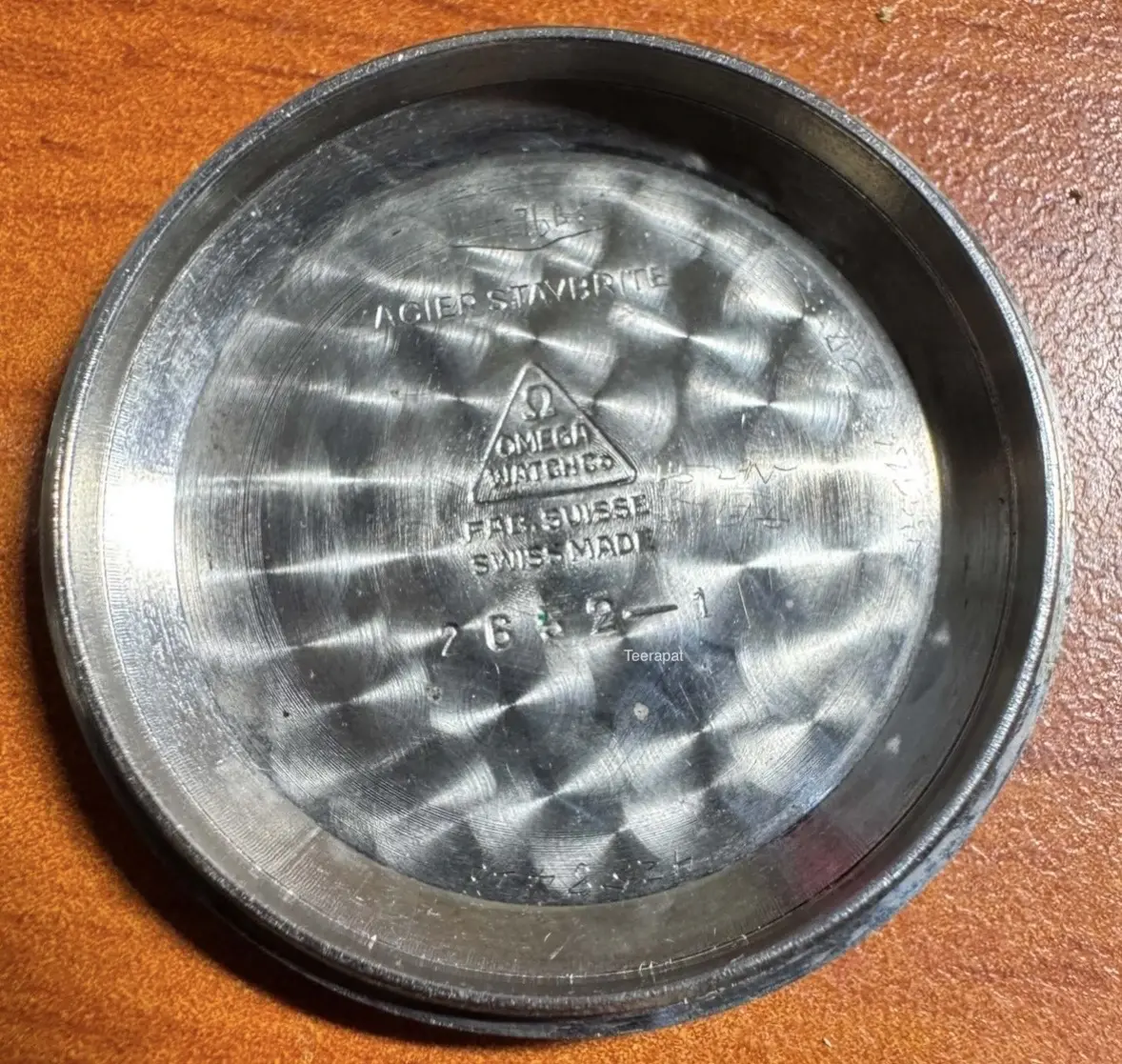
Could my watch be one of the earliest known examples of this dial pattern, based on both its movement number and the case-reference suffix stamped inside the caseback?
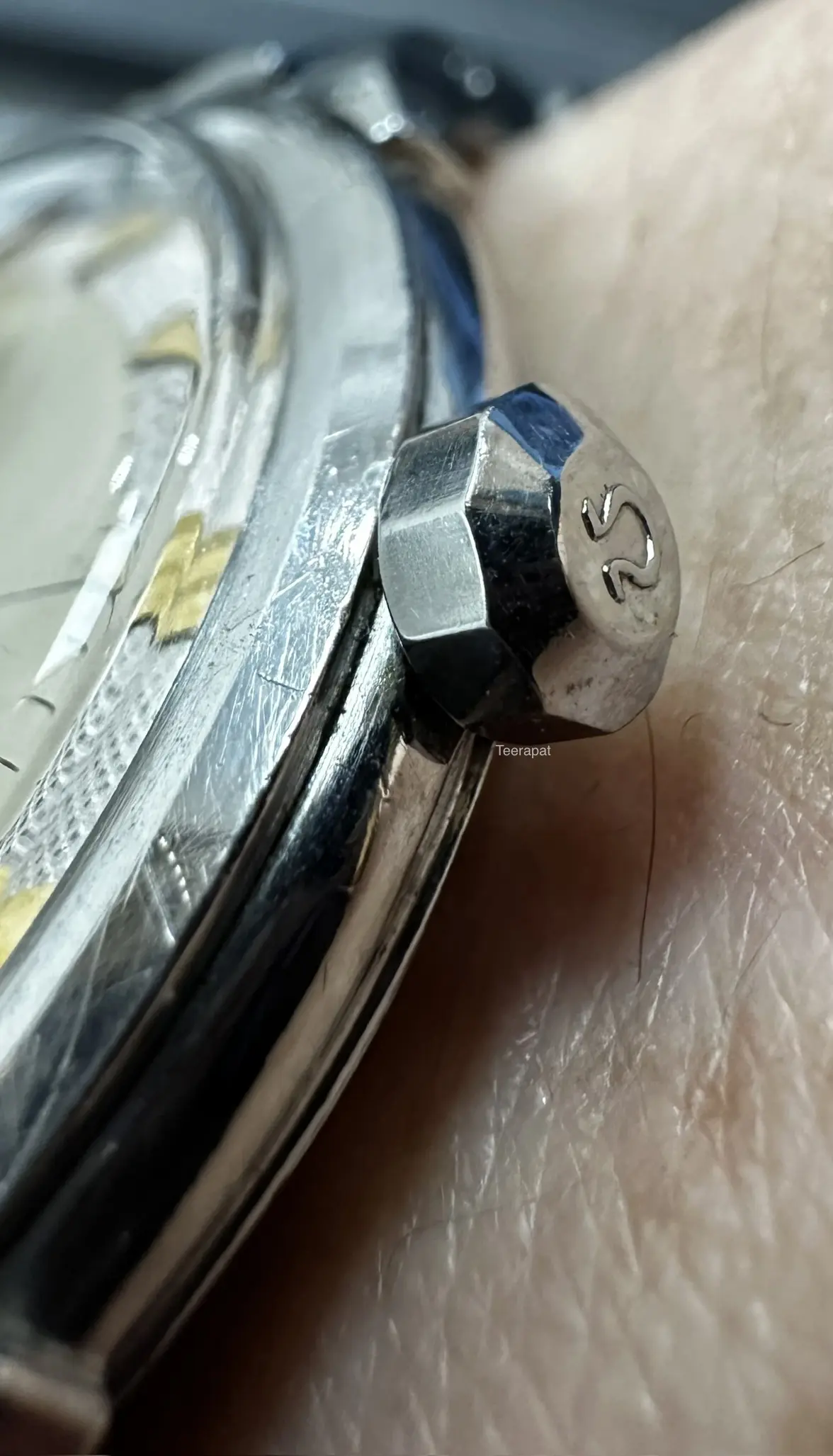
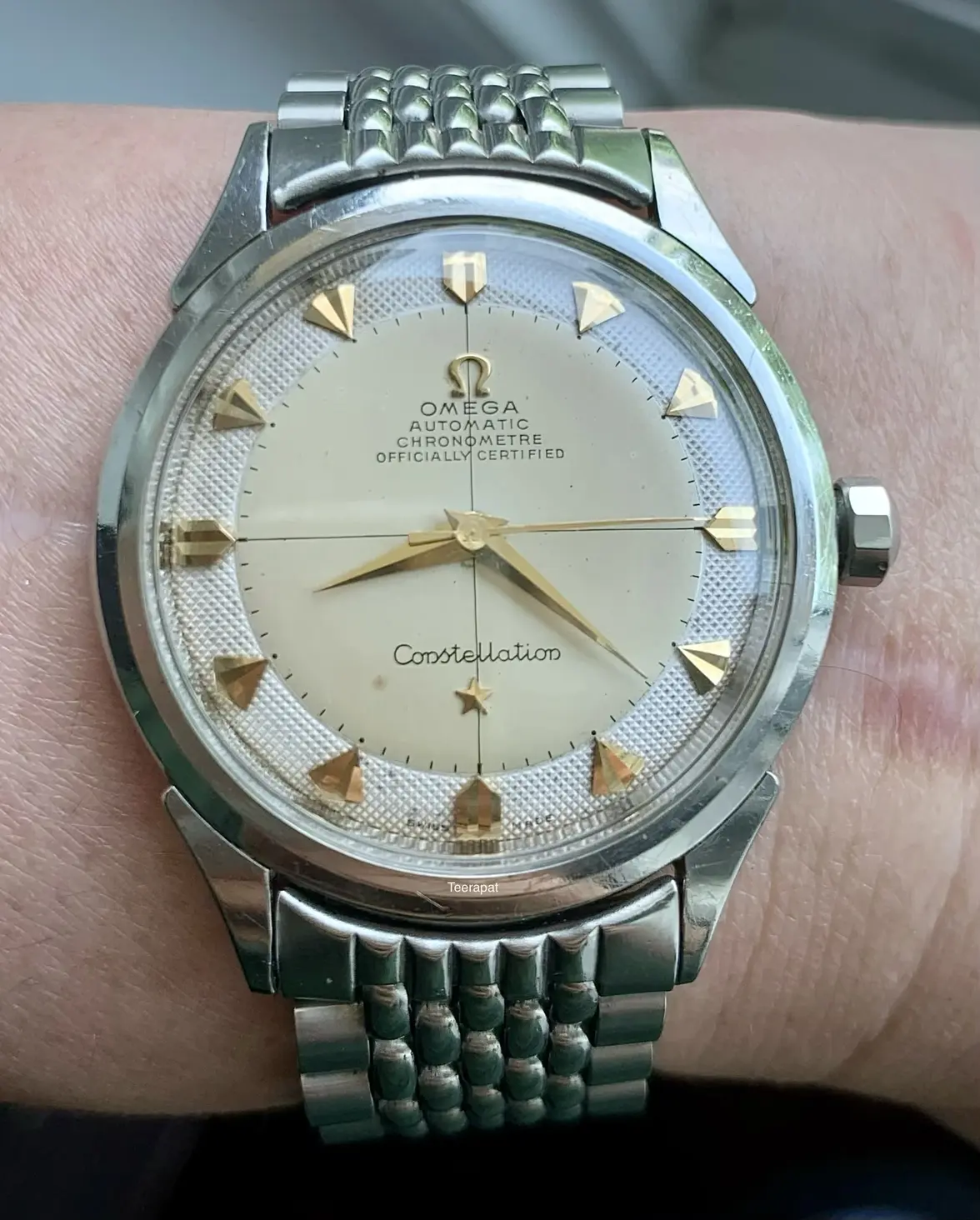
Here is my Omega Constellation reference 2652-1, powered by caliber 354 with movement number 13,160,xxx. The case is stainless steel, complemented by yellow-gold dial furniture. It also retains the thick, ten-sided decagonal crown, which appears to be original.
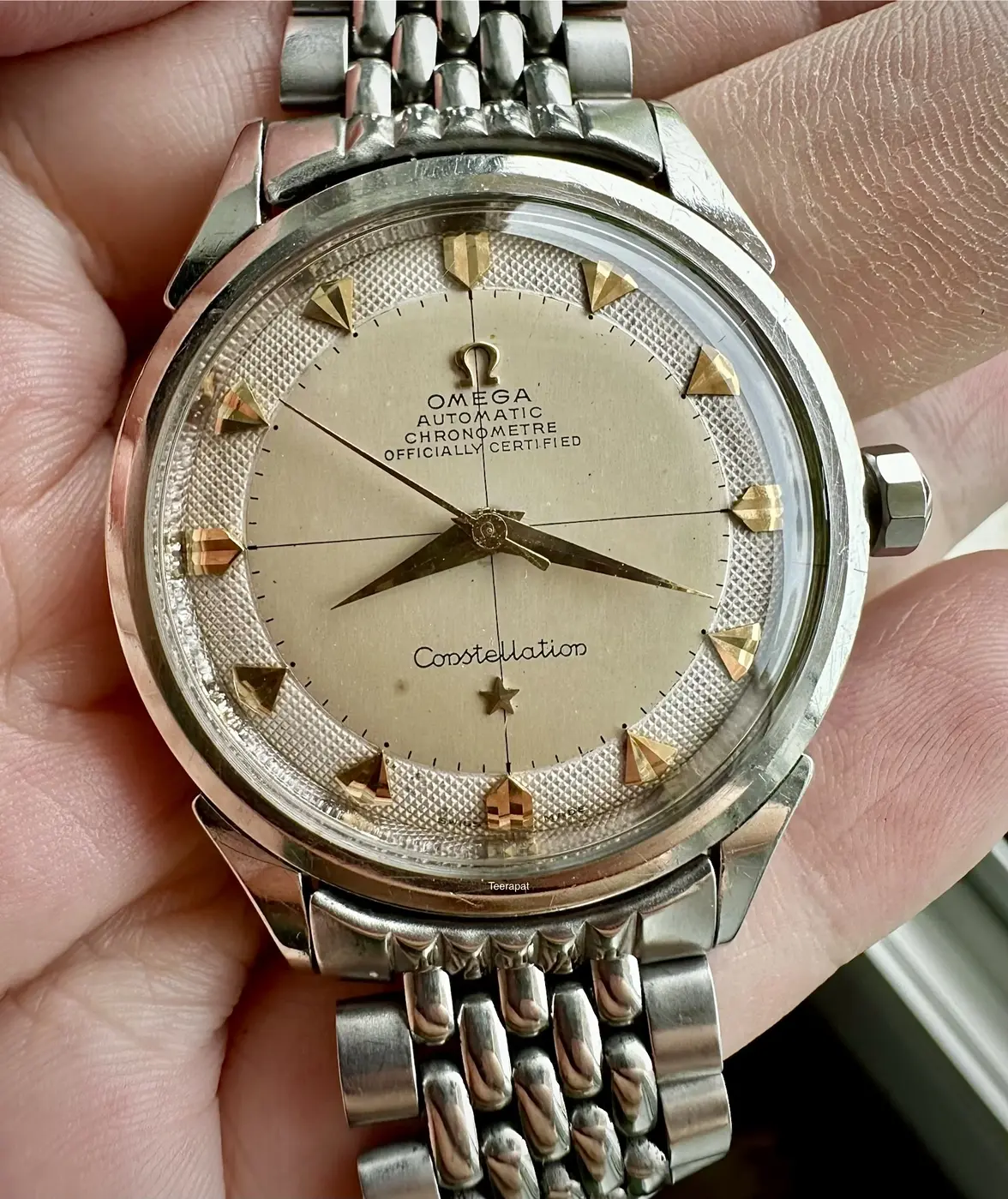
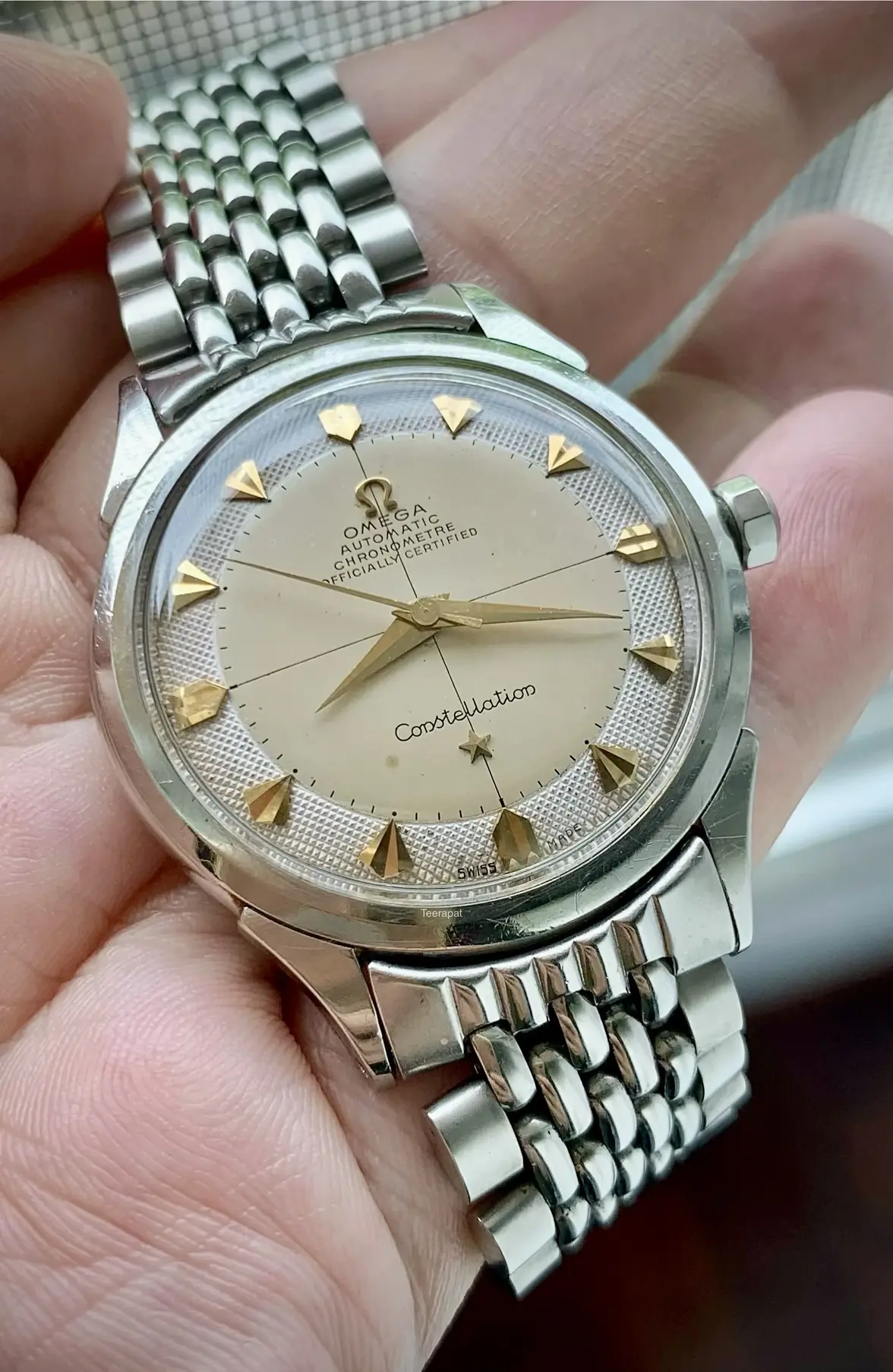
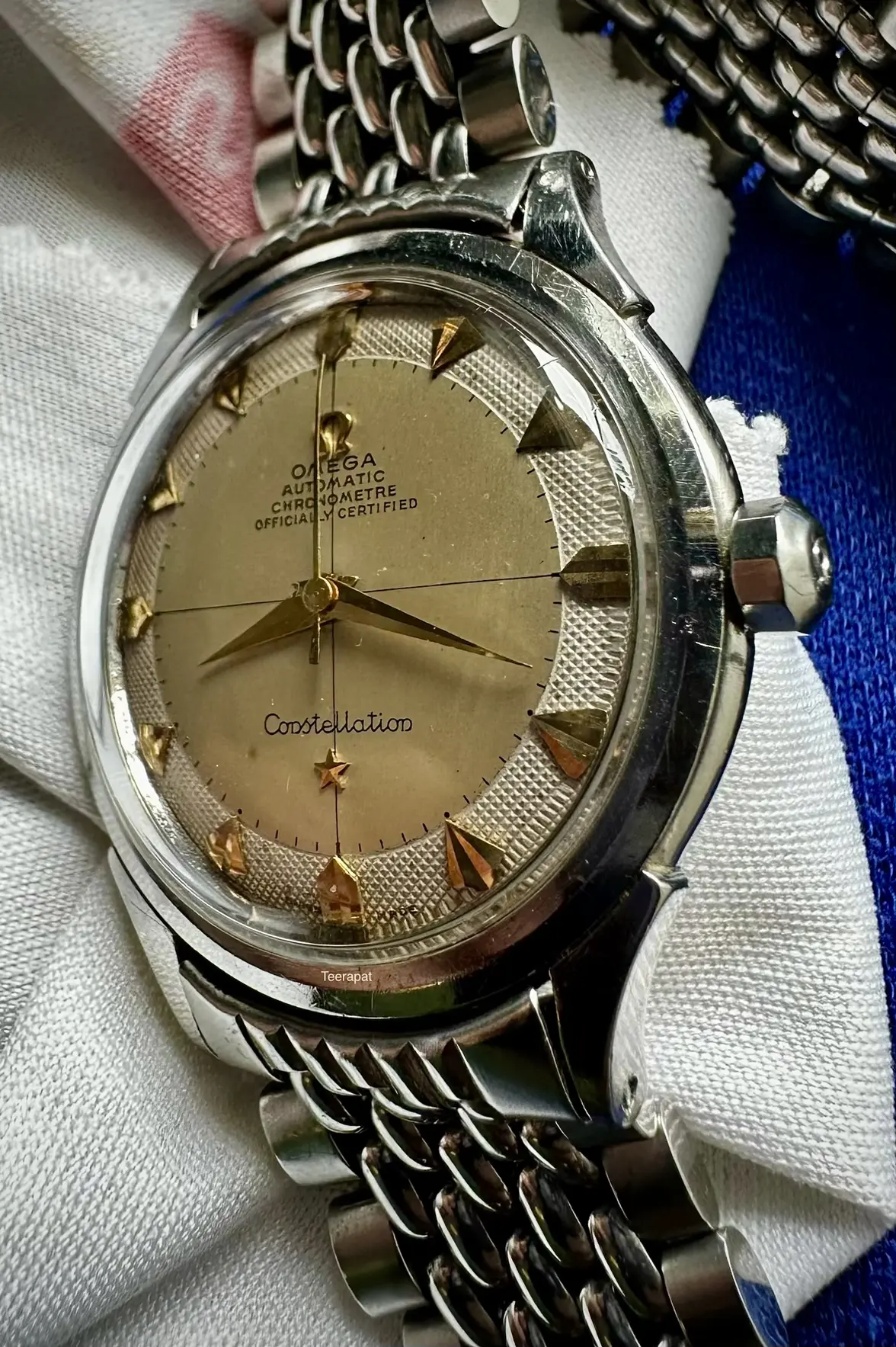
In person, the dial has a beautiful two-tone appearance. The central section looks noticeably darker than the outer waffle-textured area, creating a particularly attractive contrast.
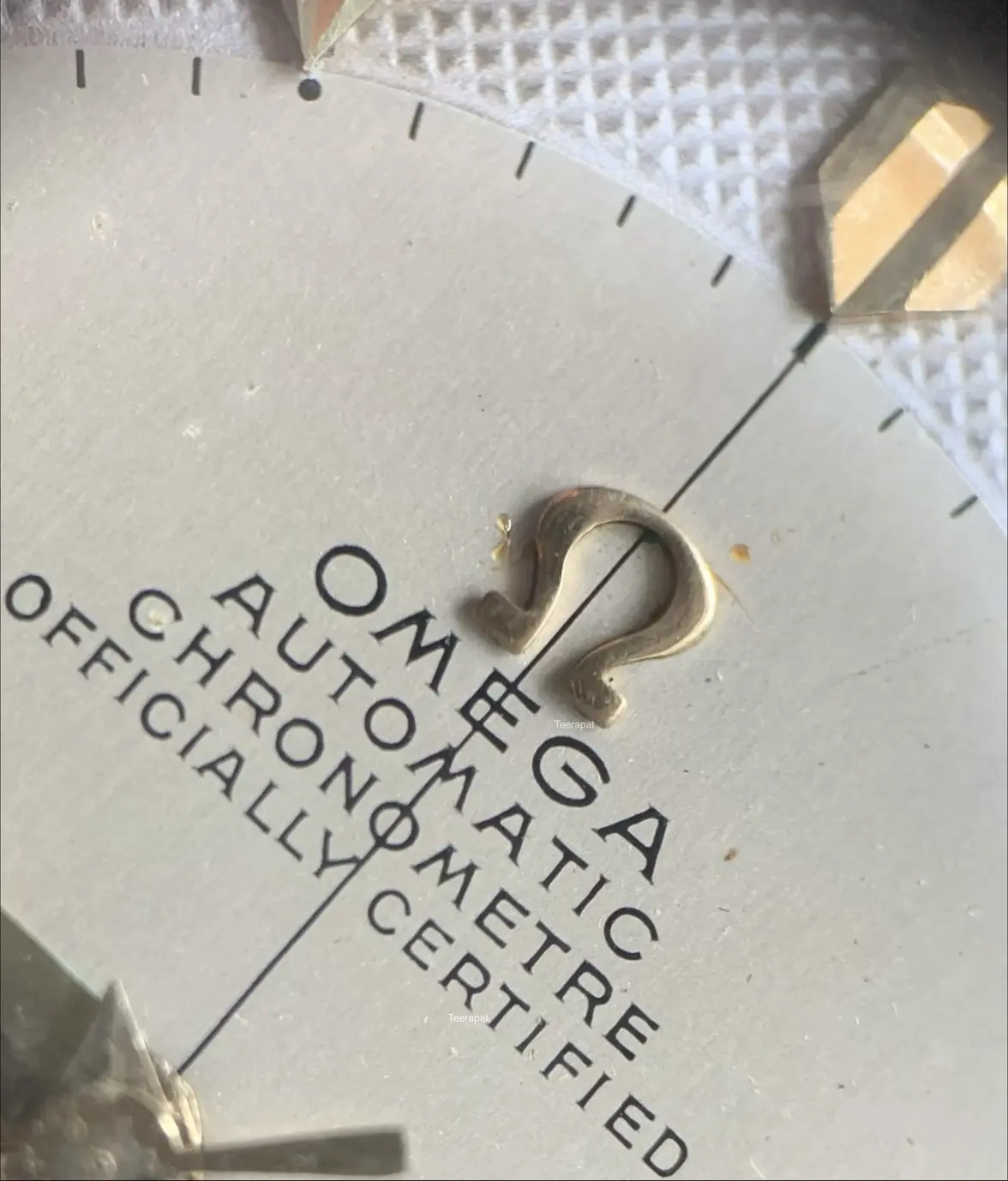
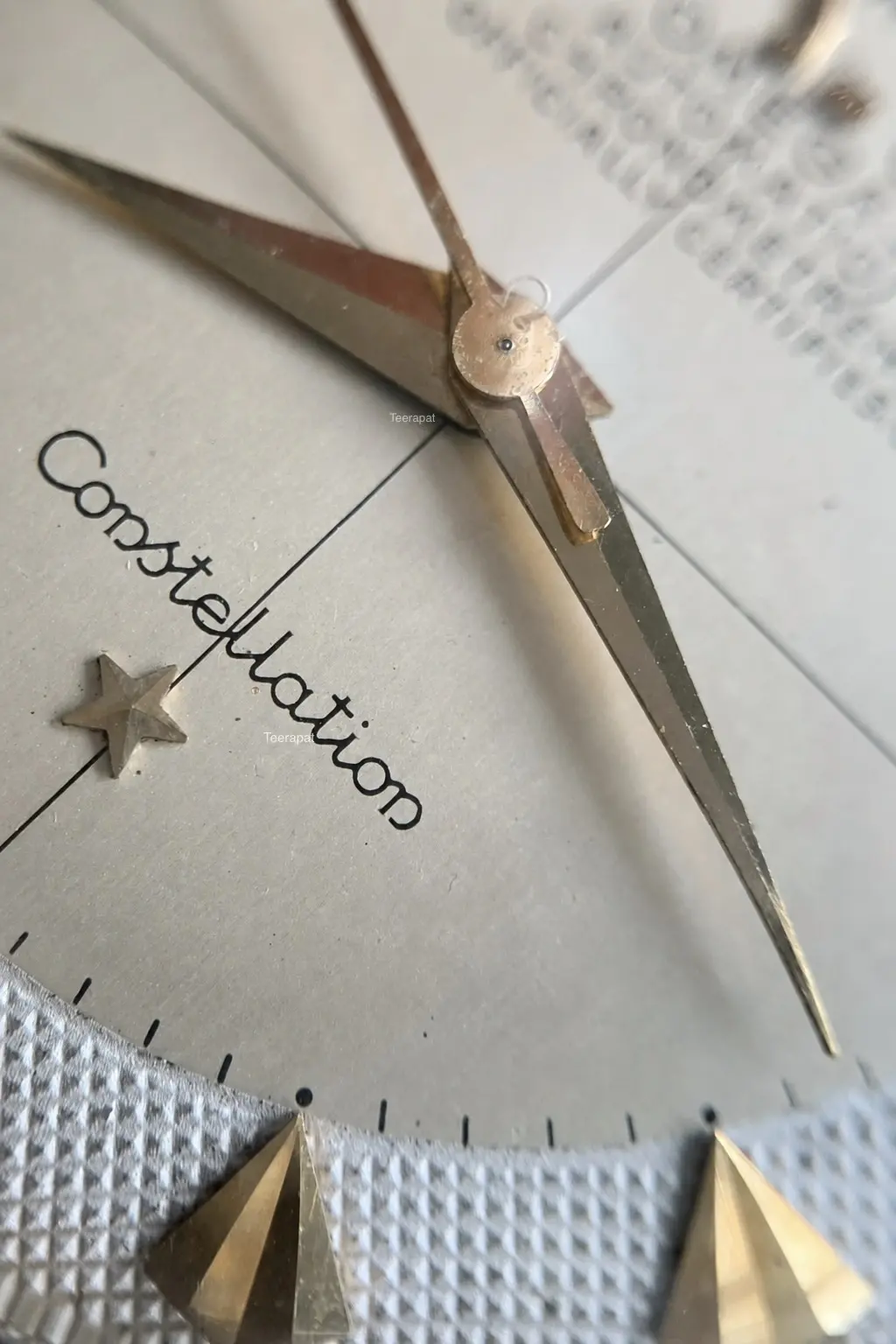
A closer look at the dial printing:
Please note the thin Omega symbol on the original crystal too.
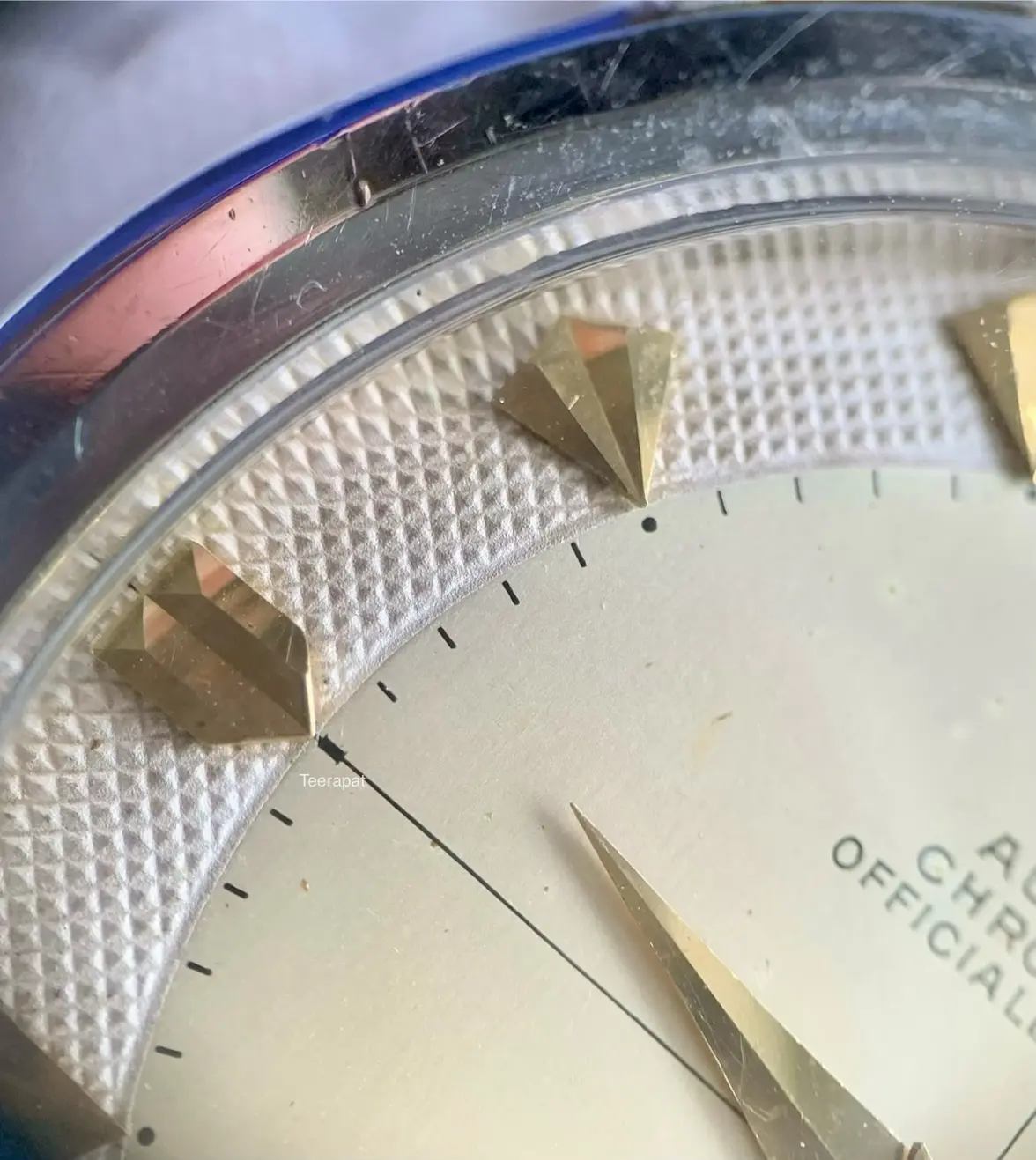
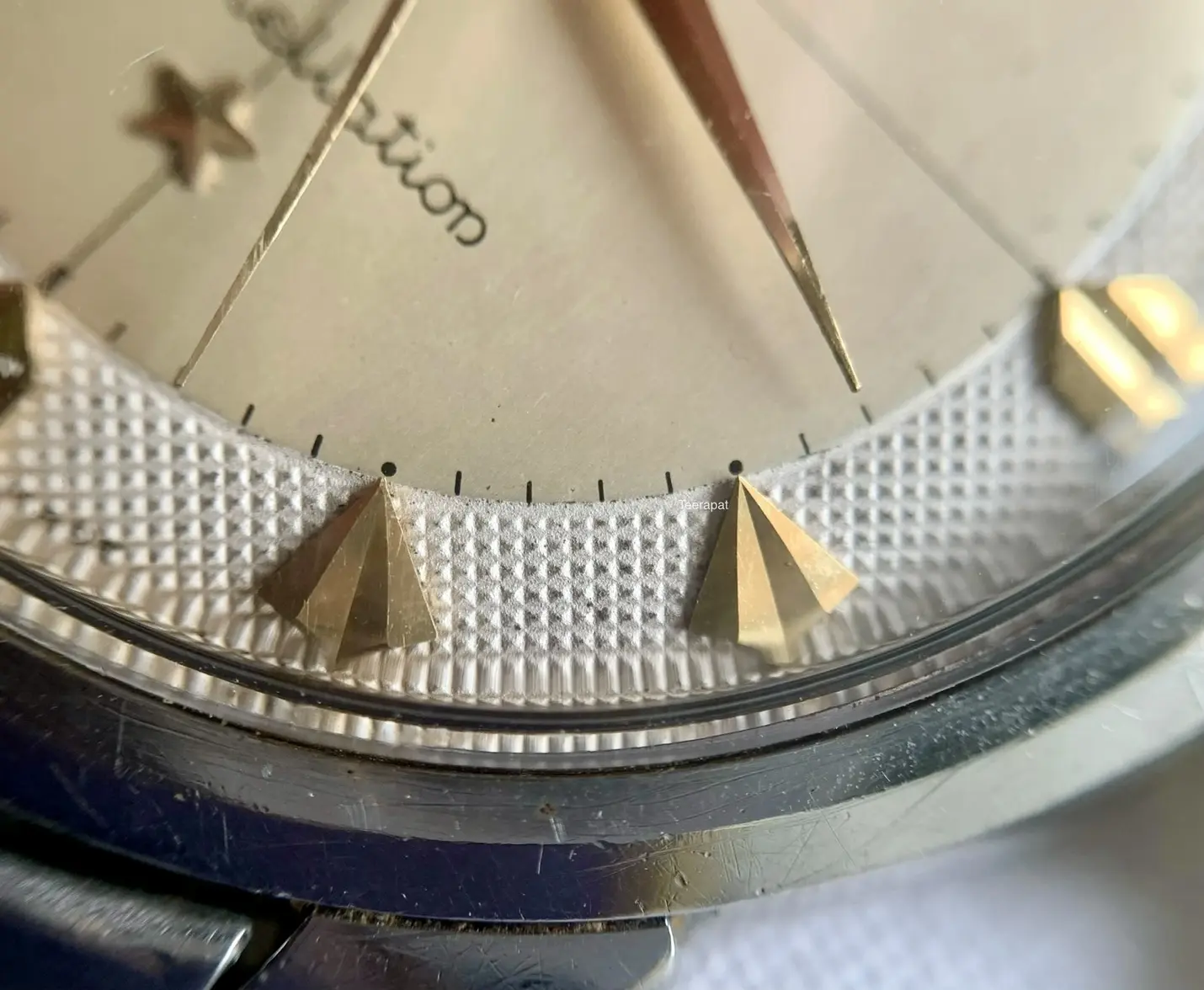
Close-ups of the hour markers and outer waffle texture:
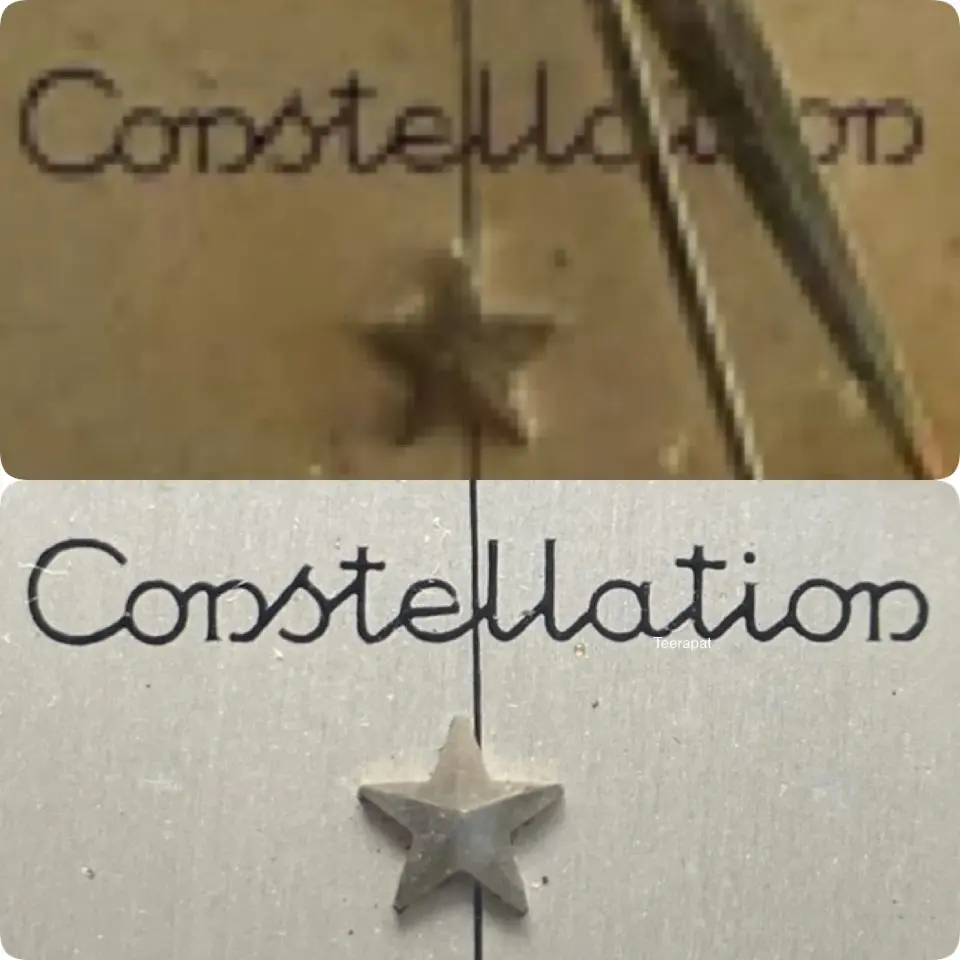
One detail initially caused me some concern. The vertical crosshair does not pass exactly through the center of the applied star (the red arrow), meaning that it does not divide the star into two equal halves.
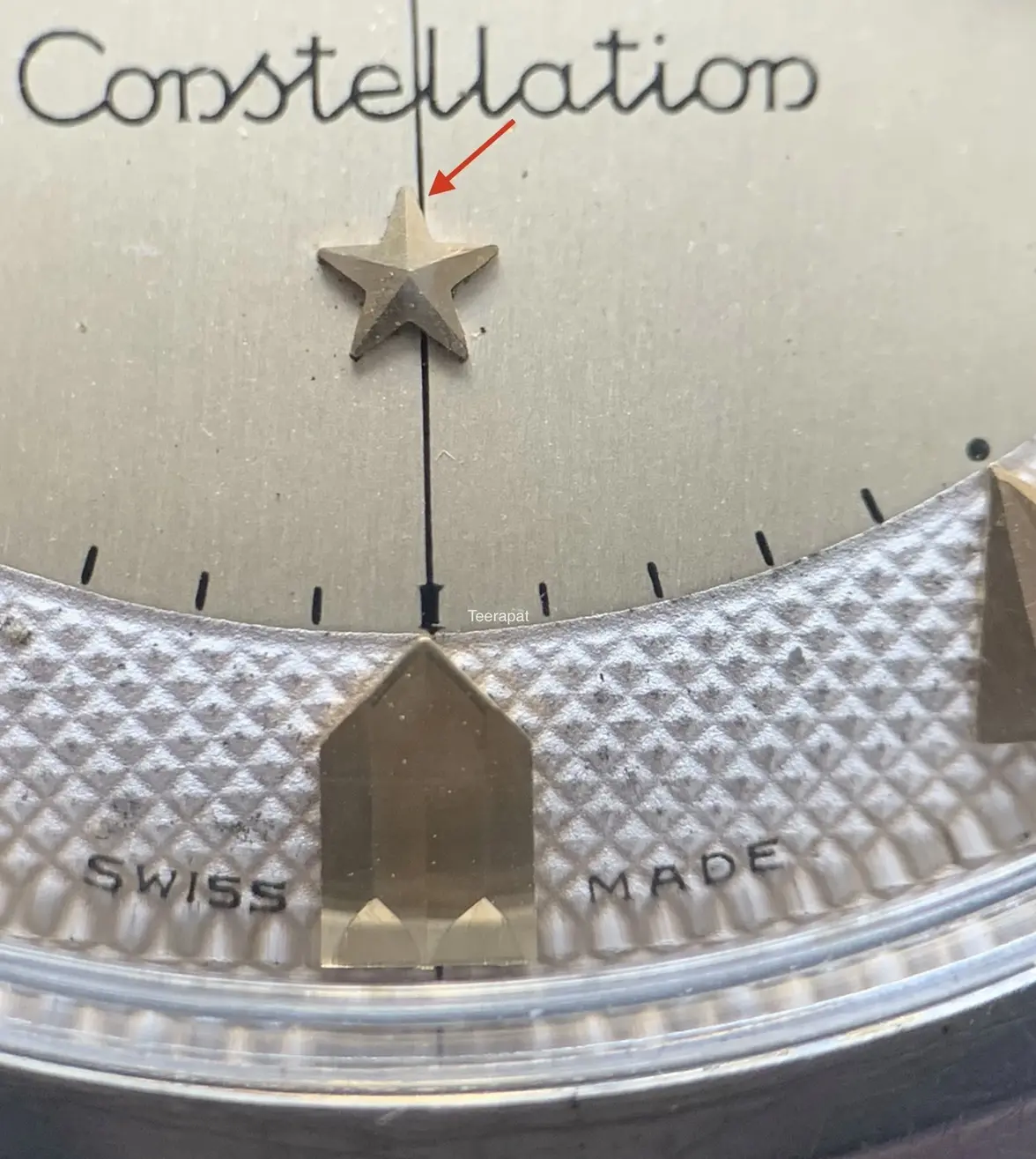
At first, I wondered whether this unusual alignment might indicate that something was wrong. However, a knowledgeable member with whom I discussed the watch via private message explained that the star on some of these models can be tilted very slightly to the left.
I therefore searched for other examples showing the same characteristic. Interestingly, the beautiful partial-waffle Constellation owned by @Cristos—with the waffle texture in the center—also appears to have its star tilted slightly to the left.
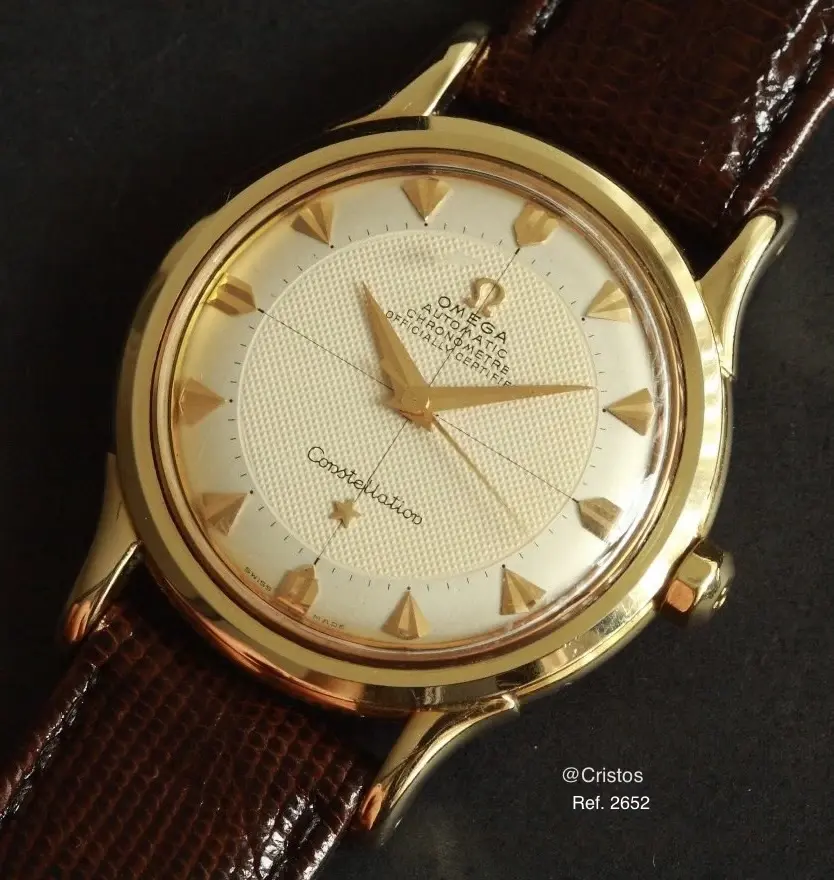
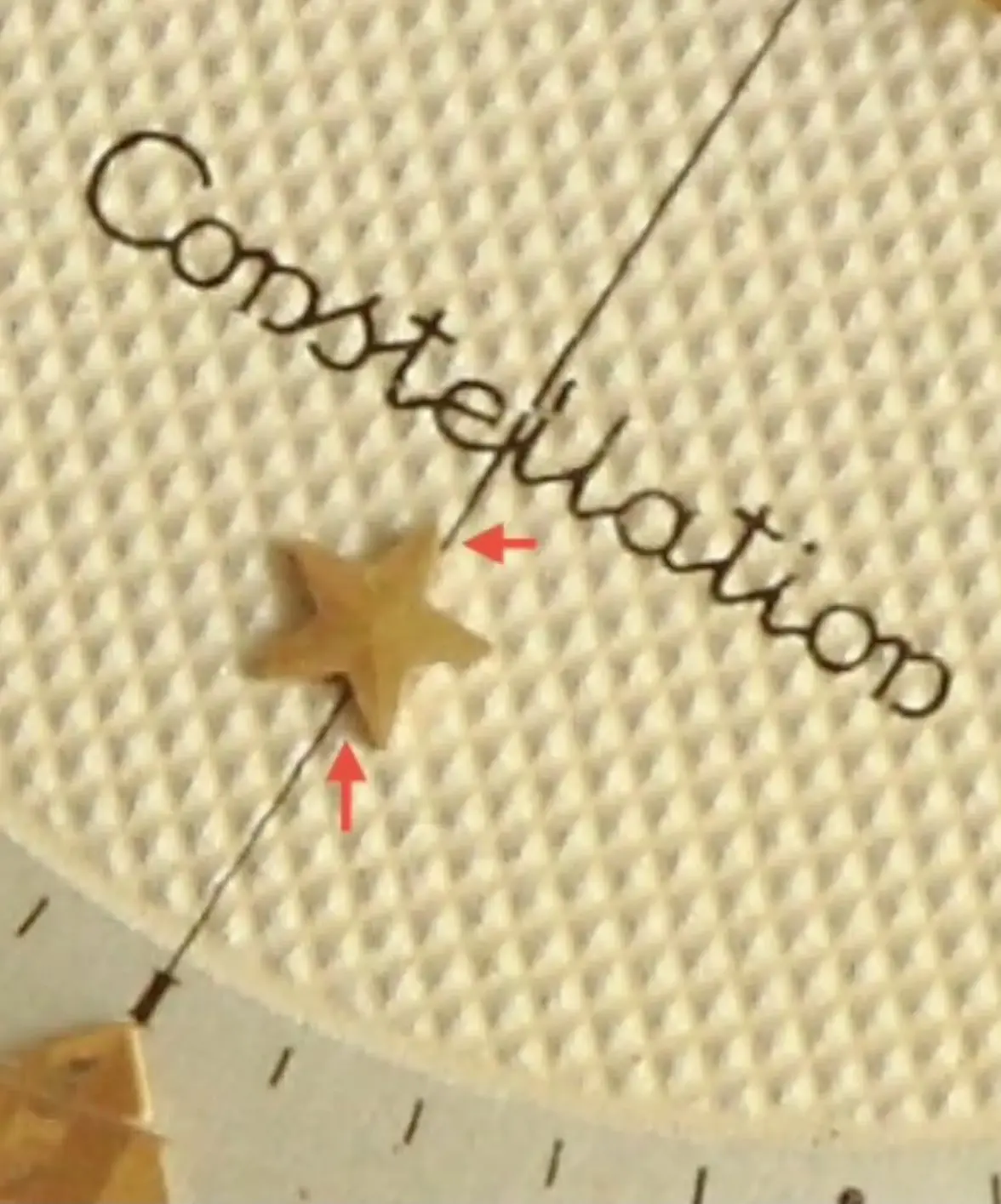
This leads me to believe that such small variations may occasionally be found on early Constellations, particularly on uncommon dial configurations such as the half-waffle examples shown here.
As usual, when evaluating an uncommon dial, I prefer to examine its reverse side whenever possible. In this case, I believe all the applied markers are original and show no signs of removal and reattachment.
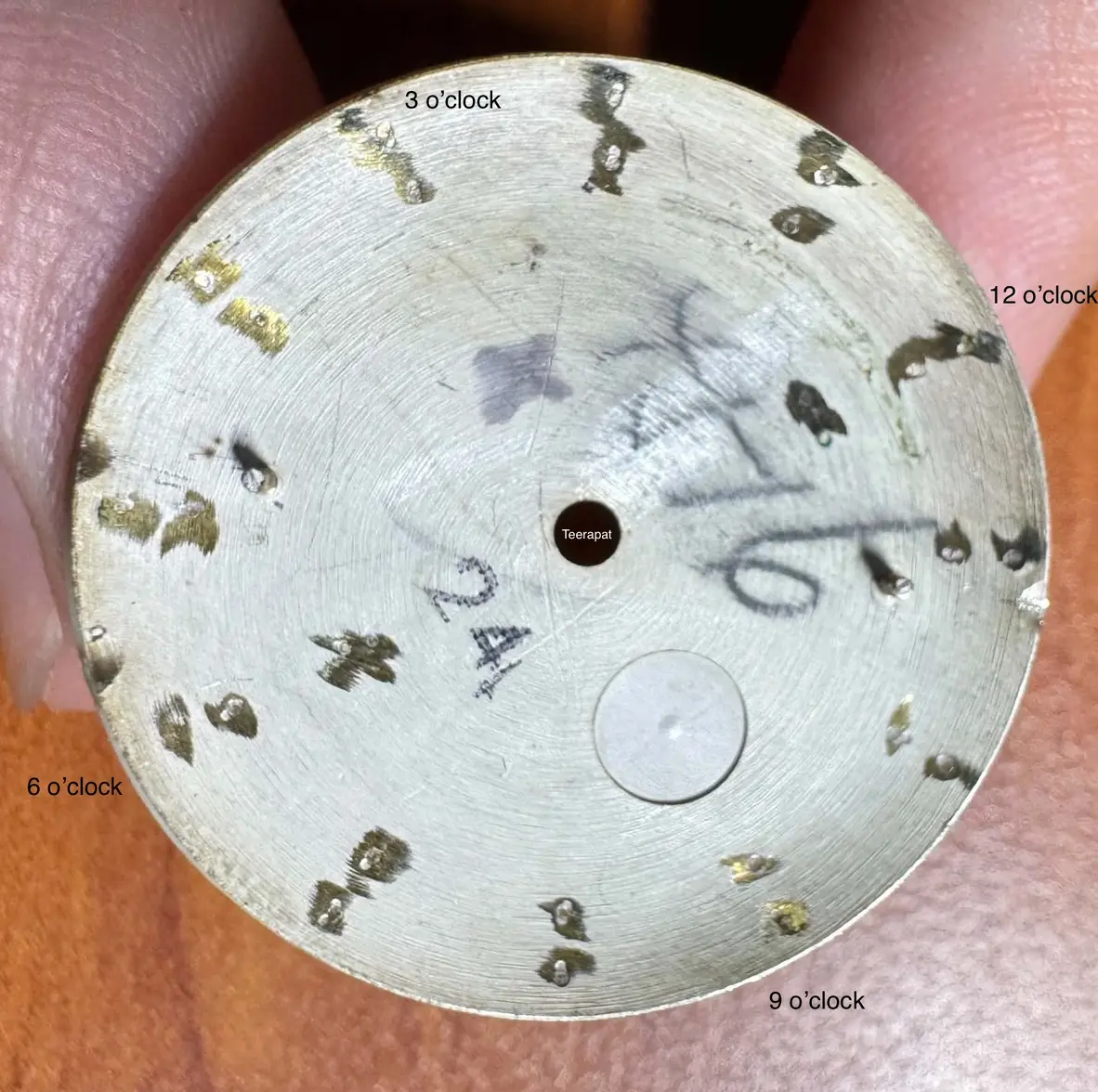
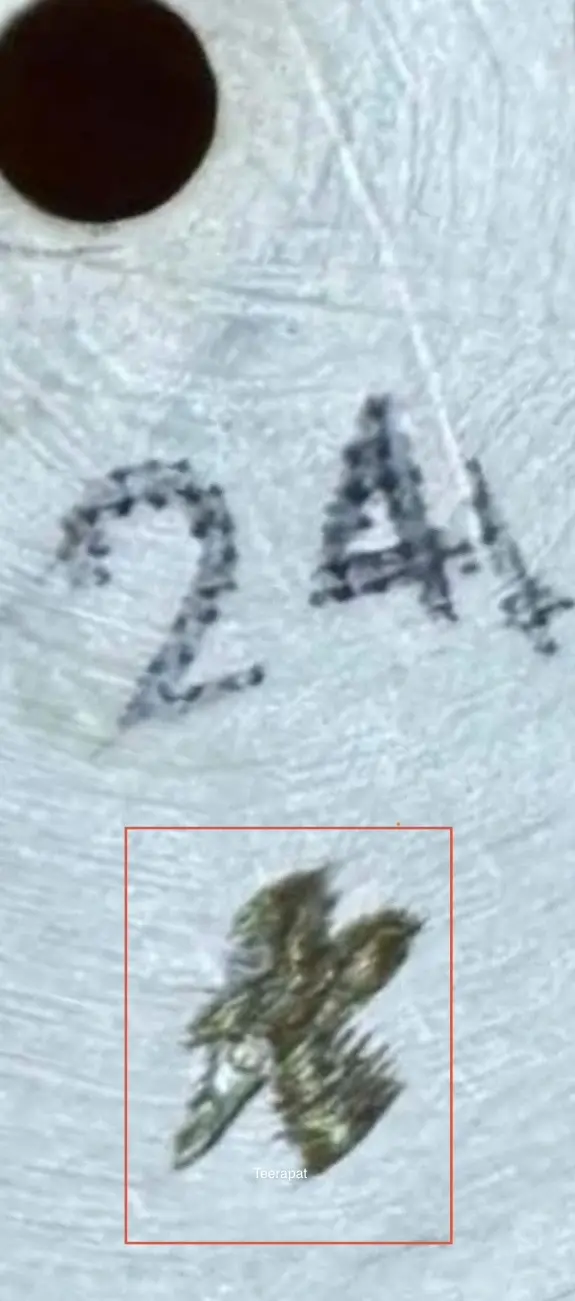
I paid particular attention to the star's mounting point, which initially concerned me. On the reverse side of the dial, the star is located beneath the number 24. In my opinion, the surrounding metalwork and finishing appear original.
And finally, the wrist shot:
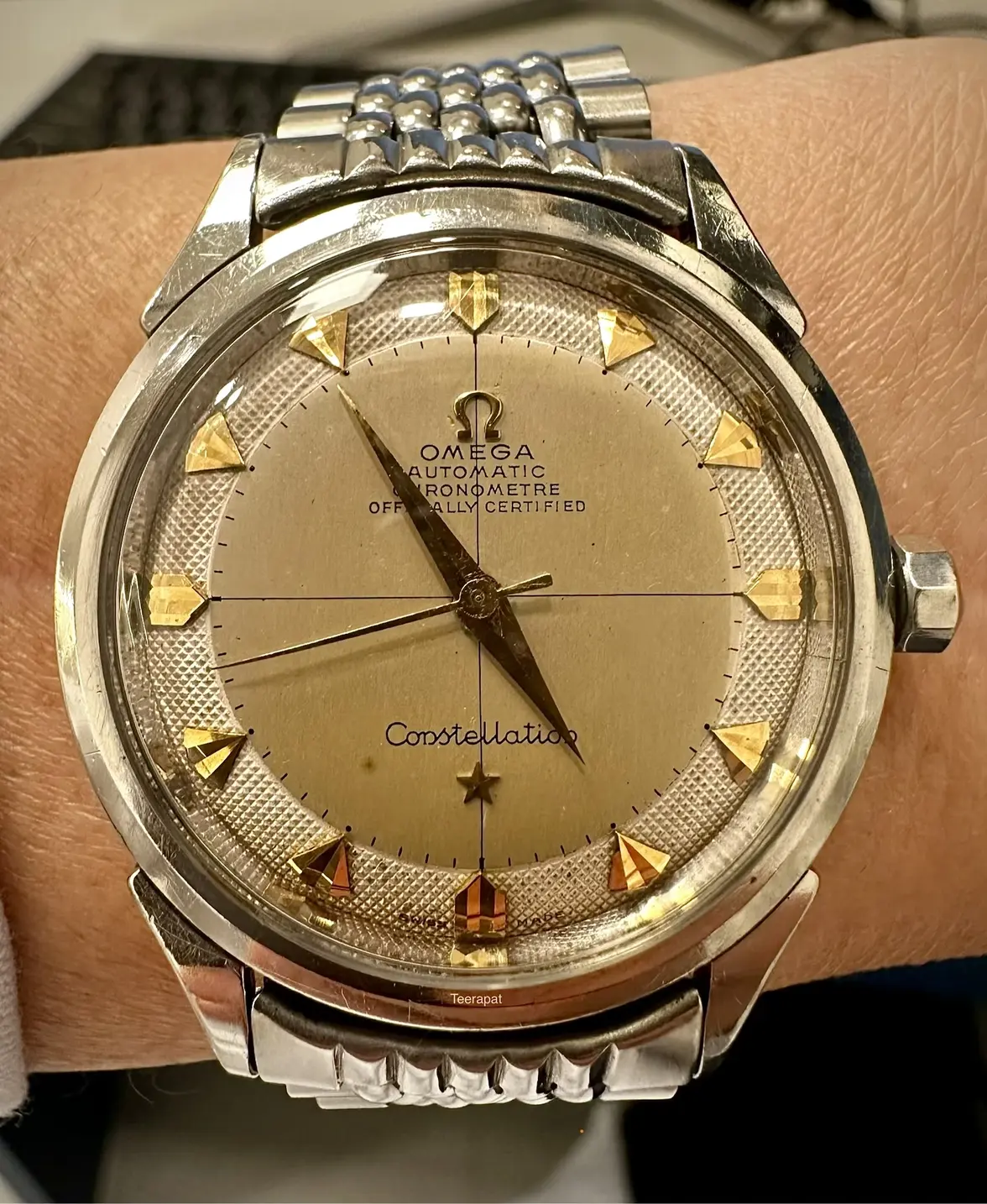
Thank you very much for looking, and I would be grateful to hear your thoughts.
If anyone owns—or has seen—another partial-waffle Constellation with the waffle texture only on the outer portion of the dial, particularly one I may have missed, please feel free to share it here.
Best regards,
Teerapat
I would like to share another uncommon Constellation dial pattern from my collection: the so-called “partial-waffle” or “half-waffle” dial. As the name suggests, one section of the dial has a waffle texture, while the other remains smooth and slightly domed. In this thread, I will focus specifically on the version with the waffle texture on the outer portion of the dial.
Looking only at 1950s Constellations, and based on the examples I have been able to document, I have not seen this particular pattern on reference 2648. It appears to have first been used on reference 2652 and later on reference 2782, both powered by caliber 354. So far, I have not encountered this dial configuration on references fitted with caliber 505, such as references 2852 and 2887.
I have found two examples of reference 2652 with this dial pattern. The first was a gold-capped 2652-5 previously sold on this forum, while the second was an all-steel 2652-6. I also found two examples of reference 2782: a very attractive steel 2782-3 and another example, discussed on this forum, that appeared to have been redialed.
Once again, I consider myself very fortunate to have found one.
Could my watch be one of the earliest known examples of this dial pattern, based on both its movement number and the case-reference suffix stamped inside the caseback?
Here is my Omega Constellation reference 2652-1, powered by caliber 354 with movement number 13,160,xxx. The case is stainless steel, complemented by yellow-gold dial furniture. It also retains the thick, ten-sided decagonal crown, which appears to be original.
In person, the dial has a beautiful two-tone appearance. The central section looks noticeably darker than the outer waffle-textured area, creating a particularly attractive contrast.
A closer look at the dial printing:
Please note the thin Omega symbol on the original crystal too.
Close-ups of the hour markers and outer waffle texture:
One detail initially caused me some concern. The vertical crosshair does not pass exactly through the center of the applied star (the red arrow), meaning that it does not divide the star into two equal halves.
At first, I wondered whether this unusual alignment might indicate that something was wrong. However, a knowledgeable member with whom I discussed the watch via private message explained that the star on some of these models can be tilted very slightly to the left.
I therefore searched for other examples showing the same characteristic. Interestingly, the beautiful partial-waffle Constellation owned by @Cristos—with the waffle texture in the center—also appears to have its star tilted slightly to the left.
This leads me to believe that such small variations may occasionally be found on early Constellations, particularly on uncommon dial configurations such as the half-waffle examples shown here.
As usual, when evaluating an uncommon dial, I prefer to examine its reverse side whenever possible. In this case, I believe all the applied markers are original and show no signs of removal and reattachment.
I paid particular attention to the star's mounting point, which initially concerned me. On the reverse side of the dial, the star is located beneath the number 24. In my opinion, the surrounding metalwork and finishing appear original.
And finally, the wrist shot:
Thank you very much for looking, and I would be grateful to hear your thoughts.
If anyone owns—or has seen—another partial-waffle Constellation with the waffle texture only on the outer portion of the dial, particularly one I may have missed, please feel free to share it here.
Best regards,
Teerapat