- Posts
- 47
- Likes
- 6
cal3.2.1
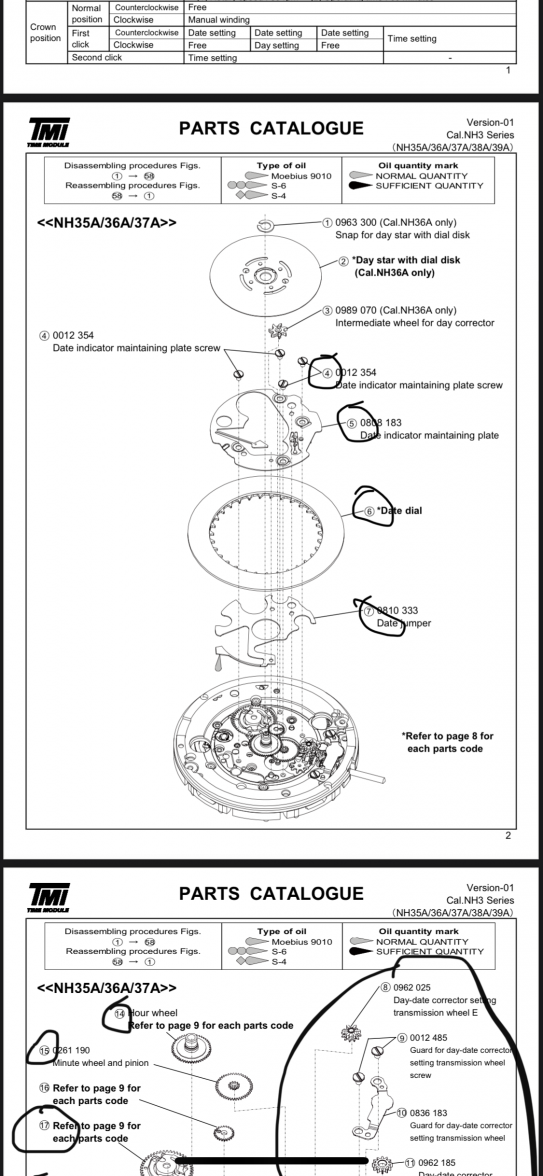
·I have recently began restoring my first mechanical watch which got me into the hobby (an invicta pro diver). I have almost finished servicing the movement using the following guide and am waiting on replacement parts (ignore markings on the guide)
:
The case and primarily the bracelet has seen some very very heavy use:
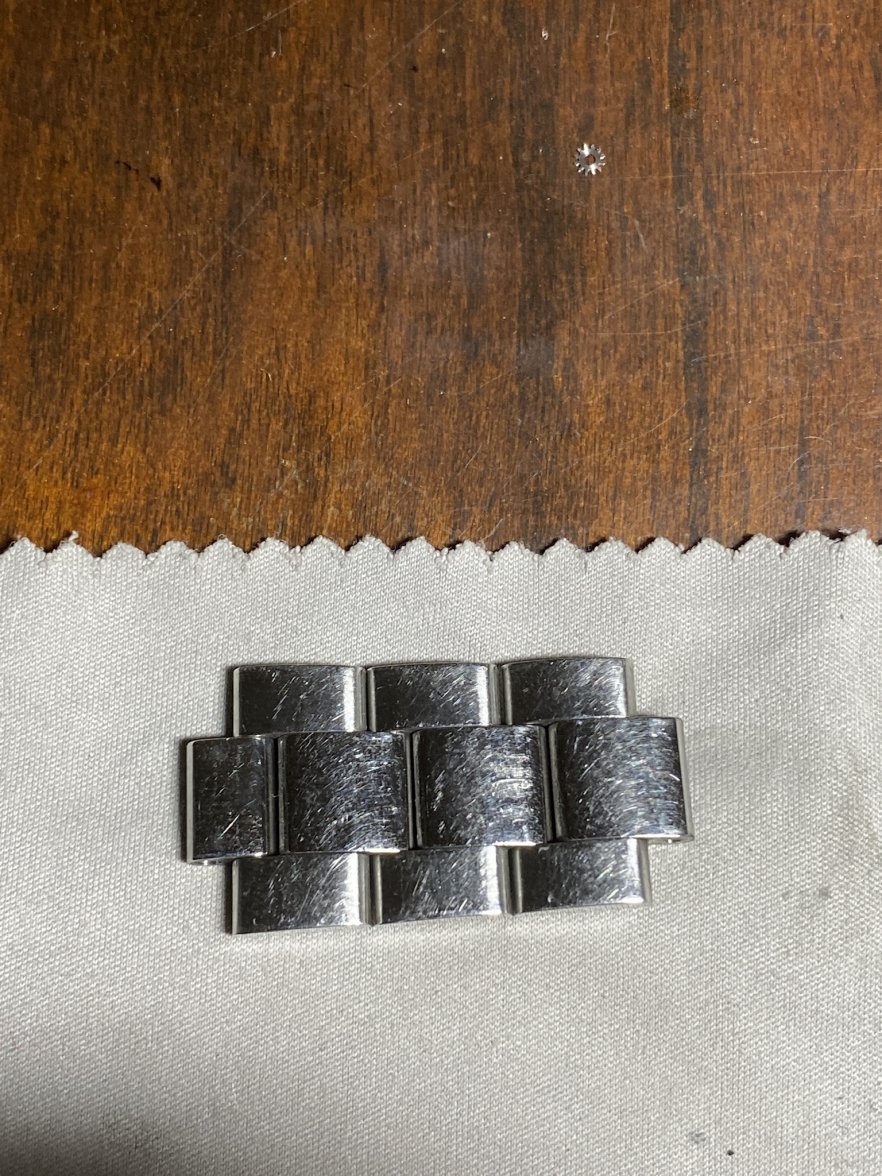
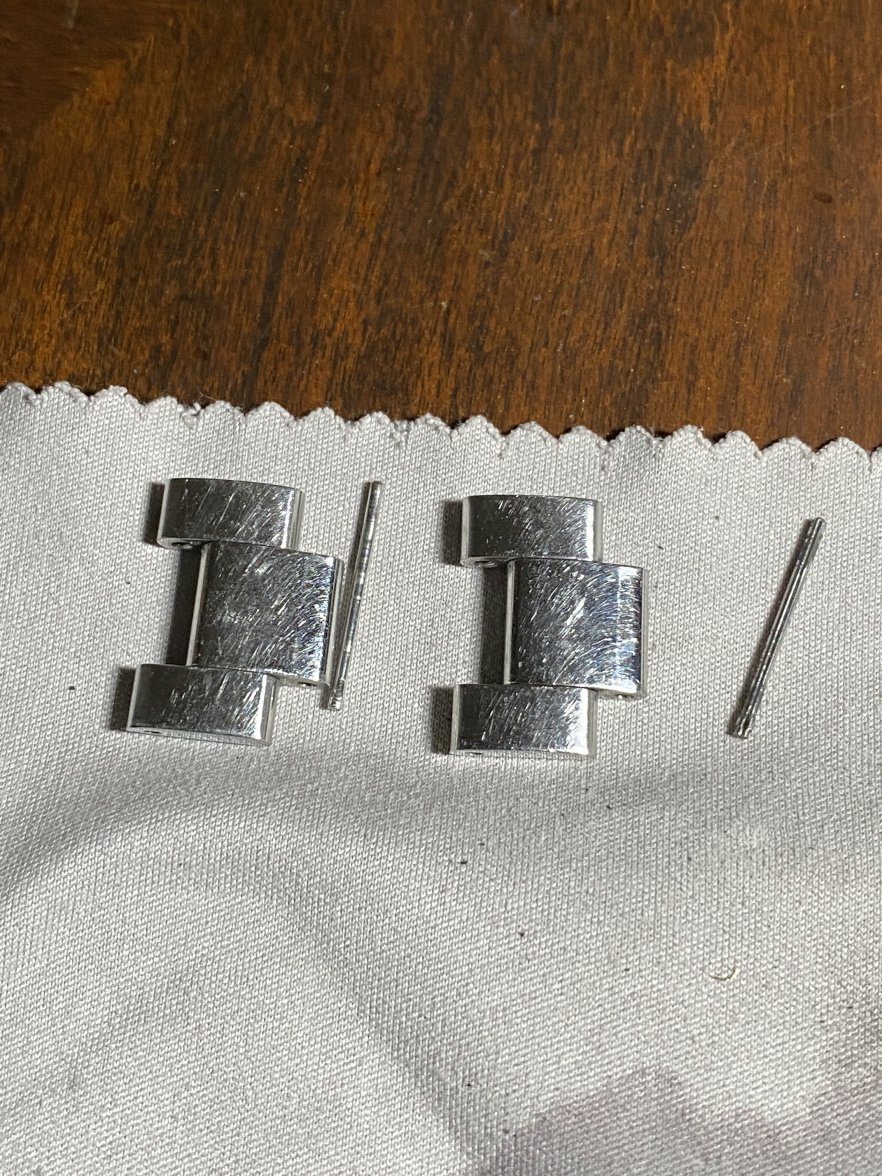
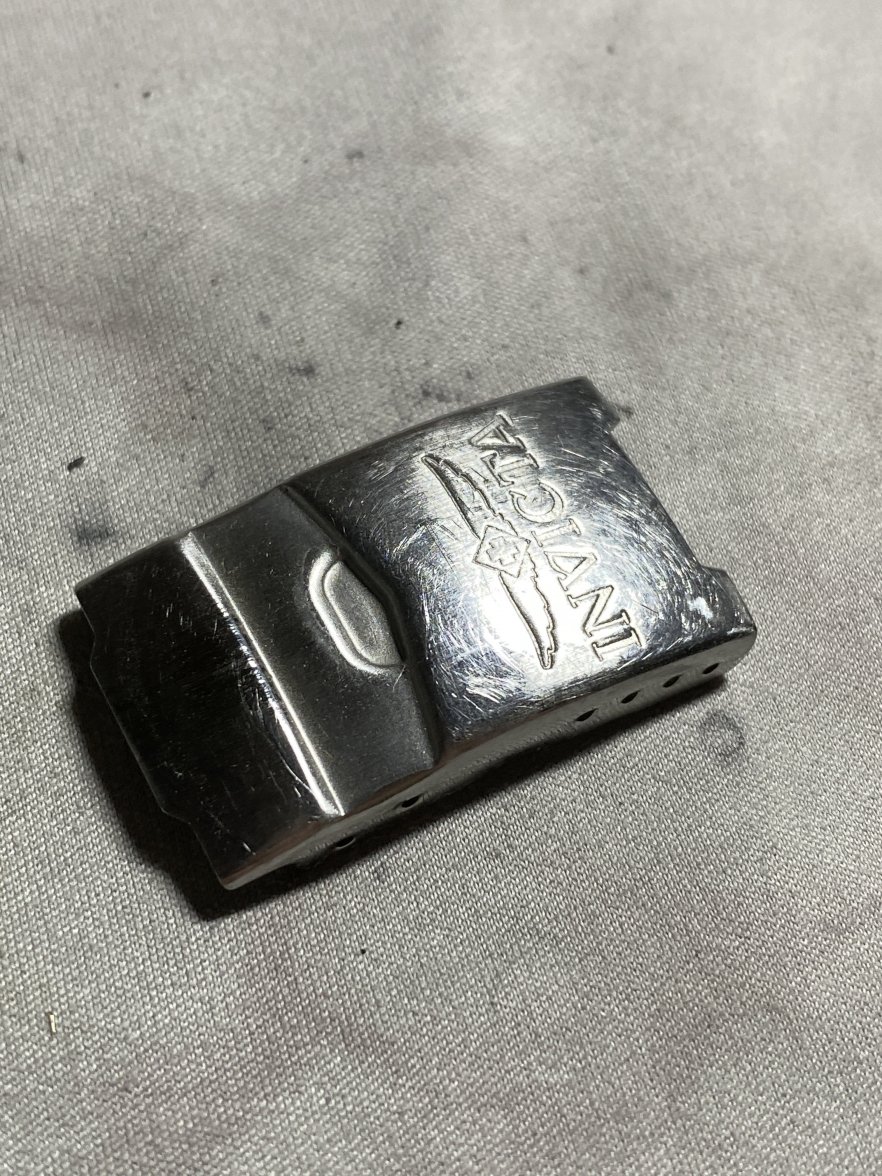
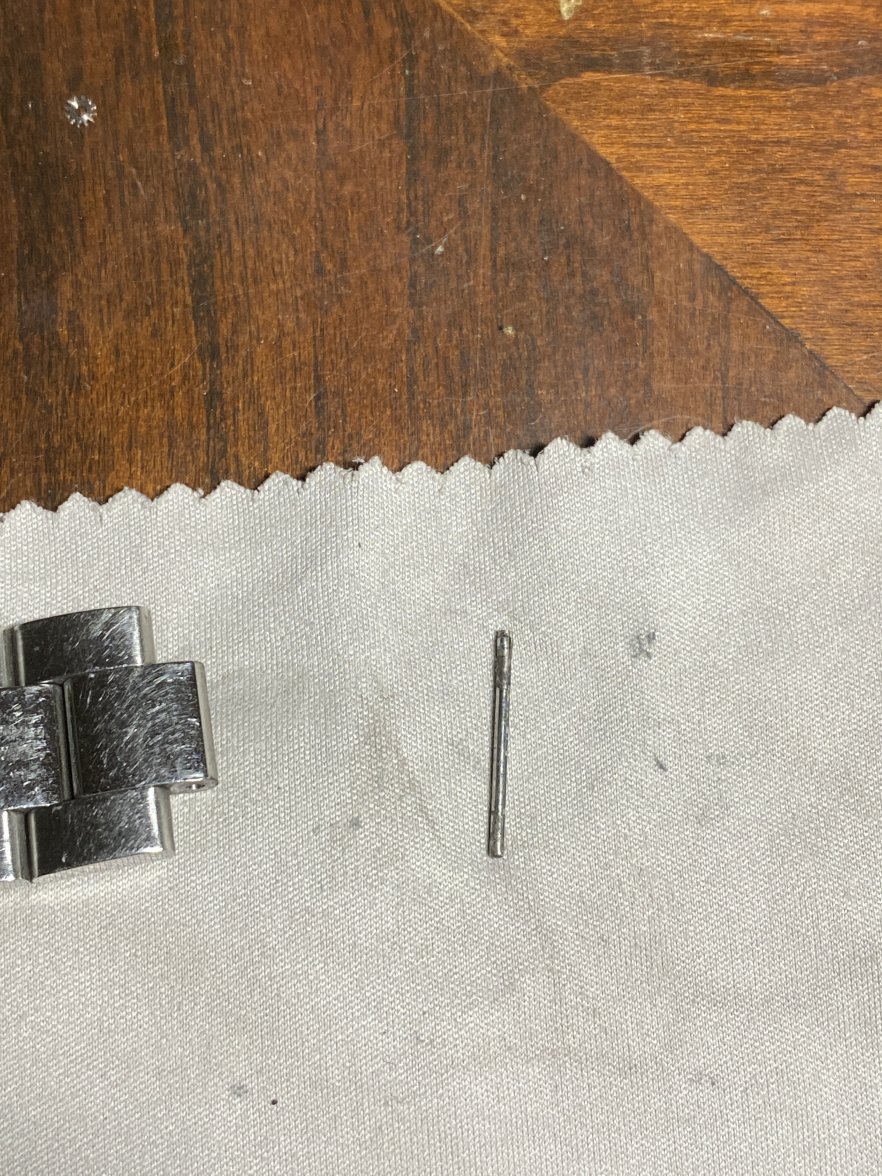
in some photos, it looks as though there were no polished areas of the bracelet. I did some research, bought the necessary materials and went to town trying to restore it. After quite a long time spanning over 2 days, I have polished the center pieces of the links, edges of the links, and re-finished the brushed stainless edges. As this is my first time doing anything of the sort, it is nowhere near perfect:
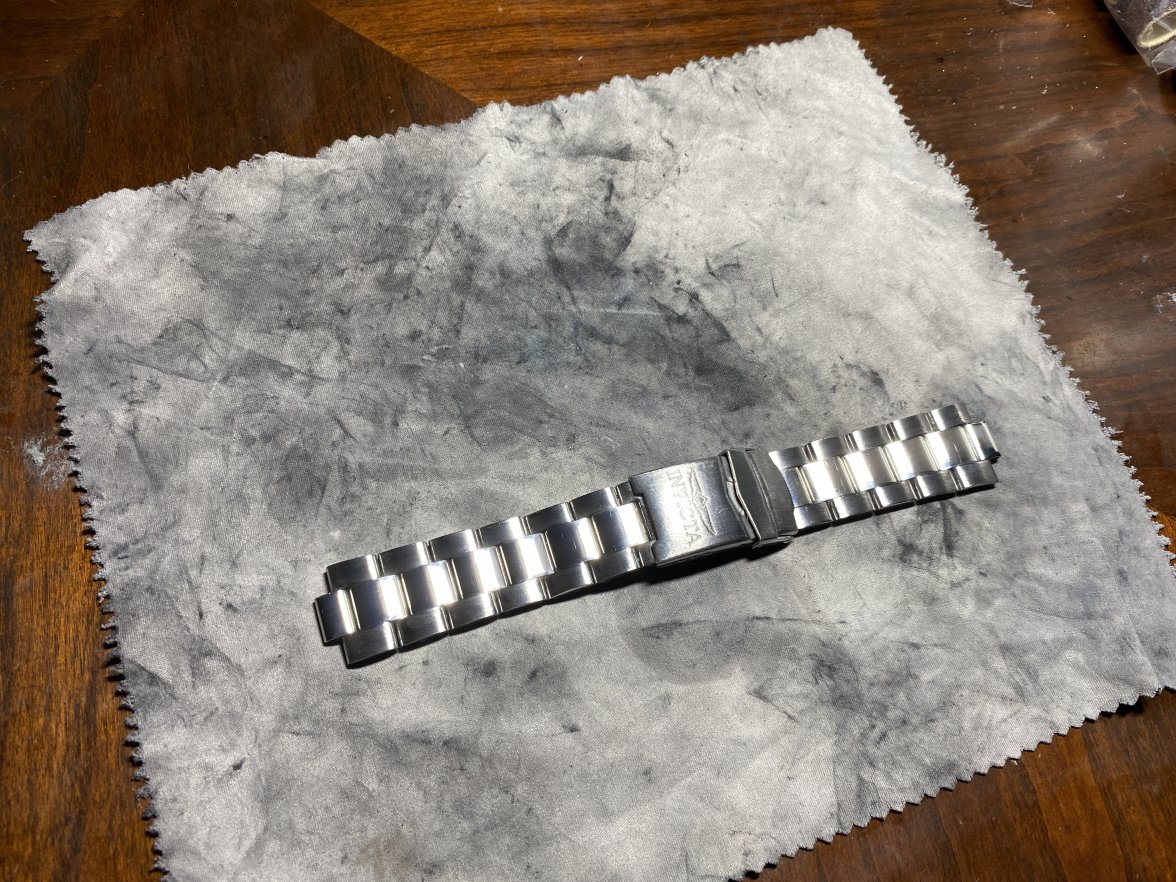
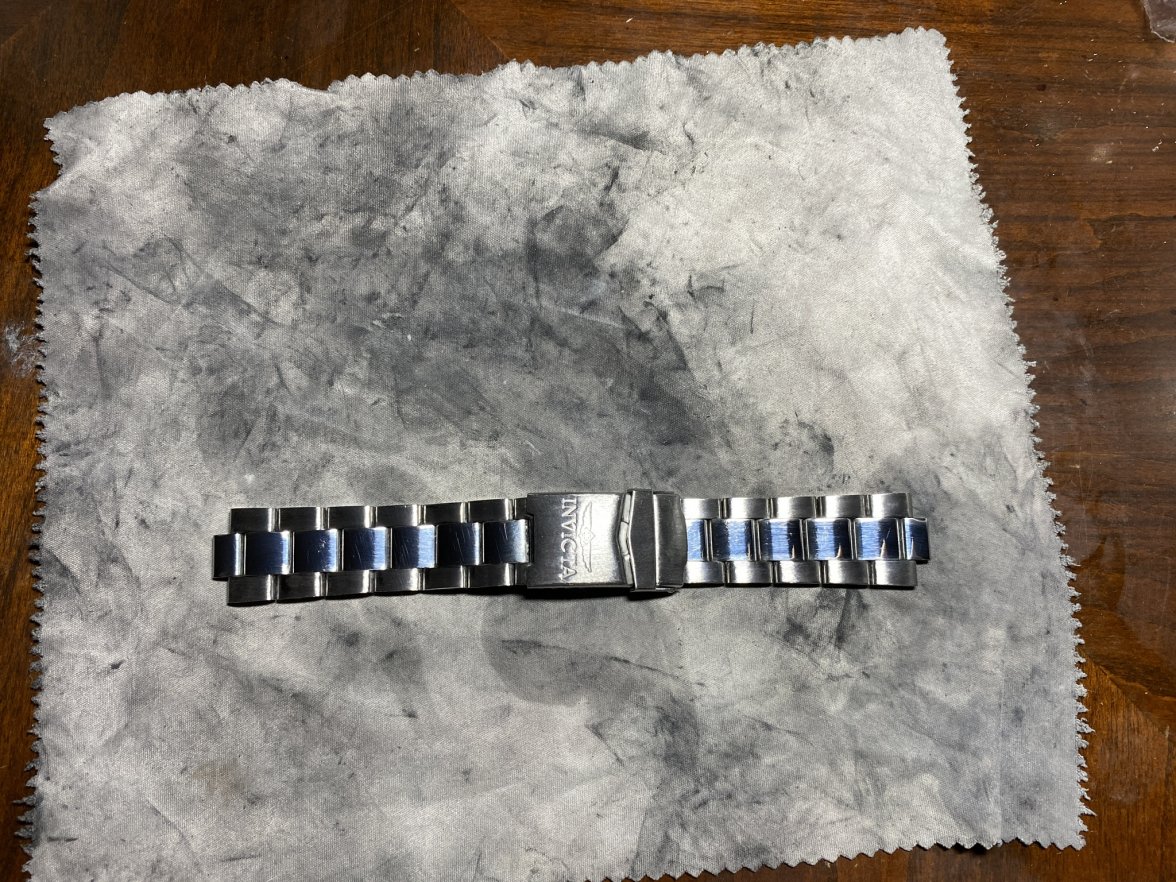
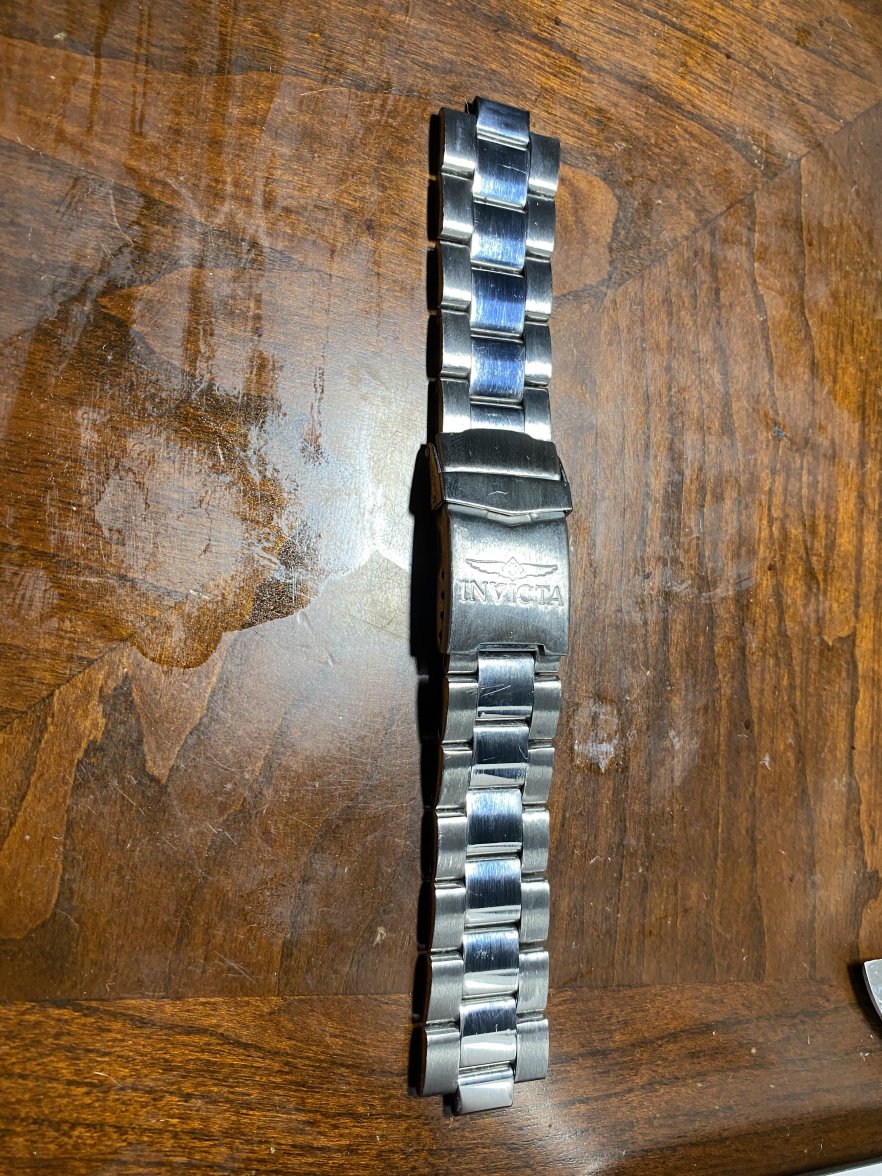
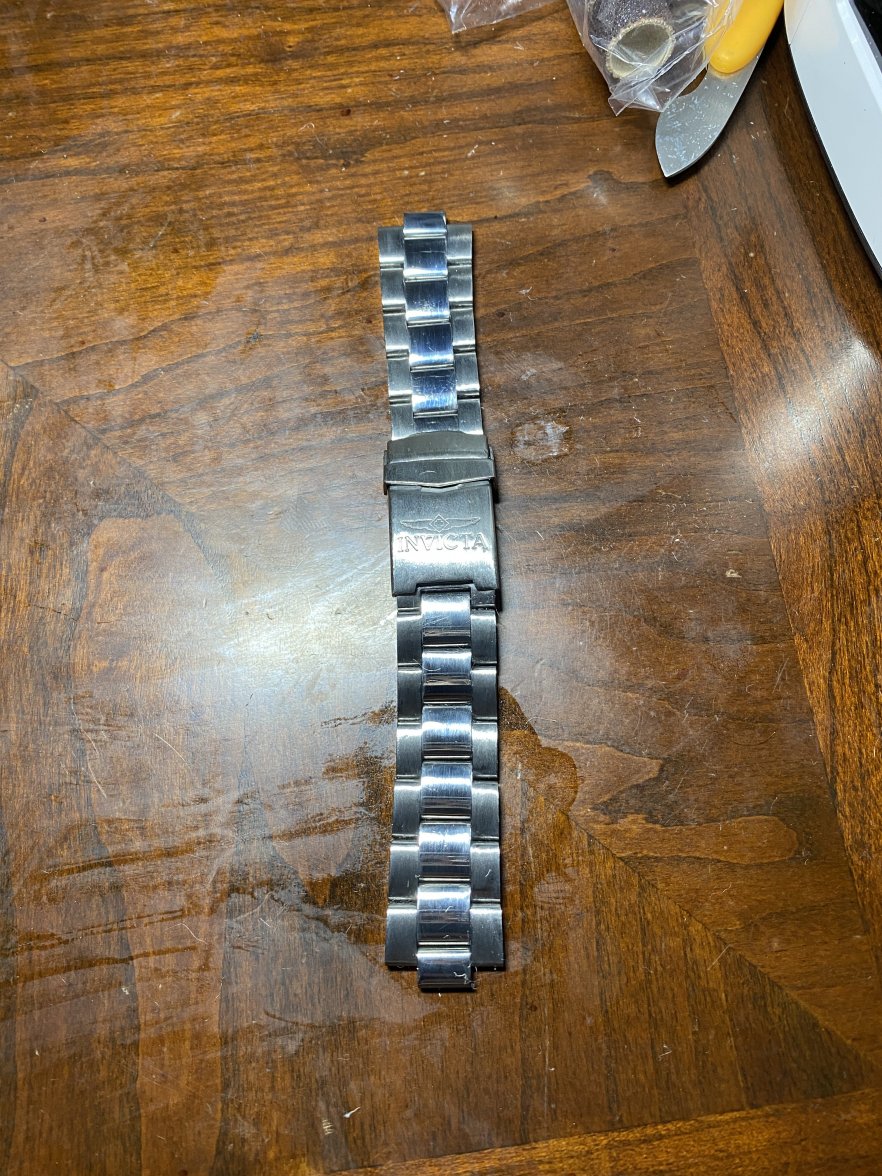
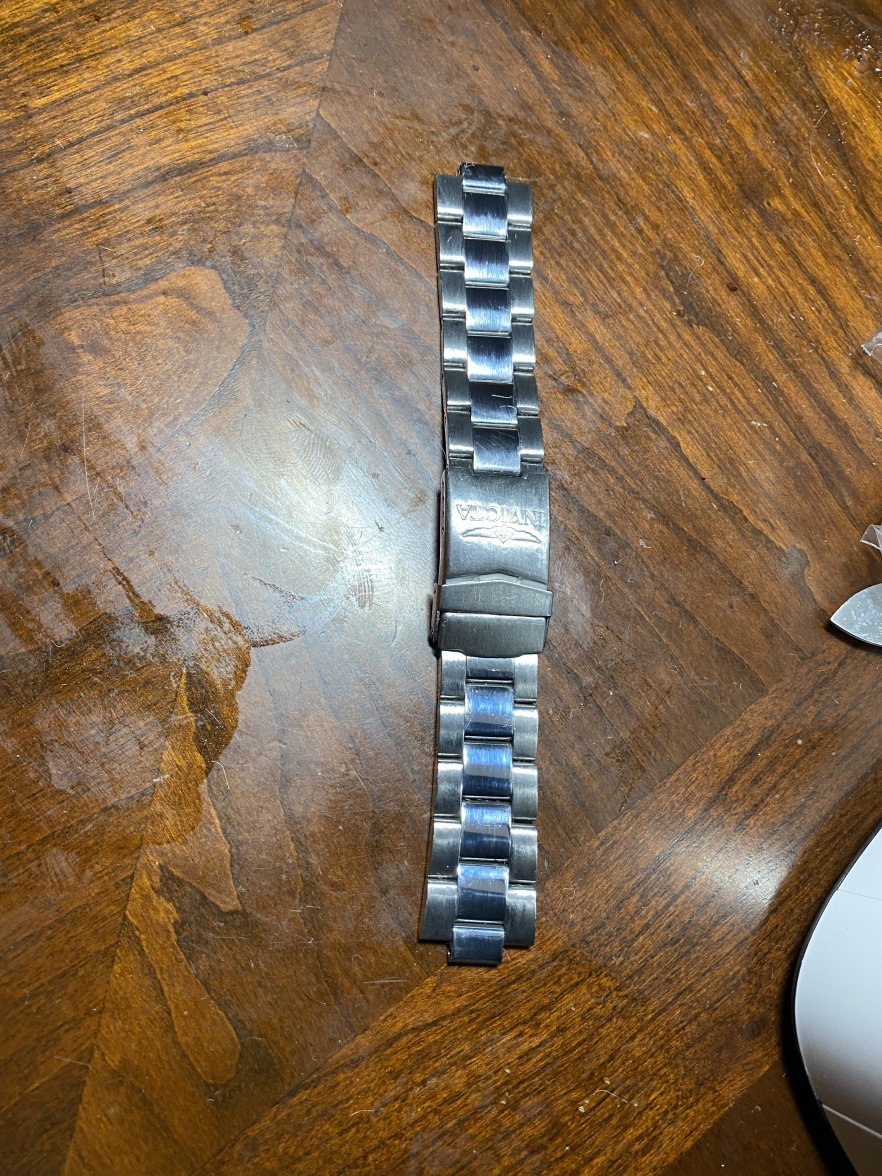
The inner polished part was done with a Dremel, felt polishing pads, tech diamond tools 16,000 grit, 100,000 grit, and 200,000 grit diamond polishing compound. The outer of the links and the clasp were done with a 220 grit grinding wheel on the before mentioned Dremel. I understand 220 grit is rather low but it is what I had at hand, I have seen many others using scotch brite and from what I have read a better alternative, garryflex sanding bricks. Having used the 220 grit wheels, I found it is too rough and not as fine of a finish as I had hoped. My question lays with garrison garryflex bricks, will the extra 20 grit (240) make that much of an improvement? And if not, are there any other suggestions on how to refine this a bit more? I also am stumped regarding the inner high polished part of the links. They have polished well, but there are streak marks, remaining scratches (are they simply too deep or can some still come out?). I do not by any means expect it to come out like new, but I feel like it could come out much better. Does anyone have any suggestions regarding what could be done differently or is this the best it will get?
Disclaimer: I understand replacement NH35A movements and bracelets (even the whole watch itself) can be had for a cheaper price than that of my tools, polishing compounds and other materials. I am focusing on the academic aspects of learning the proper ways to restore/service future watches in my collection.
:
The case and primarily the bracelet has seen some very very heavy use:
in some photos, it looks as though there were no polished areas of the bracelet. I did some research, bought the necessary materials and went to town trying to restore it. After quite a long time spanning over 2 days, I have polished the center pieces of the links, edges of the links, and re-finished the brushed stainless edges. As this is my first time doing anything of the sort, it is nowhere near perfect:
The inner polished part was done with a Dremel, felt polishing pads, tech diamond tools 16,000 grit, 100,000 grit, and 200,000 grit diamond polishing compound. The outer of the links and the clasp were done with a 220 grit grinding wheel on the before mentioned Dremel. I understand 220 grit is rather low but it is what I had at hand, I have seen many others using scotch brite and from what I have read a better alternative, garryflex sanding bricks. Having used the 220 grit wheels, I found it is too rough and not as fine of a finish as I had hoped. My question lays with garrison garryflex bricks, will the extra 20 grit (240) make that much of an improvement? And if not, are there any other suggestions on how to refine this a bit more? I also am stumped regarding the inner high polished part of the links. They have polished well, but there are streak marks, remaining scratches (are they simply too deep or can some still come out?). I do not by any means expect it to come out like new, but I feel like it could come out much better. Does anyone have any suggestions regarding what could be done differently or is this the best it will get?
Disclaimer: I understand replacement NH35A movements and bracelets (even the whole watch itself) can be had for a cheaper price than that of my tools, polishing compounds and other materials. I am focusing on the academic aspects of learning the proper ways to restore/service future watches in my collection.