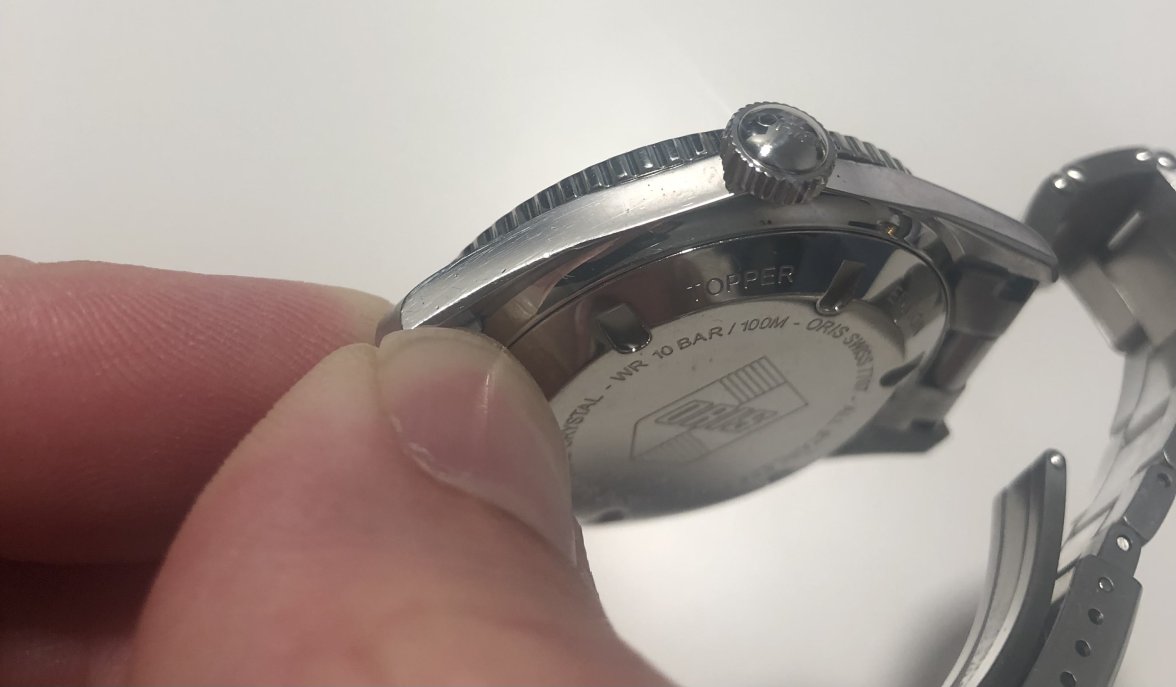
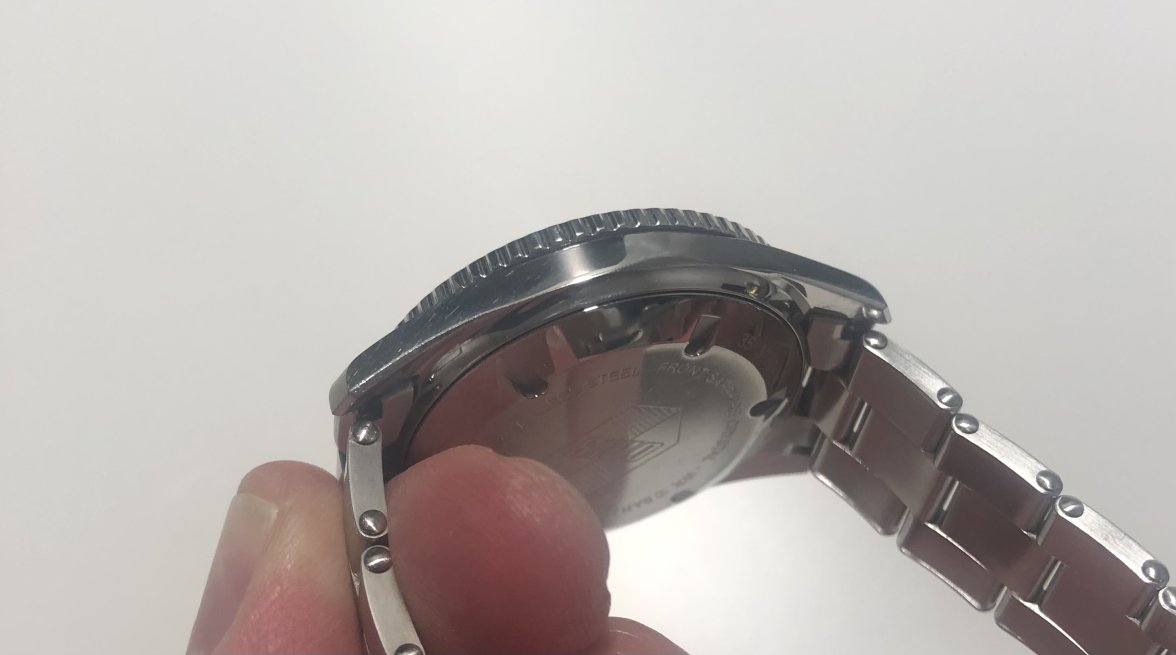
But couldn’t they just take a time stamped photo instead, and follow the instructions about not polishing?
Setting aside whether Oris handled this specific instance properly even according to their own expectations (it appears they admit they did not, in that they suggest they should not have accepted the watch in the first), and setting aside whether we might hope Oris would have different expectations of itself having errored in their own policies :
I do not think it would be “quicker and cheaper” to take photos etc., in that from an operational/process perspective that requires developing a not insignificant secondary process and decision tree effecting
all services in order to address the request of what is certainly a Oris rare customer with a strong aversion to polish.
With Oris’s current process, all that is needed is a record of servicing a specific watch whatsoever, and in the background a default position that
all service watches have been polished of any material dings at service, so there’s nothing more for the company to collect, track, review, etc. From a process and operations perspective, it’s a very simple action tree.
Conversely, a secondary and concurrent policy of photographing of the rare customer’s watch
not seeking polish would be considerable more operationally/process involved.
Which highlights a point to bare in mind from the Oris perspective: it’s surely a
tiny fraction of Oris watch owners that might ask for their watch to
not be polished, vs the vast majority that
affirmatively desire and
expect a polish with any service. So not only is there an incentive to polish all watches, but also an incentive to not inject exemptions: from the error-cost perspective, the risk of polishing a watch the owner
didn’t want polished is far less than the risk of
not polishing a watch the owner
did expect to be polished.
Least of all from a brand such as Oris, I am not surprised to find they have no desire to create additional processes to accommodate the rare Oris client with a strong aversion to polishing a watch in a service, especially since their usual customer surely expects a polish.
This, of course, is separate from expecting Oris to at the very least behave according to its own policies by not accepting the watch for service in the first place, or if accepted for service in error to then somehow make it “customer is always right” correct.