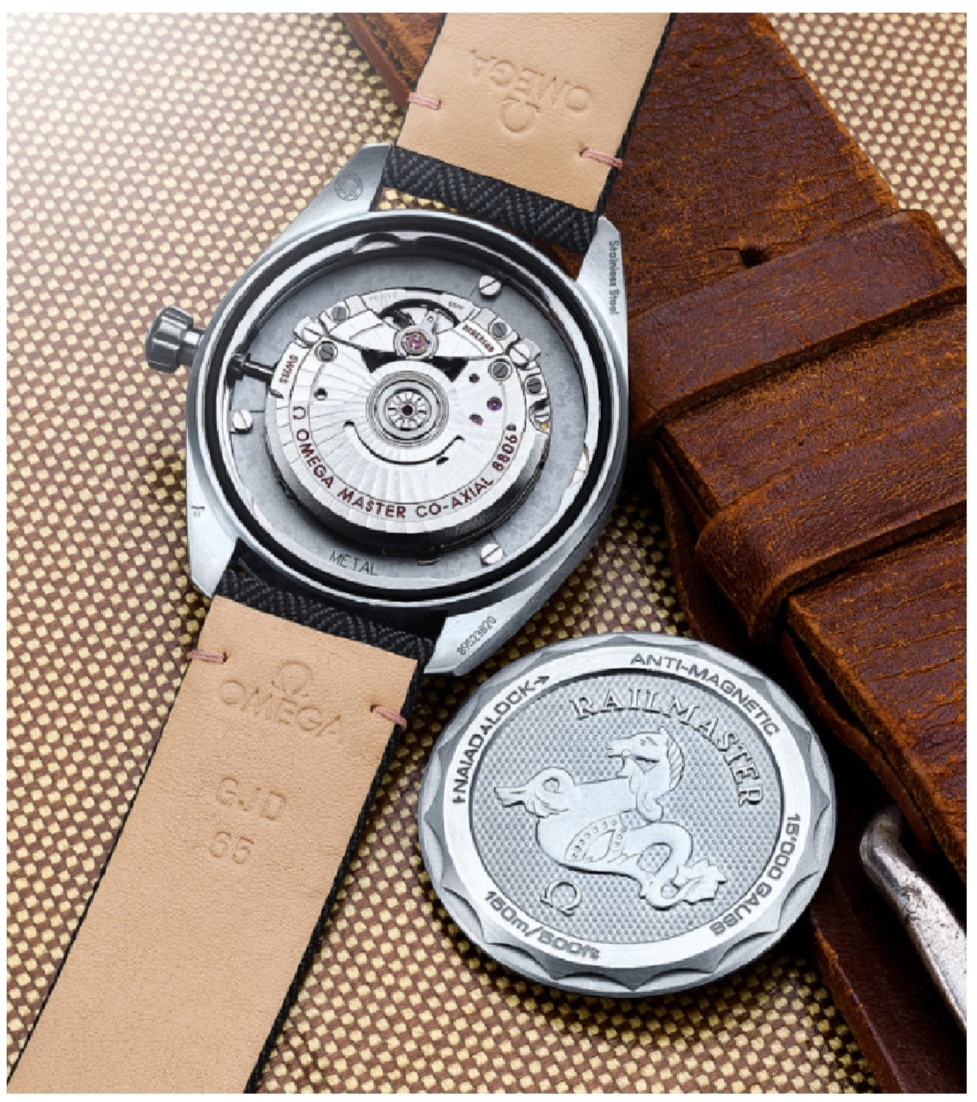
8806 movement exposed..

Posts
1,565
Likes
2,673
So basically, this watch could've been a lot smaller, if the case diameter was reduced, and would've worn a lot thinner, had a high-dome crystal been used like on the 57 Trilogy. Guess big is still popular outside of collector/enthusiast groups?
 
Posts
470
Likes
526
Looking at the pic again it's hard to gauge any depth. At first glance it looks like the movement has been crudely plonked in the caseback onto a metal disc, but enlarging the image it's clear the disc is 'hugging' the movement (and will be given extra protection with a disc on top between the movement and the caseback?)
 
Posts
470
Likes
526
Something doesn't make sense with that image. The 8806 is 29mm in diameter and the watch casing is a fraction under 40mm, which means that there is 5mm space either side of the movement when centrally positioned inside the case. Having measured my watch 29mm centrally across my caseback and compared that to this image, there is no way in that image that gap is 5mm from edge of movement to edge of case?
 
Posts
8,255
Likes
19,445
That's a tiny [looking] movement thing! I feel robbed now! 😒
 
Posts
470
Likes
526
That's a tiny [looking] movement thing! I feel robbed now! 😒

I did too, however if you do the maths and measurements this scaled image isn't right. The case is 40mm in diameter, the movement is 29mm, which means there is a 5.5mm gap between the edge of the movement to the edge of the case on either side of the movement. The ratio on this image doesn't add up.

For further scale and comparison, measuring my dial across it's almost 30mm (roughly the size of the movement) and therefore the movement, to allow for the thickness of the steel casing, would take up much of that space (unlike in the pic).

I'm now wondering if that was an early pre-production mock up pic/render of the 8806 and the scale is all wrong.
 
Posts
470
Likes
526
That's a tiny [looking] movement thing! I feel robbed now! 😒

Sorry to rattle on but this has been bugging me!

Based on the facts that the watch case diameter is 40mm and the movement is 29mm, working out the actual dimensions to scale, the image of the movement here is showing as 26mm, not 29mm, so in reality the gap around the movement is much less in reality than this render implies.

Strange.

If anyone does have a pic of the real thing that would also of course back this conundrum up.
Edited:
 
Posts
2,473
Likes
3,855
Sorry to rattle on but this has been bugging me!

Based on the facts that the watch case diameter is 40mm and the movement is 29mm, working out the actual dimensions to scale, the image of the movement here is showing as 26mm, not 29mm, so in reality the gap around the movement is much less in reality than this render implies.

Strange.

If anyone does have a pic of the real thing that would also of course back this conundrum up.
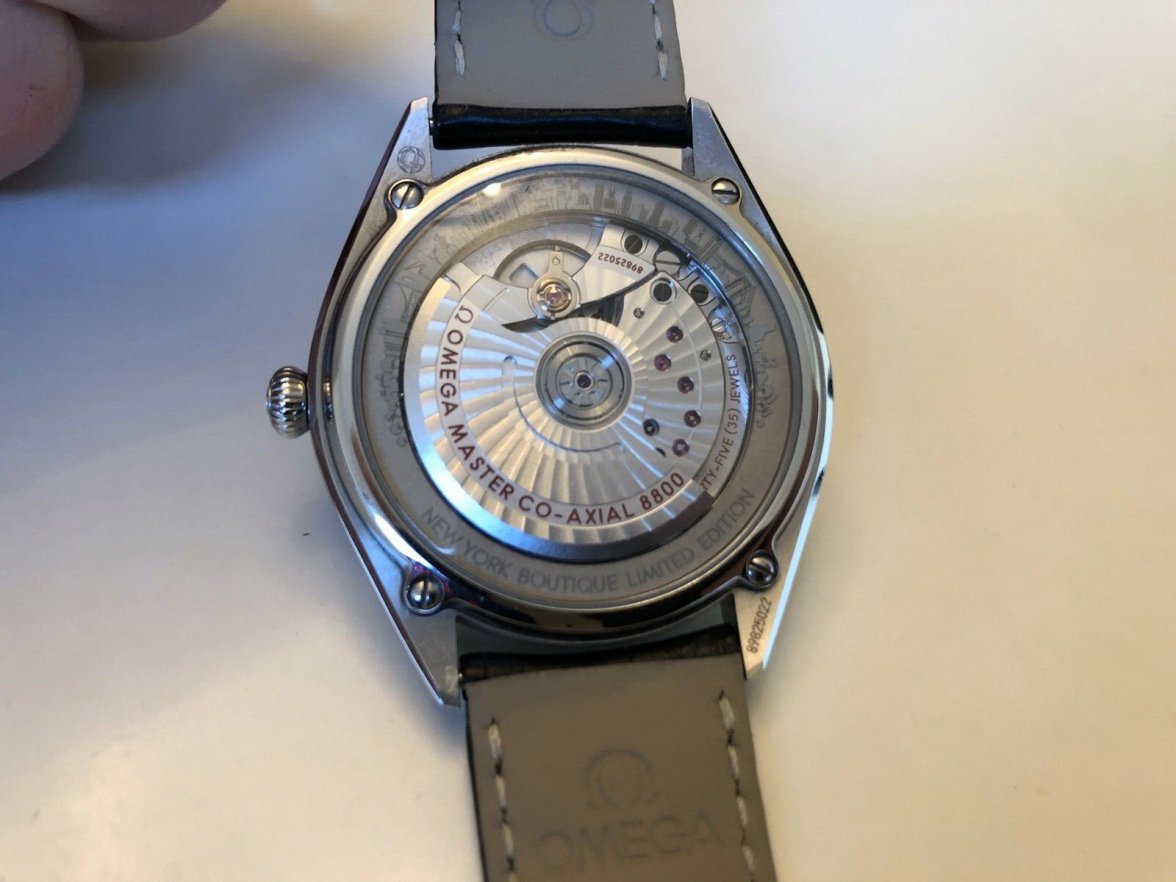
Looks about right to me. Here is a 39.5mm Seamaster with an 8800 (8806 is the no date version)... now imagine it without the city design around the movement
 
Posts
3,998
Likes
9,018
Based on the facts that the watch case diameter is 40mm and the movement is 29mm, working out the actual dimensions to scale, the image of the movement here is showing as 26mm, not 29mm, so in reality the gap around the movement is much less in reality than this render implies.

RE the bold, determined how?

in terms of apparent volume, a 10mm delta edge-to-edge is pretty huge when comparing visually.

For example, in terms of volume a 7mm sphere is 59% larger than a 6mm sphere. Seems the same, surprising, effect may be at play here?
 
Posts
3,998
Likes
9,018
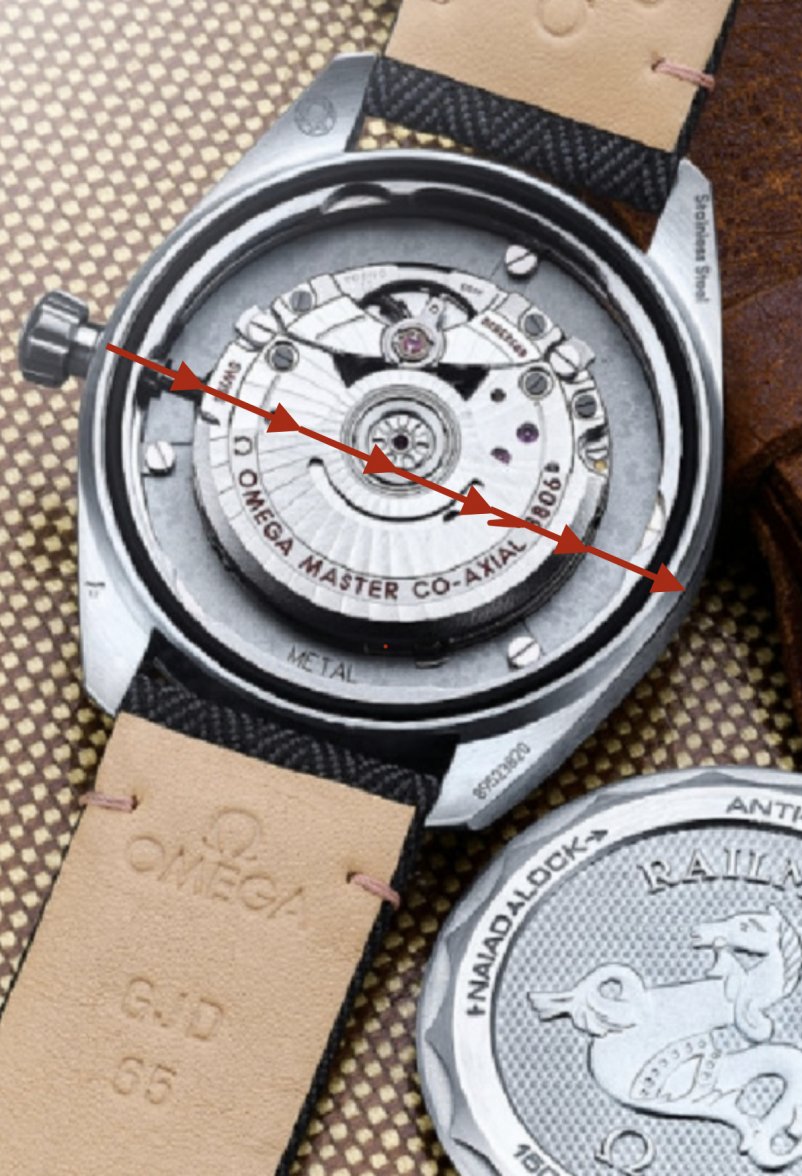
Just because being out of my element in nerd stuff:

Here’s a crude photo with 6 arrows, all identical in length.

The full six arrows length is [X].

Four arrows is 66% the length of [6 arrows].

Similarly, 29mm is 72% of 40mm. Put differently, 40mm will appears almost 30% larger than 29mm.

Now, 66% is different from 72%, but only by 6% - which, based on this cartoon slapdash example, doesn’t seem like much difference given things like distortion in the picture, my arrows not quite hitting the full diameter, etc.

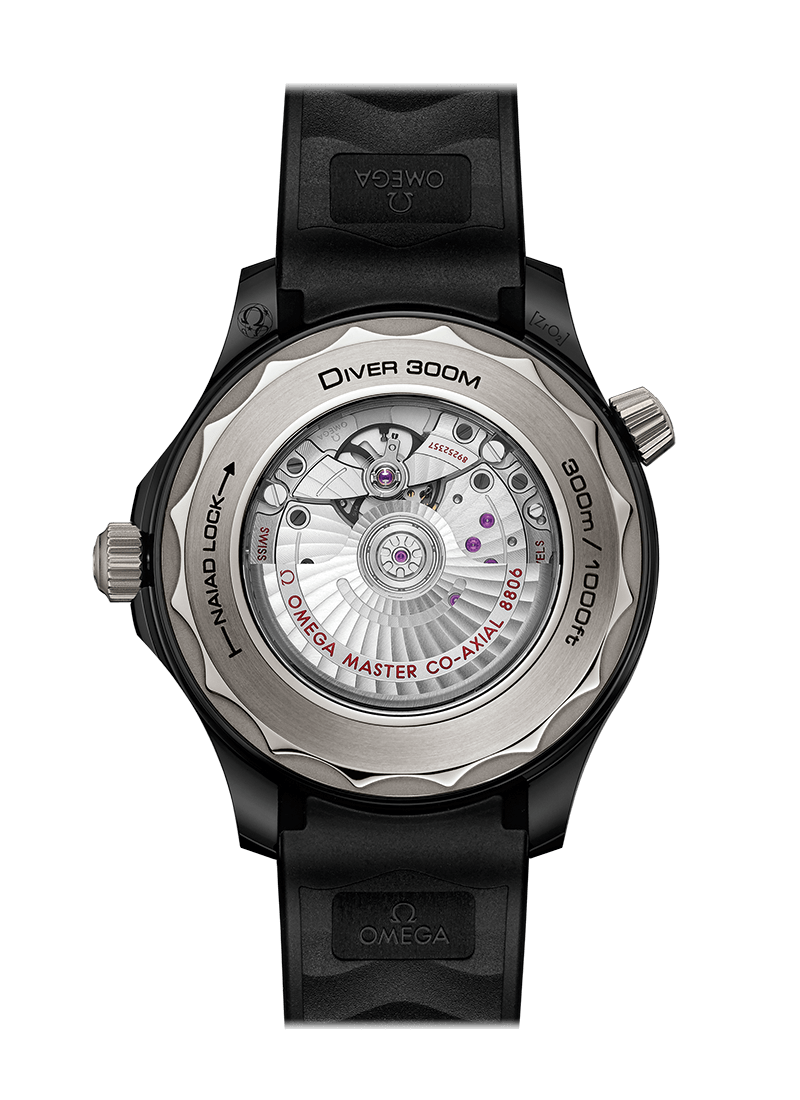
Also, here it is in the 43mm 300m - straight from Omega’s website, and it looks real small

 
Posts
113
Likes
128
I must say i’m not surprised by the spacing of the movt vs case size.... People often complain about the “large” movements Omega makes whic result in larger cases, but in most cases the movement has very little impact on the case size given the dimensions involved...

My understanding was that the 88** Calibre movements were more a replacement for the 2500 series so smaller and slimmer.....
I read somewhere (trying to find the source ) that the 88** was 11.5lignes (26mm) diameter and 4.5mm thick..

Whereas the 8500/8900 series were larger at 13lignes (29mm diameter and 5.5mm thick)..

The 88** should only be single barrel, whereas the 8500/8900 are twin barrel.
 
Posts
470
Likes
526
I must say i’m not surprised by the spacing of the movt vs case size.... People often complain about the “large” movements Omega makes whic result in larger cases, but in most cases the movement has very little impact on the case size given the dimensions involved...

My understanding was that the 88** Calibre movements were more a replacement for the 2500 series so smaller and slimmer.....
I read somewhere (trying to find the source ) that the 88** was 11.5lignes (26mm) diameter and 4.5mm thick..

Whereas the 8500/8900 series were larger at 13lignes (29mm diameter and 5.5mm thick)..

The 88** should only be single barrel, whereas the 8500/8900 are twin barrel.

8806 is 29mm according to here :

https://watchbase.com/omega/caliber/8806

Which, when looking at my original screenshot the 29mm movement inside a 40mm looks too small, unless, as others have said, distortion/parallax etc and a bit of optical illusion is playing a part.

The 8806 in the 43mm SMP (above) does indeed look small, but given that's 43mm (vice 40mm) I can see why.
Edited:
 
Posts
10,438
Likes
16,317
If Al says it is 26mm then it is 26mm, looks like Watchbase is wrong. Bearing in mind the single barrel it is easy to accept that the 8800 could be skinnier than the 8500/8900 in both directions. Nice to see how the Naiad lock back works, like a camera bayonet mount.
 
Posts
470
Likes
526
If Al says it is 26mm then it is 26mm, looks like Watchbase is wrong. Bearing in mind the single barrel it is easy to accept that the 8800 could be skinnier than the 8500/8900 in both directions. Nice to see how the Naiad lock back works, like a camera bayonet mount.

Yes, the nifty caseback system looks very cool/clever and not really a DIY job either I guess.

26mm it must be then, which makes the original image seem about right after all.

How sturdy and reliable are the mounting screws to hold the movement in tight, snug and secure? With extended servicing intervals on the new/latest METAS movements, is it now wise to have the caseback professionally removed and inners inspected as an interim to full servicing?
 
Posts
29,662
Likes
76,811
If Al says it is 26mm then it is 26mm, looks like Watchbase is wrong. Bearing in mind the single barrel it is easy to accept that the 8800 could be skinnier than the 8500/8900 in both directions. Nice to see how the Naiad lock back works, like a camera bayonet mount.

These sites like Watchbase and Ranfft are useful to a degree, but are often full of errors, so take the information posted on them with a large grain of salt.

Omega says the movement is 11.5 lignes, so 26 mm:


Cheers, Al
 
Posts
271
Likes
408
Seeing that profound of a spatial gap in the Railmaster, and SMP 300 pictured above, I'm curious why Omega chose an 8800 movement range instead of the 8900 for those collections?

My 8900 Globemaster's exterior dimensions are under 13mm in height, and at 39mm in width. Diminutive compared to the current-gen 42mm Seamaster 300M. Granted, the SMP has increased water resistance.

If only only we could choose between movements when buying a watch while keeping the exterior design, akin to picking between powertrain options on a car 😀 I'd favor the 8900, with its twin-barrel power reserve, and most importantly, its silent rotor.
 
Posts
2,473
Likes
3,855
Seeing that profound of a spatial gap in the Railmaster, and SMP 300 pictured above, I'm curious why Omega chose an 8800 movement range instead of the 8900 for those collections?

My 8900 Globemaster's exterior dimensions are under 13mm in height, and at 39mm in width. Diminutive compared to the current-gen 42mm Seamaster 300M. Granted, the SMP has increased water resistance.

If only only we could choose between movements when buying a watch while keeping the exterior design, akin to picking between powertrain options on a car 😀 I'd favor the 8900, with its twin-barrel power reserve, and most importantly, its silent rotor.
Probably cheaper, and they didn't have to develop a no-date version of the 8900, whereas the no-date 8800 already was in use by the 60th LEs, No Time to Die Seamaster, and I think the 43.5mm Seamaster 300m too. It all comes down to money. But my question is, why not spend the extra $0.25 for a spacer around the movement?
 
Posts
29,662
Likes
76,811
But my question is, why not spend the extra $0.25 for a spacer around the movement?

I don't think you know what you are looking at. There is already a spacer there - known as an enlargement ring. It's made of Titanium in this watch (220.12.40.20.01.001):

079TIZ007587 | ENLARGEMENT RING TITANIUM 8806