- Posts
- 735
- Likes
- 2,973
Please consider donating to help offset our high running costs.

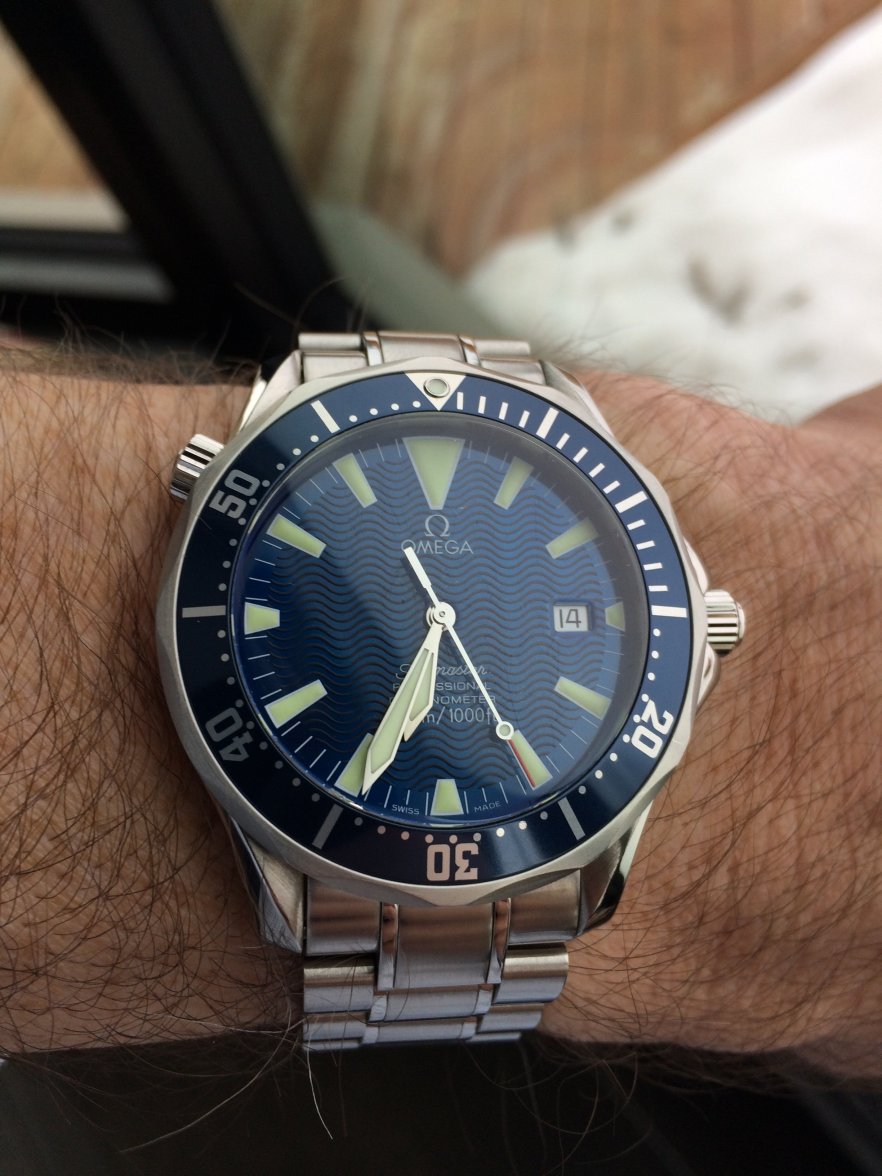
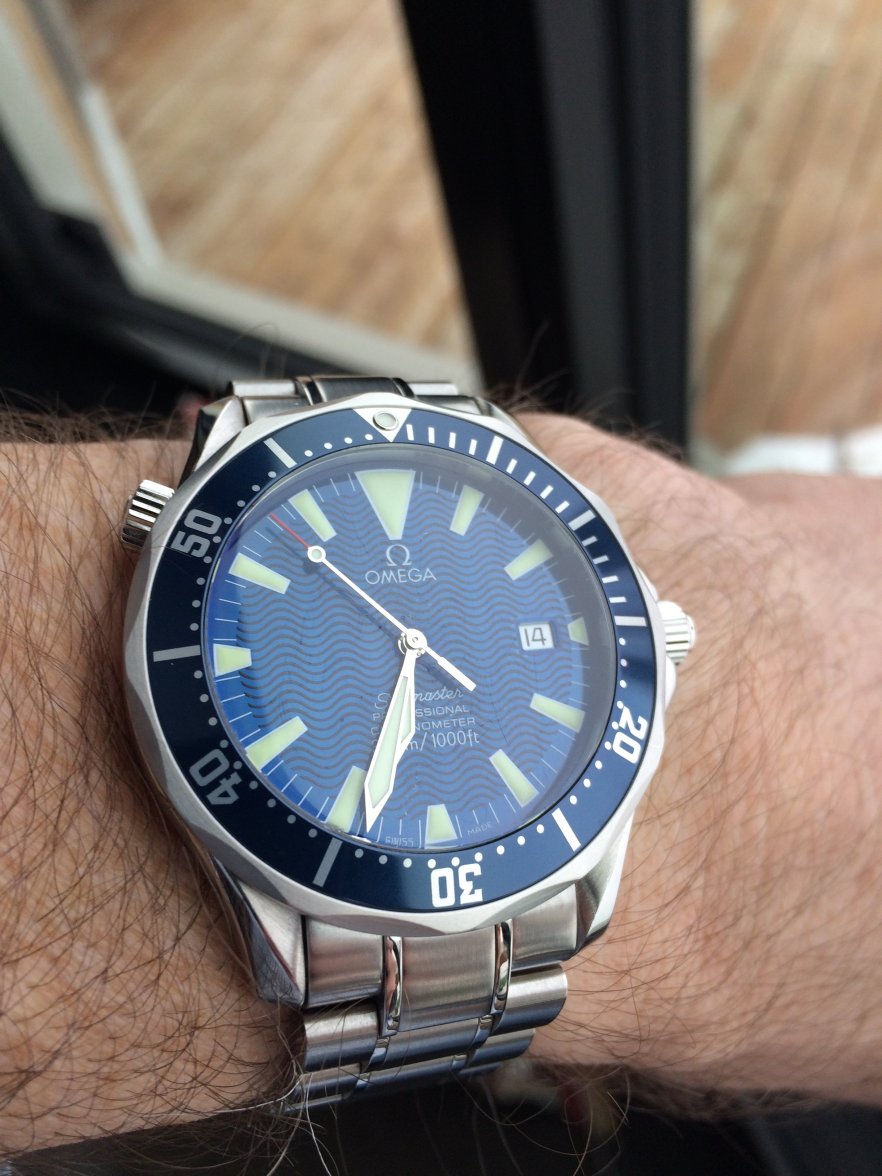
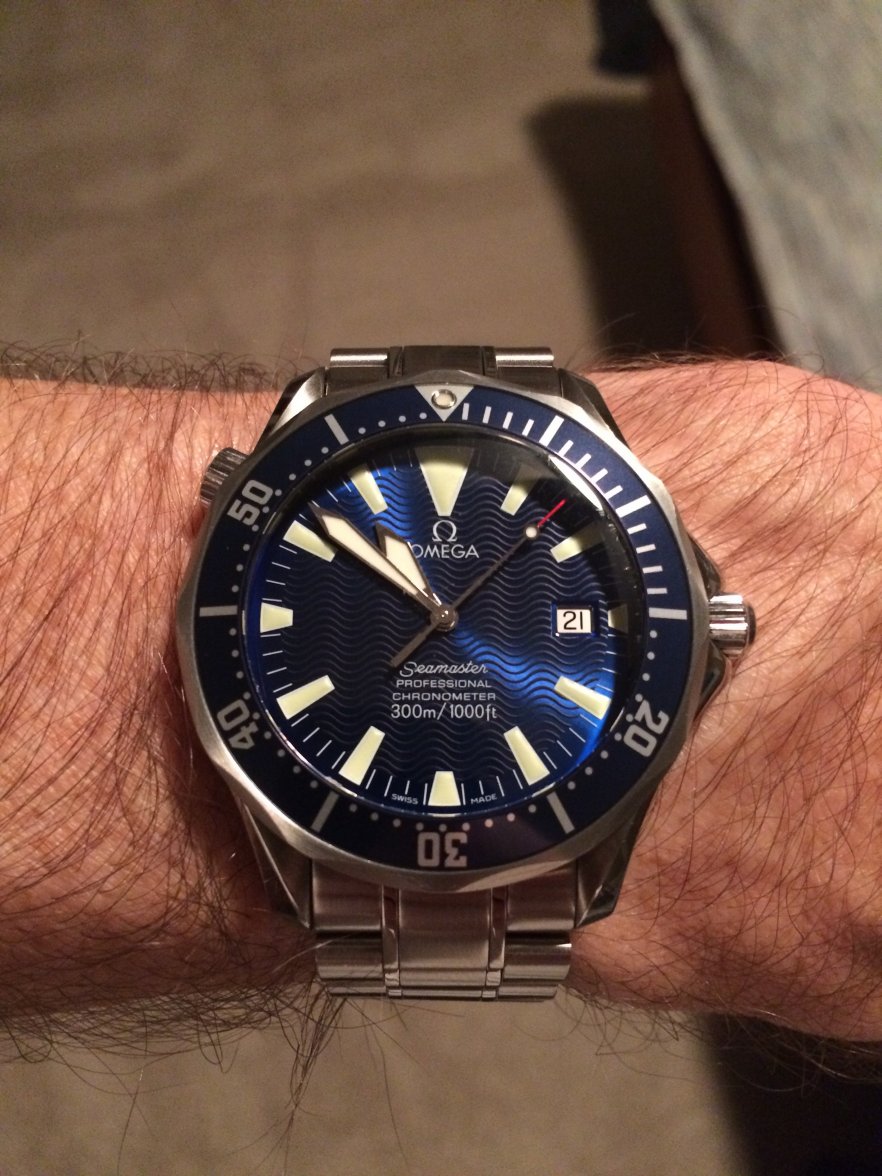
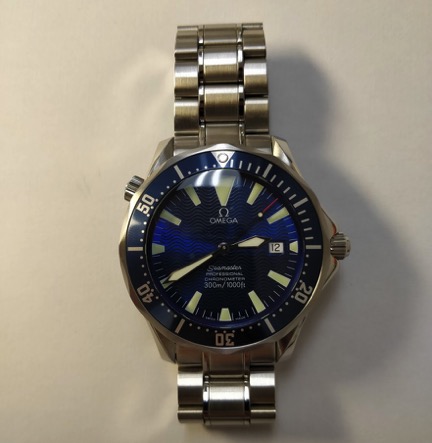
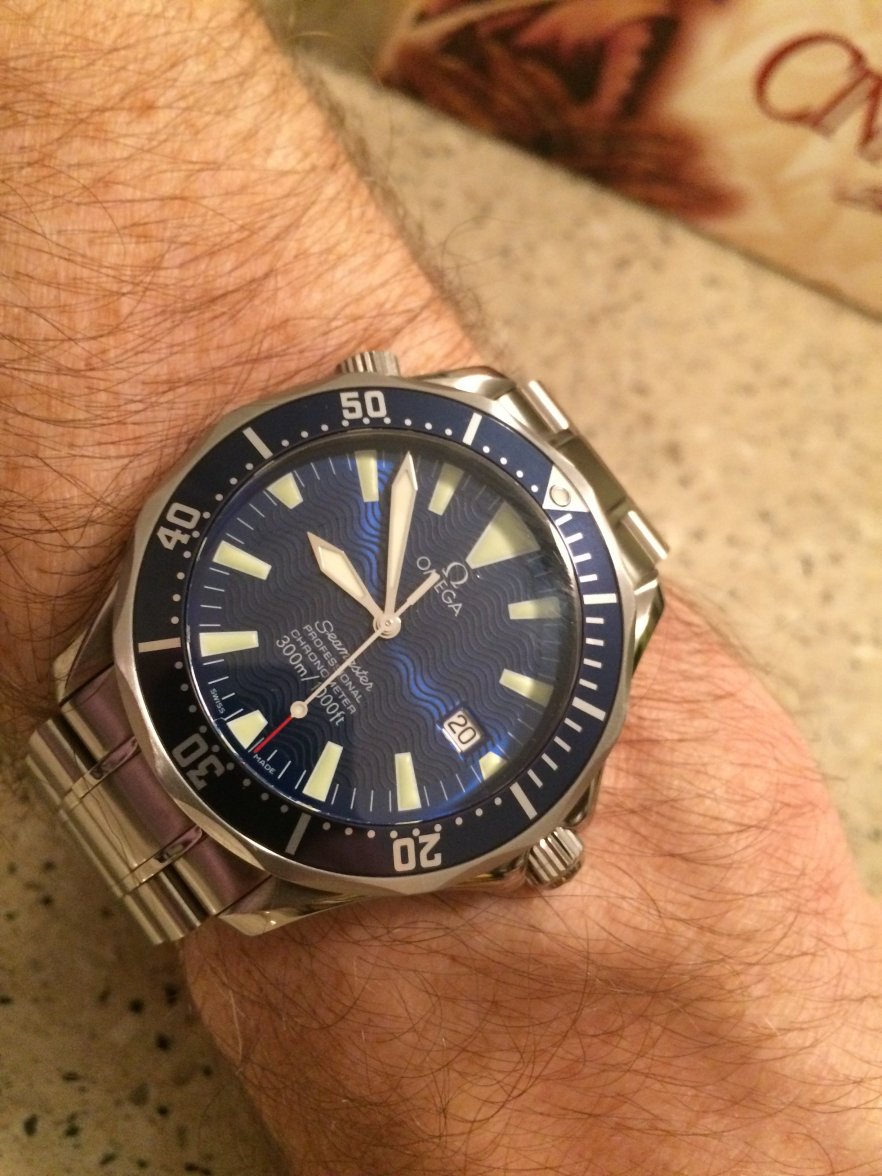
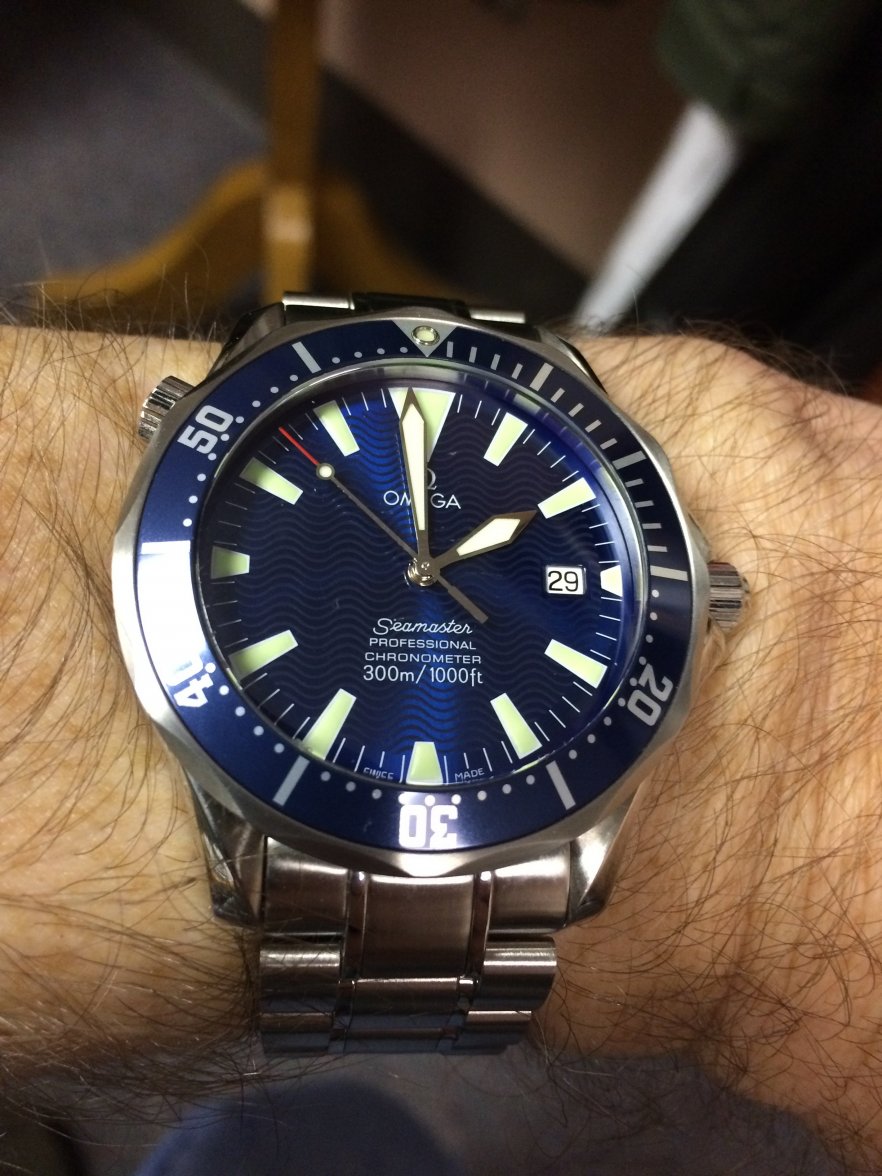
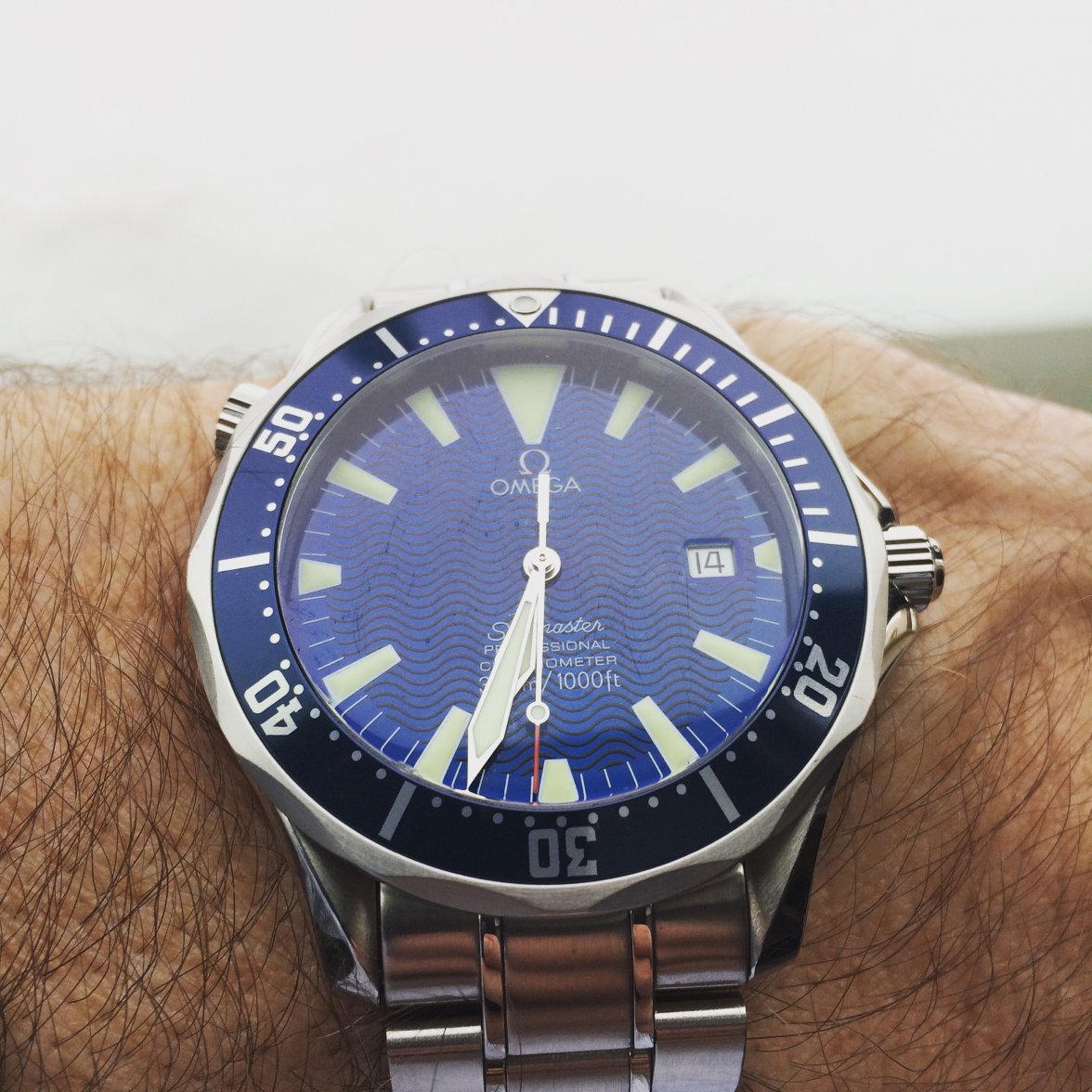
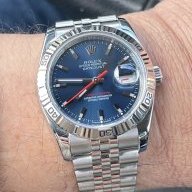
I bought this from a Swatch tech who did the mod himself...I am very happy with it!
This is a selection of pics I have taken, inside or in the sun. Haven't had it long enough to get any spring or summer sun...


ps. Am happy for Al to correct me on this as he often does but I would guesstimate the commonality of parts between the 2500 and 1120 movements at over 80%. It’s only the escapement where they really differ and watchmakers aren’t universally keen on Omega’s coax at all costs philosophy. Quite the opposite it seems.
It really depends on how you count the parts, and it varies between different versions of the 2500. I performed a quick count using the 2500 tech guide, and identifying the percentage of parts that has either 2500 or 1120 in the part number. Those with 1120 are common to the 1120, and those with 2500 are specific to the 2500. It's not as straightforward to calculate as you might think, but if you go purely by the part numbers, it's about 60% common parts, using the 2500B as the example.
But some of those parts are only different because they are stamped with identification, so that means the only difference may be the lettering that is engraved into the parts. In other cases, one part of a subassembly is different, so other parts in that same subassembly might be the same, so if there are 4 parts to the subassembly, is it one whole parts that is different, or only 25% of the 4 parts?
In addition, things like the 1120 that uses a regulator where the 2500 is free sprung are not taken into account using this method. So the regulator itself can be one additional part, or two separate parts if you count the parts in the subassembly. The balance is different and it is a subassembly with several parts, so are all the parts in that subassembly different? Not enough information available to say for sure.
It's more than just the escapement that changes certainly. The escapement changes, plus the main plate (additional holes/jewels) and also the pallet fork bridge for the same reason, plus the stop lever, balance (which is not part of the escamement, at least not all of it). Depending on the version so there are 3 different mainsprings used across the 2500 range. The 2500 A and C use the 1120 mainspring, where the B and D use their own specific mainsprings.
So I'm not going to give an exact percentage because it's too much work, but it is more than just the escapement certainly.
in layman's term would you say the 2500D is a better movement than the 1120?

Meaning he is not allowed to put a 2531.80 bezel in the 2255.80. I'm wondering if this is a common practice for Omega Certified watchmaker?

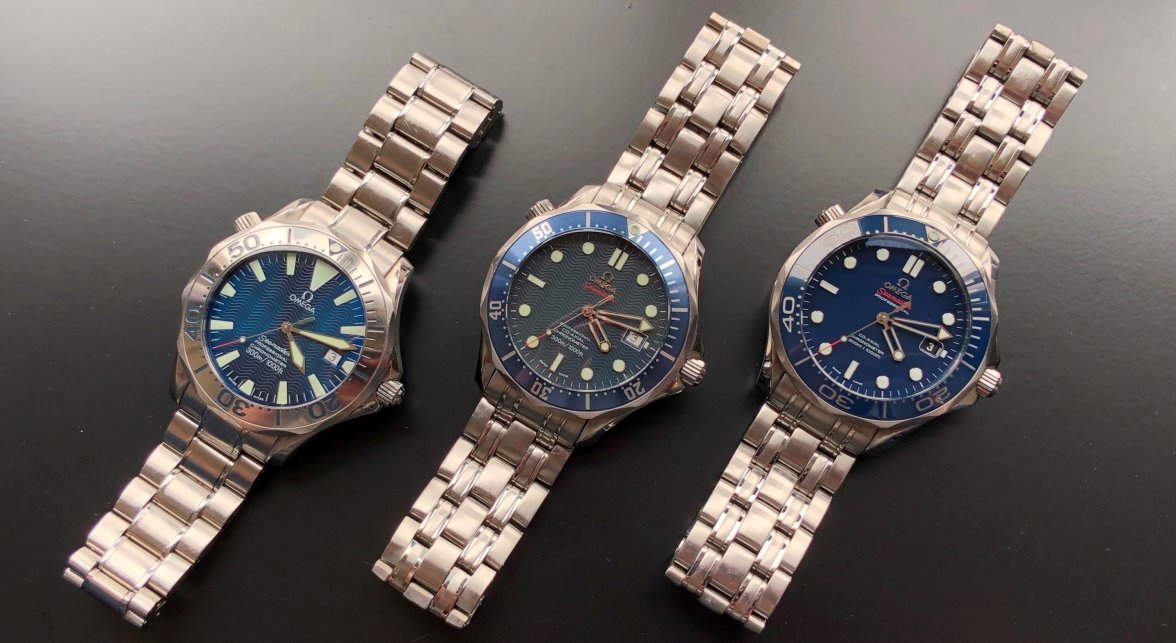
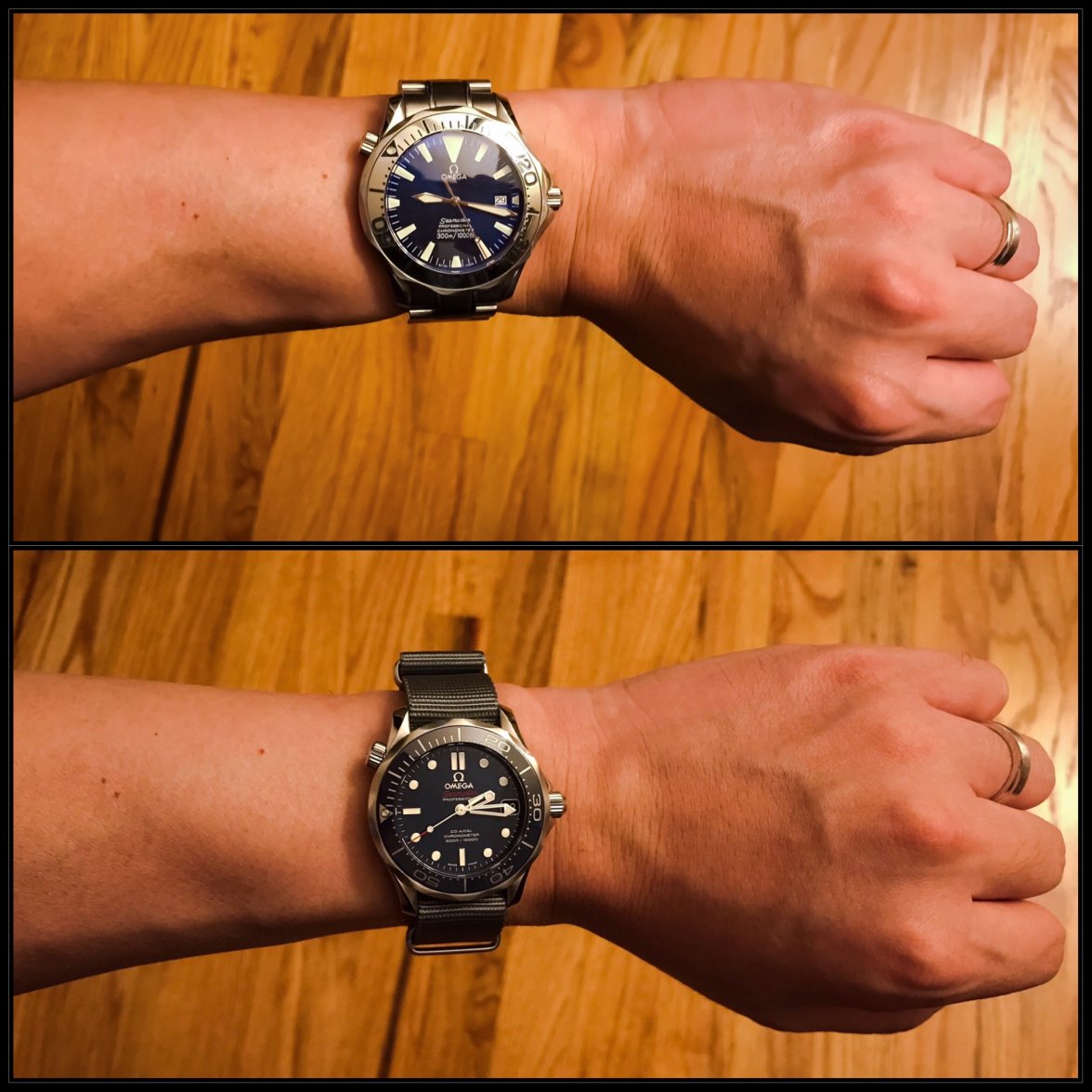
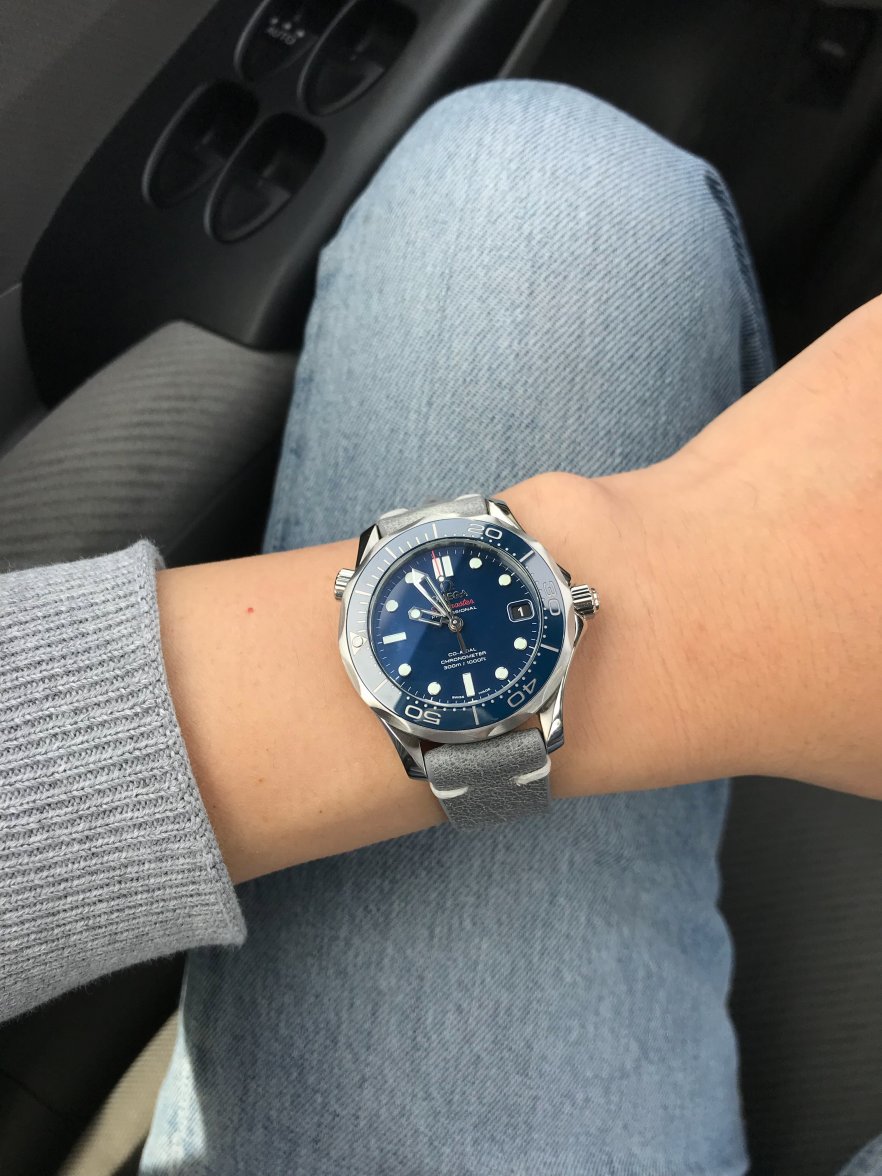
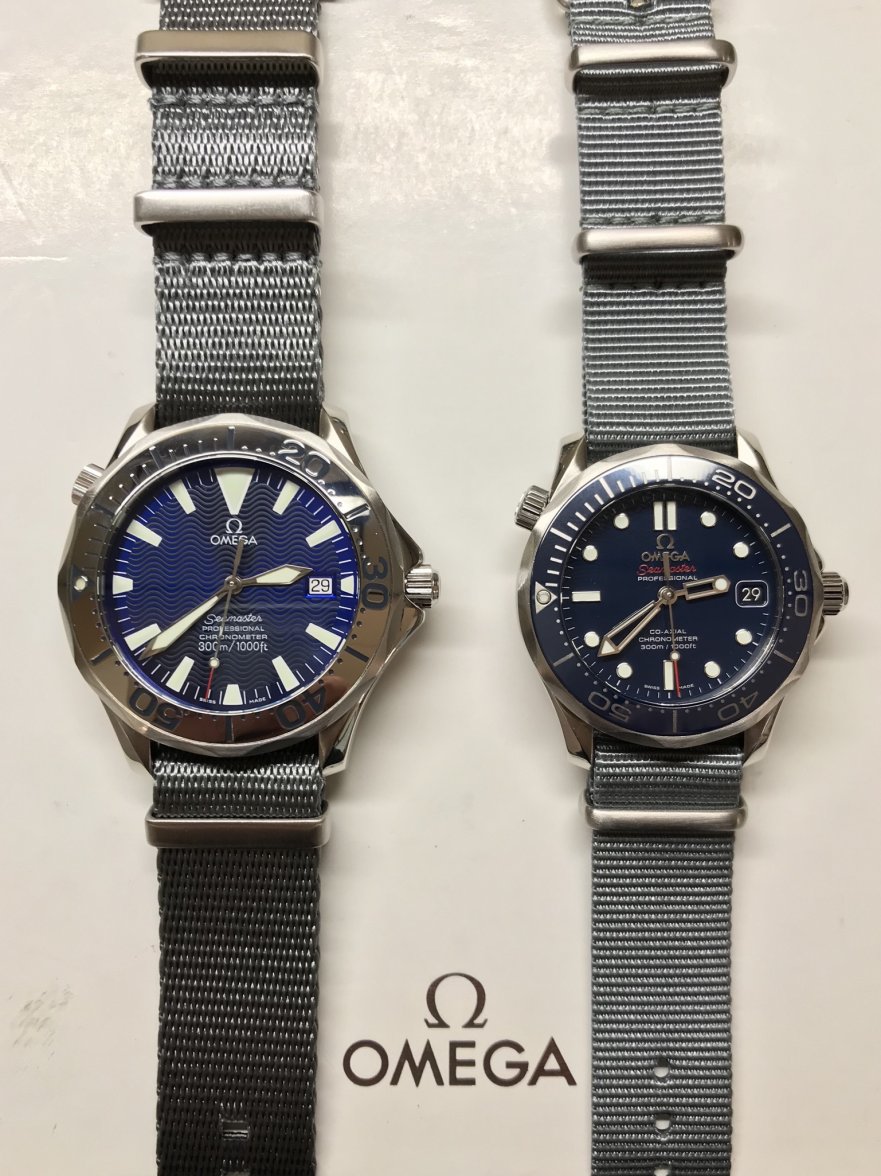
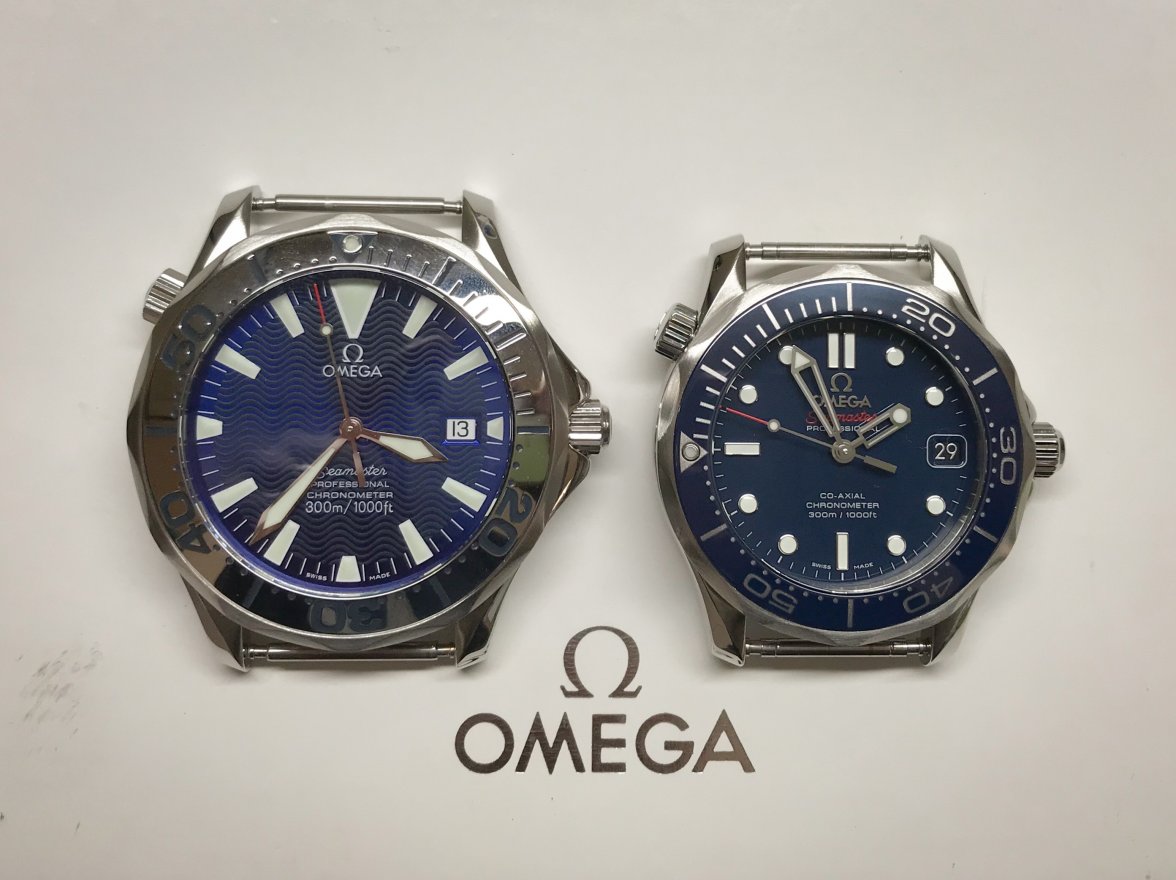
I recently acquired 2 Seamasters in blue, a 2007 2255.80 Electric Blue (referred to as "EB") and a 2014 SMPc mid-size 212.30.36.20.03.001 (referred to as "SMPc").
My wrist size is just a tab over 6.25'. I own a few speedy moonwatches and never thought its 42mm size looks too big on me. So I thought I could pull off the EB with 41mm case diameter. On the other hand, I always want to give the midsize a try. So I just acquired both and would try them out before deciding which one I should keep. Now having them for a few days, I'm really torn between the two, each has its own unique characters and shortcomings. I'd like to seek for opinions from the forum to help me decide. Here's how I feel about each of them:
SMPc
Pros:
1. I think the overall size looks better in proportion to my wrist size. As if a 41mm SMP would look on a 7-7.5' wrist. No overhang at all from lug to lug, and for the first time a NATO strap looks right on my wrist.
2. It's more modern looking, better material used, sharp but elegant.
3. Better movement (2500D).
Cons:
1. Size is a double edged sword here. With the bezel width, the dial really looks quite small. It definitely feels smaller than my 36mm Explorer I. Half of the time I look at it and feel it's elegant, the other half I feel it's a bit girly.
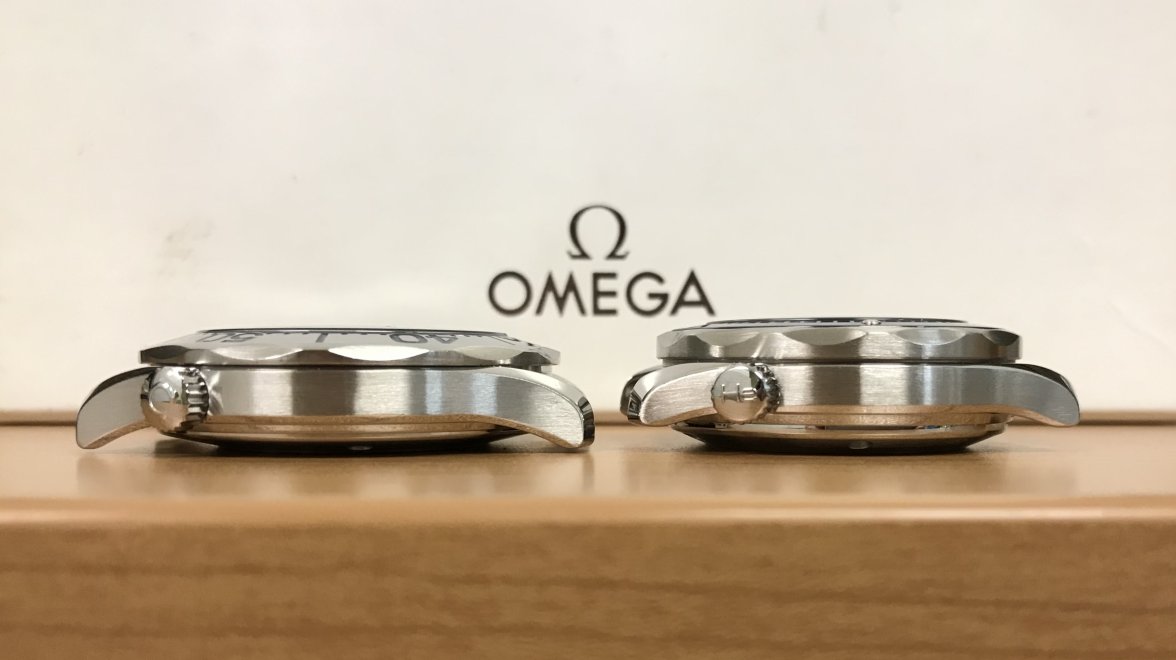
2. It's a bit thicker than the EB to my surprise. See the side view pictures below.
3. Not so sure about the font on the bezel and the skeleton hands.
EB
Pros:
1. The dial... just amazing how it plays with different light conditions. And it just explodes under the sun.
2. I prefer the sword hands and rectangular hour indices.
3. Thinnest 300m diver I've ever seen.
4. A size that's generally preferred by watch lovers, and more appropriate to its designed function as a diver.
Cons:
1. Once I got used to the midsize, every time I put the EB on I feel it's too big for my wrist. NATO looks way too bulky and does not work...
2. Craftsmanship and material used is not as refined, no applied logo, white gold (correction: should be SS) indices, etc.
3. Inferior movement.
What does the forum think, Which size looks better? Can I pull off the 41mm EB? Does the midsize look too small? Please let me know your opinions.
Thanks!!
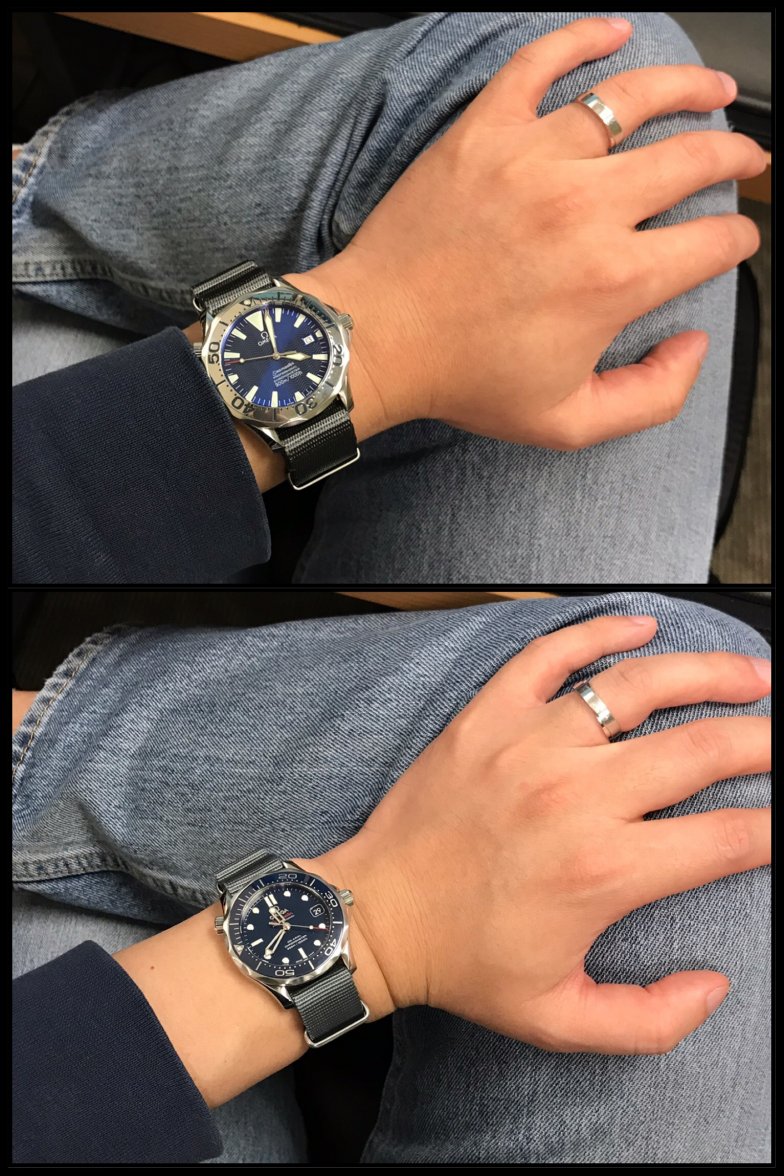
Both models are nice and look good on your wrist, it is a matter of personal taste. I have 7 inch round wrists and wore medium size SMP for over 10 years; then tried the full size and sold the medium. I had since then purchased and sold many models on both sizes, but have settled (for now 😉 ) on full size.
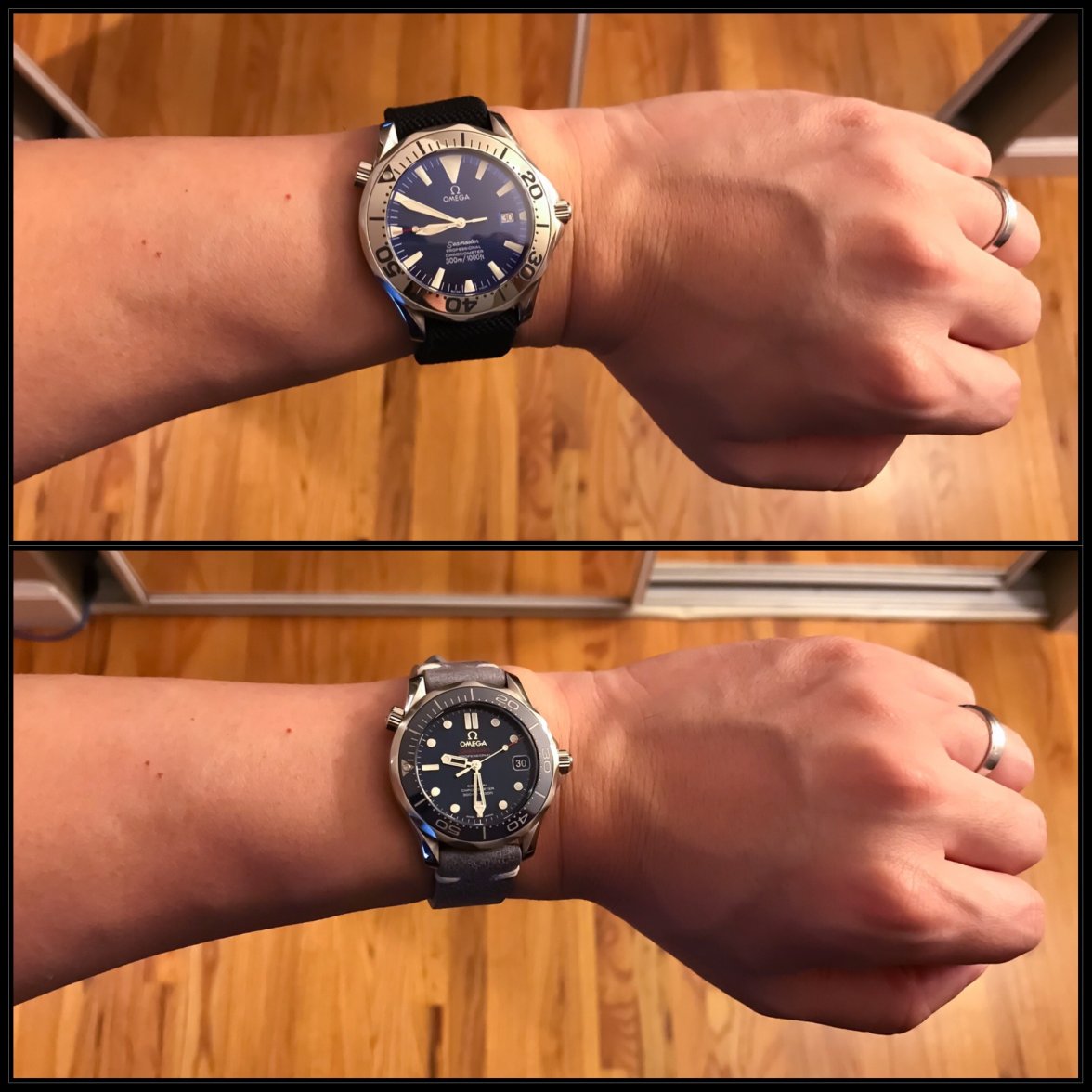
I bought this from a Swatch tech who did the mod himself...I am very happy with it!
This is a selection of pics I have taken, inside or in the sun. Haven't had it long enough to get any spring or summer sun...



I see quite a few EB that was modded with this bezel. I'm wondering whether it is just replacing the bezel insert, or it has to be the entire bezel? and if just the insert, is this mod reversible?
Would appreciate some insights from anyone that did this mod. Thanks!