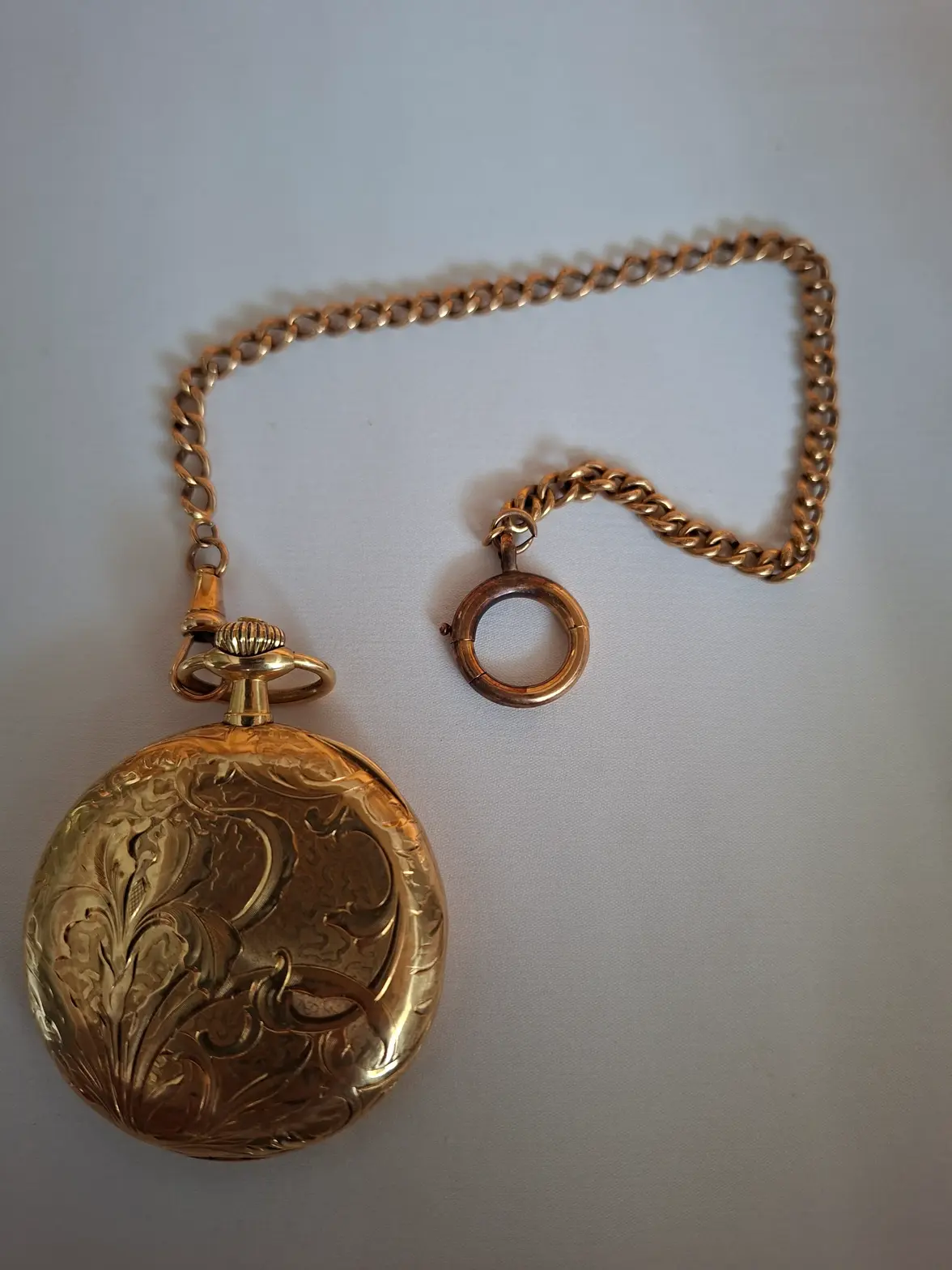
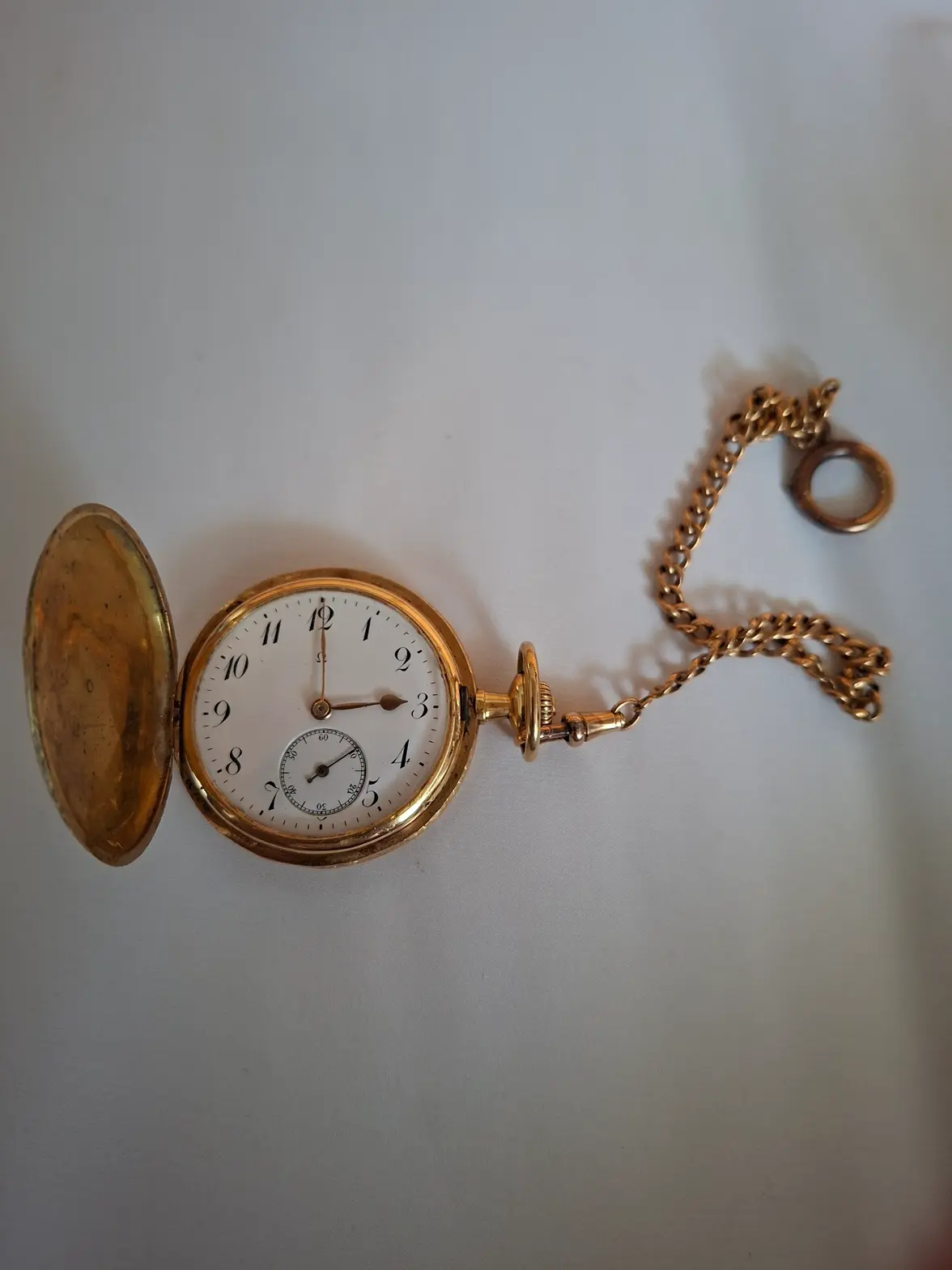
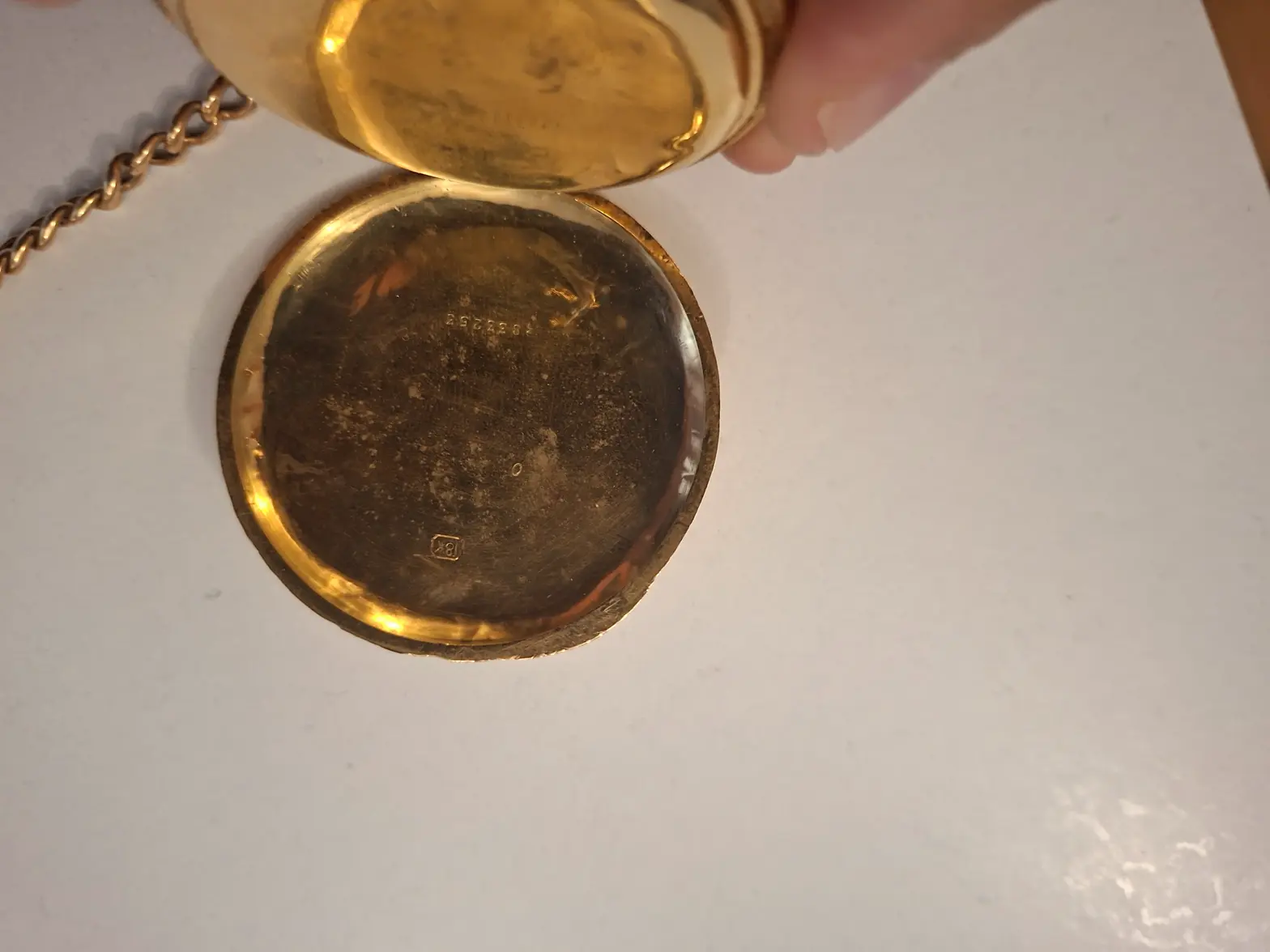
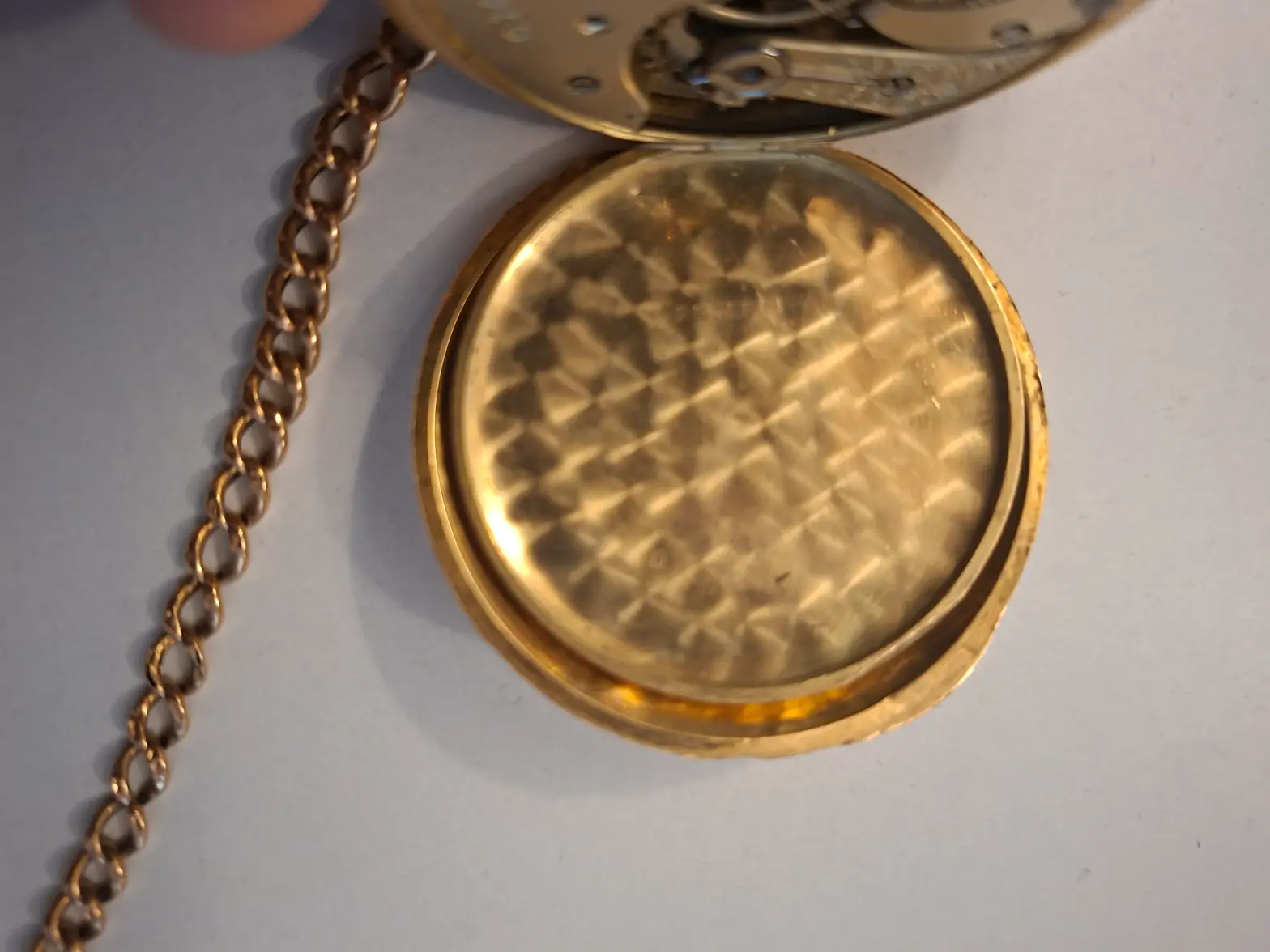
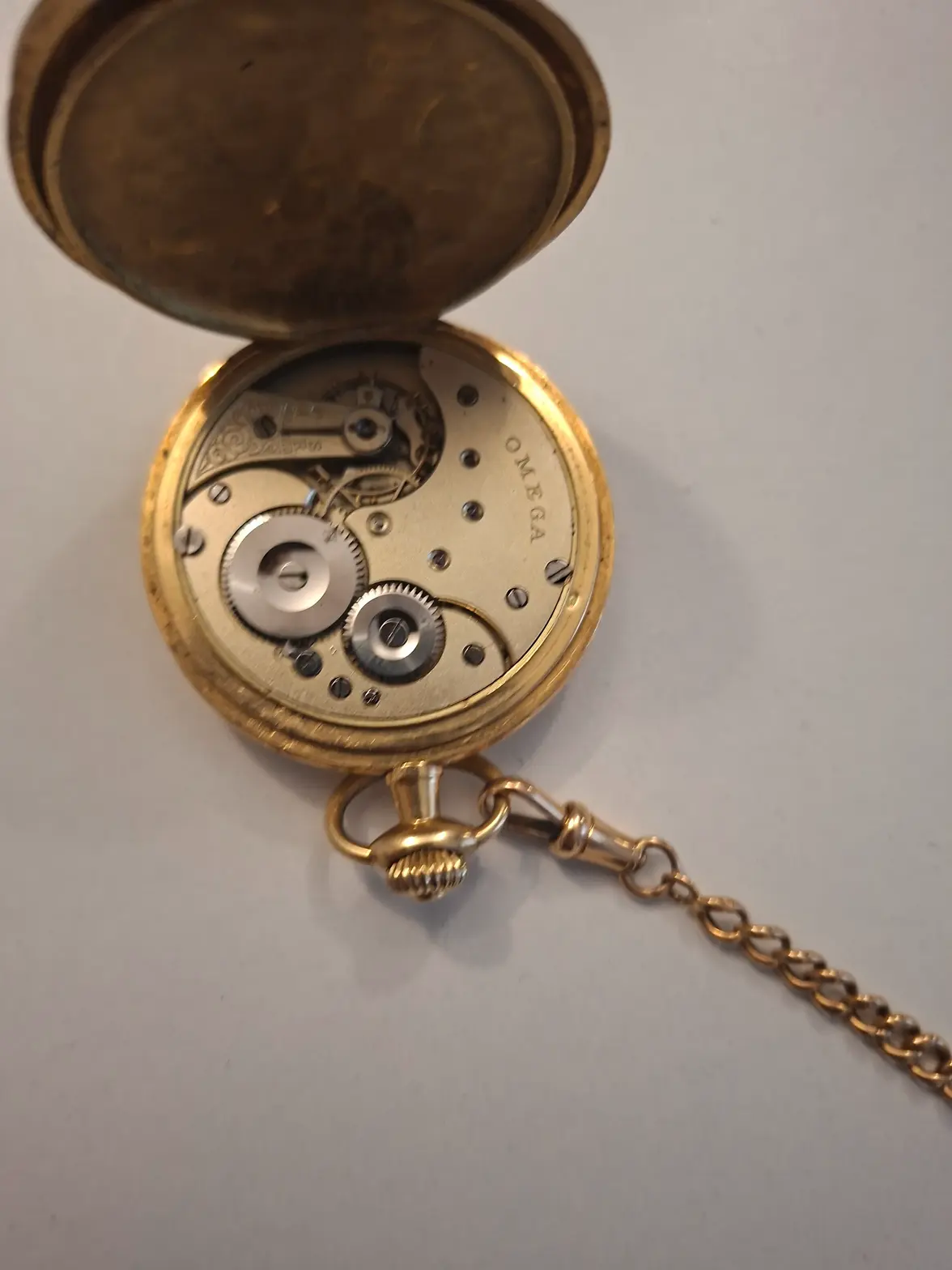
Dear all, i have received this Omega hunter pocket watch as a gift from my great grandfather. The only piece of information i have is that it comes from Switzerland and the number 3833253 is engraved on the case. I don't even know if it's gold plated or in gold.
I would like to have as much information as possible regarding this watch, what is the best way to restore it and maintain it and the expected market value. I am not looking at selling it i want to keep it but i would like to understand it's value.
Open the front and back lids, and look inside the covers. Gold cases carry hallmarks: on a Swiss case of that era, you're looking for "0.750" or "18K" (18 carat), "0.585" or "14K", or "0.800"—the last one means silver, sometimes gilt to look like gold. Plated cases usually say things like "plaqué," "doublé," or carry no fineness number at all. There's often also an Omega medallion stamped in the caseback. Photograph whatever you find and post it here - that one photo settles gold-vs-plated for free, and it's the single biggest factor in the value question.
Then the number that actually dates it: the 3833253 on the case is the
case number. The date lives on the
movement - open the back fully, look for a serial stamped on one of the bridges (usually 6–7 digits on these), and post that with a photo of the movement. With the serial, this crowd can place the year, usually within one or two.
On restoration, one plea from someone who sees the damage constantly: don't polish it, and don't re-do the dial. That enamel dial and those spade hands survived a century - cleaned gently, they're worth more than any "restored" version. The only money worth spending is a gentle mechanical service (the oils inside are generations old), by an independent watchmaker who works on antique pocket watches.
And the tip that saves the case: when closing a hunter lid,
press the crown first, then release it with the lid shut - never snap it closed. Snapping wears the lip that keeps the lid tight, and worn-snap hunters are half of what I see. Your great-grandfather's watchmaker would tell you the same.
Post the inside-cover and movement photos, and we'll pin down what you've got.