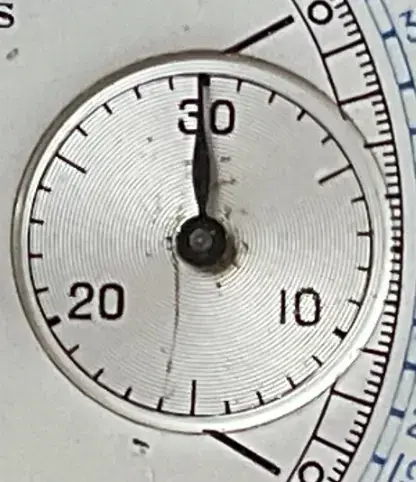
I measured the minute counter using a straight‑on photo and reference circles. The deviation is under ±0.1 mm and fully concentric with the outer minute track. The apparent offset in the earlier photos was caused by angle distortion only.
I think that in the 1930s and 1940s, dial blanks were often completely silvered or galvanically treated before the actual printing or lacquering of the front took place. Since the dial feet are part of the blank, they were plated in the same bath.
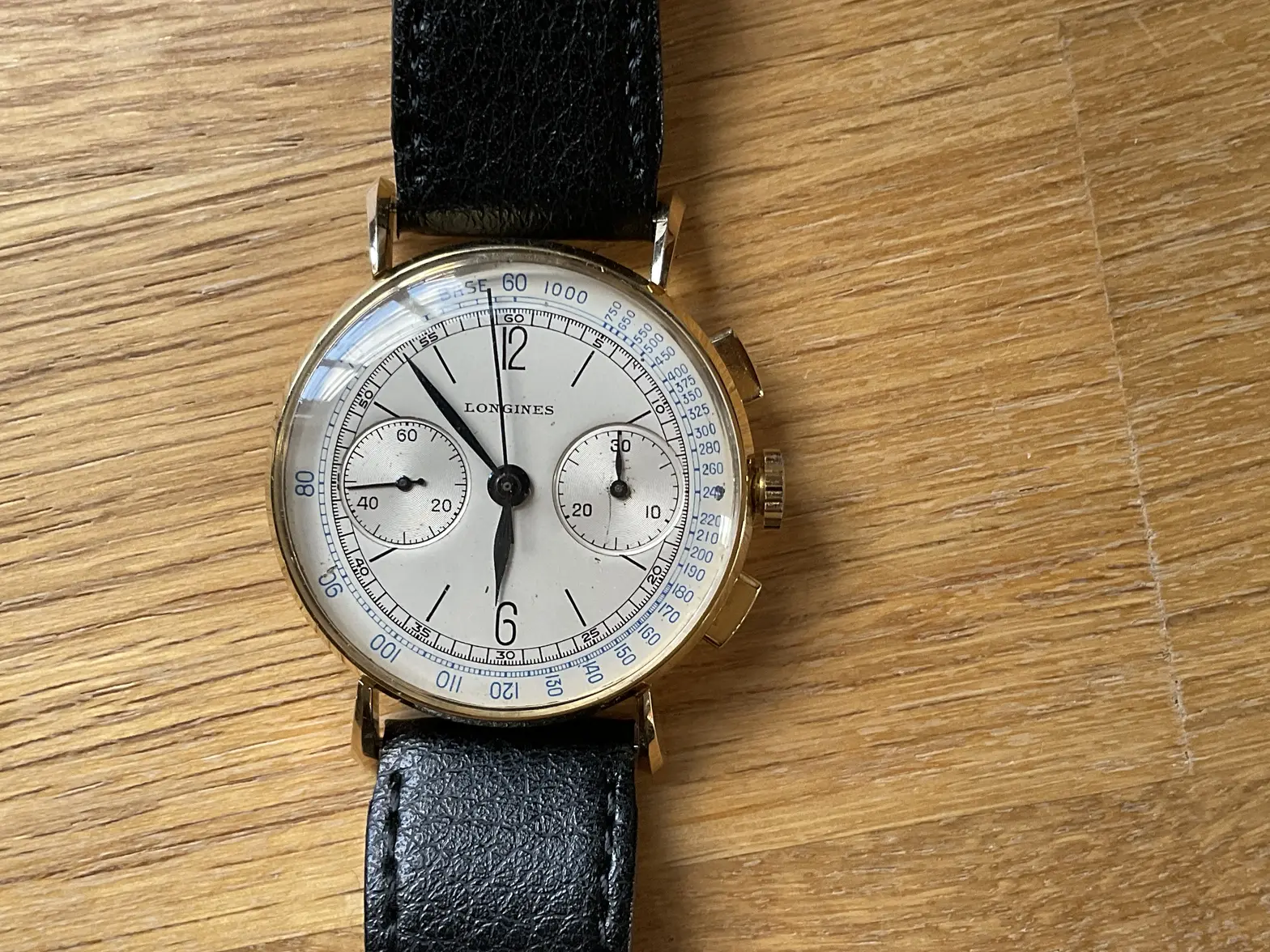
doesn't look centered, at "5" three lines outside the track, at "20" maybe one.. Furthermore, the absence of a rail track is, at least, unusual for the 6.1 million production run (1940/41). The same goes for the shape of the small hands in the totalizers. Furthermore, I agree with Radiumpassion regarding the signature. So let’s say that this 13ZN is a particularly rare variant that happens to have several questionable features, but ones that are acceptable if you like that kind of watch.