Yet another sign of the apocalypse

Posts
6,187
Likes
21,182
You're fighting decision paralysis. We lose power here often once or twice a year. I knew I needed something, but was stuck in what was the best setup relative to cost, need, etc...

I recently went with this, a tri-fuel that is currently set for propane.
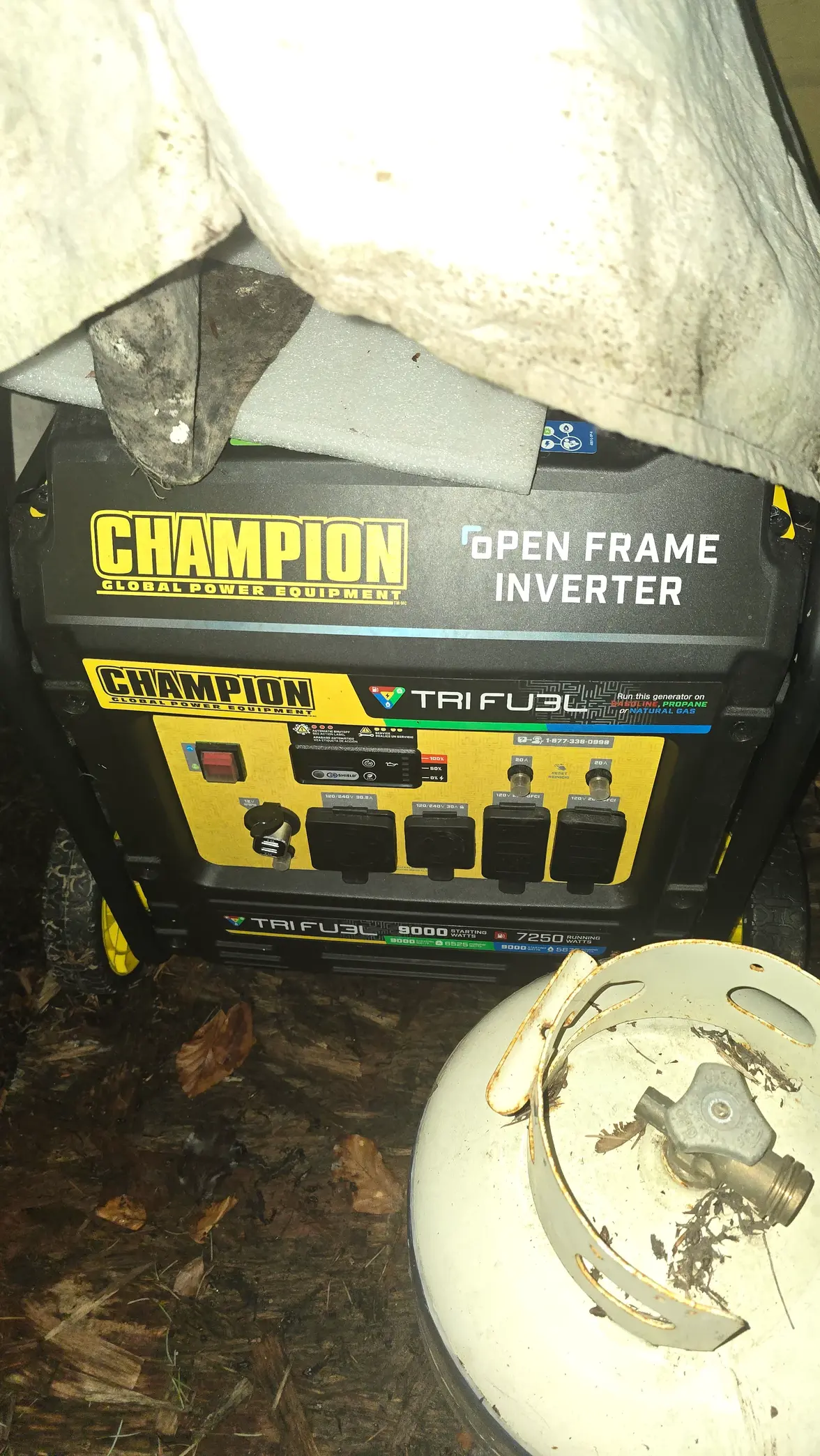

Ideal? No. But better than waiting for the perfect setup.

I still need to setup a more permanent housing for it. But I sleep better.

Negative of gas is dealing with stale gas and purging the carb if it isn't run often.

Downside of natural gas piped in is not getting a generator because you haven't got time to get the nat gas setup. I liked Nat gas for the simplicity of flipping to the generator when we get the odd storm. For a serious quake, we're told that the gas lines that feed us will be destroyed. But that's a whole different scenario.

Really, something imperfect is better than nothing.

But first thing to do is fill your emergency water supply.

We'll stop there.

 
Posts
1,477
Likes
2,999
Natural gas generators are convenient because the fuel comes from the pipeline and you don’t have to store anything, but they depend on the gas utility staying operational. Diesel or gasoline generators use fuel stored on-site, which makes them independent of outside infrastructure during an outage, though stored fuel has its own limitations. Diesel can degrade over time (years) and gasoline goes stale (months) fairly quickly unless treated and rotated. Also, propane and natural gas engines generally work best when the engine is designed for those fuels rather than simply converted from gasoline. Another factor is that gaseous fuels like propane and natural gas have lower energy density than gasoline or diesel, so engines typically produce less power or consume more fuel to generate the same output.

Do agree, fresh water is the first thing to go.
 
Posts
3,873
Likes
8,365
There's the risk of fire, but along western Oregon it's the overdue big-one, supposed to be a 9.0 quake

Hopefully you mentioning this encourages me to actually finalize some Earthquake preparedness things that have been in-and-out of my head for a couple of years...
 
Posts
2,923
Likes
6,099
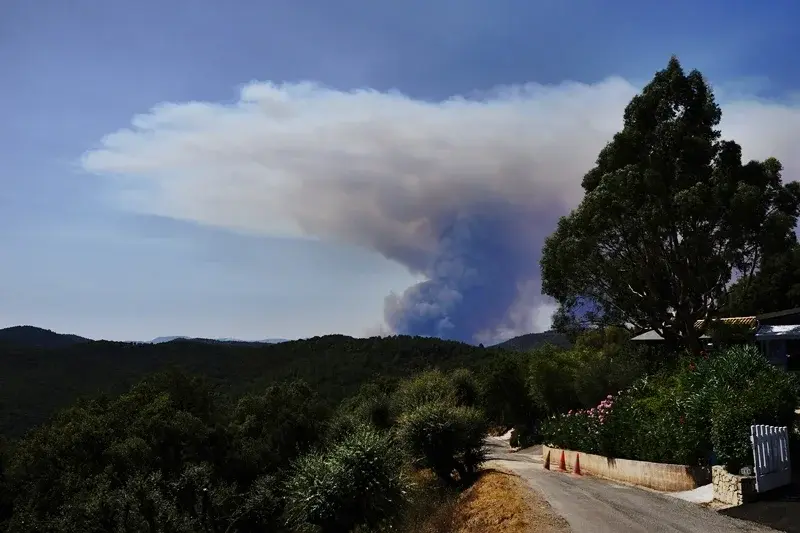
I live in the danger zone in Provence. We have marked escape routes, a special alarm system, firefighting planes, and I am prepared for a quick evacuation. From a certain danger potential, the electricity is proactively turned off to protect the fire department and prevent new fires (overhead lines). view in 2021 from our street

https://firms.modaps.eosdis.nasa.gov/map/#d:24hrs;@0.0,0.0,3.0z
Edited:
 
Posts
17,937
Likes
37,506
I've lived in the second driest continent on Earth all of my life.
The changes in the frequency of bushfires has increased in my observable lifetime.
Years ago, the seasons were reasonably even, but now the heavy rainfall in Spring/Autumn/Winter, and the subsequent super hot Summer dries out all of the newly sprouted vegetation. I only need to look at recent fires in my area to see that the option of having a go-bag is becoming a fact of life for many Aussies.

Go-bags.

I lived with a go-bag in my wardrobe for many years, as did my Son.
It wasn't for bushfire evacuation but for when a knock on the door and the order to come with us, the aircraft would be leaving in three hours etc.

I only hope people who have a bushfire go-bag get the same early warning.
 
Posts
13,696
Likes
53,498
Interestingly, my power never went out, or at least not yet. The boundary for the outage was about half a mile away. Go figure.

Still, I'm research backup systems. One of my neighbors was bragging about his Tesla powerwall, and how his house can run for days and days on it (he doesn't have solar). But when I looked it up, the capacity is only about 13 kW-h, which wouldn't even get me through a single daylight period with the A/C. And it's insanely expensive. Natural gas generators or even a high capacity gasoline/propane portable generator look more practical as backup systems.
They are not cheap but work well.
 
Posts
24,235
Likes
53,970
They are not cheap but work well.
Understood. If I were going to install solar panels, a backup battery would be a total no-brainer. The lack of generator noise and ease of installation are huge selling points, and my location is good for solar. But I just installed a very expensive roof last year, and I'm not considering solar at this time.

Without any generation, I just don't think that the realistic capacity of battery backup is enough to meet my needs. A 13.5 kW-h powerwall is already very expensive, and the 5-10 year lifetime doesn't thrill me either. One of my neighbors keeps talking about how he is going to install solar to complement his EVs that he can use for storage. So far it's a lot of talk, but if he ever actually gets around to doing it, I think it will not only be a good backup solution, he will effectively be off-the-grid. In the long run, I could do that but that is a huge project.

If necessary, I can weather a 12-hour power outage, I'm more worried about several days. Our electricity was cut for 4 out of 5 consecutive days in December. After a couple of days, I drained the water from my pipes as much as possible and left for our mountain house. And at the moment, some people in my town lost power on Thursday and it still hasn't been restored. That is the use-case I'm really looking to mitigate. Natural gas is really the best solution for me if I'm willing to swallow the cost. I'm trying to hedge against the frequent electricity interruptions we are seeing, not a major disaster. If our gas supply is interrupted, I'm out of my house anyway with no furnace or hot water.

The irony is that the power lines are actually buried in my neighborhood, which was one of the major selling points of our location, mainly for preservation of mountain views. But presumably there are above-ground transmission lines that supply us.
Edited:
 
Posts
13,696
Likes
53,498
Understood. If I were going to install solar panels, a backup battery would be a total no-brainer. The lack of generator noise and ease of installation are huge selling points, and my location is good for solar. But I just installed a very expensive roof last year, and I'm not considering solar at this time.

Without any generation, I just don't think that the realistic capacity of battery backup is enough to meet my needs. A 13.5 kW-h powerwall is already very expensive, and the 5-10 year lifetime doesn't thrill me either. One of my neighbors keeps talking about how he is going to install solar to complement his EVs that he can use for storage. So far it's a lot of talk, but if he ever actually gets around to doing it, I think it will not only be a good backup solution, he will effectively be off-the-grid. In the long run, I could do that but that is a huge project.

If necessary, I can weather a 12-hour power outage, I'm more worried about several days. Our electricity was cut for 4 out of 5 consecutive days in December. After a couple of days, I drained the water from my pipes as much as possible and left for our mountain house. And at the moment, some people in my town lost power on Thursday and it still hasn't been restored. That is the use-case I'm really looking to mitigate. Natural gas is really the best solution for me if I'm willing to swallow the cost. I'm trying to hedge against the frequent electricity interruptions we are seeing, not a major disaster. If our gas supply is interrupted, I'm out of my house anyway with no furnace or hot water.

The irony is that the power lines are actually buried in my neighborhood, which was one of the major selling points of our location, mainly for preservation of mountain views. But presumably there are above-ground transmission lines that supply us.
I was referring to Generac Nat Gas or Propane.
 
Posts
845
Likes
2,697
A generator you can run for 3 days is all most people need. Gas makes a lot of sense for people with gas powered cars, because as it gets old you can use it. Less waste.

If we were all to get massive generators with huge battery packs, it would mostly go unused, and the waste is just unthinkable, to trash so many huge battery packs every 8 years.
 
Posts
24,235
Likes
53,970
I was referring to Generac Nat Gas or Propane.
Haha, I totally misunderstood, Larry!
 
Posts
24,235
Likes
53,970
A generator you can run for 3 days is all most people need. Gas makes a lot of sense for people with gas powered cars, because as it gets old you can use it. Less waste.
Yep. Also very cost effective.
 
Posts
1,477
Likes
2,999
A generator you can run for 3 days is all most people need. Gas makes a lot of sense for people with gas powered cars, because as it gets old you can use it. Less waste.

If we were all to get massive generators with huge battery packs, it would mostly go unused, and the waste is just unthinkable, to trash so many huge battery packs every 8 years.
A couple strings of Group 31 lead acid batteries are quite manageable and recyclable.
 
Posts
24,235
Likes
53,970
If you want gas, the "Westinghouse" branded iGen variable speed generators are a pretty good buy. VERY quiet, completely portable. Not bad fuel consumption, a little more than the similar rated 803A. Both the MEPs and iGens output a sine wave safe for electronics. The MEPs do it naturally, runing at synchronous speed, the iGens use electronics to convert the generator's DC output to a pure sine wave. Again, a reliable power bank is the key, I believe.
I have been looking more closely at these, and the Westinghouse iGen generators are starting to rise to the top. I'm going to chat with my electrician to get his thoughts as well.
 
Posts
4,737
Likes
47,590
If we were all to get massive generators with huge battery packs, it would mostly go unused, and the waste is just unthinkable, to trash so many huge battery packs every 8 years.
A couple strings of Group 31 lead acid batteries are quite manageable and recyclable.

There are other alternatives to lead acid or lithium cells that do not expire in a short time delineated time frame such as old tech Edison cells ( Nickel Iron Cells ) sure they may not have the best charge discharge curves in the world but they are pretty good and the best advantage is they will last generations and are serviceable regarding electrolyte changes plus are not fussy re charge or discharge. In my opinion the most over looked but completely sustainable long term self sufficiency battery out there.
 
Posts
1,477
Likes
2,999
There are other alternatives to lead acid or lithium cells that do not expire in a short time delineated time frame such as old tech Edison cells ( Nickel Iron Cells ) sure they may not have the best charge discharge curves in the world but they are pretty good and the best advantage is they will last generations and are serviceable regarding electrolyte changes plus are not fussy re charge or discharge. In my opinion the most over looked but completely sustainable long term self sufficiency battery out there.

Nickel-iron cells are rugged and can last a very long time, but they’re not exactly simple to maintain compared with ordinary lead-acid batteries. The potassium hydroxide electrolyte absorbs carbon dioxide from the air and gradually converts to potassium carbonate, which means the electrolyte has to be refreshed periodically. Water is also lost during charging due to gassing and needs to be replaced.

Charging behavior is also different. NiFe cells generally require higher charging voltages and relatively strong absorption charging for a sufficient period to reach full charge. They don’t lend themselves well to simple constant-voltage or float charging the way lead-acid batteries do, and solar systems often need special charge settings to handle them properly.

During charging they gas heavily, producing hydrogen, typically more than a comparable lead-acid bank. Because of that, good ventilation and regular water maintenance are necessary. NiFe cells also tend to have lower round-trip efficiency and higher self-discharge than lead-acid batteries, meaning more energy has to be put back into them to recharge. In generator-supported systems that can translate into noticeably higher fuel consumption.

Another practical difference is voltage behavior. NiFe cells have a wider voltage range and can exhibit more voltage sag under load than lead-acid batteries. That can sometimes cause issues with inverter low-voltage cutoffs or charging algorithms unless the inverter or charge controller is specifically configured for NiFe characteristics.

Where NiFe cells do shine is durability—they tolerate deep discharge, overcharge, and long service life better than most chemistries. But that durability comes with the tradeoff of higher maintenance and more demanding charging behavior.

For context, my perspective comes from more than 25 years working with large-capacity traction and storage batteries, including silver-zinc, lead-acid, and lithium systems, along with more recent study of nickel-iron and nickel-zinc cells.
 
Posts
8,095
Likes
28,521
For context, my perspective comes from more than 25 years working with large-capacity traction and storage batteries, including silver-zinc, lead-acid, and lithium systems, along with more recent study of nickel-iron and nickel-zinc cells.
Your expertise is appreciated. While tangential, what are your current views on the evolution of EVs? Do you see any breakthrough battery technologies on the near horizon?
 
Posts
29,668
Likes
76,825
If we were all to get massive generators with huge battery packs, it would mostly go unused, and the waste is just unthinkable, to trash so many huge battery packs every 8 years.
If you live in a place where there are peak demand charges at specific times during the day (most people do), these batteries can be used to power the home during those times, charging at off peak times, in order to save you money. If you are only using them for a battery back-up for power failure, you would be right, but the vast majority are not used just for that.
 
Posts
29,668
Likes
76,825
Coincidentally, our power was out for about 2 hours this morning. High winds likely brought down lines or trees. It cycled on and off about 5 times rapidly before going out completely. Thankfully the only negative result was that the coffee was delayed...
 
Posts
3,585
Likes
8,275
I'm in northern CA, we've been through many years of devastating fires, and lots of planned power outages. It got to be such a headache that many many houses here got Generac standby/autoswitching gens. Mostly the 22kw, which is way more than most people need, comes with an auto switching panel that will seamlessly transfer you on and off main utility. Most houses have large propane tanks, so that makes it easy. I got one myself, can't remember the cost, maybe $7K for the gen, a few hundred for the pad, and I did the install myself. I'm not an electrician but it's not rocket science, and I just had someone double check my work before I turned it on.
Has been well worth it ! Noise levels are medium, not too bad, and so many houses are running gens when the power is down, you don't really worry about outside noise, and you can't hear it inside. I would def recommend, although maybe overkill for some people.
 
Posts
3,947
Likes
6,767
I bought a generator several years ago. There is no better way to insure your power will never go out than buying a generator.