- Posts
- 30,225
- Likes
- 78,047
Archer
·You want diffuse light, not a bunch of point sources like those ring lights. Adding a thin sheet of translucent material (like mylar drafting film) under the light you have will help. But for this to be completely effective, you need to have the ability to light from below as well as above.
I use a Zeiss Stemi DV4, so not a cheap scope and it's very good for working under:

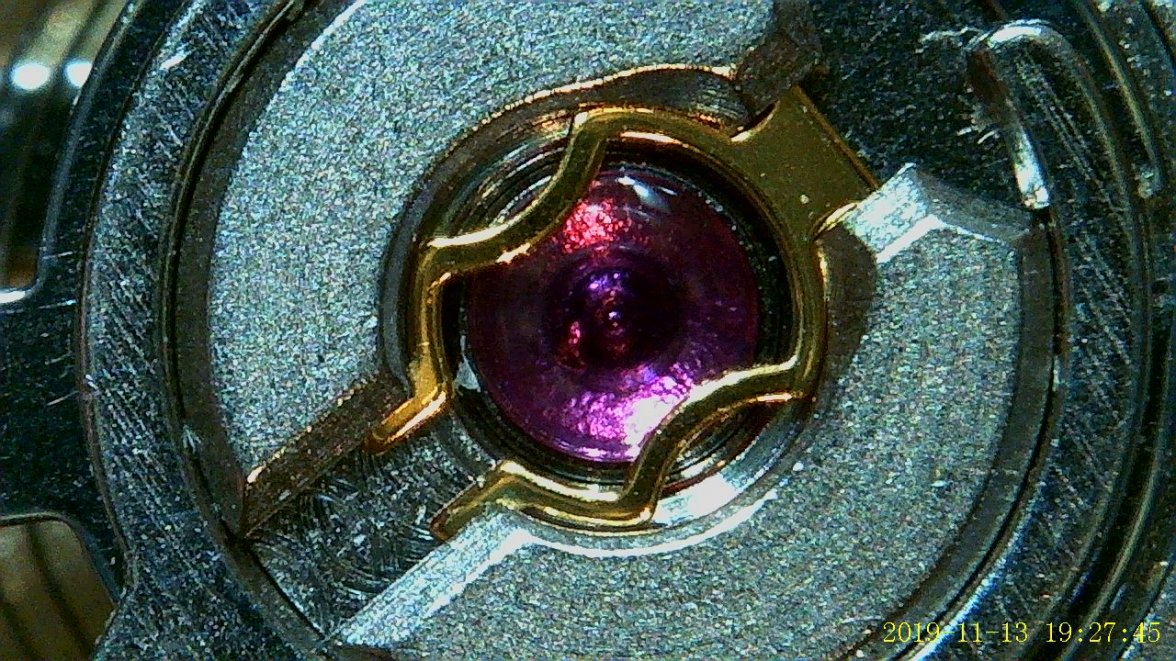
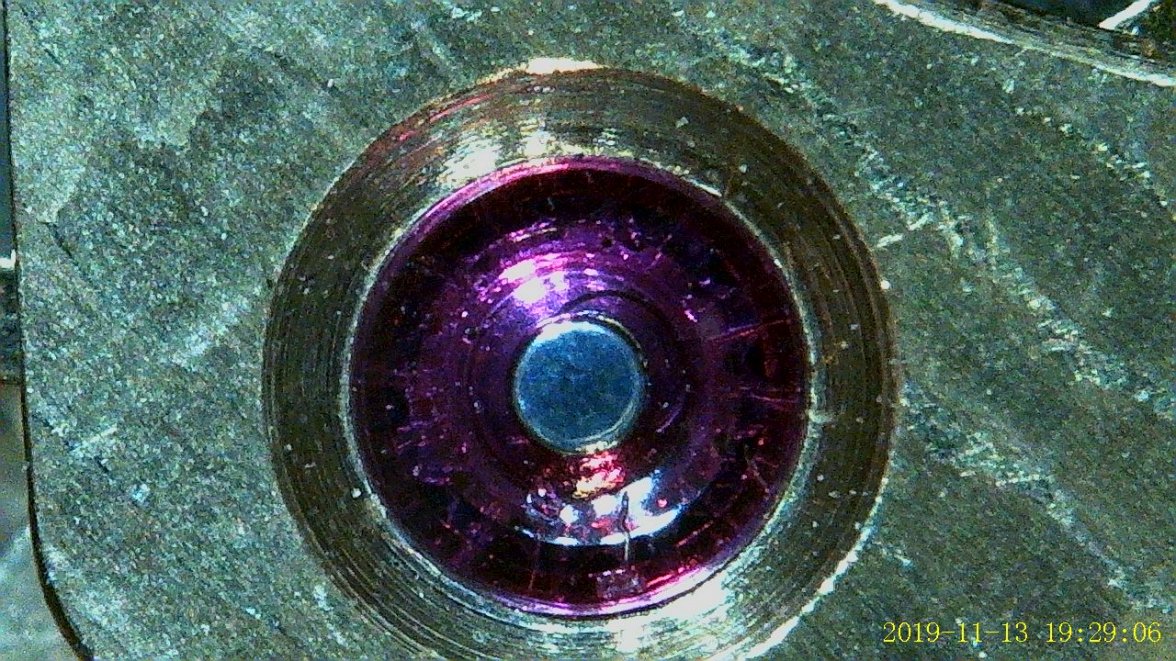
Lights from above and below, and each is separately adjustable. Here's a shot of a cap jewel lit from above:

As you can see, it has a lot of dried oil on it, and this is after one trip through the cleaning machine - had to manually scrape this off and clean them again.
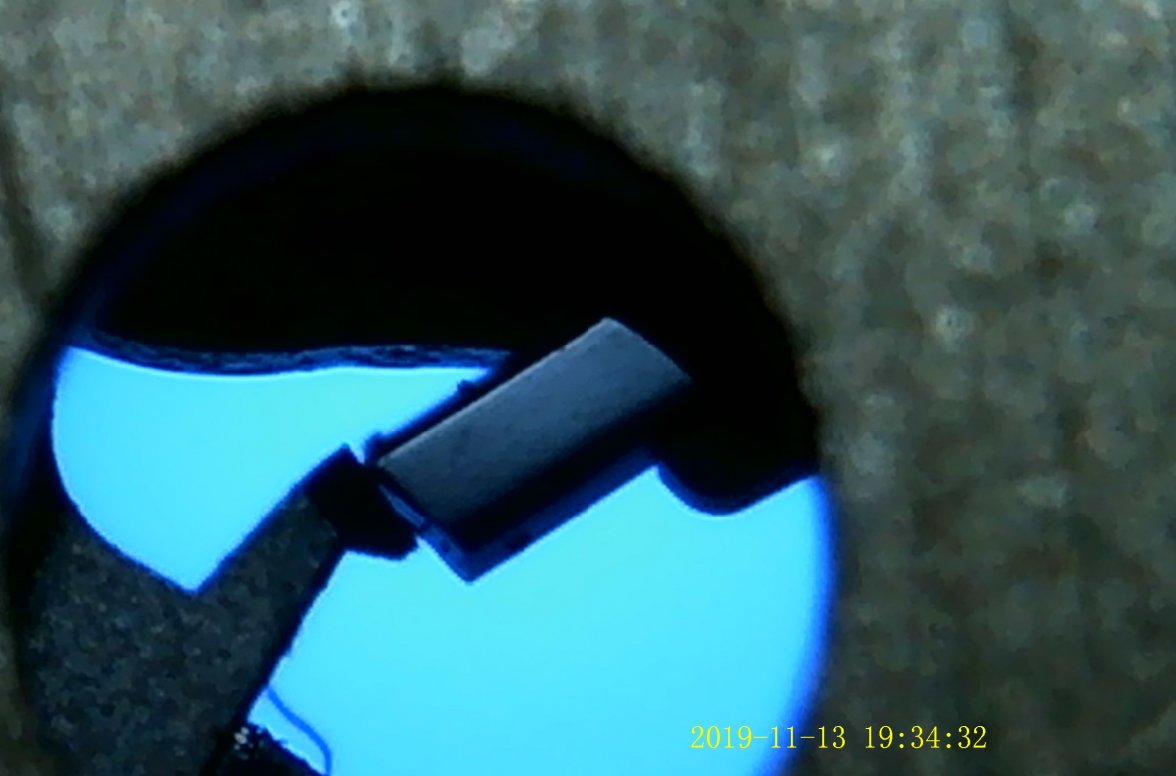
Here I am inspecting the hands for cracks - this is where the lighting from below is very helpful, because without backlighting these, most of the cracks are not visible. Here is the hour hand:

And the minute hand - both were stabilized before putting them back on the SM300:

Also backlighting is very good for other specific things, like checking the oiling of the escapement.
I shoot these photos using a Lumix camera, and zooming in can get you a better view of something than you can see with just your eyes at 52X. I just hold the camera up to the eyepiece and shoot the photos. Post processing in photoshop also give you flexibility to see things that you might not see with your eyes looking through the scope, and I can also take great videos through the scope as well.
The LED scopes can be useful, but for me I prefer old fashioned optics.
Anyway, lighting is the key thing...
Cheers, Al
I use a Zeiss Stemi DV4, so not a cheap scope and it's very good for working under:

Lights from above and below, and each is separately adjustable. Here's a shot of a cap jewel lit from above:

As you can see, it has a lot of dried oil on it, and this is after one trip through the cleaning machine - had to manually scrape this off and clean them again.
Here I am inspecting the hands for cracks - this is where the lighting from below is very helpful, because without backlighting these, most of the cracks are not visible. Here is the hour hand:

And the minute hand - both were stabilized before putting them back on the SM300:

Also backlighting is very good for other specific things, like checking the oiling of the escapement.
I shoot these photos using a Lumix camera, and zooming in can get you a better view of something than you can see with just your eyes at 52X. I just hold the camera up to the eyepiece and shoot the photos. Post processing in photoshop also give you flexibility to see things that you might not see with your eyes looking through the scope, and I can also take great videos through the scope as well.
The LED scopes can be useful, but for me I prefer old fashioned optics.
Anyway, lighting is the key thing...
Cheers, Al