Winding a Seamaster Professional Chronograph Automatic

Posts
6
Likes
1
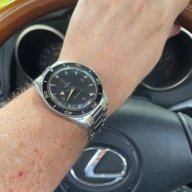
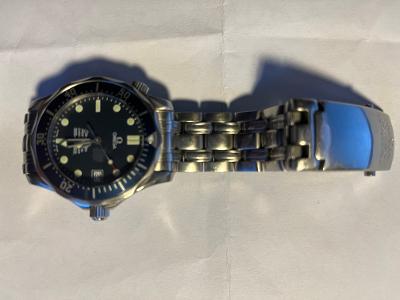
Hi. I have searched but can't seem to find an answer to my specific question. I just inherited the above watch (I believe it is from 2004) and had it fully serviced (not sure if the jewler sent it to Omega). The watch keeps excellent time but this is my first Omega automatic, so not sure if there is an issue. I know the watch can be wound manually and I have done it a few times. After about 1 week the watch starts to lose time. I have read that if one has a sedentary lifestyle, regular wrist movement is not enough to keep the watch wound. To test my theory I did not wind the watch and just shook it for about 45 sec every other day. It started to lose time today after about 2 weeks after resetting the time. Is this normal or should I take it back to the jewler? Does an Omega Seamaster automatic need to be manually wound on a regular basis (weekly) if physical activity is minimal? Just an fyi - I wear the watch 24/7. Many thanks and eagerly awaiting responses.

 
Posts
24,234
Likes
53,968
Wearing the watch 24/7 would generally be enough to keep it wound. Especially if you wound it manually to start.

but moving it for 45 seconds every couple of days is not enough
 
Posts
2,702
Likes
3,599
And how much time is lost after a week? A few seconds, a minute? This info would help us know if it is an issue or not. A picture of the watch would help us identify the movement.
 
Posts
6
Likes
1
It loses about 40 min if I do not shake it after a full winding. When I shook it every other day (with no winding) it lasted 2 weeks and it started to lose time. All this while wearing it 24/7.
 
Posts
2,702
Likes
3,599
It loses about 40 min if I do not shake it after a full winding. When I shook it every other day (with no winding) it lasted 2 weeks and it started to lose time. All this while wearing it 24/7.

thanks for the photo. First of all, that’s not a chronograph - it’s a chronometer, which is different. And 40 minutes loss indicates either the auto winding system isn’t working well, or you never wound it fully to begin with.

The movement in that one is fairly easy to service by most independent watchmakers, but if he didn’t have a parts account, he might not have replaced some worn components.

first thing to check is the power reserve. Wind it a lot (100 times or so), then leave it sitting. If it keeps going for 48 hours, the main winding system is good. In that case, give it another good wind and wear it and see if the problem goes away.

my bet is you never fully wound it - the auto winder on these is meant to keep it topped off, not to wind it from nearly dead.
 
Posts
6
Likes
1
thanks for the photo. First of all, that’s not a chronograph - it’s a chronometer, which is different. And 40 minutes loss indicates either the auto winding system isn’t working well, or you never wound it fully to begin with.

The movement in that one is fairly easy to service by most independent watchmakers, but if he didn’t have a parts account, he might not have replaced some worn components.

first thing to check is the power reserve. Wind it a lot (100 times or so), then leave it sitting. If it keeps going for 48 hours, the main winding system is good. In that case, give it another good wind and wear it and see if the problem goes away.

my bet is you never fully wound it - the auto winder on these is meant to keep it topped off, not to wind it from nearly dead.
Thanks Donn. You are right, I don't think I ever wound it all the way. This time I wound it until I heard a very faint click. (it was nowhere near 100 revolutions however, maybe 45). I'll report back in 48 hours after the full winding, which was Saturday morning. As mentioned, this is my first Omega automatic (I have a quartz Omega).
 
Posts
15
Likes
12
Omega auto's seem to be better than excellent. I have several Seiko auto's, but they have nothing like the accuracy or ability to stay wound like my PO does.
 
Posts
1,162
Likes
6,031
Thanks Donn. You are right, I don't think I ever wound it all the way. This time I wound it until I heard a very faint click. (it was nowhere near 100 revolutions however, maybe 45). I'll report back in 48 hours after the full winding, which was Saturday morning. As mentioned, this is my first Omega automatic (I have a quartz Omega).
You cannot over wind this watch. There is no way to tell if it is wound all the way, because the mechanism is in place to make sure it is not over wind by the rotor. Forty revolutions should be enough, as it is on mine. Winding a hundred times would be pointless.
Edited:
 
Posts
2,702
Likes
3,599
You cannot over wind this watch. There is no way to tell if it is wound all the way, because the mechanism is in place to make sure it is not over wind by the rotor. Forty revolutions should be enough, as it is on mine. Winding a hundred times would be pointless.

Just to clarify, I said 100 times because I have found most people don’t make full revolutions when the wind the crown, only half ones. So if I had said 40 turns, the original poster might have only done 20 full turns and the watch would have still been under wound. Since you can’t overwind this watch, I always say wind it 100 times on the automatic movements to make sure neophytes really get it wound fully.
 
Posts
6
Likes
1
Hello all. Well you were right - it seems that I never fully wound the watch. It has been over 8 days and the watch has kept excellent time almost to the second. As mentioned, I would it up until I heard a faint click at about 40 revolutions. My movements have been about the same as always (desk job working from home), except when I take my daily walks I swing my arms instead of putting them in my pockets. Funny how the Omega manual does not mention the clicks or approximately how many revolutions to fully wind the watch. Coming from mid range Seiko automatics, I had no clue how important fully winding an Omega automatic is. Thanks again for the simple and accurate advice.
 
Posts
403
Likes
2,383
This concept of winding automatic watches seems dubious to me. I have never wound any automatic and usually just put them on the wrist, set the time after some 30min. I may give it 3-4 turns, when I'm in a hurry and start the escapement with a quick shake.
Normally, when I put the watches down after the day, they are fully wound and going for another 35-40 hours, depending on the make and vintage. If not, I assume something is wrong with the winding mechanism.
This refers to rotors and not bumpers or micro rotors, where I'm aware that YMMV.

Could a professional please comment? @Archer
 
Posts
1,210
Likes
3,905
As I've always understood it, there is no difference between manually winding an automatic, or wearing it and letting the mechanism wind the mainspring because of your movement...the end result is exactly the same, you're just using your fingers in one case, and moving the rotor in the other.
 
Posts
403
Likes
2,383
As I've always understood it, there is no difference between manually winding an automatic, or wearing it and letting the mechanism wind the mainspring because of your movement...the end result is exactly the same, you're just using your fingers in one case, and moving the rotor in the other.

Yes, but the discussion above implies that you have to (or should) manually wind automatic watches, which seems like a bizarre concept to me. If an automatic from the late 60s onwards does not wind itself from 0 to full on its own, I suspect that the winding mechanism is faulty (bearing, rubbing, dry, etc).
 
Posts
1,210
Likes
3,905
Yes, but the discussion above implies that you have to (or should) manually wind automatic watches, which seems like a bizarre concept to me. If an automatic from the late 60s onwards does not wind itself from 0 to full on its own, I suspect that the winding mechanism is faulty (bearing, rubbing, dry, etc).
Makes sense. I wouldn't say you 'have to'...you could just go for a nice morning walk to get it started, or speed up the process with a wind. Agreed with your thoughts of a faulty winding mechanism if it doesn't keep enough charge to ride out the night on a nightstand after a full day of wearing (unless your physical activity throughout the day is akin to a hibernating bear or three toed sloth).
 
Posts
6
Likes
1
Just my observation and the more the knowledgeable can elaborate - some automatics do not have a winding mechanism (my 2 Seiko's for example). When they stop you simply shake for a few seconds and they start up and normal arm movements continue to wind them. The Omega instruction booklet states: "If the watch has not been worn 45 hours or more, wind the watch with the crown in position 1." It does not elaborate on how many revolutions are needed, however. Comments on this forum state that wrist movement alone may not fully wind the watch and that has been my experience over the last 2 months (new owner). Perhaps it is a quirk of the Seamaster?
 
Posts
29,668
Likes
76,824
This concept of winding automatic watches seems dubious to me. I have never wound any automatic and usually just put them on the wrist, set the time after some 30min. I may give it 3-4 turns, when I'm in a hurry and start the escapement with a quick shake.
Normally, when I put the watches down after the day, they are fully wound and going for another 35-40 hours, depending on the make and vintage. If not, I assume something is wrong with the winding mechanism.
This refers to rotors and not bumpers or micro rotors, where I'm aware that YMMV.

Could a professional please comment? @Archer

Read...the...manual...

 
Posts
403
Likes
2,383
Read...the...manual...


I very much appreciate your reply, albeit it doesn't directly comment on the question at hand. They manual says "wind the watch if not worn for any period corresponding to its reserve", which seems self-evident.
I guess with some logic, it can be interpreted as "does not need to be wound if worn".😵‍💫
 
Posts
29,668
Likes
76,824
I very much appreciate your reply, albeit it doesn't directly comment on the question at hand. They manual says "wind the watch if not worn for any period corresponding to its reserve", which seems self-evident.
I guess with some logic, it can be interpreted as "does not need to be wound if worn".😵‍💫

You stated that manually winding an automatic is "dubious" and "bizarre"...it's neither. It's what Omega, and pretty much every other watch manufacturer recommends.
 
Posts
403
Likes
2,383
I hate to perpetuate this topic, but just to clarify that my remarks with regard to manual winding of automatics were in context of what was discussed in the thread before, i.e. the recommendation to (fully) wind automatic watches despite / while / before wearing them. That is what I find "bizarre" and "dubious" and I doubt that any manufacturer recommends this.
We all hopefully understand that manually winding automatics can be done in obvious circumstances.

I was opening this topic, because I noticed in a WUS discussion that this is still an unclear subject, where many people believe that automatic watches have to be wound.
 
Posts
2,702
Likes
3,599
I hate to perpetuate this topic, but just to clarify that my remarks with regard to manual winding of automatics were in context of what was discussed in the thread before, i.e. the recommendation to (fully) wind automatic watches despite / while / before wearing them. That is what I find "bizarre" and "dubious" and I doubt that any manufacturer recommends this.
We all hopefully understand that manually winding automatics can be done in obvious circumstances.

I was opening this topic, because I noticed in a WUS discussion that this is still an unclear subject, where many people believe that automatic watches have to be wound.

I know that many Seiko automatics don’t have a manual wind feature and so have to use the auto-wind feature. But I have never had a Swiss automatic that will wind up completely from a full stop using only the auto winder. Of course, I’ve never shaken them for several minutes to power the movement, because winding just seems easier and more intuitive to get the watch going from a dead stop. I’m going to have to manipulate the crown anyway to set the time since it was stopped.

And the original poster’s comments (and tons of other threads) supports the fact that if you don’t fully wind a Swiss automatic movement before wearing, the watch will loose power before it should, which indicates it was never fully wound by just the auto-winder.