In a world of diminishing supply of parts for vintage watches, the last thing watchmakers need is for newbies destroying such rare parts in an effort to “learn” about their watches! You want to learn, then start with scrap watches you can pick up for next to nothing. It doesn’t matter if nothing comes of your efforts. But if you are practicing on a watch that is important to you, best of luck!
Interesting how attitudes change over time. I was an early steampunk doing Victorian costuming at Science Fiction conventions in the 1980s and 1990s. I used to hate it when I would see others using old watch parts for costume accessories. Still I would give small bags of 'rusty floor sweepings.' to friends. (Seems some watchmakers saved everything.) I guess I caught this hoarder/collector bug.
The real trick is matching stuff. Most things do not fit together. In the 1990s there was not exchange of information. I have considered using some of my image processing experience to do a sort of AI parts sorter. Like used in industry. Bit of a fantasy. Would take a team of top engineers to do.
When I would go on the Horological trips, and meet some of the best watchmakers, the idea was that any watchmaker could duplicate any part. This might work on the older watches or one off examples from the 18th century.
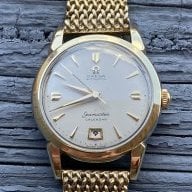
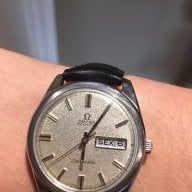
Does seem strange nearly 30 years later that I was practicing on constellations and seamasters. I liked them because they were easy to work on (and one could get the parts.) I have over a dozen 'no name' chronographs I purchased in the late 1990s and early 2000s which I still consider practice watches. The other brand I liked because they were easy to work on was Heuer. Those were actually a bit harder to come by than the omegas. A lot of watches were scrapped for their cases when the US went off the gold standard. (Before the 1970s it was illegal for US citizens to own more than 30USD of bullion.) Gold was 30 dollars an ounce. My uncle was a dentist and we would play with scrap gold. The us dollar was backed in gold. ( there were also silver notes which were usually 5USD.) These protections were put in place after the great depression to prevent another one. Somehow business students which are not good at engineering do not understand non linear mathematics and why ponzi schemes do not work.
I always considered Rollex 'junk' as parts were hard to come by, and they were over engineered.
Sometime I will tell the story of my mentor, who ran a tool and die stamping business for the silicon valley. He said there were 20 manufactures of digital (LED) watches in the silicon valley in the 1970s, that he made parts for. These all collapsed in a bubble, leaving only Ti and Casio. This all had the effect of crashing 1/3 of the swiss economy. A story few have heard, because the world was more concerned with the Oil crisis.
Short version is as he would put it. "The calculator companies did not understand the luxury jewelry markets. That watches are simply about the appearance and not the engineering inside. " To further paraphrase. "This was something Timex understood."
I miss him a lot, and pretty much stopped playing with watches when he passed on after a horrible bout with alzhiemers.
but I digress ...
-julie