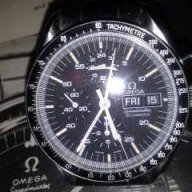
Which arm is the regulate and which is the beat

Posts
24,613
Likes
54,657
In this case, I think you would regulate using the screw. No need to touch the regulator arm itself.
 
Posts
289
Likes
212
Should you really be in there?
Stick to only touching that little screw off to the side from the balance. That should minimize the damage (and it's meant for the rate).
Without a timegrapher I would not touch the stud at the end of the spring the regulates the beat.
 
Posts
19
Likes
7
Should you really be in there?
Stick to only touching that little screw off to the side from the balance. That should minimize the damage (and it's meant for the rate).
Without a timegrapher I would not touch the stud at the end of the spring the regulates the beat.
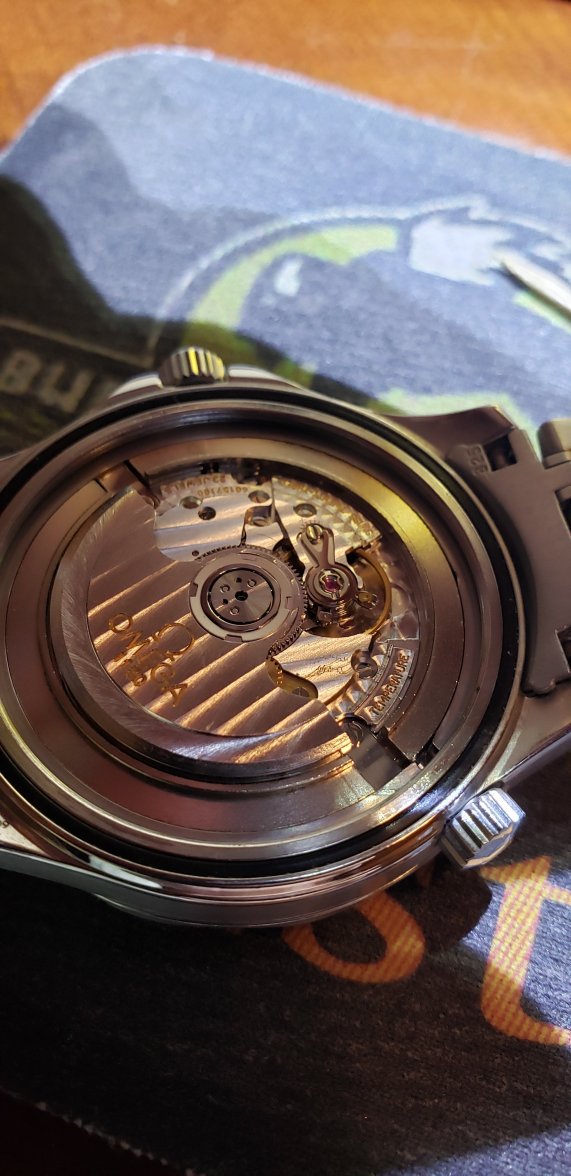
The top screw is for very fine adjustment. The two arms below the mainspring are a regulator and the other is for beat. The little brass square adjusts the small pins under the arm which st on either side. You need a special tool for that. I'm curious which arm regulates and which one is for the beat. Thx
 
Posts
24,613
Likes
54,657
The top screw is for very fine adjustment. The two arms below the mainspring are a regulator and the other is for beat. The little brass square adjusts the small pins under the arm which st on either side. You need a special tool for that. I'm curious which arm regulates and which one is for the beat. Thx

Here's a hint. If you understand the function of the fine adjustment mechanism, you should be able to answer your own question. It's your watch, but as noted above, if you don't know which is which, or the difference between mainspring and hairspring, it's probably not a good idea for you to be playing with it. Even having the movement exposed to a dusty environment can cause problems. It looks like someone has already put some scratches in there.
Edited:
 
Posts
15,644
Likes
46,691
The fact that you have to ask tells me you are waaaaay beyond your depth! One slip, and you could be in fora huge expense.
 
Posts
19
Likes
7
Ah. It was a simple question. I like to see and know how things work. It's my watch and if i want to rinker with it i can. If people didn't ask questions, no one would learn anything. I know that dust can cause problems. You need not concern yourself with my watch. Thank you though.
 
Posts
15,644
Likes
46,691
Ah. It was a simple question. I like to see and know how things work. It's my watch and if i want to rinker with it i can. If people didn't ask questions, no one would learn anything. I know that dust can cause problems. You need not concern yourself with my watch. Thank you though.

Gung Ho!
 
Posts
20
Likes
49
Ah. It was a simple question. I like to see and know how things work. It's my watch and if i want to rinker with it i can. If people didn't ask questions, no one would learn anything. I know that dust can cause problems. You need not concern yourself with my watch. Thank you though.

I thought changing my bracelet to my rubber strap was being technical, this terrifies me!
 
Posts
29,917
Likes
77,362
The top screw is for very fine adjustment. The two arms below the mainspring are a regulator and the other is for beat. The little brass square adjusts the small pins under the arm which st on either side. You need a special tool for that. I'm curious which arm regulates and which one is for the beat. Thx

The stud carrier is used to adjust the beat, and the regulator (where you adjust the pin spacing using the Etachron tool) is where you adjust the rate.

If you need to adjust the rate more than is possible using the fine adjustment screw, you likely have bigger issues than just regulation.

Cheers, Al
 
Posts
19
Likes
7
I’ve taken apart and reassembled several watches, mostly older cheap watches, a few Waltham pocket watches, and surprisingly they are working fine. I like tinkering with them. I appreciate being clean and delicate with them. I have the confidence to adjust a watch, just didn’t want to mess with the beat. That’s something I can’t accurately adjust without special tools. Adjusting the rate is merely having the patience to wait and measure the results.
 
Posts
289
Likes
212
So what was wrong with the answers to the previous thread (around January 3rd)? You were told which lever is what (hopefully you ignored Skunkprince's answer), so by now you should have done a whole lot of regulating. Where's the watch at now?
 
Posts
19
Likes
7
So what was wrong with the answers to the previous thread (around January 3rd)? You were told which lever is what (hopefully you ignored Skunkprince's answer), so by now you should have done a whole lot of regulating. Where's the watch at now?
I was just Double checking. The time has been all over the place. It started off at about 9 sec slow. According to the + - stamp I should turned the small screw. Cw to advance, but that actually decreased it by about 15 seconds. But the screw was more centered so I thought I'd leave it centered and adjust the arm. Turning that cw a half of a mm retarded it even more. So I decided to try the other way and it in fact started advancing it but as I actually got closer to the correct time I ran out of roo room. m fo
 
Posts
19
Likes
7
I was just Double checking. The time has been all over the place. It started off at about 9 sec slow. According to the + - stamp I should turned the small screw. Cw to advance, but that actually decreased it by about 15 seconds. But the screw was more centered so I thought I'd leave it centered and adjust the arm. Turning that cw a half of a mm retarded it even more. So I decided to try the other way and it in fact started advancing it but as I actually got closer to the correct time I ran out of room. It may actually need a service. It is a twenty year old watch. I may bring it to a local jeweler and have them place on a time Grapher.
 
Posts
289
Likes
212
Or get a timegrapher yourself. Cheaper than another watch; just saying....
 
Posts
343
Likes
420
@Sinnyone

I once posted a very similar thread on WUS, titled Just Because I Got Away with It Doesn't Mean It Wasn't Stupid: https://www.watchuseek.com/threads/...snt-mean-it-wasnt-stupid.983241/#post-7373635

Long story short is I was much more afraid of trying to turn the fine adjustment screw by sticking anything into the movement perpendicularly without the right tools than I was afraid of moving a lever arm by pushing against it parallel to the movement. It took quite a few tries because the arm isn't meant for fine adjustment and because I wouldn't even open the case with the watch running; so each time I nudged it, I had to wait for the watch to run down completely before opening it again. That was 7 years ago, and while my Speedy Pro is overdue for a service, it's still running +10 sec/day.
Edited:
 
Posts
19
Likes
7
@Sinnyone

I once posted a very similar thread on WUS, titled Just Because I Got Away with It Doesn't Mean It Wasn't Stupid: https://www.watchuseek.com/threads/...snt-mean-it-wasnt-stupid.983241/#post-7373635

Long story short is I was much more afraid of trying to turn the fine adjustment screw by sticking anything into the movement perpendicularly without the right tools than I was afraid of moving a lever arm by pushing against it parallel to the movement. It took quite a few tries because the arm isn't meant for fine adjustment and because I wouldn't even open the case with the watch running; so each time I nudged it, I had to wait for the watch to run down completely before opening it again. That was 7 years ago, and while my Speedy Pro is overdue for a service, it's still running +10 sec/day.
I was at 9 sec a day. But hey. You have to have some confidence in yourself. I really like seeing how things work.