What's the (legal?) situation on tritium?

Posts
1,440
Likes
3,774
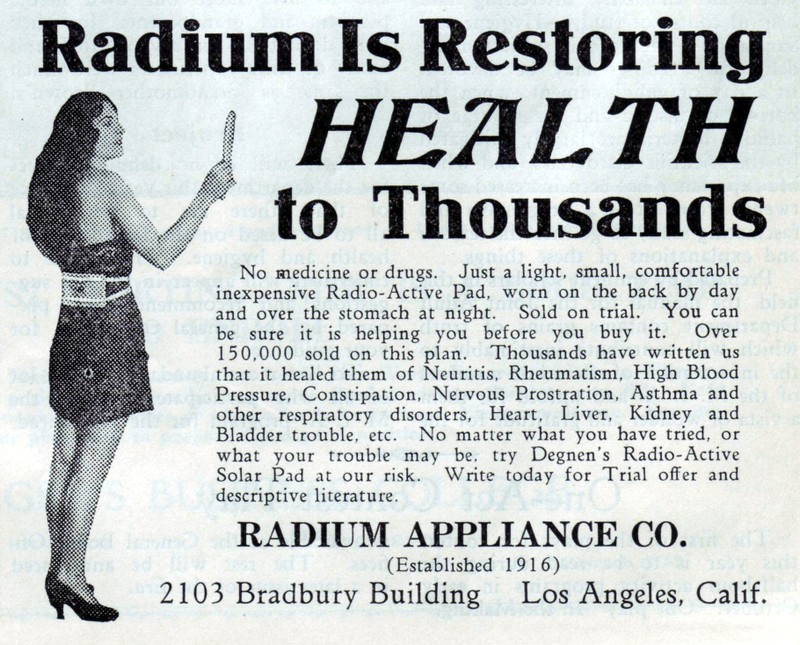
Sights or suppositories?
Well I guess I should check both just in case...

Sent from my SM-G930T using Tapatalk
 
Posts
252
Likes
546
Good thing it has a cocoa butter based carrier...
Wha? Ugh, don't ADMIT to having read the ad! Never admit to reading the ad! (Especially this one).
 
Posts
389
Likes
1,021
Superluminova is basically Strontium Phospate and it will degarde over time.

How much time is dependent upon light exposure.

The stronger the light and the longer the exposure will detrermine how much time its life is shortened by - I had a graph here somewhere which I can't find right now.

There's a quantum cascade of photons and electrons up and down energy wells when charging and discharging light that is not completely reversible over time. That means it wears out.

On the other hand Tritium is used in its raw gaseous state these days, rather than compounded.

So it is a pure hydrogen isotope that is naturally radioactive, emitting Beta particle - high energy electrons

This type of radiation is blocked easily by very simple things like glass, steel oh and human skin- all the common materials in a watch wearers.

The hydrogen gas is inside small glass tubes that are coated with a phosphor salt - the colour is determined by the salt used

So its a flourescent tube that doesn't need electricity - its also widley used in emergency lighting for this reason

There's generally three grades depending upon the volume of gase and the type of phosphor used

The two main users, Switzerland and USA have different regulation governing the amount of material that is allowed to be inside any single device, the US allowing 4 times the amount the Swiss do. So the T25 and T100 specs that you will see refer to these regulatory levels and have nothing to do with the manufacturers secret recipe, technical acumen or 11 herbs and spices, not matter what the brochure or web site says

They all share the 12.3 year half life of the tritium material, meaning that the amount of radioactive material will be halved each dozen years.

So if you got a high end watch with high grade tubes, then ut will probably glow legibly for 20-30 years. If it was one of the cheapies then more like 10-20 years

I can't see it being banned anywhere since it is used for dsafety lights and several nuclear bodies around the world have deemed it as not posing a hazard.

There's a great article from aBtW on it here:

http://www.ablogtowatch.com/how-glow-dark-tritium-gas-tubes-made-mb-microtec/

Its use in watches requires the manufacturer to have the relevant buclear material handling certification from the country's relevant governing body. I'd suspect that this is why it is not more widely used.

Doesn't stop some well-meaning politician getting a bee in their bonnet, I suppose.
 
Posts
29,242
Likes
75,625
I can't see it being banned anywhere since it is used for dsafety lights and several nuclear bodies around the world have deemed it as not posing a hazard.

This is perhaps a bit of an oversimplification. Most of the tritium on the planet is in the form of tritiated water (I've seen estimates that this accounts for as much as 99% of global tritium) and although the emissions from tritium in a watch are not particularly hazardous to the wearer, tritium itself is far from being a non-hazardous substance. In other words the radiological properties (talking about how easily emissions are blocked) belies the inherent toxicity of tritium in it's most common form.

Because tritiated water can reach pretty much anywhere in the body that water does (including crossing the placenta in pregnant women), ingesting tritiated water is most certainly hazardous. It can also be inhaled in the form of water vapour and absorbed through the skin.

Standards for tritium in drinking water vary, and there is some debate right now here in the Great Lakes area about having radionuclides listed as a "chemical of mutual concern" by US and Canadian regulators, which would require more stringent monitoring as a start. The Great Lakes provide drinking water for over 30 million people. Tritium is a big one in this discussion thanks to the 30 nuclear power plants in the great lakes basin, and CANDU reactors in particular do generate a lot of tritium when operating (far more than a light water reactor does). Part of this debate is about how this substance is classified and how looking at only one aspect can be misleading. This is why I have been looking into this in some detail recently.

Cheers, Al
 
Posts
389
Likes
1,021
Yup, all that is true, but the biological half life of tritium is 12 hours, even less if the igestor drinks more water, so the danger to the body is minimal as it doesn't stay in the body in large quantities for long enough to do damage. This was ratified based on testing done in 2007 and published buy the international governing body.

Don't forget that we live in an ocean of radiation. The natural background radiation varies around the planet, depending on where on the earths crust you are and how much atmosphere is above you.

Sleeping in a brick building increases your dose, catching a flight for an hour increases your dose. Beta radiation is stop by almost anything, so that it isn't a big risk.

The nasty stuff is ionising Em radiation like UV, x-rays and the like or the big and slow particle like Alpha - the one the Russians used to poison the guy in Britain a few years ago.
 
Posts
29,242
Likes
75,625
Do you work for the nuclear industry by any chance? 😉

Yup, all that is true, but the biological half life of tritium is 12 hours, even less if the igestor drinks more water,

Yes, I've read the same information, but again your characterization is an easy trap to fall into. Unless you are somehow suggesting that ingesting more tritiated water is somehow going to flush the previous tritiated water from your system, which doesn't make any sense at all of course.

Don't forget that we live in an ocean of radiation. The natural background radiation varies around the planet, depending on where on the earths crust you are and how much atmosphere is above you.

Indeed, which is why it is important to minimize any exposures that you can, since damage is cumulative over your lifetime.

Are you familiar with the concept of ALARA? If not, it might be the next thing you should Google. As Low As Reasonably Achievable is a common and often used philosophy for those with regular occupational exposures to radiation (X-ray technicians for example) and IMO should also be the practice of the nuclear industry in general when it comes to protection of drinking water, which is my primary concern.

There are thousands of drinking water inlets on the Great Lakes, and a spill of tritiated water from a nuclear facility is not something that water treatment system can filter out.

Beta radiation is stop by almost anything, so that it isn't a big risk.

Once again this is misleading. External exposure to Beta radiation is not the same as drinking tritiated water. Ingesting it is a whole different ballgame.

Cheers, Al
 
Posts
389
Likes
1,021
Yup spent 35 years in this industry - x-ray and ceramic CAD/CAm stuff

Got my Radiation Safety Licence exam certificate renewed 3 years ago now

The key to the whole ALARA thing is the reasonable part.

Do you have any figures on how many parts per million there is likely to be in the water?

A quick look at the US Great Lakes area shows at moderate elevation - around 200-ish meteres above sea leveland at that lattitude in the earth's magnetic field you'll be getting a slightly higher dose of cosmic radiation than someone living in LA. The area has a moderately high concentration of Uranium, Thorium and Potassium deposits, the chief agents that contain naturally occuring radioactive isotopes and these decoy to produce Radon gas, just to add to the cocktail, so the background radiation will be slightly higher due to that.

And these are sources that emit nasty things like gamma rays, protons and neutrons that smash up cell's neuclues and DNA, which is what does the damage and can lead to cancers or worse

The nuclear industry posts a dose limit for workers of 20 milli Sieverts per year.

If you lived in Rio or Iran or Quandong Chine, Southwestern India or some parts of Australia, you'd be living in a soup of radiation that is between 175 -250 mSv/y

Extensive studies spanning over 25 years have shown the rates of cancer in these regions - even sensitive at risk tissue like lung & bowel - are no different than those of the rest of the local populations.

The US , Australia, Japan & The UK all had pretty tight controls on those who work with anything that might expose them were allowed to receive in a year. South Korea was a lot laxer. I never had to deal with other places so no direct knowledge.

Even amongst those countires, I'm allowed to drink roughly 100 times the quantity of Tritium based water and by-products here in Australia than you guys in the US

This has the effect of increasing my total dose 4mSv per year - this is still way, way below the "working in the hot zone" figure of 20mSv and a tiny fraction of what the natural background radiation is in many parts of the world.

Being in an aeroplane is roughly 60 times the cosmic dose than that at see level, but even this only adds around 2mSv per year if you spend your timeworking in aircraft. This would have a greater impact than drinking Tritium based water products and you do see aircrews having their jobs banned because of radiation dangers


Sleeping in a brick building will increase your dose by a similar amount as the clays that make up the bricks will contain higher concentrations of uranium and thorium minerals. Again, no bans on bricks around the place, nor even limits on the hours of sleep you should expose yourself to.

Beta particles emitted by 3H or Tritium are easily stopped by things like wood, plastic, water and aluminium, so the risk to internal organs is extremely low as most material in the body blocks it

it also passes through the body in 7-14 days and does not accumulate in tissues and is excreted normally.

Sure ,continually drinking water that continains it won't flush it out, but it won't increase your overall dose by much either - about a 5th of the extra dose that a nuclear, radiation or radiology worker is exposed to above background

Doesn't sound all that unreasonable to me.

I'm not trying to defend nuclear industry short-cuts in dumping waste water or the like.

Just trying to inject some objectivity into the discussion that radiation isn't all bad and we live and have evolved with it over time in moderately large quantities.

So if you are worried what might be happening in your local water in the Great Lakes, think about us when you jump on a plane for 20 hours to come visit Australia, sit on the beach and then sleep in your hotel and drink some water. Anybody go to the Olympics in Rio? then you just got 10 times your normal dose.

Sure, you have to be careful and not take unnecessary risks - you can't see or feel radiation until its too late.

Just looking at what is reasonable here - ditching the baby with the bath water might not be the most realistically desirable outcome in this situation.

However, as soon as emotion enters politics and lobbying, anything can happen

A coupleof Science news shows here showed this a while ago with some vix-pop style investigations that people fell for and got quite riled about. "Di-Hydro Oxide ( water)should be banned and yet the government does nothing. Found in all cancer tissues( because cells are mostly water), present in many known poisons( because all our venomous critters are also mosly water), prolonged exposure or inhallation can cause rapid death( also known as drowning) sign this petition now" had people fooled and signing in droves

The point?

Its easy to scare folk with stuff they are unfamiliar with.

Being reasonable about radiation doesn't come naturally.

ALARA is usually used in a medical diagnostic context, not so much background radiation from natural or man-made sources. It basically means that you should only x-ray the part concerned with the diagnosis and using the least views and the losest settings to achieve that depending upon the seriousness of the condition. In other words I don't get a whole body CT for a sprained ankle. But I will get a few chest x-rays if they think I ight be having a eart attack.
 
Posts
18,107
Likes
27,413
Well that's just fake facts man. Lies from the Illuminatti! Little known fact their name actually means they want everyone to glow. It's all apart of their plan to make us glow!!!
 
Posts
389
Likes
1,021
Well that's just fake facts man. Lies from the Illuminatti! Little known fact their name actually means they want everyone to glow. It's all apart of their plan to make us glow!!!

Well it could be worse - you could sparkle and then there'd just be teen angst everywhere 😬
 
Posts
389
Likes
1,021
I live in "The Granite City" - radon rules!!!!

😝
My Mouse! Hi 4

. a colourful place to visit indeed!

The radon obviously hasn't affected you at all 👍
 
Posts
2,043
Likes
5,500
My Mouse! Hi 4

. a colourful place to visit indeed!

The radon obviously hasn't affected you at all 👍

Beyond an immunity to Speedie madness, not at all as far as I can see. My cynicism, iconoclasm, pedantry etc. are all natural 😁

Oh, and you should see it on a day like today - I suppose grey is a colour........

 
Posts
389
Likes
1,021
Beyond an immunity to Speedie madness, not at all as far as I can see. My cynicism, iconoclasm, pedantry etc. are all natural 😁

Oh, and you should see it on a day like today - I suppose grey is a colour........


is the sleet vertical or horizontal at the moment? 😜

Fond memories indeed - been at least 25 years😎
 
Posts
29,242
Likes
75,625
Do you have any figures on how many parts per million there is likely to be in the water?

Current drinking water standards allow for as much as 7,000 Bq/l for tritium here in Ontario (I am most certainly not in the US, thanks). On the US side it's 700, and some studies have proposed a standard as low as 20. Note that the current standards are very "stand alone" in their approach and don't take into account ingestion by other means, such as consuming fish from the Great L:akes (the fishery on the lakes is a $4 billion/year industry). I'll be having a lake perch dinner next week at a local place actually - I eat it about once a year only.

What is "out there" in terms of radiation on the Great Lakes is a question...more on that later.

The area has a moderately high concentration of Uranium, Thorium and Potassium deposits, the chief agents that contain naturally occuring radioactive isotopes and these decoy to produce Radon gas, just to add to the cocktail, so the background radiation will be slightly higher due to that.

There is an almost constant public education program here about Radon, and getting your house tested. Mine has been tested and I have an HRV on the HVAC in the basement that ensures adequate air exchanges. Despite this Radon is the single biggest cause of lung cancer in non-smokers here...

Just looking at what is reasonable here - ditching the baby with the bath water might not be the most realistically desirable outcome in this situation.

However, as soon as emotion enters politics and lobbying, anything can happen

If you want to characterize my concerns this way, that is your choice - it's certainly a common practice. I don't expect you to understand the significance of the issues at play here. Simply describing the Great Lakes to people doesn't really give them a full understanding of what they are and what they mean to tens of millions of people. When we've taken my wife's relatives from Australia to Lake Erie (15 minutes from our house) they simply can't fathom that what they are looking at is a lake of fresh water, and not the ocean. The surface area of the 5 Great Lakes is larger than the state of Victoria in Australia (where my wife was born) to give you some perspective.

I certainly agree that lobbying is a big problem in politics, and the industry are the biggest lobbyists no doubt.

The Great Lakes are under constant threat from pollution of all sorts, overfishing, invasive species, etc. Unfortunately many here take them for granted. The issue at hand for the Great Lakes is that radionuclides are not at this time considered a “chemical of mutual concern” and therefore do not fall under the Canada-US Great Lakes Water Quality Agreement.

The rules surrounding radionuclides on the Great Lakes are based on rules for seawater, not freshwater that millions drink on a daily basis, myself included. These lakes are a very different ecosystem than an ocean.

By designating it as a chemical of mutual concern, this will trigger the development of a bi-national strategy to asses what needs to be done. This can be collective monitoring (as opposed to more focused, site specific monitoring) that will give a more complete idea of the radionuclides in the Great Lakes, fill in gaps in regulations, develop more complete emergency plans, make the results of the monitoring more transparent and accessible to the public, etc.. Back in 2010 during the refurbishment of the Bruce Nuclear power plant, there was a plan to ship the steam turbines (radioactive, 100 tons each, and if I recall there were 15 of them) through the Great Lakes and down the St. Lawrence river, across the Atlantic, and to a recycler in Sweden. During the hearings on this plan, when the emergency plans were studied it was found that in the event of an accident, there wasn't even a complete list of all the drinking water intakes, and contacts of who to call if they had to be closed in a specific area. Nor what those people would do for drinking water if this actually happened.

Note this issue is not just about tritium - in addition to the operating nuclear power plants in question there are legacy mining sites, legacy waste sites, and legacy weapons sites around some of the lakes (Huron, Erie, and Ontario being the primary lakes for those). In Port Hope, ON, the government is spending a billion dollars sealing up a nuclear waste site in that area right now that was leaching into Lake Ontario.

Believe it or not, when the US and Canadian governments put their heads together to solve a problem, they have a decent track record of getting the job done - the acid rain treaties being a very good example of that.


ALARA is usually used in a medical diagnostic context, not so much background radiation from natural or man-made sources. It basically means that you should only x-ray the part concerned with the diagnosis and using the least views and the losest settings to achieve that depending upon the seriousness of the condition. In other words I don't get a whole body CT for a sprained ankle. But I will get a few chest x-rays if they think I ight be having a eart attack.

Yes, I know, and as I said it was about applying this principle to the power generation industry. As you rightly point out, it is a very reasonable approach. If you can easily control the amount of radioactive effluent from your reactor site, then do so (and they can in most cases).

And yes they didn't X-ray my ankle when I was having stents placed during my heart attack. I was not concerned about the radiation from the fouroscopy while I was on the table obviously, because I was already dying. The nuclear industry is very good with the sort of propaganda about "getting more radiation from eating a banana" than some thing they are fighting against being regulated. Letting the industry have their way is dangerous in my view, so asking the questions is part of keeping the system honest.

It's easy to tell people they are stupid with things they are unfamiliar with...

Cheers, Al
 
Posts
389
Likes
1,021
Yea
I live on the granite island. Highest cancer rates in Europe due to Radon.
Yeah, Radon is an Alpha particle emitter with no stable isotopes and denser than air. Its the biggie in the cancer stakes. Nasty stuff.

And the decay products are all nasty too, so you inhale the tasteless, colourless, odourless gas, it does some damage and starts decaying and the decay products are solids that stick to dust particle and the walls of your airways and stick there and continue doing damage.

The alleged Russian assassination of Litvinenko used Pollonium, also an alpha particle emitter.

Alpha particles are helium nuclei, so massive compared to beta particles which are electrons

That's why they are so dangerous - small enough to get through cell membranes, big enough to hit atoms in molecules and disrupt them, like DNA

Tritium on the other hand, as I mentioned earlier, emits beta particles, And these are of a particularly low energy, so have little penetrating power. Not to say they can't do the molecule smashing, just that this requires a LOT of energy for an electron to pull off.

This isn't bias or lobbying. This is physics.

They won't penetrate more than 6 mm of air and are stopped by skin.

As mentioned previously, regularly consuming a level that is a hundred times higher than that allowed in the US will raise your dose by one fiftieth of the dose deemed safe for workers in nuclear reactors, x-ray rooms, or working with isotopes.

This is about one tenth of the dose of the normal background radiation level if you are just chillin' in your house, even less if you're on a flight.

So that is around a 500th of the average dose.

Tritium, unlike Pollonium or other heavy metals does not accumulate in the body. Of anything.

Tritium decays to create helium, which is inert and the aforementioned beta particle. That is it.

So fish swimming in a lake, Great or otherwise, will not accumulate tritium.

Unlike heavy metals such as lead and mercury which are just toxic chemically, or radioactive nucleides like uranium or thorium, that decay to create alpha particles ( those are the nasty ones from above) and Radon Gas ( the nasty stuff that kills folks)

Again, this is Physics that is quantifiable by repeatable experiment.

So on to ALARA, which is not about not x-raying your ankle if you are having a heart attack.

In fact, the opposite is true

If you trip and fall, the risk to your life is low. Therefor the risk introduced by imaging your ankle should be similarly low, unless there is reason to believe there's something else wrong And in the course of taking those images, the x-ray radiographer will only take those views thaat the doctor asks for or that their training shows will best show the location of the break. They won't keep snapping away until they get the perfect shot. Also they will use settings that will just barely give an image. But they will take a series of images because they can't fix it unless they can see where it is broke.

However if you were to trip and break a rib, as long as you are not exhibiting symptons of puncturing a lung, then they won't x-ray usually. There is so much connective tissue its not going to get displaced and there's no treatment other than time, so why dose the patient for no improved outcome?

However, If you are having a heart attacak and the cardiologist is trying to save your life and insert a stent, then the risk to your life by not know where the catheter is going is huge. So a few years ago this would have been done using a flouroscopy technique that on average used a total of a 21 minutes exposure. This is equivalent to about 150 years of normal background radiation. This is a huge dose and it increases the risk of developing cancer later. However the risk of not doing the imaging is that you won't have a later in which to get cancer. Similarly, the age of folks who do end up with this type of procedure often means that they may not end up living long enough to develop a radiation induced cancer.

Modern digital detectors have improved this enormously, but it is still significantly more than almost everything else you will experience in your life.

Its also interesting to note that cancer is not a causally linked outcome to this level of radiation exposure. It increases the statistical liklihood of some cancer occurrence at some point in the future, but it is not an "if a then b" thing. Its an "If a, then, there's a greater than x% chance of b"

Its not like Cyanide, where if you consume the requisite dose, then you die.

There are still folk around who survived Hiroshima and Nagasaki and are cancer free. This also makes those Radon-Induced cancers really hard to count - that's why they are estimates based upon all other factors being equal, genetic, environment lifestyle etc, etc.

I'm not trying to say that environmental damage is nonsense. I'm not trying to say that big business doesn't do things that it shouldn't. Nor should you go dancing around in a disused uranium mine for kicks. What is done about previous mine remdiation doesn't have anything to do with the production of Tritium either.

All I'm trying to say is that radiation isn't a single thing and it doesn't have universal outcomes. I've never called anybody stupid, just that folks who don't understand the different types of radiation, what they do and how they behave always tend to react fearfully.

Tritium is a relatively innocuous material in the grand scheme of things. Even the above rough conversions are a bit iffy as the dose equivalents are really dependent upon the type of radiation.and the particle interactions

@Archer - I'm glad that you are around after your stent to love your lakes - yes they are spectacular as we saw in our trip to Canada after my wife had a brain aneurism fixed with a stent & balloon under fluoroscopy, so I'm real familiar with this, quite apart from working with the equipment.

Also worth bearing in mind is that even if Nuclear power wasn't around, we'd as a society still want reactors for all the isotopes they create. Ever had a friend of relative with cancer given a treatment involving radiotherapy - from a reactor and it has to be relatively nearby as the isotypes used will usually decay in hours or days. Even eaten packed chicken and not choked on a foreign object? Radioisotopes are routinely used in food processing to x-ray food to detect foreign bodies, the list goes on & on.

I'm glad to hear that your relevant goverments co-operating can achive desired outcomes. I'm just nervous when I hear about legislation and there's no mention of any science being done to validate it. Happens here in Australia all too often. One of our former leaders thought that Wind Power was ablight on the landscape and should be banned and started down the path of this based upon, well nothing but funding from a lot of coal mine owners, really.

Besides, watches with Tritium dials and hands are so cool, I'd hate to see them banned.
 
Posts
29,242
Likes
75,625
Tritium on the other hand, as I mentioned earlier, emits beta particles, And these are of a particularly low energy, so have little penetrating power. Not to say they can't do the molecule smashing, just that this requires a LOT of energy for an electron to pull off.

I'll say it again, this isn't just about tritium - it's about radionuclides in general.

So on to ALARA, which is not about not x-raying your ankle if you are having a heart attack.

In fact, the opposite is true

ALARA is usually used in a medical diagnostic context, not so much background radiation from natural or man-made sources. It basically means that you should only x-ray the part concerned with the diagnosis

Okay...

I'm glad to hear that your relevant goverments co-operating can achive desired outcomes. I'm just nervous when I hear about legislation and there's no mention of any science being done to validate it.

As I've already said, part of the result of adding radionuclides to the list will mean more science will be done to fully understand the scope of what is in the great lakes, and take action where needed.

I am not against tritium production, nuclear power, making of medical radioisotopes (the Chalk River facility in Canada makes the majority of medical radioisotopes for the world and is only one of four that make them on an ongoing basis - hopefully someone is picking up the slack when they start decommissioning the reactor in 2018), or calling for bans of any of these things, including watches. I work with tritium watches every day, and often radium as well...
 
Posts
389
Likes
1,021
I'll say it again, this isn't just about tritium - it's about radionuclides in general.


Well, to be fair, the OP and the heading of the thread, was about Tritium.

However I do agree that research is a good thing and dumping radionuclides, particularly heavy metals is a bad thing!👍
 
Posts
29,242
Likes
75,625
Well, to be fair, the OP's question was answered in the second reply in the thread.

An the law of OF is in play - thread drift happens. 😀
 
Posts
345
Likes
969
thats scary.. makes me think about the vaping thing people use instead of cigarettes. Imagine in the future will have some scary side affect we don't know about yet.