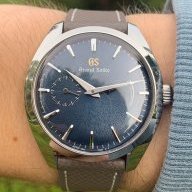
What modern watches will be "future classics"?

Posts
73
Likes
62
There seems to be a huge amount of focus on vintage watches at the moment. In fact almost every new release from some top manufacturers seems to be a "reissue" of a 50s, 60s or 70s watch.

So... my question is which modern watches (released year 2000 onwards) do you think will be sought after by collectors in 20, 30, 40 years or more? Which watches that are readily available now will become "grail watches" for our children and grandchildren?

I'm thinking of any manufacturer, not just Omega, but preferably a model that is newly released since 2000 and is still readily available today.

 
Posts
2,598
Likes
5,660
I think our children are highly unlikely to be interested in mechanical wristwatches, and grandchildren even less so.
 
Posts
1,567
Likes
2,677
There seems to be a huge amount of focus on vintage watches at the moment. In fact almost every new release from some top manufacturers seems to be a "reissue" of a 50s, 60s or 70s watch.

So... my question is which modern watches (released year 2000 onwards) do you think will be sought after by collectors in 20, 30, 40 years or more? Which watches that are readily available now will become "grail watches" for our children and grandchildren?

I'm thinking of any manufacturer, not just Omega, but preferably a model that is newly released since 2000 and is still readily available today.

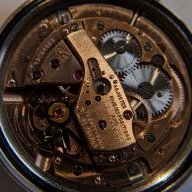
The Seamaster 300m is already becoming what you describe. It may have been introduced before the turn of the millennium, but 25+ years of production have yielded enough examples that it is starting to be collected widely and with greater intensity. Original tritium dial watches have seen a price rise in recent years, and full, NOS set examples are showing up less and less for more and more. With the immense popularity of the 2018 model, attention has also spread to the older models of the 300m.

I think our children are highly unlikely to be interested in mechanical wristwatches, and grandchildren even less so.
This is a possibility, not an inevitability.
Watch editorials such as Hodinkee have already succeeded in garnering a large, younger audience of watch enthusiasts. That and the association of mechanical craftsmanship with status reinforces the probability that mechanical timepieces will still last despite the prevalence of quartz and smartwatches.
 
Posts
2,598
Likes
5,660
This is a possibility, not an inevitability.
Watch editorials such as Hodinkee have already succeeded in garnering a large, younger audience of watch enthusiasts. That and the association of mechanical craftsmanship with status reinforces the probability that mechanical timepieces will still last despite the prevalence of quartz and smartwatches.

Yes it’s not inevitable, but IMO the collector community could easily be an order of magnitude smaller than it is now by the time my grandchildren could become collectors. To put that in a timeframe, my kids now are 8 and 4 so it’s probably 40-50 years or more until any potential grandchildren would be in a position to start collecting vintage wristwatches.
 
Posts
6,872
Likes
12,623
Let's be honest, whatever make You love, the 1960s watches, even pre-2001 mechanical watches were far better looking than all the crap flooding the market these days. So I believe a 1960s Omega Ultraman or a Rolex 1675 GMT will still be very desirable mechanical watches in 50 years time...
 
Posts
73
Likes
62
I think our children are highly unlikely to be interested in mechanical wristwatches, and grandchildren even less so.

I can understand the point of view, although in my experience the fact that most of us spend hours glued to digital devices means there is more interest in "old-fashioned" non-digital pastimes, not less. I'm not just thinking watches but also all the interest in home baking, "craft beer", pretty much anything that seems homespun and slower paced than the modern world.

Even if you are right, it's not going to stop me buying a few modern classics for my collection just in case!
 
Posts
1,306
Likes
1,465
ultimately the classics will remain classic. There's been nothing "new" in watch design other than novel or new materials in the last 50 years. the real advancements have been in getting "timepieces" on the wrists of people who would traditionally not wear a watch (iWatch I'm looking at you) as well as the cheap quartz watch.

this generation will most likely not move onto "traditional" watches except as statement pieces (like jewellery). this generation will also be the beneficiary of your collection habit. They will be dumped onto an already overstocked market in order to cash out.

IMHO ::stirthepot::
 
Posts
1,301
Likes
2,575
... which modern watches (released year 2000 onwards) do you think will be sought after by collectors in 20, 30, 40 years or more? Which watches that are readily available now will become "grail watches" for our children and grandchildren?
It's a question of anticipating supply (scarcity) and future demand for a particular model. You can more or less attempt to gauge the supply side, particularly for models out of production, but forecasting demand in 40 years is crystal balling. These days there are so many niche brands with very low output that I'd ignore them because, chances are, niche today, niche tomorrow, and watches from small high-end manufactures aren't "readily available" anyway.

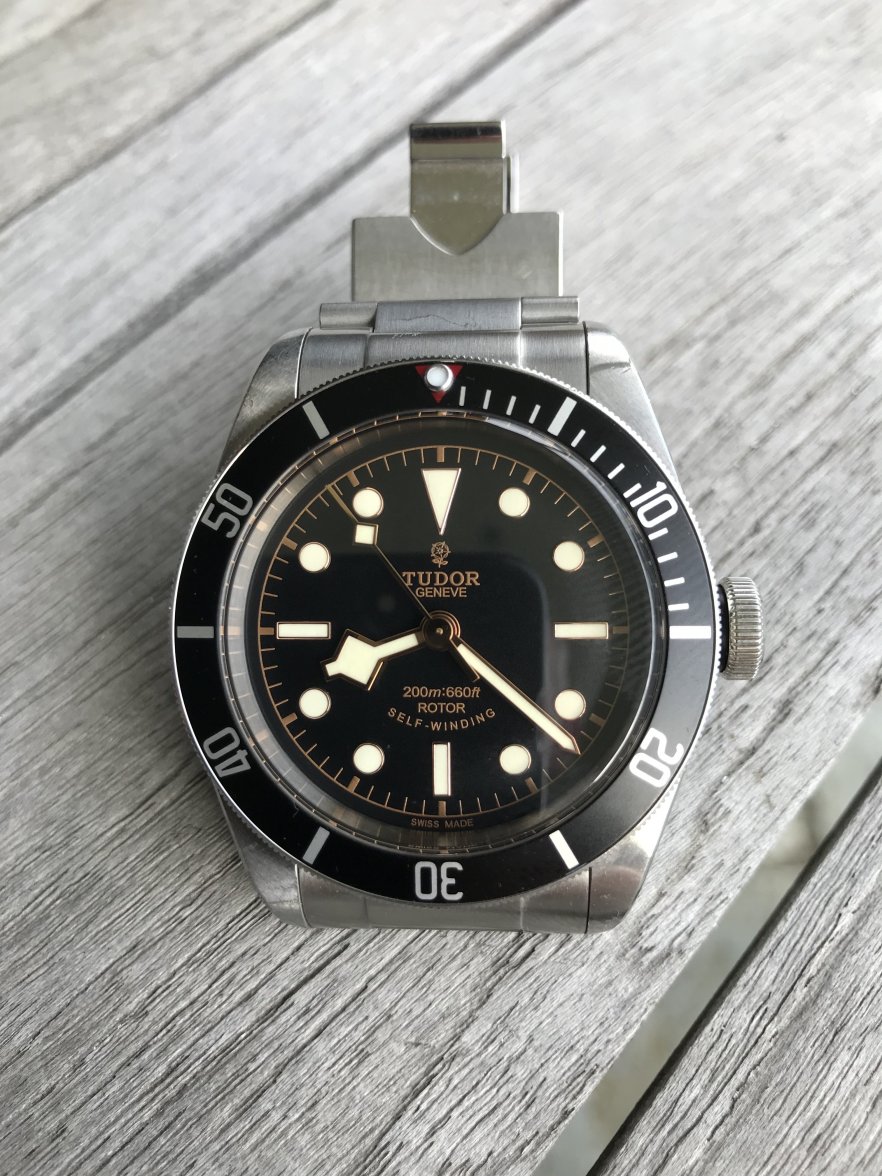
At the risk of being completely wrong, I'll jump off the fence and give a name. Tudor's Black Bay family is accessible and popular. The smaller size of the BB58 appears to be more popular than the original BB ETA size and the larger still in-house movements. The BB58s and in-house BBs are still in production and will probably remain so for a long while due to popularity, so they won't be scarce. The BB ETAs are no longer manufactured and one model in particular was only produced for a few months - the black bezel (BBB). Even though the BB58 size is more popular today, size is not necessarily a major factor for collectors - many sought-after vintage watches today are smaller than contemporary watches. The BBB ETA may not be so readily available any more but they pop up. So I'm punting future collectors will look for them because they are the holders of the original genes of the popular and growing BB family, they have scarcity and they're a great looking watch with a movement that doesn't need to go back to Tudor for service. You can buy me a beer in 30 years if I'm right. 😀 Here's mine:

 
Posts
73
Likes
62
At the risk of being completely wrong, I'll jump off the fence and give a name. Tudor's Black Bay family is accessible and popular... The BBB ETA may not be so readily available any more but they pop up. So I'm punting future collectors will look for them because they are the holders of the original genes of the popular and growing BB family, they have scarcity and they're a great looking watch with a movement that doesn't need to go back to Tudor for service. You can buy me a beer in 30 years if I'm right. 😀 Here's mine:


Funnily enough I've been weighing up a Black Bay for a while now. I'd always thought the in-house movement would be preferable to watch geeks, but what you say makes perfect sense.

Beautiful watch by the way, although I'm pretty interested the blue bezel version. We can compare when I buy you that beer in 30 years time! 👍
 
Posts
1,872
Likes
2,154
It's a question of anticipating supply (scarcity) and future demand for a particular model. You can more or less attempt to gauge the supply side, particularly for models out of production, but forecasting demand in 40 years is crystal balling. These days there are so many niche brands with very low output that I'd ignore them because, chances are, niche today, niche tomorrow, and watches from small high-end manufactures aren't "readily available" anyway.

At the risk of being completely wrong, I'll jump off the fence and give a name. Tudor's Black Bay family is accessible and popular. The smaller size of the BB58 appears to be more popular than the original BB ETA size and the larger still in-house movements. The BB58s and in-house BBs are still in production and will probably remain so for a long while due to popularity, so they won't be scarce. The BB ETAs are no longer manufactured and one model in particular was only produced for a few months - the black bezel (BBB). Even though the BB58 size is more popular today, size is not necessarily a major factor for collectors - many sought-after vintage watches today are smaller than contemporary watches. The BBB ETA may not be so readily available any more but they pop up. So I'm punting future collectors will look for them because they are the holders of the original genes of the popular and growing BB family, they have scarcity and they're a great looking watch with a movement that doesn't need to go back to Tudor for service. You can buy me a beer in 30 years if I'm right. 😀 Here's mine:


The moment I saw the title, I thought about this watch. I couldn't agree more!👍

Ps.. If it is for sale, let me know.😉😁
 
Posts
1,301
Likes
2,575
The moment I saw the title, I thought about this watch. I couldn't agree more!👍

Ps.. If it is for sale, let me know.😉😁
Sorry NFS now but check back in 30 years. 😀
 
Posts
2,921
Likes
14,963
So... my question is which modern watches (released year 2000 onwards) do you think will be sought after by collectors in 20, 30, 40 years or more? Which watches that are readily available now will become "grail watches" for our children and grandchildren?

I'll let you know once I repair my time machine and get it up and running.

8-5.jpeg
 
Posts
712
Likes
2,597
A niche in 30 years time could be micro brands, there are some weird and wonderful pieces with alot of generic movements, so will be serviceable and small batches

Disclaimer, I own zero, so not putting any money down.

Limited ed Seikos could be interesting, big and growing following and apart from the 5 line the strategy seems to be moving up the market

Oh and 5 digit Rolex.
 
Posts
1,759
Likes
5,502
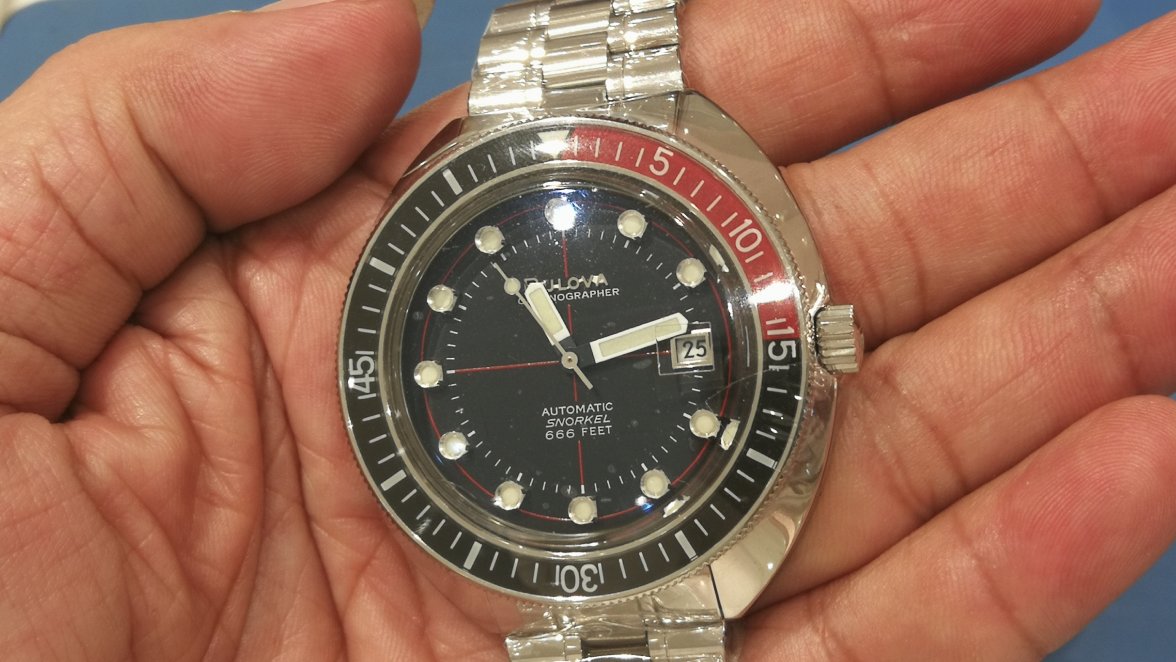
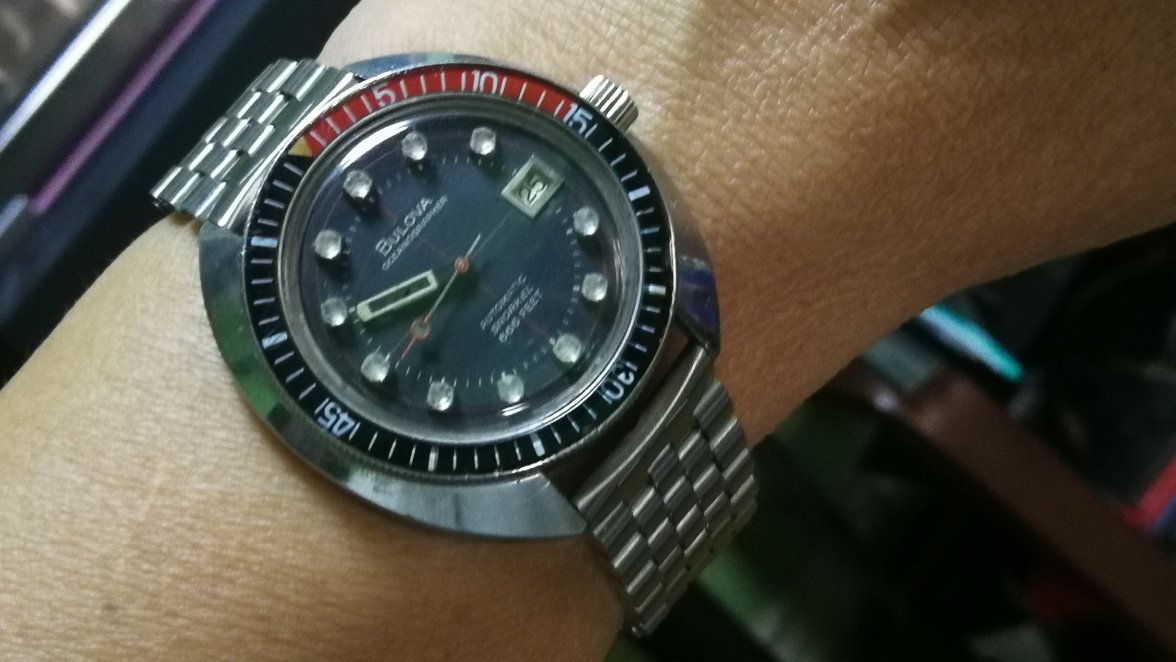
i was tempted by the new devil. no obvious design deviation from the past to present.

 
Posts
15,478
Likes
45,845
Hard to predict. One of my most collectable watches is almost 90 years old. I am the second owner. It belonged to my late father who was a watchmaker. He bought the watch in the early 1930s, and it was his main watch for many years. Fast forward to the late 1940s when he was no longer wearing the watch. It became just an old watch chucked into a drawer that he used to lend to customers while he repaired their watches. I acquired it from him in 1975 when it had become a sought after watch in the eye of collectors. My Rolex Prince Observatory duo-dial “doctor’s” watch.