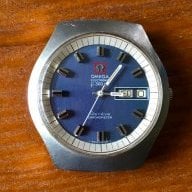
What does “mid-size” mean, exactly?

Posts
1,811
Likes
2,688
I saw this term used in another ongoing thread here in this subforum—applied, I believe, to a 41mm watch.

In the context of the present standard range of watch sizes (hence this being posted in the Modern Omegas forum), what do you think “mid-size” and its related terms mean? For what it’s worth, I would not brand 41mm mid-size. But a little internet searching suggests it’s all very subjective and squishy.

To my mind—with respect to modern-era men’s watches—

Under 34mm = small (vintage proportions)

34-37mm = mid-size (perhaps dainty by current trends, but suitable for almost any man’s wrist, like an Explorer I or Day-Date)

38-42mm = large (trendy now in the ascendant era of stainless steel sports watches)

Over 43mm = jumbo (getting into ultra deep, SD43 territory—more niche)


I know there are other variables than dial size, and that personal taste factors in somewhat, but I wonder if we can find any consensus on how we use these terms. …Not that it’s terribly important.

 
Posts
3,739
Likes
7,941
I would think of a mid-size watch as 36-38mm, roughly (with 38 pushing that a bit); "full size" watches at 39-42mm, and smaller, classic watches as under 35, 34mm; in the case of divers, a lady diver at 28-32mm makes 36mm "midsize."


I used that term earlier. My comment might not have been super ckear though, I meant that the standard SMP should stay at 41mm, and that Omega should- if doing a smaller size- release a mid size.

What's odd about Omega's lineup is that both the Aqua Terra and Planet ocean line have watches ranging down to ~38mm, which is pretty much the 2026 "mid" size (from Omega anyway).

I truly understand the desire for a smaller size diver from Omega. I think a 38mm SMP would give a lot of people what they want, but if it's something Omega decided to do it should be as a midsize offering.
Edited:
 
Posts
213
Likes
173
I saw this term used in another ongoing thread here in this subforum—applied, I believe, to a 41mm watch.

In the context of the present standard range of watch sizes (hence this being posted in the Modern Omegas forum), what do you think “mid-size” and its related terms mean? For what it’s worth, I would not brand 41mm mid-size. But a little internet searching suggests it’s all very subjective and squishy.

To my mind—with respect to modern-era men’s watches—

Under 34mm = small (vintage proportions)

34-37mm = mid-size (perhaps dainty by current trends, but suitable for almost any man’s wrist, like an Explorer I or Day-Date)

38-42mm = large (trendy now in the ascendant era of stainless steel sports watches)

Over 43mm = jumbo (getting into ultra deep, SD43 territory—more niche)


I know there are other variables than dial size, and that personal taste factors in somewhat, but I wonder if we can find any consensus on how we use these terms. …Not that it’s terribly important.
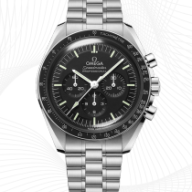
midsize equals small = 36.
 
Posts
10,357
Likes
16,210
It rather depends on the model in question. If there is a big model at 44mm then a 41mm that looks the same could be from one POV legitimately be styled as mid sized. As above I’m thinking of the Planet Ocean as one such example though there are several Omega models where there were 2 or more full size options. The AT based Railmaster came in 36, 39, 41 and the ludicrous 49mm which made naming tricky as it logically had 2 mid sized models which were in fact full sized.
Edited:
 
Posts
211
Likes
256
I would think of a mid-size watch as 36-38mm, roughly (with 38 pushing that a bit); "full size" watches at 39-42mm, and smaller, classic watches as under 35, 34mm; in the case of divers, a lady diver at 28-32mm makes 36mm "midsize."

I would agree with this assessment.
 
Posts
1,666
Likes
3,268
IMHO for modern watches a midsize means:
38-39mm for divers.
35-36mm for field and dress watches.
 
Posts
1,811
Likes
2,688
It rather depends on the model in question.

If there is an answer, then this is probably it. It’s a context-dependent question, I suppose.