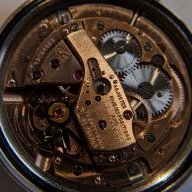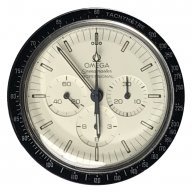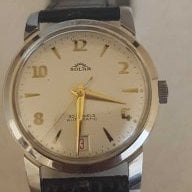
Wearing Radium.

Posts
29,663
Likes
76,816
I used the wear one all the time...no problems!!


Seriously though, I sold the only watch that had a radium dial. I do still work on watches that use radium, and I'm very careful about it...risks are cumulative, not exclusive. Something for the "I do far more dangerous stuff than this" crowd should keep in mind, if not for this topic then for others.

 
Posts
1,282
Likes
5,716
I used the wear one all the time...no problems!!


🤮

I won't be able to get this image out of my head
 
Posts
4,810
Likes
12,179
I think the health impact / risks of owning radium watches are quite low, but I have personally decided to not go there. I have health issues as it is, so I avoid radium.
Edited:
 
Posts
403
Likes
2,511
I think it's probably fine - unless you start talking into a radium watch that is....👍

 
Posts
617
Likes
2,975
Thanks @Dgercp , as I also was asking myself (like @iamvr too) the same these days after reading about it and getting worried after reading an article in german language which really condemned the usage of radium watches altogether. Very enlightening thread. Thank you to others, who have shared their opinion as well.

One question though... As it not obvious to me: If Tritium is far safer, and it usually shows on the dial through the two Ts surrounding "Swiss Made", how can one tell a particular lume is radium? Or do simply ALL vintage watches from the 30s, 40s and 50s up until the 60's and 70's (I have no rough idea when super luminova was invented) that have lume have therefore radium on them?

Also, does the amount of radium lume make any difference? A recently acquired 50's Seamaster has darkened lume on most indices and a bit of course on the hands, but in comparison to, let's say, a GMT Master shown in this thread, it looks far less "dangerous".
 
Posts
1,565
Likes
2,673
Thanks @Dgercp , as I also was asking myself (like @iamvr too) the same these days after reading about it and getting worried after reading an article in german language which really condemned the usage of radium watches altogether. Very enlightening thread. Thank you to others, who have shared their opinion as well.

One question though... As it not obvious to me: If Tritium is far safer, and it usually shows on the dial through the two Ts surrounding "Swiss Made", how can one tell a particular lume is radium? Or do simply ALL vintage watches from the 30s, 40s and 50s up until the 60's and 70's (I have no rough idea when super luminova was invented) that have lume have therefore radium on them?

Also, does the amount of radium lume make any difference? A recently acquired 50's Seamaster has darkened lume on most indices and a bit of course on the hands, but in comparison to, let's say, a GMT Master shown in this thread, it looks far less "dangerous".

To my understanding, the only "sure way" to ascertain whether a watch has radium on it is to use a geiger counter. Visual cues can help, but they are not definitive and can vary between brands and dial manufacturers due to different compositions of the lume.

Older lume also tends to have higher concentrations of radium. As it grew to be more of a concern, the percentage of radium in lume was gradually reduced over time, so younger watches actually tend to be less radioactive than older ones. For some of these, there are visual cues as well, (i.e. Rolex exclamation point dials). That said, the actual difference in radioactivity may not be that significant.
 
Posts
4,810
Likes
12,179
Thanks @Dgercp
One question though... As it not obvious to me: If Tritium is far safer, and it usually shows on the dial through the two Ts surrounding "Swiss Made", how can one tell a particular lume is radium? Or do simply ALL vintage watches from the 30s, 40s and 50s up until the 60's and 70's (I have no rough idea when super luminova was invented) that have lume have therefore radium on them?

Tritium is much safer. It emits only beta particles, whereas radium emits alpha particles that are more massive and therefore more dangerous. Further, tritium does not does not produce radon gas which can reach dangerous levels in a small confined space (e.g., a safe full of radium-lumed watches). Finally. tritium has a half life of about 12.5 years. So, a 25 year old watch only has 1/4 the tritium it started with. A 50 year old watch has 1/16 the tritium it started with. Radium has a half life of 1600 years, so a radium watch today has essentially all the radium left from when it was made. Radium was phased out in the early 60's and the switch was made to tritium. Superluminova produces no radiation and replaced tritium in the early 90s.

Thanks @Dgercp
Also, does the amount of radium lume make any difference? A recently acquired 50's Seamaster has darkened lume on most indices and a bit of course on the hands, but in comparison to, let's say, a GMT Master shown in this thread, it looks far less "dangerous".

The amount of radium in a watch is highy variable, but it is difficult to know how much radium was used unless you use a Geiger counter. The concentration of radium in the lume, and the thickness of the lume can vary. The area of the watch face lumed is not a good indicator of the amount of radium.

Near the Swiss Made, T indicates tritium, R or Ra indicates radium, the lack of extra letters does not indicate anything. You will sometimes see no extra letters on watches containing radium, tritium, superluminova, or no lume at all. Sometimes there is a T on both sides of the Swiss Made, sometimes only one side.
 
Posts
1,432
Likes
1,431
I sold the only radium watch I owned. I don’t have the proper knowledge but having it always made me feel uneasy... why take the risky, however small it may be?
 
Posts
24,230
Likes
53,961
One question though... As it not obvious to me: If Tritium is far safer, and it usually shows on the dial through the two Ts surrounding "Swiss Made", how can one tell a particular lume is radium? Or do simply ALL vintage watches from the 30s, 40s and 50s up until the 60's and 70's (I have no rough idea when super luminova was invented) that have lume have therefore radium on them?

Also, does the amount of radium lume make any difference? A recently acquired 50's Seamaster has darkened lume on most indices and a bit of course on the hands, but in comparison to, let's say, a GMT Master shown in this thread, it looks far less "dangerous".

Most lume from before 1960-ish will be radium, if it is original. It's usually not marked in any special way. Of course, sometimes it has been removed and replaced. Radium was generally phased out in the early 60s in favor of tritium-based luminous paint.

The amount of lume certainly matters, but so does the amount of radium in the lume, which you generally have no way to judge without a Geiger counter. In particular, military watches from the 1930s are often an order of magnitude more radioactive than the typical Omegas or Rolexes from the 1950s that you may be looking at.
 
Posts
1,565
Likes
3,672
When I asked a nuclear scientist this question years ago, he said if you’re not strapping the watch over your eyeball, or to your balls, you should be fine...

😉
 
Posts
1,534
Likes
3,238
M'Bob said:
When I asked a nuclear scientist this question years ago, he said if you’re not strapping the watch over your eyeball, or to your balls, you should be fine...

Christopher Walken's character in Pulp fiction kept a vintage Rolex up his ass, while he was a POW in Korea or Vietnam. I guess that is probably risky, as well. If I am ever conscripted, which is unlikely, I'll make sure I take my smallest timepiece with luminova. I'm glad I have that worked out in advance - it is always better to be prepared.
 
Posts
1,487
Likes
2,376

Christopher Walken's character in Pulp fiction kept a vintage Rolex up his ass, while he was a POW in Korea or Vietnam. I guess that is probably risky, as well. If I am ever conscripted, which is unlikely, I'll make sure I take my smallest timepiece with luminova. I'm glad I have that worked out in advance - it is always better to be prepared.

No Rolex for Walken’s rectum but rather a Lancet....also if you ever are conscripted and captured as a prisoner of war you can always just buy a new watch if and when you’re released 😀

“Lancet was a Swiss brand produced by Lagendorf Watch Company. The watch in Pulp Fiction was a 1918 trench watch, a 15-jewel hand-winding timepiece, the kind of timepiece likely to be carried by a soldier in World War I, as described so memorably by Christopher Walken. Because so many were produced, they’re still available quite regularly on eBay and other auction sites.”
 
This website may earn commission from Ebay sales.
Posts
1,534
Likes
3,238
No Rolex for Walken’s rectum but rather a Lancet....also if you ever are conscripted and captured as a prisoner of war you can always just buy a new watch if and when you’re released 😀

“Lancet was a Swiss brand produced by Lagendorf Watch Company. The watch in Pulp Fiction was a 1918 trench watch, a 15-jewel hand-winding timepiece, the kind of timepiece likely to be carried by a soldier in World War I, as described so memorably by Christopher Walken. Because so many were produced, they’re still available quite regularly on eBay and other auction sites.”
Thanks for the correction - it's been at least 25 years, so it is probably time to re-watch this movie.
 
This website may earn commission from Ebay sales.
Posts
29,663
Likes
76,816
Thanks for the correction - it's been at least 25 years, so it is probably time to re-watch this movie.

I watched over Xmas - still holds up pretty well.
 
Posts
1,534
Likes
3,238
I watched over Xmas - still holds up pretty well.
Funny, I have been enjoying Tim Roth's performance in Tin Star and thinking about all of his performances in the old Tarantino flicks. I will definitely rewatch it soon.
 
Posts
617
Likes
2,975
Most lume from before 1960-ish will be radium, if it is original. It's usually not marked in any special way. Of course, sometimes it has been removed and replaced. Radium was generally phased out in the early 60s in favor of tritium-based luminous paint.

The amount of lume certainly matters, but so does the amount of radium in the lume, which you generally have no way to judge without a Geiger counter. In particular, military watches from the 1930s are often an order of magnitude more radioactive than the typical Omegas or Rolexes from the 1950s that you may be looking at.

Thanks @Dan S for sharing, really appreciate it!
 
Posts
368
Likes
253
Just yesterday I've read the "Tritium girls" article somewhere and here it is this thread! Once upon a time we tested my friend's WWII military issued Omega on Geiger and there were a 3 digit number on it. Since then... no Geiger testing anymore 😀