Disclaimer: I am not a watchmaker. I've read a fair bit and I've watched some videos. You wouldn't want me to be operating on your brain if I had simply done some reading and watched some brain surgery videos . . . and I hadn't been to med school.
😉
Of course, there's a bit less at stake in evaluating the state of a watch.
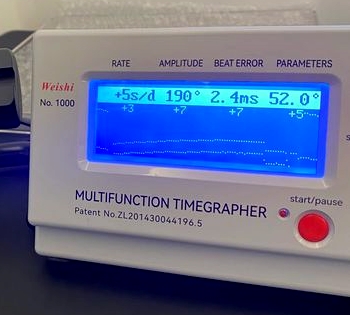
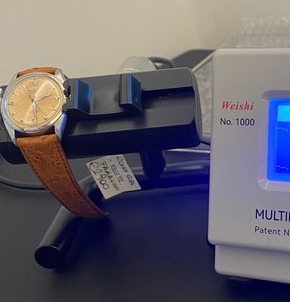
That said, I have developed a scratch sheet for recording what I observe using one of those inexpensive timegraphers and then I transcribe the information onto an Excel spreadsheet.
While the instrument is not calibrated in any way, I do test under as close to identical environmental circumstances as is practical.
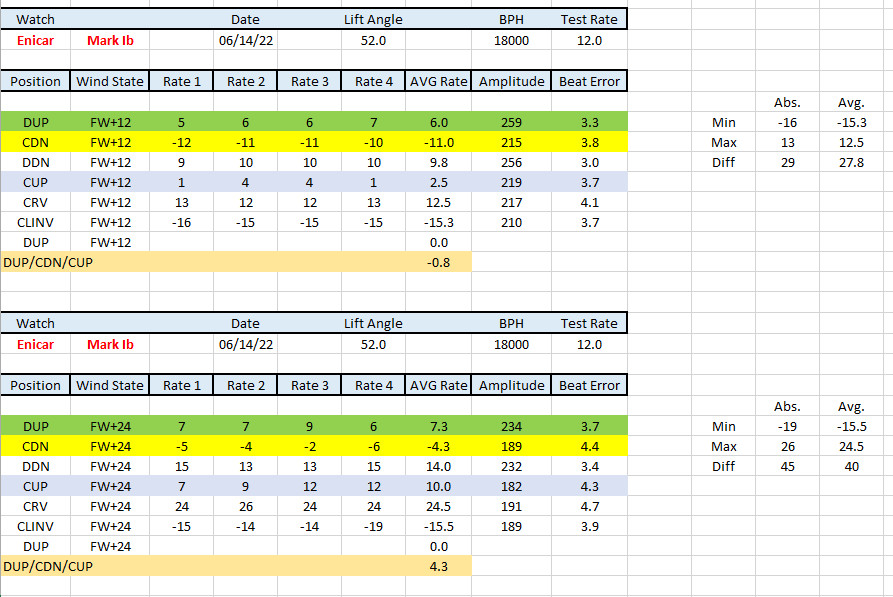
Here is what a 1
961 Enicar Sherpa Graph Mark Ib looked like before I sent it out for service:
I use my own abbreviations for position: Dial-up, Crown-down, Dial-down, Crown-up, Crown right in the vertical and Crown to the left inverted. I probably should adopt watchmaker abbreviations.
I note the winding state and I take several readings and average them in the columns at the right. The machine itself does averages so my averages are averages of averages. In the above examples, fully wound plus 12 hours later and fully wound plus 24 hours later.
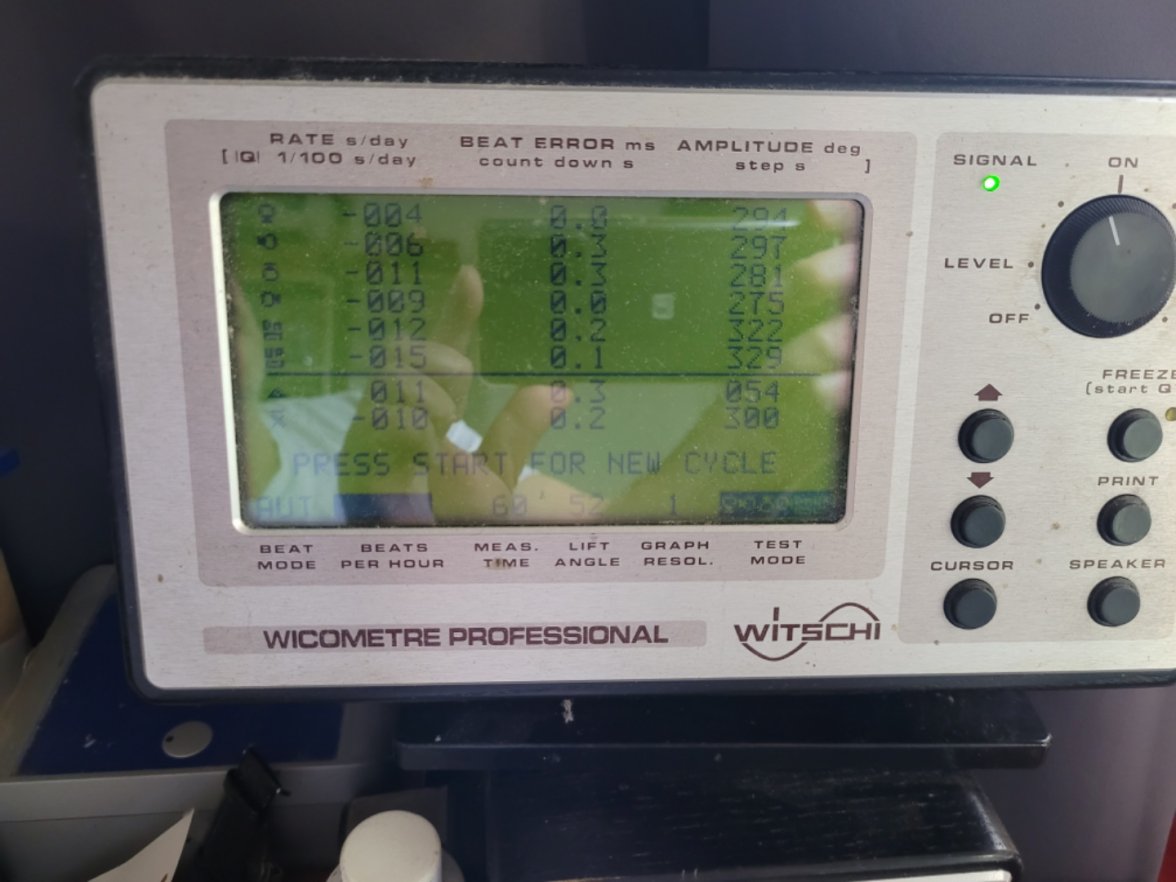
The amplitude is probably not terrible, but my experience with the Valjoux 72 is that it ought to be near 300 in the dial-up or dial-down position when newly serviced and the beat error should be below 1.0 msecs when the watch has a fixed stud carrier and 0.5 msecs or less with a mobile or adjustable stud carrier on the balance. When the amplitude is low and the watch obviously needs service I generally don't bother to try and adjust it.
When I observe a drastic drop in amplitude, say in a vertical position, I know there is friction. One can sometimes determine which bearing surface is at fault.
The columns off to the right indicate the maximum excursion of seconds per day from the "worst" performing position to the "best" performing position. Rightly or wrongly,a watchmaker is encouraged to comment, I have concluded the smaller the difference the better the watch is likely to perform . . . and a watch with a smaller overall excursion is in better shape than one that has a 28 second or 40 second difference as seen above.
I've decided that, for a right-handed person who works at a desk often and who does walk around during the day, the most important positions to balance are dial-up, followed by crown up while sitting at the desk and crown down while walking around. For a left-handed person, one substitutes crown-up for crown-down. One can actually adjust a watch to favor a left-hander or a right-hander.
One thing you may notice is that, although the watch is in need of service, you would not think so - or know so - without seeing how it performs on the timegrapher because it is keeping time quite well.
Am I overthinking things? I usually do!
😀
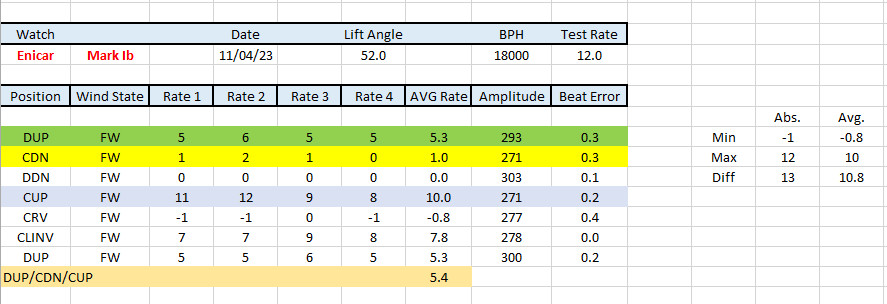
So now let's look at the watch after it has come back from service . . .
Unfortunately I did not yet record an FW+12 reading so that we can make a firm apples to apples comparison, but already we see good amplitude, a very low beat error rate especially for a movement with a fixed stud carrier and the maximum excursion in time-keeping in all positions is much improved.
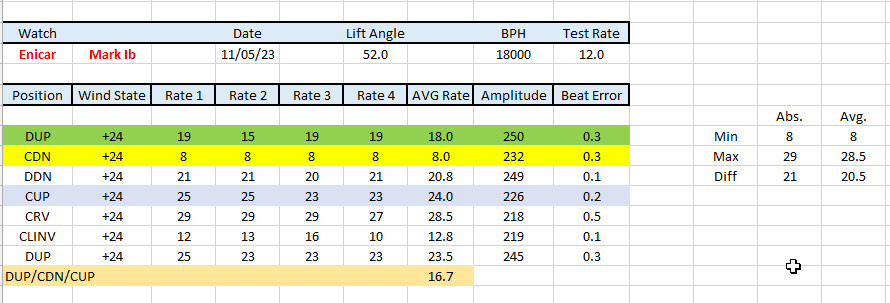
Here we are at FW+24 hours:
The watch is running a bit fast and it does speed up a bit more after 36 hours. One could say to oneself: "Gee, the watch seems to be keeping better time before it was serviced?" The watchmaker allowed the watch to run a bit fast, but clearly,
the watch has received a very good service.
There is really no way to determine whether a watch has been properly serviced without looking at it on a timegrapher or equivalent.
It is easier and now worthwhile for me to adjust the watch to my own tastes if I so choose, knowing that the watch is in a good state of repair.
Comments and criticism welcome.
Cheers,
Joe
Edit: I have left out a few additional things that I take for granted. For example, you may notice that after service the readings taken are more consistent. The beat is more stable. Also, when one looks at the graph lines on the timegrapher, they are smoother overall and there are no ticks that appear to be "out of bounds."