Tachymètre bezel useless in space !

Posts
6,845
Likes
12,581
The title was a literal quote by the late Apollo 15 Command Module Pilot USAF Colonel Alfred Worden, who just repeated NASA astronauts' feedback given in 1966. Remarkably, in May 1970 NASA astronauts' repeated that feedback and by May 1971, a practical "60 seconds" bezel was introduced at NASA!
During a January 2019 VIP event in Berlin - Germany, I had the privilege & pleasure to talk to retired NASA astronaut Alfred Worden (February 7, 1932 - March 18, 2020) about two things pilots/aviators really like: flight jackets and pilot wrist watches.
He was pleasantly surprised having someone at his table asking real practical questions, as we compared our wrist watches (during that week in Europe, Worden wore two Omega Speedmaster, a regular 1861 and a special edition HB-SIA version) and talked about military officers' careers.
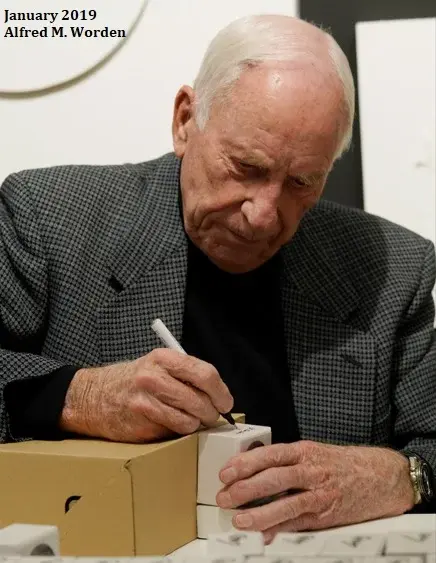
Funny enough, during one of my very first visits to Omega, I was once told "You should have worn a different watch" and I really had to bite my lips & teeth not to mention the words of Alfred Worden:
"We should have worn a different Speedmaster"...
I have been writing about the Omega Speedmaster since 1994, extensively using official NASA & Roscosmos photographs, revealing research which steadily came online via Hodinkee in 2015 and via OmegaForums & MoonwatchUniverse blog since June 2016.
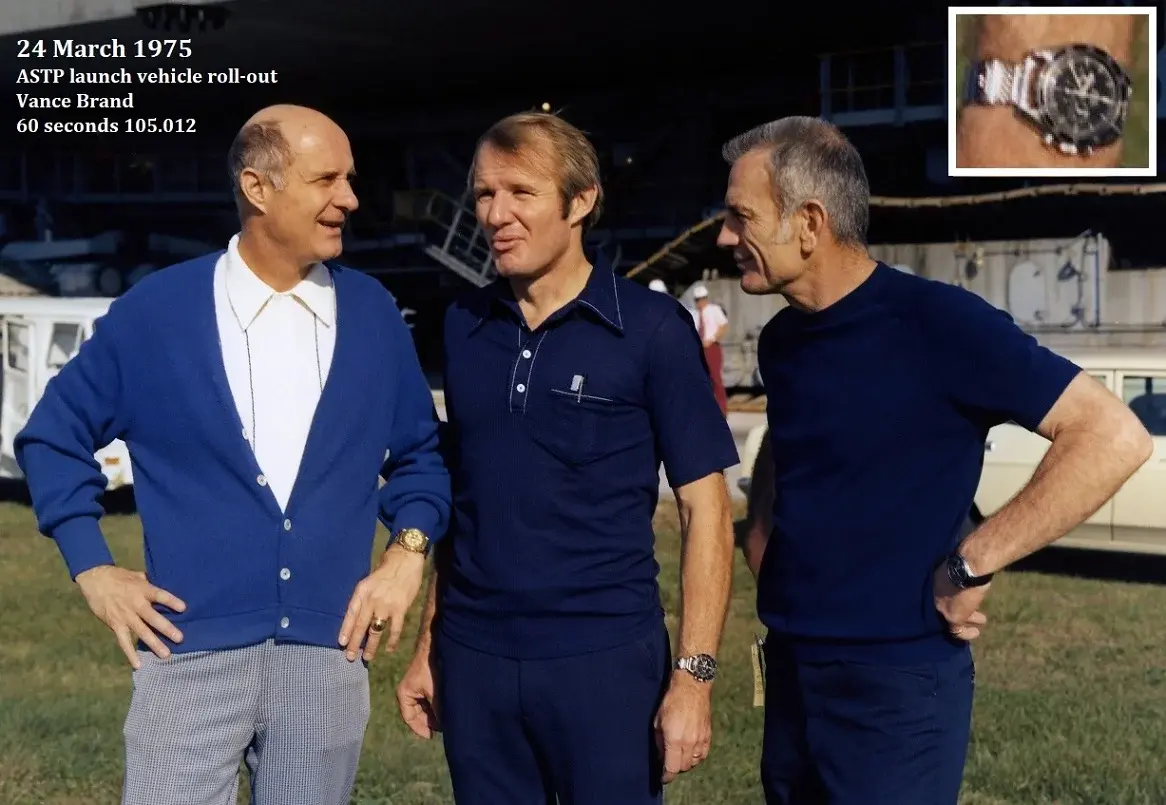
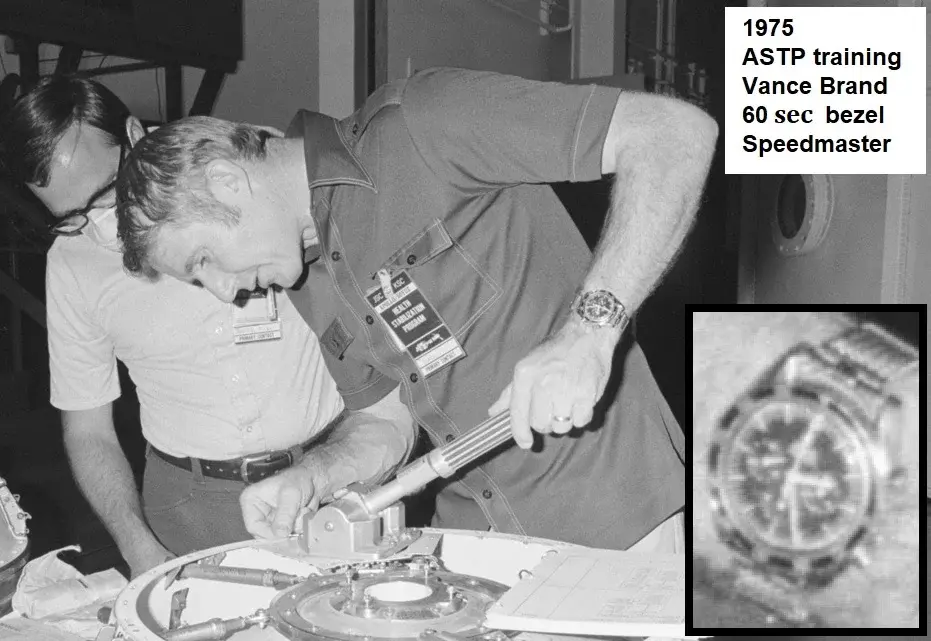
Talking with Alfred "Al" Worden was a real climax, like a cherry on the cake explaining many things I had noticed in NASA photographs (e.g. ASTP PLT USMC Major Vance D. Brand still wearing a NASA-issued "60 seconds" bezel Speedmaster in July 1975 NASA photo S75-28485).

Our conversation triggered me to delve extremely deep in NASA photographs, suggesting to help out the 2019 "Moonwatch Only" with a chapter on "Astronauts and their Speedmasters", giving talks at GTGs, making listings & finding out when each NASA received his NASA-issued Omega Speedmaster for the first time...
And yes, up to 1968 NASA didn't have enough Omega Speedmaster wrist chronographs to issue one to each astronaut on active flight status...
And yes, at least half-a-dozen astronauts didn't care about the "Tachymètre" bezel, some even flew in space with a bezelless Speedmaster...

Alfred Worden passed away March 18, 2020, aged 88... the same date for Thomas Stafford (2024 - aged 93) and Robert Rushworth (1993 -aged 68)
Edited:
 
Posts
6,845
Likes
12,581
Using my " 125 important Omega Speedmaster dates " listing:
March 16, 1962
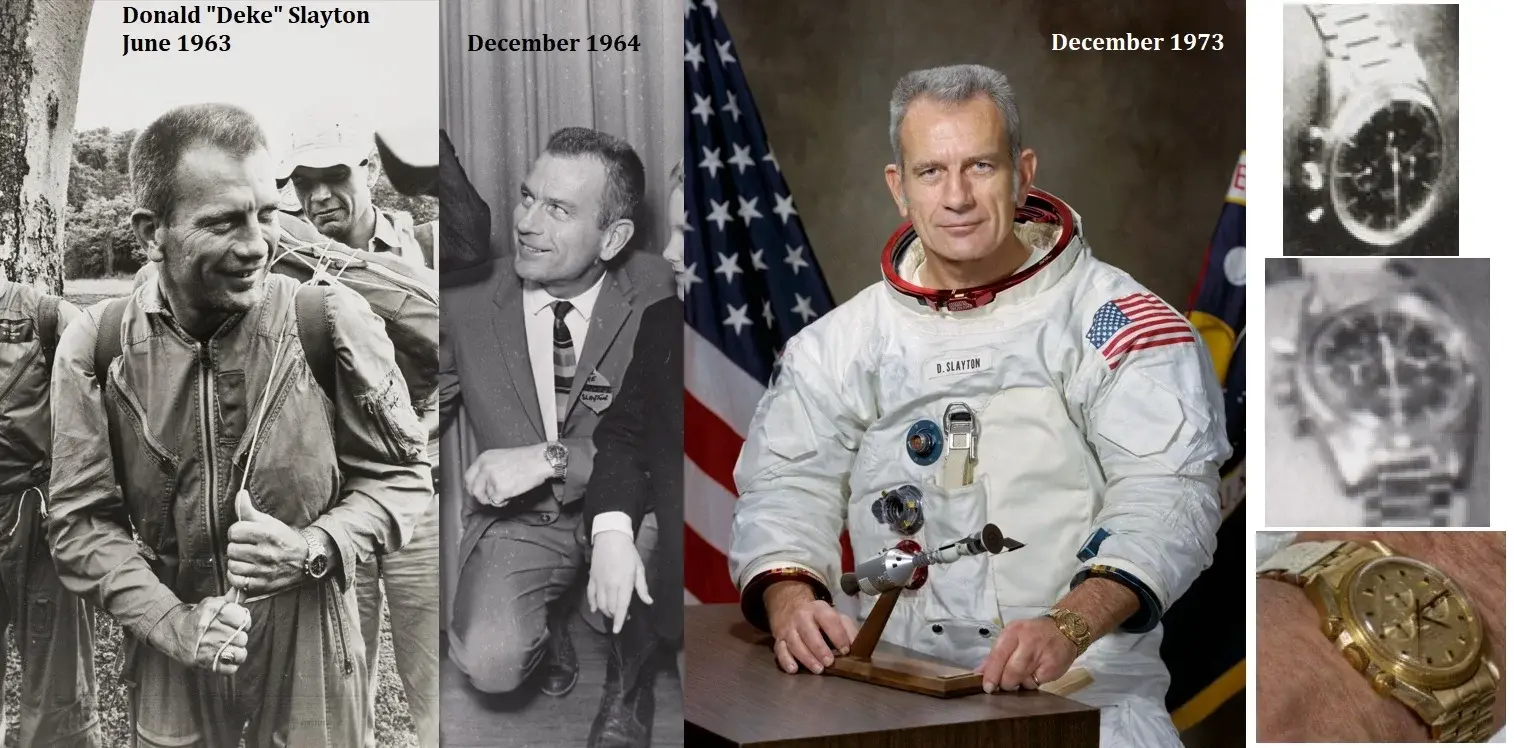
US Air Force Major "Mercury 7" astronaut Donald "Deke" Slayton photographed wearing a 1961 Omega Speedmaster CK2998 wrist chronograph during a press conference stating he was grounded for medical reasons and that Mercury-Atlas 7 would be flown by US Navy Lt Scott Carpenter. Slayton would have named his mission "Delta 7", Carpenter choose "Aurora 7".
Donald Slayton was "out" for 10 years, being returned to active flight status in March 1972, announced on 30 January 1973 as DMP for the Apollo Soyuz Test Project.

Slayton was the first NASA astronaut to wear a personal Omega Speedmaster and the first using his Speedmaster without the "Tachymètre" bezel as seen in this June 1963 Jungle survival training photograph. I have added two more photos but we can't blame Slayton for loosing the burgundy bezel on his Gold "Apollo 11 tribute" Speedmaster BA 145.022-69 (n° 27) as the aluminum bezel easily bumped off the softer Gold of the case.
(Photos: USAF/NASA)
.
 
Posts
1,328
Likes
704
I understand exactly what you mean, Phill. The rolex gmt master II has the same problem. We have no choice but to keep fighting.

Flightmaster forever.
 
Posts
6,845
Likes
12,581
Again, Using my " 125 important Omega Speedmaster dates " listing:
April 30, 1962
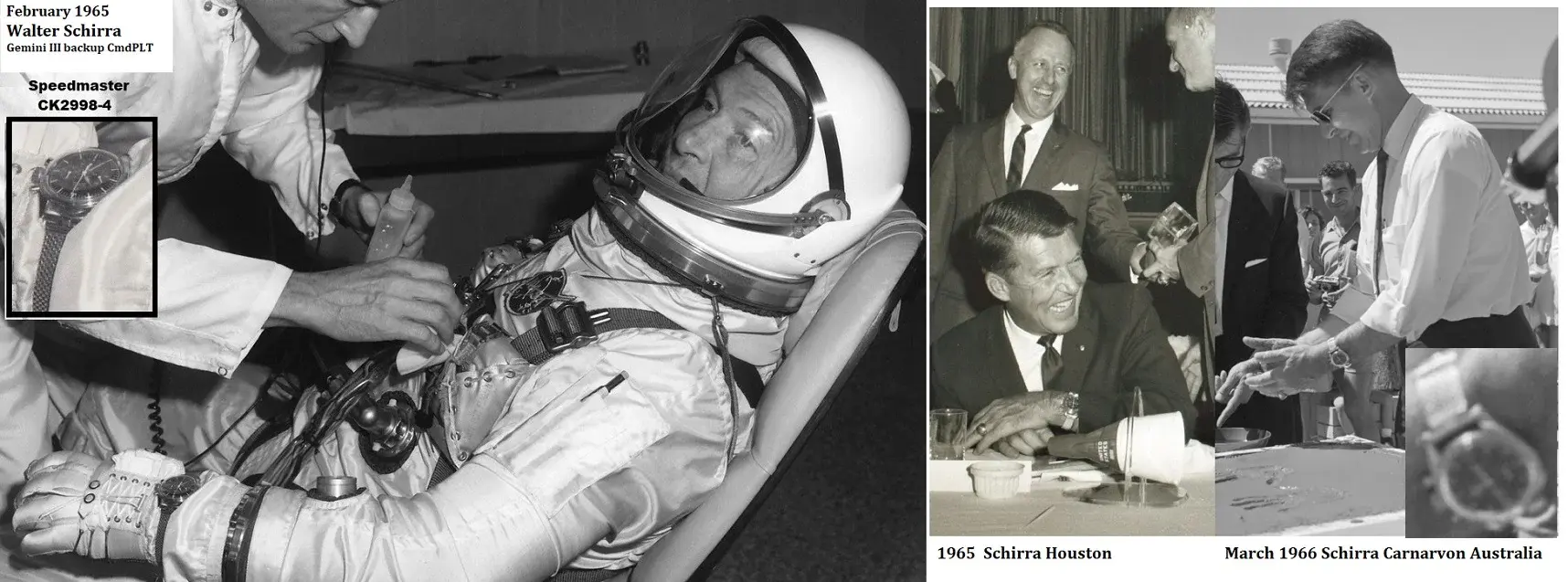
US Navy LtCdr "Mercury 7" astronaut Walter "Wally" Schirra posing for a portrait in LIFE magazine wearing his tailor-made Silver-reflecting coated BF Goodrich pressure suit and a 1961 Omega Speedmaster CK2998-4 wrist chronograph on an elastic expansion bracelet.
During NASA training, Schirra even used his personal CK2998-4 during water egress training and during SCUBA tests in his swimming pool at home. (NASA S65-1415)
October 3, 1962 and Schirra decided to wear the Speedmaster on his Mercury-Atlas 8 "Sigma 7" mission, making it the FOIS - First Omega In Space (9 Hours 13 minutes = 6 LEO Low Earth Orbits).

However, by February 1965, photos showing Schirra training as backup for the Gemini III mission, show a bezelless CK2998-4 (NASA 65-H-27) and the watch stayed this way to at least March 1966 when we see Schirra wearing it for the last time (thus far).
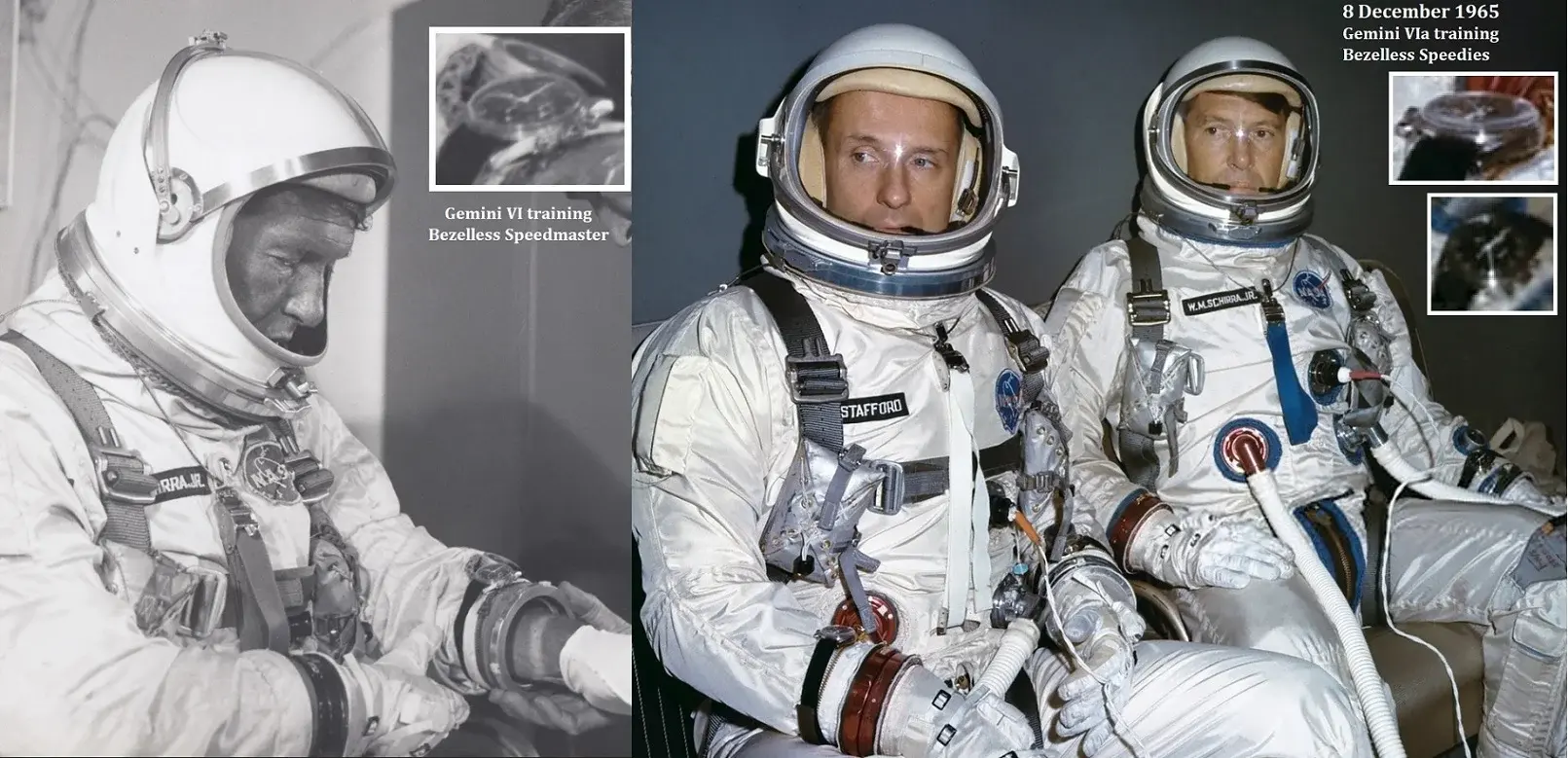
Remarkably, fellow Gemini III backup Thomas Stafford later assigned to Gemini VI, also wore a bezelless Speedmaster as did Schirra for Gemini VIa training!
(Photos: NASA)
.
 
Posts
6,845
Likes
12,581
The Gemini VI training Speedmaster chronographs puzzle !
5 April 1965, NASA announced the Gemini VI crew, Walter Schirra and Thomas Stafford.
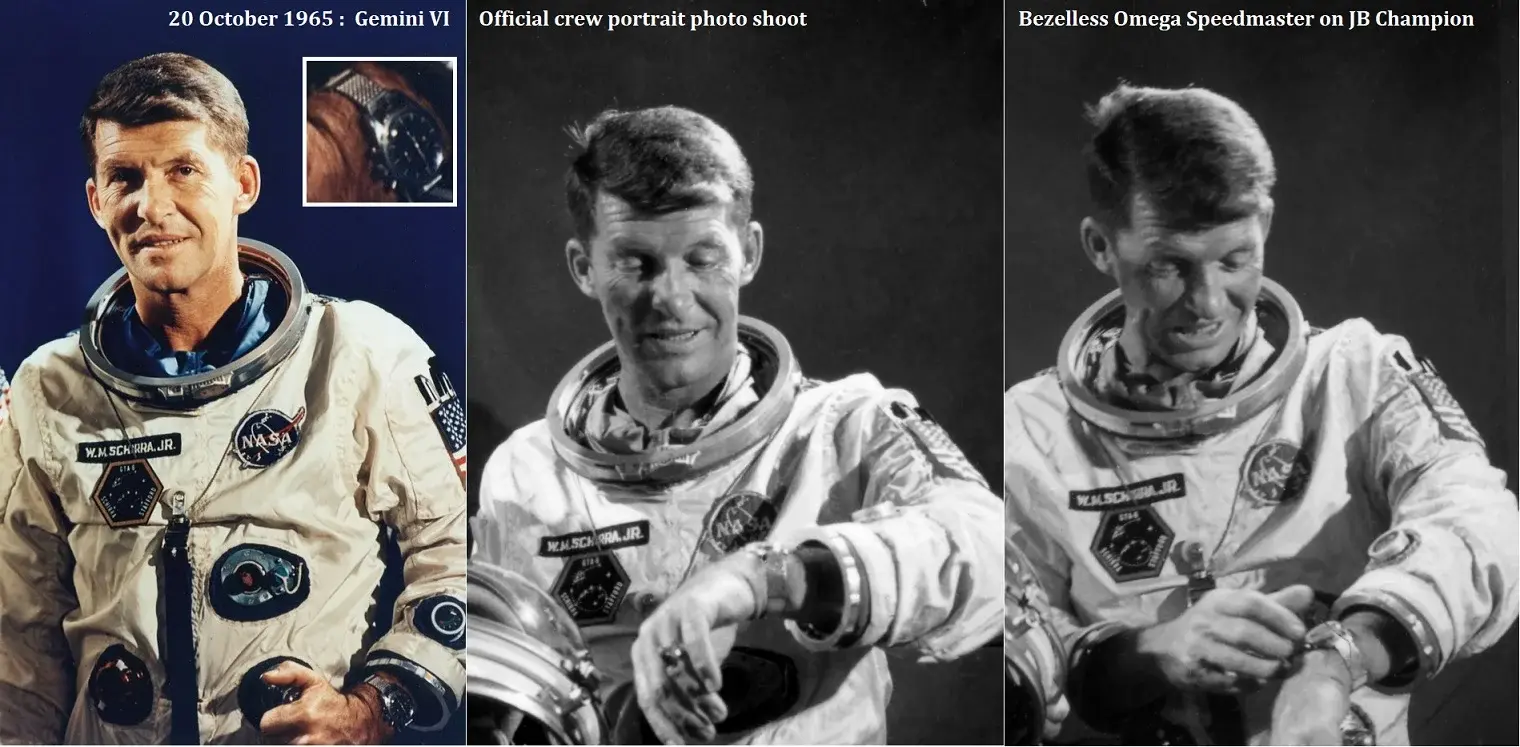
During training, Schirra often wore a bezelless Omega Speedmaster, but I can't decide if he was still using his personal CK2998-4 or already a bezelless NASA-issued 105.003-64?
Lots of photos available of the 20 October 1965 official NASA crew portrait photo session.
IMHO, the Speedmaster on a steel mesh JB Champion was his CK2998-4
While, the Speedmaster on a black Velcro was a NASA-issued 105.003-64 (n° 19) ?
.


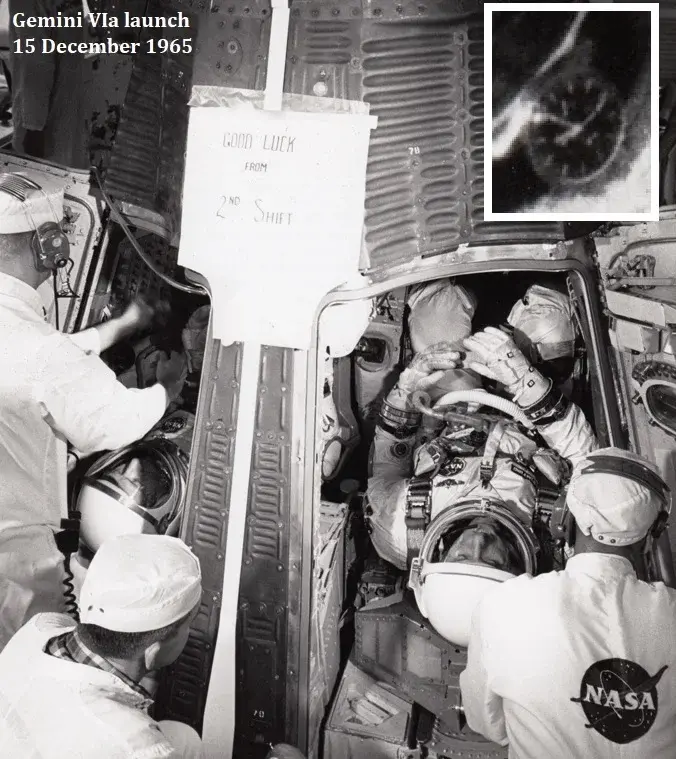
Also, USAF Capt Thomas Stafford wore a bezelless Omega Speedmaster, one of two Speedies he eventually wore during the Gemini VIa mission on 15 December 1965 (25 hours 51 min = 16 orbits).
Hard-to-tell from B&W photos if Schirra wore a bezelless Speedmaster during Gemini VIa mission, but Thomas Stafford 100% did so, on his right forearm !
(Photos: NASA)
 
Posts
6,845
Likes
12,581
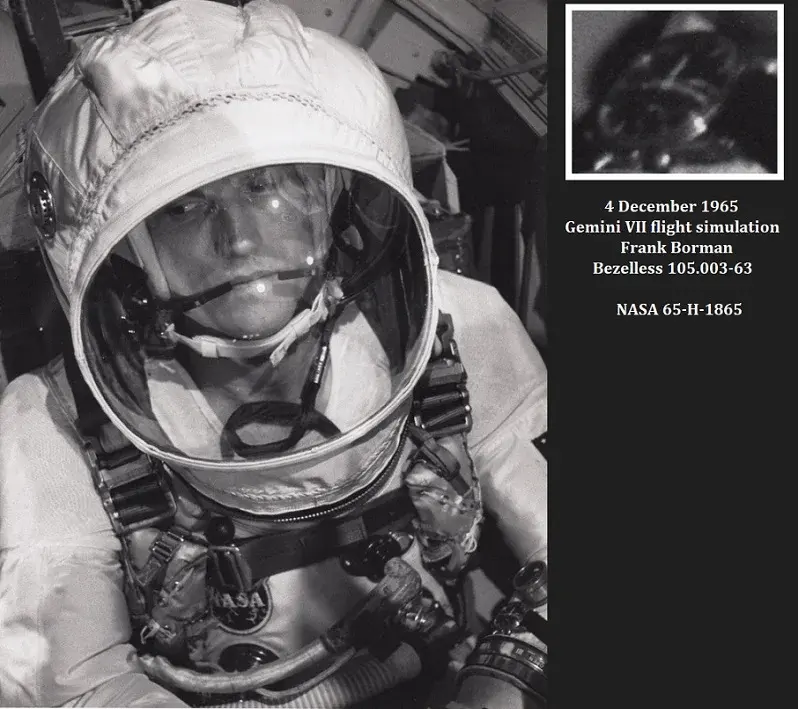
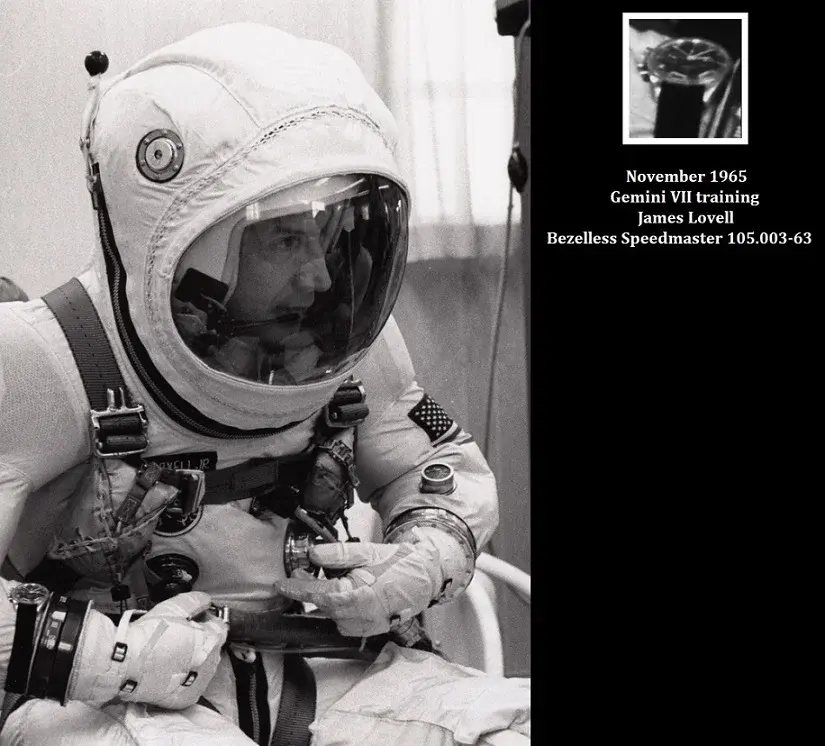
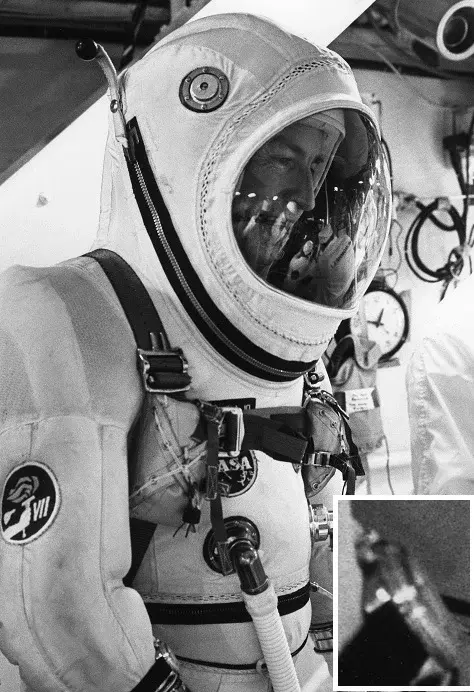
Gemini VII training, using the lightweight Gemini G5C pressure suits and bezelless Speedmaster
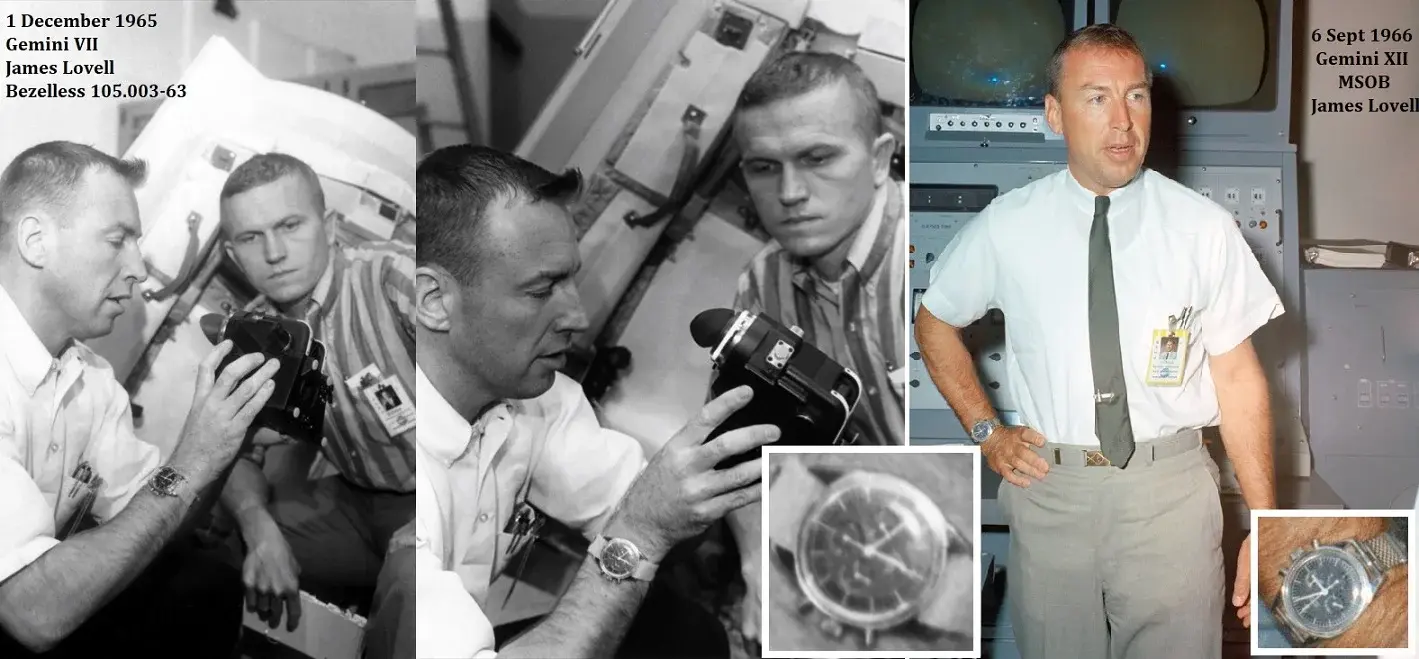
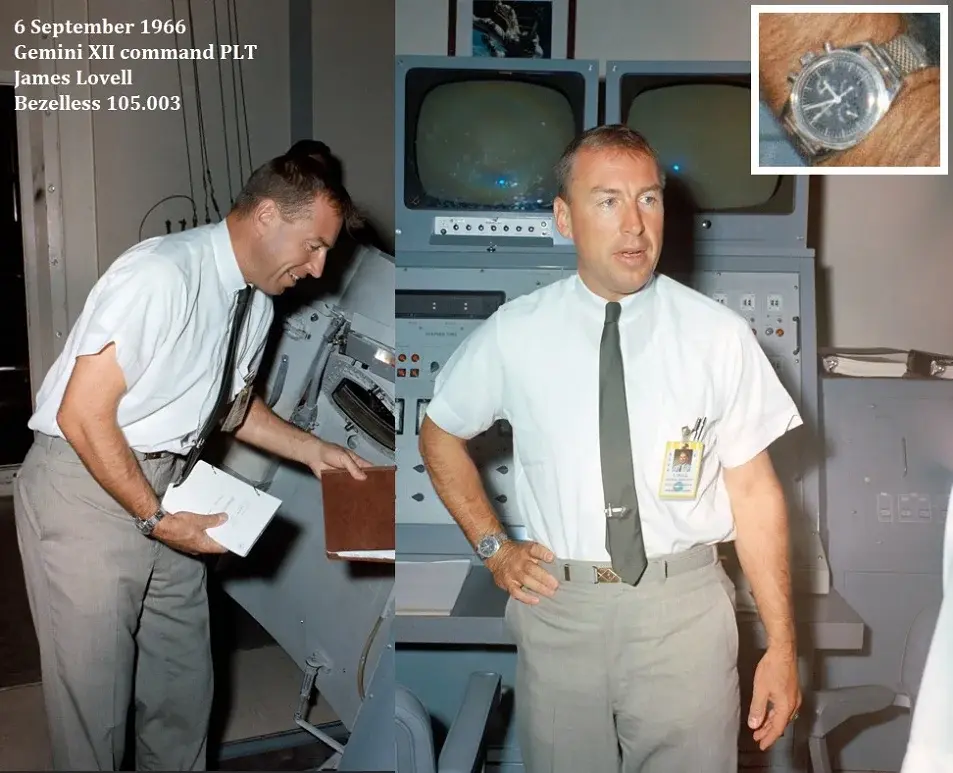
November 1965, during Gemini VII training, both Frank Borman and James Lovell were often photographed wearing a bezelless NASA-issued Speedmaster. Moreover, James Lovell both wore a bezelless Speedmaster 105.003 on a stell mesh JB Champion bracelet and on a black Velcro.
Note James Lovell was still using a bezelless 105.003 during Gemini XII training in September 1966.
(Photos: NASA)

Checking the actual Gemini VII mission photos, I can't make out if James Lovell wore a bezelless NASA-issued Speedmaster during the long 13 days 18 hours in space!
(December 4 to 18, 1966)
(Photo: NASA)
 
Posts
6,845
Likes
12,581
Again, Using my " 125 important Omega Speedmaster dates " listing:
December 15, 1966
During one of the End-of-Gemini-Program parties, the astronauts visited several dinner events, with Frank Borman (Rolex OP), James Lovell (Rolex GMT-master) and Michael Collins (Rolex Turn-O-Graph 6202) wearing their personal wrist watches...
November 29 - December 2 , 1966
Preliminary Gemini program feedback during the AIAA meeting in Boston.
NASA astronauts' feedback on the Speedmaster contained among other remarks, a brushed case to avoid glare, more legible sub-dials and a practical "60 seconds" bezel...
NASA would discuss full details during the February 1 & 2, 1967 Project Gemini summary review.
A meeting overshadowed by the 27 January 1967 Apollo 1 accident, NASA Dr Robert Gilruth urging to avoid "second-guessing" on Apollo 204 review board as undue speculation on Apollo 1 accident was a disserve to the nation and the board.
However, NASA astronauts' feedback on the Omega Speedmaster would resurface in May 1970...
 
Posts
6,150
Likes
21,072
It's not really an issue any more since Astronauts wear X-33s, right?
 
Posts
6,845
Likes
12,581
It's not really an issue any more since Astronauts wear X-33s, right?
Indeed, that's the "60 seconds" bezel in practice, but this topic is about how did Omega (finally) get there...
 
Posts
6,845
Likes
12,581
April 1966, Alfred Worden was selected as NASA astronaut in Group 5 nicknamed by astronaut John Young "The Original 19", after the original "Mercury 7", of which during that time four were still on "active flight status" at NASA (Shepard, Grissom, Schirra, Cooper... and Donald Slayton).
Although X-15 pilot Joe Engle was among the 19 rookies, they were reminded to be an astronaut, one had to had been in space...
NASA management still adhered to the standing procedure of reserving certain Omega Speedmaster chronographs for a specific flight (we know know certain NASA S/N were only used on training e.g. 13 & 24) while astronauts assigned to a mission were ASAP issued a Speedmaster.
Here James Lovell, who received his first NASA-issued Speedmaster in July 1965 (Gemini VII), still wearing that 105.003 chronograph without a bezel up to the Gemini XII launch breakfast on 11 November 1966.
(Photos: NASA)

 
Posts
6,845
Likes
12,581
Again, Using my " 125 important Omega Speedmaster dates " listing:
( I will post this dates listing in a separate topic... "when the time is right" to proof other stuff)

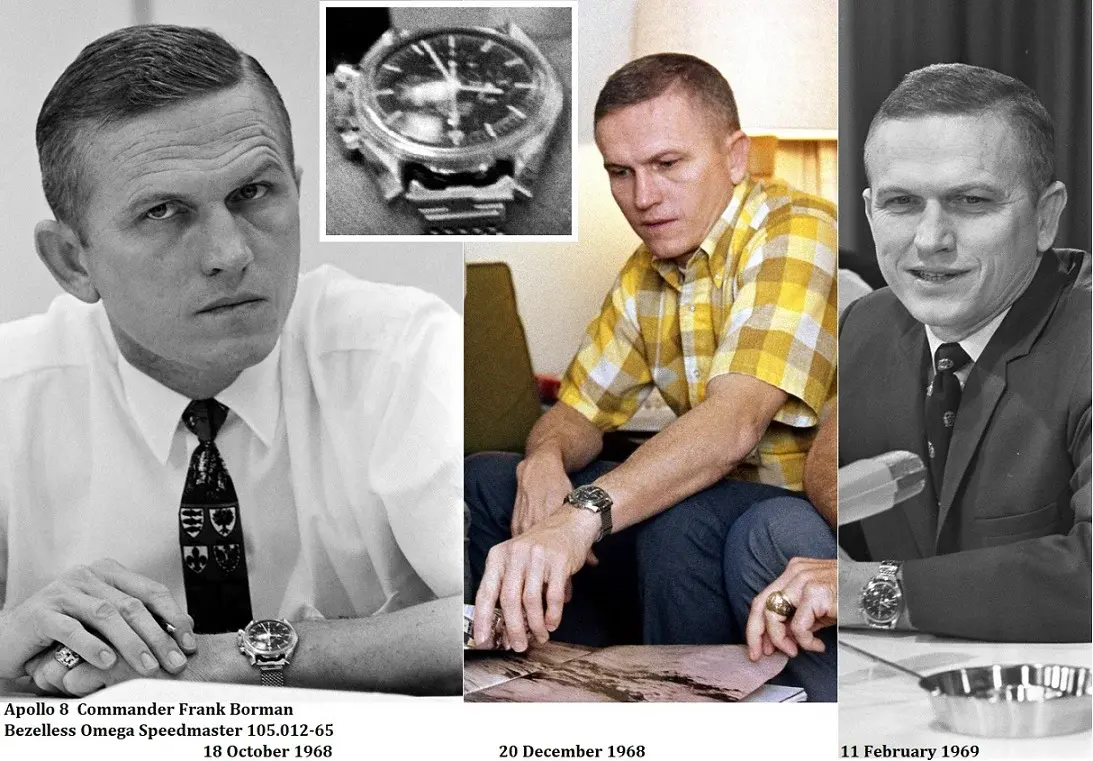
Apollo 8 and the first bezelless Speedmaster 105.012
20 November 1967

NASA announcement of the Apollo 8 crew, initially Frank Borman, Michael Collins & William Anders
19 Augustus 1968
NASA announcement of the Apollo 8 crew, Frank Borman, James Lovell and William Anders
NASA photographs point out, William Anders received his NASA-issued Speedmaster in September 1966, still a 105.003 version (remember by that time NASA had only received two batches of Omega Speedmaster chronographs), while Frank Borman was among the first astronauts to receive a 105.012 version (December 1966 onwards).
(Photos: NASA)
.
 
Posts
6,845
Likes
12,581
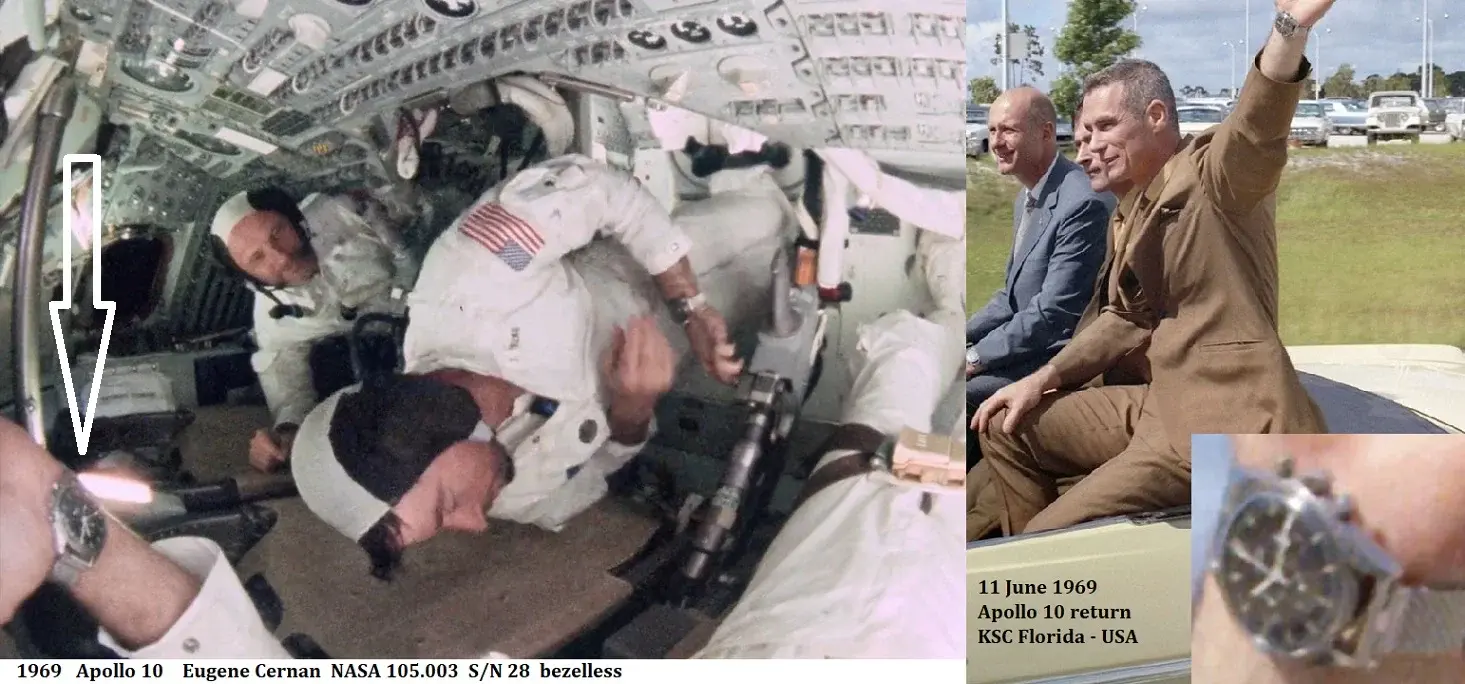
Apollo 10 and Eugene Cernan's lucky charm NASA-issued Speedmaster 105..003 S/N 28
While Gemini IX mission & post-splash-down photos clearly show Cernan's Speedmaster 105.003 S/N 28 came unscathed out of the 2 hours long perilous spacewalk (June 1966)...
By June 1969, this Speedmaster was Cernan's lucky charm, wearing it under the spacesuit on a steel mesh Jacoby Bender Champion bracelet on Apollo 10 (and later on Apollo 17).
By that time S/N 28 had lost its bezel, when that exactly happened is hard to determine, as Cernan always wore it on his inner left hand wrist.
(Photos: NASA)
.
 
Posts
6,845
Likes
12,581
The 1966 NASA astronauts' feedback must have seeped through to Switzerland as during 1967-68, Omega designed and produced the "ultimate space watch", innovating the Speedmaster chronograph inside (new alloys, oils, etc...) and out (Titanium, new glass, bezel, outer case...).
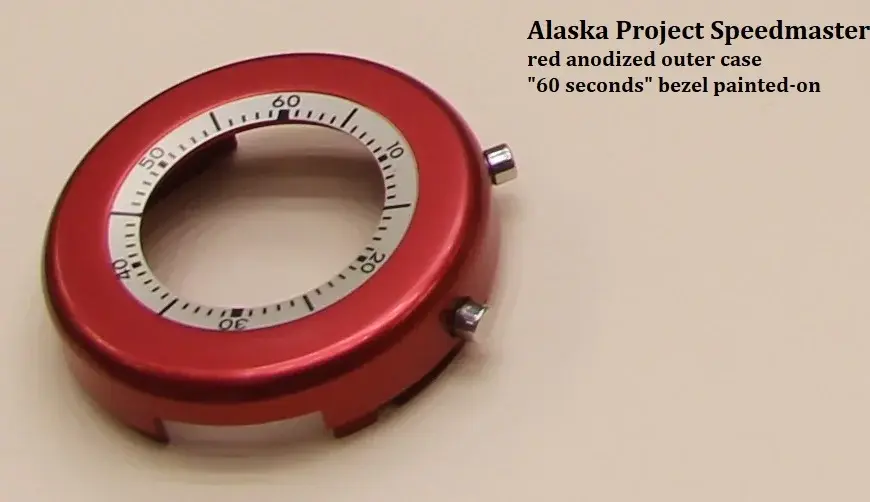
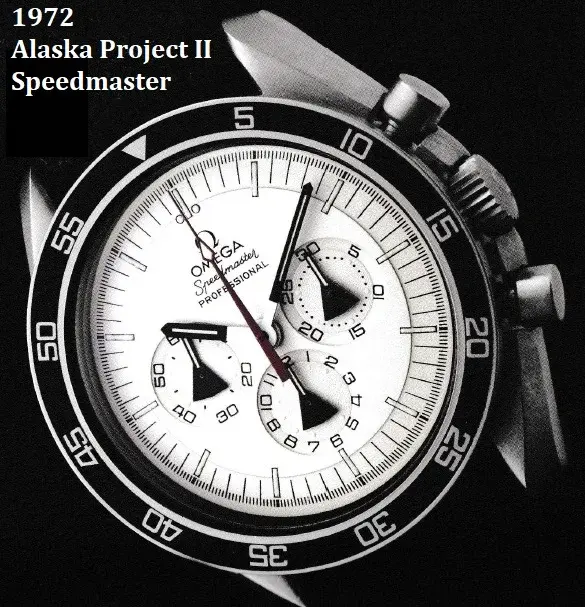
The Alaska Project Speedmaster with white dial and red chronograph & Gemini capsule-shaped subdial hands was all about ensuring the utmost legibility and came with an extra outer aluminum case which had a "60 seconds" bezel painted on it.
Made for use on the bumpy LRV - Lunar Rover Vehicle, on the dusty lunar surface it came too late as by 1970 Apollo 18 to 20 were cancelled.
No idea if the Alaska Project Speedmaster was shown to the Apollo era NASA astronauts but on 22nd May 1973 it was shown to a Soviet-Russian delegation visiting Omega HQ in Switzerland, who prefered the Omega flightmaster but ended up using the Alaska Project Speedmaster onboard Salyut-6 space station in 1977.
(Cfr my articles: "Time Peace, How Omega Got Behind The Iron Curtain" & "To Russia With Love")
(Photo: Omega museum 2016 - Moonwatchuniverse)
.

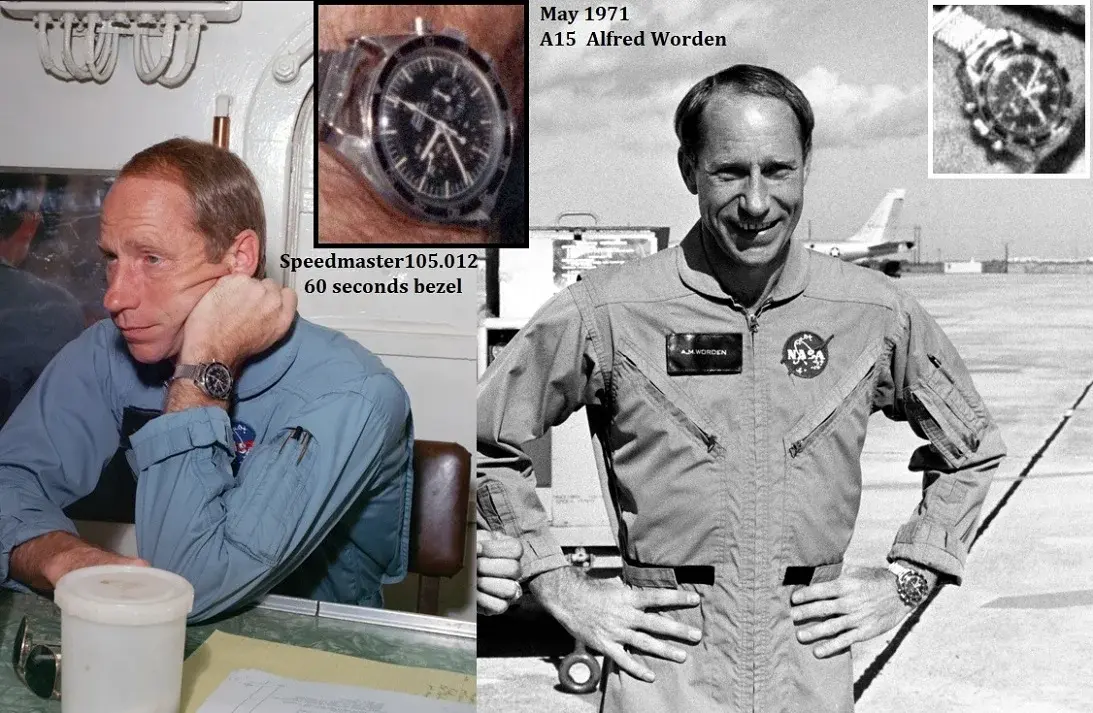
Moreover, after the April 1970 Apollo 13 accident, NASA astronauts' feedback again asked for a legible "60 seconds" bezel and that's how one year later the Apollo 15 crew (finally) got their NASA-issued Speedmaster 105.012 with "60 seconds" bezel.
May 1971, the Apollo 15 astronauts were completing their training wearing NASA-issued Omega Speedmaster 105.012 wrist chronographs with a legible "60 seconds" bezel. Alfred Worden told me NASA had "made" half-a-dozen of these bespoke bezels for the the prime & back-up Apollo 15 crews.
Apollo 15 prime: David Scott, James Irwin and Alfred Worden (an all US Air Force crew)
Apollo 15 backup: Richard Gordon, Harrison Schmitt and Vance Brand.
(Photos: NASA)
 
Posts
6,845
Likes
12,581
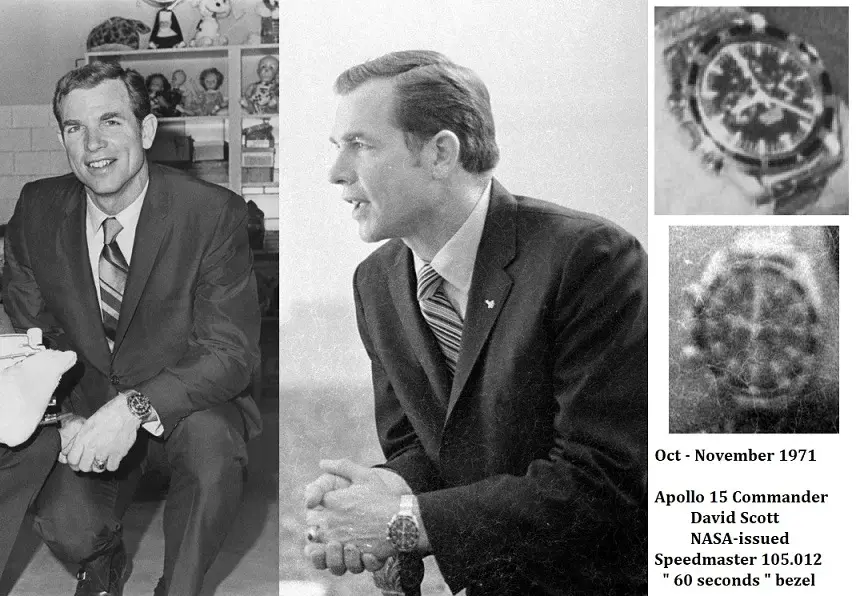
However, as mentioned before NASA adhered to the standing procedure of reserving certain Omage Speedmaster for a particular mission, so Apollo 15 ended up wearing COTS NASA-issued Speedmaster 105.012 versions: Scott S/N 42, Irwin S/N 47 and Worden S/N 45).
However, Scott carried tow extra Bulova time pieces, a 50 mm stopwatch (used to time the 24.5 seconds DOI Descent Orbit Insertion maneuver) and a 44mm prototype manual winding Bulova 885104-01 wrist chronograph.
However, post-mission the Apollo 15 astronauts continued to wear their bespoke "60 seconds" bezel Speedmaster 105.012 chronographs as can be seen in dozens of September-December 1971 NASA photos. Here a few examples showing David Scott:
.
 
Posts
6,845
Likes
12,581
This also explained the 24th March and 12th July 1975 NASA photos showing ASTP PLT Vance Brand (A15 backup) still wearing the "60 seconds" bezel Speedmaster during Apollo-Soyuz training.
(Photos: NASA)
.

In 1972, Omega had redesigned the Alaska Project Speedmaster, which now came as a shot-blasted matte Titanium case with a legible "radial subdial" set and a practical "60 seconds" bezel.
In 1977, the Yuri Gagarin Cosmonaut Training Center Starcity Moscow ordered a pair of these " ex-Alska Project II " Speedmaster chronographs, which were used onboard the Salyut-6 space station!
.
However, by 1978, the manual winding "Radial Dial" Alaska Project III Speedmaster again came with a Tachymètre bezel, as did the Speedsonic "Radial Dial" Speedmaster. Obviously, Omega tested different chronographs for the upcoming STS - Space Transportation System (Space Shuttle) program and the 1978 Alaska Project III Speedmaster was chosen for the STS-crews.

More esoteric research in numbers...
In January 1978, NASA only retained about 30 Speedmasters, out of 97 delivered between 1965 & 1968, but the agency only ordered 56 "Radial Dial" Speedmaster chronographs for its pool of now 100 astronauts 🤨
In 1993, NASA got an extra 25 (non-radial) Speedmaster chronographs, having 81 Speedies for by that time 175 astronauts!
Again in 1998, NASA got an extra dozen (non-radial) Speedmaster, bringing the total to 93 Speedies ... in preparation for the introduction of the X-33.
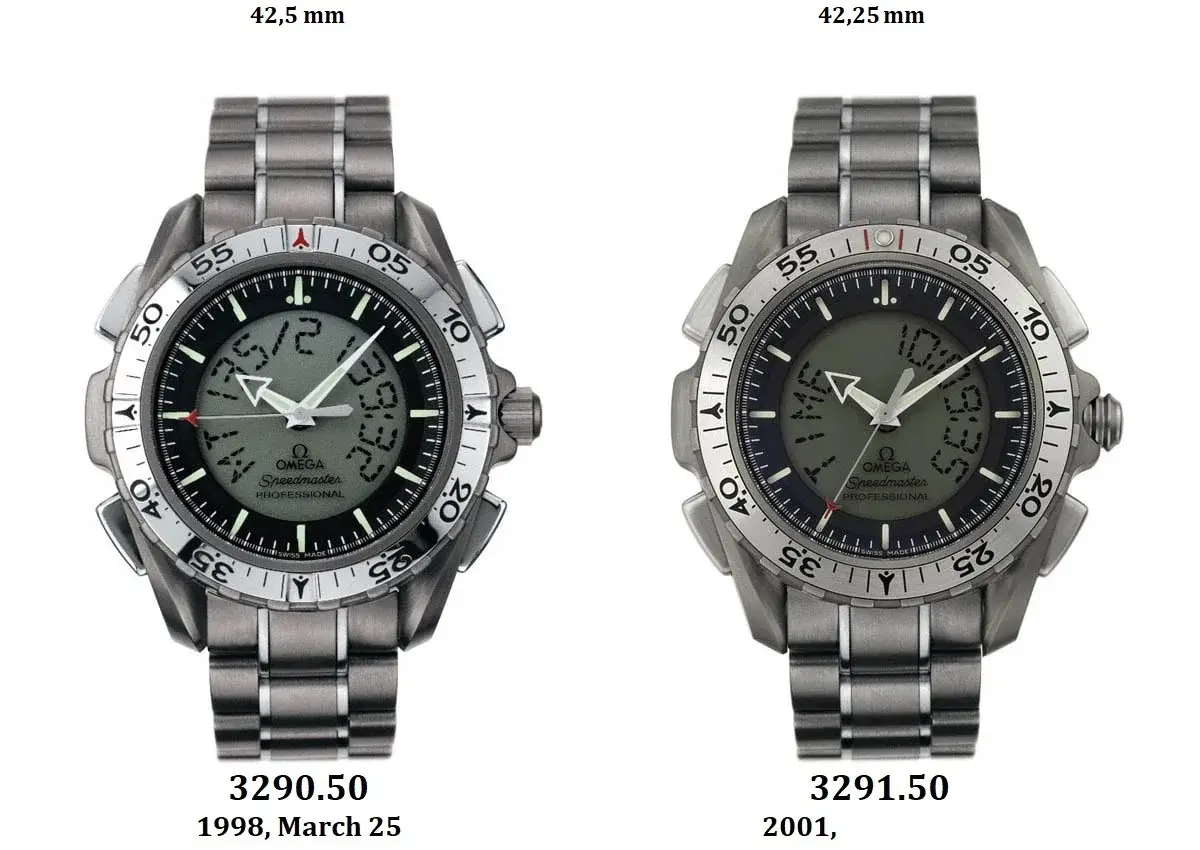
Of course by that time NASA was using other watches (e.g. Casio & Seiko A829 quartz chronographs) but the Omega Speedmaster X-33, tested onboard space shuttle since 1996, became the ultimate spacefarers' toolwatch 1998 onwards... with a "60 seconds" bezel.
(Photo: Omega)
.
 
Posts
4,697
Likes
17,794
This really is amazing forensic level research. Anyone wanting the full Speedmaster Space story this is the hard yards, very well done to keep making sure everything is documented. It’s all about accuracy 😉 There is a book here in the making.
 
Posts
6,845
Likes
12,581
Thanks for Your kind words, and the above is only the tip of an iceberg on NASA photo material...
 
Posts
1,328
Likes
704
Thanks to you. It’s one of the few things we can enjoy on the internet. Unfortunately there’s a lot of misinformation and interests involved.

We should always consult the original sources and not misrepresent them.

Best regards from 🇪🇦