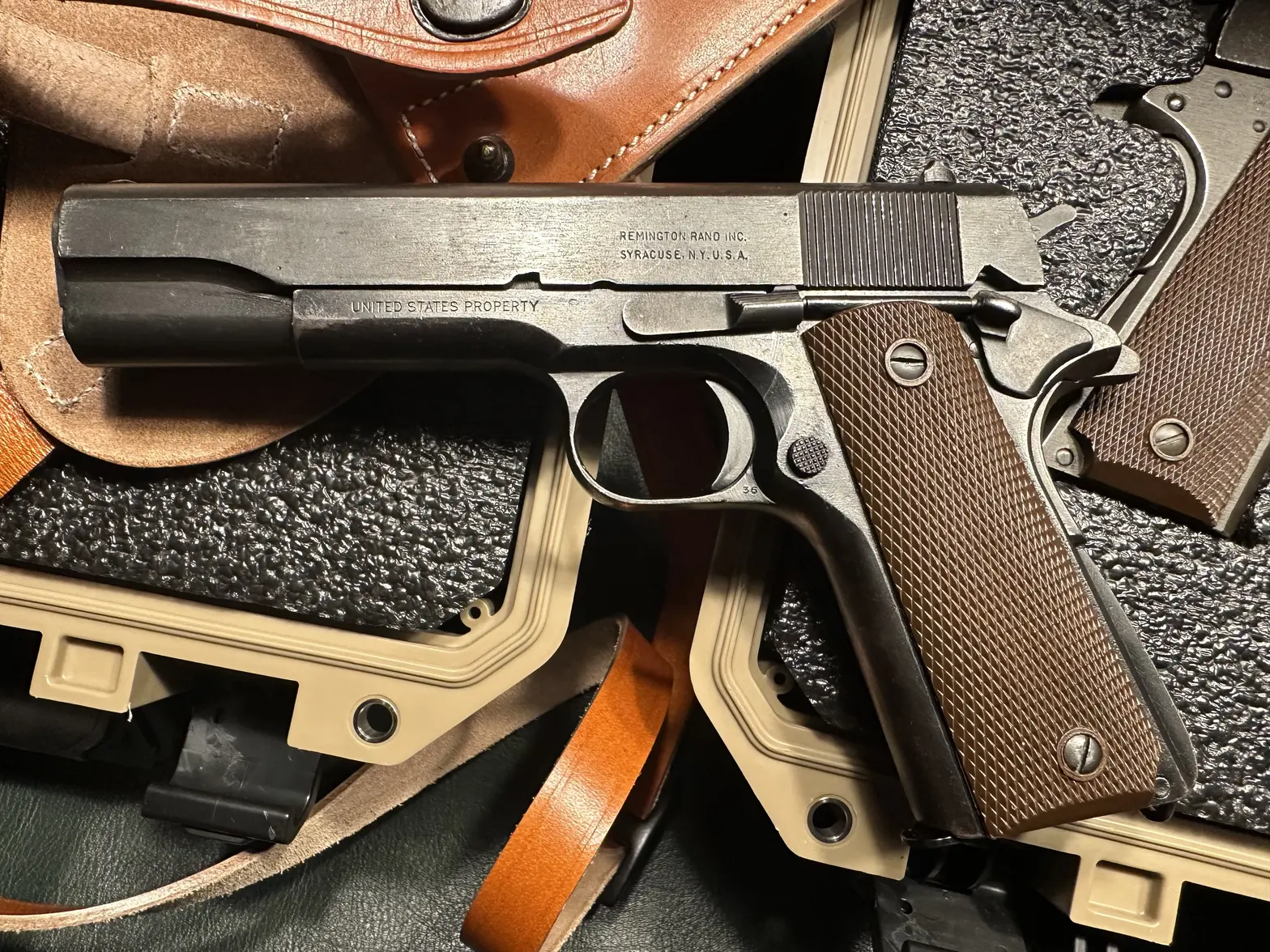
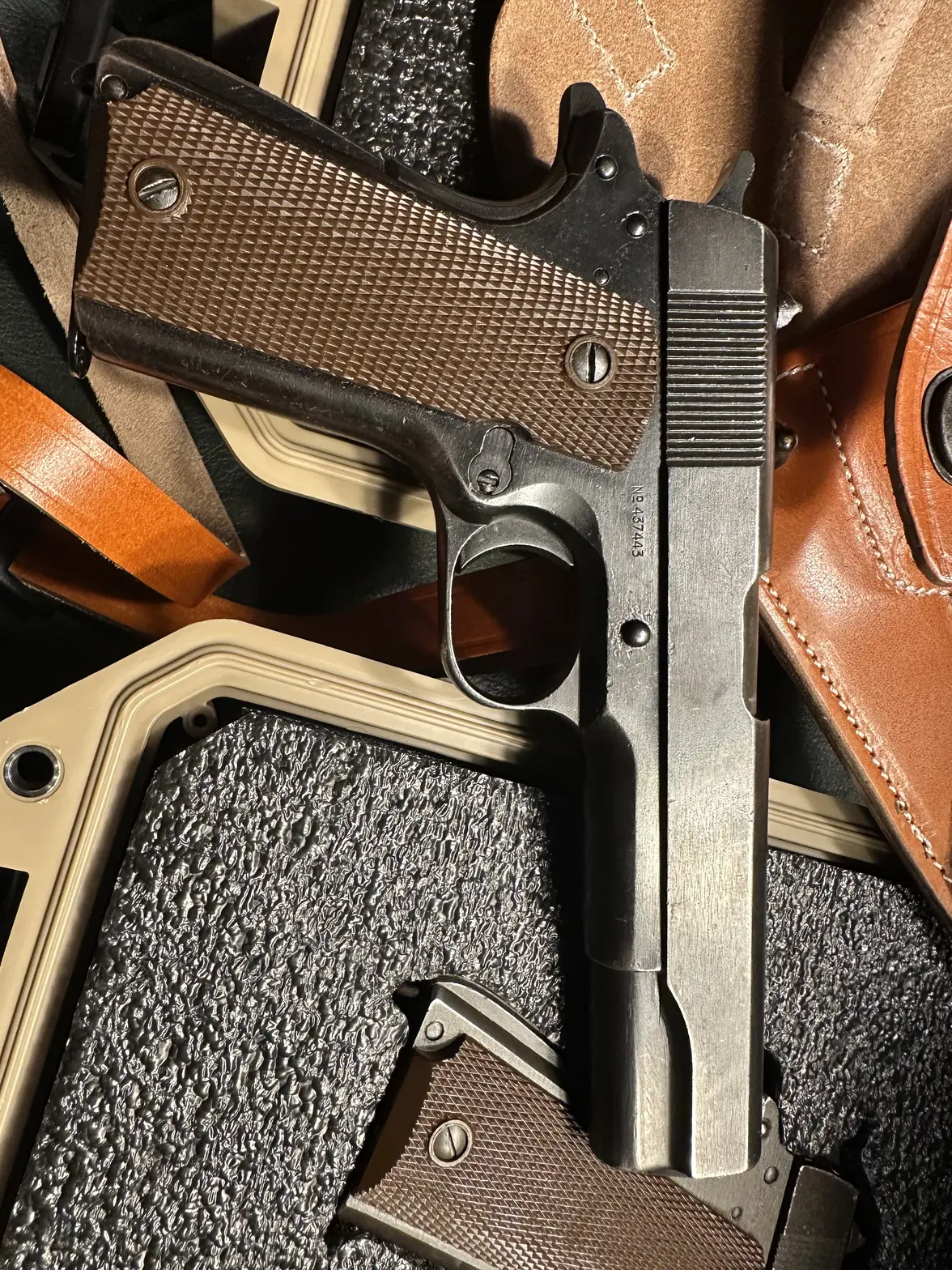
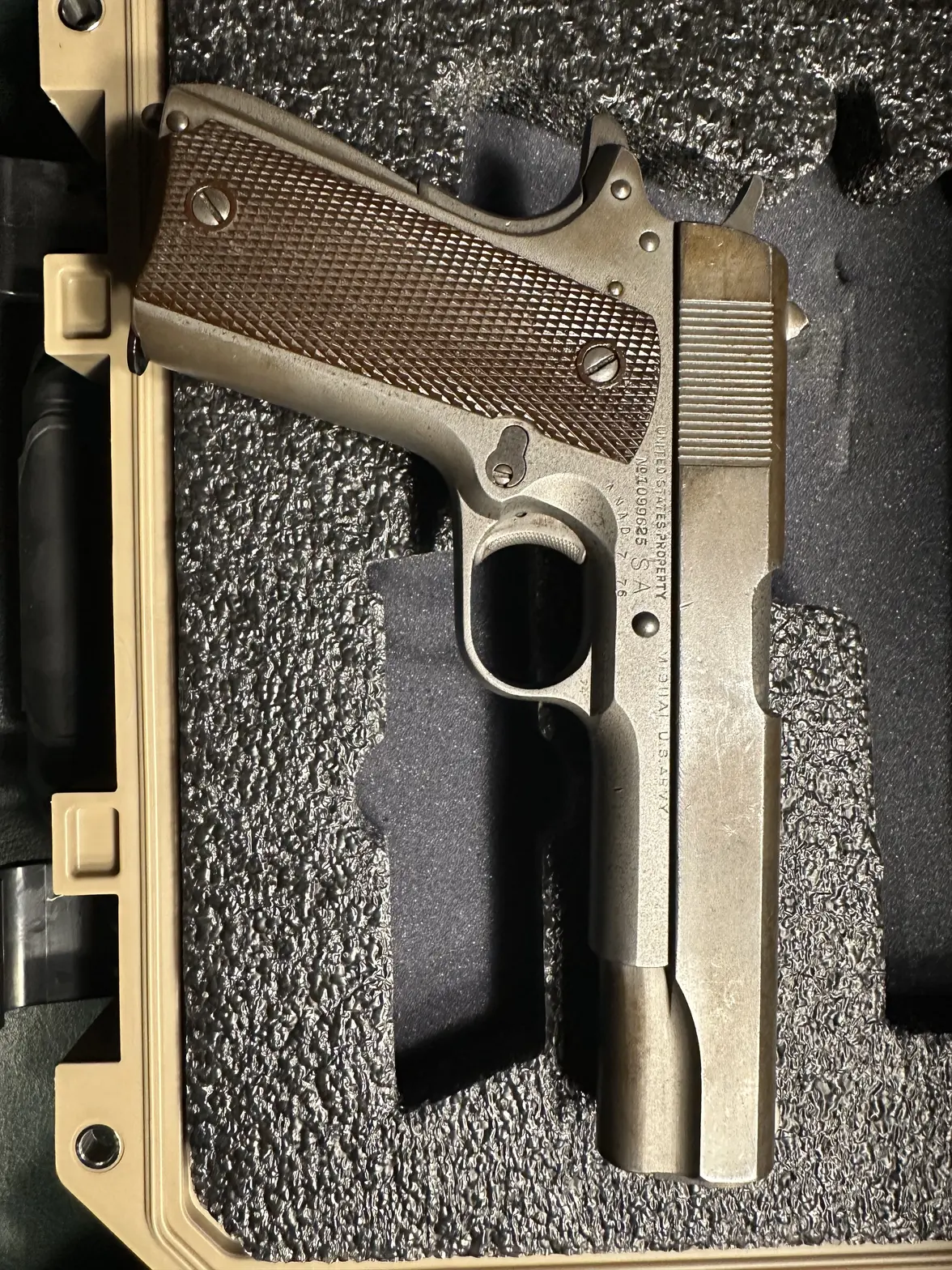
All hail, indeed!
Oh no! I feel a story coming on!
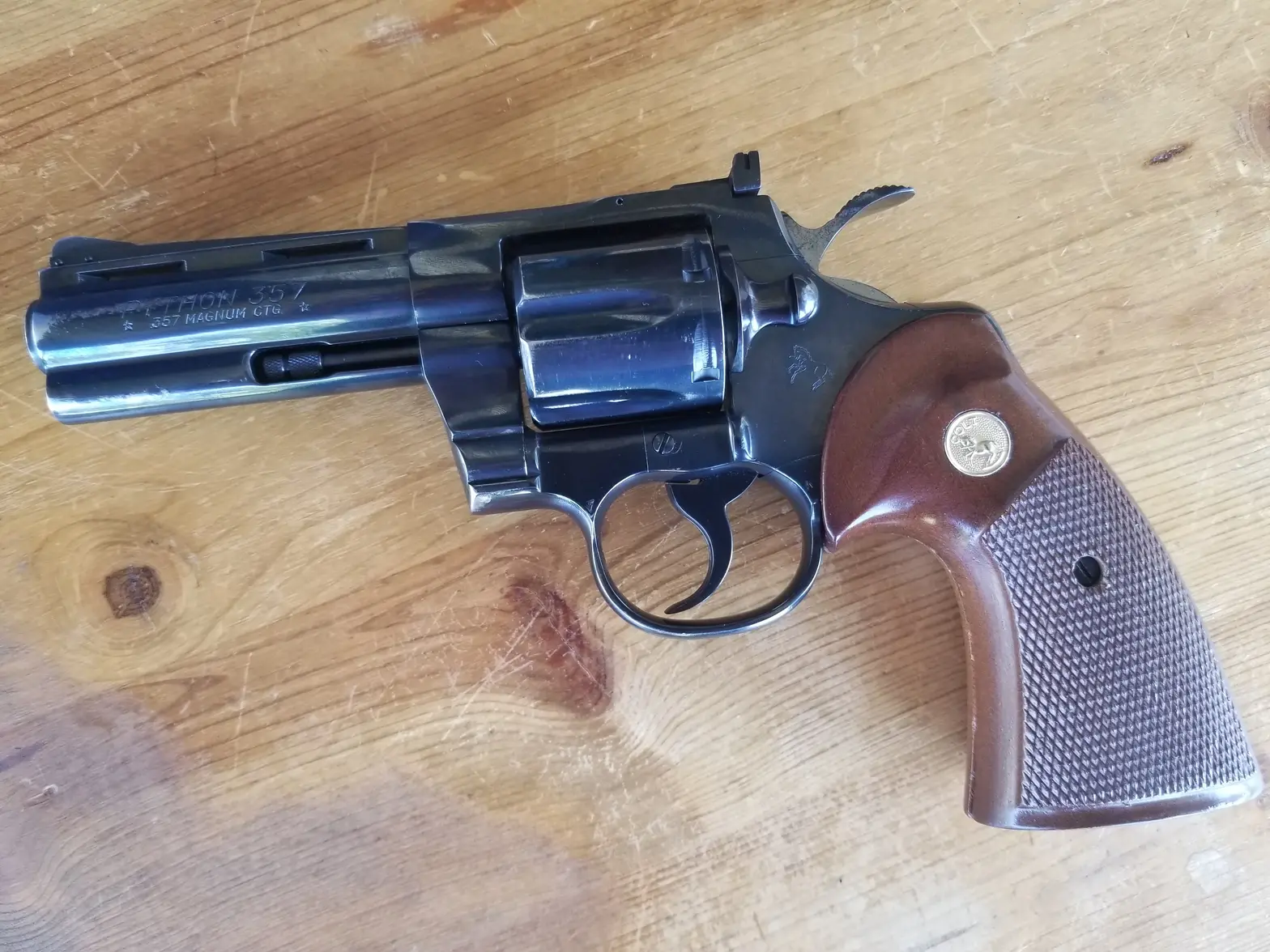
Speaking of which, I once owned one of the original batch of 500 "pre-Model 29" 4-inch .44 Magnum revolvers, the barrel length that Elmer Keith agitated Smith & Wesson president Carl Hellstrom to produce, as related in Roy Jinks' "History of Smith & Wesson." A doubly rare bird it was.
Bought it right on the firing line of a Central Texas Rifle & Pistol Club HIgh Power Rifle Match one Sunday afternoon, just after we had completed shooting for the day. A competitor was showing it around and asking $300 for it so I bit. This was in the early 1980s so can't say if it was that good of a deal at the time. Came with factory original "diamond" checkered rosewood stocks of the same configuration as your walnut stocks and numbered to the revolver's serial number.
It had been been a lawman's holster gun so exhibited a measure of holster wear on its fine blue finish and the rosewood stocks' surfaces were worn. The stocks' hue was near black in color.
A request for a factory letter indicated that it had been shipped to Waco, Texas from Smith & Wesson in late December of 1956. I played with it for several years, toted it a few times on hikes and hunts on our old family place, and tested my favorite .44 Magnum handloads through its 4-inch barrel to compare velocity performance to my long-snouted 8 3/8-inch Model 29 that I purchased brand new in January of 1980.
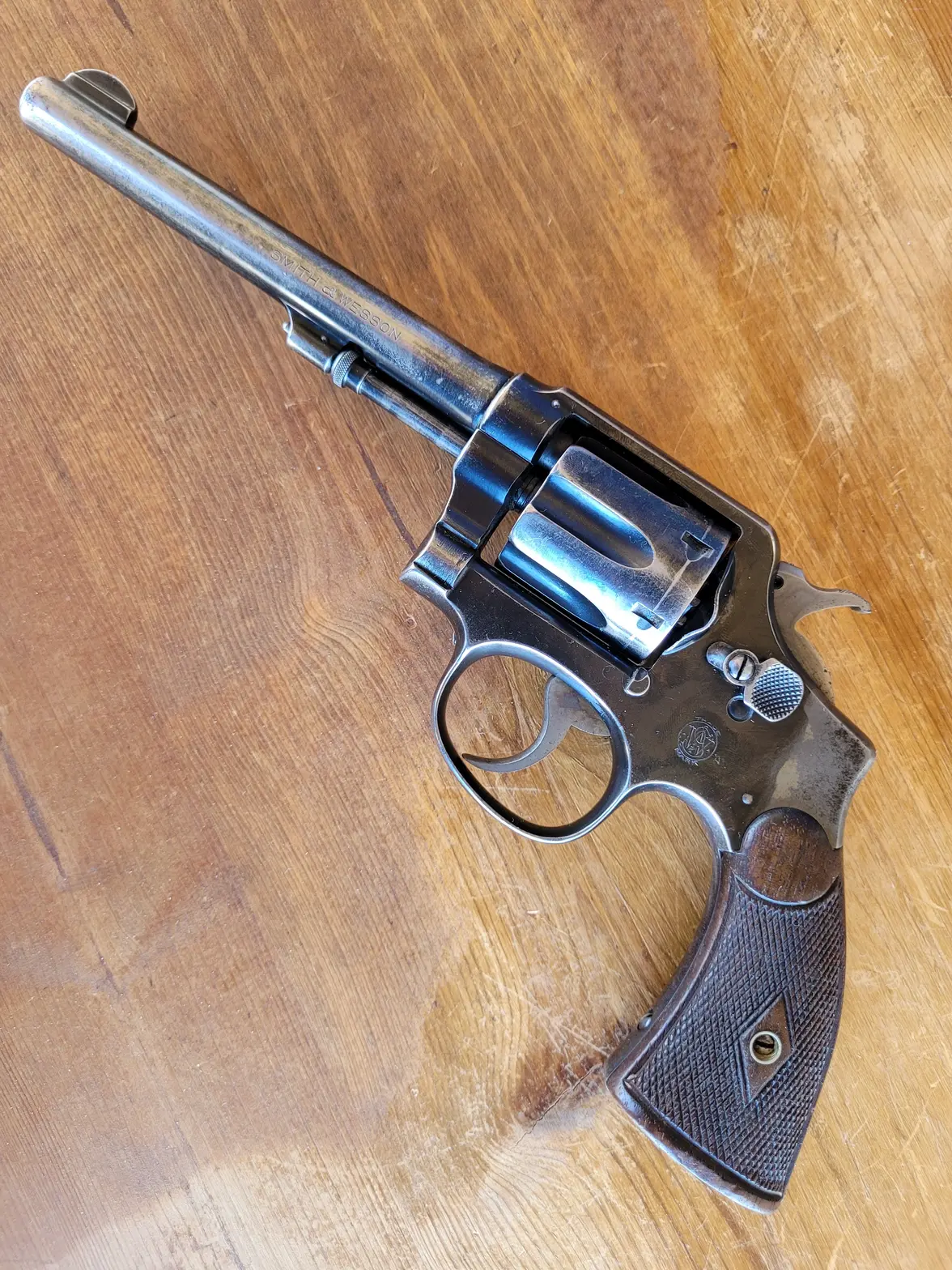
After a few years, I determined that I liked a 4-inch pre-war Smith & Wesson .44 Special revolver for both toting and shooting purposes than I did the 4-inch .44 Magnum, as concussive and hard kicking as it was when using full powered loads in its 4-inch barrel. So, I sold the scarce early .44 Magnum for $350 and thought I made out like a bandit at the time. I knew exactly what it was, but such special interest collectible guns didn't command big prices at that time. Now I rue the day I sold it and mourn the revolver. I still dream about it in my sleep.
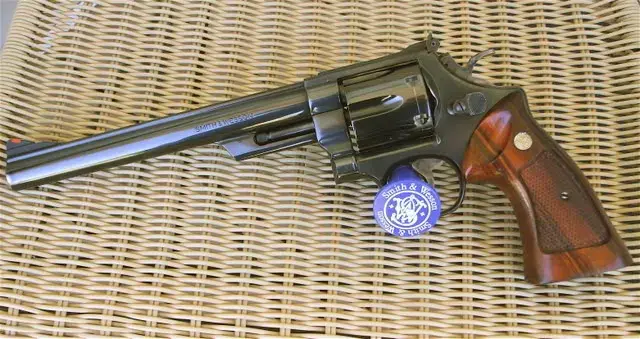
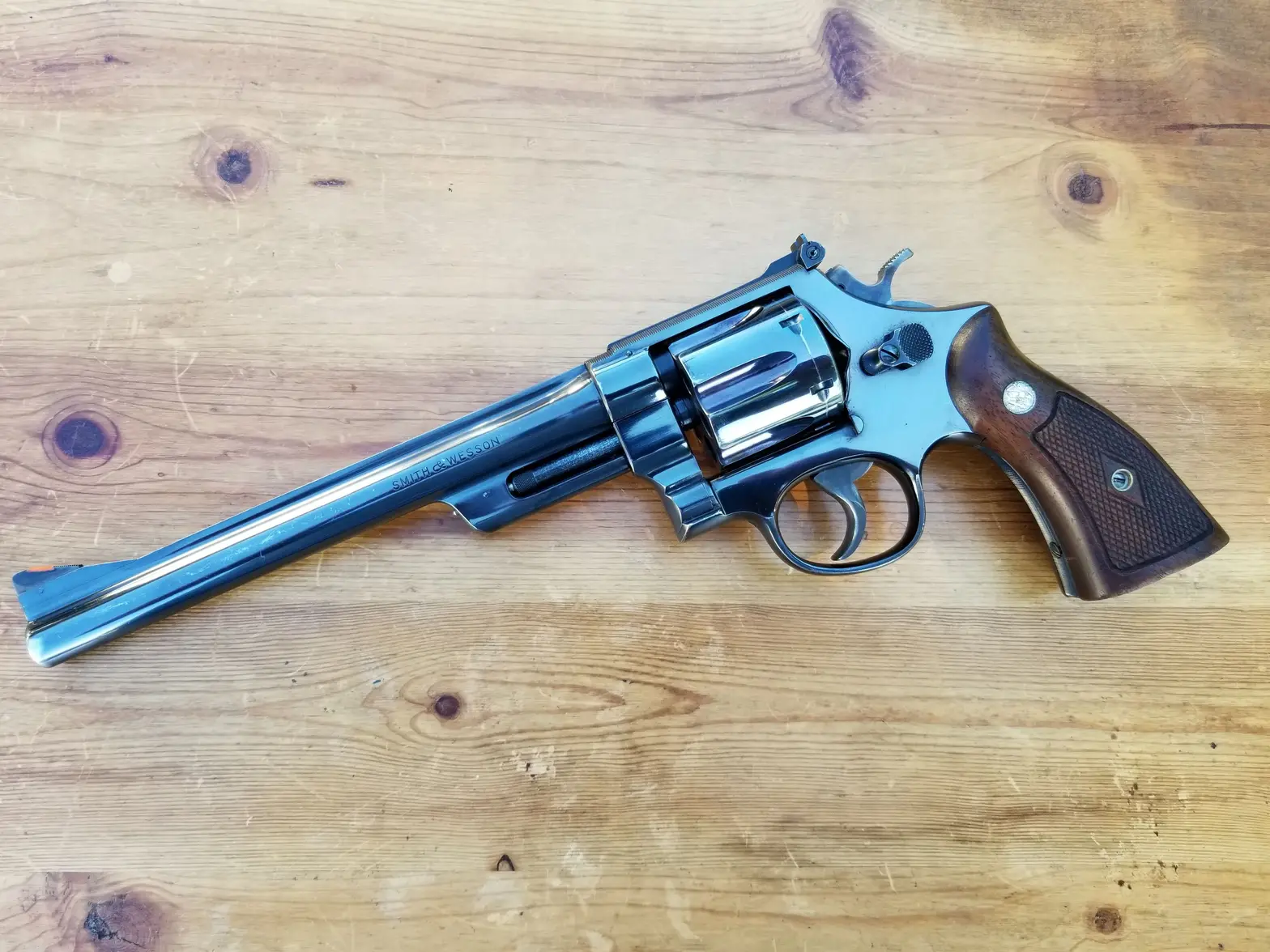
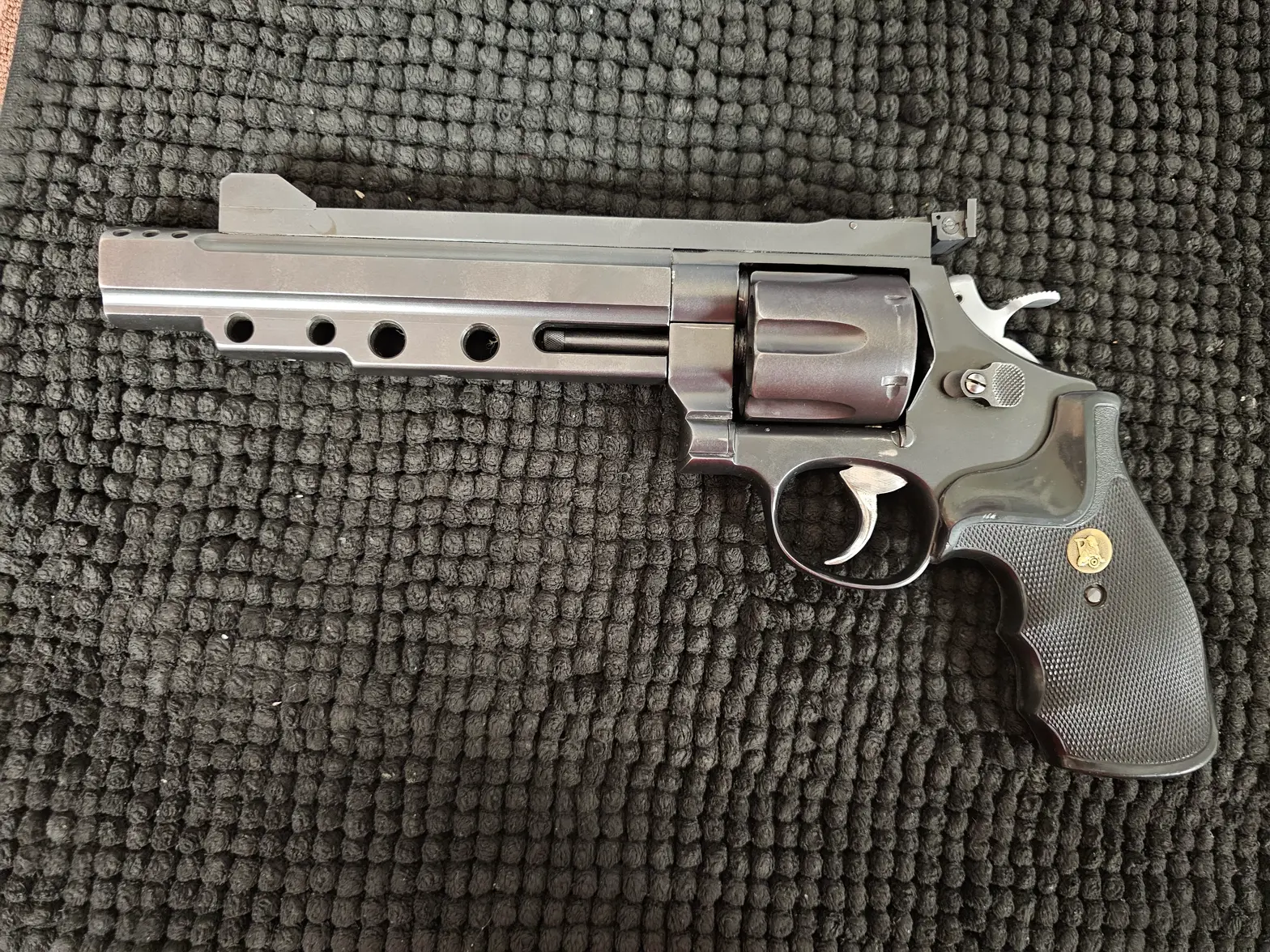
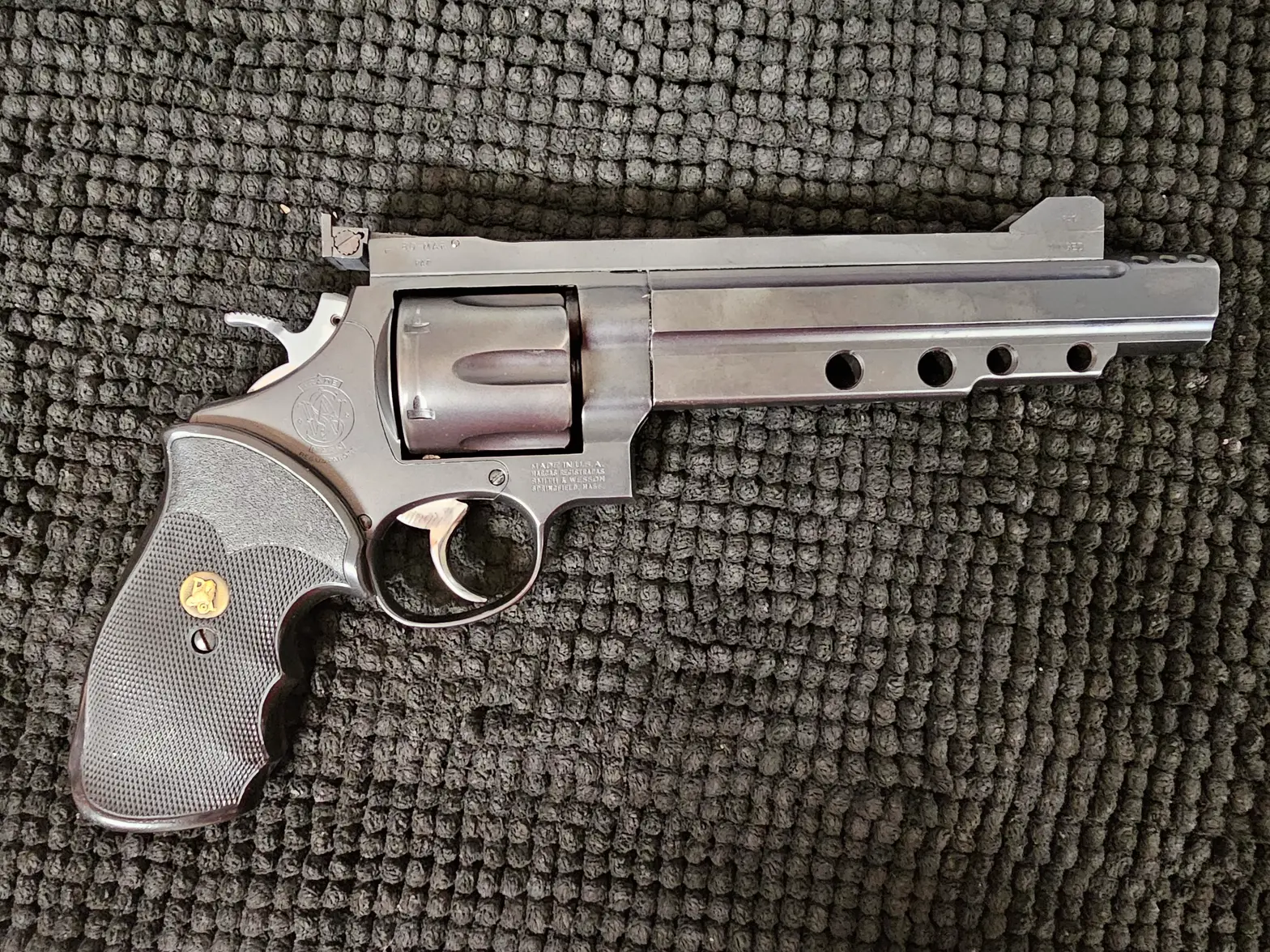
Here's the Smith & Wesson Model 29 that I bought new in 1980. By then the stocks lost their diamond pattern around the escutcheon and Smith & Wesson ballyhooed the wonders of the high contrasting figure of the goncalo alves stocks they put on their premium revolvers instead of good Missouri walnut. My revolver is still "pinned and recessed" (barrel anchored with a retaining pin and chambers in the cylinder expertly recessed to contain cartridge rims flush with rear cylinder face), two nice, thoughtful touches that were later deleted for production economy. Yet, by 1980 the premium high polish blue surfaces weren't quite as expertly polished as those craftsmen produced in the 1950s or earlier. Side by side, your revolver from that era and my revolver of 20-25 years later won't appear different superficially, but for those in the know the craftsmanship will shine through on the earlier revolver.
Still, my Smith & Wesson Model 29 scratches an itch, anytime I inspect it or take it out for "exercise." And, lest anyone succumb to the amplification of rumor that Model 29s are tender and won't hold up to a lot of full powered .44 Magnum shooting, I offer mine as a rebuttal. Seems that as the internet firearms hobby forum came into fruition this rumor achieved wide circulation, mostly by those who worshiped at the alter of the Ruger .44 Magnums and their thick cast steel frames and those who wanted to appear knowledgeable through repeating hearsay.
I jumped into Hunter Pistol Silhouette competition with both feet about the time I acquired the Model 29. For four years I shot the Model 29 in competition, racking up a lot of matches each season and practicing at the local gun club range several times per month. The rules change allowing scoped handguns ran me off from that competition for I didn't want to use scopes. The gun magazines of the era promoted the necessity of powerful loadings for flat shooting and knock down power on those 100 yard rams. So, I developed gut-bustin' handloads and fired gobs of them off in the Model 29. I also deer hunted with the revolver some and shot it for fun. The revolver yet locks up on each chamber (only barely on a couple of them). The forcing cone though exhibits quite a lot of erosion from the nuclear powered charges of Hodgdon H 110 powder lit off and funneled into the barrel. It still groups better than my ability to hold and shoot it.
My "widdle feelings" were hurt in 2023 when I attended the Smith & Wesson Collectors Association symposium in Glendale, Arizona. I was wandering the exhibit hall and came across an 8 3/8-inch Model 29 with a serial number near mine, all laid out in its original wooden exhibit box with instruction sheet other factory literature, and cleaning equipment. I still have all that stuff that came with mine and mentioned the fact. The exhibitor had an eye-popping $2400 price tag dangling from his Model 29s trigger guard. I asked if they were really worth all that now and related that I had one just like his, with nearly perfect external surface finish, but was well worn from shooting use, describing the forcing cone erosion.
The exhibitor got on his high horse and began sternly lecturing me on why I shouldn't have used it and subjected it to all the wear and tear. He was really insensed! I finally interupted him in the middle of his preaching tirade, telling him I bought the revolver brand new back then and bought it to use, so use it I did and didn't need him 40-something years hence to tell me how irresponsible I had been to use a future collectible in such a manner.
Save the hobby from cold clammy handed "collectors!"