Size Matters: Are midsize watches making a comeback?

Posts
1,673
Likes
3,274
Came across this interesting video today which discusses the evolution of men's watch sizes over the years and how midsize watches are making a comeback:

To be honest I still find options for smaller wristed guys like myself thin on on the ground in the diver watch space. If Omega revived the midsized Seamaster Pro, but with a 38-39mm case diameter and 44-45mm lug-to-lug? Perfection! (chef's kiss)

Anyway, what say you all? Is there a market for midsize watches? (especially divers and chronographs) Is the trend for larger men's watches over the last 20 years just an aberration or are big watches here to stay?

 
Posts
590
Likes
1,397
Just to get something off my chest... a year or so ago I watched a video from this guy where I think he was talking about a wish list for a future SMP and he mentioned he'd like to see a "mid size 39-40 mm" version. I mentioned in the comments that I don't think 39-40 mm qualifies as mid size, 36 mm was typically considered mid size. I got roasted by his subscribers that I had no idea about watches, obviously 36 mm was strictly a small women's size and was not mid size at all.


Anyway...

The short answer is that there is a market right now, and there might not be one in ten years. Fashion is cyclical and watches aren't immune.

The long answer is that when I first got into watches as a teenager, it was around the peak of Panerai's resurgence. 44 mm and larger watches were very much in style, and 36 mm were very much not. You had Sly and Arnie wearing these hand cannons, Jeremy Clarkson and James May both wore Omega Railmaster XXL's at a whopping 49 mm while Top Gear was at its peak, big watches were huge. You did have a subset of watch fans complaining these giant watches looked stupid.

These days, the pendulum has swung as fashion turns and people started to go back to classic sizes. No better example of this I think than old conservative Rolex having increased the Explorer to 39 mm during that period, and now changing course back to a 36 mm. I wonder also if seeing classic sized watches on hit shows like Mad Men had some level of impact as well? But you also still have a subset of watch fans complaining these tiny watches look stupid.

My take is that typical sizing in the 38-41 mm range is probably here to stay, that size being considered normal (for men) seems to have stuck around for many decades at this point, while larger and smaller watches have trended in and out. I love my 36 mm Railmaster and even if that size does trend out in the future, which I think it will, I don't see myself selling it. I like how it looks proportionally and I like that it's a bit of a callback to classic times. I couldn't see myself wearing a 36 mm diver though, IDGuy is (imo) correct that proportion and application play a bigger role in appropriate sizing than pure diameter.
 
Posts
924
Likes
4,258
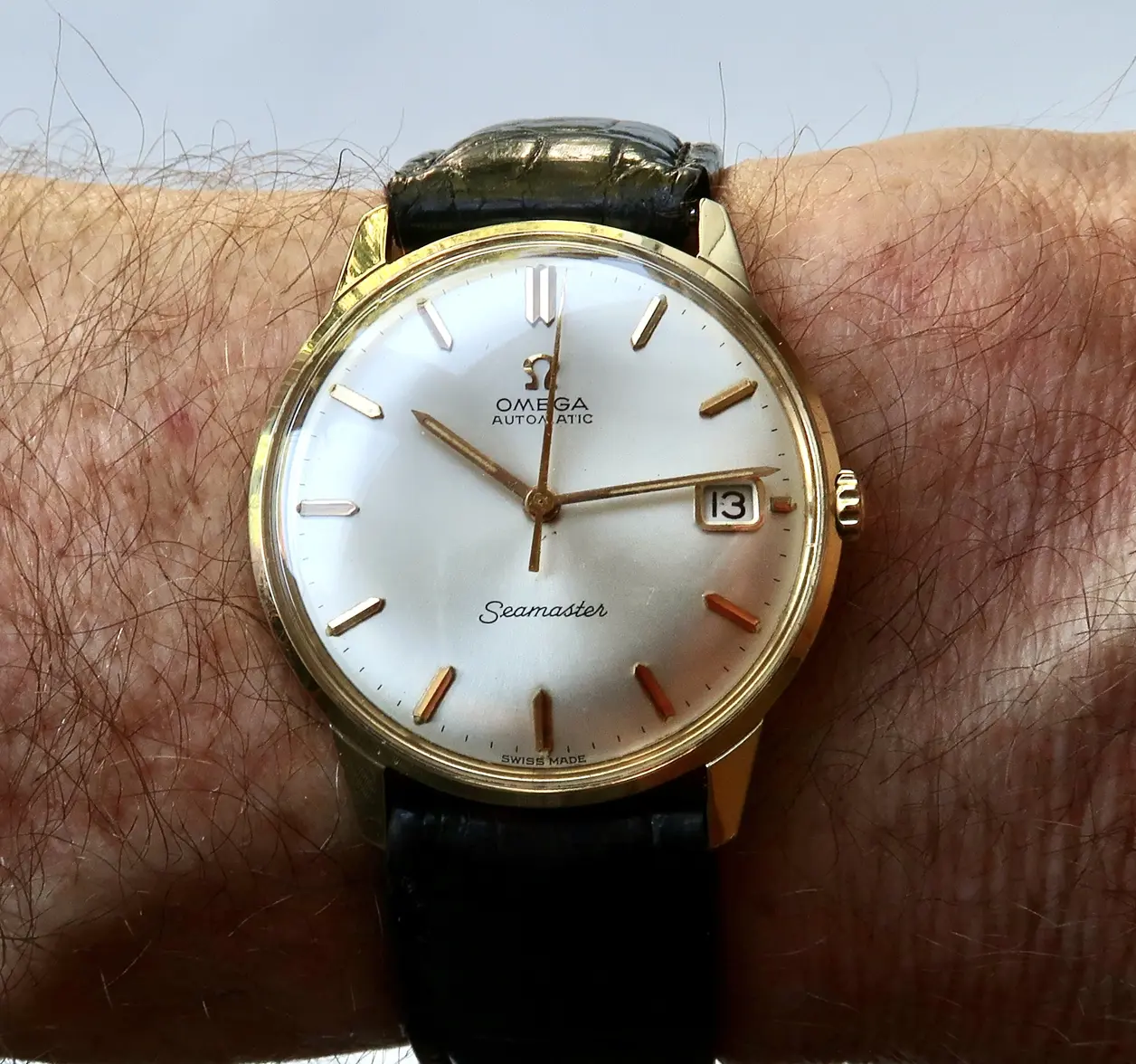
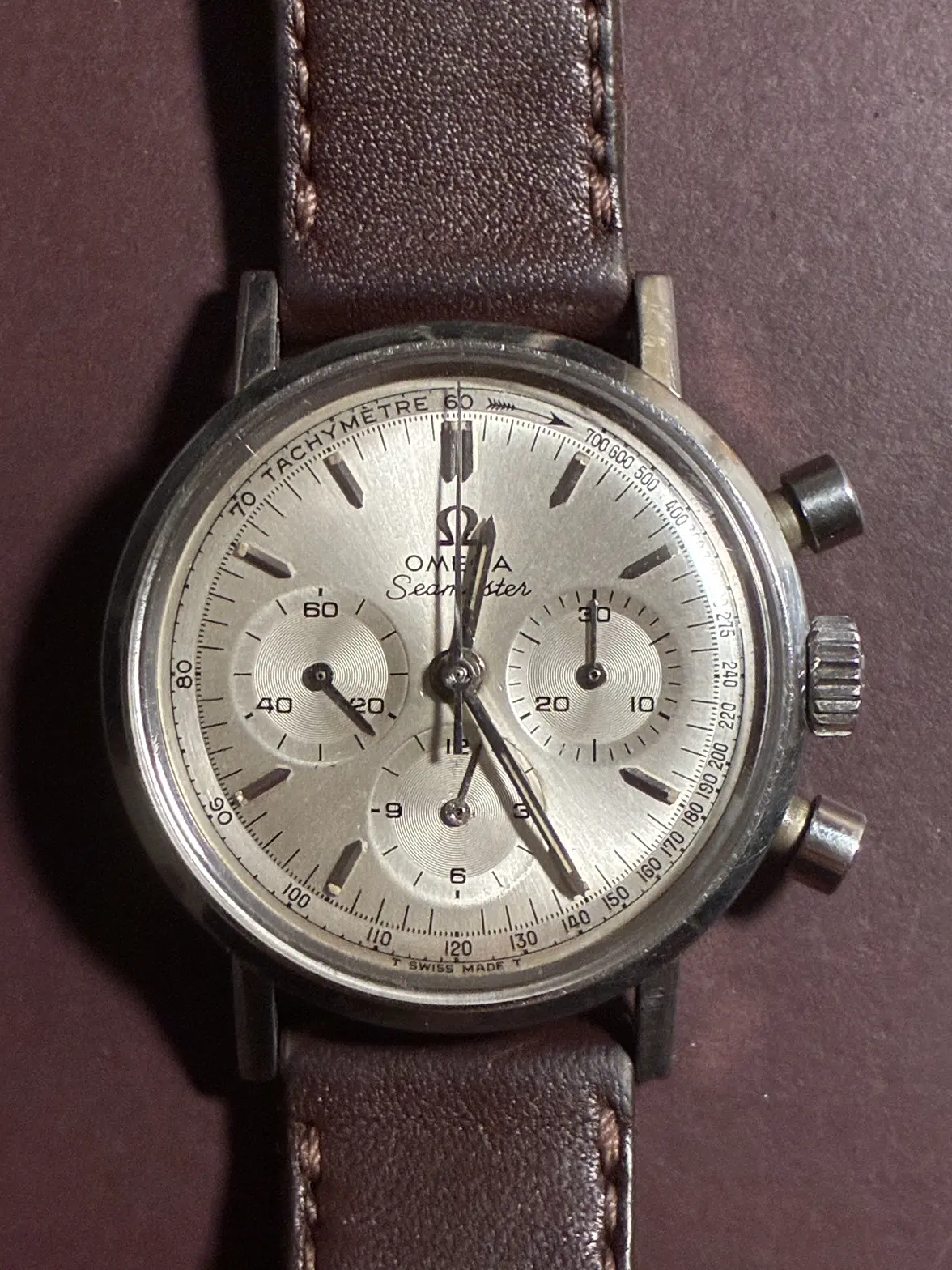
Watch size is also about perception. A narrow bezel on a watch with a nice dial can make it look much larger on your wrist than one with a wide bezel. I am 6'3'' - guess how big this vintage Seamaster is.

 
Posts
1,673
Likes
3,274
Watch size is also about perception. A narrow bezel on a watch with a nice dial can make it look much larger on your wrist than one with a wide bezel. I am 6'3'' - guess how big this vintage Seamaster is.

34mm?
 
Posts
1,673
Likes
3,274
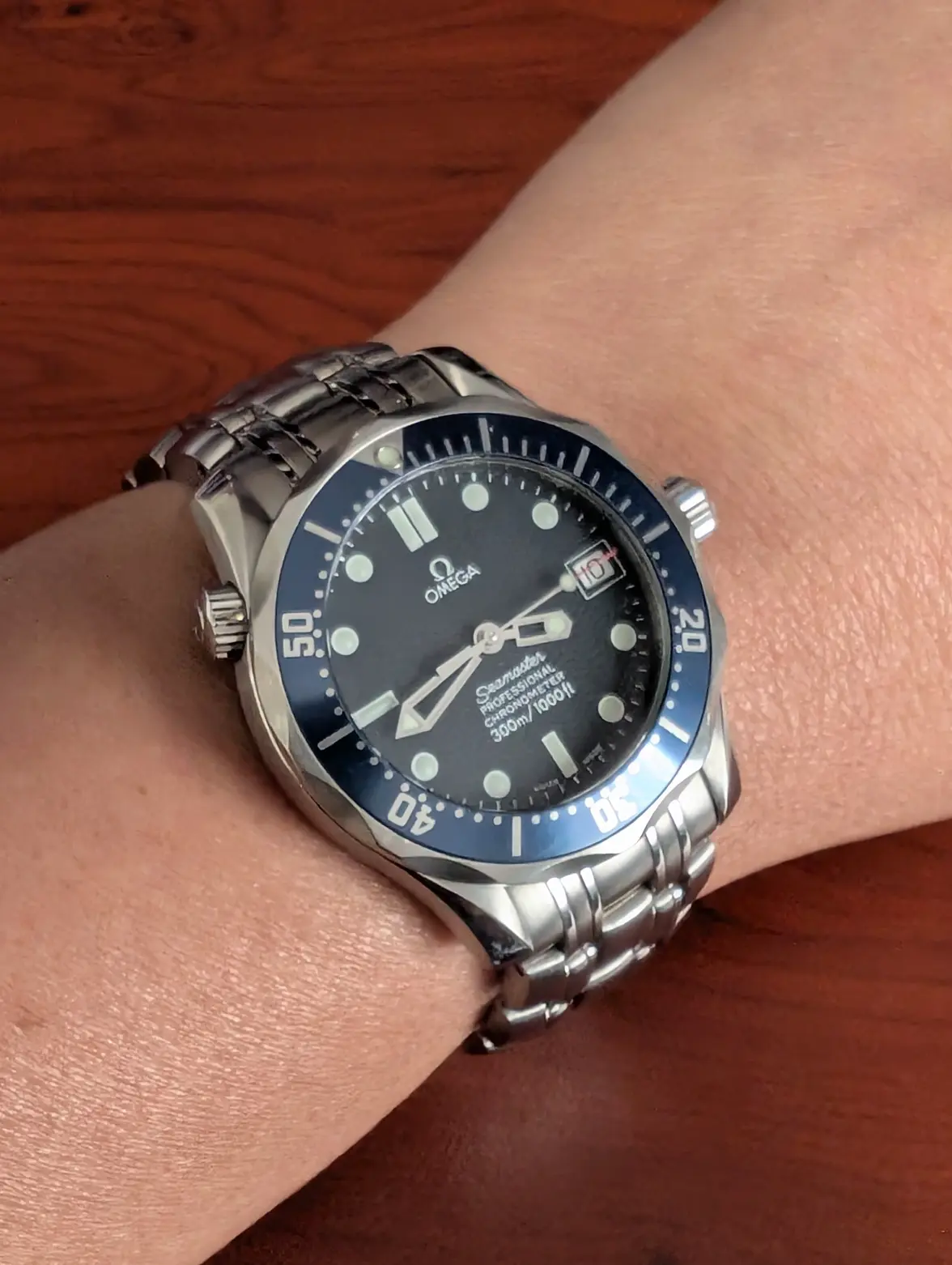
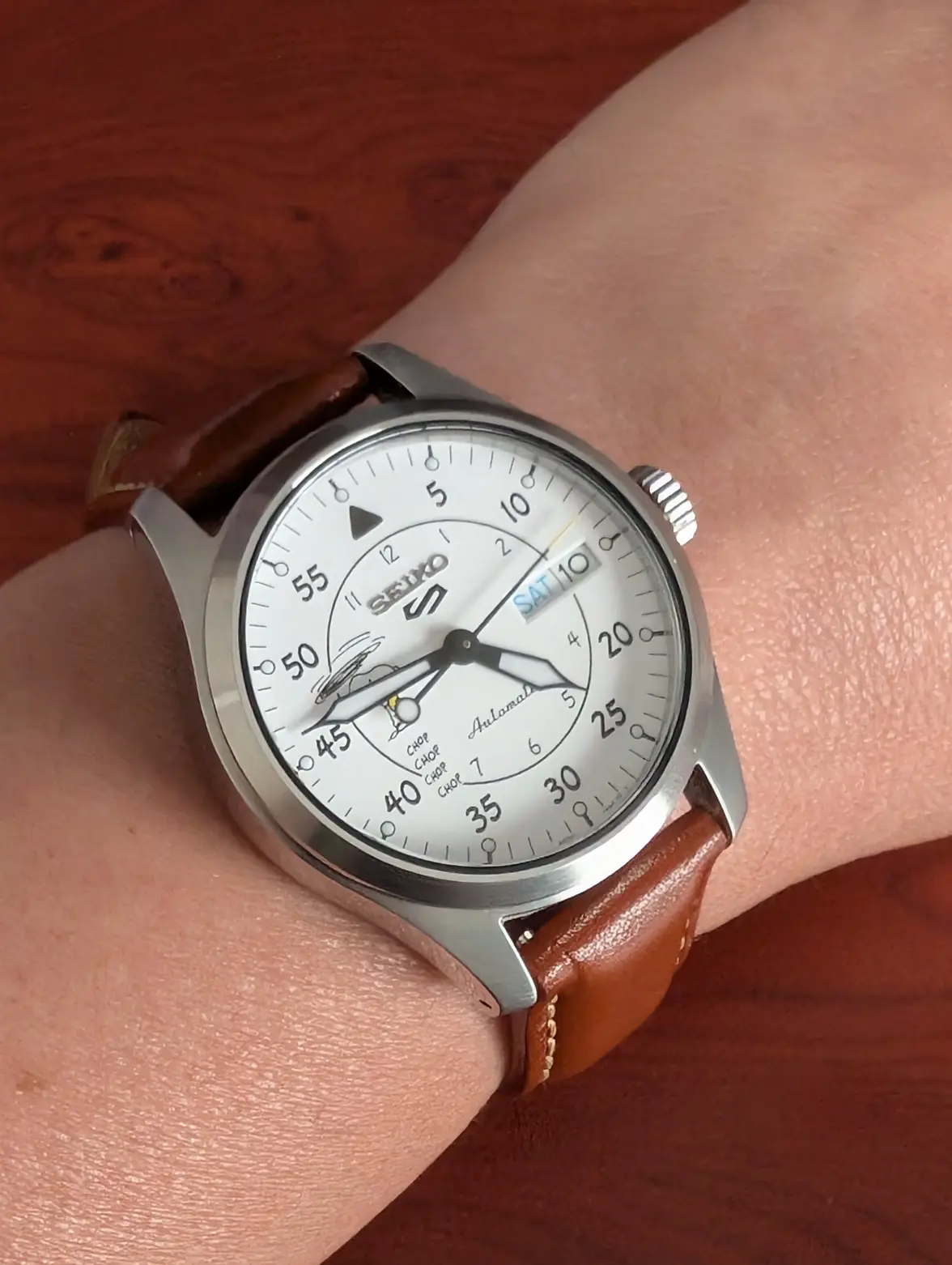
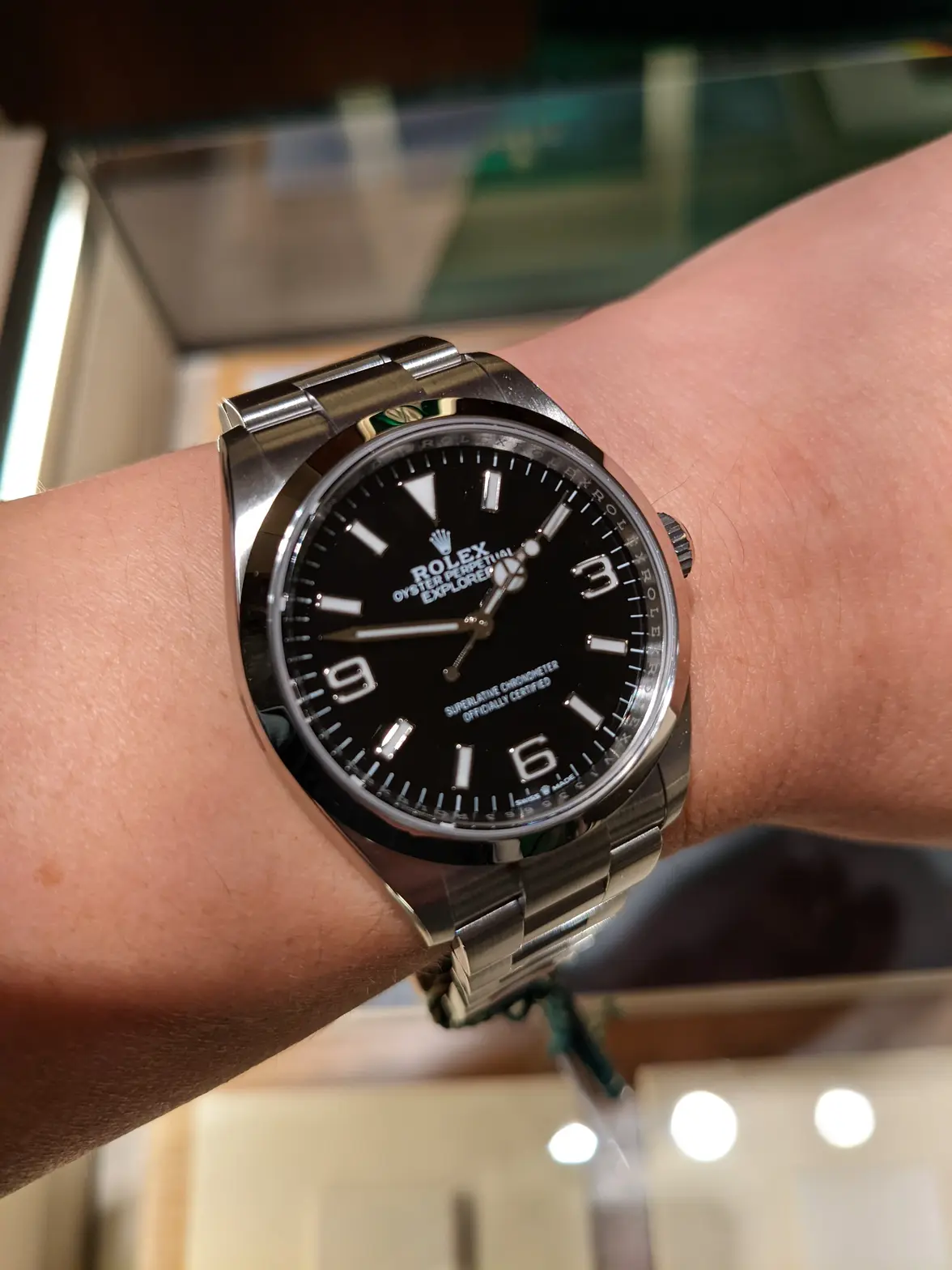
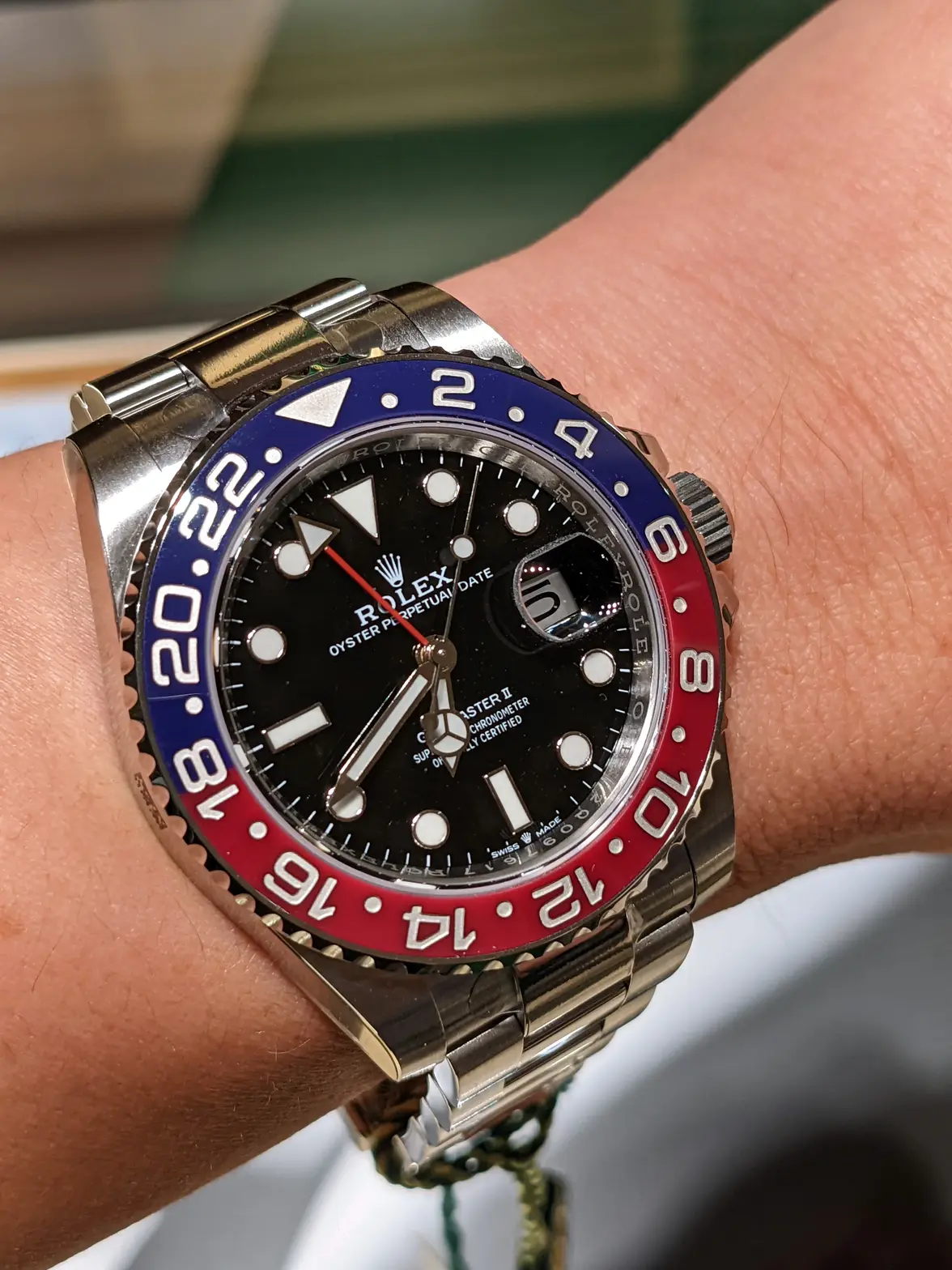
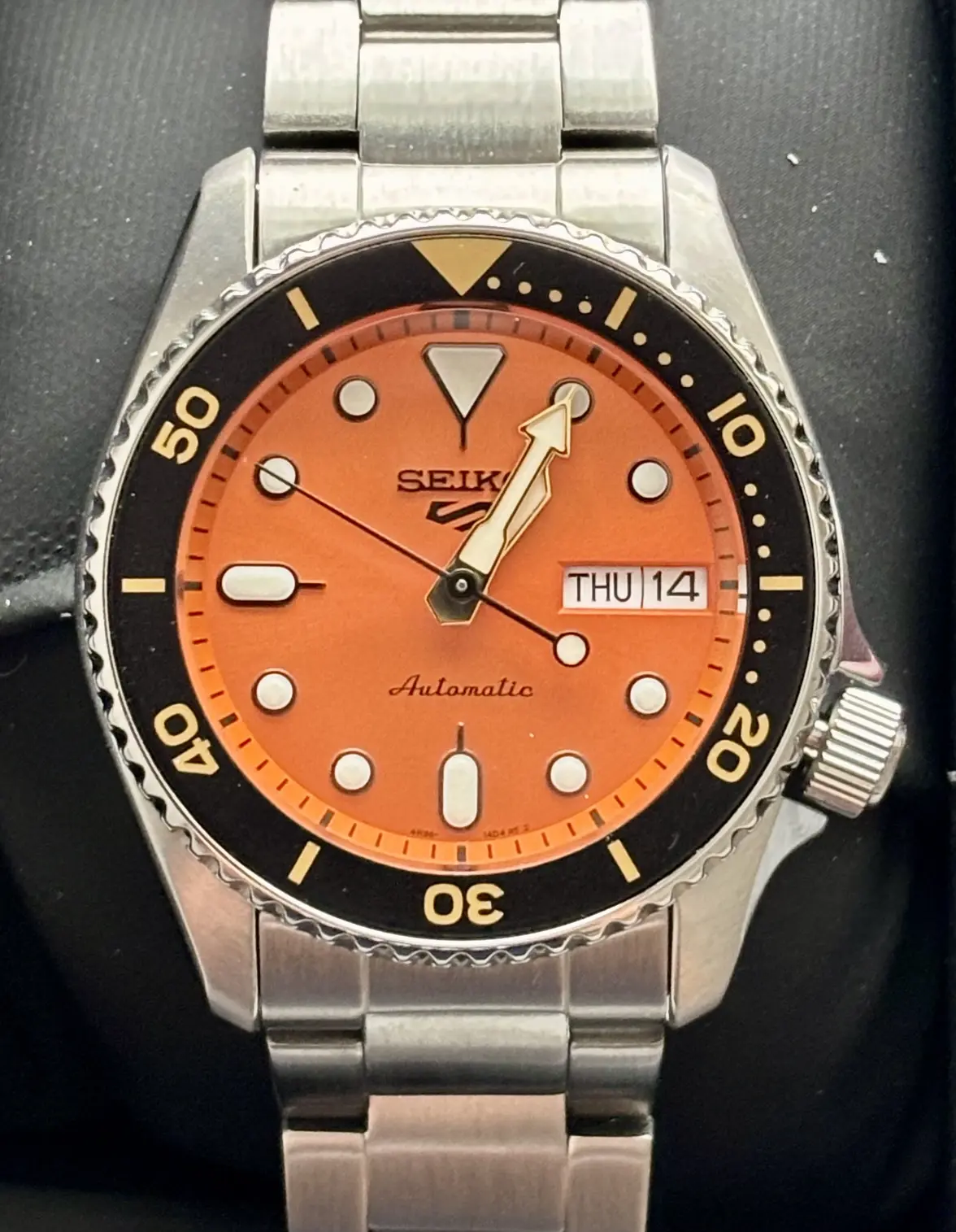
Agree with the aforementioned responses that it's all about proportions and perception. I've got really slim 6in wrists so the 36mm SMP case size fits me well. However, I'll admit that from time to time I feel that the watch wears a bit smaller because of the diver's bezel eating into the dial area. I've also tried on bigger watches like the 40mm Rolex GMT Master thinking that the thick bezel would help make it wear smaller. However, I still couldn't help feeling that the watch looked too chunky on me. The 36mm Explorer and my Seiko 5, on the other hand, looked perfect to me because of their thin bezels and relatively short lugs. Photos for comparison:
 
Posts
43
Likes
109
Seems inevitable it will swing back to some degree. I have a smaller wrist but feel comfortable all the way up to 41 or so, and like going back and forth with sizing. Both have advantages. Smart watches and sport watches make going larger easier I think - my Garmin is huge and makes most any mechanical seem small. But it does seem like things have gone a little far with the risk of losing proportion/style to an extent. Anecdotally seems like more comments of folks wishing a watch was 1-2mm smaller than the reverse.
 
Posts
1,096
Likes
1,644
I'm not sure if I dislike big modern watches because I like vintage or I like vintage because I dislike big watches.

I'm a big guy with decent sized wrists. Most of my collection is 34-37. I have one 41 that feels huge.
 
Posts
1,673
Likes
3,274
What is considered mid-size?
That's a good question. Back in the day when Pearce Brosnan played Bond, the Seamaster Pro was available in three case diameters: 41mm, 36mm and 28mm. I'm assuming these equated to the Mens, Mid (Unisex?) and Ladies sizes respectively. So I'd say that a contemporary midsize watch could be anywhere between 34-38mm case diameter? Muddying the waters further is the recent trend of some women wearing what would once be considered oversized watches.
 
Posts
141
Likes
285
My two cents is that since anything vintage, specially when it comes to watches, is really hot and trendy now, with that comes the appreciation for sizes and styles that are old school. The era of grotesquely large watches is long gone and now maybe even the +40 mm watches may become too large for current fashion trends. Personally I love midsized watches and that’s where 90% of my purchases land.
 
Posts
4,620
Likes
46,405
Wouldn’t that be 36-40mm? Maybe even 34-35mm would qualify and 40-42mm as the high upper end.

Think I agree with the the 34 to 35 being midsize, 31 to 33 being unisex or as was boys watches and every thing over 37 ish and up being Jumbo. I may have skipped the late 80's and 2000's in my 1960's assessment 😀
 
Posts
141
Likes
285
Think I agree with the the 34 to 35 being midsize, 31 to 33 being unisex or as was boys watches and every thing over 37 ish and up being Jumbo. I may have skipped the late 80's and 2000's in my 1960's assessment 😀
Yeah, back in the day 36,5mm was larger than standard and 37mm was jumbo already.
 
Posts
43
Likes
109
In terms of the risk of crowding smaller cases/dials with detail and functions (raised in the original video), this may be a valid concern but seems like there is still quite a bit of room to downsize. Here is a 39mm chronograph I recently got that wears great - and i think has nice proportions. Not sure if it qualifies as mid-size but smaller than most contemporary chronos.

 
Posts
3,863
Likes
10,640
I have fairly medium sized wrists at 7 1/4" and my collection ranges in size from 28 to 38mm.

Granted, my newest watch was made in 1972. So, I'm not exactly the target audience for companies trying to sell their contemporary wares.

I did own a 44mm Eterna KonTiki 1973 reissue that I rather liked but the size was such a shock to my wearing sensibilities that I never really got used to it and sold it after only owning it for a year.
 
Posts
141
Likes
285
This is a perfect example of a midsized watch that’s just right. At 38mm’s, it doesn’t feel too big nor too small in my opinion. Ref. SRPK35K1
 
Posts
141
Likes
285
In terms of the risk of crowding smaller cases/dials with detail and functions (raised in the original video), this may be a valid concern but seems like there is still quite a bit of room to downsize. Here is a 39mm chronograph I recently got that wears great - and i think has nice proportions. Not sure if it qualifies as mid-size but smaller than most contemporary chronos.

I don’t really think it’s a valid concern, most vintage chronographs are +/- 36mm. It worked nicely 60-70 years ago, so it’ll work nicely today.
 
Posts
297
Likes
857
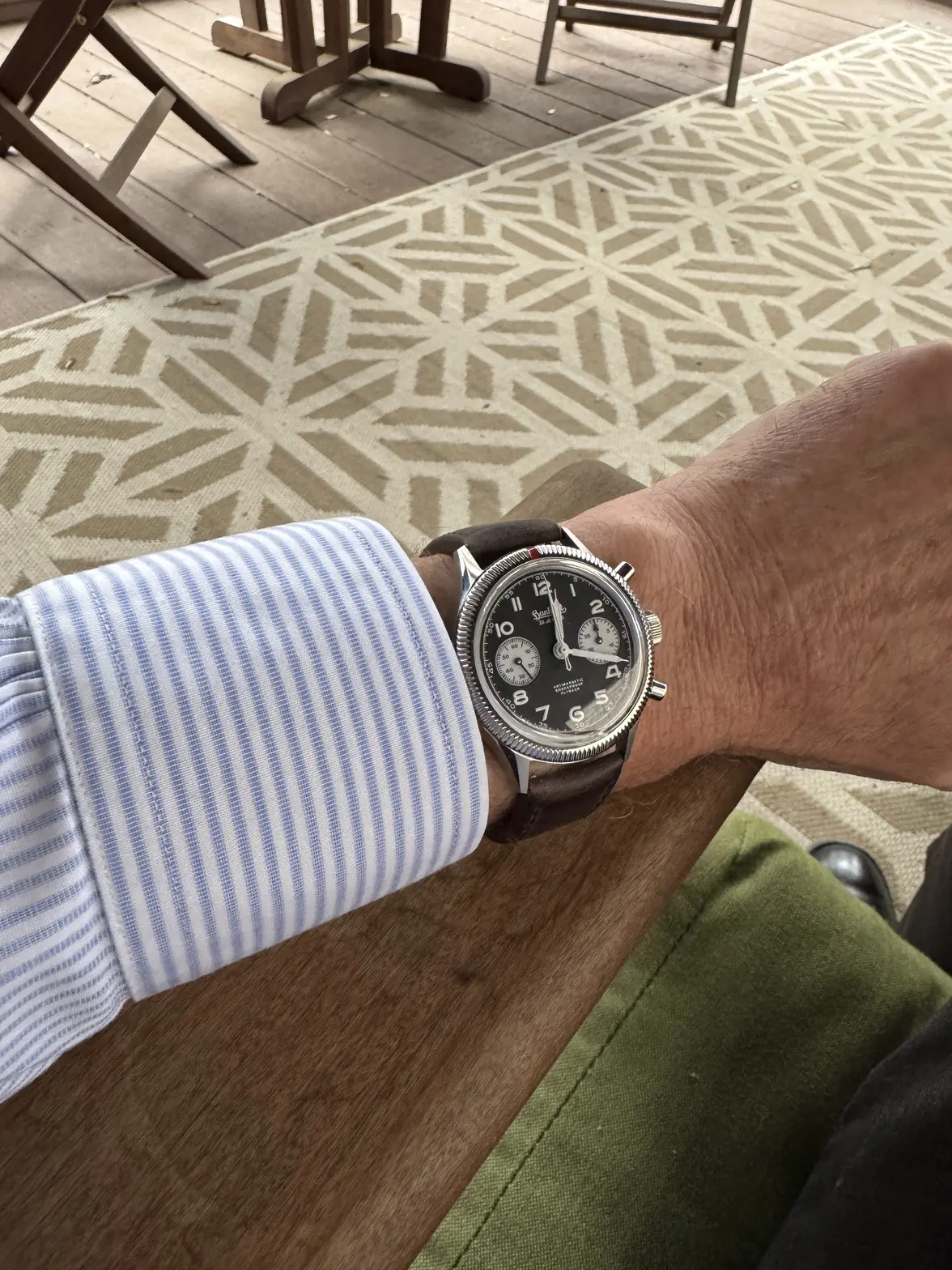
I don’t really think it’s a valid concern, most vintage chronographs are +/- 36mm. It worked nicely 60-70 years ago, so it’ll work nicely today.
I agree. 36 mm vintage chronographs were well executed proportionately and functionally. Here’s a photo of one of mine for example.