Seamaster Black Dial Discussion. Fasten your safety belts.

Posts
167
Likes
1,524
I'm just carrying over from the other thread Re: Anthor's pre-purchase inquiry.

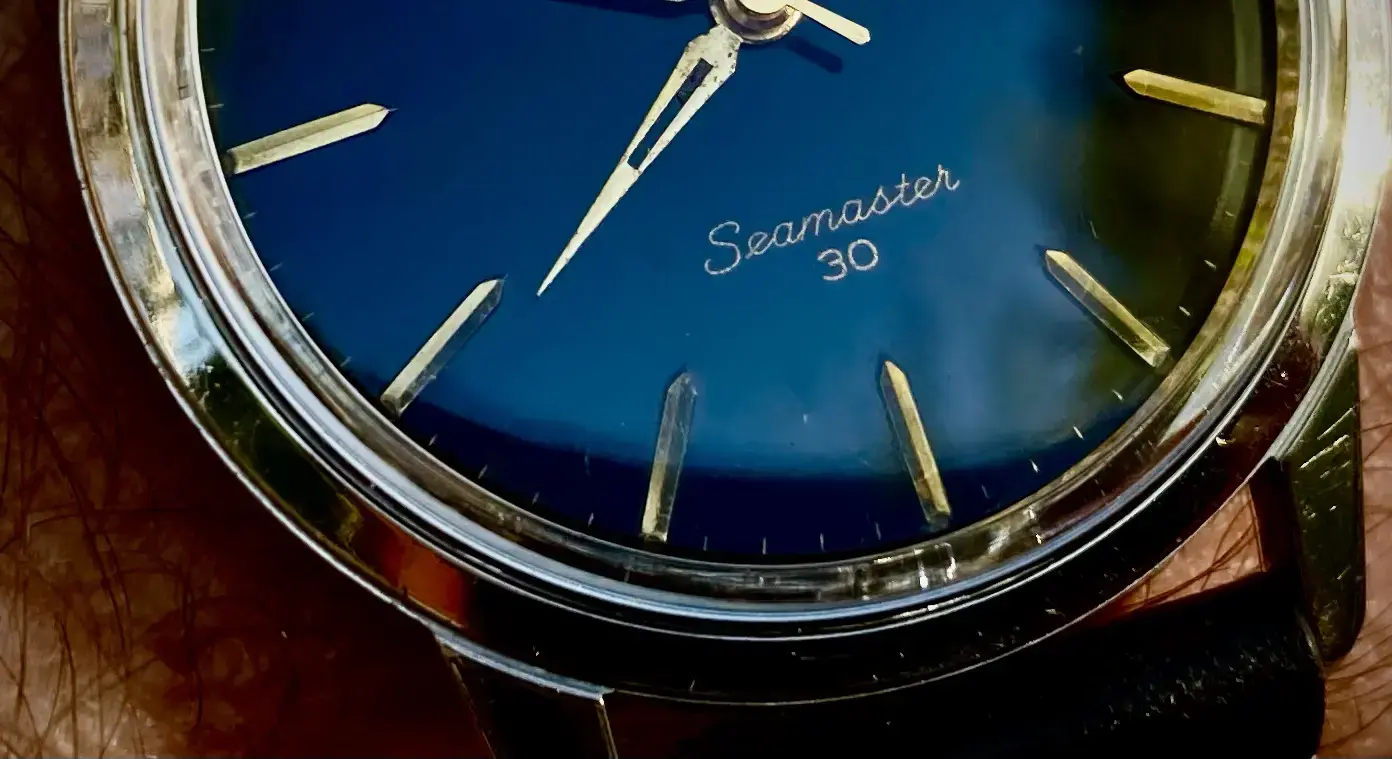
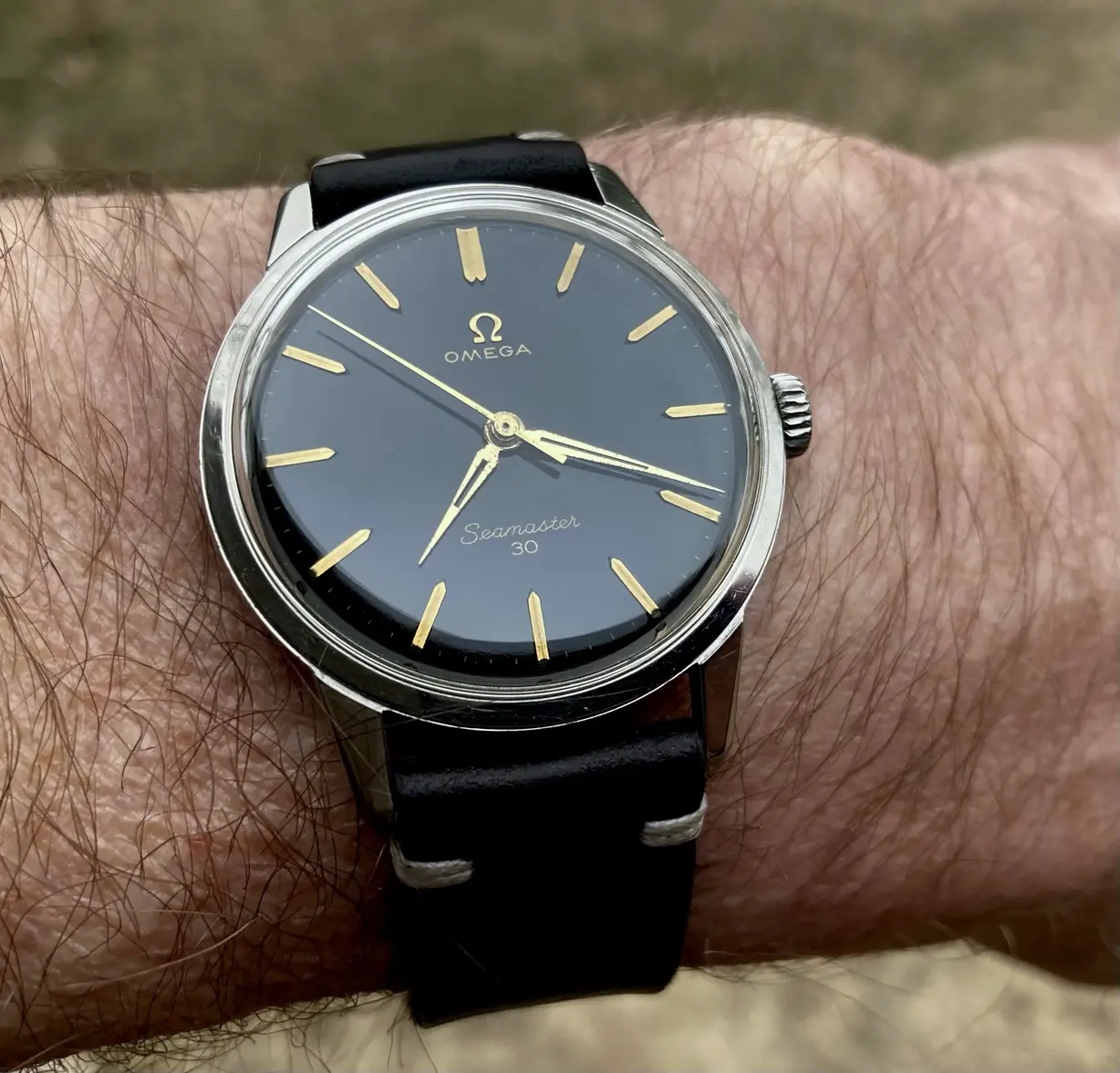
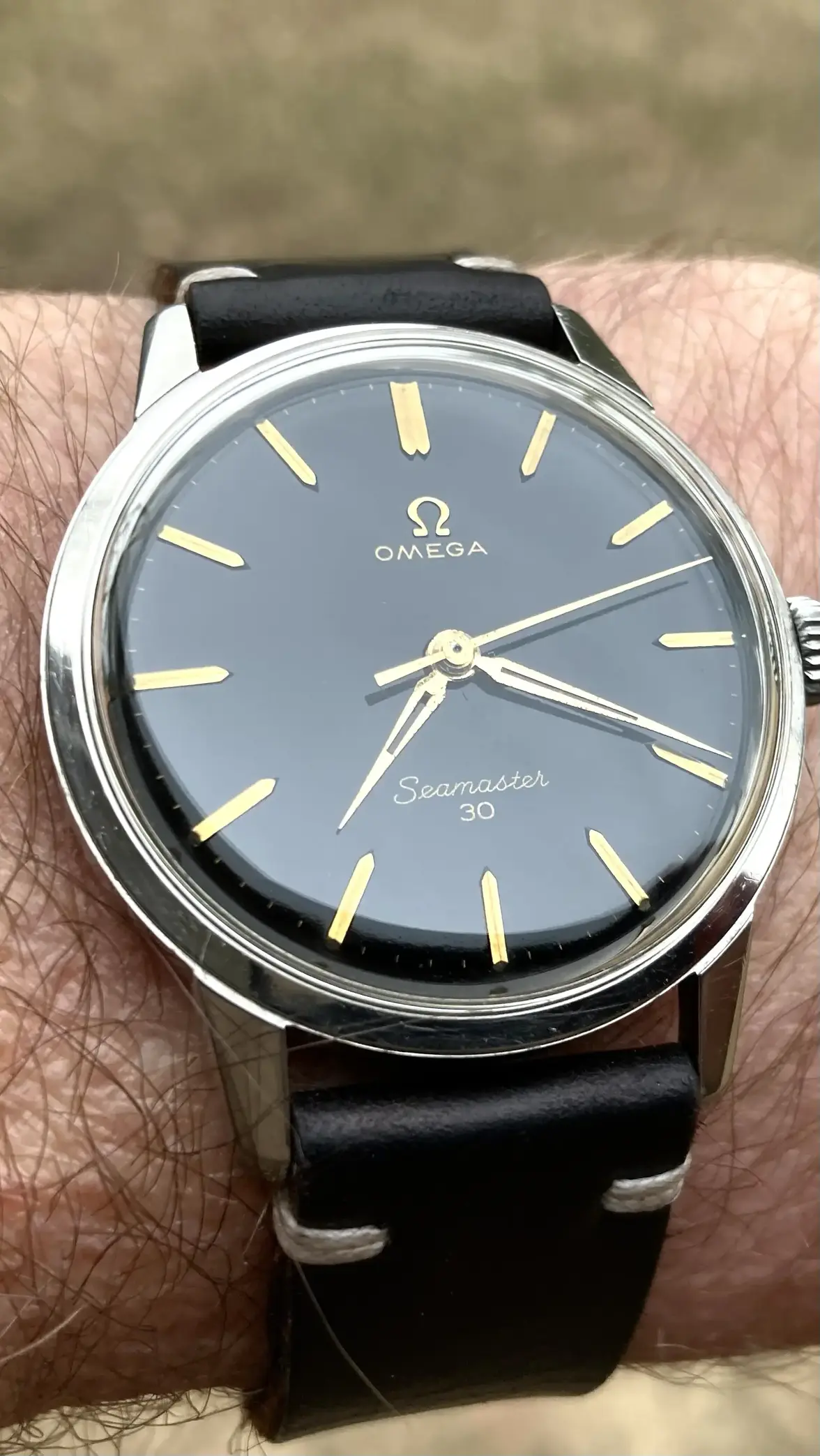
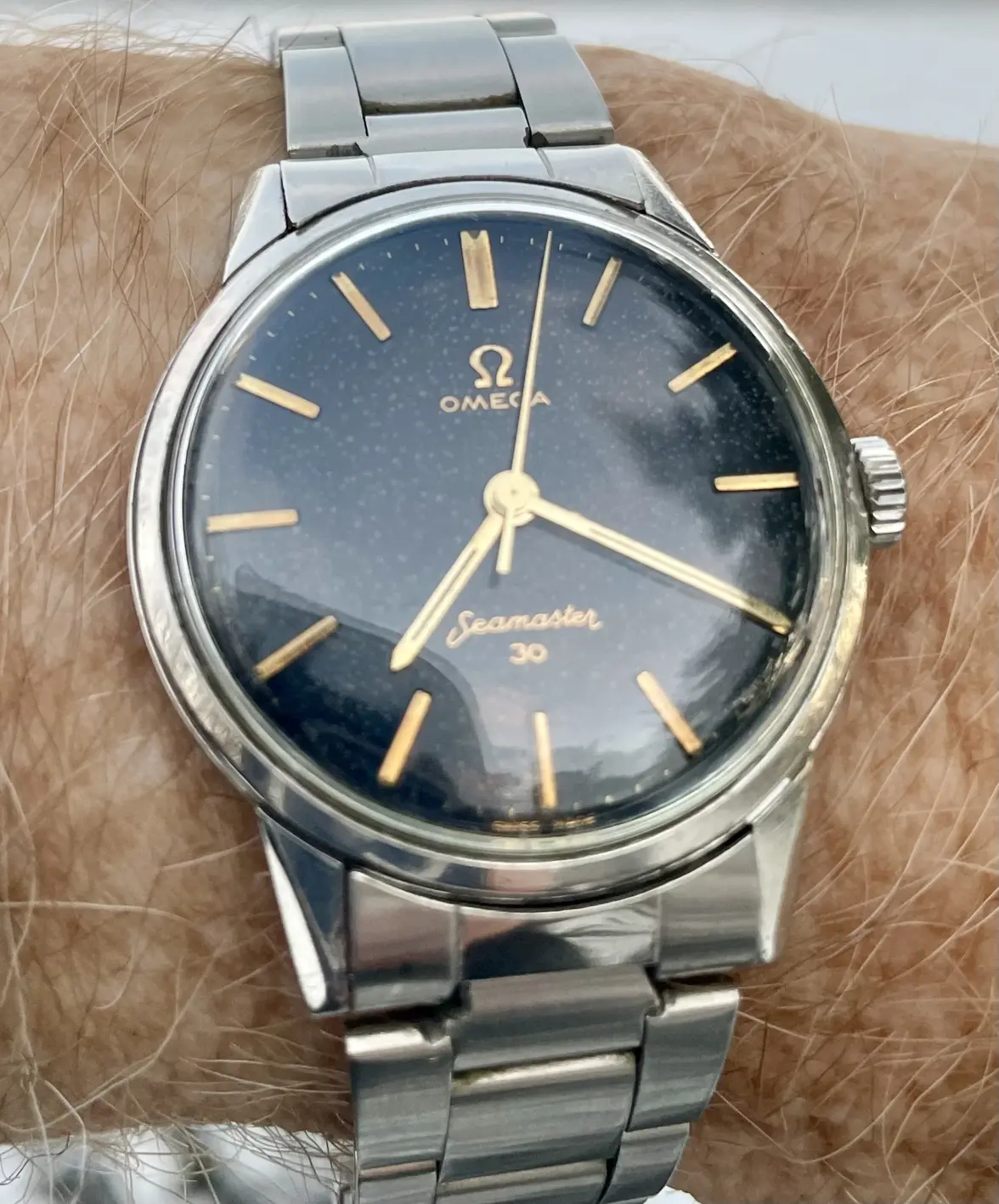
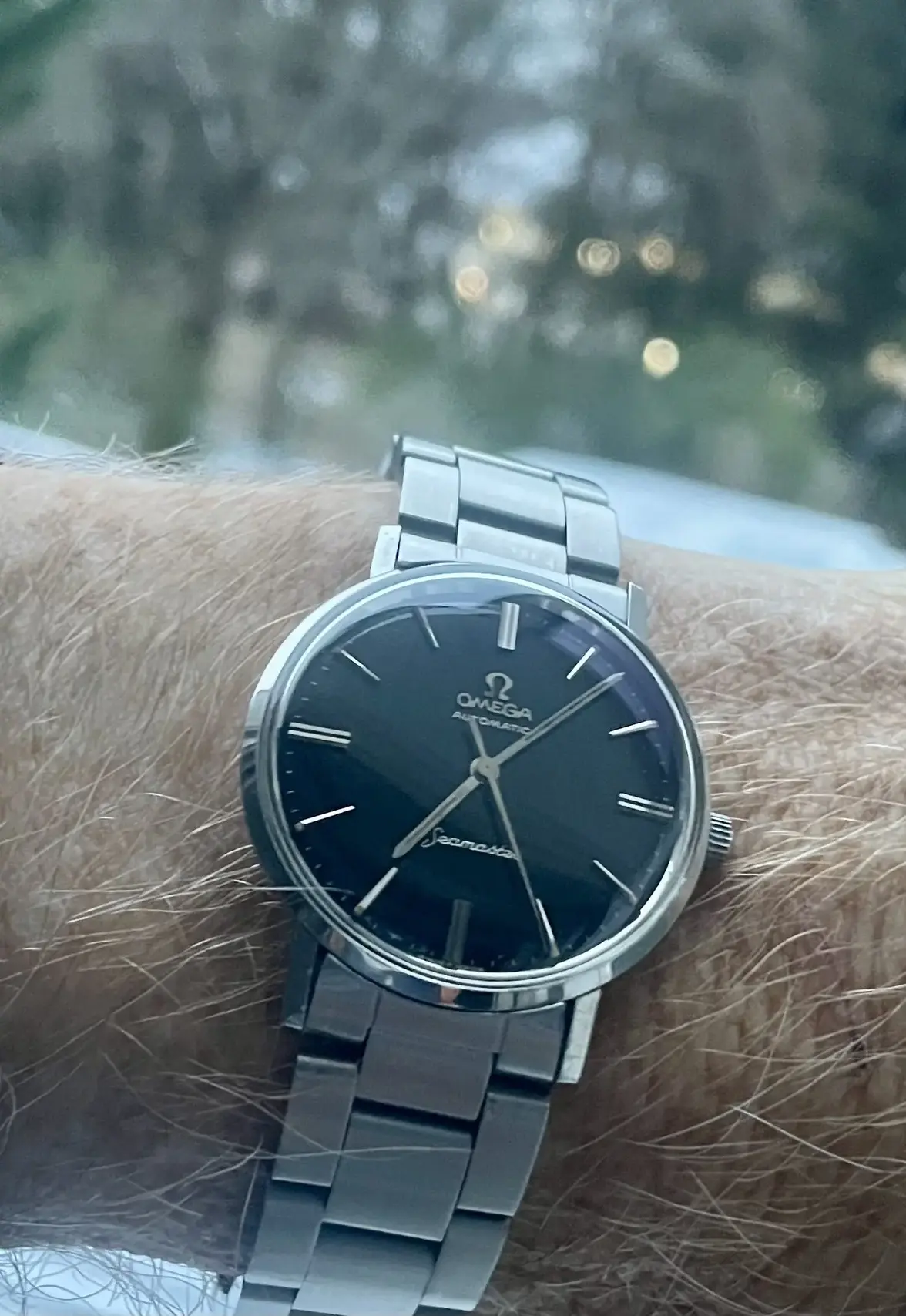
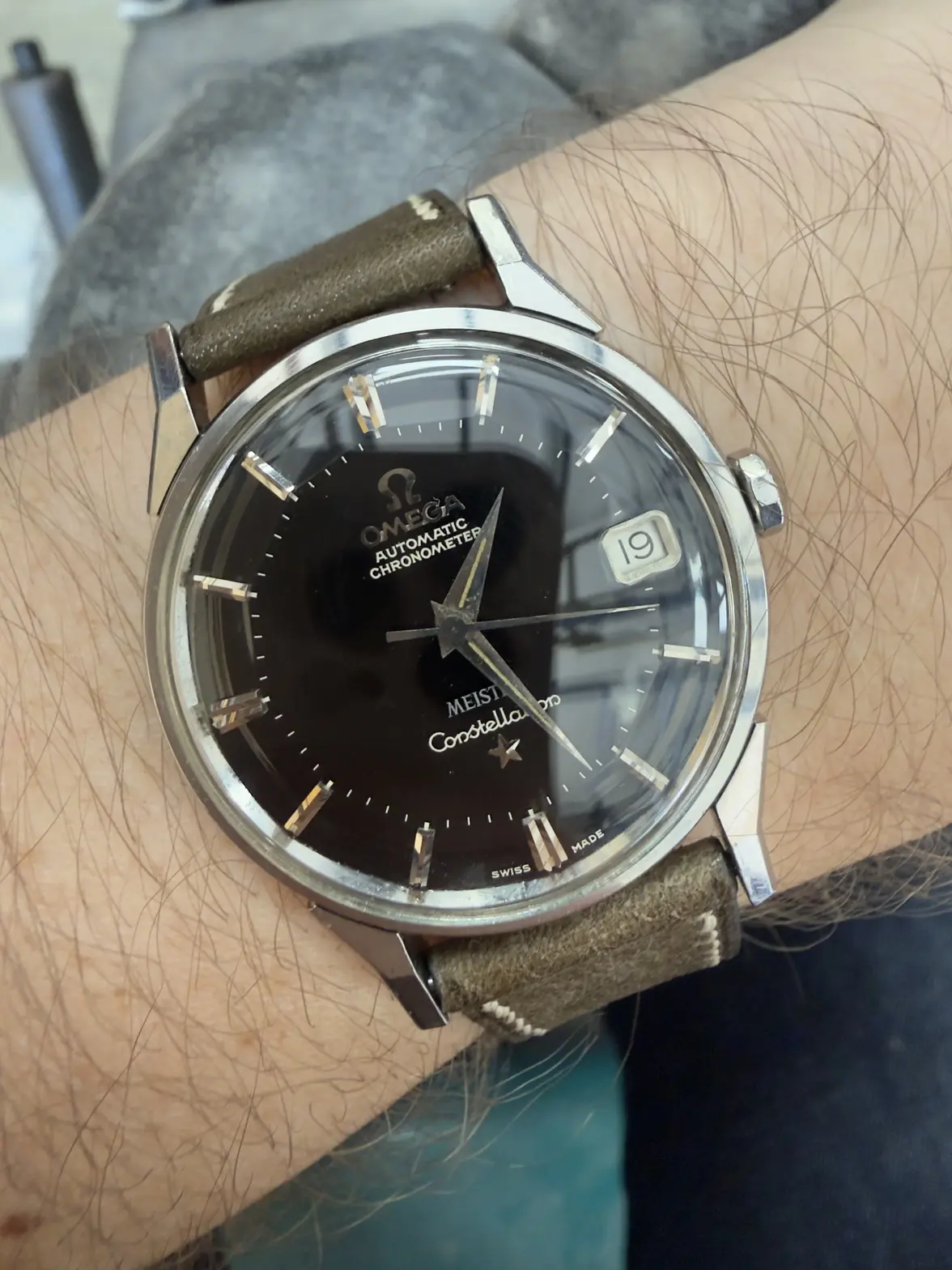
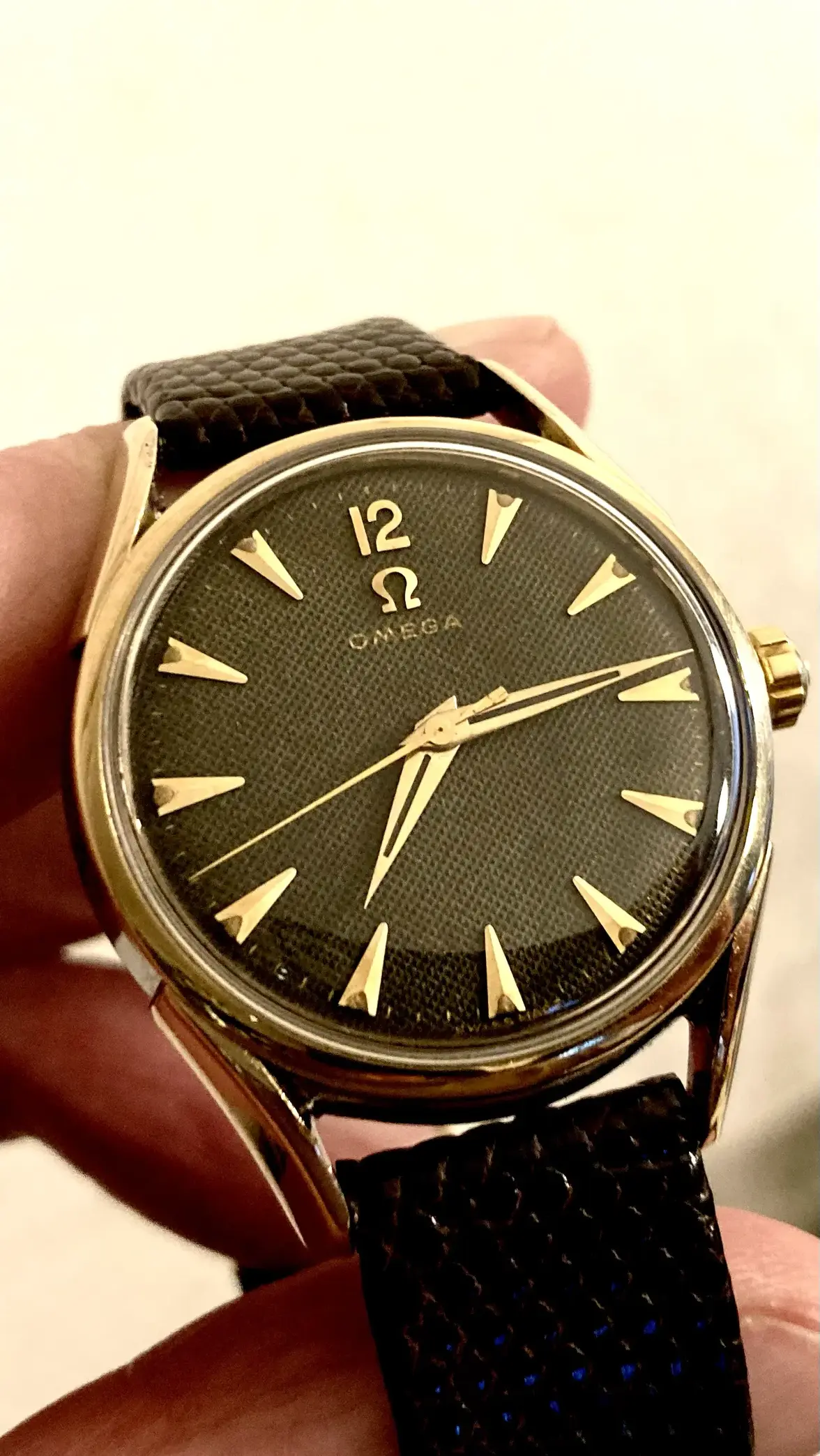
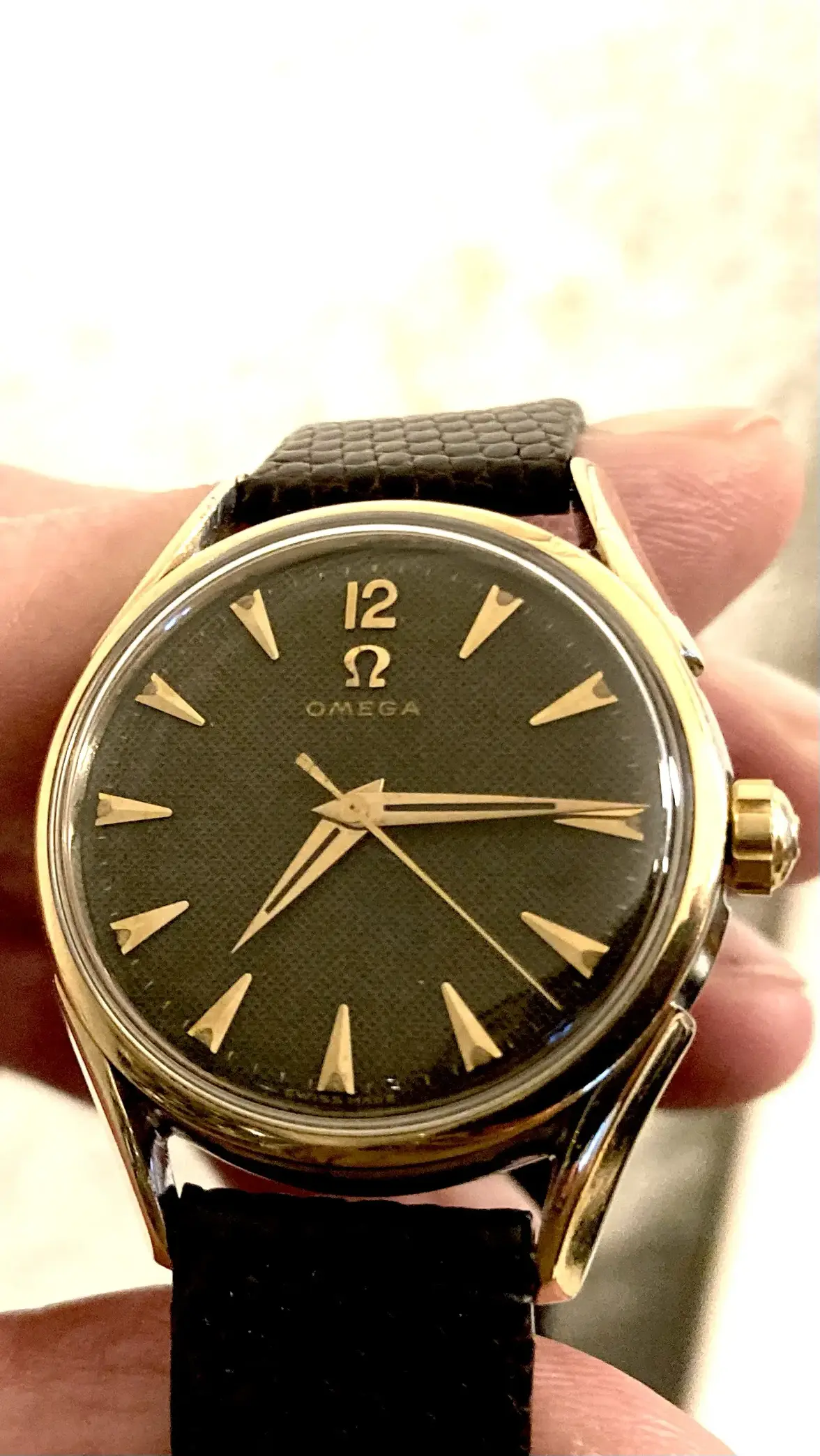
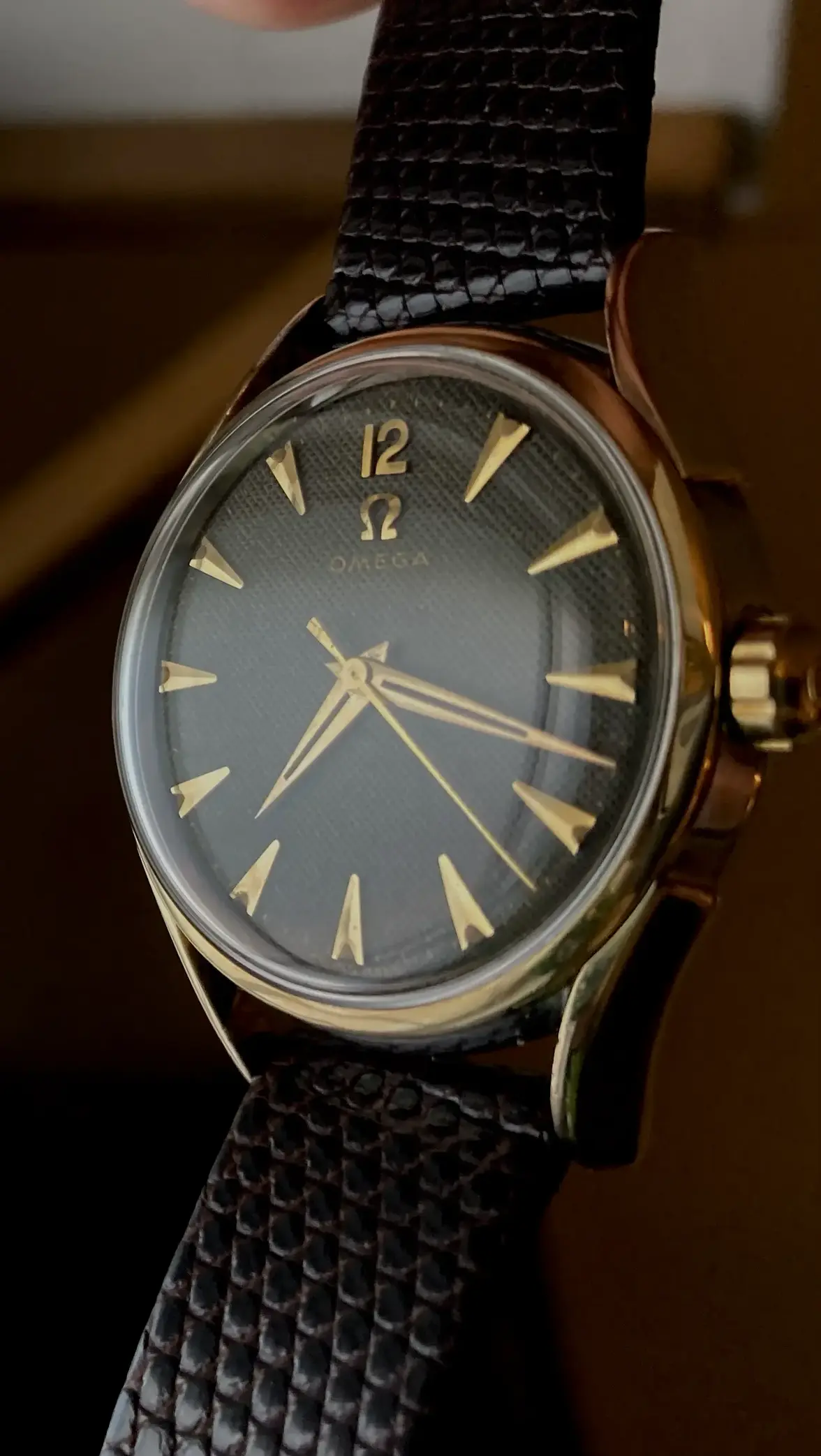
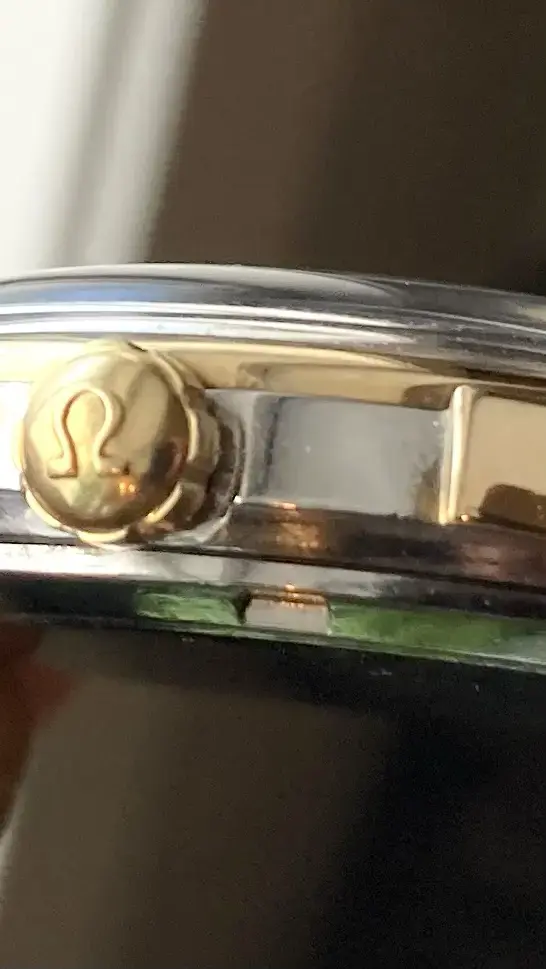
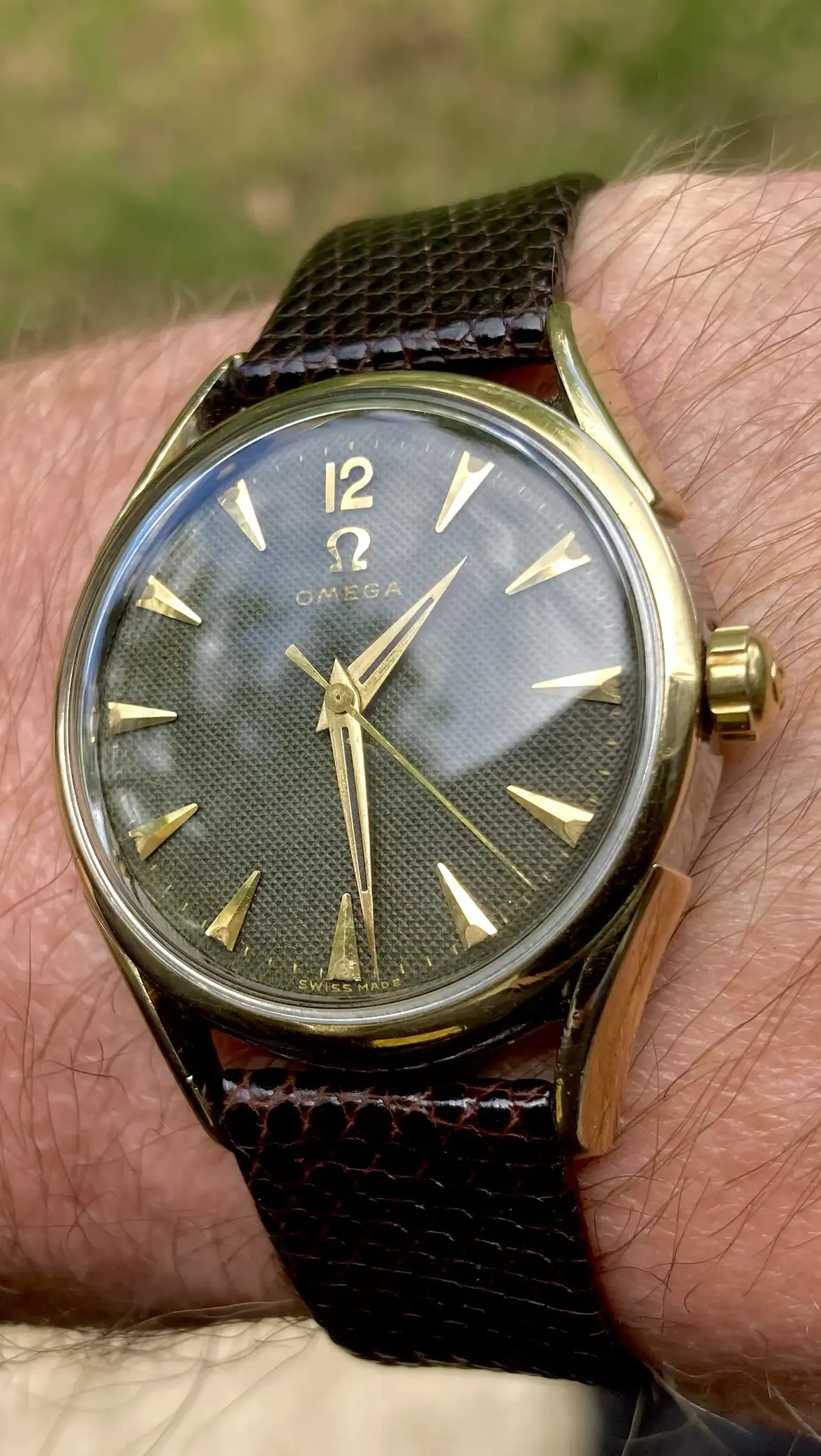
I know this is a touchy subject, but I think it's a mistake to have a knee-jerk reaction to every black dial that it's a redial. In the scope of vintage watches, they made a crap-ton of these black dials even though it was a low overall percentage. As a disclaimer, I've owned this watch for over a decade. Love it...Never going to sell it....ultimately couldn't care less if the dial is refinished, Frankenstein-ized, polished case, not polished case, whatever. It has a sweet running cal. 286 in it which to me as a gear-head is the best part. It's all 100% Omega which is the most important part. I'm not trying to overly convince people that this is an original gilt dial, but I'm more convinced that it is and I think it helps to have examples posted in threads for discussion since there are a lot of refinished black dials. It's also a red flag if a black dial appears hyper-smooth and mirror black. This one has a rougher finish than mirror.
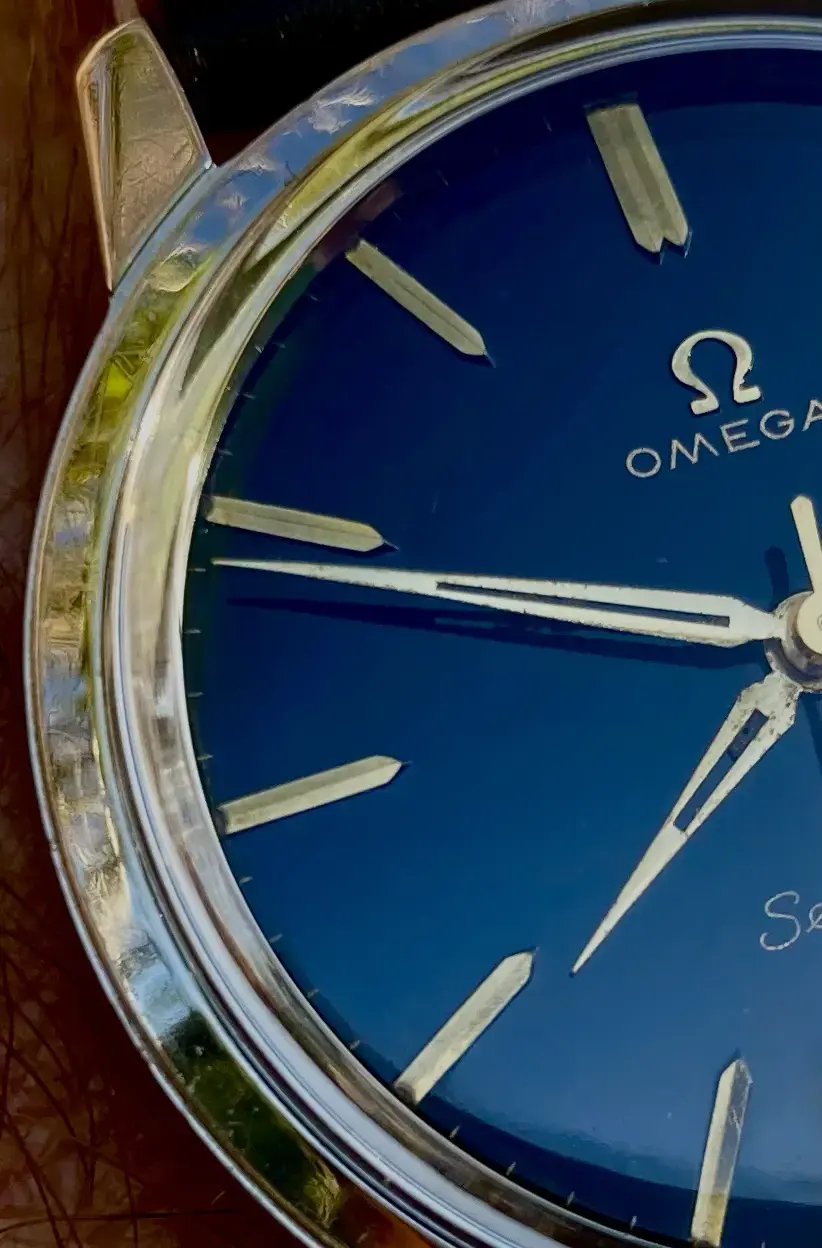
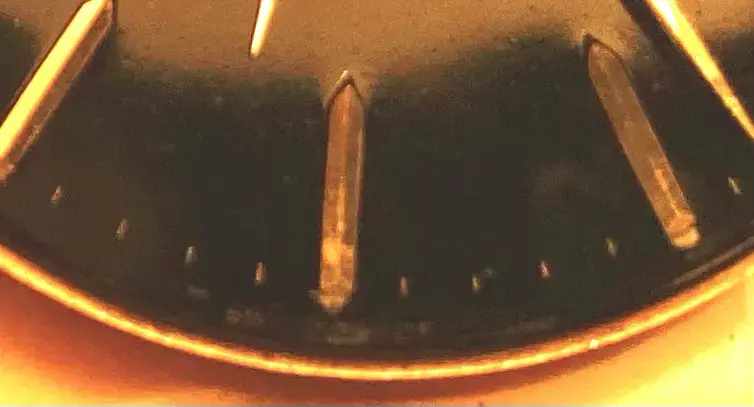
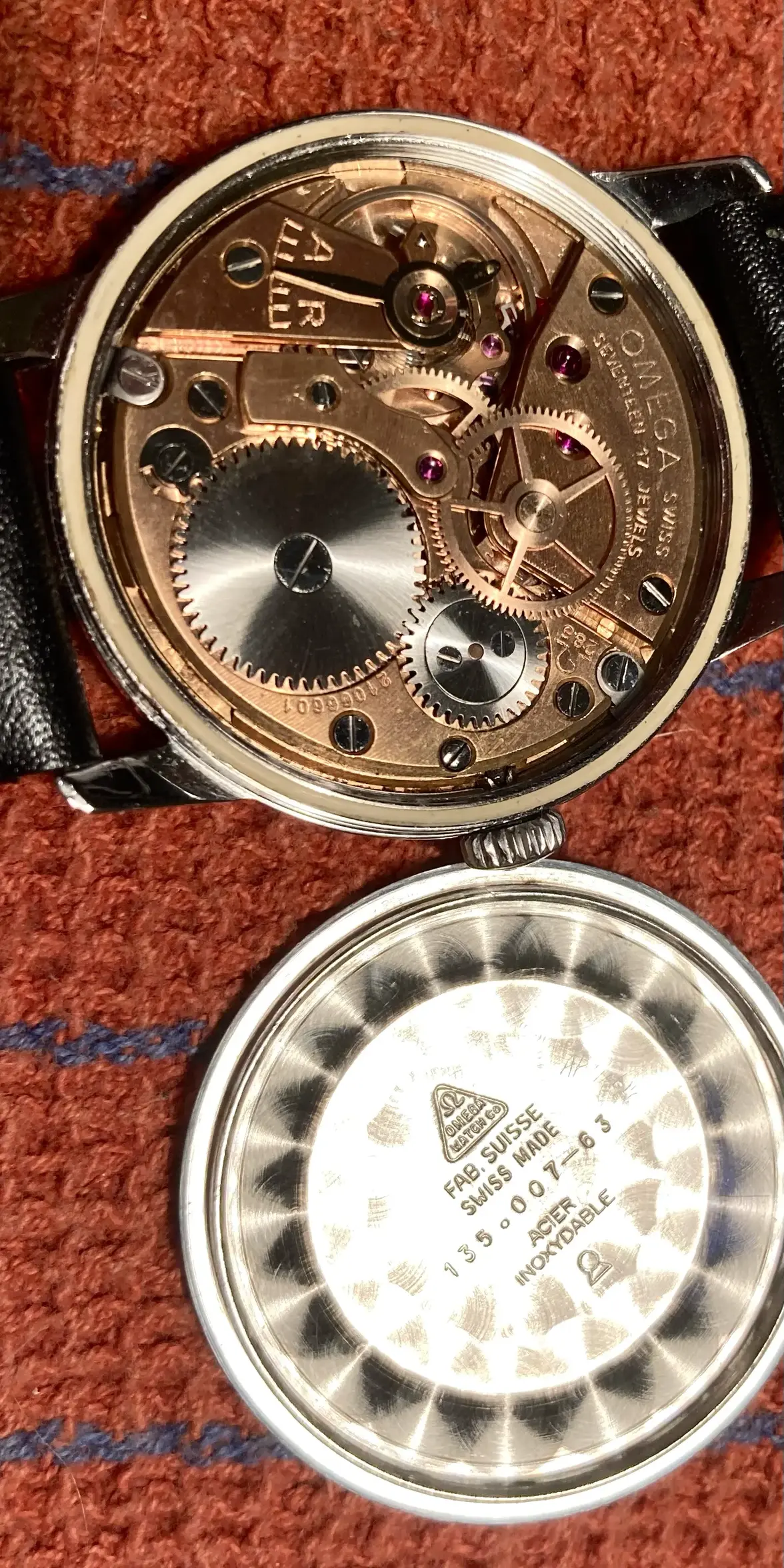
When I got the watch around 2015, I uncased the movement to replace the crystal. I had a lousy phone camera at the time like I have now. I tried to enhance what's left of "T Swiss Made T" at 6:00. I'm not into high end photography. Sorry. Frankly, I don't like disturbing this watch to uncase the movement again for more photos, but if I service it again I'll get out the good Nikon camera. Promise.

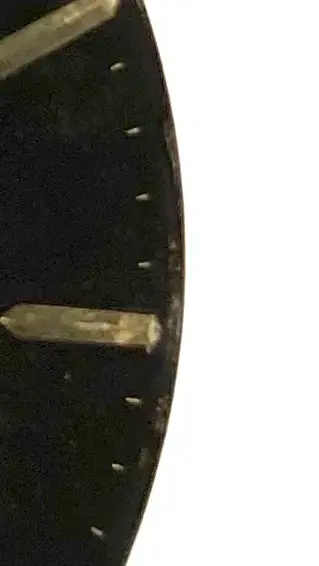
All of the damage was done to the "T Swiss Made T" print at 6:00 when I got the watch. I'm careful enough not to scuff off dial paint manipulating the movement in and out of the case. The rest of the dial print appears gilt gold and "glints" and sparkles in angles of light under magnification. The font seems correct for a 1964 dial as well as the style of "S". 21xxx serial #. 1964. 135.007-63 case reference. Perfectly normal for a 1964 watch to have a dash-63 case reference as I understand things, but this was an era of transition. There seems to be unlimited variations of cal. 286- 135.007 dials and hands. The more research you do, the more legit variations you uncover.

The tritium lume in the lume plots have a rotten, dark brown to black appearance as well as what's left in the luminous hands. I don't see how a dial can be repainted and still have neatly aged-out tritium lume still intact. I'm most suspicious about the luminous Alpha hands on this watch, but I have luminous stick sword hands in my hoard if I ever feel like changing them out and I like the Alpha hands better anyhow. It's a far out possibility that the Alpha hands are original.

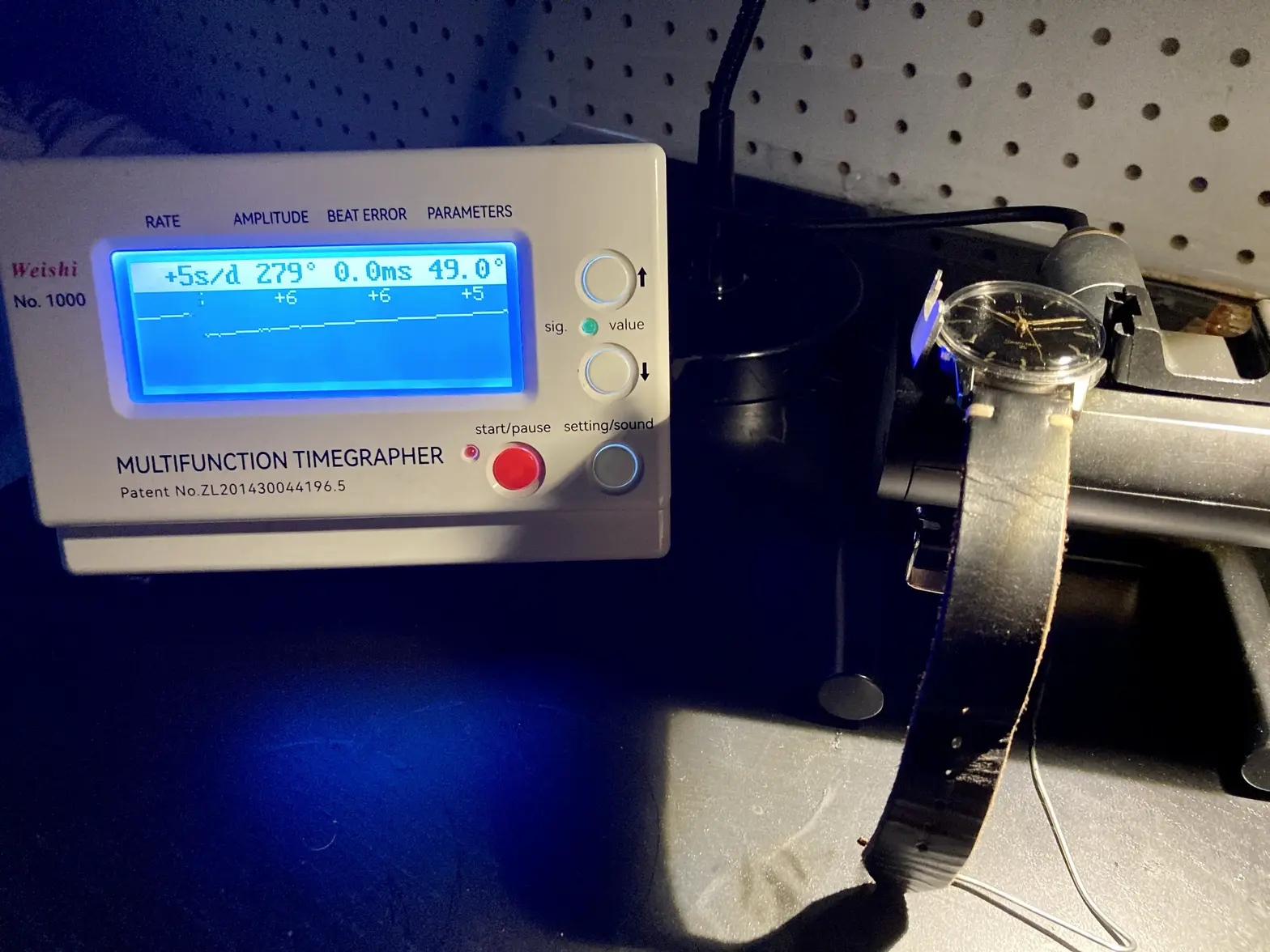
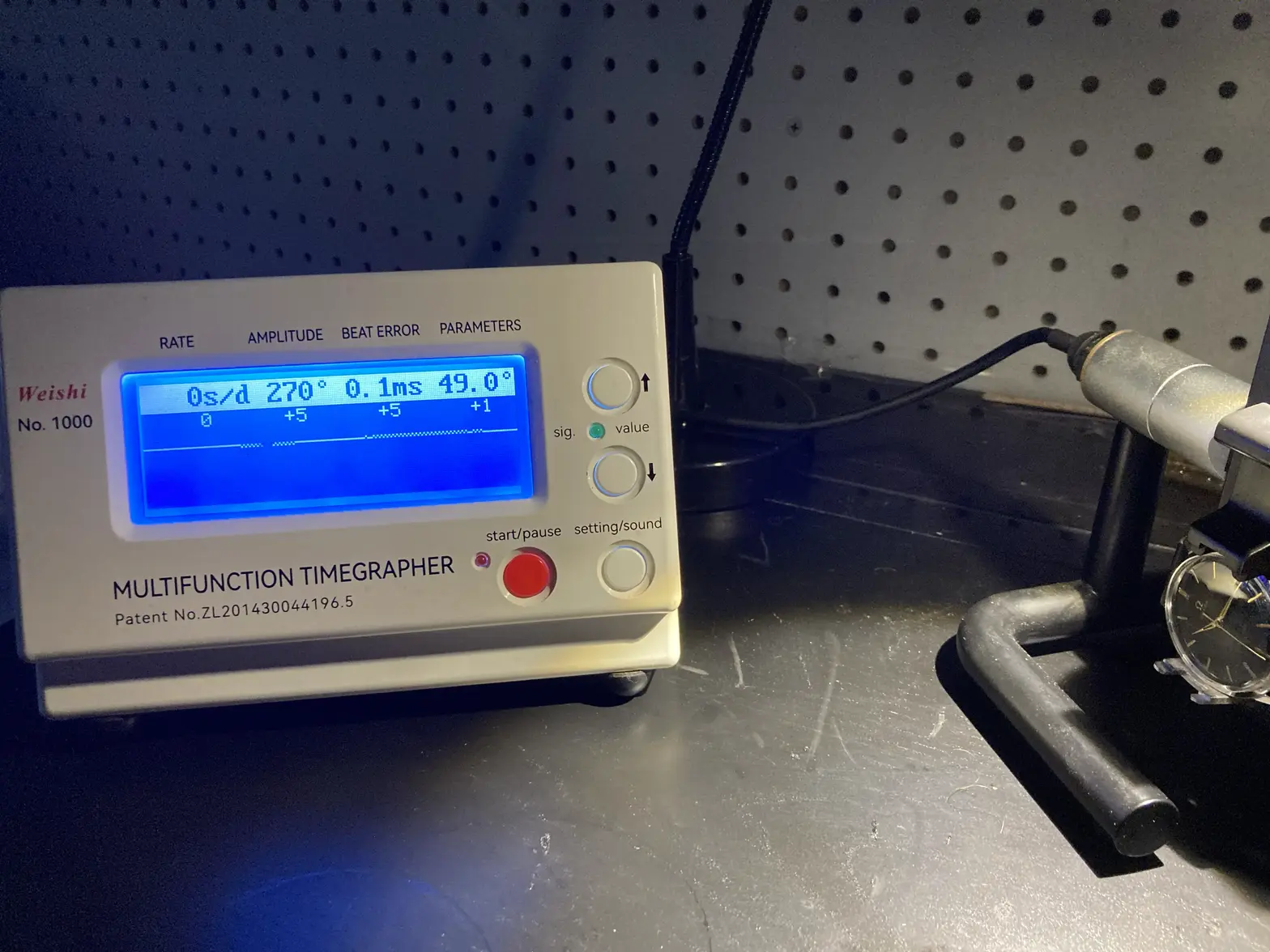
Anyway, the watch is a great runner and I't one of my favorites. It runs 270+ degrees of amplitude vertically and you can spike it into the low 300s amplitude dial-up on a fresh wind. Just amazing movements. If you know, you know...
 
Posts
167
Likes
1,524
A very nice example. Thank you for sharing.
Thanks for stopping in. There are some black (gilt) dial threads, but I think these dials are kind of a mystery and I think they need to be discussed more with photos and discussion of the finer points rather than just "No!! All black dials fake re-paints" responses. Granted, many of them are refinished and people new to watches should steer clear, but they made quite a few of them and there are many real ones out there too.
 
Posts
1,141
Likes
1,460
Beautiful.

When did omega switch from radium to tritium?
 
Posts
8,538
Likes
60,999
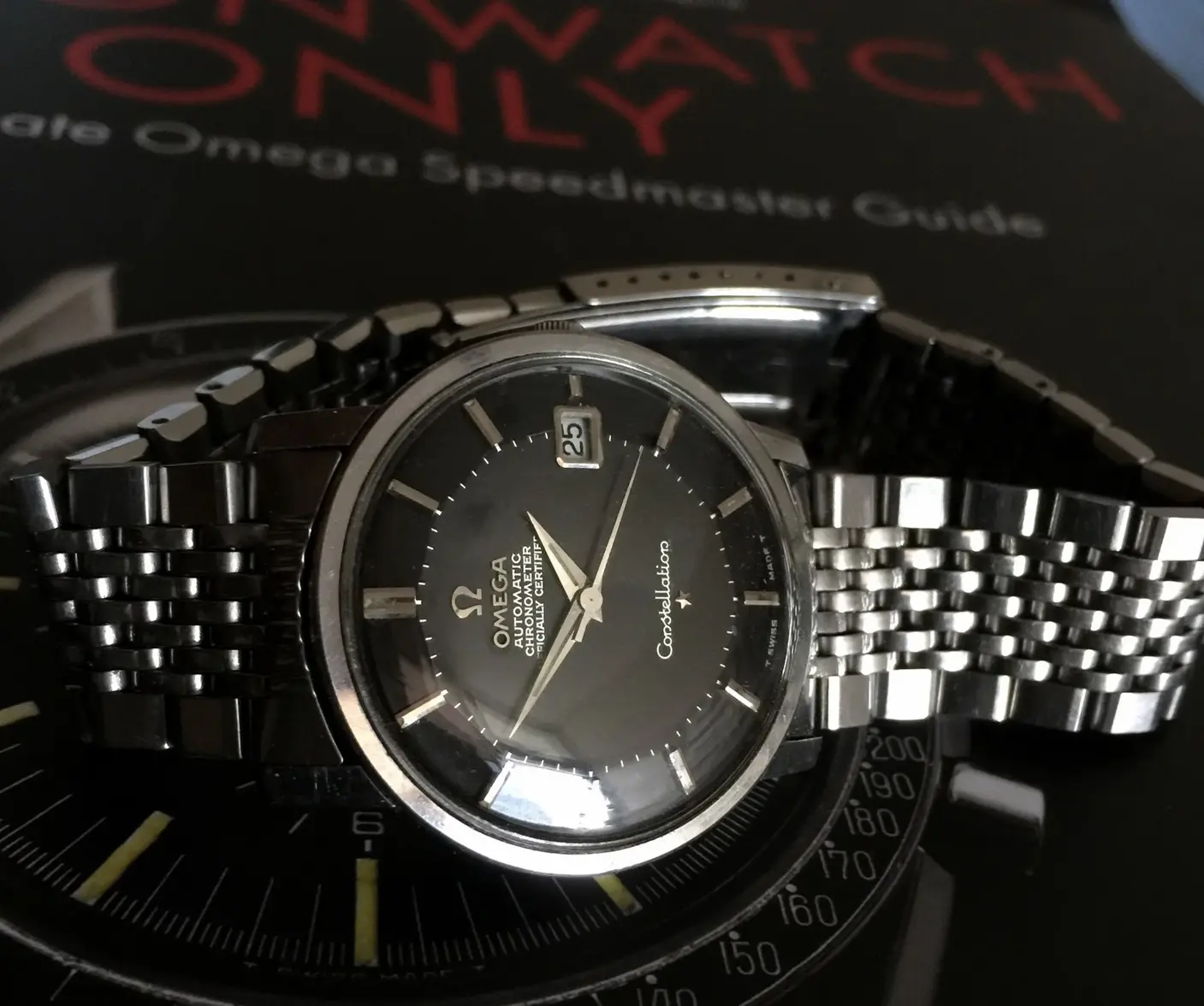
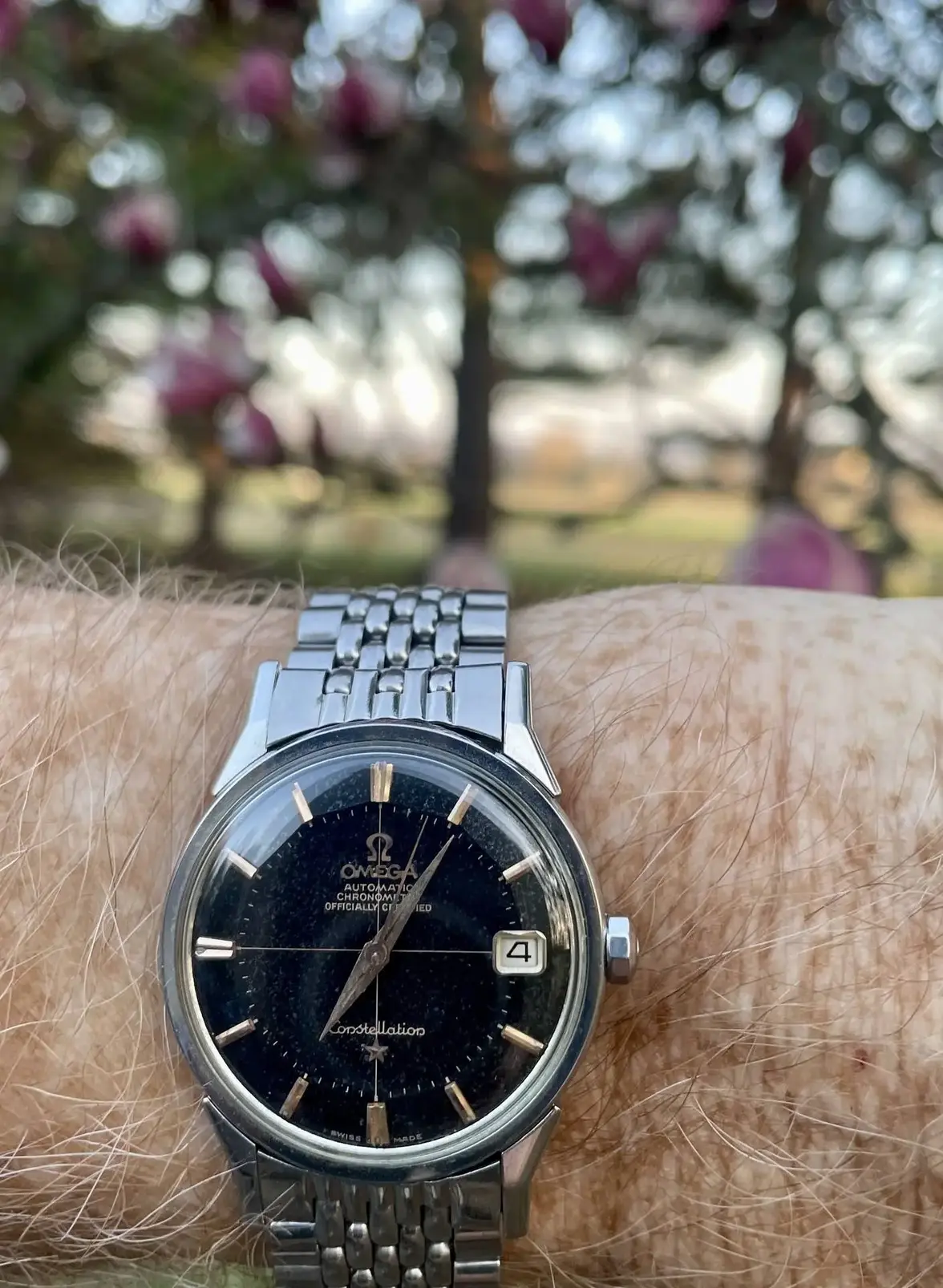
Sometimes one gets lucky with a pristine Constellation from 1966.
Ref. 168.010 Cal.564

 
Posts
167
Likes
1,524
Sometimes one gets lucky with a pristine Constellation from 1966.
Ref. 168.010 Cal.564

Super!
 
Posts
46
Likes
66
I don't think people are saying that every black dialled Omega is a redial. What people are saying is that it's wise to take extra caution when purchasing a black dialled Omega, and in the absence of quality photos etc, assume it is a redial.

You then bid accordingly to the lowered expectations, and what you receive will either meet or exceed them.
 
Posts
2,114
Likes
2,324
I don't think people are saying that every black dialled Omega is a redial. What people are saying is that it's wise to take extra caution when purchasing a black dialled Omega, and in the absence of quality photos etc, assume it is a redial.

You then bid accordingly to the lowered expectations, and what you receive will either meet or exceed them.
Right. A big part of it is how much more difficult it is to tell (AND photograph!), AND how many redials there are vs untouched ones. I personally find black redials MUCH harder to tell.

The advice is "black dial == redial", because unless you have the knowledge to know better (which takes a pretty high level of knowledge), you'll likely end up making a bad decision.

Its the same as why we send newbies the "teach them to fish" on normal watches, except the black dial is that thread on super hard mode.
 
Posts
167
Likes
1,524
You can see the changeover to tritium marked dials starting ~1962 as Sog said.

Rough observations:
Coathanger "S" dials seem to be non-tritium. "Swiss Made"
Regular "S" dials '63 to '64 > onward that have Tritium lume. "T Swiss Made T" for lume on both dial and hands. Sometimes just one "T" It seems like they dropped the coat hanger "S" about the same time they started using tritium. Black dials seem to follow this.

It seems like tritium was a selling feature and they wanted to mark the dials. The word was out long before 1962 that radium maybe wasn't such a good thing. Maybe tritium was quietly marketed as safer than radium with Ts on the dials?
 
Posts
3,121
Likes
6,817
The Swiss passed a radiation safety law in late 1963 requiring labelling of Tritium dials with T. It was implemented in early 1964. So this was not a marketing decision but rather a regulation. The story of tritium use and dial markings after that gets muddy, and subject of ongoing debate.

Here is a thread for further reading.

Regarding the coat hanger S issue, I was under impression that coat hanger S was indicator of earlier dials (5/5 in my small collection are 1961 or earlier with radium or no lume). But I have been told since then that this is not a hard rule, the Regular fat S dials can be seen on earlier dials as well. So thats a bit muddy as well.

So you are correct calling these "rough observations"
 
Posts
167
Likes
1,524
The Swiss passed a radiation safety law in late 1963 requiring labelling of Tritium dials with T. It was implemented in early 1964. So this was not a marketing decision but rather a regulation.

Regarding the coat hanger S issue, I was under impression that coat hanger S was indicator of earlier dials (5/5 in my small collection are 1961 or earlier with radium or no lume). But I have been told since then that this is not a hard rule, the Regular fat S dials can be seen on earlier dials as well. So thats a bit muddy as well.
Thanks for sharing the safety law info.

I think Singer Dial took over most tritium dial manufacturing ~1962. Maybe they made a lot of dials for Omega prior to 1962, but I don't know. I have a coat hanger S Seamaster 30 135.003 with a plain non lume sunburst dial with a 1962 serial # cal. 286. You can't nail anything down 100% particularly with 1962 and '63 watches. Much of it would depend on how many dials they had waiting in line to be assembled into watches and how long it took, I would think.

It seems like the dial in my black Seamaster 30 would fit a 1964 dated movement. Fat S.
"T Swiss Made T" dial markings. Almost certainly made by Singer.
 
Posts
167
Likes
1,524
My other black dial. A waffle. 2667-4SC. (unnamed early Seamaster)? 139xxxxxx serial # cal. 420. 1953-ish. I'm not sure what the texturing even is on these. It seems like the fine waffle detail is stamped onto the brass dial, then painted, then printed. Did Singer make these textured dials? Omega?

I've always thought that most everything about the dial and hands seems OK on this one. Aged radium plots and what's left of aged lume in the luminous dauphine hands. I've seen radium dots between the 1 and 2 in "12" on these kinds of dials, some with none at all, and some with a single lume dot above "12". I think this particular one had a single radium dot above 12 that is now gone. There's a small radium burn mark on the crystal tension ring right above "12" that makes me think this.

The black dial paint has taken a fade to a grayish green in certain light and angles. Patina and fade are also important considerations in authenticating dials and hands. I think waffle and other textured dials are the most difficult to fraudulently refinish. I think most are not refinished unless it's obviously a botched job. Ignore the over-polished 2 tone case. I'm working on a solution.
 
Posts
167
Likes
1,524
You then bid accordingly to the lowered expectations, and what you receive will either meet or exceed them.
On the other hand, people could be missing out on adding a genuine black dial Omega to their collection by having unrealistically low price expectations on genuine ones because (almost) all they ever read about or hear about are "fake" black dials. Legitimate sellers of black dial Omegas aren't going to let them go for bargain prices. You aren't going to get them for a steal or at discount prices if they're genuine if the seller knows it's genuine.

I agree that new people in the hobby should avoid them without running them by O.F. first. It's a no-brainer that knowledge and deep immersion into the fine details of these more rare dials is needed.
 
Posts
2,114
Likes
2,324
On the other hand, people could be missing out on adding a genuine black dial Omega to their collection by having unrealistically low price expectations on genuine ones because (almost) all they ever read about or hear about are "fake" black dials. Legitimate sellers of black dial Omegas aren't going to let them go for bargain prices. You aren't going to get them for a steal or at discount prices if they're genuine if the seller knows it's genuine.

I agree that new people in the hobby should avoid them without running them by O.F. first. It's a no-brainer that knowledge and deep immersion into the fine details of these more rare dials is needed.
A big part of it is that even OF has a hard time with them (in part due to pictures on sales listings rarely being good, also in part due to the rarity and number of redials).

A lighter dial has basically everyone with 100 posts can see a redial in all but a few cases(and solve the thread in 5 posts), black dials end up being long discussions. It's smart money IMO to avoid them until you have the expertise and access to judge it in person (or, perhaps, The luck to have a seller with significantly better than average photography skills).

So until you KNOW what you're talking
 
Posts
46
Likes
66
On the other hand, people could be missing out on adding a genuine black dial Omega to their collection by having unrealistically low price expectations on genuine ones because (almost) all they ever read about or hear about are "fake" black dials. Legitimate sellers of black dial Omegas aren't going to let them go for bargain prices. You aren't going to get them for a steal or at discount prices if they're genuine if the seller knows it's genuine.

I agree that new people in the hobby should avoid them without running them by O.F. first. It's a no-brainer that knowledge and deep immersion into the fine details of these more rare dials is needed.

You're right, people could be missing out on genuine black dialled Omegas. But we aren't talking about a seller knowing the authenticity (which often they can be mistaken on anyway), we're talking about bidding on low-quality listings where it's too difficult to make a determination.

Assuming it's a redial means you play it safe. If a seller is unwilling to provide better quality photos, that itself is usually not a good sign. Admittedly I've bid on listings, where in the interest of time I've gambled by not waiting for better quality pictures, but I feel much more comfortable doing this with other watches as opposed to black dialled ones, where experience tells me are much more likely to have redials. To each their own I guess.
 
Posts
167
Likes
1,524
. It's smart money IMO to avoid them until you have the expertise and access to judge it in person (or, perhaps, The luck to have a seller with significantly better than average photography skills).

So until you KNOW what you're talking
Good points.
If there was ever a time to increase knowledge and reduce insulting low-ball offers, this is the time. Omega Enthusiast LTD has a mint 1956 Pie Pan listed for over $7000 bucks and this guy eventually sells everything he lists. Cleanest example I've ever seen. A watch that hasn't been made in 70 years. Serviced professionally. The first responses in a vintage forum would be "Bah!! Too much money..."!!! even though there's hardly another example in the world this nice.

Some vintage forums would have you believe that you're overpaying for anything that's priced over $400 bucks. This belief is going to let most if not everything that's vintage in collectable condition and authentic slip away from beginning collectors unless they're willing to drastically increase their authentication skills.