Seamaster 300M Timegrapher Results: How to Read Them

Posts
19
Likes
6
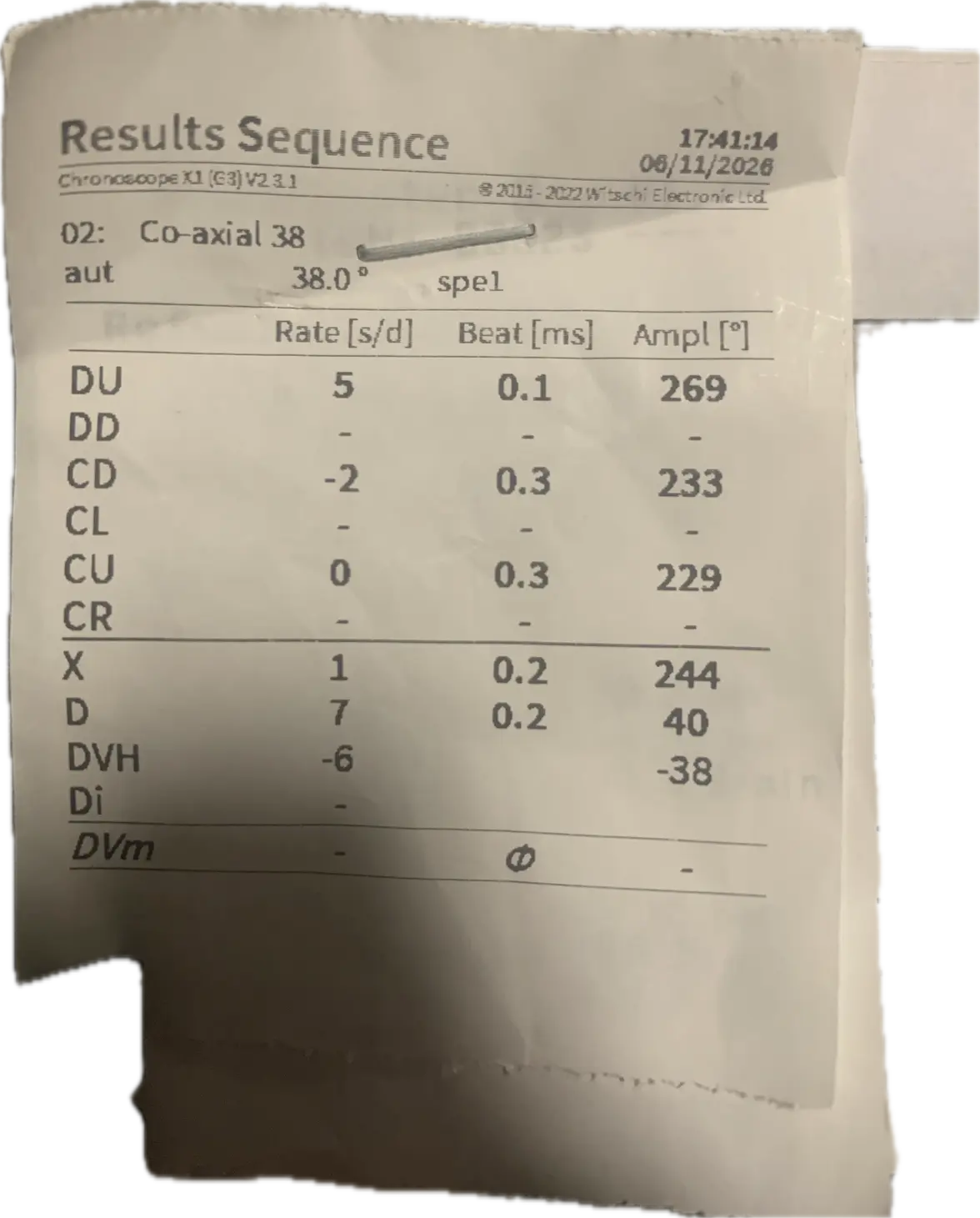
Watch is running fine but these test results are foreign to me. PLEASE help educate me. I'll dive deeper into the web sometime soon. Late model 300M. THANKS... JoeD

 
Posts
30,017
Likes
77,535
These are an incomplete set of results. Should be measured over at least 5 positions for just a COSC watch, and should be 6 positions for a METAS watch. If this is a late model SM300, then it would be METAS and requires 6 positions tested.

Far left column is the position, next is the rate in seconds, then beat error in ms, then amplitude in degrees.

X is the average of the 3 readings, D is the Delta, or difference between the fastest and slowest position - these are the critical numbers.

Based on just 3 readings, the timekeeping is fine, but this is possibly leaving out half the readings that should be there, so does not fully reflect the performance. Amplitudes are a bit low, but co-axial watches are sometimes like that.
 
Posts
19
Likes
6
These are an incomplete set of results. Should be measured over at least 5 positions for just a COSC watch, and should be 6 positions for a METAS watch. If this is a late model SM300, then it would be METAS and requires 6 positions tested.

Far left column is the position, next is the rate in seconds, then beat error in ms, then amplitude in degrees.

X is the average of the 3 readings, D is the Delta, or difference between the fastest and slowest position - these are the critical numbers.

Based on just 3 readings, the timekeeping is fine, but this is possibly leaving out half the readings that should be there, so does not fully reflect the performance. Amplitudes are a bit low, but co-axial watches are sometimes like that.
Thanks