Rust/corrosion on 3yo SMP Diver 300 bracelet

Posts
18
Likes
1
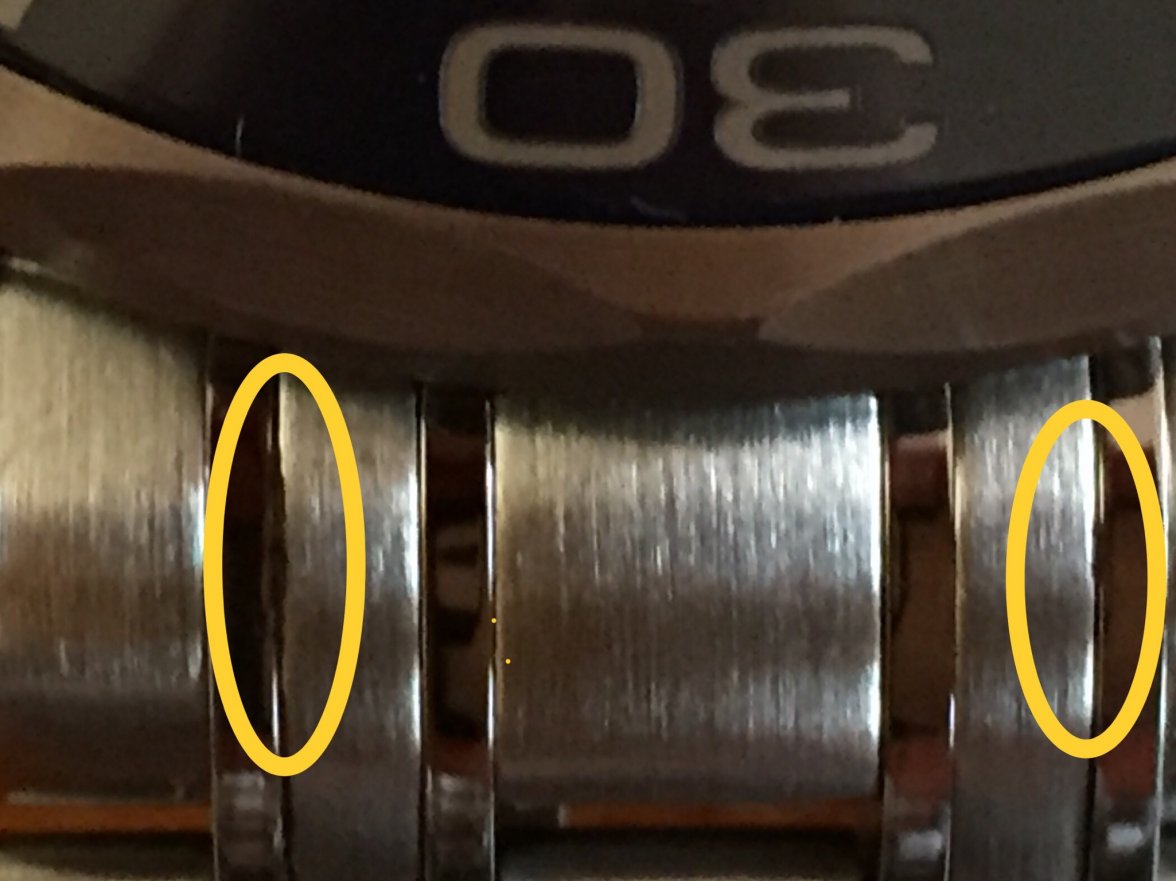
G’day all. I just noticed a sizeable rust-coloured mark on the bracelet link of my SMP (purchased new in 2017). Given that it’s stainless steel, I figured it was just a buildup of some grime...that is until I gave it a good wash and had another look. I was able to remove the rust stain which had extended outward from the point of corrosion on the polished link to the brushed surface adjacent to it, but a closer examination revealed that the leading edge of the polished link has corroded (no longer a smooth leading edge) and a rust-coloured, irregular surface remains. Interestingly (to me), I noted that the other three links on both sides of the watch case had a small degree of rust in the same location. My question is, ‘Is this a common thing with the SMP Diver 300?’
I possess a 40 yo sea master and a handful of other pieces that are rust free, so it is mildly irritating to find this on a quality time piece. The watch is my ‘daily wear’ and apart from the usual perspiration a watch is exposed to, it has not been exposed to anything else chemical or otherwise. The attached photo is of the watch after I cleaned it.
Edited:
 
Posts
597
Likes
3,868
Is this is a perhaps a common occurrence for the SMP bracelet? My 8 yrs old SMP 2220.80 has some rust marks too in certain areas of the bracelet. They started to appear within the last couple of years or so. I can scratch them off, but they appear again after a week or so.
 
Posts
2,702
Likes
3,599
Have you regularly worn the watch is salt water? Did you thoroughly rinse it off afterwards? Because regular exposure to salt water will corrode even stainless steel and allow rust to form.

Chlorine is swimming pools will have a similar effect. A lot of people with steel dive watches don’t realize this.
 
Posts
1,076
Likes
1,787
You should always rinse your stainless steel watches after workouts/diving or swimming in chlorine filled pools. Are you sure it’s not just a bit of wrist cheese?
 
Posts
597
Likes
3,868
But I always rinse off my watch after swimming 😕

Its probably the age (and environment) though and tiny specks of rust in areas are bound to appear sooner or later i guess. Mine is just a small spot on the side of one of the links. At first I thought it was a scratch tbh.
 
Posts
173
Likes
184
G’day all. I just noticed a sizeable rust-coloured mark on the bracelet link of my SMP (purchased new in 2017). Given that it’s stainless steel, I figured it was just a buildup of some grime...that is until I gave it a good wash and had another look. I was able to remove the rust stain which had extended outward from the point of corrosion on the polished link to the brushed surface adjacent to it, but a closer examination revealed that the leading edge of the polished link has corroded (no longer a smooth leading edge) and a rust-coloured, irregular surface remains. Interestingly (to me), I noted that the other three links on both sides of the watch case had a small degree of rust in the same location. My question is, ‘Is this a common thing with the SMP Diver 300?’
I possess a 40 yo sea master and a handful of other pieces that are rust free, so it is mildly irritating to find this on a quality time piece. The watch is my ‘daily wear’ and apart from the usual perspiration a watch is exposed to, it has not been exposed to anything else chemical or otherwise. The attached photo is of the watch after I cleaned it.

It is very very strange!! I've seen at work during few years hundread of Seamaster 300 Pro and i never noticed anything like rust or corrosion... How is that possible?
 
Posts
2,702
Likes
3,599
It is very very strange!! I've seen at work during few years hundread of Seamaster 300 Pro and i never noticed anything like rust or corrosion... How is that possible?

It’s pretty straightforward chemistry. Here’s a nice write up by an engineer that isn’t too technical if you want more info.

http://www.sperkoengineering.com/html/Rust.pdf
 
Posts
597
Likes
3,868
It is very very strange!! I've seen at work during few years hundread of Seamaster 300 Pro and i never noticed anything like rust or corrosion... How is that possible?

Here it is on mine on the side of one link. Its a very small speck. Can be scratched off, but will appear again after a few days... It has been that way for a couple of years now I've noticed. Odd.

49513880076_b45bf8c27f_b.jpg
 
Posts
173
Likes
184
Here it is on mine on the side of one link. Its a very small speck. Can be scratched off, but will appear again after a few days... It has been that way for a couple of years now I've noticed. Odd.

49513880076_b45bf8c27f_b.jpg

It very strange indeed!!! Never seen or heard about corrosion on a 316L steel... As someone said before, it could be related to swimming in salt water or diving in it without washing off the salt afterwards with fresh water but it should have happened a lot of times to corrode the omega stainless steel...
 
Posts
597
Likes
3,868
It very strange indeed!!! Never seen or heard about corrosion on a 316L steel... As someone said before, it could be related to swimming in salt water or diving in it without washing off the salt afterwards with fresh water but it should have happened a lot of times to corrode the omega stainless steel...
But like i said before, i always rinse it with fresh water after a swim. I would imagine it'd be worse than that speck if I didn't.
 
Posts
173
Likes
184
But like i said before, i always rinse it with fresh water after a swim. I would imagine it'd be worse than that speck if I didn't.

Very True... This is another thing to consider!! The whole story is very strange... Could it be related to impurities in the stainless Steel alloy?
 
Posts
597
Likes
3,868
Very True... This is another thing to consider!! The whole story is very strange... Could it be related to impurities in the stainless Steel alloy?
No idea. I did a double check of the watch just now, looking through the links and all the nooks and cranny, all clear. The only rust spot is the one pictured on the side of the link. The rest of the watch is fine.
 
Posts
2,702
Likes
3,599
Since no one seems to want to read the PDF I linked to above describing the chemistry, I’ll attempt to paraphrase.

1. What makes stainless steel rust-resistant is the chromium in the mixture. When exposed to air, it forms a chromium oxide layer that is resistant to rust. If a process reduces the amount of CrO in any area, or covers it, then rust can form.

2. If the chromium is not uniformly distributed in the steel matrix, there can be small areas where there is little chromium, and less capability to form CrO. In this case, it is a deficiency in the alloying process. This may or may not be the case in these examples.

3. Another common cause of rusting is When a piece of high-carbon steel or iron is rubbed against stainless and leaves a scratch and some of the high carbon material behind. That will then rust. Consider leaning over an iron railing on a balcony and the bracelet makes enough contact to leave a scratch. You’ve probably transferred non-stainless material as well, which will rust. In this case, the stainless material underneath will form CrO and not rust, only the surface material will rust.
 
Posts
173
Likes
184
No idea. I did a double check of the watch just now, looking through the links and all the nooks and cranny, all clear. The only rust spot is the one pictured on the side of the link. The rest of the watch is fine.

It is very very strange!!
 
Posts
173
Likes
184
Since no one seems to want to read the PDF I linked to above describing the chemistry, I’ll attempt to paraphrase.

1. What makes stainless steel rust-resistant is the chromium in the mixture. When exposed to air, it forms a chromium oxide layer that is resistant to rust. If a process reduces the amount of CrO in any area, or covers it, then rust can form.

2. If the chromium is not uniformly distributed in the steel matrix, there can be small areas where there is little chromium, and less capability to form CrO. In this case, it is a deficiency in the alloying process. This may or may not be the case in these examples.

3. Another common cause of rusting is When a piece of high-carbon steel or iron is rubbed against stainless and leaves a scratch and some of the high carbon material behind. That will then rust. Consider leaning over an iron railing on a balcony and the bracelet makes enough contact to leave a scratch. You’ve probably transferred non-stainless material as well, which will rust. In this case, the stainless material underneath will form CrO and not rust, only the surface material will rust.

OK, thank you very much for the info!! To be fair I didn't even know that you posted a link with a PDF...

Anyway, so, it seems to be a defect in the stainless steel alloy, right?
 
Posts
7,680
Likes
14,204
OK, thank you very much for the info!! To be fair I didn't even know that you posted a link with a PDF...

Anyway, so, it seems to be a defect in the stainless steel alloy, right?
No, it's not a defect. The article explains how rust on SS is possible.
 
Posts
173
Likes
184
No, it's not a defect. The article explains how rust on SS is possible.

OK... I will have a look at that article then!! Thank you very much!
 
Posts
18
Likes
1
Have you regularly worn the watch is salt water? Did you thoroughly rinse it off afterwards? Because regular exposure to salt water will corrode even stainless steel and allow rust to form.

Chlorine is swimming pools will have a similar effect. A lot of people with steel dive watches don’t realize this.

Have you regularly worn the watch is salt water? Did you thoroughly rinse it off afterwards? Because regular exposure to salt water will corrode even stainless steel and allow rust to form.

Chlorine is swimming pools will have a similar effect. A lot of people with steel dive watches don’t realize this.
Edited:
 
Posts
4,698
Likes
17,795
As an aside what warranty did the watch come with? If it is registered on the Omega site you could email them / your AD.
Always interesting and helpful to be the manufacturers point of view.