Precious Metals

Posts
24,613
Likes
54,656
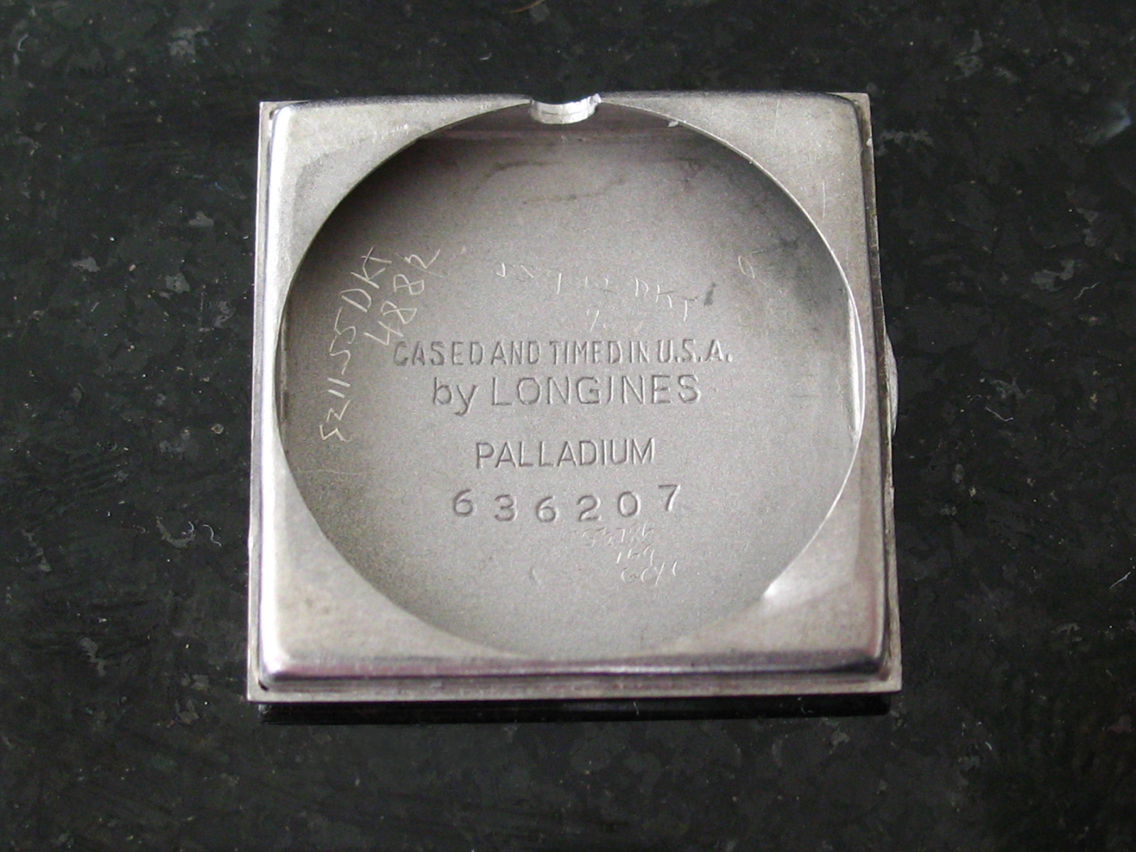
Titanium is commonly used, but not precious (edit: I see that you mentioned Ti). In general, Palladium is considered a precious metal, but I don't know if it has been used for watch cases.
 
Posts
2,326
Likes
7,547
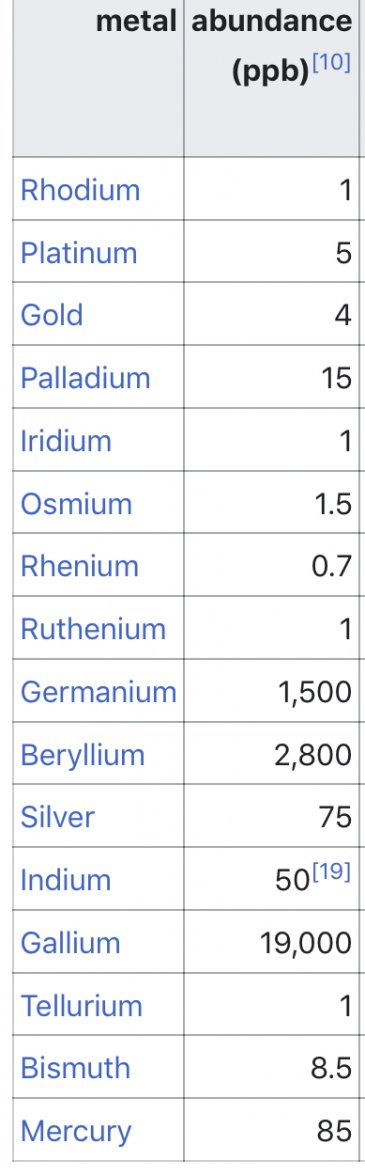
Saw this list. No tantalum. No cheese. So that settles the question i suppose.
 
Posts
8,162
Likes
28,792
re: Mercury

You mean that I have been bio-accumulating a precious metal through my decades of tuna consumption? Glass half-full! 😁
 
Posts
15,644
Likes
46,689

There are 6 metals in the platinum group. The only four used in jewellery are platinum, palladium, iridium, and rhodium. Rhodium is only used for plating, and it is currently the most expensive of the six metals. Rhodium compounds are considered to be poisonous, or toxic. Platinum is usually alloyed with either palladium or iridium, and usually 90/10 proportions when used in jewellery. Gold and palladium are currently more than double the price of platinum, but rhodium is over $6,000 per ounce.
 
Posts
2,326
Likes
7,547
re: Mercury

You mean that I have been bio-accumulating a precious metal through my decades of tuna consumption? Glass half-full! 😁

Are you saying you’re precious? 😀
 
Posts
1,069
Likes
2,166
Yeah, I love my art to emit toxic mercury vapor!

I once got a tour of a mercury-pool telescope on the back lot at NASA JSC. Imagine a roughly 8-foot diameter basin of mercury that slowly spins so that the centrifugal force of the spinning creates a concave mirror surface which forms the primary mirror of a reflecting telescope. We had to wear a heavy-duty respirator and goggles just to walk into the building and couldn't stay too long because the vapor would get in our skin, hair, clothes. Very cool though.
 
Posts
29,917
Likes
77,361
Yeah, I love my art to emit toxic mercury vapor!

That was exactly my thought watching that video. Kept trying to figure out if it was out in the open or behind glass...
 
Posts
572
Likes
754
That was exactly my thought watching that video. Kept trying to figure out if it was out in the open or behind glass...
You were not alone, either of you, in that thought. Next door neighbours smashed a barometer in their garage and the bother they had to go to clean up the mercury (specialist team from the local authority) was quite something.

It reminds me of a chemistry lab accident when I was at school - we were doing something with stearic acid that involved heating it to somewhat more than 100 degrees (I don't recall what as I didn't go on to a career in science, sadly). By then, school labs had stopped using mercury thermometers for most stuff, switching to red dyed alcohol thermometers. But they didn't go high enough for this. Teacher comes over to my fume cupboard. "That's not going very quicky," he says, and takes hold of what he assumes is the glass stirring rod and whisks the mixture vigorously. It was, in fact, the thermometer. Mercury everywhere. Clouds of brown smoke (no idea what that was, sorry). Slams fume cupboard door shut. "Everybody out. NOW!" It was a week before the lab was in use again. Come to think of it, maybe I should have posted this on the facepalm thread.
 
Posts
29,917
Likes
77,361
You were not alone, either of you, in that thought. Next door neighbours smashed a barometer in their garage and the bother they had to go to clean up the mercury (specialist team from the local authority) was quite something.

It reminds me of a chemistry lab accident when I was at school - we were doing something with stearic acid that involved heating it to somewhat more than 100 degrees (I don't recall what as I didn't go on to a career in science, sadly). By then, school labs had stopped using mercury thermometers for most stuff, switching to red dyed alcohol thermometers. But they didn't go high enough for this. Teacher comes over to my fume cupboard. "That's not going very quicky," he says, and takes hold of what he assumes is the glass stirring rod and whisks the mixture vigorously. It was, in fact, the thermometer. Mercury everywhere. Clouds of brown smoke (no idea what that was, sorry). Slams fume cupboard door shut. "Everybody out. NOW!" It was a week before the lab was in use again. Come to think of it, maybe I should have posted this on the facepalm thread.

Well when I was a kid I used to collect mercury from broken thermometers and keep in a little jar, but of course had no idea how toxic it was then.

Interesting you mention heating stearic acid. Some older watch movement cleaning machines had a chamber of heated stearic acid that you would dip the parts into - just the vapour coming off that chamber if I understand correctly. This formed a coating on the parts that kept oils from creeping away from where they were placed, so an early for of the surface treatments we use now called epilame (Fix-O-Drop, Episurf-Neo, etc.).
 
Posts
572
Likes
754
Well when I was a kid I used to collect mercury from broken thermometers and keep in a little jar, but of course had no idea how toxic it was then.

Interesting you mention heating stearic acid. Some older watch movement cleaning machines had a chamber of heated stearic acid that you would dip the parts into - just the vapour coming off that chamber if I understand correctly. This formed a coating on the parts that kept oils from creeping away from where they were placed, so an early for of the surface treatments we use now called epilame (Fix-O-Drop, Episurf-Neo, etc.).

That's really interesting. I sometimes think if I was ever going to do another degree for interest, I'd quite like to return to chemistry, although the maths required puts me off. That plus the lab time would make it difficult for distance learning to be fitted around work.