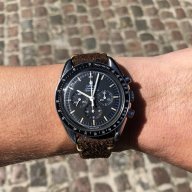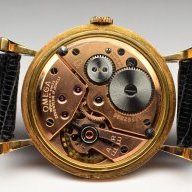
Opening case back with ball...

Posts
323
Likes
1,133
Dear OF,

I would like to get extracts of archives for my 2 Seamasters just as little keepsakes really!

I know I need to open the case backs to obtain the serial number, feeling a little apprehensive about doing this (just because of how precious they are to me). I have opened a fair few casebacks of other watches to change batteries etc. So I do consider myself as competent so I am just looking for some advise/reassurances as to whether opening the case backs of my Seamasters that are threaded will be the same method as opening other casebacks or if it is a no no and straight to a watch maker?

My model numbers are 165.002 & CK2976

Many thanks in advance,
Dave

 
Posts
1,024
Likes
3,998
I am going to be zero help, I’m afraid. I must have tried over 2000 times without success. I just cannot fathom how it works, despite knowing the physics behind it. Now my ball sits in a cupboard and I went back to a standard adjustable case back tool. Here endeth my useless post.
 
Posts
1,542
Likes
3,354
If you live near to a competent watchmaker why not just take them in? They may charge you a minimal amount to open the case back, let you take pictures and then put the backs on again, but surely that's got to be worth minimising any risk of scratching or damage?
 
Posts
52
Likes
63
Screw back cases are lot easier to open then snapbacks. I ge that snapbacks arent as easy to open and if you are not confortable with those to use a watchmaker. As for your ''threaded'' cases those are fairly easy to open with a ball or simple tool unless they are shut tight. At the end of the day go with your gut. There is nothing wrong with bringing them to a watchmaker.
 
Posts
9,596
Likes
27,705
If you have a socket wrench and super glue, just glue on the top on the caseback, wait for it to harden and then click on the wrench and slowly turn it to open. After it has come off, let the caseback and socket sit in acetone for a few minutes and the glue will come off without issues.

Remember to have a new gasket ready to replace the one in the watch at the moment.
 
Posts
323
Likes
1,133
Thanks for the input all, I think I might just head to a watch maker to be safe 😀
 
Posts
284
Likes
2,032
A rubber ball works really well, I've even used my kid's Pepper Pig one before. Just apply pressure when you do it.
 
Posts
323
Likes
1,133
A rubber ball works really well, I've even used my kid's Pepper Pig one before. Just apply pressure when you do it.
Thank you for sharing this @Tristanp I have used a rubber ball on other watches to change batteries etc. Think I am just worrying due to how much I love my Seamaster's 🤔
 
Posts
1,819
Likes
5,923
I have a rubber ball and I'd say it has about an 80% success rate. There are a few that won't budge regardless of how hard you try.
 
Posts
24,242
Likes
53,989
I'm very jealous of people who are successful with rubber balls, but they don't work well for me. I have watched many videos, inflate the ball appropriately, etc. Still no luck.
 
Posts
4,338
Likes
10,272
My balls work about half the time.
I manually blow them then squeeze to a small surface area and press firmly to the back and twist.
Side note: my balls get dirty. Use rubbing alcohol and a clean rag. This creates a very tacky surface....to my balls.
 
Posts
1,819
Likes
5,923
The success rate will depend entirely upon the watches you are opening. I buy quite a few old Landeron, Valjoux and other vintage watches that are often neglected for decades. My success rate with a rubber ball (maybe 2 in 10) is bound to be worse than someone opening regularly serviced watches. Maybe Archer will chime in here, but I'd go as far as to say if a Submariner has been closed properly, (example) a rubber ball should not be enough to open it. Anyone?
Not sure why a properly closed Sub would not work with a rubber ball? I find chronographs or any watch with unprotected crowns the most difficult, as I don't want to put any undue pressure on the pushers with my hand.
 
Posts
200
Likes
291
I am going to be zero help, I’m afraid. I must have tried over 2000 times without success. I just cannot fathom how it works, despite knowing the physics behind it. Now my ball sits in a cupboard and I went back to a standard adjustable case back tool. Here endeth my useless post.
Neither can I, even though theoretically I know my ball's friction coefficient should be sufficient. 🤬
 
Posts
29,669
Likes
76,827
I don't use the ball for opening cases initially - I have proper case opening tools for that. I do use mine at the bench, mostly to snug a case back down after service so the watch can go through timing checks, and opening it again at the bench to maybe make an adjustment. Once the timing tests are done and I'm not making any more adjustments, the case gets a final tighten using the proper tools before pressure testing and shipment back to the customer.

For those who might not find the ball effective, there are a couple of things to keep in mind - the surfaces of the ball and the case need to be clean, or it will just slip. So wiping both down with something like a cloth dampened with a bit of alcohol can improve the friction.

You also need the proper level of inflation - too little air can cause the ball to flatten out to the point it will contact surfaces of the watch other than the case back, such as the backs of the lugs, which makes turning more difficult. If you keep it well inflated it tend to do a better job at just contacting the case back, even when you apply a good amount of pressure.
 
Posts
4,593
Likes
10,810
If you have a socket wrench and super glue, just glue on the top on the caseback, wait for it to harden and then click on the wrench and slowly turn it to open. After it has come off, let the caseback and socket sit in acetone for a few minutes and the glue will come off without issues.

Remember to have a new gasket ready to replace the one in the watch at the moment.

as I have pointed out many times on rolex forums, my wife's godfather who was rolex trained in manila told us this is the method employed by rolex themselves when coming across super stubborn case backs, especially solid gold versions. They use adhesive to attach the caseback opener.
 
Posts
29,669
Likes
76,827
as I have pointed out many times on rolex forums, my wife's godfather who was rolex trained in manila told us this is the method employed by rolex themselves when coming across super stubborn case backs, especially solid gold versions. They use adhesive to attach the caseback opener.

Not surprising, as the style of case back Rolex employs just begs to be stripped, in particular in precious metals. It's a rather poor design all things considered.
 
Posts
13,697
Likes
53,498
My balls work about half the time.
I manually blow them then squeeze to a small surface area and press firmly to the back and twist.
Side note: my balls get dirty. Use rubbing alcohol and a clean rag. This creates a very tacky surface....to my balls.
😁
 
Posts
323
Likes
1,133
Morning all,

Thought I would update, I got brave and carefully tried out the ball, it worked for one of my seamasters but not the other. so I was pretty pleased with the 50% success rate and got some photo's of the movement I was after!

Thanks for all the comments, advise and amusement as always! 😀
 
Posts
1,835
Likes
3,728
A rubber ball works really well, I've even used my kid's Pepper Pig one before. Just apply pressure when you do it.
Please don't let the kids see the part of the vid where he uses the scissors. Not clever.