Omega Quartz LCD 1616 Circuitry Help

Posts
32
Likes
8
Good evening all,
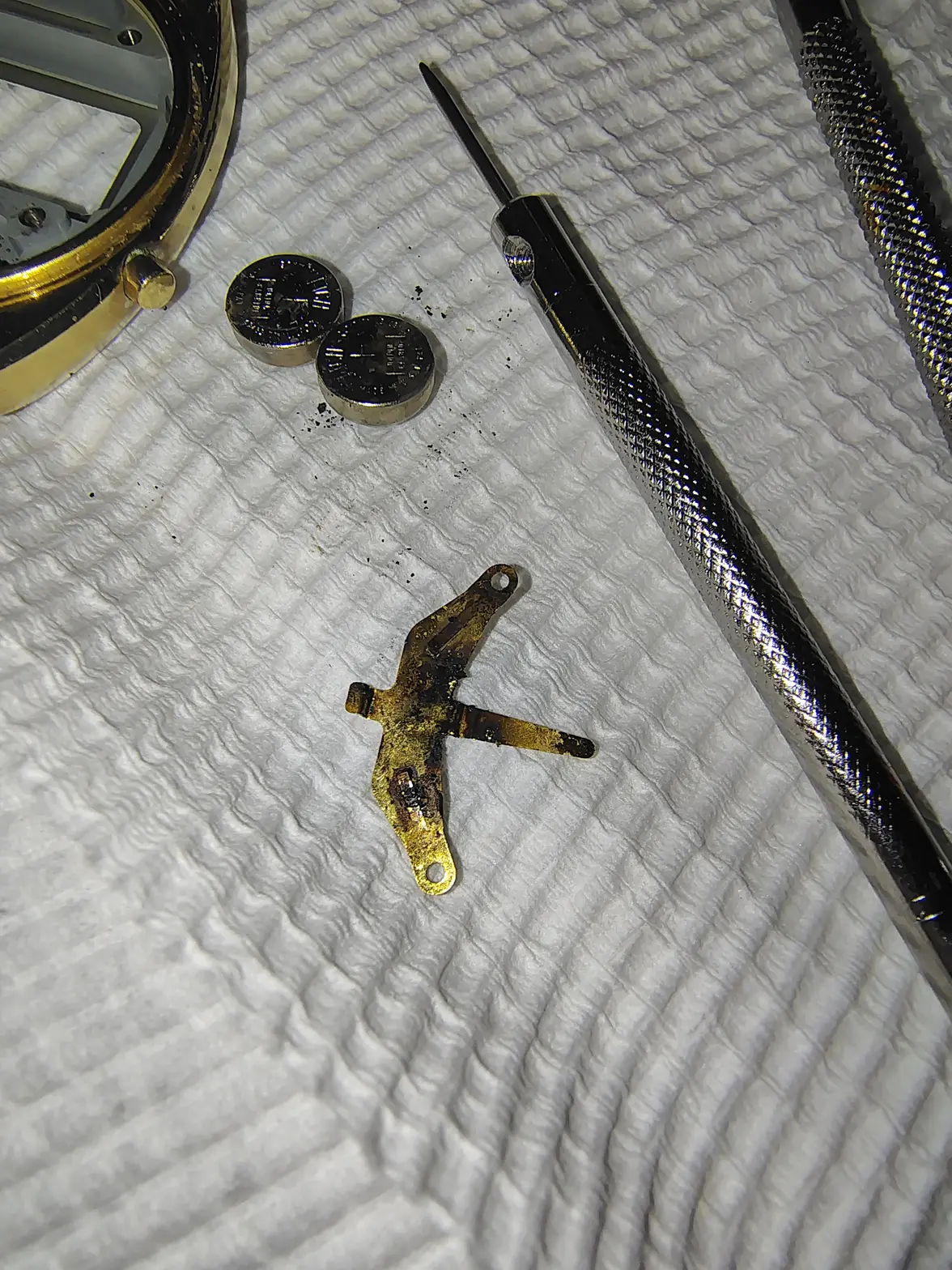
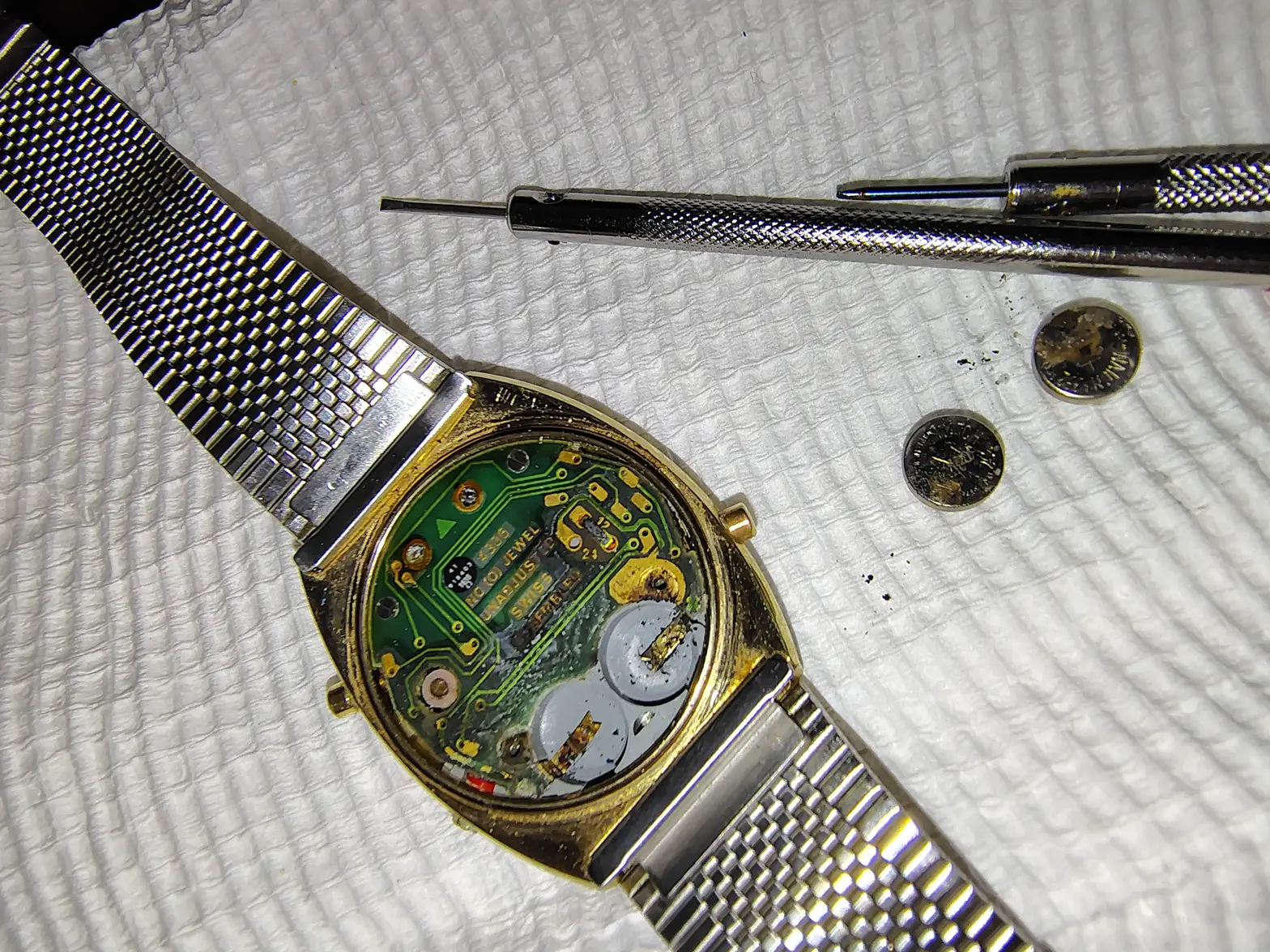
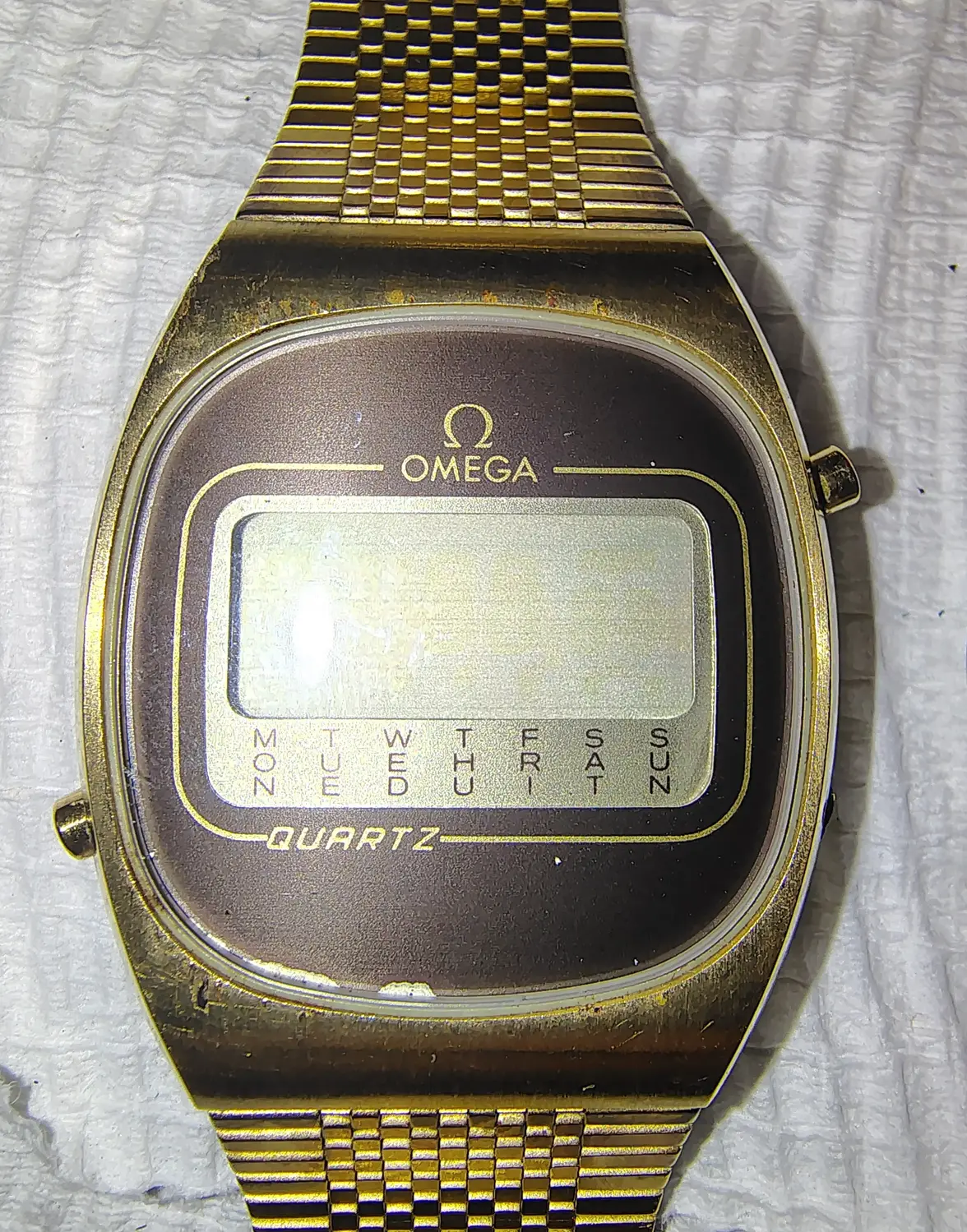
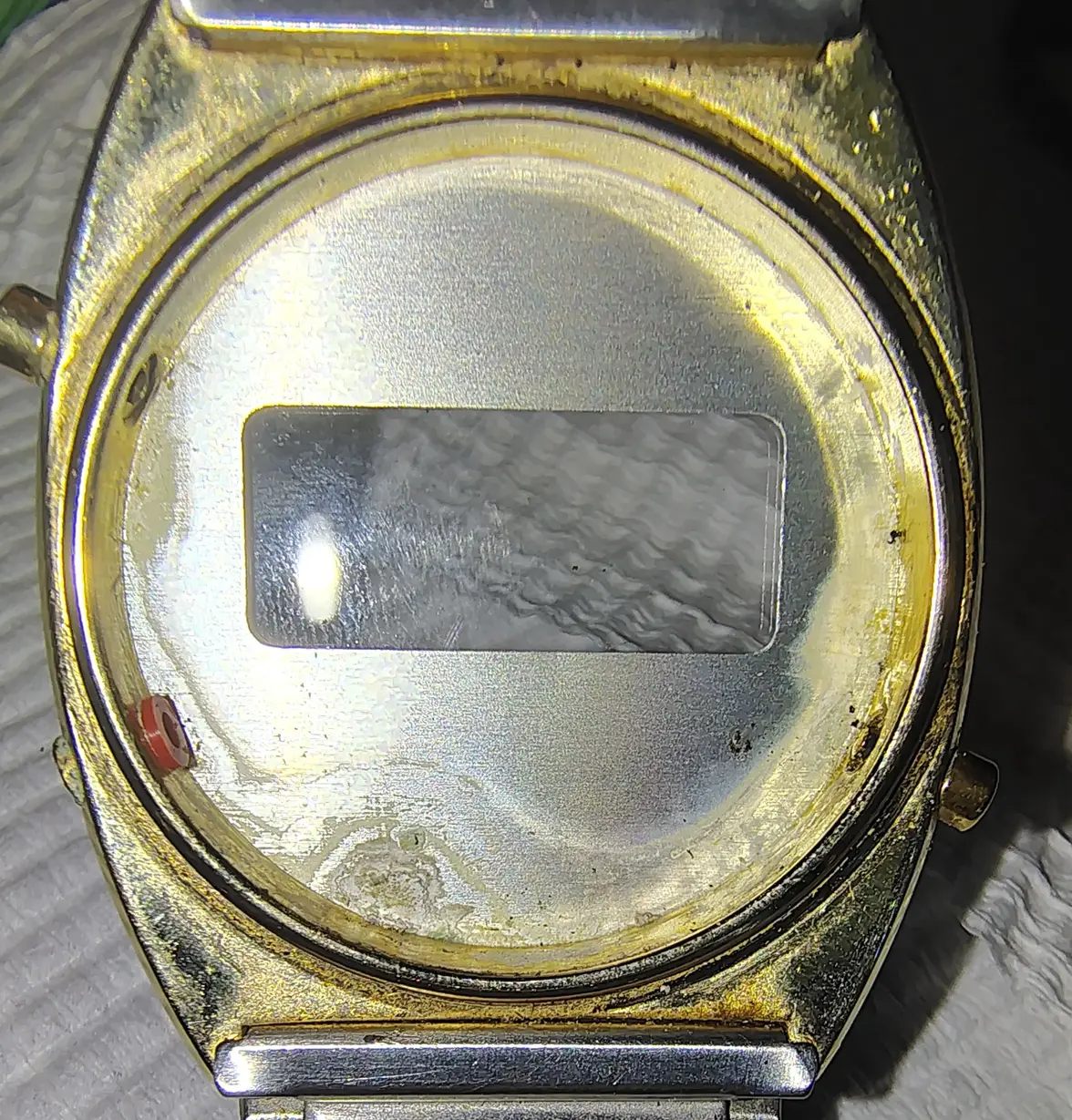
I did my usual rounds of shops today and found a boxed Omega Quartz 1616 priced extremely cheap. My bubble was quickly burst though by the condition of the box. The box and manual have various mould stains and water damage. The watch itself had visible corrosion around the push button and the plating is bubbling around the face. Popped it open at home and the original 392s were still in there - the contents of said batteries though were everywhere. Bracelet and glass though is fantastic!

I've cleaned what I can using isopropyl alcohol and cotton buds. Whacked two new batteries in and... Nothing. Who would've thought? Surprisingly though, the light works very well. But the LCD itself has no signs of life at all.

Any thoughts or ideas? I've got a volt meter and I'm willing to put in some miles, but I've got no idea what I'm looking at, really.
 
Posts
15,530
Likes
46,086
Better pray to Saint Jude Thaddeus, patron saint of hopeless cases. He’s probably your only hope. Let us know if I’m wrong.
 
Posts
32
Likes
8
Better pray to Saint Jude Thaddeus, patron saint of hopeless cases. He’s probably your only hope. Let us know if I’m wrong.
Hopeless cases are my speciality!

I don't know if this is in my favour, but I read the technical manual for the 1632 and saw that each side battery powered different parts. Just tested my 1616 with a single battery in each side, and only the right side yielded results (i.e. the light). I wonder if that means the issues are isolated to the left hand side. There was much more corrosion to the board, there.
 
Posts
2,850
Likes
4,549
I do not see any pix of the LCD side. How much corrosion was there around the chip and the display.

The old chips were fairly sensitive to static discharge. The nematic fluid can also leak over time. The polarization filters fade. This is basically a form or soap. (soap bubbles are liquid crystals.)

Some years ago I bought a bunch of bare glass displays. Most were for a stopwatch. Found a description how the multiplexing worked. As I recall there were several waves which had different phases. Was fairly easy to code an 8 bit AVR chip to make them work. Shortly after a version of the chip came out that had this function built in.

Since there are so many column drivers the chips are often what is called 'chip on die' or COD packages. where the chip is potted directly on the board.

An oscilloscope would be needed to check this to see if the system is at all functional. An old crystal earpiece can also be used to see if there is activity although the frequencies might be too high to hear. A pipe organ controller I am working on uses that for troubleshooting. I sometimes use these displays with the pipe organ stuff. Pipe organs also use shift registers to drive many columns of control lines.

Volt meters are only good for tracing DC power. Sometimes one can detect some RMS voltage from the clock lines if the frequency is high enough.

I also work with old cameras from the 1990s where LCD displays are standard. These usually have flex printed circuit which often fails. Especially where it bonds with the glass. I have experimented with the conductive paint as well as using the fiber laser to etch traces with less than satisfactory results.

When I fixed some Apple watches I learned about something called 'z tape,' which is conductive in the thin direction. I have too many projects, so have not actually tried it yet, although I did get some.

Would love to find a watch similar to this to experiment with. I have been collecting 134x parts which seem to have increased in popularity lately. Just having the Omega logo makes these attractive.
 
Posts
32
Likes
8
I do not see any pix of the LCD side. How much corrosion was there around the chip and the display.

The old chips were fairly sensitive to static discharge. The nematic fluid can also leak over time. The polarization filters fade. This is basically a form or soap. (soap bubbles are liquid crystals.)

Some years ago I bought a bunch of bare glass displays. Most were for a stopwatch. Found a description how the multiplexing worked. As I recall there were several waves which had different phases. Was fairly easy to code an 8 bit AVR chip to make them work. Shortly after a version of the chip came out that had this function built in.

Since there are so many column drivers the chips are often what is called 'chip on die' or COD packages. where the chip is potted directly on the board.

An oscilloscope would be needed to check this to see if the system is at all functional. An old crystal earpiece can also be used to see if there is activity although the frequencies might be too high to hear. A pipe organ controller I am working on uses that for troubleshooting. I sometimes use these displays with the pipe organ stuff. Pipe organs also use shift registers to drive many columns of control lines.

Volt meters are only good for tracing DC power. Sometimes one can detect some RMS voltage from the clock lines if the frequency is high enough.

I also work with old cameras from the 1990s where LCD displays are standard. These usually have flex printed circuit which often fails. Especially where it bonds with the glass. I have experimented with the conductive paint as well as using the fiber laser to etch traces with less than satisfactory results.

When I fixed some Apple watches I learned about something called 'z tape,' which is conductive in the thin direction. I have too many projects, so have not actually tried it yet, although I did get some.

Would love to find a watch similar to this to experiment with. I have been collecting 134x parts which seem to have increased in popularity lately. Just having the Omega logo makes these attractive.
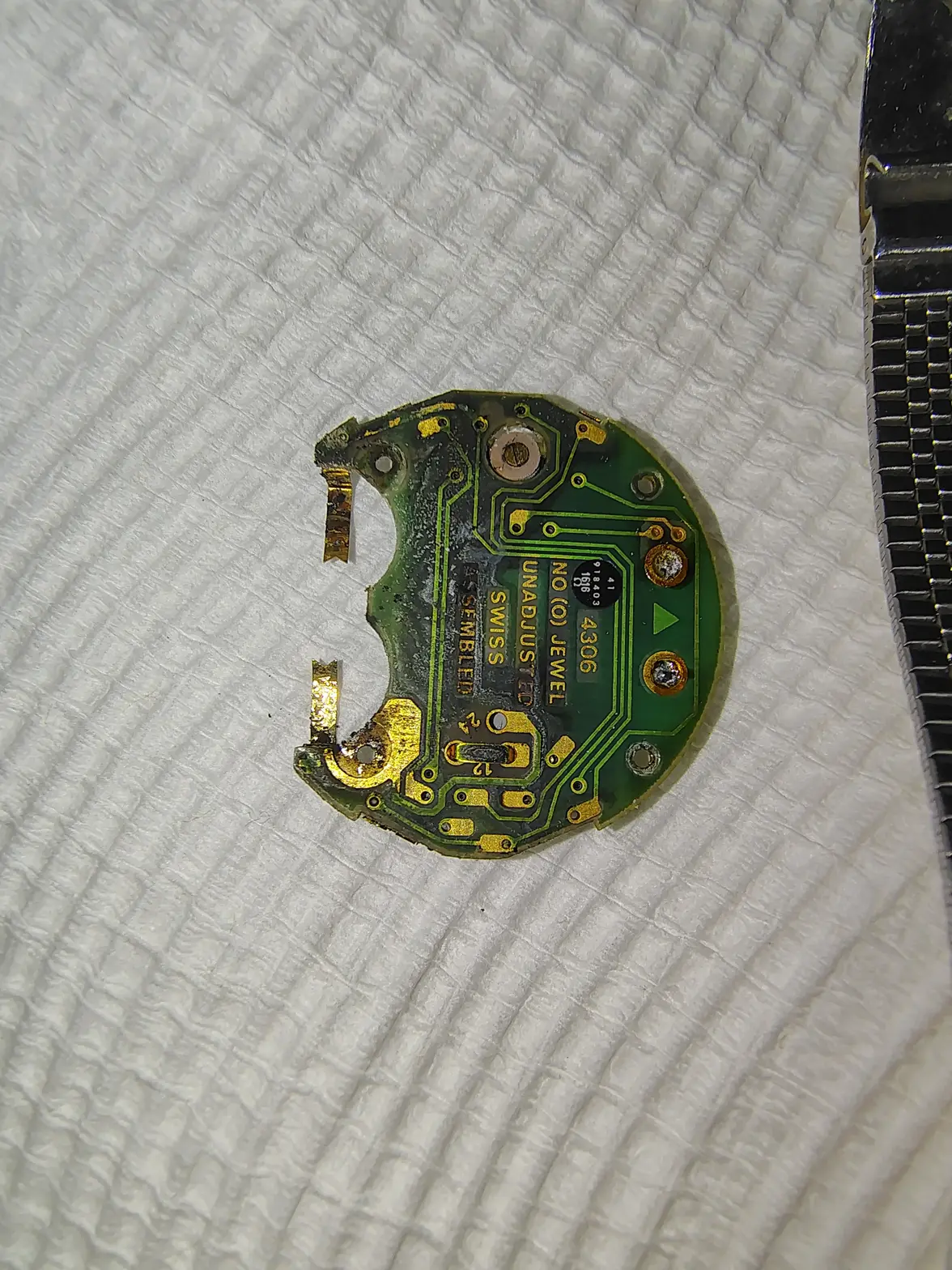
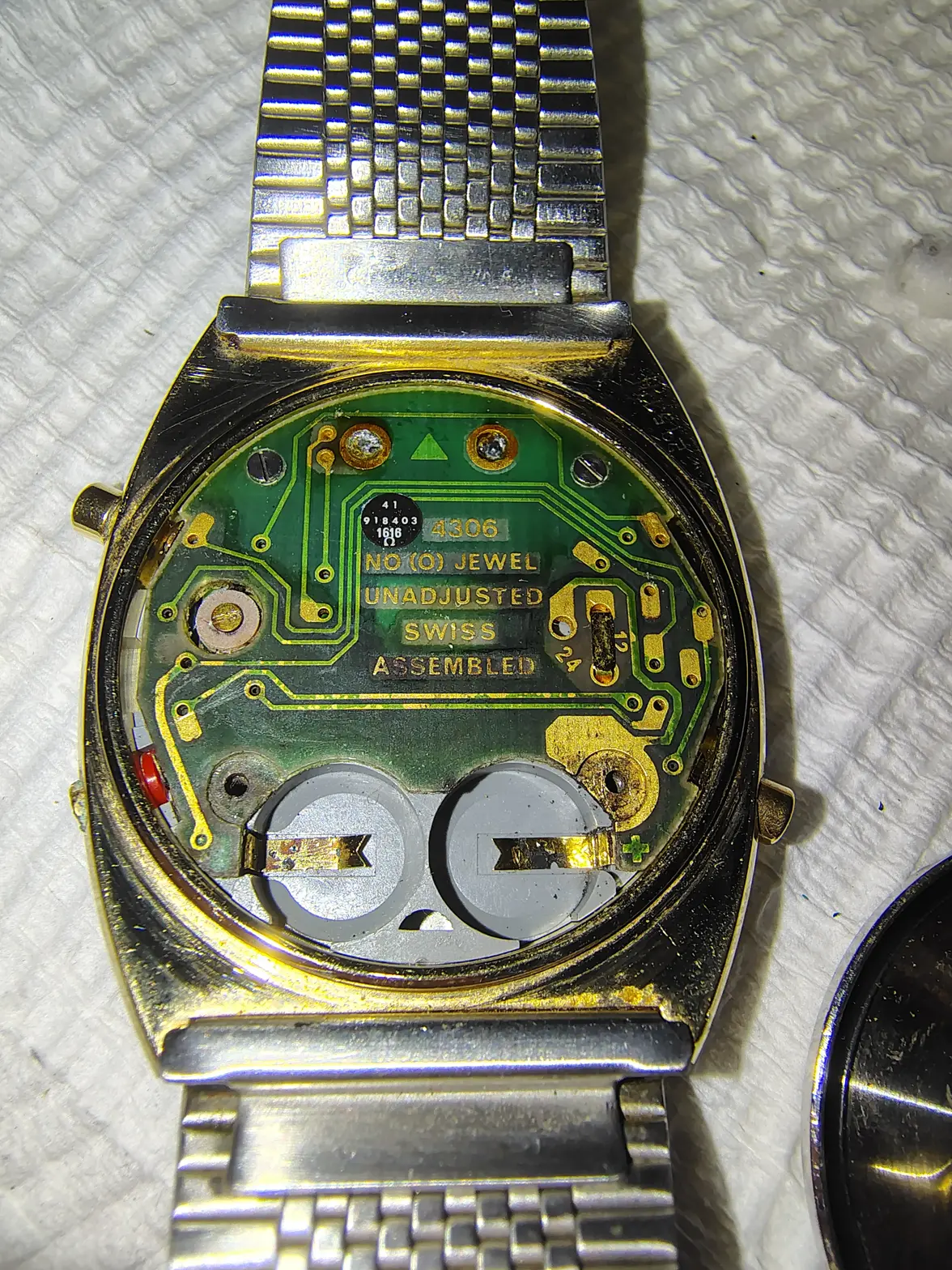
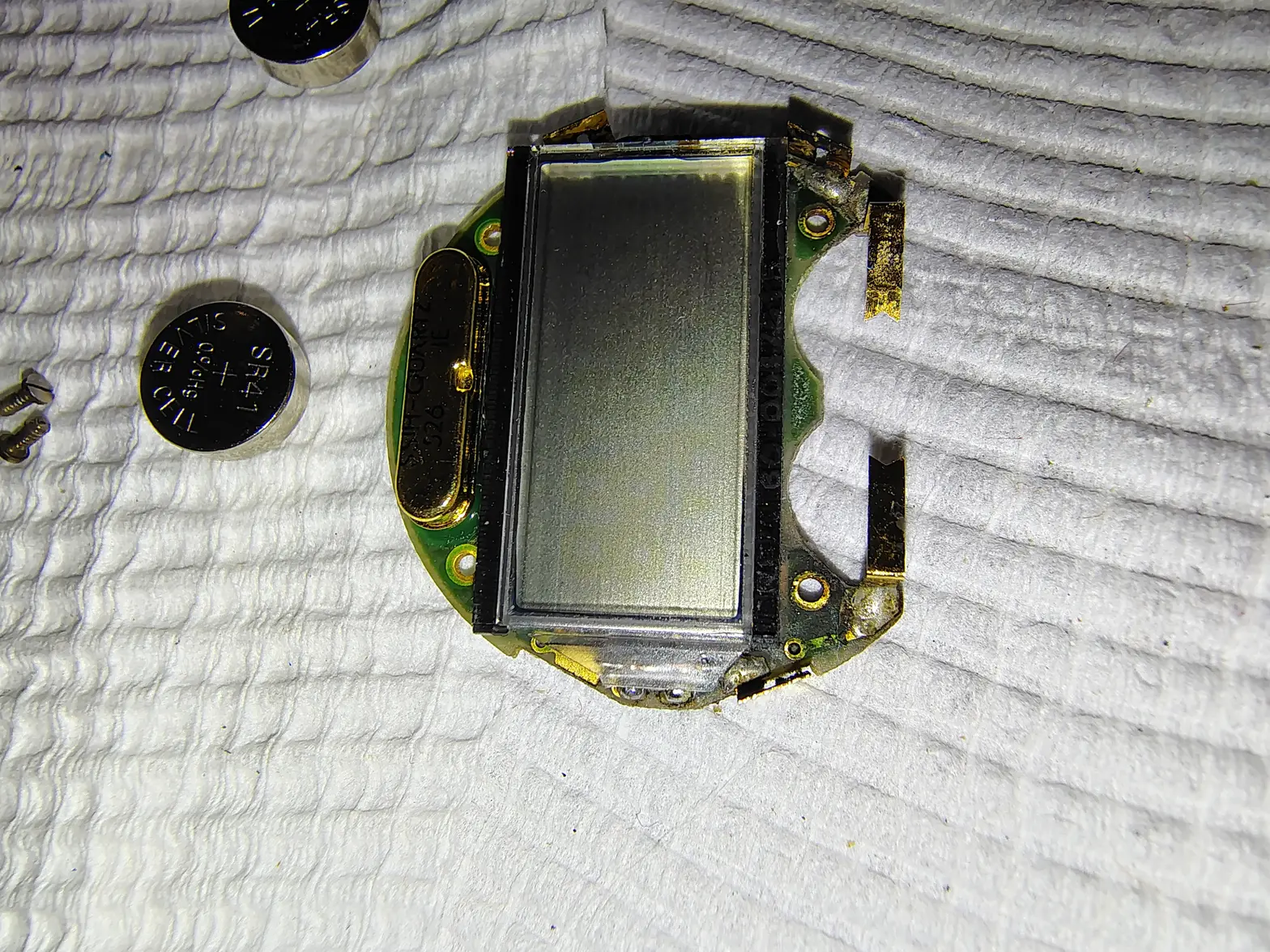
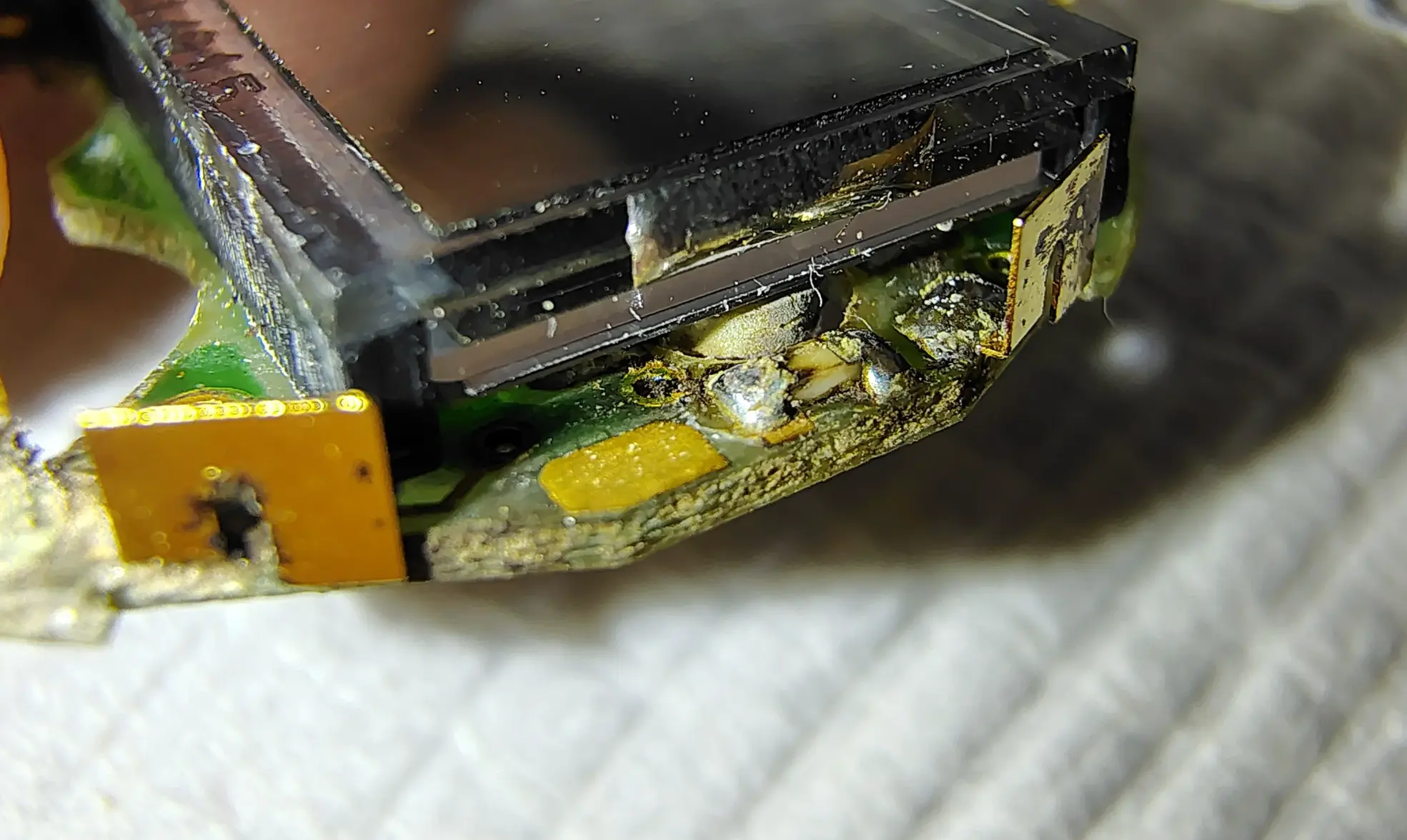
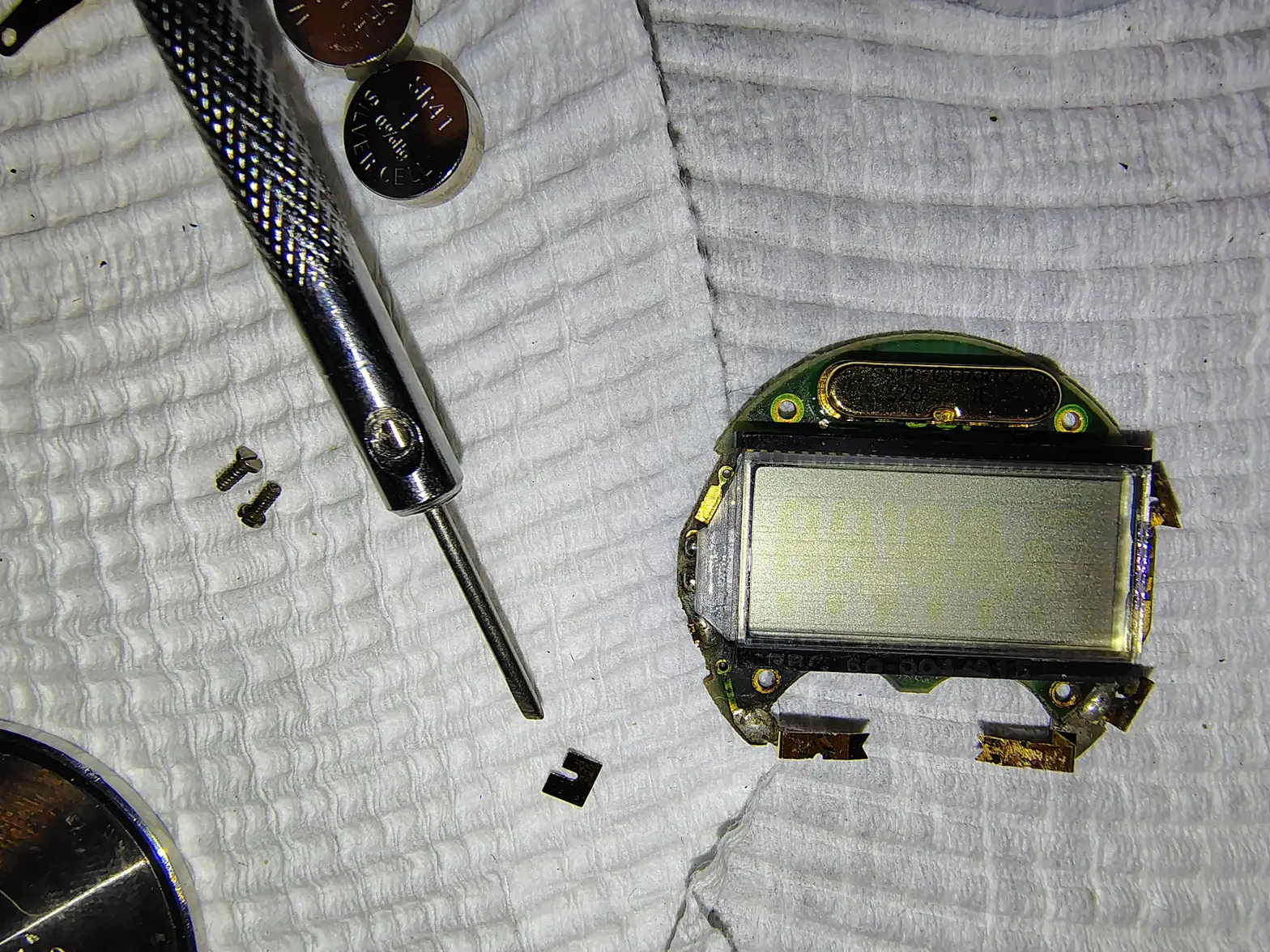
Thanks for the detailed response. You're right, I should've included photos of the other side. Please see below. Initially I thought this side was okay but upon closer inspection, the right side of the board (left underside) looks absolutely fried from battery leakage. I wonder if I can remove the display. I've done that on some Seiko LCDs before.

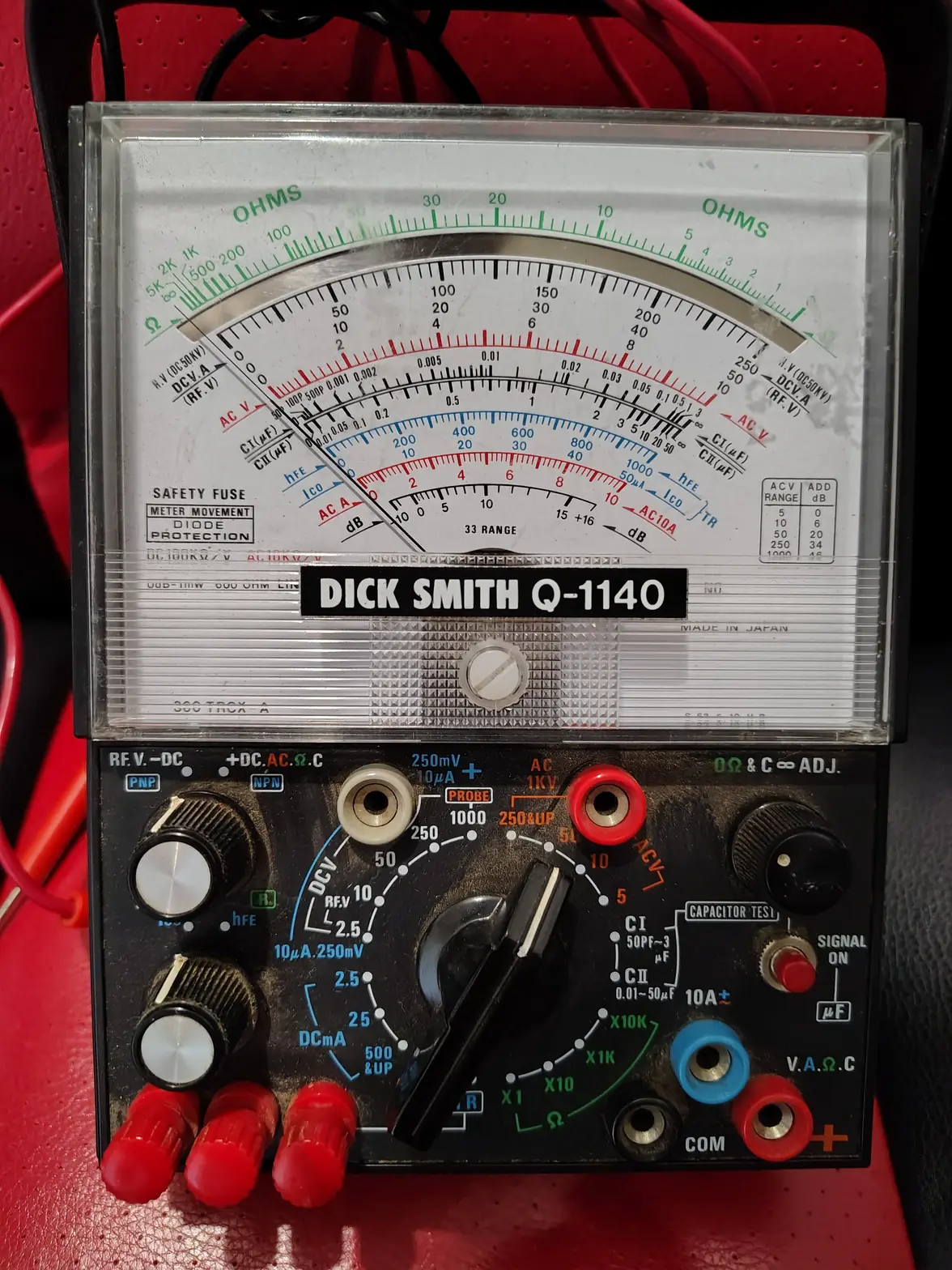
I've also attached a photo of my multimeter if that assists.

 
Posts
32
Likes
8
Alright,
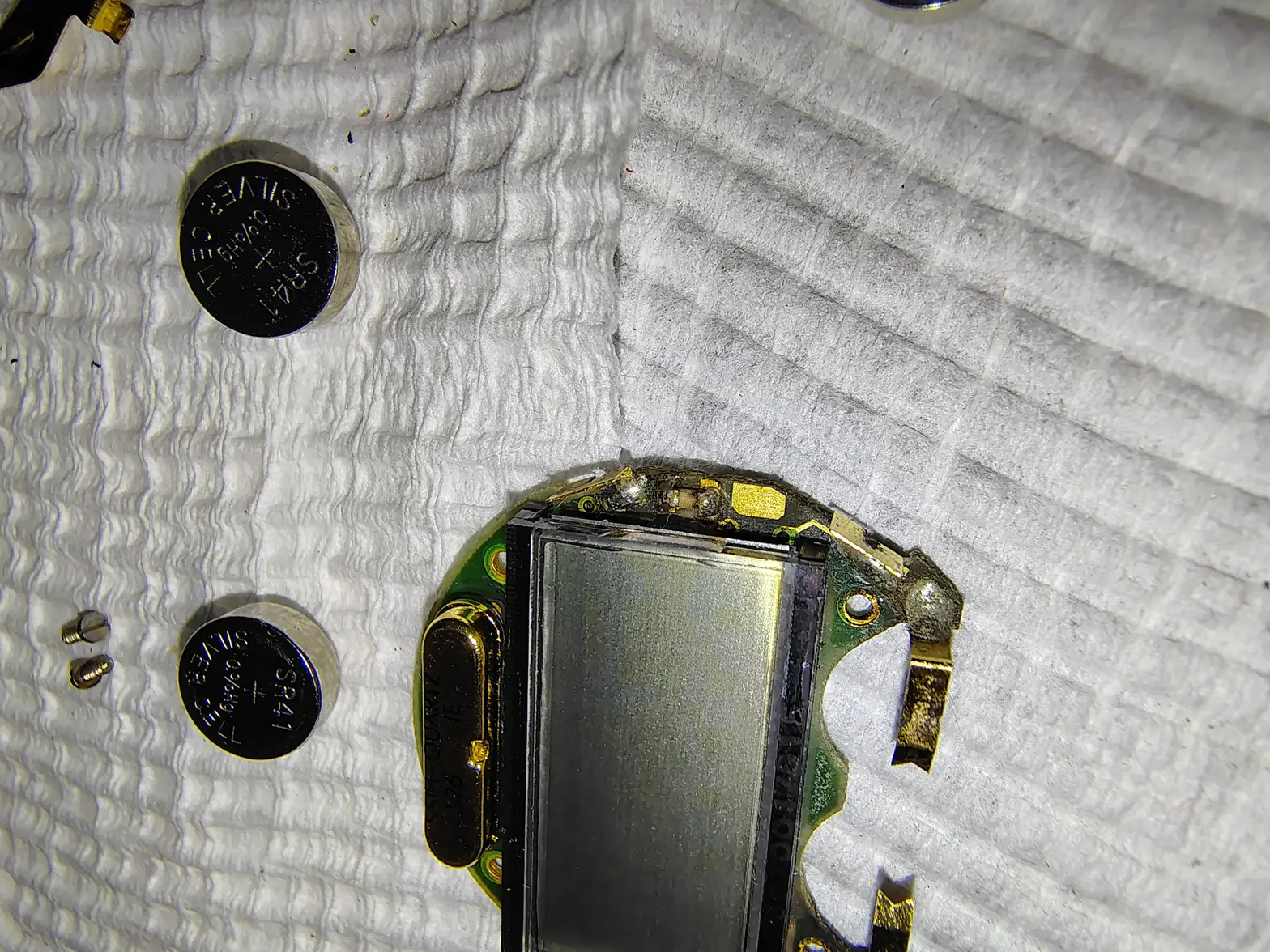
It gets better. One of the button contacts fell off upon barely touching it with a screw driver. I hope I can find a replacement.

 
Posts
2,850
Likes
4,549
You might get some activity with that old analog needle meter. If the quartz is good, then it will twitch the needle. The Quartz is the big oblong thing at the top of the last photograph. There might be some test points.

Good news is this does not use FPC to connect the display. I looked at the data sheet. I think the glass and the electronic modules are separate items.

In a lot of devices, like calculators, there is a rubber strip that is conductive in the Z direction. Sometimes the display is held in place by a hard plastic clip. It almost looks like this display is being held onto it by the corrosion. You might be correct that the display comes off. If this were my watch I would try prising it off with some hand levers. Not a lot of force needed, just enough to separate it from the conductive rubber risers.

One has to be careful of the reflective coating on the bottom. The front polarizer may also be removable. The data sheet shows these with separate part numbers.

I see quite a bit of de laminating of the FPC. So I suspect the electronics here are pretty much toast. Repairing them would require a hot air rework station and some decent soldering skills.

I did do a quick eBay search, not a lot came up in the US. Most of the listings were international. 9600 is always the ref number of the electronics module.

9801 is the display glass, so this does come apart. There are a number of listings for 1615, mostly in Canada. Not a lot can go wrong with the glass.
 
Posts
32
Likes
8
You might get some activity with that old analog needle meter. If the quartz is good, then it will twitch the needle. The Quartz is the big oblong thing at the top of the last photograph. There might be some test points.

Good news is this does not use FPC to connect the display. I looked at the data sheet. I think the glass and the electronic modules are separate items.

In a lot of devices, like calculators, there is a rubber strip that is conductive in the Z direction. Sometimes the display is held in place by a hard plastic clip. It almost looks like this display is being held onto it by the corrosion. You might be correct that the display comes off. If this were my watch I would try prising it off with some hand levers. Not a lot of force needed, just enough to separate it from the conductive rubber risers.

One has to be careful of the reflective coating on the bottom. The front polarizer may also be removable. The data sheet shows these with separate part numbers.

I see quite a bit of de laminating of the FPC. So I suspect the electronics here are pretty much toast. Repairing them would require a hot air rework station and some decent soldering skills.

I did do a quick eBay search, not a lot came up in the US. Most of the listings were international. 9600 is always the ref number of the electronics module.

9801 is the display glass, so this does come apart. There are a number of listings for 1615, mostly in Canada. Not a lot can go wrong with the glass.
Thank you again. You're extremely helpful and informative.

I was looking at the technical manual for the 1615 as it looks quite similar. The diffuser pulls out of the display. Are you saying the two black rubber strips would lift off with pressure?

Given the damage to the board and the now broken button contact, I'm considering buying one of the modules listed. But $400aud is a steep price to pay - it's a bit of a gamble. The quartz module looks quite different on the listing compared to mine too, despite it apparently being NOS.
 
Posts
32
Likes
8
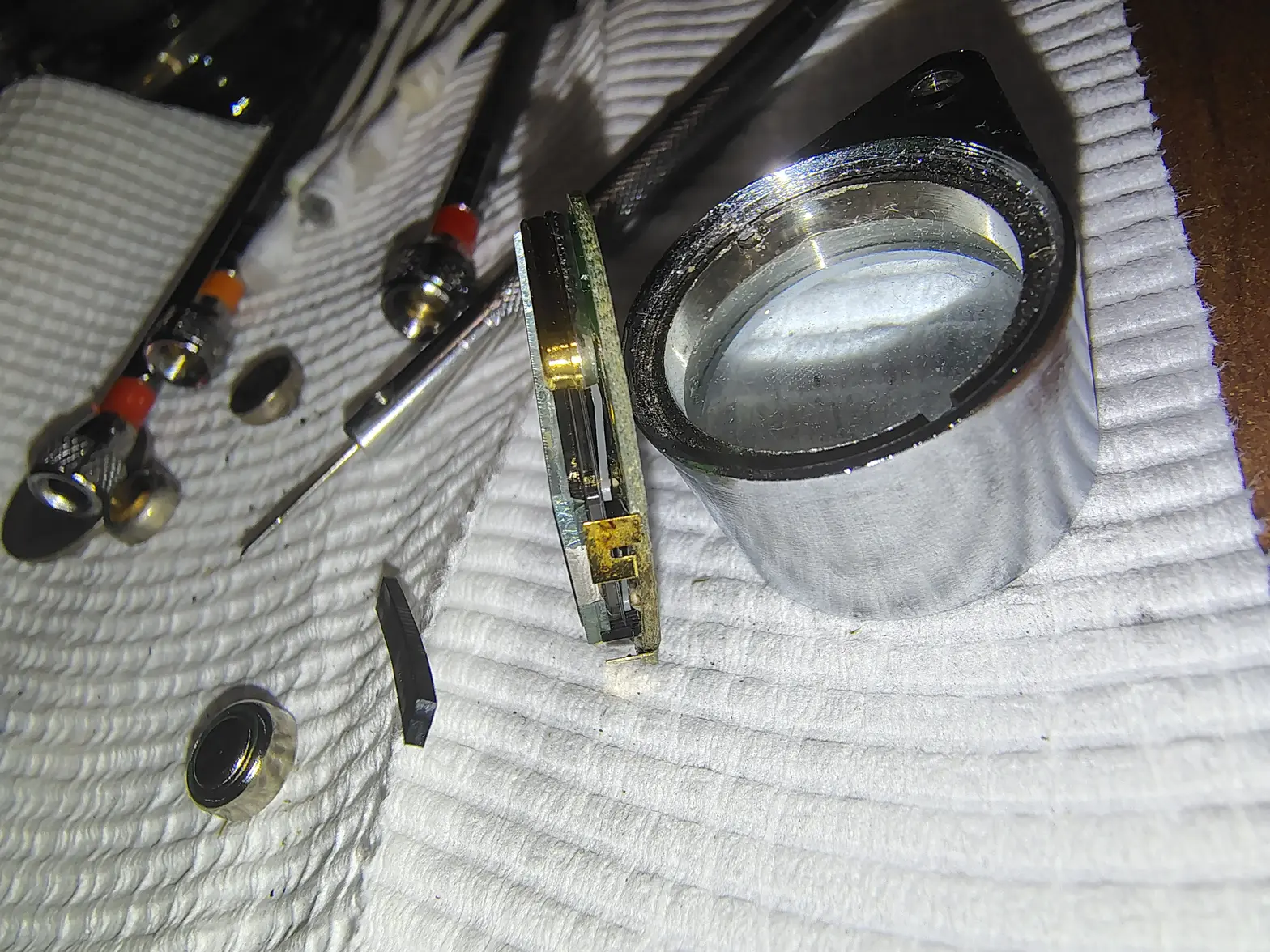
I've removed one of the rubber pieces.

I understand what you mean now by the plastic clip etc. I've swapped the screen on a few gameboys. Took a moment, sorry.

Does the black rubber strip bridge the screen to the module?

 
Posts
32
Likes
8
Alright,
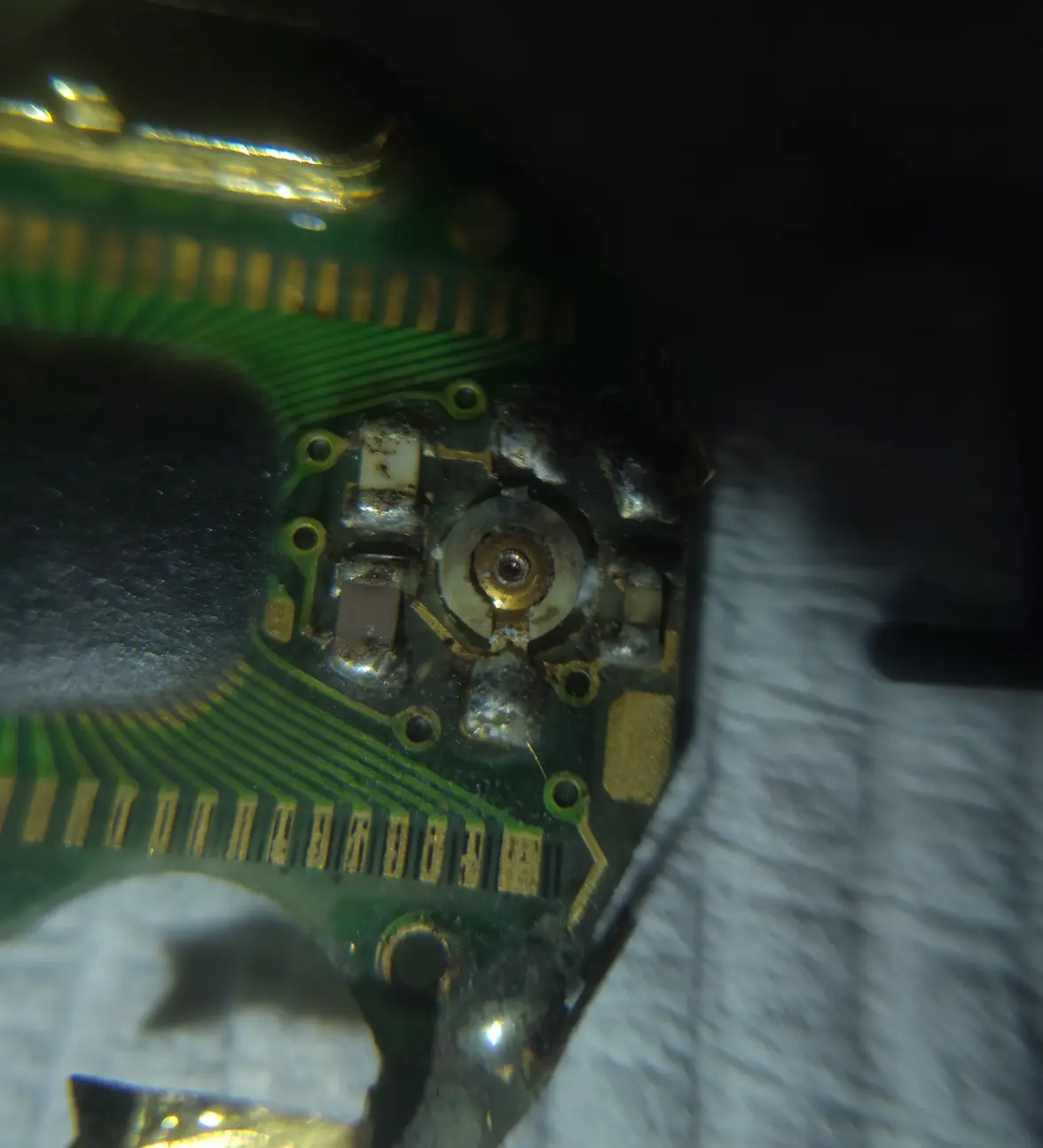
Got the screen off. This looks absolutely fried, right?

I just used some isopropyl to wipe away the battery leak and it completely disintegrated part of the trimmer.