Omega Pocketwatch Info

Posts
1
Likes
0
Hi everyone,


I bought this watch a few days ago at a vintage shop. Could anyone here tell me something about it? I’m new to the watch game and haven’t been able to find much information about it.


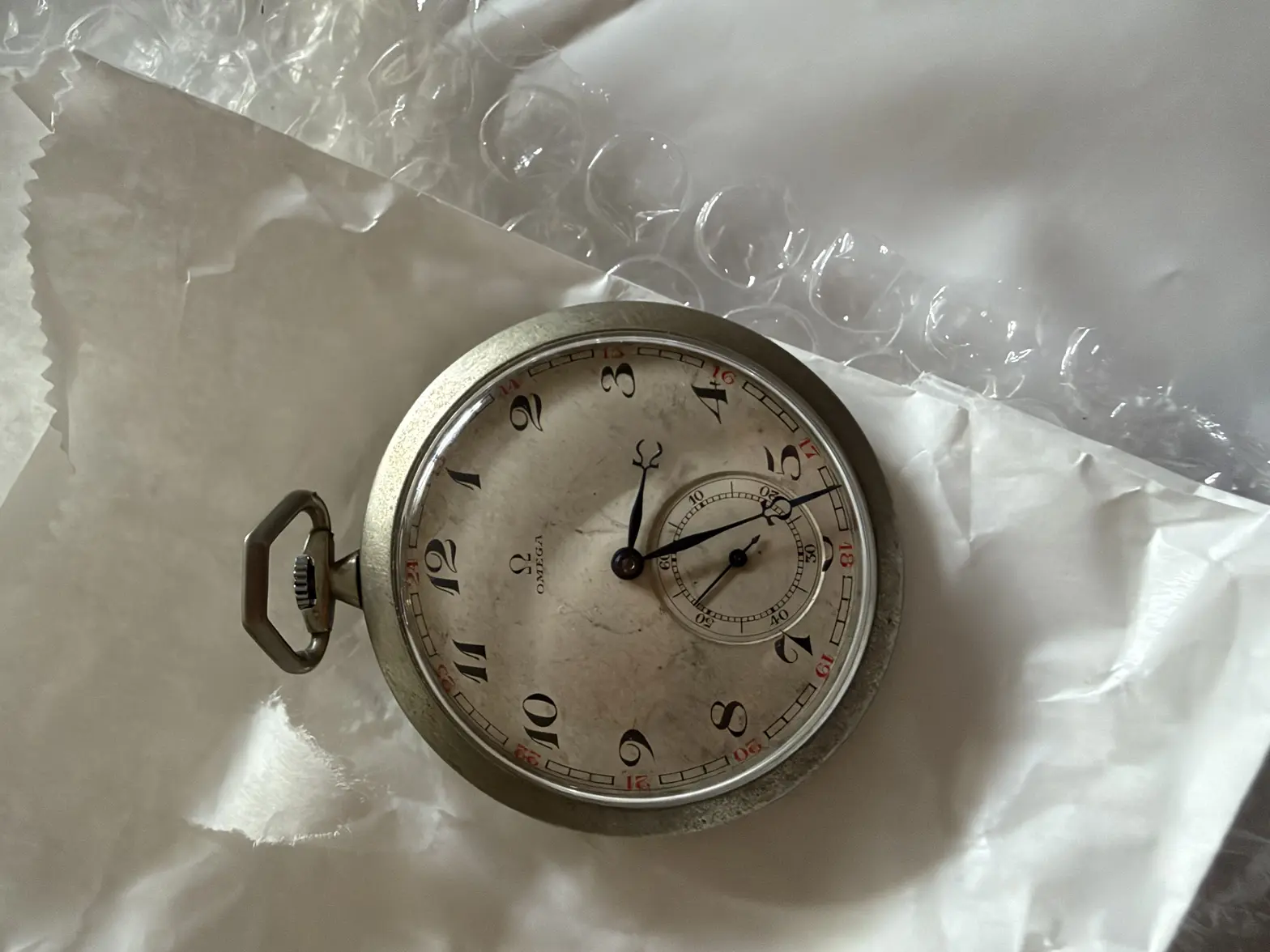
As far as I know, the watch is from the early 1930s. I also couldn’t find any watches with these hands, so I’m not sure whether they’re original.


I’d really appreciate any help or information. Thanks!
 
Posts
21
Likes
25
Welcome - first posts with a grandfather's watch are the best kind.


The fellows above are right: the answer's inside the case, and a watchmaker should be the one to open it (the oils in there are decades past their service life anyway, so it needs the visit regardless before regular wear). But so you know exactly what you're looking for when it's open - there are two numbers in there, and they answer your two questions separately:


Inside the caseback: the case reference. For a 50s piece it'll be a 4-digit number, sometimes with letters in front (CK 2846, C 2577, that style). That's the number that names the model - it's how "a 50s Seamaster" becomes "Seamaster ref. such-and-such," and it'll also tell you whether the case is steel, gold-capped, or solid.


On the movement, stamped on one of the bridges: the serial number. Seven or eight digits. That one dates the watch - usually to within a year. Ask the watchmaker to photograph both while it's open; five seconds of his time, and worth more than any amount of guessing from the dial side.


On the crown - don't lose sleep. A replaced crown is normal service history on a 70-year-old watch, same as new tires on an old truck. And if the dial has been redone somewhere along the way, as noted above: that matters to collectors' prices, but for a grandson wearing his grandfather's watch, it changes nothing that counts.


Post the two numbers when you have them and this crowd will pin it down to the exact reference and year for you.
 
Posts
21
Likes
25
Scratch my post above - pasted from the wrong tab; that answer belonged to another thread entirely. Here's what your watch actually is:


Welcome - and good eye stopping at that one in the shop. Here's what your photos already tell us:


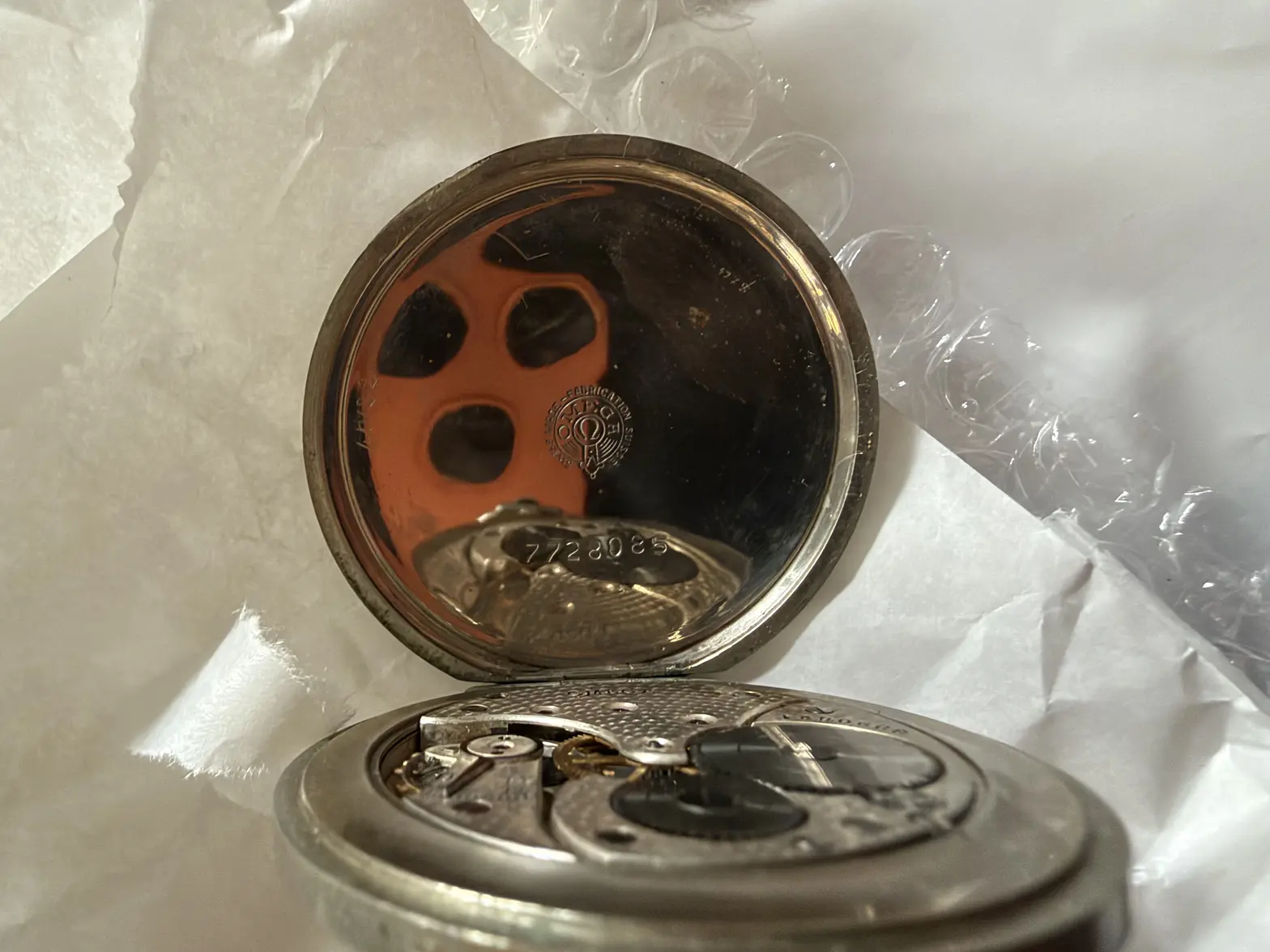
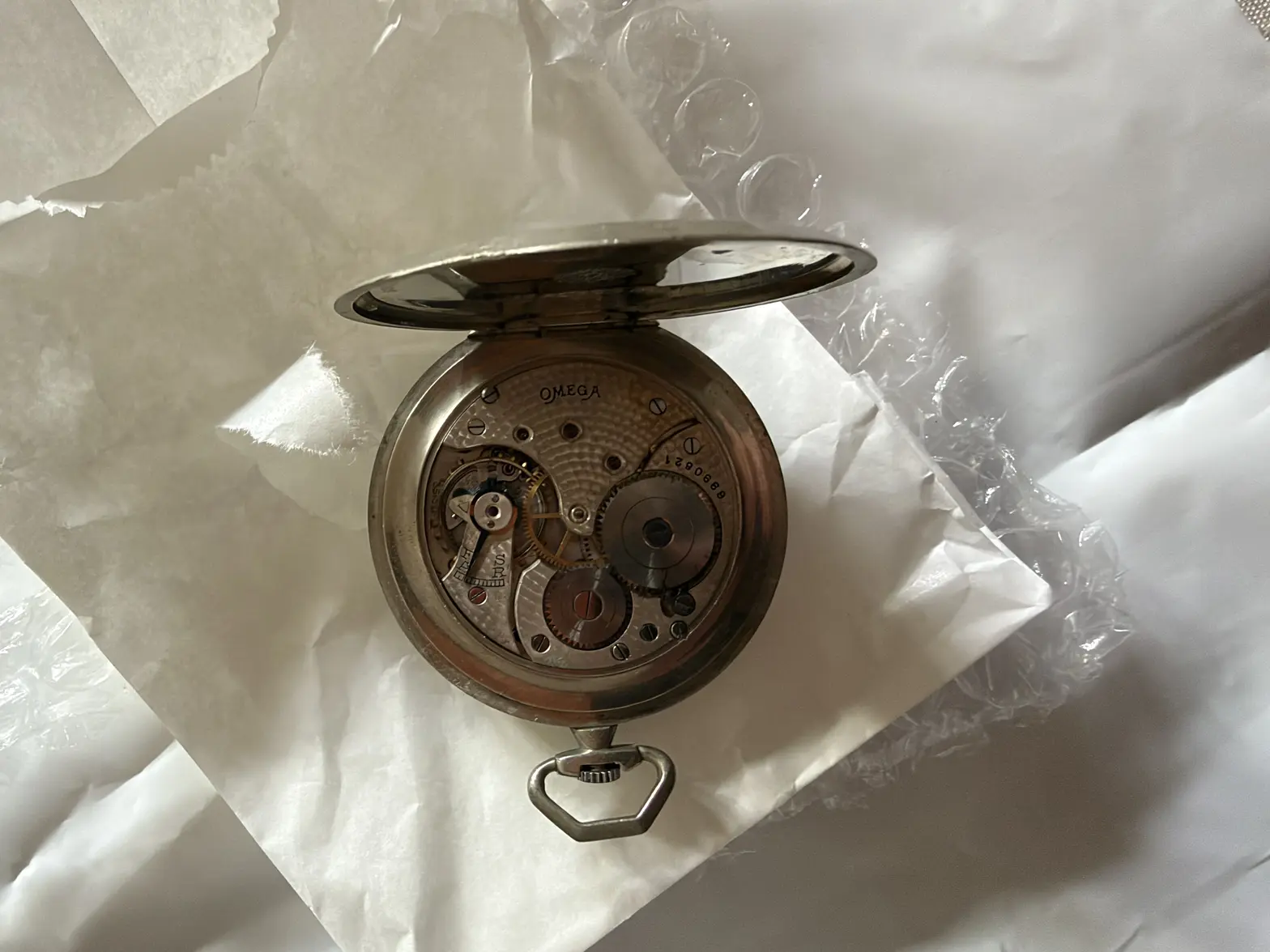
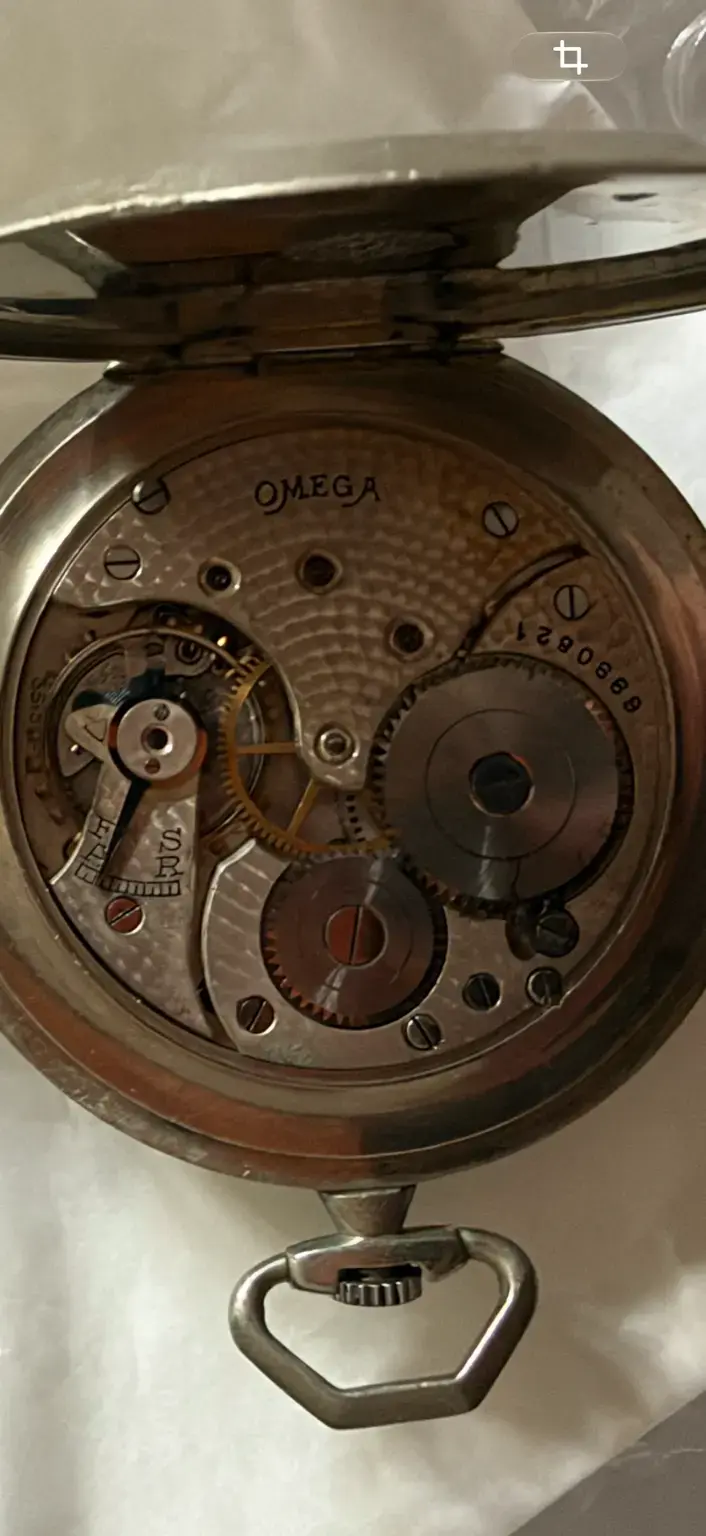
The movement serial - 6890821, stamped on the bridge - dates it to about 1928–29, so "early 1930s" was a close guess; it's a touch earlier. That's the number that dates any Omega. The 7728085 inside the caseback is the case number - a different serial that identifies the case itself. Two numbers, two jobs, and both being period-consistent is a good sign nothing's been swapped.


The movement is Omega's manual pocket calibre of that generation - sub-seconds layout, pearled plates, and the round "OMEGA FABRICATION SUISSE" medallion stamped in the caseback is the correct factory case marking for the period. The case looks nickel/chrome rather than silver - the workhorse finish, honest and durable.


The dial is worth a second look: black Breguet-style numerals with the red 13–24 outer track - a 24-hour dial, common on Continental-market Omegas of the late 1920s. That's original character; keep it exactly as it is.


On your hands question: the blued minute and seconds look right for the period. The hour hand with the trident tip is a style Omega used in the era, but mixed hand sets are the most common small swap on these - the tell is whether the blueing tone and finish match the minute hand exactly. From your photos they're close; a watchmaker can confirm in seconds with the bezel off, and even a period replacement would be a minor note, not a problem.


If it winds and runs, a gentle service before regular use is the only thing I'd do - the oils in it are older than most of us. Fine honest watch; enjoy it.