Omega Cal. 1320 vs 1325: Movement Differences & Repair

Posts
18
Likes
1
Dear people,
Firstly, I want to say that I am just so incredibly happy to meet you all here and that I could find this forum with all of the genius people with so much experience! This is my very first post, and if I am breaking any rules I very much apologize and ask the moderators not to punish me too harshly.

The following situation is keeping me up at night and giving anxiety:

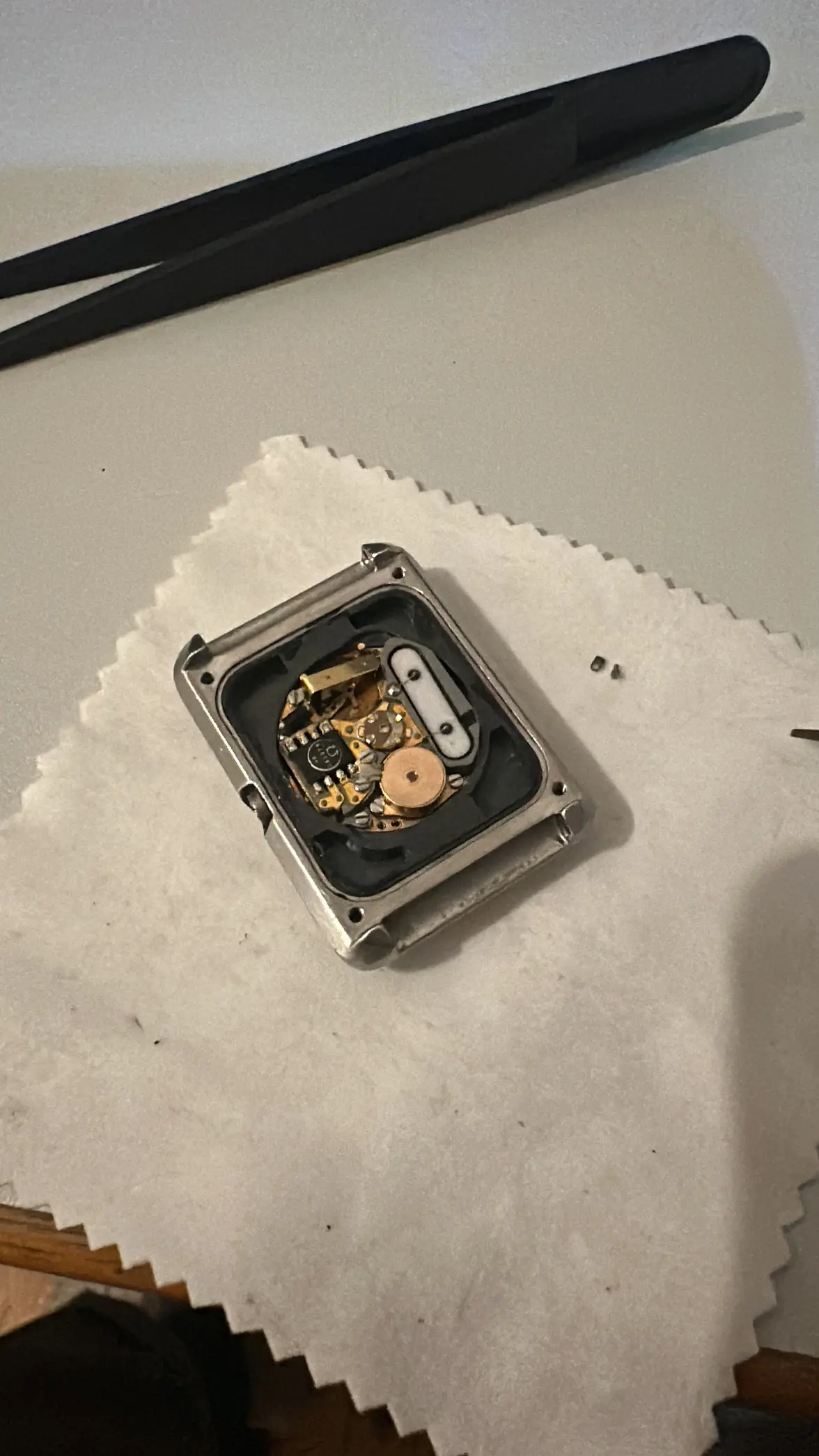
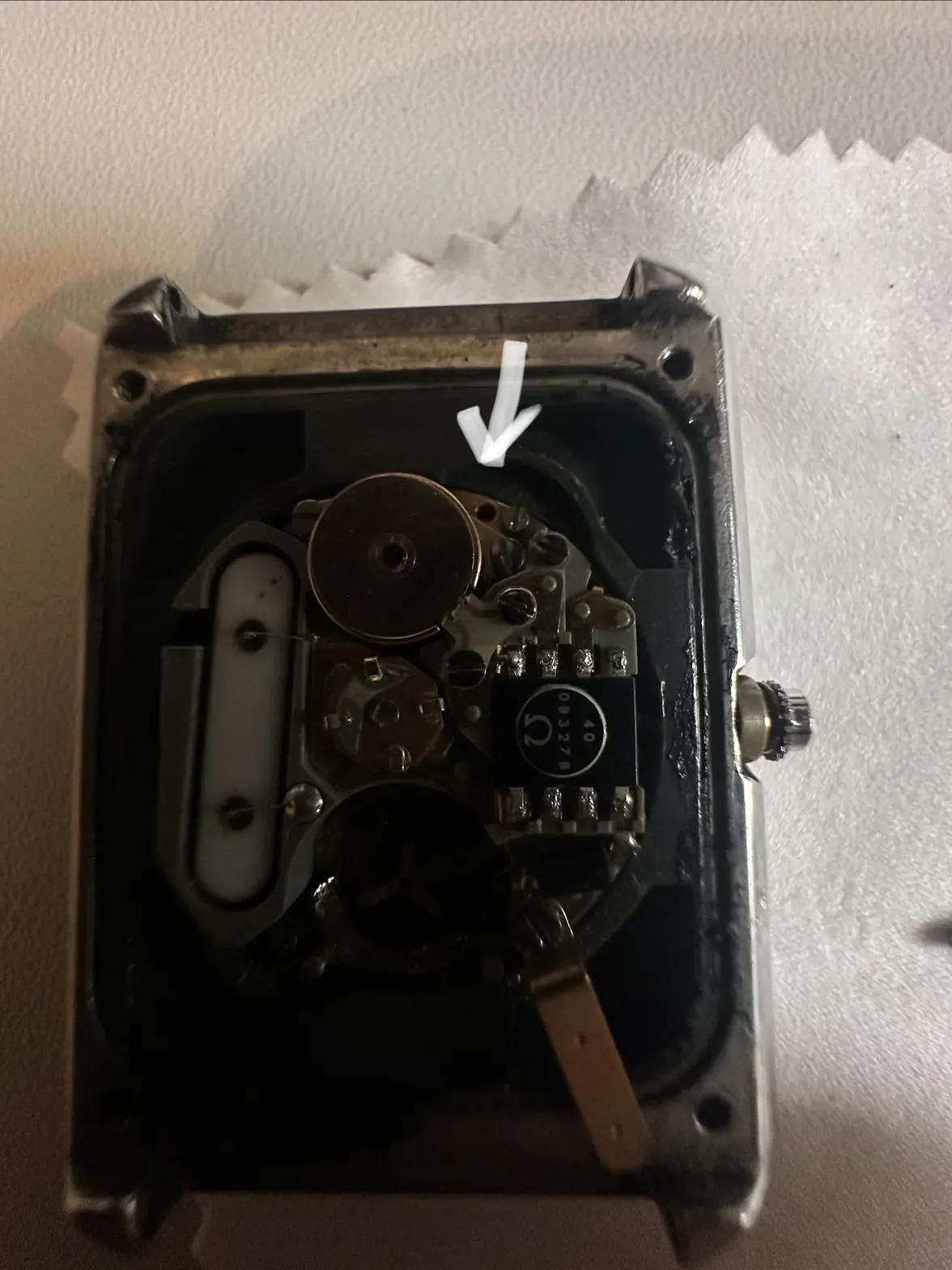
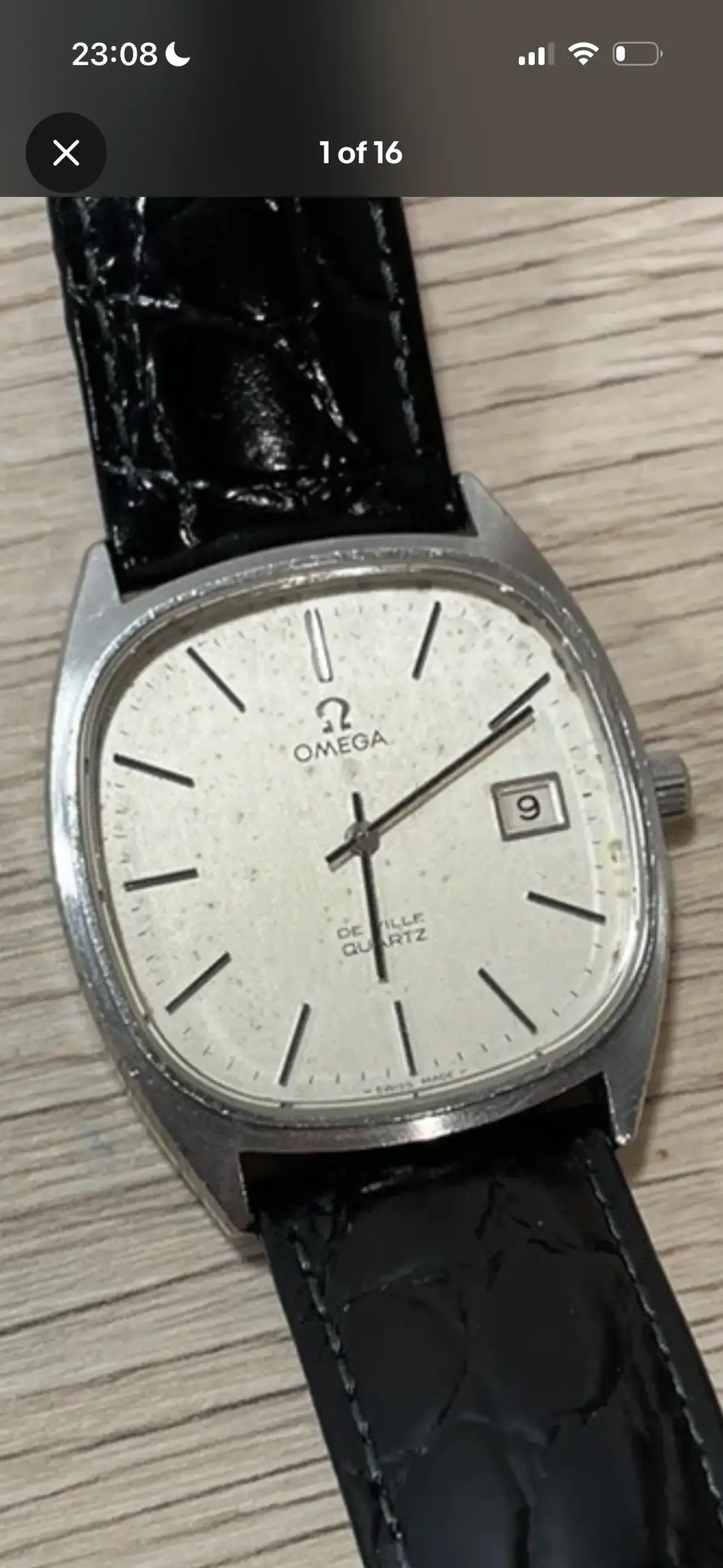
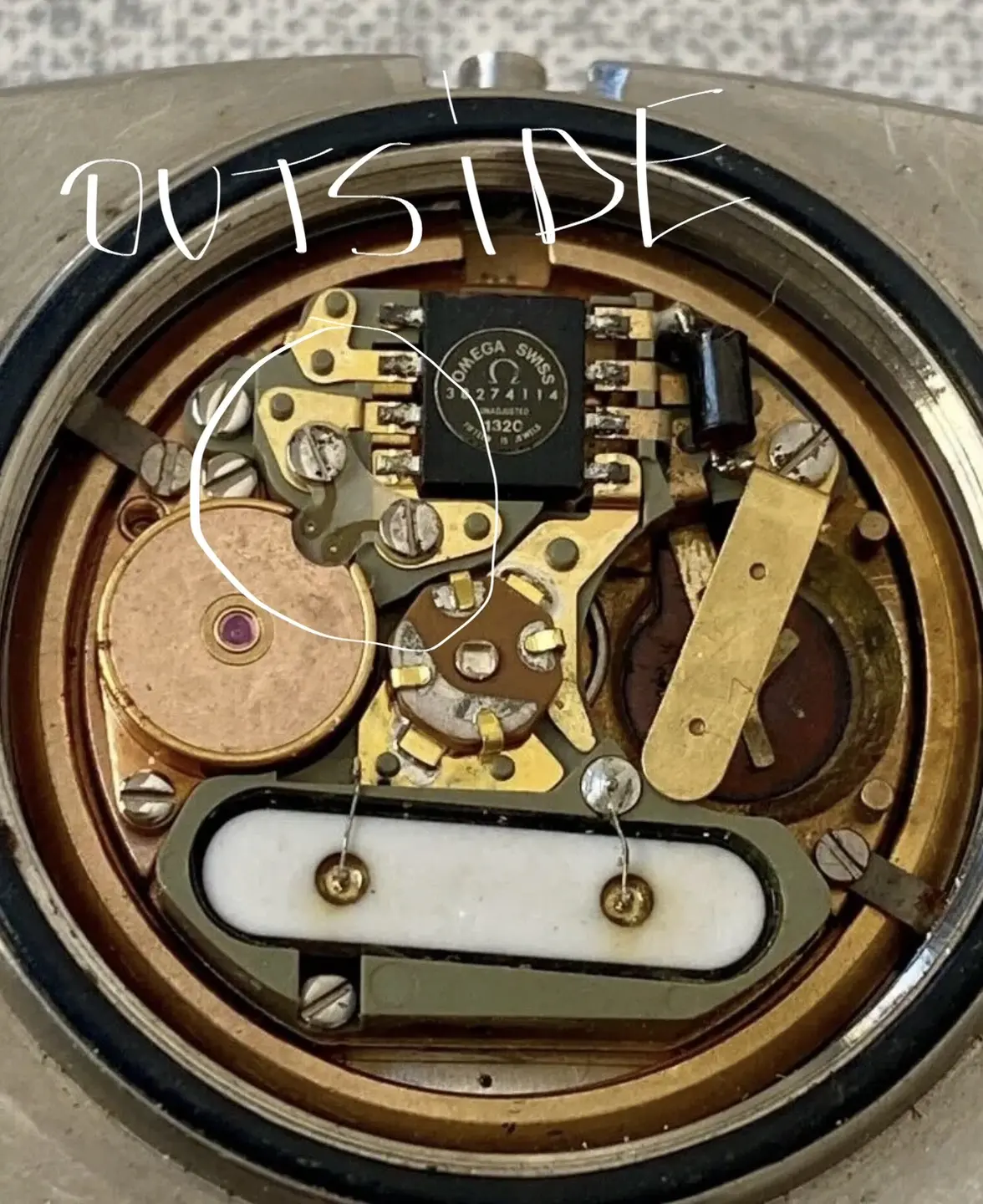
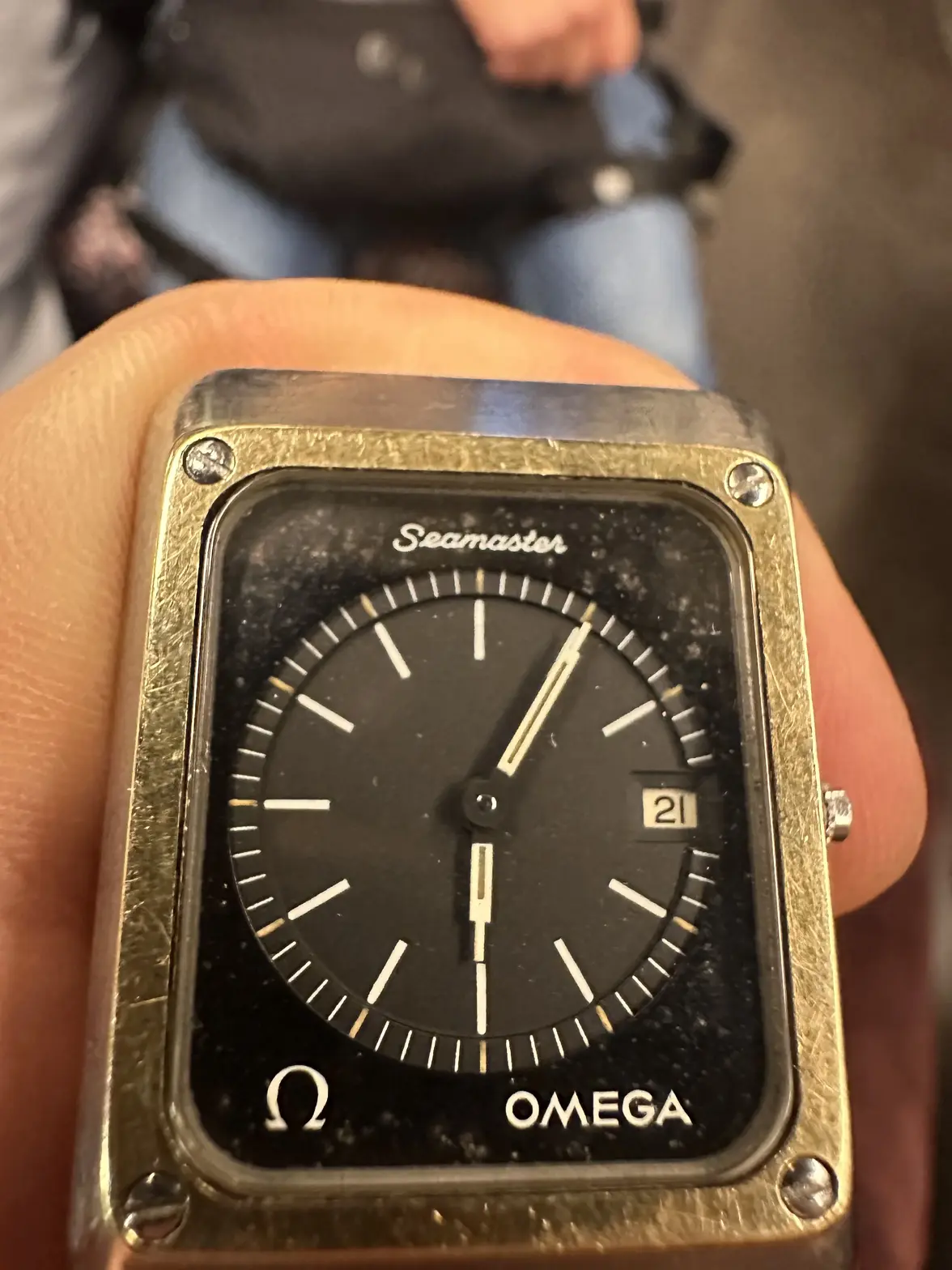
So a few days ago I just did the unexplainable- found omega seamaster mariner and bought it for so cheap I can’t even say (under 200 bucks, even less) - in non working condition. The outer condition is just so nice and I managed to clean every little case part. Then I was getting into the movement - opened the case and saw that it was quite dirty inside and a screw randomly fell onto my table. After an inspection I saw that the motor and two little wires that connect the motor to the circuit were not even touching and they were outside and not on the inside. Presuming that either the motor or the electronics might be dead I started the search. Then all the hell broke loose - I figured it’s a 1320 movement that has just so many parts being sold for it online but I didn’t find any single eBay ad with the motor. After a while I managed to source an electronics module for it which costs some money. But me having zero experience with quartz movements - I have no clue what isn’t working on it.

Going to omega service is not an option - this is my DIY project and I don’t want to pay over 800 bucks for the official restoration. I am planning on repainting the black dial myself with a microscope, micron by micron and blueing (blackening) the scratches places chemically. But I really don’t know what to do and I have so many questions.

1. I found a watch with a 1325 movement - are they identical in size? Many parts are interchangeable, but not the electronics module. I don’t care about the value, the watch is for me
2. I can pay over 300 bucks for a watch that 100% has the same movement - but don’t want to. Do I have to? What would you do?
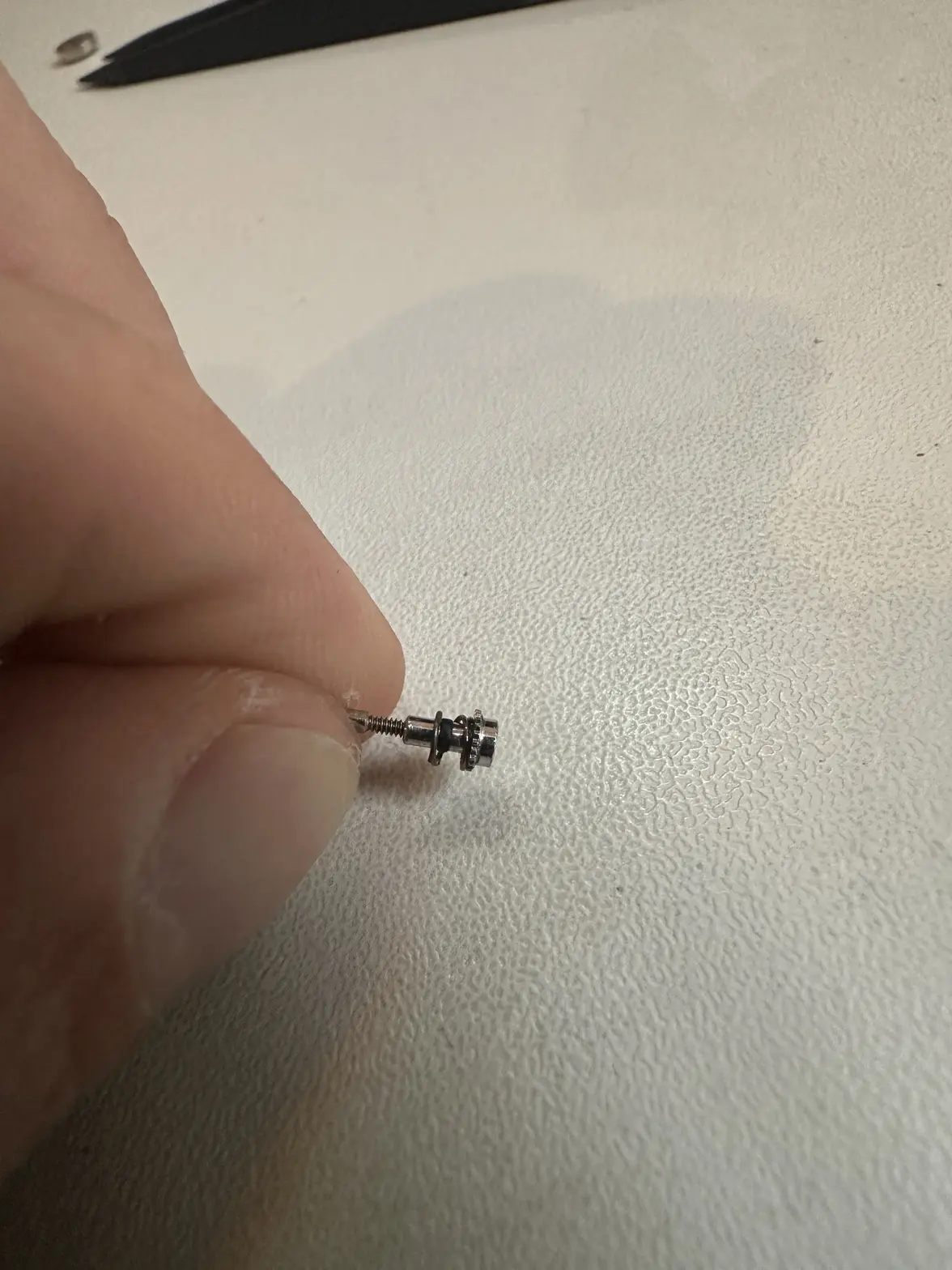
3. The crown is broken and only the inner pusher is left. The outer turny wheely thing is gone. What watch could be the best donor?
4. Shall I risk and buy the electronics module? What is the probability that it’s not that what’s broken, but the motor? There is no motor on the internet.
5. Do you know exactly which other watches had precisely the 1320 movement?
6. What is the way to find out what’s exactly broken?

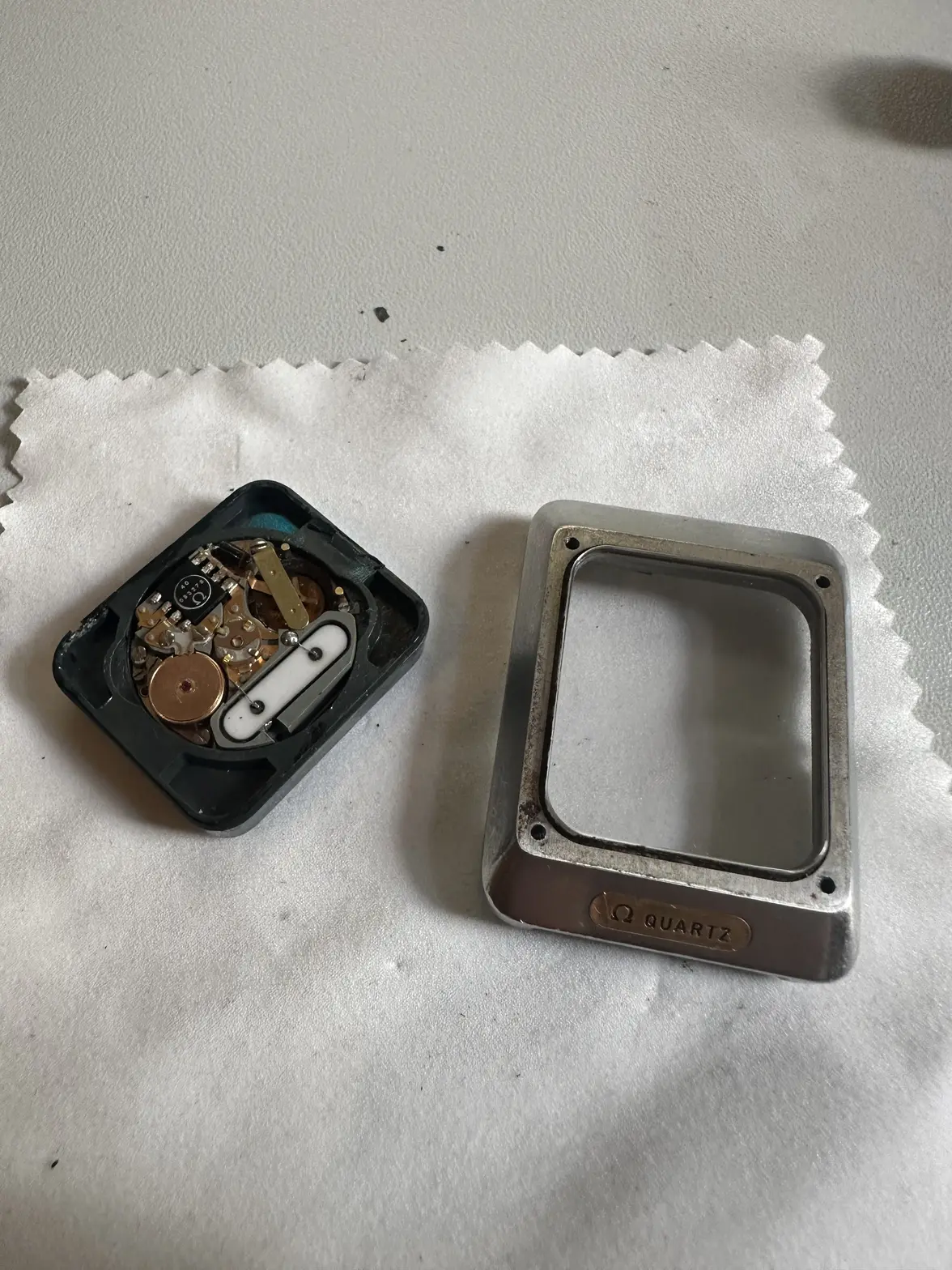
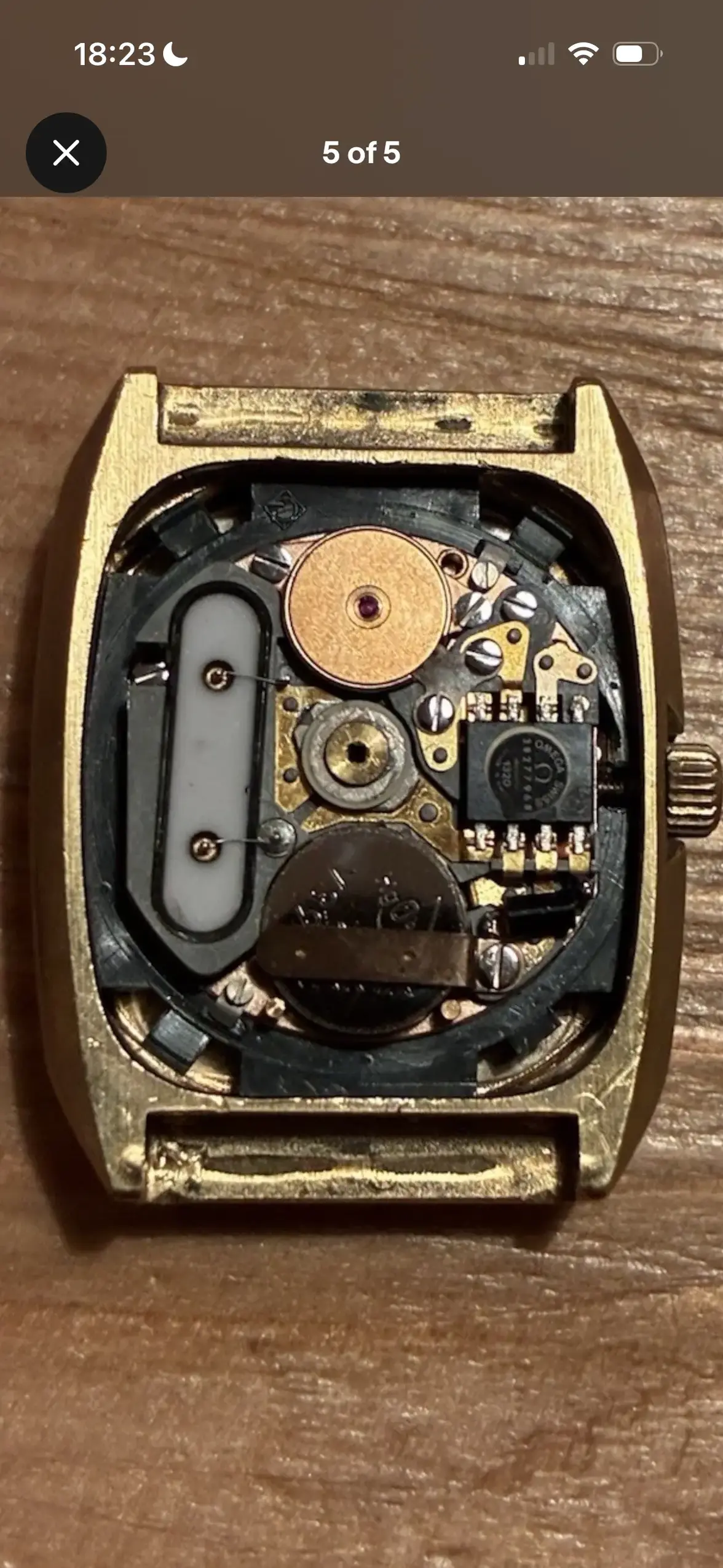
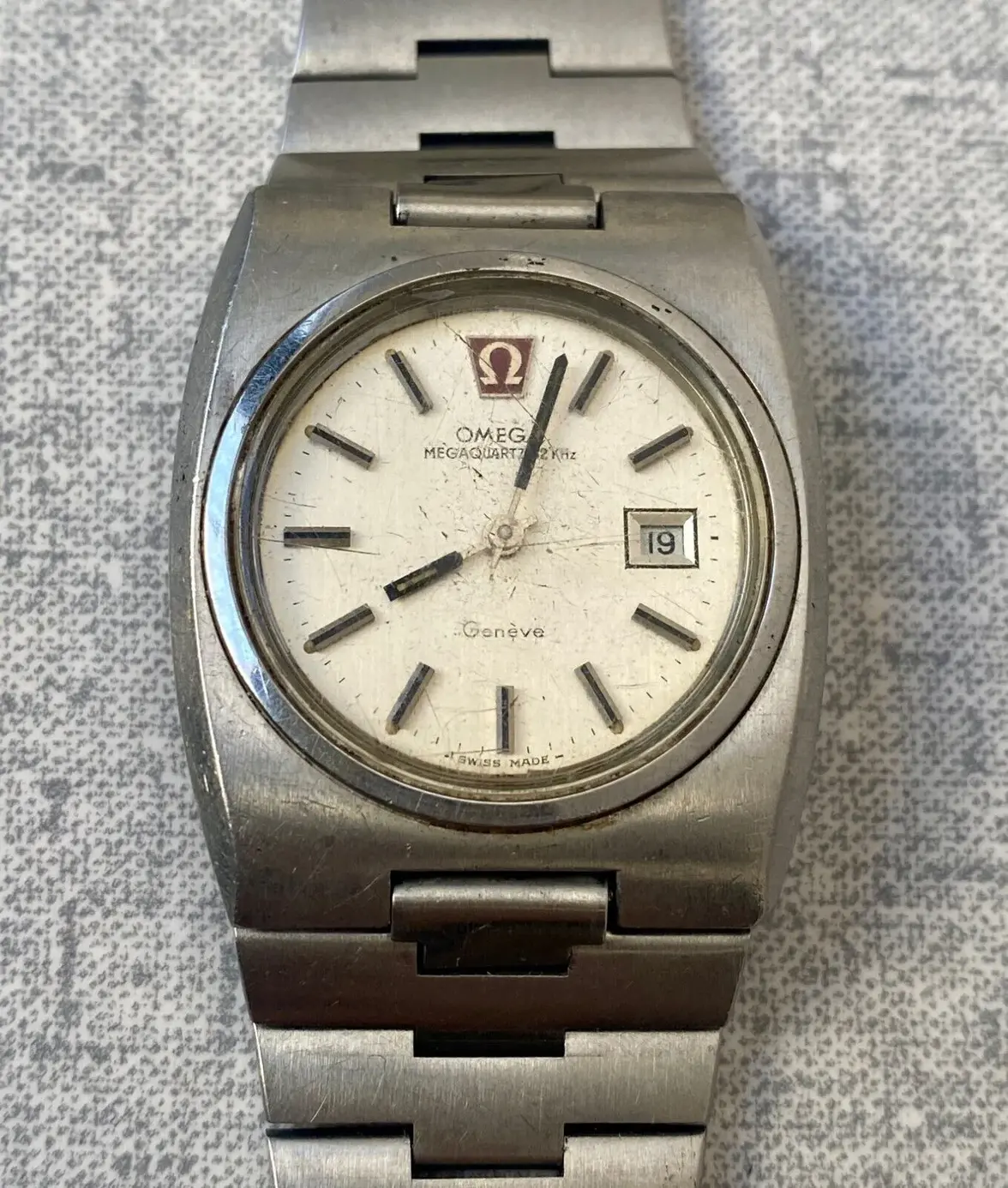
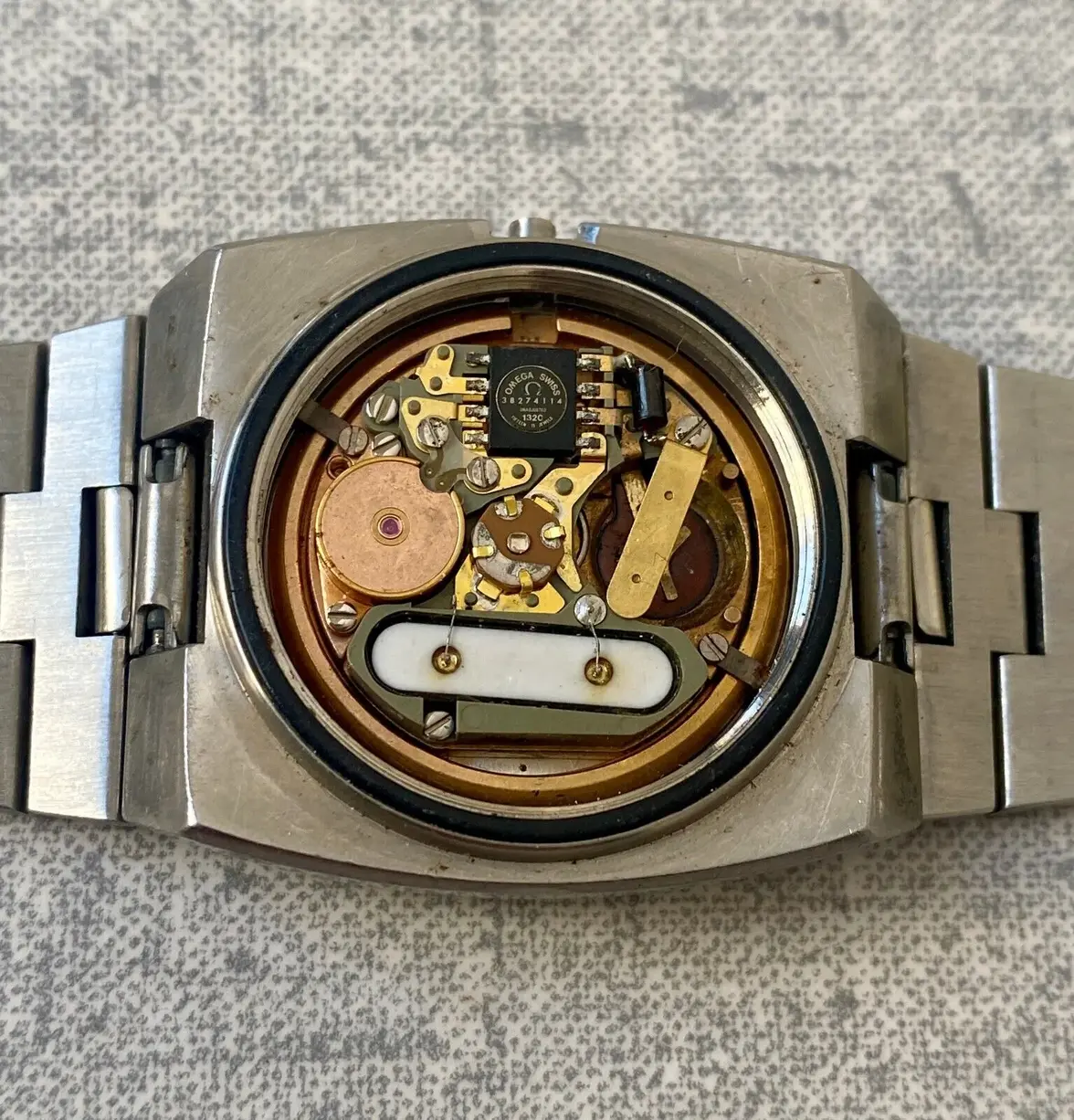
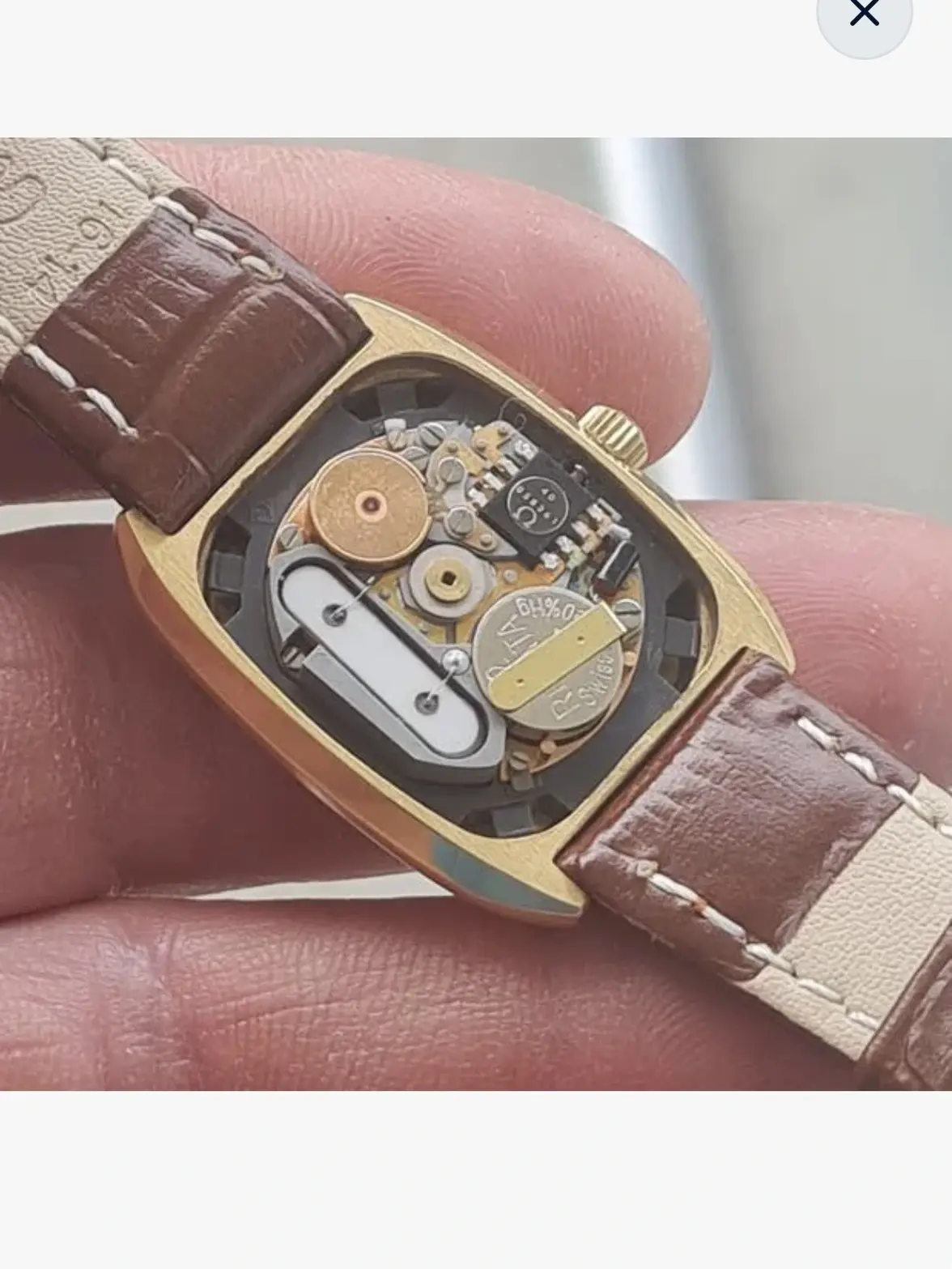
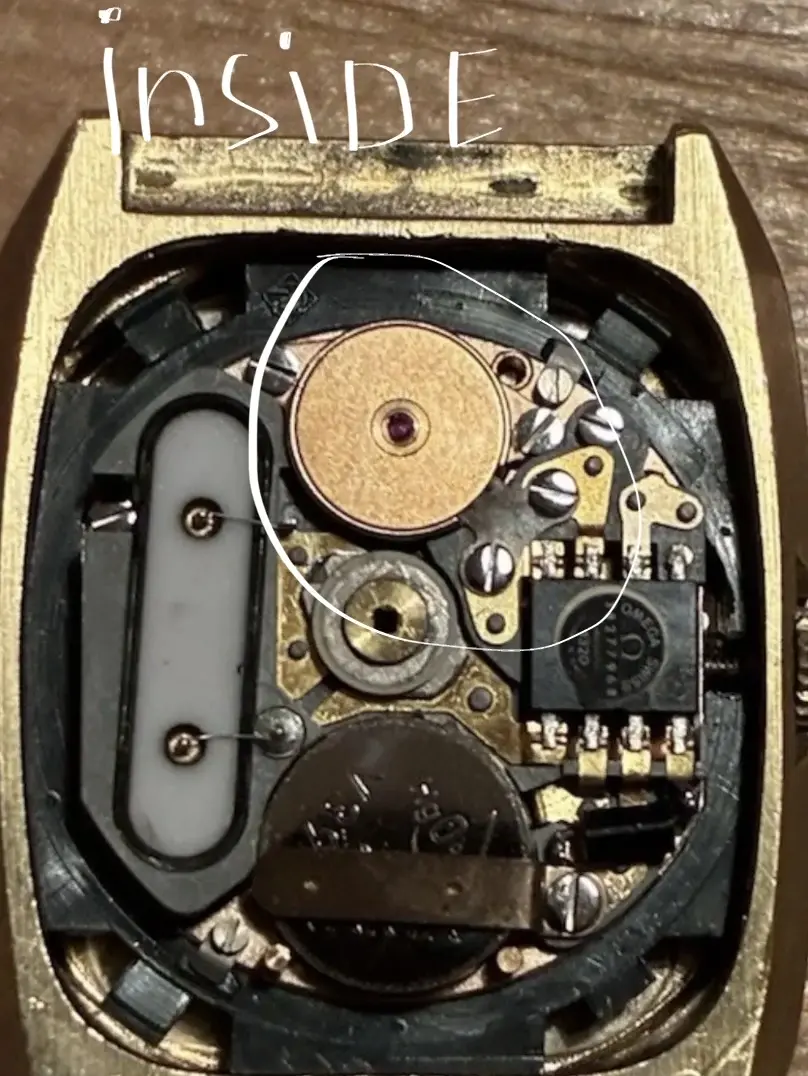
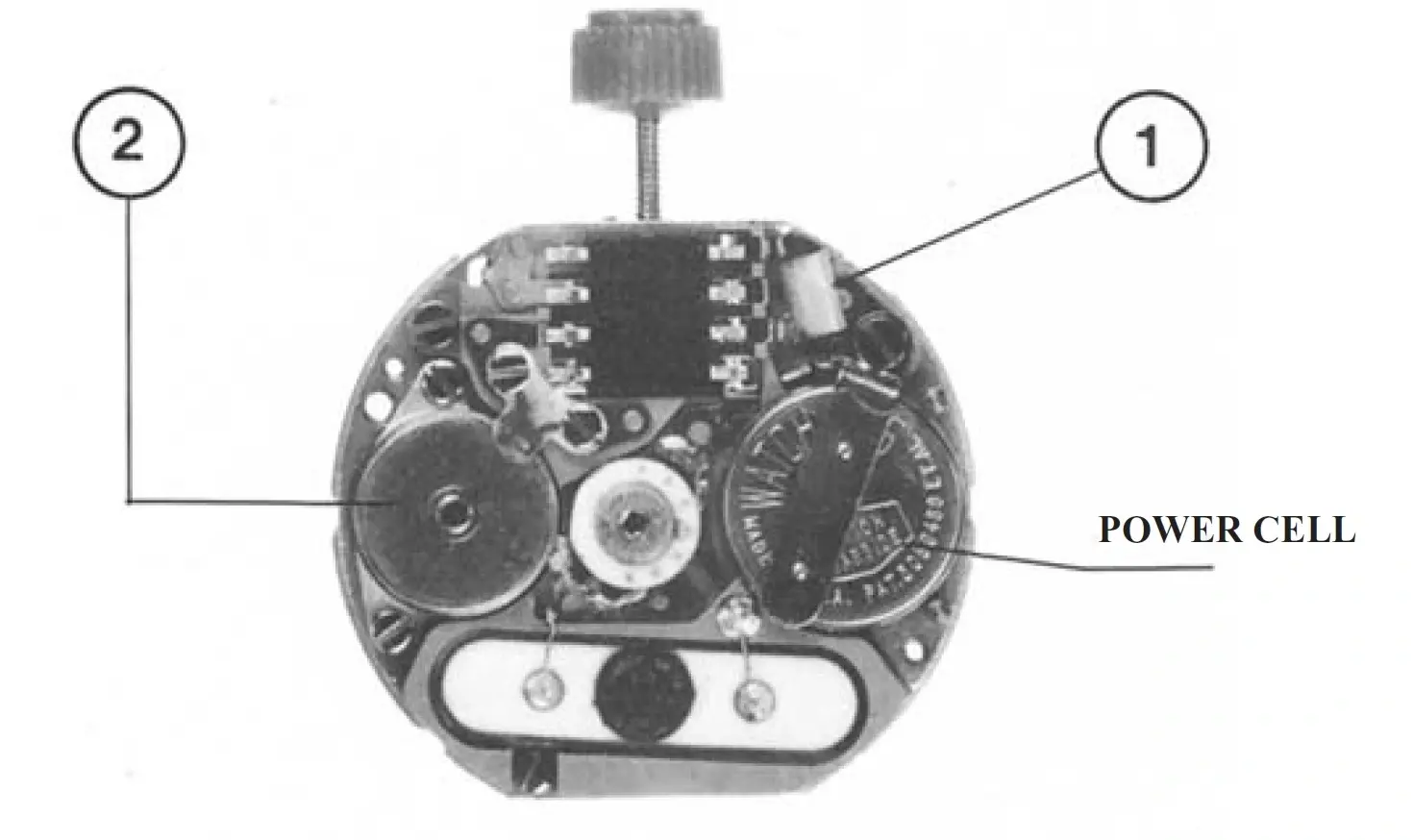
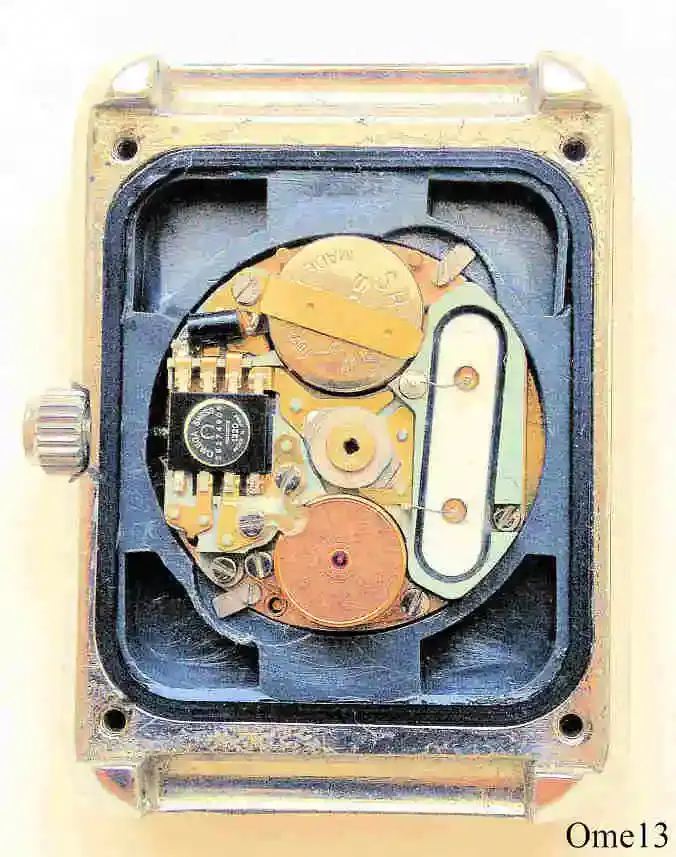
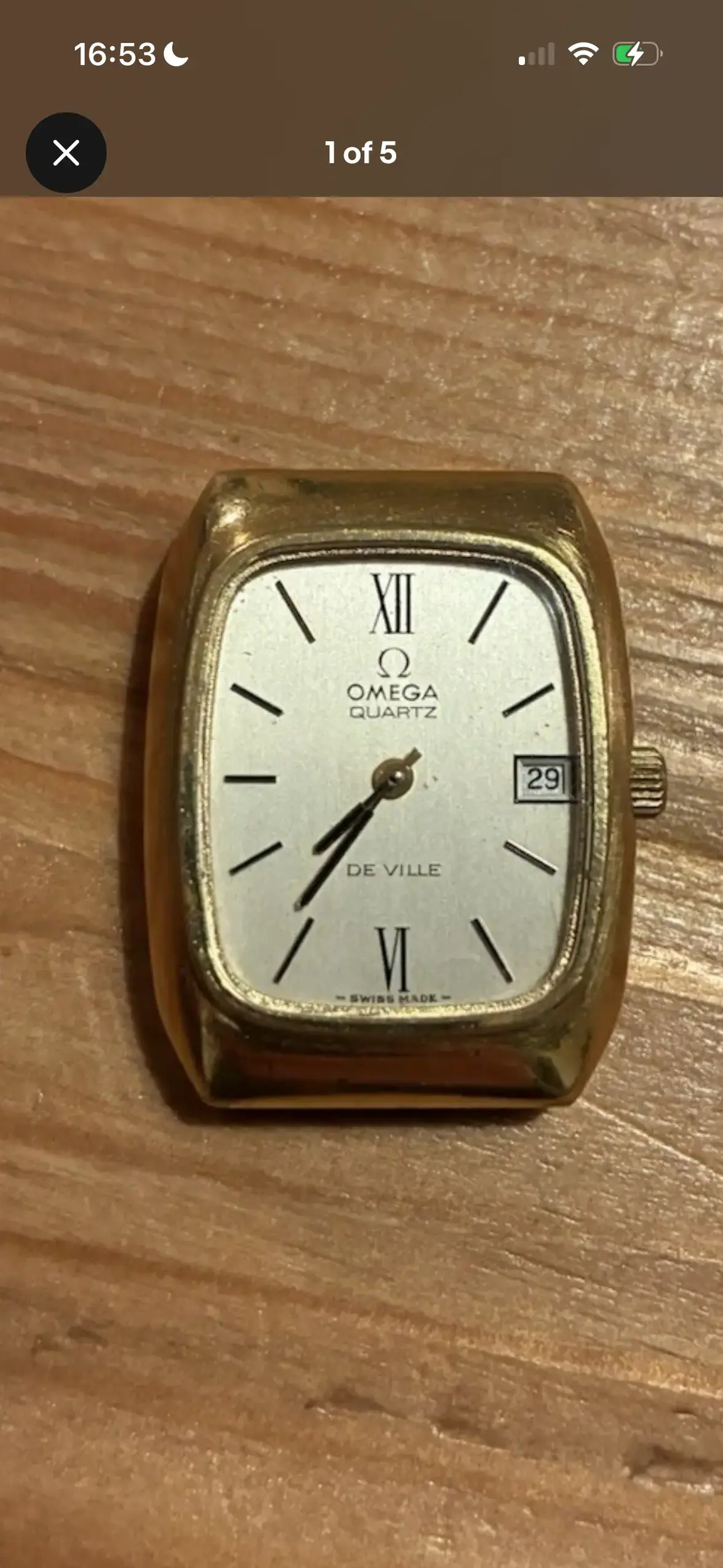
I am including the pictures of my watch inside (it’s square), right after that a photo of my watch from the internet - and right after that the watches that might have the same movement for people to see. Can some kind soul help me find any solution? I am going insane over it.
Thank you to everyone here!


My watch:
Internet picture:


Similar watches I found:
 
Posts
2,310
Likes
2,506
Going off of:
https://www.emmywatch.com/wp-conten...inc/documents/omega--1320--movement_parts.pdf
https://www.emmywatch.com/wp-conten...inc/documents/omega--1325--movement_parts.pdf

1325 has a different main plate, date wheel, stem, stem-spring, electronic module, and casing clamp screw.

They both list the size as well, looks like the 1320 is not round entirely and is 18.2mm x 20mm x 6mm.
1325 is significantly larger at 25.6mm(round) x 6mm.

No idea on the rest of it.
 
Posts
18
Likes
1
Going off of:
https://www.emmywatch.com/wp-conten...inc/documents/omega--1320--movement_parts.pdf
https://www.emmywatch.com/wp-conten...inc/documents/omega--1325--movement_parts.pdf

1325 has a different main plate, date wheel, stem, stem-spring, electronic module, and casing clamp screw.

They both list the size as well, looks like the 1320 is not round entirely and is 18.2mm x 20mm x 6mm.
1325 is significantly larger at 25.6mm(round) x 6mm.

No idea on the rest of it.
I am able to buy smaller parts. Do you think it’s possible to buy only the stem and little round thingy for it? Then I would just get an IC module.
Thank you so much!
 
Posts
2,310
Likes
2,506
I am able to buy smaller parts. Do you think it’s possible to buy only the stem and little round thingy for it? Then I would just get an IC module.
Thank you so much!
Ebay has quite a few of the 1320 stems for sale, about $25. It'll need trimming obviously (which takes a little bit of skill).

By the round thingy, do you mean the crown? I THINK that is a 196.055, right? If so, part should be ST43270 (or LA instead of ST for yellow), and Otto Frei has one for $48.
 
Posts
2,937
Likes
4,680
Lucky lucky. I have gone quartz crazy myself. Would love to find one of these megaquartz cheap.

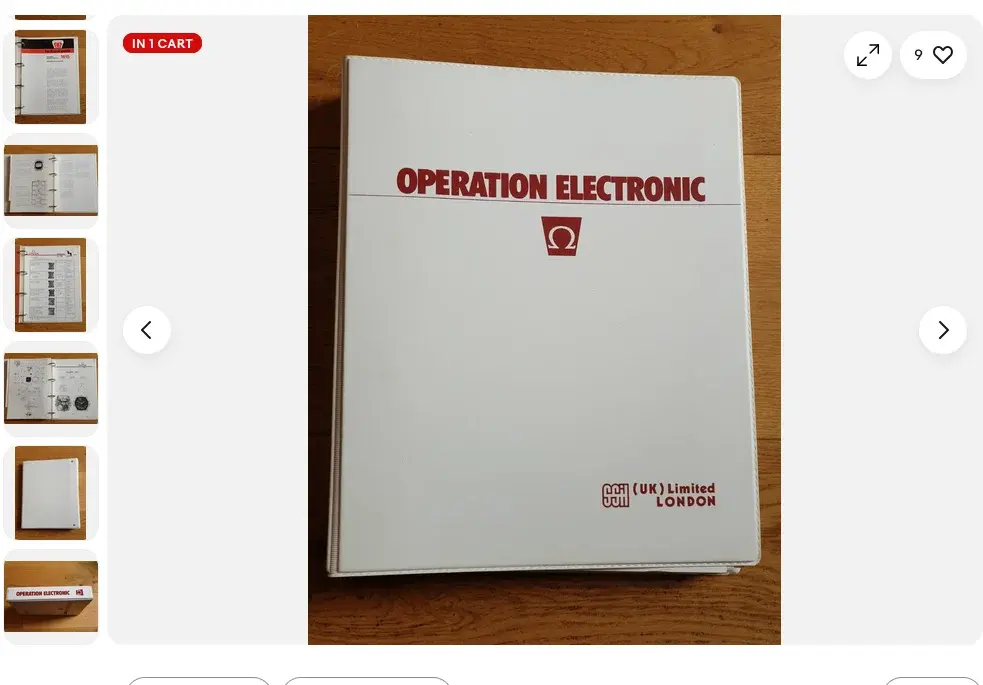
Currently I am in the process of restoring a 1655 money pit which shares parts with 1365. What I found was Omega published some technical manuals which for some reason have 'manual wind' in the title. These can be a bit tricky to find. They do show up from time to time on eBay (and if one is lucky the seller photographs all the pages. which is useful for auctions what ended.) I see there is a full binder for sale in the UK https://www.ebay.com/itm/166931436485


Bit outside my price range, especially for information that I think should be free or a minimal handling fee. (At one time US law required manufactures to make schematics available. The local library had a wall of Sam's Photo Facts.)

Most of these documents are fairly boiler plate. So one can get the general feel for how these work. As noted in many of my recent threads I am building my own test diagnostics machines for these. If you do a search here on OF for alitest and deltatest. Omega made some machines specifically for working on these. Especially the non 32768 movements.

The tricky part is figuring out how the inductive pickups work. Simple tests with a scope can often tell if the system is oscillation, although the probes pull things off with capacitive coupling.

The wire in the motor coils though is really fine. I have a coil winding machine for pipe organ magnets which are a scale larger and several scales smaller in resistance (40 to 120 ohms vs the 1.2 to 1.5k in a watch coil.)

I have 4 134x motors with infinite resistance. Unfortunately the cover plate is spot welded in place. Most likely the break is close to the contactors, but next to impossible to re-solder.

Curiously one ot the 1342 movements has an identical broken stem. The 1365 what arrived in the mailbox a bit less than an hour ago says missing dial (but I think they meant stem and crown.) It looks like the button pusher is missing. The crownless 1365 confuses a lot of people.
 
This website may earn commission from Ebay sales.
Posts
18
Likes
1
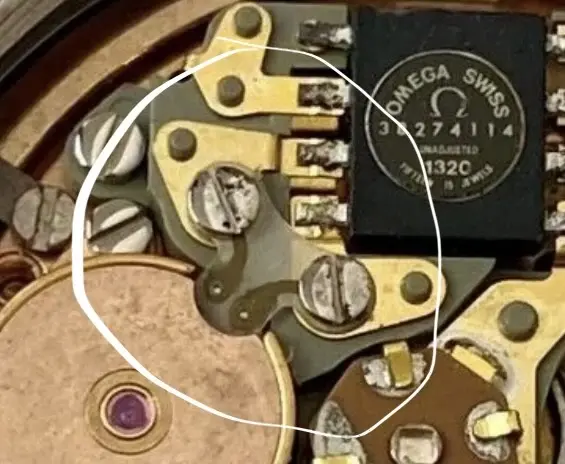
Following up on my previous question - I have a question about the motor assembly that is driving me absolutely insane and I cannot find any information online whatsoever.

The motor consists of a cylindrical can (rotor inside) and a lid that has a coil wound inside it. There is a flexible plastic strip with two wire contacts that need to connect to the coil.

My question is very simple but I cannot figure it out: should the flexible plastic strip with the two wire contacts go UNDER the lid (between the lid and the can, so the contacts touch the coil from inside when the lid closes), or should it sit ON TOP of the closed lid?

When I found the watch, the strip was on top and the lid was semi-open. I assumed this was wrong and put the strip underneath. There is a small gap that seems designed for it. But the watch still doesn’t work either way.

The maddening part: I found pictures online showing BOTH configurations on what appears to be the same movement. So I genuinely have no idea which is correct.

I am including two pictures - one with each variation - hopefully someone with experience can immediately see what is wrong.

Thank you so much, you are my only hope!

 
Posts
29,994
Likes
77,505
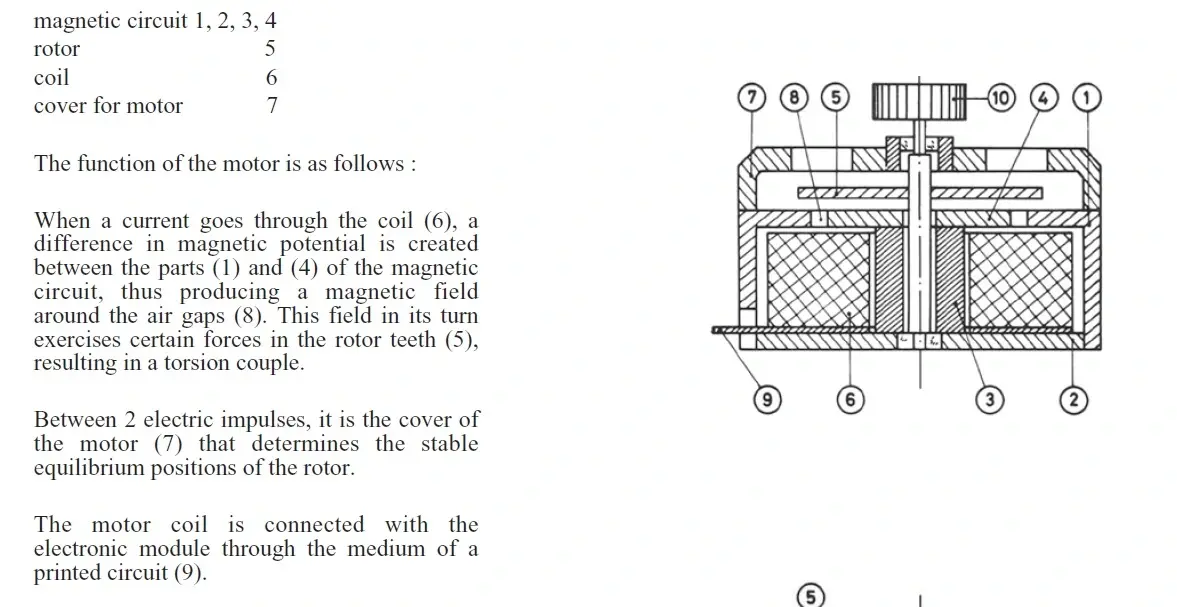
The answer is yes...from Omega tech guide for the 1320:

 
Posts
18
Likes
1
The answer is yes...from Omega tech guide for the 1320:

Please excuse me for this kind of an extremely silly, horrific question, but yes - what? On top? On the picture it’s on top.
Thank you so so much, you’ve made it possible now! Also just out of curiosity- is it a technical manual that you have?
Also I pried it open with a very thin metal sheet and put it in the inside, could I have damaged it?
Thank you SO MUCH 🙏
 
Posts
29,994
Likes
77,505
Please excuse me for this kind of an extremely silly, horrific question, but yes - what? On top? On the picture it’s on top.
Thank you so so much, you’ve made it possible now! Also just out of curiosity- is it a technical manual that you have?
Also I pried it open with a very thin metal sheet and put it in the inside, could I have damaged it?
Thank you SO MUCH 🙏
Sorry I thought it was pretty obvious - in the photo it is on top, and in the diagram it is inside, so yes is the answer to both questions.
 
Posts
18
Likes
1
Sorry I thought it was pretty obvious - in the photo it is on top, and in the diagram it is inside, so yes is the answer to both questions.
Ah so in other words - it doesn’t matter?
 
Posts
18
Likes
1
Sorry, I completely understood now what you meant, my autism is sometimes unbearable…
So on their photo it’s on top, but on the diagram it is definitely inside. So “yes” to both questions means - it doesn’t matter, as long as there is a contact. And you wrote about the manual - you actually do have it. Thank you so very much!
 
Posts
2,937
Likes
4,680
I dismembered a similar 1342 motor, for a future thread, where this part was snapped off.


The 'plastic' piece is really a thin strip of flexible fiberglass printed circut material (called FR4.) This can be prone to fracturing. More recent stuff uses a kapton type backing although trace cracking remains a problem.

Interesting that the can on the megaquartz is not spot welded shut.

It really does help to track down the technical 'Maintenance' data sheets (not the parts lists.) Most of them repeat the same information so one can abstract a general picture as to how the system is supposed to function.

Troubleshooting these movements really requires a good understanding of electronics engineering. By chance my two year electronics tech degree was in the late 1970s early 1980s. So this was the era where I was introduced to the subject. Although this information was/is highly proprietary and hard to come by.

My guess is that the direction of the PCB trace etching may have been flipped during production to increase reliability.

I took me 4 movements to get another working 1342 watch. So out of 8 motors only three of them work. I only have 6 PCBs as some of the motors were on partial plates. So there are 4 good PCBs and 2 bad ones.

I may try opening sacrificing another 134x can to see if there is a way to access the coil break (which is probably close to the solder points.) As noted I have a coil winder, which uses heat and an alcohol solvent to bind the block together. Working with this wire is about 1000 times smaller than a hairspring,

With the 1365 the caseless movement was good, the complete watch is bad. The coil, on the non functioning watch, which is a linear lavete type rather than the can is good. So that is 50 percent with a small sample.


Hopefully in this next week I can get more of my little 'Arduino' quartz test bench functional. I had to spend time upgrading my laptop and the old drivers to the chip programmer no longer work. Which can be an issue with open source stuff where the old build gets abandoned.
 
Posts
2,937
Likes
4,680
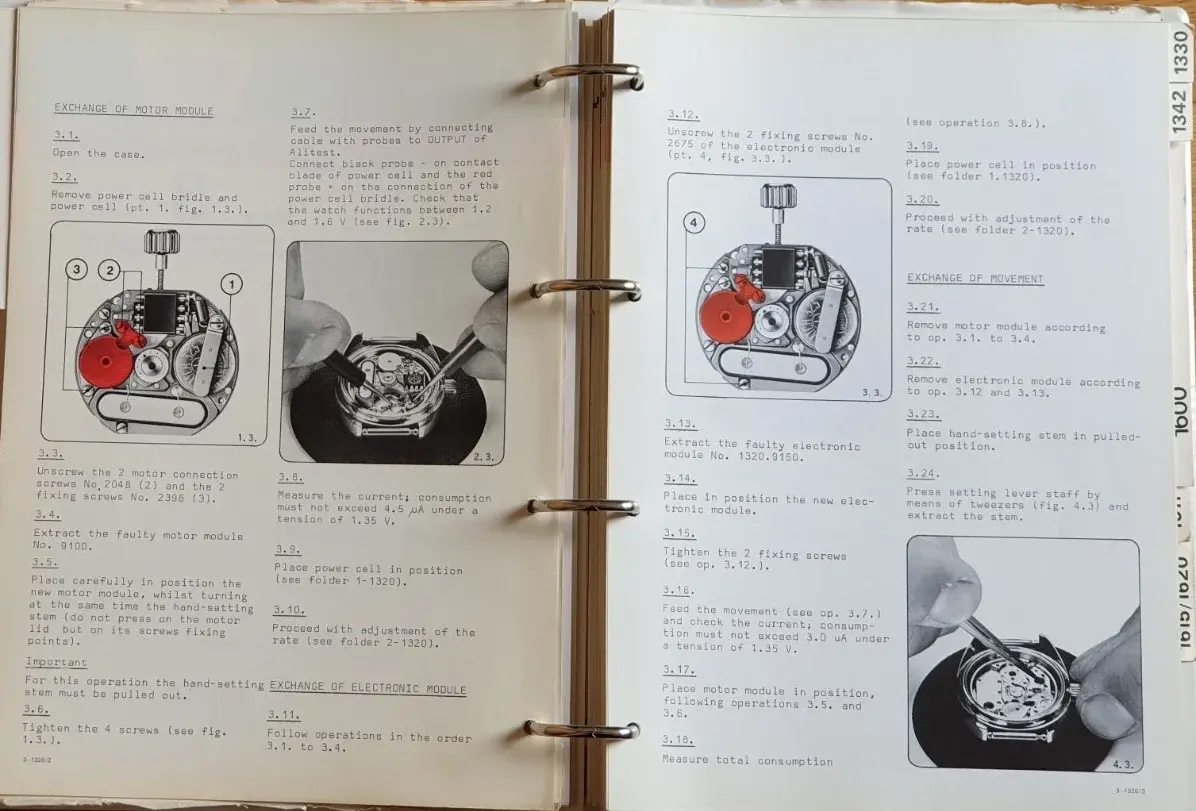
Some more information. If you zoom in on the auction photos above one of the page is the 1320/25 motor replacement instructions.
I have clipped this here (since auction photos disappear.) Note that the index tab is for a different watch. One has to read the copy to find the information.
Ideally this information should be available to all whom are interested. So that stuff can be repaired/recycled. Modern economics is not sustainable.

I found the complete 1365 Maintenance manual in another auction and clipped the photos, then printed them. It had some really good descriptions as to how to take down the wheel train.
 
Posts
18
Likes
1
Thank you so very very very much to everyone! The information here is just golden! I am incredibly grateful! 🙏🥹
In the next days some parts will come and I will keep posting pictures of my restoration process here.
 
Posts
18
Likes
1
I dismembered a similar 1342 motor, for a future thread, where this part was snapped off.


The 'plastic' piece is really a thin strip of flexible fiberglass printed circut material (called FR4.) This can be prone to fracturing. More recent stuff uses a kapton type backing although trace cracking remains a problem.

Interesting that the can on the megaquartz is not spot welded shut.

It really does help to track down the technical 'Maintenance' data sheets (not the parts lists.) Most of them repeat the same information so one can abstract a general picture as to how the system is supposed to function.

Troubleshooting these movements really requires a good understanding of electronics engineering. By chance my two year electronics tech degree was in the late 1970s early 1980s. So this was the era where I was introduced to the subject. Although this information was/is highly proprietary and hard to come by.

My guess is that the direction of the PCB trace etching may have been flipped during production to increase reliability.

I took me 4 movements to get another working 1342 watch. So out of 8 motors only three of them work. I only have 6 PCBs as some of the motors were on partial plates. So there are 4 good PCBs and 2 bad ones.

I may try opening sacrificing another 134x can to see if there is a way to access the coil break (which is probably close to the solder points.) As noted I have a coil winder, which uses heat and an alcohol solvent to bind the block together. Working with this wire is about 1000 times smaller than a hairspring,

With the 1365 the caseless movement was good, the complete watch is bad. The coil, on the non functioning watch, which is a linear lavete type rather than the can is good. So that is 50 percent with a small sample.


Hopefully in this next week I can get more of my little 'Arduino' quartz test bench functional. I had to spend time upgrading my laptop and the old drivers to the chip programmer no longer work. Which can be an issue with open source stuff where the old build gets abandoned.
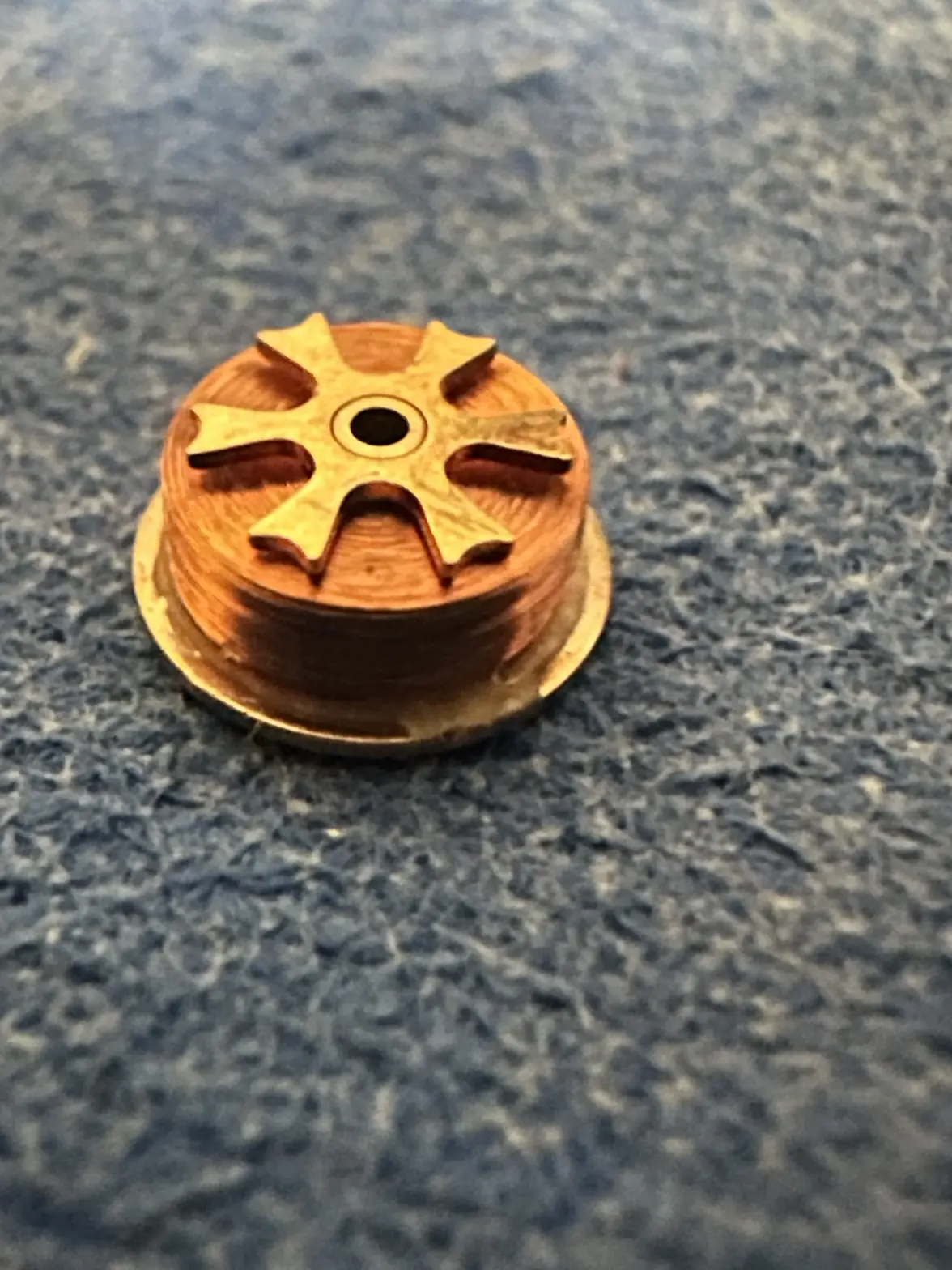
Actually do you think it’s alright to simply design a very simple flex board and just order it online? I could make a few quickly and post the design files here. BTW does my motor look okay?

 
Posts
18
Likes
1
I dismembered a similar 1342 motor, for a future thread, where this part was snapped off.


The 'plastic' piece is really a thin strip of flexible fiberglass printed circut material (called FR4.) This can be prone to fracturing. More recent stuff uses a kapton type backing although trace cracking remains a problem.

Interesting that the can on the megaquartz is not spot welded shut.

It really does help to track down the technical 'Maintenance' data sheets (not the parts lists.) Most of them repeat the same information so one can abstract a general picture as to how the system is supposed to function.

Troubleshooting these movements really requires a good understanding of electronics engineering. By chance my two year electronics tech degree was in the late 1970s early 1980s. So this was the era where I was introduced to the subject. Although this information was/is highly proprietary and hard to come by.

My guess is that the direction of the PCB trace etching may have been flipped during production to increase reliability.

I took me 4 movements to get another working 1342 watch. So out of 8 motors only three of them work. I only have 6 PCBs as some of the motors were on partial plates. So there are 4 good PCBs and 2 bad ones.

I may try opening sacrificing another 134x can to see if there is a way to access the coil break (which is probably close to the solder points.) As noted I have a coil winder, which uses heat and an alcohol solvent to bind the block together. Working with this wire is about 1000 times smaller than a hairspring,

With the 1365 the caseless movement was good, the complete watch is bad. The coil, on the non functioning watch, which is a linear lavete type rather than the can is good. So that is 50 percent with a small sample.


Hopefully in this next week I can get more of my little 'Arduino' quartz test bench functional. I had to spend time upgrading my laptop and the old drivers to the chip programmer no longer work. Which can be an issue with open source stuff where the old build gets abandoned.
Ah and also, by the way, what should the resistance be on the coil on the working one?
And if I could ask much too much - do you have an unsnapped plastic strip with the right ends? I have a feeling that mine is not complete. If you do have it in fact - could you please please scan in on a flatbed scanner in 2400DPI for me?
Thank you so much!
 
Posts
2,937
Likes
4,680
By chance I attempted to tin the ends of my coil last night. No luck. The wire is really thin. The heat or pressure from the iron simply made it break off. May have other breaks. I did get some coverage, but the resistance is still zero.

I have considered the possibility of making a new PCB.

I was going to make a thread for this. Which is replicating the insulator on he 134x.


(oops I posted to soon.)
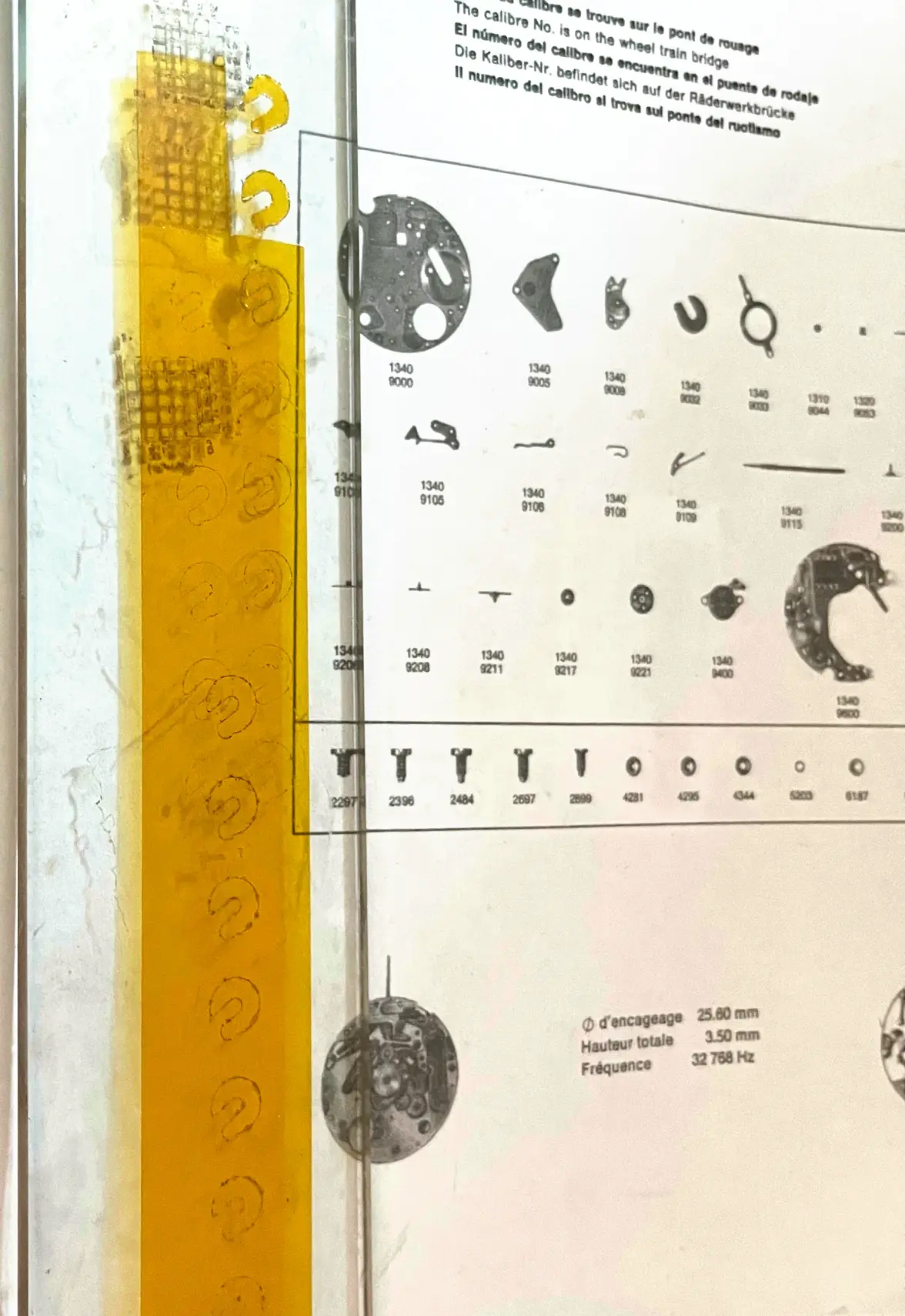
I did this Tuesday on the fiber laser. Where I traced the item from the data sheet. Cut the Kapton tape on some old glass. The laser etches the glass, This is a lot easier than trying to use an xacto to cut the tape.

As noted I do not have a 1320/25 (would love one.) So I have nothing to scan. The data sheets are printed 1:1 although most now are downloaded and need to be re-scaled. The motor assembly can bee seen in the lower right to the left of the PCB board. So the theory is there.

In practice there is no real point (until the coil problem can be addressed. I also uses the fiber laser to attempt etching a PC scrap to re work it. The laser burned into the fiberglass. The next attempt was to ink the copper and etch the remaining bit. That sort of worked. Need a bit better resist. Of course the standard light sensitive resin based photo etch would work better. (I always found it interesting that the Egyptians discovered this process like 3000 years ago.)

Data sheet for the 1320. Omega 201320.pdf which @JimInOz posted above. The motor board is a bit faded out. Probably was in the hard copy. The edge outline can also be recovered from photographs above. Especially the ones @Archer posted. So you already have a scan of the PCB board.

I use lightburn (free trial download) to do the tracing.

As for the resistance I do not have the full 1320/25 maintenance sheet (only what I found on online auction sites.) Most of these tend to be between 1.5 and 1.7k which is high for a coil. I guess the low voltage makes for low current.

Hopefully in the next few weeks I can get my test thingy (time domain relectometer) working. I also keep putting of coding the lavete style motor pulse generator. (built the hardware over the weekend.)
Edited:
 
Posts
18
Likes
1
By chance I attempted to tin the ends of my coil last night. No luck. The wire is really thin. May have other breaks.

I have considered the possiblility of making a new PCB.

I was going to make a thread for this. Which is replicating the insulator ont he 134x.

What is 134x? And which coil, in the motor? Are you sure the motor is faulty? What resistance did you measure in your motor coil?

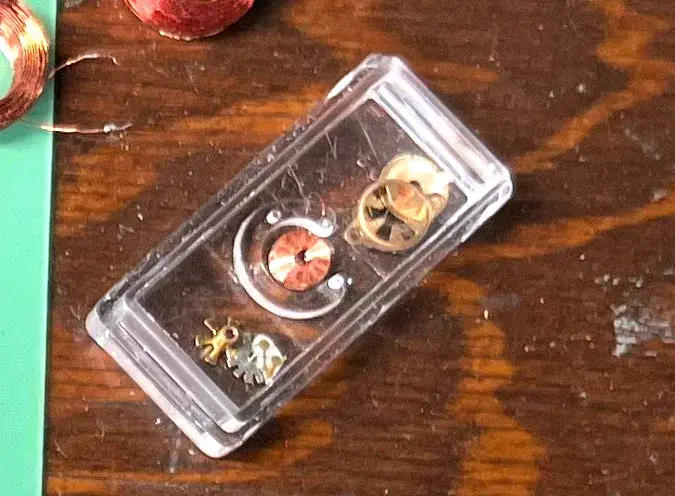
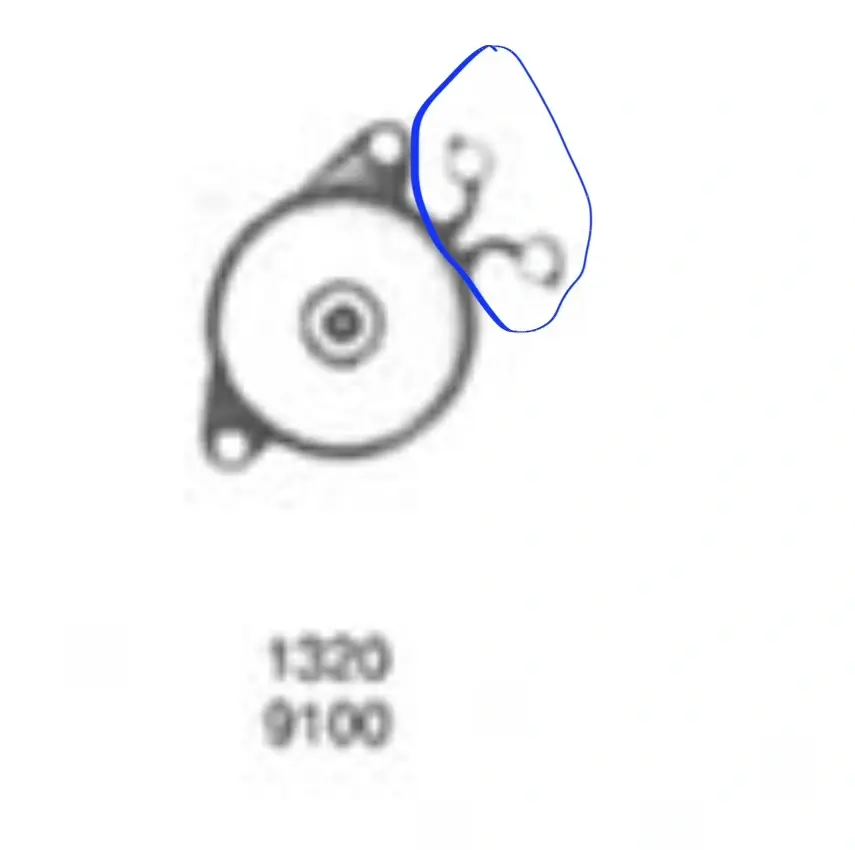
And everyone who has this movement - can someone please please please scan the plastic part with two terminals on a normal flatbed scanner in 2400DPI and post it here?

Specifically this thing here: