Omega 2500(version D?)

Posts
67
Likes
59
Hello all. I am fault finding a non functioning Omega 2500 (I believe it to be version D). Before I go too far with the reassembling process I’d like to get some additional information not found on the Omega technical sheets. It might be useful if I tell you briefly what I know and what I believe I’ll need help with please.

Stuff I know / Docs I have:

  • Omega Tech sheet release ‘H’ for the 2500.
  • Omega Work Instruction 40 (section 7) 2019.
  • Studied numerous slow motion videos of the co-axial in action.
  • Aware the principle is similar yet totally different to Swiss lever escapement.
  • I know the 2500 calibre is based principally on the ETA 2892A2 with various improvements. Im very familiar with servicing the 2892 calibre so its the co-axial aspect I’m looking at here.
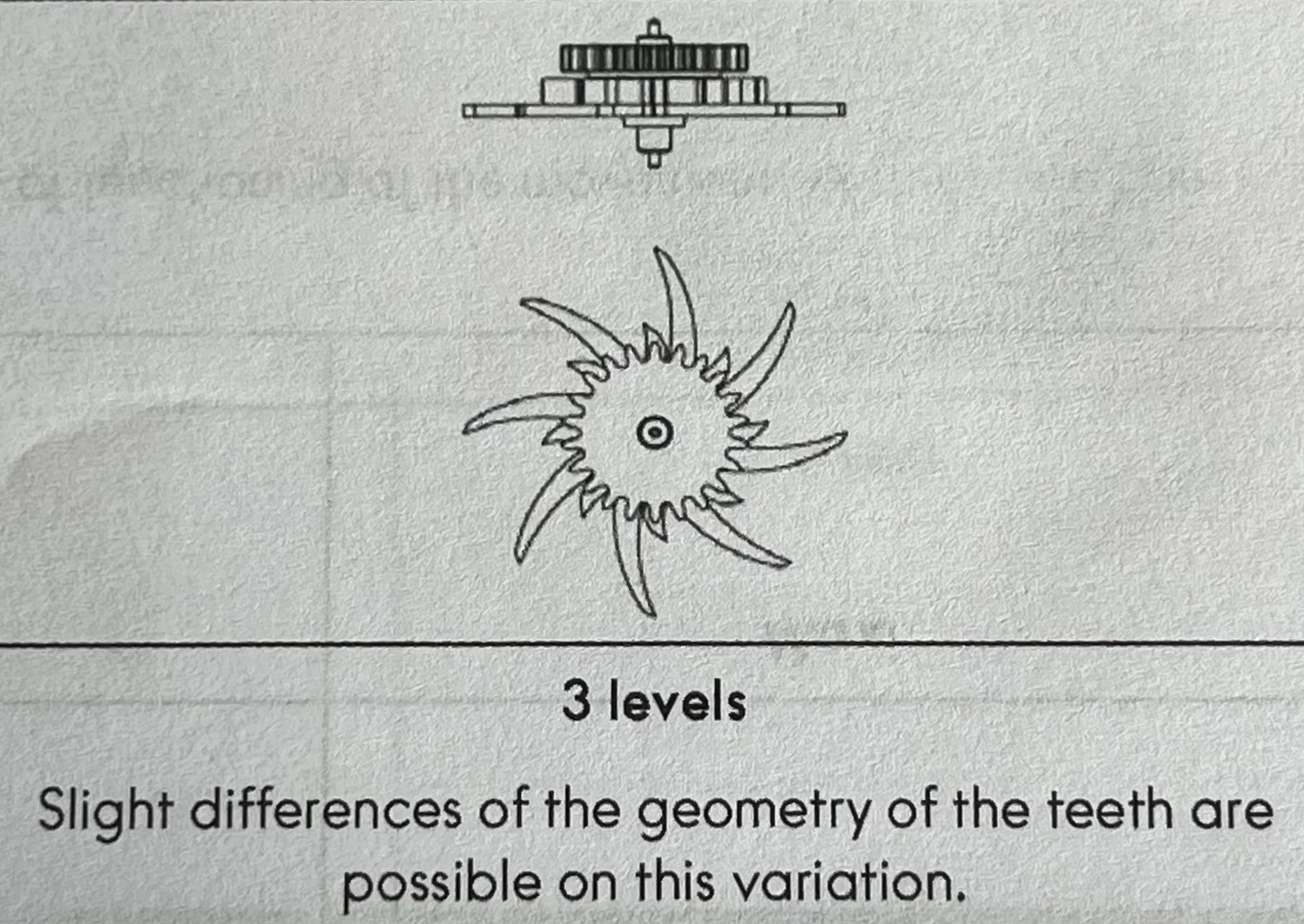
  • The co-axial type I have is 3 layer, with thin swept unbaced arms and no braces (sun ray appearance) which I understand to be the last revision of design (?).
  • The process to remove the balance is only as per tech sheet ie 90 degree towards movt centre.
  • lubrication isn’t required to prevent wear, but acts as a cushion.
  • Specific order for co-axial bridge screw tightening (one is a precision locator the other additional clamping force)
  • must not just nudge the pallet horn to and fro to to test as you do with Swiss lever escapement
  • I’ve watched Mark Lovick’s video, but he misses out some essential insights, plus that version of Co-axial is an early 2 layer one.

Stuff Im struggling to understand:

- Should I pre-wind the barrel before attempting to test the escapement?
  • how do I pretest the co-axial escapement prior to fitting the balance?
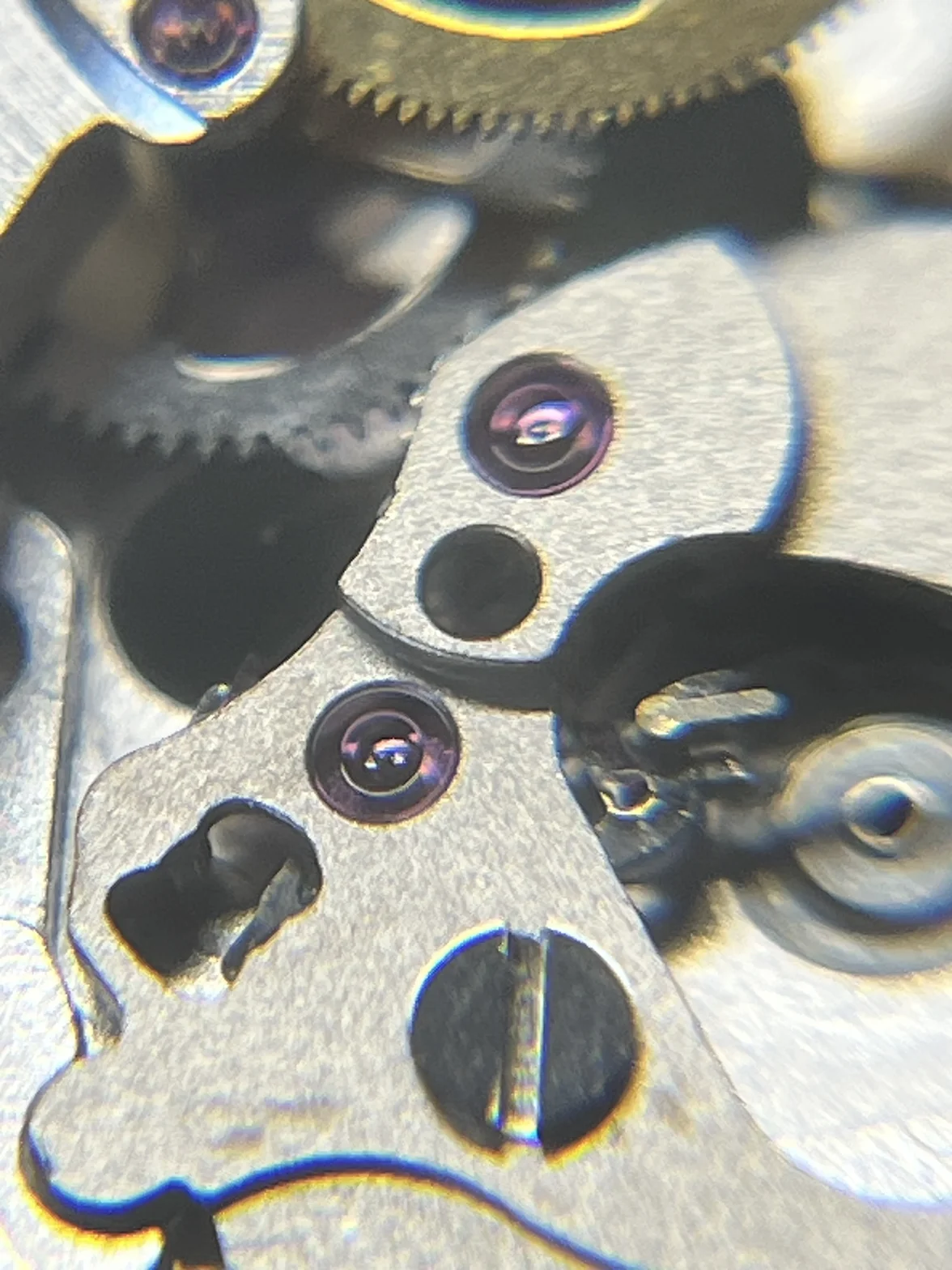
  • What is the function of the side lever on the pallet fork (it’s visible in a window cut into the left side of the bridge? Is this manual advancement of the co-axial escape using a fine oiler, the equivalent of banking?
  • Before reinstalling balance, which position should the pallet fork horn be set in (toward centre, towards outside or doesn’t it matter?

Sorry this is a long request for information, but I thought letting you all know specifically what I know / don’t know might be an easy way to garner some advice. Any information or answers to my questions would be greatly appreciated please, and thanks in advance.

Kind regards, Darren.
 
Posts
30,185
Likes
77,928
Should I pre-wind the barrel before attempting to test the escapement?
  • how do I pretest the co-axial escapement prior to fitting the balance?
  • What is the function of the side lever on the pallet fork (it’s visible in a window cut into the left side of the bridge? Is this manual advancement of the co-axial escape using a fine oiler, the equivalent of banking?
  • Before reinstalling balance, which position should the pallet fork horn be set in (toward centre, towards outside or doesn’t it matter?
In order...

1 - Yes, of course - you need power in order to cause the movement to advance.

2 - You don't. You do any testing and oiling with the balance installed, and in the special test holder that Omega sells.

3 - This is where the banking is.

4 - From Omega's own instructions...

"Position the pallet fork where locking takes place on the output pallet-stone"
 
Posts
30,185
Likes
77,928
One last thing...

lubrication isn’t required to prevent wear, but acts as a cushion.

Although this is the official line Omega has used, it is not uncommon at all to see pretty significant wear on the co-axial wheel teeth - you need to check those and replace if they are worn. The lubrication does help mitigate that wear.

I'm guessing from these questions that you have not had any training from Omega on these, and as much as I am not here to be some sort of gatekeeper of who works on what, without the correct training and equipment servicing one of these properly will not be easy. I just have received too many panicked emails from watchmakers who thought they would give it a go, and then realized they were in way above their heads, so proceed with caution...

The thing with co-axials that is somewhat related to what I quoted here, is that good performance on the timing machine after service in no way means that you have serviced this correctly. In this way, co-axial watches are very misleading compared to a lever escapement, because if you over oil (or even don't oil) a lever escapement you will see it in your timing machine results. Here if you don't even bother oiling it will look fine, but the watch will eat itself up over time.
 
Posts
67
Likes
59
hello Archer and thanks very much for your detailed reply.

Working backwards here, no, I’m not Omega trained at all, but I wish I was! I’m way too long in the tooth now. If I could turn back the clock by 40 years, knowing what I know now about watches, I’d remap my career path accordingly. I’m a trained aerospace engineer. But that’s been fun too! For me, watch repair started as a hobby 15 or so years ago and I am completely self taught - you have actually played a part of that learning too, insofar as I’ve read many of your articles on here and in the past asked questions which you’ve kindly answered.

I completely missed the note about setting the pallet such that output (exit) stone is ‘locked’. So if I understand that correctly, that would mean the pallet dart is away from the movt centre rather than innermost?

From what you say, there’s no way to carry out even a perfunctory test of the escape whilst the balance is out of the movement?

Regards, Darren.
Edited:
 
Posts
30,185
Likes
77,928
What "test" is it that you are trying to do exactly?

Unlike a lever escapement, there's really no adjustments to be made here - you never move pallet stones for example, and the banking is fixed, so what test is it you are trying to do?
 
Posts
67
Likes
59
Hi Mr Archer.

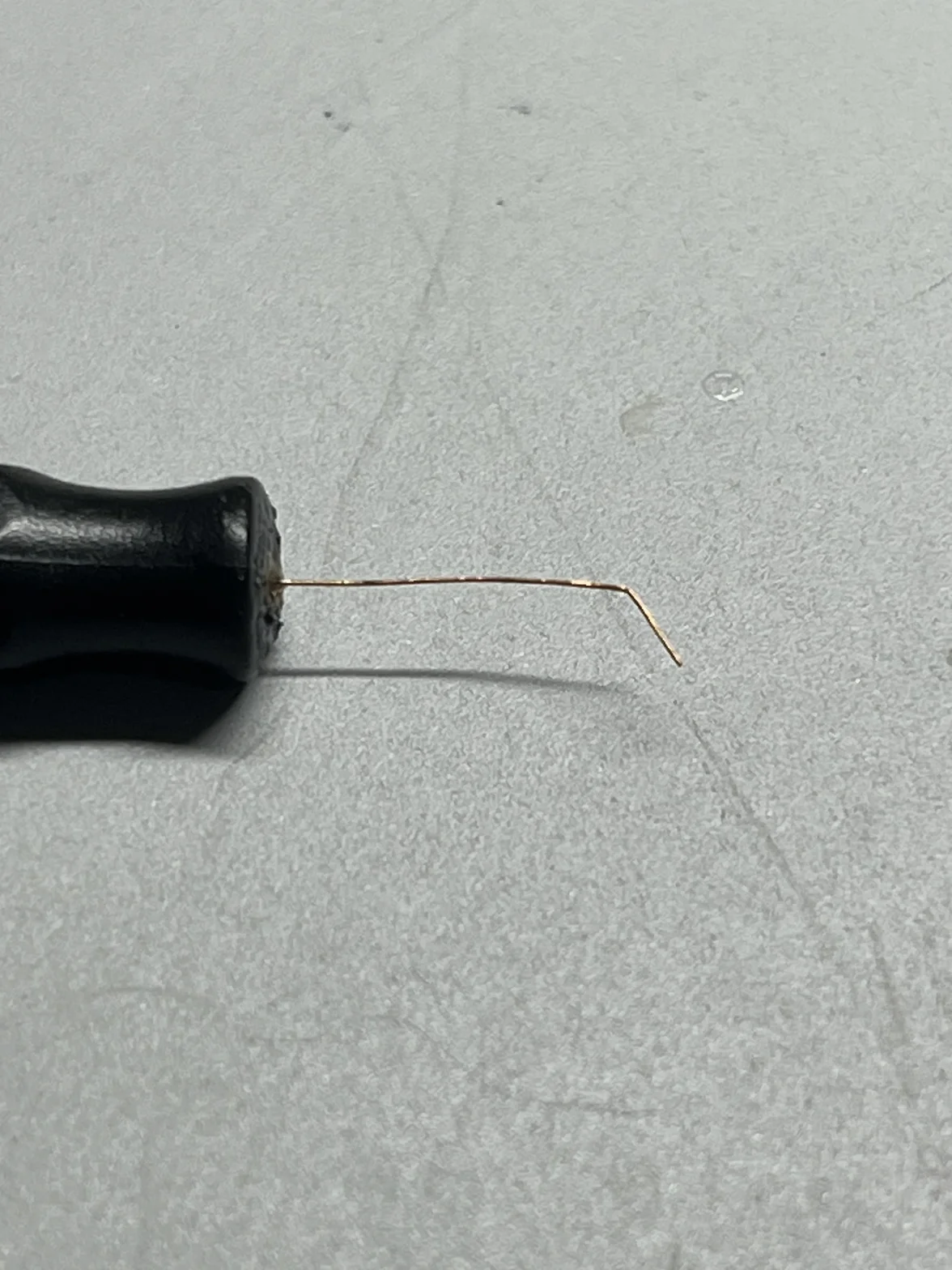
By “perfunctory test”, I was wondering if there is the equivalent of what I call the “nudge test” of the pallet fork in a usual Swiss lever escapement whereby I use a fine bronze wire nudging tool which I made to gently tease the dart from banking pin to banking pin. The fine bronze wire is far too thin to impart any damage on the escapement and by experience it gives an early ‘feel’ as to whether or not decent power is getting to the dart.

The photo attached is the tool I made from a single bronze wire pulled from a ‘suede boot brush’. I’m sure Bergeon will want to copy it when they see it 😉

So I was wondering if it’s possible to nudge the coaxial pallet fork, then the sun wheel in such a way as to simulate the two balance jewels swinging through ?

My question is somewhat a moot point now, as I’ve stripped, cleaned oiled and re-assembled the watch (paying especial attention to the pallet position and how to load the balance).

Happy to say the watch is now running again (for now anyway), which is an immediate win win since it wasn’t a strong runner and would intermittently stop.

I noted it’s a 25,200 beater, which seems wrong (I believe 4Hz is the best rate) but my weishi 1900 is auto-detecting and is probably confused by the co-axial? It’s also showing 340 amplitude at 52 lift angle which is ridiculously high. What I will say is the balance looks and sounds strong. I’ll slow motion video it tomorrow and get a fundamental amplitude amp reading.

Rate is -4 to -8 across all positions which surprised me for my first off coaxial movement with a dubious history. I’ve a lot to learn, especially the lubrication of the coaxial sun wheel!

Enjoy your weekend Mr Archer

Kind regards, Darren

Edited:
 
Posts
2,625
Likes
2,805
Hi Mr Archer.

By “perfunctory test”, I was wondering if there is the equivalent of what I call the “nudge test” of the pallet fork in a usual Swiss lever escapement whereby I use a fine bronze wire nudging tool which I made to gently tease the dart from banking pin to banking pin. The fine bronze wire is far too thin to impart any damage on the escapement and by experience it gives an early ‘feel’ as to whether or not decent power is getting to the dart.

The photo attached is the tool I made from a single bronze wire pulled from a ‘suede boot brush’. I’m sure Bergeon will want to copy it when they see it 😉

So I was wondering if it’s possible to nudge the coaxial pallet fork, then the sun wheel in such a way as to simulate the two balance jewels swinging through ?

My question is somewhat a moot point now, as I’ve stripped, cleaned oiled and re-assembled the watch (paying especial attention to the pallet position and how to load the balance).

Happy to say the watch is now running again (for now anyway), which is an immediate win win since it wasn’t a strong runner and would intermittently stop.

I noted it’s a 25,200 beater, which seems wrong (I believe 4Hz is the best rate) but my weishi 1900 is auto-detecting and is probably confused by the co-axial? It’s also showing 340 amplitude at 52 lift angle which is ridiculously high. What I will say is the balance looks and sounds strong. I’ll slow motion video it tomorrow and get a fundamental amplitude amp reading.

Rate is -4 to -8 across all positions which surprised me for my first off coaxial movement with a dubious history. I’ve a lot to learn, especially the lubrication of the coaxial sun wheel!

Enjoy your weekend Mr Archer

Kind regards, Darren


View attachment 3438416
That is definitely a test I do, I have an oiler just for that purpose. The idea is "before I mess with the balance again and risk screwing up the balance spring, make sure we are getting a good 'snap' to the pallet fork to make sure I didn't screw anything up so far".
 
Posts
30,185
Likes
77,928
I noted it’s a 25,200 beater, which seems wrong (I believe 4Hz is the best rate) but my weishi 1900 is auto-detecting and is probably confused by the co-axial? It’s also showing 340 amplitude at 52 lift angle which is ridiculously high. What I will say is the balance looks and sounds strong. I’ll slow motion video it tomorrow and get a fundamental amplitude amp reading.
Lift angle is 38, but in any case your machine doesn’t have the capability to read the amplitude correctly. It requires a special program specifically for the sounds of the co-axial, and only professional grade machines (like Witschi) have this capability.

How did you oil the 30 different spots on the escapement?
 
Posts
67
Likes
59
Lift angle is 38, but in any case your machine doesn’t have the capability to read the amplitude correctly. It requires a special program specifically for the sounds of the co-axial, and only professional grade machines (like Witschi) have this capability.

How did you oil the 30 different spots on the escapement?
The weishi 1900 is ‘supposed’ to work with co-axial. From my experience of using it on Swiss lever escapements it is ‘barely adequate’ for my work at present. It will need upgrading if I intend to progress further I know!

I oiled the co-axial escapement as per omega WI40 section 7. That is all I have to work with just now. I’m not sure if there are any other documents that give greater detail? 30 points! I recall doing 16, (two layers of escapement, each 8 arms, one tiny dot per arm). Where have I missed please? Is there an omega image summarising the 30 points you can point me to? Any assistance would be greatly appreciated.

Kind regards, Darren
Edited:
 
Posts
30,185
Likes
77,928
The weishi 1900 is ‘supposed’ to work with co-axial. From my experience of using it on Swiss lever escapements it is ‘barely adequate’ for my work at present. It will need upgrading if I intend to progress further I know!
It will "work" in terms of giving you a rate, but without specific program selections to measure co-axial balance amplitudes, it won't be accurate on that aspect.

I oiled the co-axial escapement as per omega WI40 section 7. That is all I have to work with just now. I’m not sure if there are any other documents that give greater detail? 30 points! I recall doing 16, (two layers of escapement, each 8 arms, one tiny dot per arm). Where have I missed please? Is there an omega image summarising the 30 points you can point me to? Any assistance would be greatly appreciated.
Sorry - the 30 points is for the 2-level, and for the 3 level that you have you place 10 drops of oil. One on each of the lower teeth, and two on the upper pinion teeth.

My questions was more how did you actually do the oiling? As I mentioned this is typically done in the holder Omega has for this specific task - oiled through the dial side of the movement and under a microscope, being able to carefully control the balance wheel to get the escapement into the exact position needed for each drop of oil. How did you actually do this...