Old pocket watch identification...

Posts
2
Likes
1
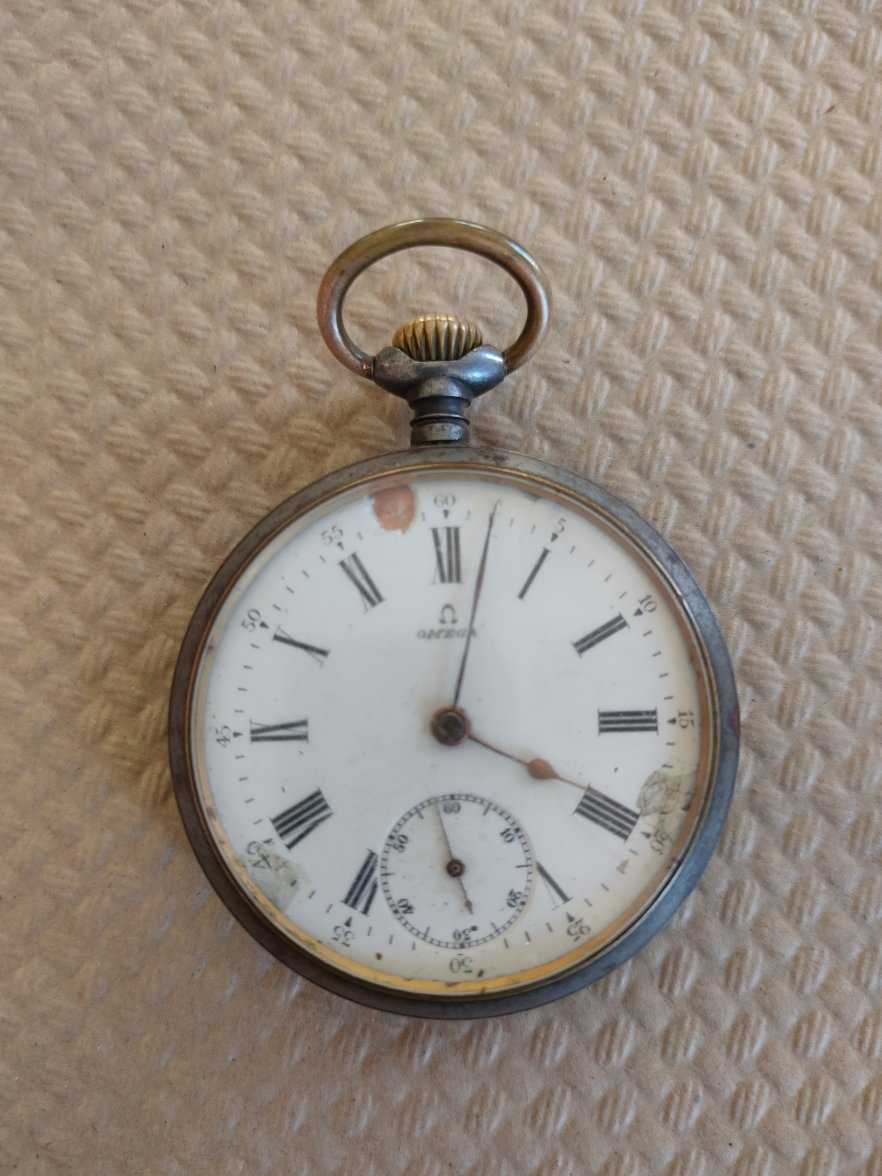
I'm very new to the community and would like help figuring out the model or year. Here are some photos
 
Posts
3,594
Likes
8,211
Welcome to the forum!

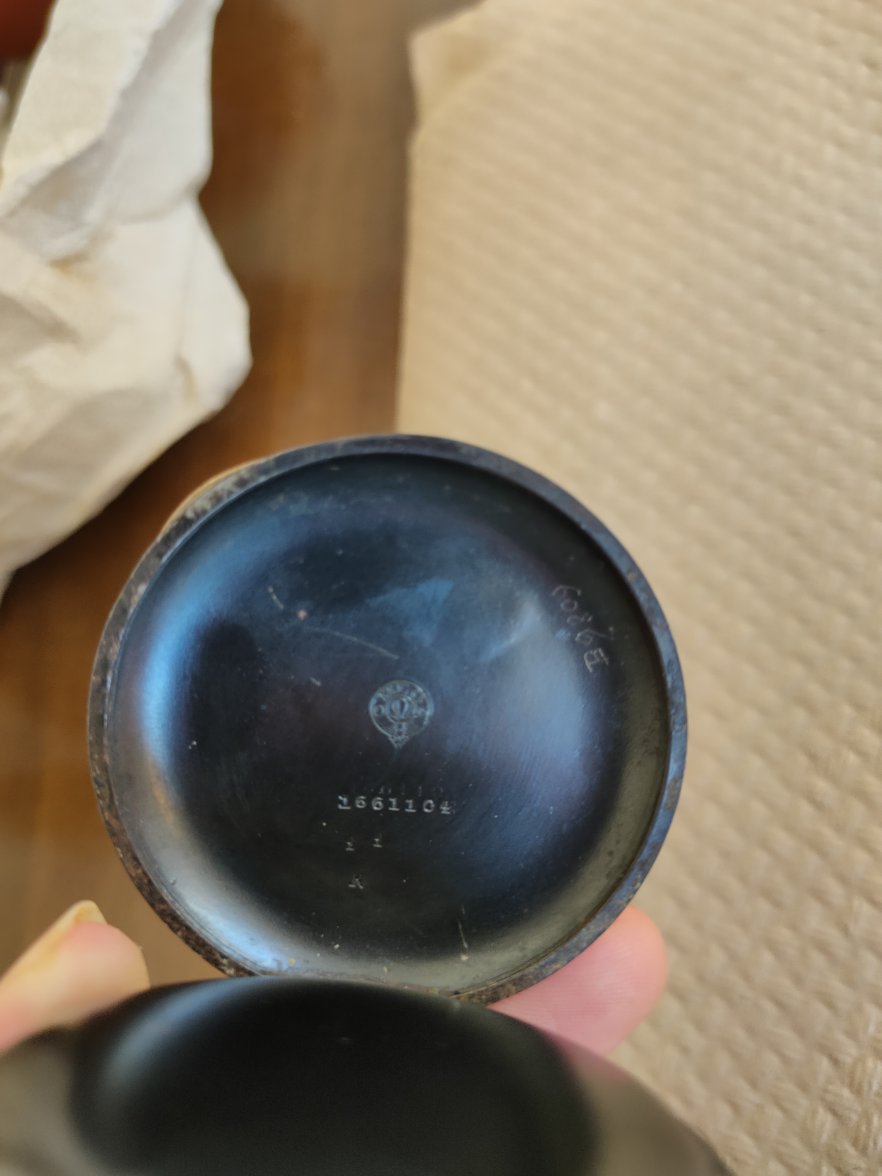
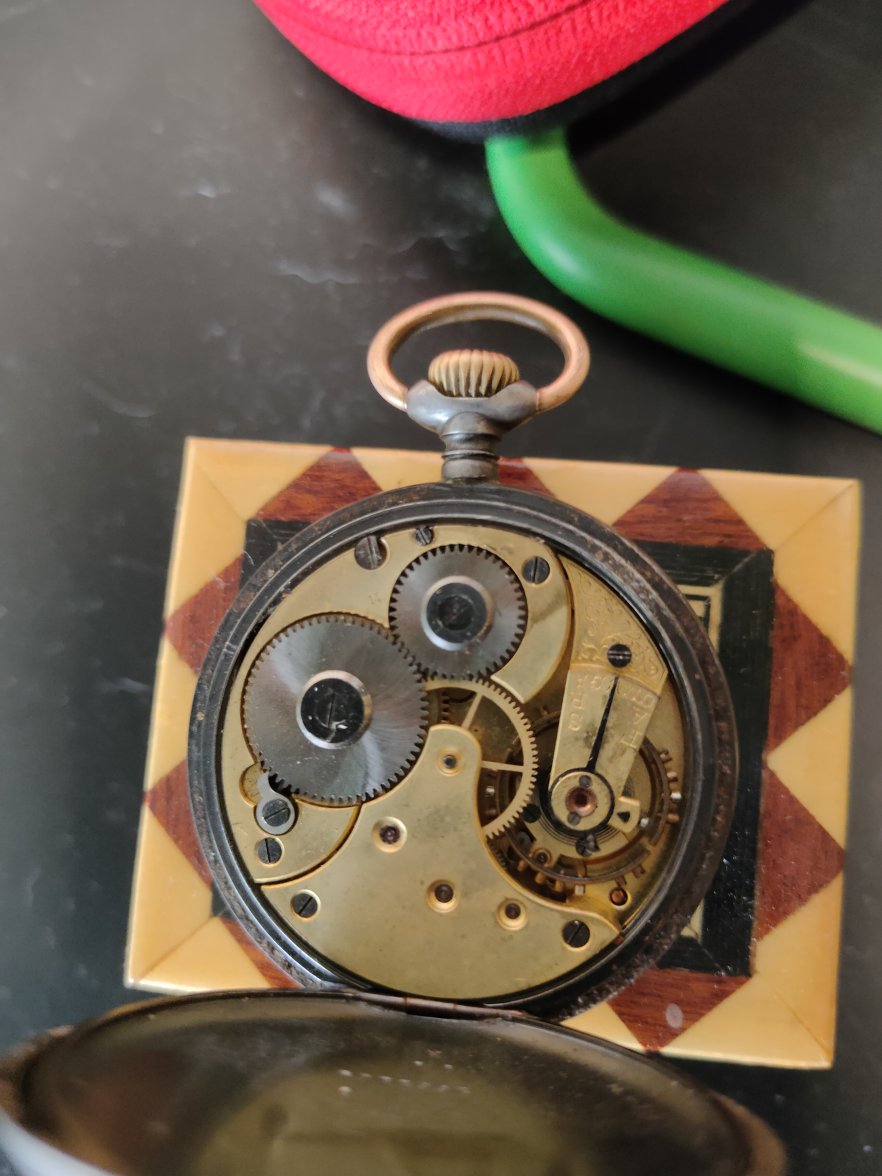
Case number dates from 1894-1902, appears to be the caliber 19''' based on the unusual clicker shape.

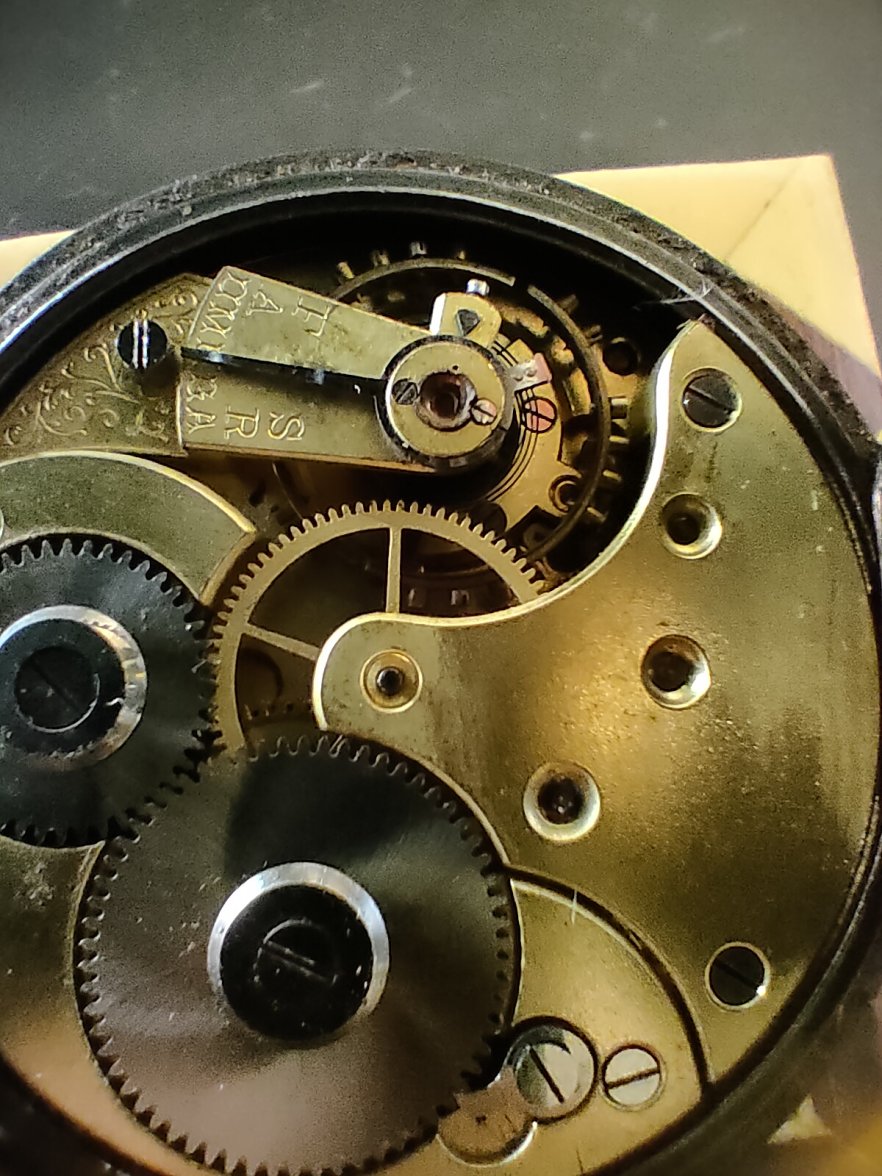
Can you give us a measurement of the movement diameter? A closeup of the rubies to see if the chatons are screwed in ?
I'd also love to see a good shot of the small engravings under the case number.

Any background info?


I'm the village idiot but many of our oldie experts are in bed right now so be patient and we will try to find out more.

You may have one of the very earliest watches marked Omega.
 
Posts
5,082
Likes
15,706
The Omega logo looks elongated. Interesting to see a clearer picture of it
 
Posts
17,995
Likes
37,595
The Omega logo looks elongated. Interesting to see a clearer picture of it

Not unusual. The "horseshoe" shaped Ω and the italicised OMEGA were normal in that era (turn of the 19th/early 20th century).
 
Posts
2
Likes
1
Welcome to the forum!

Case number dates from 1894-1902, appears to be the caliber 19''' based on the unusual clicker shape.

Can you give us a measurement of the movement diameter? A closeup of the rubies to see if the chatons are screwed in ?
I'd also love to see a good shot of the small engravings under the case number.

Any background info?


I'm the village idiot but many of our oldie experts are in bed right now so be patient and we will try to find out more.

You may have one of the very earliest watches marked Omega.
The movement diameter is about 42mm and here is a close up of the rubies:

I can't get a better photo of the engraving on the case but it's two 1's and an R. There's also an engraving that can be seen on the top right of the photo in the original post that says B9809 and some other hand carved letters and numbers on other parts of the case.
I found this watch yesterday at an antique store in the small town I live in in Spain, but the seller told me he gets his pocket watches from his friend that lives in France.
Thanks!
 
Posts
13,348
Likes
18,502
On very early Omega pocket watches like this, the serial number of the movement is located underneath the dial and can only be seen when the watch is disassembled.

This looks like the real deal to me as a circa 1900 Omega pocket watch. However, it also looks like there are at least a couple of parts missing. It might turn out to be quite expensive to restore this watch to running condition.

gatorcpa
 
Posts
3,594
Likes
8,211
The movement diameter is about 42mm and here is a close up of the rubies:

I can't get a better photo of the engraving on the case but it's two 1's and an R. There's also an engraving that can be seen on the top right of the photo in the original post that says B9809 and some other hand carved letters and numbers on other parts of the case.
I found this watch yesterday at an antique store in the small town I live in in Spain, but the seller told me he gets his pocket watches from his friend that lives in France.
Thanks!

If I am correct, here is some general info about the movement.
http://www.ranfft.de/cgi-bin/bidfun-db.cgi?10&ranfft&2&2uswk&Omega_19

Jim(inOz) and Evan (Gatorcpa) are two of the very best and they will guide you well.

The hand carved letters are watchmaker's service marks but the two 1's and the R are the marks I would like to see clearly. They may be hallmarks or other official markings.

May I ask your intentions with this piece?
While it might be prohibitive to repair, you might get lucky and this watch is a piece of history.

You might get lucky but you won't get rich.
 
Posts
17,995
Likes
37,595
Possibly a caliber 19''' L 15P in a blued steel case.
If the dial had been in much better condition it would be worth restoring, but as it is probably only a parts watch.