- Posts
- 2,959
- Likes
- 6,317
Modest_Proposal
·I too have been using the word "calatrava" here (and often) to refer generically to the same type of Longines watches which are flat and elegant.
I find it pretty convenient and it seemed to me it was an accepted usage, as I didn't invent it and have seen it done elsewhere (maybe Hodinkee, it's true).
in any event not all 1940s Longines have italian nicknames and when someone refers to Longines calatravas we know exactly what they mean. In this particular case it turned out that's exactly what it was.
Language is a system of labels that we chose to convey meaning. if one fulfills a useful purpose without creating unbearable offenses or distortions I don't see why not use it.
So I'll say; as someone focused on 1940s Longines watches, I find the word "calatrava" routinely useful to refer generically to the simple, flat and elegant 1930-1940, snap-on, case back Longines models which may bear a variety of calibers in a variety of cases. And if the word can be used for other watches with the same characterics- flat simple and elegant- that's convenient too.
No worries in any event, no offense meant or taken.
thanks Darren for sharing your beautiful Longines!!

Although I understand what you're getting at - I like to look at the reasons why these terms became to mean what they mean. Take two examples:
1. Calatrava
2. Tricompax
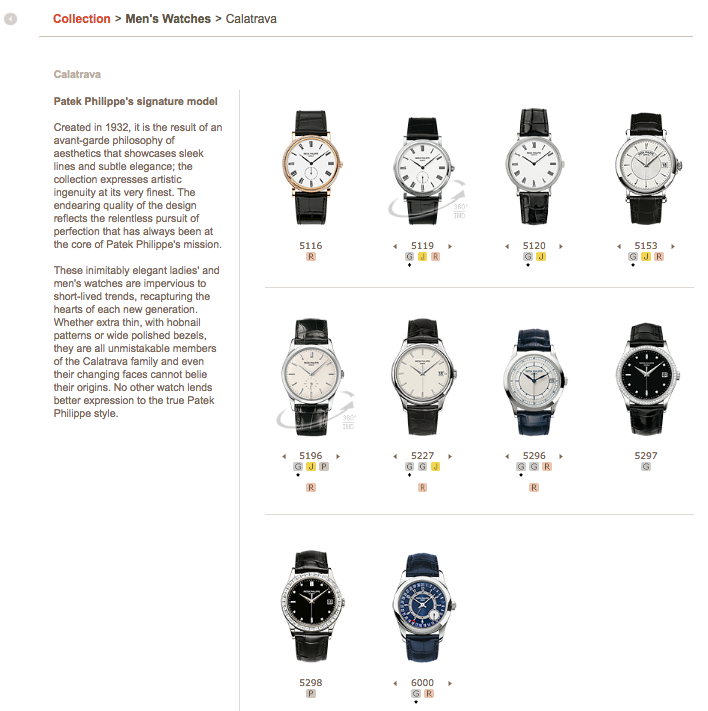
"Calatrava", since the time I started collecting (3-4 years ago), referred to a particular design, styled in pictured below. Most often it was associated with Patek. In fact, Patek even has/had a Calatrava line. Over time the term has become looser. Part of the blame can be attributed to (*1) ignorant collectors who mistook the meaning. But a still larger portion of the blame, IMO, can be placed on unscrupulous dealers who discovered that associating their watches with this term would bring in more $$$ (refer back to *1). Also consider the increasingly loose term "Tre Tacche".
The same can be said of the term "Tri-Compax". A term essentially reserved for Universal Geneve watches, but in spirit was meant to describe the number of complications a watch had. Now the word can often be seen referring to three-register chronographs. Again - part of the blame can be placed on misinformed collectors. But a larger part of the blame, IMO, can be placed on dealers who find that associating their chronographs with a word linked to the growingly hot UG Tri-Compax's brings in the $$$. I've seen it so many times...
Dealers like hot keywords like "Gilt", "Coin Edge", "Jumbo", "Tricompax", "Calatrava", "Tropical" and so do their clients. They are simple markers of desirability. Uncomplicated and arbitrary.
Am I opposed to changing vocabulary in principle? Not at all! But given the reasons in this case - greed and ignorance - I'm inclined to resist with great effort.
P.S.: I admit that terms like "Calatrava" probably changed a lot before I became a collector, but I can't do anything about that now. And if anybody has real knowledge on the subject, please enlighten us.